Author: AFP

  • PM Shehbaz declares day of mourning after Iranian President’s death

    PM Shehbaz declares day of mourning after Iranian President’s death

    Pakistan’s Prime Minister Shehbaz Sharif declared a day of mourning after Iranian media reported that president Ebrahim Raisi had died in a helicopter crash.

    “Pakistan will observe a day of mourning and the flag will fly at half mast as a mark of respect for President Raisi and his companions and in solidarity with Brotherly Iran,” Shehbaz posted on X, formerly Twitter.

    “I along with the government and people of Pakistan extend our deepest condolences and sympathies to the Iranian nation on this terrible loss,” he added.

    “The great Iranian nation will overcome this tragedy with customary courage.”

    The Pakistani leader hosted Raisi in Islamabad for a three-day visit in April in a bid to mend ties between the neighbours after they traded deadly strikes earlier this year.

  • Protest after Peru classifies transsexuality as mental disorder

    Protest after Peru classifies transsexuality as mental disorder

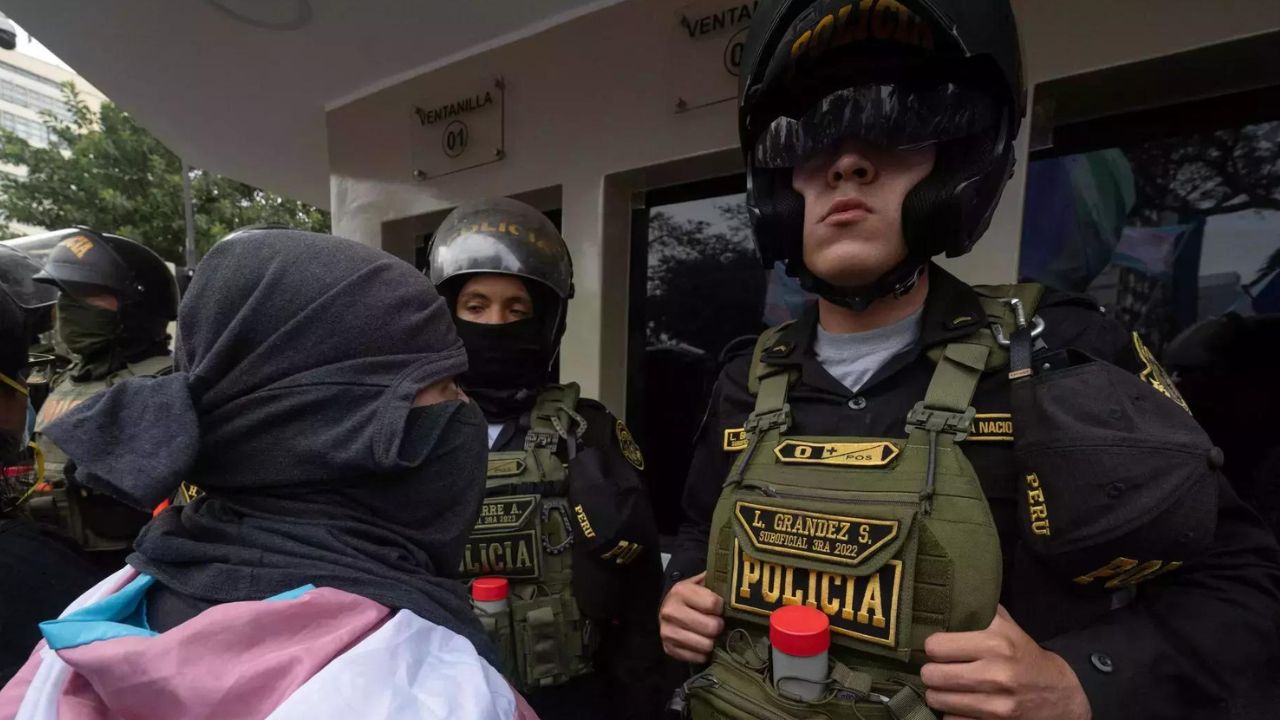
    LGBTQ groups protested Friday outside Peru’s health ministry after the government issued a decree listing transsexualism as a mental disorder.

    “It is a decree that takes us back three decades,” said Jorge Apolaya, spokesman of the Collective Pride March, a Lima-based rights group.

    “We cannot live in a country where we are considered sick,” he said.

    Transgender people are those who reject the sex they were assigned at birth. Some opt for surgical or medical intervention.

    The government on May 10 updated its list of insurable health conditions — which since 2021 has offered benefits for mental health treatment — to include services for transgender people.

    In the decree, the health ministry describes the condition as a “mental disorder” — an obsolete term long officially abandoned by the World Health Organization.

    More than 200 activists gathered outside the health ministry to demand the revocation of the decree on Friday — the International Day Against Homophobia, Biphobia and Transphobia.

    Police guard the entrance of Peru’s Ministry of Health during a protest staged by LGBTQ groups against a new government decree listing transsexualism as a “mental disorder” (Cris BOURONCLE)

    “It is a regulation that violates us … they are positioning us as sick people, as if we have a problem,” said 25-year-old Afrika Nakamura.

    With slogans like “It’s not a  disease, it’s diversity!” and “We are trans and we are not sick,” the protesters blocked the busy avenue in front of the ministry for a few hours.

    No clashes with police were reported.

    “We demand the repeal of this transphobic and violent decree, which goes against our trans identities in Peru,” activist Gianna Camacho of the Coordinacion Nacional LGTBIQ+ told AFP.

    “We are not mentally ill and we do not suffer from any mental disorder,” she added.

    The government said it would not scrap the decree.

    Health ministry official Carlos Alvadrado told AFP that doing so would “remove the right to care.”

    The ministry has previously insisted it does not consider gender diversity as an illness, and in a statement expressed “our respect for gender identities and our rejection of the stigmatization of sexual diversity.”

    It said the decree was meant merely to extend mental health coverage “for the full exercise of the right to health and well-being” of those who want or need it.

    An article on the website of Human Rights Watch describes the decree as “profoundly regressive” in a country that does not allow same-sex marriage nor for transgender people to change their identity documents.

    For Percy Mayta, a medical doctor and activist, “pathologizing” transgender people “opens the door to… conversion therapy” — which UN bodies have equated to torture and is not illegal in Peru.

    In its press statement, Peru’s health ministry underlined that “the sexual orientation and gender identity of a person does not in itself constitute a physical or mental health disorder and therefore should not be subjected to medical treatment or care or so-called reconversion therapies.”

  • Austria to resume aid to UN agency for Palestinians

    Austria to resume aid to UN agency for Palestinians

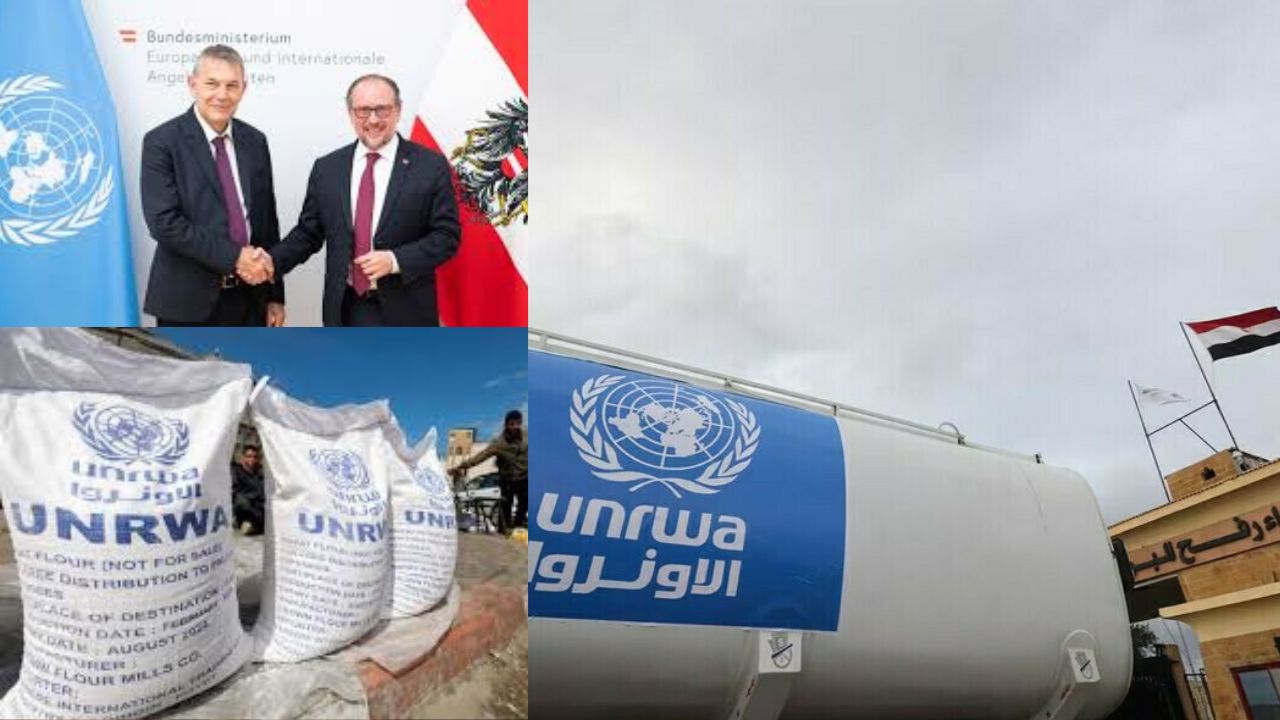
    Austria said on Saturday that it will restore its funding to the UN agency for Palestinian refugees after suspending it over allegations that staff were involved with the Hamas.

    Israel alleged in January that some United Nations Relief and Works Agency (UNRWA) employees may have participated in the Hamas attacks on Oct. 7 that triggered the genocide in the Gaza Strip.

    In the weeks that followed, numerous donor states, including Austria, suspended or paused some $450 million in funding.

    Many, including Germany, Sweden, Canada and Japan, had since resumed funding, while others have continued to hold out.

    “After analysing the action plan in detail” submitted by UNRWA “to improve the functioning of the organization,” Austria has decided to “release the funds,” its Foreign Ministry said in a statement.

    A total of 3.4 million euros ($3.7 million) in funds have been budgeted for 2024, and the first payment is expected to be made in the summer, the statement said. 

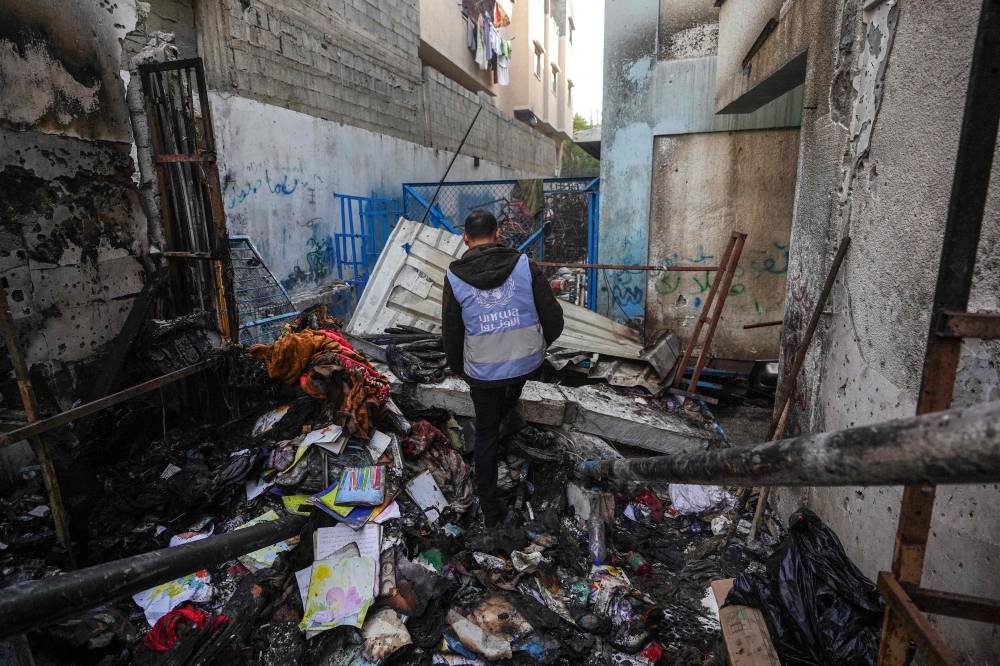
    An UNRWA staff member checks a burned area at a school housing displaced Palestinians that was hit during the ongoing conflict between Israel and Hamas, in Nuseirat in the central Gaza Strip on May 17, 2024. (Credit: AFP)

    “Some of the Austrian funds will be used in the future to improve internal control mechanisms at UNRWA,” it added.

    Austria said it will “closely monitor” the implementation of the action plan with other international partners, noting that “a lot of trust had been squandered.”

    The Alpine country said it has substantially increased support for the suffering Palestinian population in Gaza and the region since Oct. 7, making 32 million euros ($34.8 million) in humanitarian aid available to other international aid organizations.

    Israel’s has massacred at least 35,303 people, mostly civilians, according to data provided by the health ministry in the Gaza territory.

  • Flash floods kill 50 in western Afghanistan

    Flash floods kill 50 in western Afghanistan

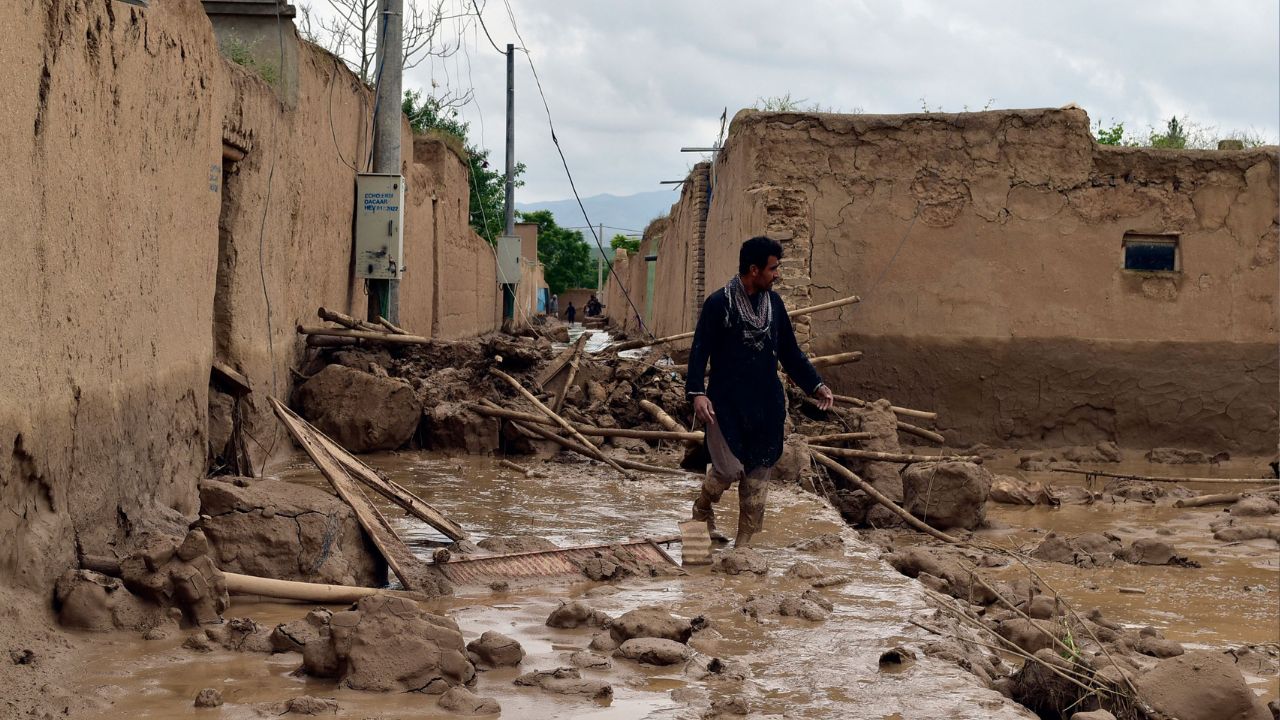
    Flash flooding has killed at least 50 people in western Afghanistan, provincial police said Saturday, a week after hundreds were washed away in the north of the country.

    The floods on Friday also destroyed about 2,000 houses, and damaged thousands more homes and businesses, Ghor police spokesman Abdul Rahman Badri said in a statement.

    The fresh flooding in the country — which is highly vulnerable to climate change — comes as survivors of the May 10 flash floods in northern Baghlan province continue to search for missing relatives.

    “Fifty residents of Ghor province were killed by the floods on Friday and a number of others are missing,” Badri said.

    “These terrible floods have also killed thousands of cattle… They have destroyed hundreds of hectares of agricultural land, hundreds of bridges and culverts, and destroyed thousands of trees,” he added.

    Major roads into and within the province were blocked.

    Abu Obaidullah, the head of the province’s disaster management department, said it was an “emergency situation”.

    The floods hit several districts in the province, including the capital Chaghcharan, where the streets “are full of mud”, Obaidullah said.

    “The situation is really concerning,” he told AFP, adding that victims were in need of shelter, food and water.

    ‘Exceptionally vulnerable’

    The UN’s World Food Programme (WFP) and Taliban officials said more than 300 people died as a result of the flood disaster earlier this month that left homes and roads coated in thick mud.

    The destruction of roads and bridges hampered rescue efforts, with United Nations agencies and Taliban authorities warning the death tolls would rise.

    Afghanistan, which is “exceptionally vulnerable to flooding” has seen above-average rainfall this spring, Mohammad Assem Mayar, a water resource management expert, said in a recent Afghanistan Analysts Network report.

    From mid-April to early May, flash flooding and other floods had left about 100 people dead in 10 of Afghanistan’s provinces, authorities said.

    Farmland has been swamped in a country where 80 percent of the more than 40 million people depend on agriculture to survive.

    The rains come after prolonged drought in Afghanistan, which is one of the least prepared nations to tackle climate change impacts, according to experts.

    The country, ravaged by four decades of war, is also one of the world’s poorest.

    The WFP warned that the recent floods have compounded an already dire humanitarian situation.

    str-sw/ecl/sco

    © Agence France-Presse

  • Video shows Sean ‘Diddy’ Combs assaulting ex-girlfriend

    Video shows Sean ‘Diddy’ Combs assaulting ex-girlfriend

    Disturbing surveillance video published on Friday shows Sean ‘Diddy’ Combs physically assaulting his then-girlfriend Casandra Ventura, corroborating allegations she made in a now-settled lawsuit late last year.

    Combs is the target of several civil lawsuits that characterise him as a violent sexual predator who used alcohol and drugs to subdue his victims, and his homes were raided this year by federal agents.

    The 2016 footage, which was obtained and published by CNN, shows the rap mogul hitting, dragging and kicking the singer known as Cassie, who in her recent lawsuit said Combs subjected her to more than a decade of coercion by physical force and drugs, plus a 2018 rape.

    In the video, Ventura leaves a hotel room after which Combs, appearing to wear only a towel, chases her before throwing her to the ground and assaulting her. “The gut-wrenching video has only further confirmed the disturbing and predatory behaviour of Mr Combs. Words cannot express the courage and fortitude that Ms Ventura has shown in coming forward to bring this to light,” read a statement from her lawyer Douglas Wigdor.

    Casandra Ventura sued Combs in federal court last fall, a bombshell suit that was settled out of court but succeeded by a string of similarly lurid sexual assault claims against the hip-hop star. Ventura met Combs when she was 19 and he was 37, after which he signed her to his label and they began a romantic relationship.

    Combs has vehemently denied all accusations against him. His lawyer did not immediately respond to a request for comment from AFP. In March armed agents entered Combs’ sprawling luxury properties in Miami and Los Angeles, a heavily publicised bicoastal operation that suggested an investigation into the rapper is underway.

  • ‘Danger behind the beauty’: more solar storms could be heading our way

    ‘Danger behind the beauty’: more solar storms could be heading our way

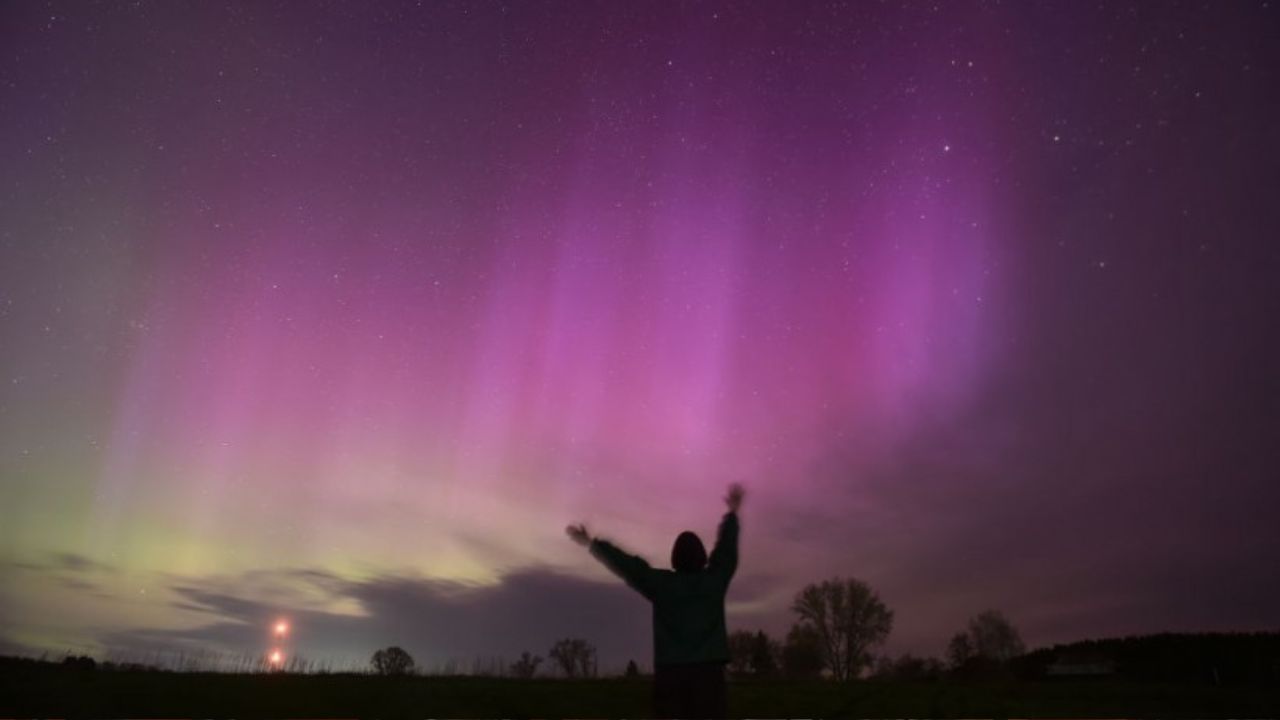
    Tourists normally have to pay big money and brave cold climates for a chance to see an aurora, but last weekend many people around the world simply had to look up to see these colourful displays dance across the sky.

    Usually banished to the poles of Earth, the auroras strayed as far as Mexico, southern Europe and South Africa on the evening of May 10, delighting skygazers and filling social media with images of exuberant pinks, greens and purples.

    But for those charged with protecting Earth from powerful solar storms such as the one that caused the auroras, a threat lurks beneath the stunning colours.

    “We need to understand that behind this beauty, there is danger,” Quentin Verspieren, the European Space Agency’s space safety programme coordinator, told AFP.

    Mike Bettwy of the US Space Weather Prediction Center said that “we’re focused on the more sinister potential impacts” of solar storms, such as taking out power grids and satellites, or exposing astronauts to dangerous levels of radiation.

    The latest auroras were caused by the most powerful geomagnetic storm since the “Halloween Storms” of October 2003, which sparked blackouts in Sweden and damaged power infrastructure in South Africa.

    There appears to have been less damage from the latest solar storms, though it often takes weeks for satellite companies to reveal problems, Bettwy said.

    There were reports that some self-driving farm tractors in the United States stopped in their tracks when their GPS guidance systems went out due to the storm, he told AFP.

    ‘Definitely not over’

    These strange effects are caused by massive explosions on the surface of the Sun that shoot out plasma, radiation and even magnetic fields at incredibly fast speeds born on the solar wind.

    The recent activity has come from a sunspot cluster 17 times the size of Earth which has continued raging over the week. On Tuesday it blasted out the strongest solar flare seen in years.

    The sunspot has been turning towards the edge of the Sun’s disc, so activity is expected to die down in the short term as its outbursts aim away from our planet.

    But in roughly two weeks the sunspot will swing back around, again turning its gaze towards Earth.

    In the meantime, another sunspot is “coming into view right now” which could trigger “major activity in the coming days”, ESA space weather service coordinator Alexi Glover told AFP.

    So the solar activity is “definitely not over”, she added.

    It is difficult to predict how violent these sunspots could be — or whether they could spark further auroras.

    But solar activity is only just approaching the peak of its roughly 11-year cycle, so the odds of another major storm are highest “between now and the end of next year”, Bettwy said.

    What threat do solar storms pose?

    Geomagnetic storms such as the recent one create a magnetic charge of voltage and current, “essentially overloading” things like satellites and power grids, according to Bettwy.

    The most famous example came in 1859 during the worst solar storm in recorded history, called the Carrington Event.

    As well as stunning auroras, the storm caused sparks to fly off of telegraph stations. The charge that originated from the Sun was so strong that some telegraphs worked without being plugged into a power source.

    So what would happen if such a powerful geomagnetic storm struck Earth again?

    Bettwy said most countries have improved their power grids, which should prevent prolonged outages like those that hit Sweden in 2003 or Canada in 1989.

    Still, he suggested people have an emergency kit in case electricity is knocked out for a day or two. Fresh water might also help in case filtration plants go offline.

    Astronauts are particularly at risk from radiation during extreme solar activity. Those on the International Space Station usually take the best shelter they can when a bad storm is expected.

    Bettwy said a massive solar storm could expose astronauts to an “unhealthy dose” of radiation, but he did not think it would be lethal.

    Emphasising that he did not want to “instil fear”, Bettwy added that radiation can also potentially “get through the fuselage” of planes flying near the north pole.

    Airlines sometimes change routes during extreme solar storms to avoid this happening, he added.

    Several upcoming missions are expected to improve forecasting of the Sun’s intense and unpredictable weather, aiming to give Earth more time to prepare.

    If the ESA’s Vigil mission, planned to launch in 2031, was in place today, it would give us far more information about the currently rotating sunspot, Glover said.

    dl/tw/sco

    © Agence France-Presse

  • ‘Hindu nation’: Religion trumps caste in India vote

    ‘Hindu nation’: Religion trumps caste in India vote

    Agra, India – Born at the bottom of the Hindu faith’s rigid caste system, voters like Anil Sonkar will determine whether Indian Prime Minister Narendra Modi returns to power next month.

    More than two-thirds of India’s 1.4 billion people are estimated to be on the lower rungs of a millennia-old social hierarchy that divides Hindus by function and social standing.

    Politicians of all stripes have courted lower caste Indians with affirmative action programmes, job guarantees and special subsidies to mitigate long-standing discrimination and disadvantage.

    But Modi’s Hindu-nationalist Bharatiya Janata Party (BJP) has established itself as India’s dominant political force with a different pitch: think of your religion first, and caste second.

    “There are no economic opportunities and business has never been so bad for me,” said Sonkar, a 55-year-old fishmonger and a member of the Dalit castes, once disparagingly known as “untouchables”.

    “But under this government, we feel safe and proud as Hindus,” he told AFP in the tourist city of Agra, home of the Taj Mahal. “That is why, despite everything, I voted for Modi.”

    Modi’s party is expected to easily win this year’s national election once it concludes in June, in large part due to his government’s positioning of the Hindu faith at the centre of its politics.

    His government has been accused in turn of marginalising the country’s 200-million-plus Muslims, leaving many among them fearful for their futures in India.

    But its strategy of appealing to pan-Hindu unity, and directing the faith’s internal frictions outwards, has reaped political dividends.

    “The BJP’s base among the marginalised has grown over every election since 2014,” political scientist and author Sudha Pai told AFP.

    The party, she added, had successfully forged a new pan-Hindu political coalition by showing respect to the “cultural symbols, icons and history” of low-caste voters, and in the process furthering its goal of building a “Hindu nation”.

    Station in life

    Caste remains a crucial determinant of one’s station in life at birth, with higher castes the beneficiaries of ingrained cultural privileges, lower castes suffering entrenched discrimination, and a rigid divide between both.

    Modi himself belongs to a low caste, but the elite worlds of politics, business and culture are largely dominated by high-caste Indians.

    Less than six percent of Indians married outside their caste, according to the country’s most recent census in 2011.

    Modi’s political coalition has managed to bridge this internal divide by trumpeting a vision of a resurgent and assertive Hindu faith.

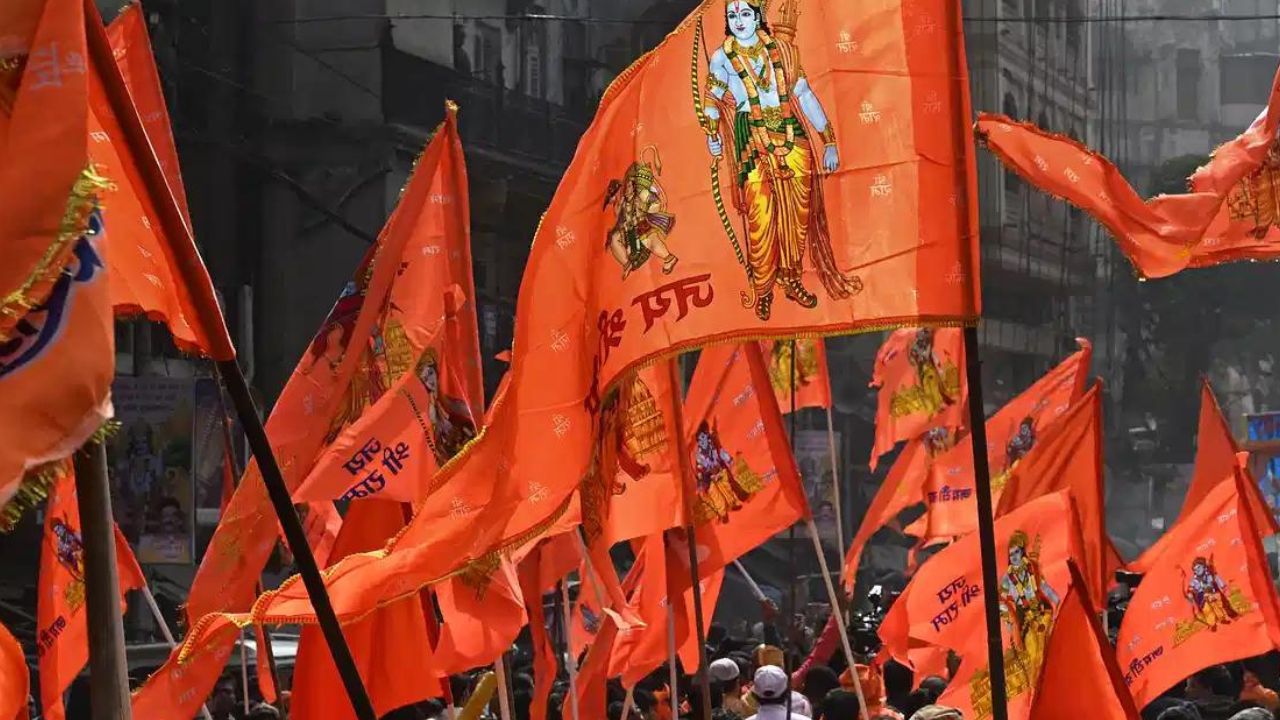
    The prime minister began the year by inaugurating a grand temple to the Hindu deity Ram, built on the site of a centuries-old mosque razed by Hindu zealots decades earlier.

    Construction of the temple fulfilled a long-standing demand of Hindu activists and was widely celebrated by Hindu voters, whatever their caste group.

    Modi’s rise also coincided with the declining fortunes of caste-based political parties that had dominated politics for decades in Uttar Pradesh, India’s most populous state with more people than Nigeria and its most important electoral battleground.

    Many in the state accused these parties of directing welfare programmes and other benefits of political power to their own caste groups, a situation they say changed when Modi came to power and made them available for all disadvantaged voters.

    “The soles of my slippers wore off as I ran around trying to get a card for free rations,” homemaker Munni Devi, 62, told AFP at a BJP campaign rally over the din of frenzied drum beats and music.

    “But Modi gave me one immediately after coming to power,” she told AFP.

    ‘Demons of those contradictions’

    The BJP has been able to unite a broad array of caste groups into a single bloc of support, but caste discrimination remains a fact of life both in politics and society at large.

    Despite Modi’s own low-caste origins, the senior ranks of his ministry, party and civil service remain overwhelmingly dominated by upper-caste functionaries.

    “Our lawmaker is from our caste and from the BJP,” said farmer Patiram Kushwaha, a Modi supporter reconsidering his allegiance.

    “He cannot do anything for us because those sitting at the top don’t listen to him.”

    More than two dozen opposition parties in this year’s poll have campaigned on a joint pledge to address the structural causes of discrimination by staging a caste-based national census and redirecting resources to the most disadvantaged.

    Analysts nonetheless expect Modi to triumph convincingly over the opposition bloc, but Neelanjan Sircar, of the Centre for Policy Research think-tank in New Delhi, said the BJP faced a monumental challenge in holding its coalition together over the long term.

    “This balancing act of keeping together groups which don’t really get along with each other is extremely tough in the long run,” he told AFP.

    “At some point, you have to face the demons of those contradictions.”

    sai/gle/sco

    © Agence France-Presse
  • Bahrain calls for peace conference at Gaza-focused Arab League

    Bahrain calls for peace conference at Gaza-focused Arab League

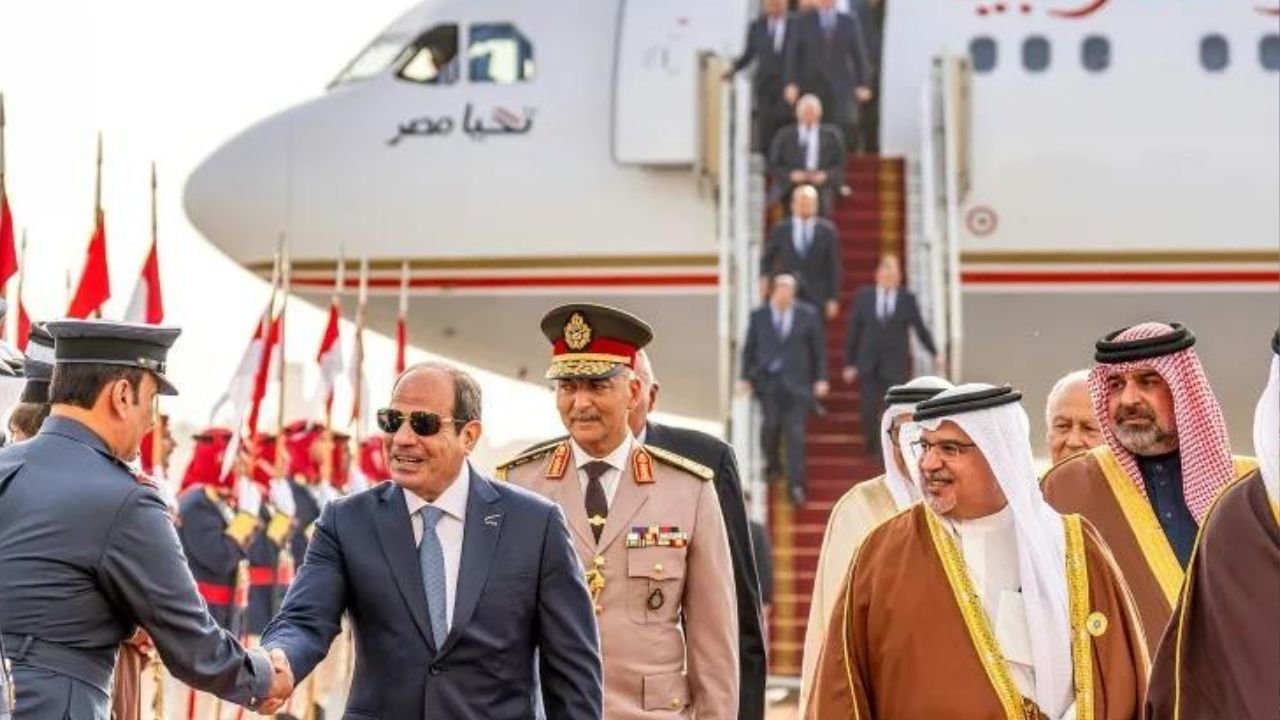
    Host Bahrain called for a Middle East peace conference Thursday at the start of an Arab League summit dominated by Israel’s war on Gaza, which has been raging in the Gaza Strip without a ceasefire in sight.

    King Hamad bin Isa Al Khalifa was addressing fellow heads of state and government at the 22-strong grouping in the capital Manama, more than seven months into a conflict that has convulsed the region.

    “(We) call for an international conference for peace in the Middle East, in addition to supporting full recognition of the State of Palestine and accepting its membership in the United Nations,” said the king.

    It is the first time the bloc has come together since an extraordinary summit in Riyadh, the capital of neighbouring Saudi Arabia, in November that also involved leaders from the 57-member Organisation of Islamic Cooperation, based in the Saudi city of Jeddah.

    At that meeting, leaders condemned Israeli forces’ “barbaric” actions in Gaza but declined to approve punitive economic and political steps against the country, despite growing anger in the region and widespread support for the Palestinian cause.

    That could change this time around as backing builds globally for a two-state solution long advocated by Arab countries, said Kuwaiti analyst Zafer al-Ajmi.

    Western public opinion has become “more inclined to support the Palestinians and lift the injustice inflicted on them” since Israel’s creation more than 70 years ago, Ajmi said.

    Meanwhile, Israel has failed to achieve its war objectives including destroying Hamas and is now mired in fighting, he said.

    Change of ‘tone’

    Israeli Prime Minister Benjamin Netanyahu on Wednesday said nearly 500,000 people had been evacuated from the southern Gaza city of Rafah, where he is insisting on going after remaining Hamas despite objections from US President Joe Biden.

    He also disputed claims that Israeli operations there would trigger a “humanitarian catastrophe”, though much of the international community remains squarely opposed to a Rafah invasion.

    Against that backdrop, and with mediator Qatar describing talks on a truce and hostage release deal as close to a stalemate, “the tone of Arab countries has changed”, Ajmi said, raising the possibility that the final declaration out of Thursday’s summit could include “binding” measures.

    The message would be especially strong coming from a summit held in Bahrain, one of two Gulf countries along with the United Arab Emirates to normalise ties with Israel in 2020 under the US-brokered Abraham Accords.

    Beyond the Israel-Hamas war, Arab leaders are also expected to discuss conflicts in Sudan, Libya, Yemen and Syria, whose President Bashar al-Assad is due to attend after returning to the Arab fold last year.

    Attacks by Yemen’s Huthis on Red Sea shipping, which the rebels say are intended as a show of solidarity with Palestinians, could also be on the agenda, said Bahraini analyst and journalist Mahmeed al-Mahmeed.

    Bahrain joined a maritime coalition organised by Washington to counter those attacks.

    “These vital sea lanes are not only important for countries in the region, but also for the global economy,” Mahmeed said.

  • India opposition criticises PM Modi for anti-Muslim comments

    India opposition criticises PM Modi for anti-Muslim comments

    India’s main opposition party on Thursday condemned Prime Minister Narendra Modi for anti-Muslim comments in election campaign speeches that have heightened concerns over sectarian tensions in the world’s biggest democracy.

    Modi remains popular across much of India and his Hindu-nationalist Bharatiya Janata Party (BJP) is widely expected to win this general election when it concludes in early June.

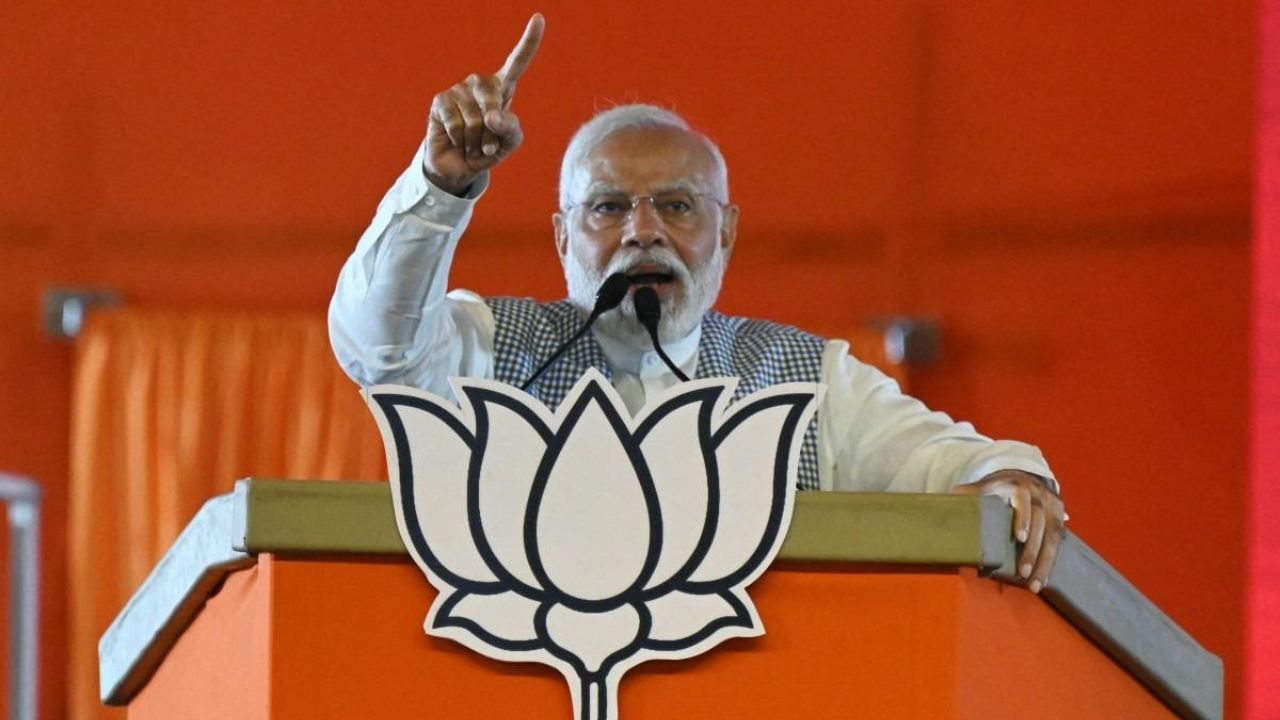
    Since voting began last month, the 73-year-old premier has stepped up his rhetoric targeting India’s main religious divide in a bid to rally voters.

    He has referred in campaign rallies to Muslims as “infiltrators” and claimed the main opposition Congress party would redistribute the nation’s wealth to Muslims if it won.

    P. Chidambaram, a former Indian finance minister and senior lawmaker for Congress, said Thursday that Modi was playing “his usual game of dividing Hindus and Muslims”.

    “The world is watching and analysing the Indian prime minister’s statements, and they do not bring glory to India,” he added.

    After Modi suggested that a former prime minister from Congress had planned for a separate “Muslim budget”, the party’s general secretary Jairam Ramesh condemned his statements as “nonsensical”.

    “This is typical Modi bombast and bogusness,” he said Wednesday on social media platform X.

    Since he swept to power a decade ago, Modi has sought to align India’s politics more closely with its majority faith, in defiance of the country’s officially secular constitution.

    His cultivated image as a champion of Hinduism has made him roundly popular but has left many among the country’s 200-million-plus Muslim minority uneasy about their status and anxious about their futures.

    Modi on Tuesday denied stoking religious tensions in a television interview with broadcaster News18.

    “The day I start talking about Hindu-Muslim (divisions) will be the day I will lose my ability to lead a public life,” Modi said.

    ‘Vote jihad’

    But at a campaign rally the following day, Modi accused Congress of planning to commit “vote jihad”, an implied suggestion that his opponents were rallying Muslims to vote against him.

    India’s poll code prohibits sectarian campaigning and opposition parties lodged a complaint about an earlier Modi speech last month with the election commission, which has yet to announce any sanctions against the premier.

    Other members of Modi’s party have been accused of matching his rhetoric and unfairly targeting Muslims during the election.

    A BJP candidate in Hyderabad, Madhavi Latha, was widely condemned on social media Monday for demanding veiled Muslim women remove their facial coverings at a polling station so she could personally check that their appearances matched their identity documents.

    Police in the southern city announced an investigation into the incident.

  • Five Israeli soldiers killed by their own tanks in Gaza

    Five Israeli soldiers killed by their own tanks in Gaza

    Israel said Thursday that five of its troops were killed by friendly fire in Gaza, as a rift emerged inside the war cabinet on how the Palestinian territory should be ruled in future.

    The army said that the five soldiers were killed when two Israeli tanks mistakenly fired shells at the building they were in during operations in the northern Jabalia refugee camp on Wednesday.

    “Five soldiers of the 202nd Paratrooper Battalion were killed last night in a mass casualty incident as a result of fire by our forces,” the military said, adding that seven other troops were wounded.

    AFP reporters, witnesses and medics said Thursday that Israeli warplanes again targeted areas across Gaza overnight, including in Gaza City and its southern Zeitun area, Jabalia and the Nuseirat refugee camp.

    The military’s main focus has been Rafah near the Egyptian border, where Prime Minister Benjamin Netanyahu has ordered an offensive in defiance of US warnings that more than a million civilians sheltering there could be caught in the crossfire.

    Netanyahu on Wednesday argued that “we have to do what we have to do” and insisted that mass evacuations there had averted a much-feared “humanitarian catastrophe”.

    Washington — long Israel’s main political, diplomatic and military supporter — has repeatedly urged its ally to take greater steps to protect and aid civilians, and to make a post-war plan for Gaza to avoid being mired in a long counter-insurgency campaign.