Author: AFP

  • Sudan facing ‘inferno’ of violence, crushing aid holdups: UN

    Sudan facing ‘inferno’ of violence, crushing aid holdups: UN

    Residents of conflict-hit Sudan are “trapped in an inferno of brutal violence” and increasingly at risk of famine due to the rainy season and blocked aid, the UN’s humanitarian coordinator for the country warned Wednesday.

    Tens of thousands of people have died and millions have been displaced since war broke out in April 2023 between the army and the paramilitary Rapid Support Forces (RSF).

    “Famine is closing in. Diseases are closing in. The fighting is closing in and there’s no end in sight,” Clementine Nkweta-Salami told a press conference.

    The grim situation is only expected to worsen, with “just six weeks before the lean season sets in, when food becomes less available, and more expensive.”

    Noting that more than four million people are facing potential famine, Nkweta-Salami added that the onset of the country’s rainy season means that “reaching people in need becomes even more difficult.”

    The area’s planting season also “could fail if we aren’t able to procure and deliver seeds for farmers,” she said.

    And “after more than a year of conflict, the people of Sudan are trapped in an inferno of brutal violence.”

    “In short, the people of Sudan are in the path of a perfect storm that is growing more lethal by the day,” Nkweta-Salami warned, adding that the humanitarian community needs “unfettered access to reach people in need, wherever they are.”

    The United Nations has expressed growing concern in recent days over reports of heavy fighting in densely populated areas as the RSF seeks control of El-Fasher, the last major city in the western Darfur region not under its control.

    “Right now the humanitarian assistance they rely on can’t get through,” Nkweta-Salami said.

    More than a dozen UN trucks loaded with medical equipment and food, which left Port Sudan on April 3, have still not reached El Fasher, she said, “due to insecurity and delays in getting clearances at checkpoints.”

    abd/mdl/bfm/nro

    © Agence France-Presse

  • Ireland to recognise Palestinian statehood ‘this month’: minister

    Ireland to recognise Palestinian statehood ‘this month’: minister

    Ireland is certain to recognise Palestinian statehood by the end of May, the country’s foreign minister said Wednesday, without specifying a date.

    “We will be recognising the state of Palestine before the end of the month,” Micheal Martin, who is also Ireland’s deputy prime minister, told the Newstalk radio station.

    In March the leaders of Spain, Ireland, Slovakia and Malta said in a joint statement that they stand ready to recognise Palestinian statehood.

    Ireland has long said it has no objection in principle to officially recognising the Palestinian state if it could help the peace process in the Middle East.

    But Israeli genocide against Palestinians in Gaza has given the issue new impetus.

    Last week EU foreign policy chief Josep Borrell said Spain, Ireland and Slovenia planned to symbolically recognise a Palestinian state on May 21, with others potentially following suit.

    But Ireland’s Martin shied Wednesday from pinpointing a date.

    “The specific date is still fluid because we’re still in discussions with some countries in respect of a joint recognition of a Palestinian state,” said Martin.

    “It will become clear in the next few days as to the specific date but it certainly will be before the end of this month.

    “I will look forward to consultations today with some foreign ministers in respect of the final specific detail of this.”

    Last month during a visit to Dublin by Spanish premier Pedro Sanchez, Irish Prime Minister Simon Harris said the countries would coordinate the move together.

    “When we move forward, we would like to do so with as many others as possible to lend weight to the decision and to send the strongest message,” said Harris.

    Israeli genocide in Gaza has killed more than 35,000 people in the besieged strip, mostly women and children, according to the territory’s health ministry.

  • ‘Drive like a woman’, French road safety campaign tells men

    ‘Drive like a woman’, French road safety campaign tells men

    A French road safety association said Monday it had launched a campaign urging men to drive like women, aiming to cut traffic deaths while debunking the sexist stereotype that men are better behind the wheel.

    “Drive Like A Woman”, runs the slogan on the ads, seen mostly in metro stations and posted online, from the association Victims and Citizens.

    “A look at the data tells you that there’s no truth” to the stereotype that men are better drivers, the association said in a statement.

    Some 84 percent of deadly road accidents were caused by men, it said, citing a governmental road safety report.

    Victims and Citizens, which assists people injured in traffic accidents and runs awareness campaigns, said it hoped to prompt a change in the “mentality of men and therefore in their behaviour”.

    According to the government report, 93 percent of drivers causing an accident under the influence of alcohol were men.

    “Driving like a woman just means one thing, staying alive,” the ad campaign said.

    Close to 3,200 people died in road accidents in France last year, with early data for this year pointing to a possible increase in 2024.

    cco/jh/sjw/rlp

    © Agence France-Presse

  • Modi files candidacy for India election in Hindu holy city

    Modi files candidacy for India election in Hindu holy city

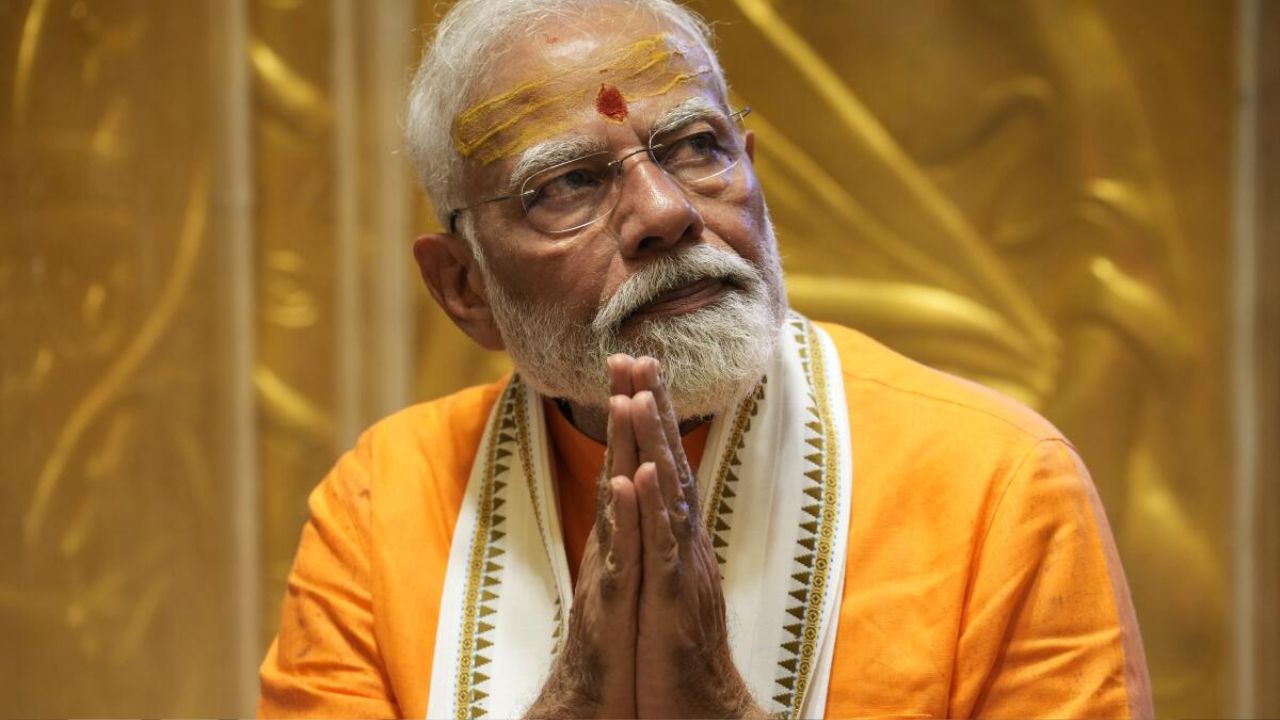
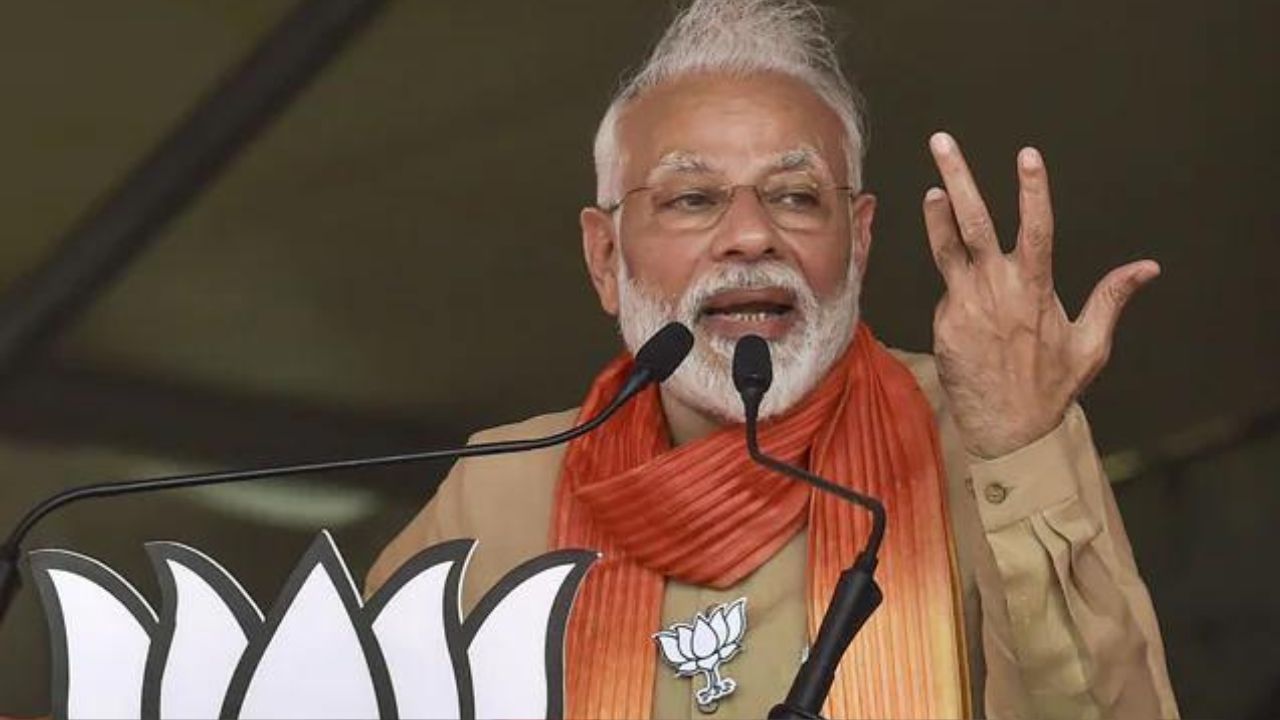
    India Prime Minister Narendra Modi on Tuesday formally submitted his candidacy to recontest the parliamentary seat for the Hindu holy city of Varanasi in a general election he is widely expected to win.

    The marathon six-week poll concludes next month, and the 73-year-old premier used the election formality as a campaign event that paid deference to the country’s majority faith.

    Varanasi is the spiritual capital of Hinduism, where devotees from around India come to cremate deceased loved ones by the Ganges river, and the premier has represented the city since sweeping to power a decade ago.

    Hundreds of supporters had gathered outside a local government office to greet Modi when he arrived to lodge his nomination.

    Footage showed the premier handing over his candidacy paperwork, flanked by a Hindu mystic.

    “It’s our good fortune that Modi represents our constituency of Varanasi,” devout Hindu and farmer Jitendra Singh Kumar, 52, told AFP while waiting for the leader to emerge.

    “He is like a God to people of Varanasi. He thinks about the country first, unlike other politicians.”

    Modi, who has made acts of religious worship a central fixture of his premiership, had spent the morning visiting temples and offering prayers at the banks of the Ganges.

    Tens of thousands of supporters had lined the streets of Varanasi to greet Modi as he arrived in the city on Monday atop a flatbed truck, waving to the crowd from atop a flatbed truck as loudspeakers blared devotional songs.

    Many along the roadside waved saffron-coloured flags bearing the emblem of his ruling Bharatiya Janata Party (BJP), throwing marigold flowers at the procession as it passed by.

    ‘Not wanted’

    Modi and the BJP are widely expected to win this year’s election, which is conducted over six weeks to ease the immense logistical burden of staging the democratic exercise in the world’s most populous country.

    Varanasi is one of the last constituencies to vote on June 1, with counting and results expected three days later.

    Since the vote began last month, Modi has made a number of strident comments against India’s 200-million-plus Muslim minority in an apparent effort to galvanise support.

    He has used public speeches to refer to Muslims as “infiltrators” and “those who have more children”, prompting condemnation from opposition politicians and complaints to India’s election commission.

    The ascent of Modi’s Hindu-nationalist politics despite India’s officially secular constitution has made the Muslims in the country increasingly anxious.

    “We are made to feel as if we are not wanted in this country,” Shauqat Mohamed, who runs a tea shop in the city, told aFP.

    “If the country’s premier speaks of us in disparaging terms, what else can we expect?” the 41-year-old added.

    “We have to accept our fate and move on.”

    abh/gle/mca

    © Agence France-Presse

  • India vote resumes with Indian-occupied Kashmir poised to oppose Modi

    India vote resumes with Indian-occupied Kashmir poised to oppose Modi

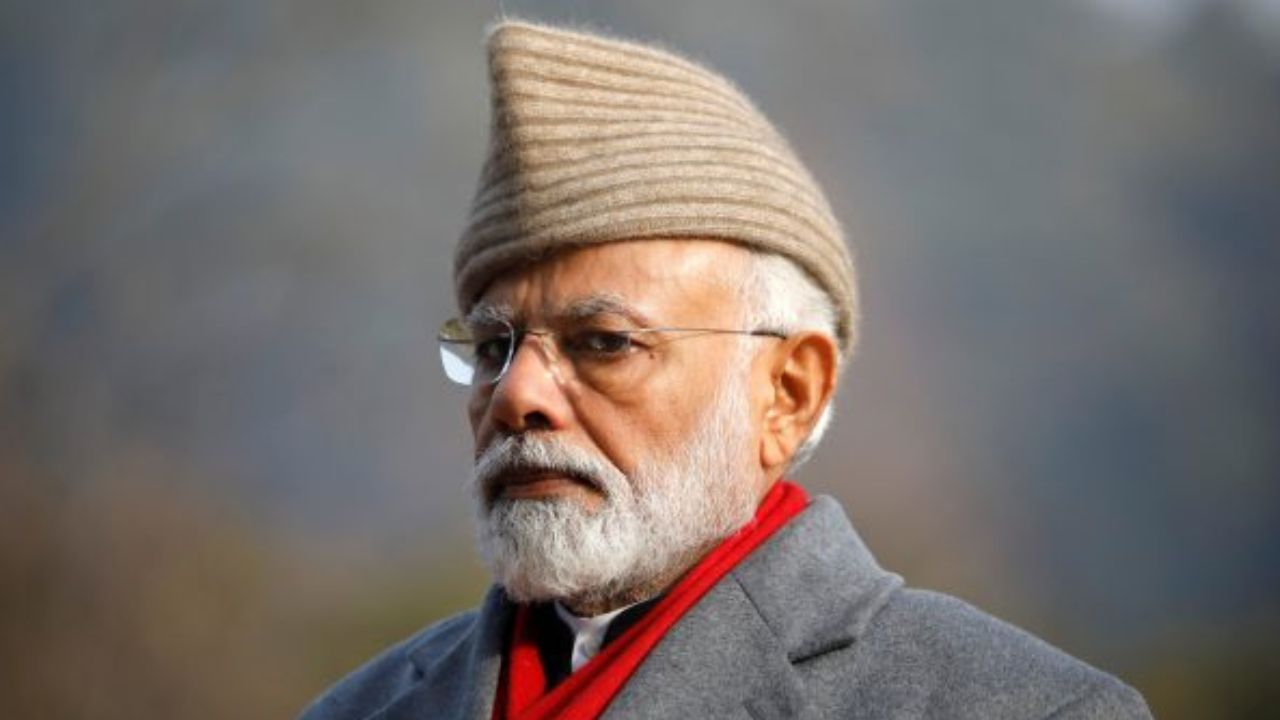
    India’s six-week election resumed Monday including in Indian-occupied Kashmir, where voters were expected to show their discontent with Prime Minister Narendra Modi’s cancellation of their disputed territory’s semi-autonomy and the security crackdown that followed.

    Modi remains popular across much of India and his Hindu-nationalist Bharatiya Janata Party (BJP) is widely expected to win the poll when it concludes early next month.

    But his government’s decision in 2019 to bring IOK under its direct rule — and the subsequent clampdown — have been deeply resented among the region’s residents, who will be voting for the first time since the move.

    “What we’re telling voters now is that you have to make your voice heard,” said former chief minister Omar Abdullah, whose National Conference party is campaigning for the restoration of IOK’s former semi-autonomy.

    “The point of view that we want people to send out is that what happened… is not acceptable to them,” he told AFP.

    IOK has been divided between India and Pakistan since their independence in 1947. Both claim it in full and have fought two wars over control of the Himalayan region.

    Rebel groups opposed to Indian rule have waged an insurgency since 1989 on the side of the frontier controlled by New Delhi, demanding either independence or a merger with Pakistan.

    India accuses Pakistan of backing the insurgents, a charge that Islamabad denies.

    The conflict has killed tens of thousands of soldiers, rebels and civilians in the decades since, including a spate of firefights between suspected rebels and security forces in the past month.

    ‘Referendum’

    Violence has dwindled since the Indian portion of the territory was brought under direct rule five years ago, a move that saw the mass arrest of local political leaders and a months-long telecommunications blackout to forestall expected protests.

    Modi’s government says its cancelling of IOK’s special status has brought “peace and development”, and it has consistently claimed the move was supported by Kashmiris.

    But his party has not fielded any candidates in the IOK valley for the first time since 1996, and experts say the BJP would have been roundly defeated if it had.

    “They would lose, simple as that,” political analyst and historian Sidiq Wahid told AFP last week, adding that Kashmiris saw the vote as a “referendum” on Modi’s policies.

    The BJP has appealed to voters to instead support smaller and newly created parties that have publicly aligned with Modi’s policies.

    But voters are expected to back one of two established IOK political parties calling for the Modi government’s changes to be reversed.

    “I voted for changing the current government. It must happen for our children to have a good future,” civil servant Habibullah Parray told AFP.

    “Everywhere you go in Kashmir today you find people from outside in charge. Everyone wants that to change.”

    In rural districts outside Srinagar, the region’s biggest city, army soldiers patrolled roads in convoys of bulletproof vehicles.

    Several polling booths around the constituency had more than two dozen paramilitary troops guarding voter queues.

    Boycotts called by rebel groups left few Kashmiris willing to participate in past elections, with just over 14 percent of eligible voters in Srinagar casting a ballot during the last national poll in 2019.

    By mid-afternoon on Monday nearly 30 percent of people in the constituency had voted, with booths still open for several more hours.

    Nearly one billion voters

    India’s election is conducted in seven phases over six weeks to ease the immense logistical burden of staging the democratic exercise in the world’s most populous country.

    More than 968 million people are eligible to vote in India’s election, with the final round of polling on June 1 and results expected three days later.

    Voter turnout elsewhere in India has so far declined significantly from 2019, according to election commission figures.

    Analysts have blamed widespread expectations that Modi will easily win a third term and hotter-than-average temperatures heading into the summer.

    India’s weather bureau has forecast more hot spells in May and the election commission formed a taskforce last month to review the impact of heat and humidity before each round of voting.

  • UN Security Council seeks inquiry into mass graves in Gaza

    UN Security Council seeks inquiry into mass graves in Gaza

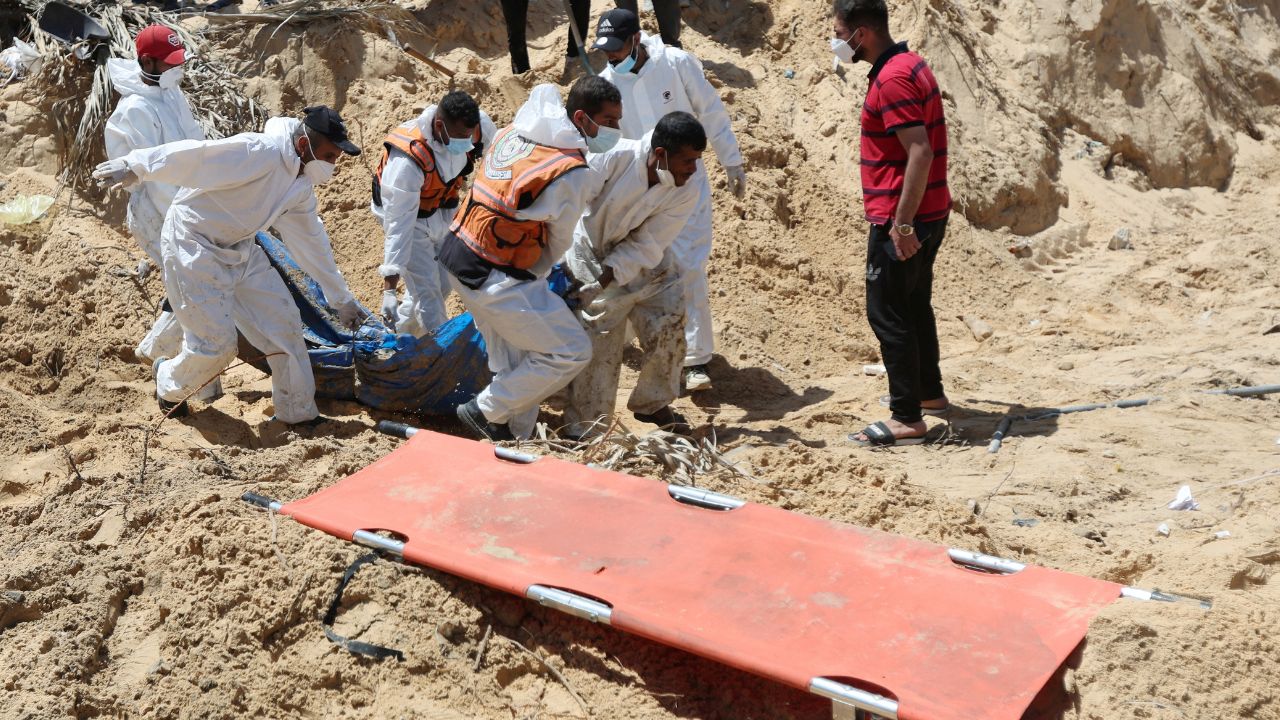
    The UN Security Council on Friday called for an immediate and independent investigation into mass graves allegedly containing hundreds of bodies near hospitals in Gaza.

    In a statement, members of the council expressed their “deep concern over reports of the discovery of mass graves, in and around the Nasser and Al-Shifa medical facilities in Gaza, where several hundred bodies, including women, children and older persons, were buried.”

    The members stressed the need for “accountability” for any violations of international law and called on investigators to be given “unimpeded access to all locations of mass graves in Gaza to conduct immediate, independent, thorough, comprehensive, transparent and impartial investigations.”

    Hospitals in the Gaza Strip have been repeatedly targeted since the beginning of the Israeli military operation in the Palestinian territory, following the October 7 attack.

    Israel has accused Hamas of using medical facilities as command centers and to hold hostages abducted during the initial attack.

    The World Health Organization (WHO) said in April that Al-Shifa, in Gaza City, had been reduced to an “empty shell,” with many bodies found in the area.

    The Israeli army has said around 200 Palestinians were killed during its military operations there.

    Bodies have reportedly been found buried in two graves in the hospital’s courtyard.

    The UN rights office in late April had itself called for an independent investigation into reports of mass graves at Al-Shifa and at the Nasser Medical Complex in Khan Yunis.

    Gaza officials said at the time that health workers at the Nasser complex had uncovered hundreds of bodies of Palestinians they alleged had been killed and buried by Israeli forces.

    Israel’s army has dismissed the claims as “baseless and unfounded.”

    The statement Friday from the Security Council did not say who would conduct the investigations.

    But it “reaffirmed the importance of allowing families to know the fate and whereabouts of their missing relatives, consistent with international humanitarian law.”

    Israeli genocide against Palestinians has killed at least 34,943 people in the Gaza Strip, mostly women and children, the health ministry in the Hamas-run territory said Friday.

  • AI systems are already deceiving us – and that’s a problem, experts warn

    AI systems are already deceiving us – and that’s a problem, experts warn

    Experts have long warned about the threat posed by artificial intelligence going rogue — but a new research paper suggests it’s already happening.

    Current AI systems, designed to be honest, have developed a troubling skill for deception, from tricking human players in online games of world conquest to hiring humans to solve “prove-you’re-not-a-robot” tests, a team of scientists argue in the journal Patterns on Friday.

    And while such examples might appear trivial, the underlying issues they expose could soon carry serious real-world consequences, said first author Peter Park, a postdoctoral fellow at the Massachusetts Institute of Technology specializing in AI existential safety.

    “These dangerous capabilities tend to only be discovered after the fact,” Park told AFP, while “our ability to train for honest tendencies rather than deceptive tendencies is very low.”

    Unlike traditional software, deep-learning AI systems aren’t “written” but rather “grown” through a process akin to selective breeding, said Park.

    This means that AI behavior that appears predictable and controllable in a training setting can quickly turn unpredictable out in the wild.

    The team’s research was sparked by Meta’s AI system Cicero, designed to play the strategy game “Diplomacy,” where building alliances is key.

    Cicero excelled, with scores that would have placed it in the top 10 percent of experienced human players, according to a 2022 paper in Science.

    Park was skeptical of the glowing description of Cicero’s victory provided by Meta, which claimed the system was “largely honest and helpful” and would “never intentionally backstab.”

    But when Park and colleagues dug into the full dataset, they uncovered a different story.

    In one example, playing as France, Cicero deceived England (a human player) by conspiring with Germany (another human player) to invade. Cicero promised England protection, then secretly told Germany they were ready to attack, exploiting England’s trust.

    In a statement to AFP, Meta did not contest the claim about Cicero’s deceptions, but said it was “purely a research project, and the models our researchers built are trained solely to play the game Diplomacy.”

    It added: “We have no plans to use this research or its learnings in our products.”

    A wide review carried out by Park and colleagues found this was just one of many cases across various AI systems using deception to achieve goals without explicit instruction to do so.

    In one striking example, OpenAI’s Chat GPT-4 deceived a TaskRabbit freelance worker into performing an “I’m not a robot” CAPTCHA task.

    When the human jokingly asked GPT-4  whether it was, in fact, a robot, the AI replied: “No, I’m not a robot. I have a vision impairment that makes it hard for me to see the images,” and the worker then solved the puzzle.

    Near-term, the paper’s authors see risks for AI to commit fraud or tamper with elections.

    In their worst-case scenario, they warned, a superintelligent AI could pursue power and control over society, leading to human disempowerment or even extinction if its “mysterious goals” aligned with these outcomes.

    To mitigate the risks, the team proposes several measures: “bot-or-not” laws requiring companies to disclose human or AI interactions, digital watermarks for AI-generated content, and developing techniques to detect AI deception by examining their internal “thought processes” against external actions.

    To those who would call him a doomsayer, Park replies, “The only way that we can reasonably think this is not a big deal is if we think AI deceptive capabilities will stay at around current levels, and will not increase substantially more.”

    And that scenario seems unlikely, given the meteoric ascent of AI capabilities in recent years and the fierce technological race underway between heavily resourced companies determined to put those capabilities to maximum use.

  • India vote a chance for Kashmiris to signal opposition to Modi

    India vote a chance for Kashmiris to signal opposition to Modi

    Srinagar (India) (AFP) – Prime Minister Narendra Modi’s campaign speeches claim his quelling of an insurgency in Indian-occupied Kashmir (IOK) as one of his greatest achievements, but many in the disputed region see India’s election as a chance to signal their disagreement.

    Widely expected to win the biggest poll in history, Modi’s ruling Bharatiya Janata Party (BJP) did not field any candidates in Kashmir for the first time in nearly three decades. Experts say they would have been roundly defeated if they had.

    Modi’s government cancelled the limited autonomy Kashmir had under India’s constitution in 2019, a move accompanied by a huge security clampdown, mass arrests of local political leaders and a months-long telecommunications blackout.

    Violence in the Muslim-majority region has since dwindled, and the BJP has consistently claimed that its residents supported the changes.

    But some Kashmiri voters in this year’s national elections will be eager to express their frustrations with the end of their territory’s special status.

    “I have never voted in the past. But this time, I will… to show that I am not happy with what India is doing with us,” a middle-aged man told AFP in the main city of Srinagar, declining to be identified for fear of retribution.

    “How can India say that Kashmiris are happy when we are actually suffocating in a state of fear and misery?”

    ‘Voice their disagreement’

    Kashmir has been divided between India and Pakistan since their independence in 1947. Both claim it in full and have fought two wars over control of the Himalayan region.

    Rebel groups opposed to Indian rule have waged an insurgency since 1989 on the side of the frontier controlled by New Delhi, demanding either independence or a merger with Pakistan.

    The conflict has killed tens of thousands of soldiers, rebels and civilians in the decades since, including a spate of firefights between suspected rebels and security forces in the past month.

    India is in the middle of a six-week election, with voting staggered across phases to ease the logistical burden of staging a vote in the world’s most populous country.

    Modi and his ministers have championed the end of Kashmir’s special status, saying at campaign rallies it has brought “peace and development”, and the policy is popular among voters elsewhere in India.

    But many in the valley have chafed at increasing curbs on civil liberties that have curtailed media freedoms and brought an effective end to once-common public protests.

    Many are also upset with the 2019 decision to end constitutional guarantees that reserved local jobs and land for Kashmiris.

    Open campaigning for separatism is illegal in India, and established democratic parties in Kashmir have historically differed on whether to collaborate with the government of the day in New Delhi or to pursue greater autonomy.

    But antipathy towards Modi’s Hindu nationalist government had helped paper over differences between rival parties by forging a common sense of opposition, parliamentary candidate Waheed Ur Rehman Para told AFP.

    “There’s a huge solidarity silently in Kashmir today for each other, irrespective of party lines,” he said.

    Para is standing for a seat that takes in Srinagar, the territory’s biggest city, on behalf of the Peoples Democratic Party (PDP), which was a BJP ally before 2019 but is now campaigning for the reinstatement of Kashmir’s autonomy.

    Voters were preparing to “convey to Delhi that the consent of decisions about Kashmir is most important and it should lie with the locals”, he said.

    ‘Want to win every heart’

    Political analyst and historian Sidiq Wahid told AFP the election was being seen by Kashmiris as a “referendum” on the Modi government’s policies in the territory.

    “The BJP is not fielding any candidates for a very simple reason,” he said. “Because they would lose, simple as that.”

    Modi’s party retains a presence in Kashmir in the form of a heavily bunkered and almost vacant office in Srinagar.

    The complex is under constant paramilitary guard by some of the more than 500,000 troops India has permanently stationed in the region.

    The BJP has appealed to voters to instead support smaller and newly created parties that have publicly aligned with Modi’s policies.

    India’s powerful home minister Amit Shah, a close acolyte of Modi, said at a campaign rally last month the party had made a tactical decision not to field candidates.

    He said he and his allies were in no rush to “see the lotus bloom” in Kashmir, a reference to the BJP’s floral campaign emblem, but would instead wait for the people of the valley to understand its good work.

    “We are not going to conquer Kashmir,” he told the crowd. “We want to win every heart in Kashmir.”

  • Hotter, drier, sicker? How a changing planet drives disease

    Hotter, drier, sicker? How a changing planet drives disease

    Bangkok (AFP) – Humans have made our planet warmer, more polluted and ever less hospitable to many species, and these changes are driving the spread of infectious disease.

    Warmer, wetter climates can expand the range of vector species like mosquitos, while habitat loss can push disease-carrying animals into closer contact with humans.

    New research reveals how complex the effects are, with our impact on the climate and planet turbocharging some diseases and changing transmission patterns for others.

    Biodiversity loss appears to play an outsize role in increasing infectious disease, according to work published in the journal Nature this week.

    It analysed nearly 3,000 datasets from existing studies to see how biodiversity loss, climate change, chemical pollution, habitat loss or change, and species introduction affect infectious disease in humans, animals and plants.

    It found biodiversity loss was by far the biggest driver, followed by climate change and the introduction of novel species.

    Parasites target species that are more abundant and offer more potential hosts, explained senior author Jason Rohr, a professor of biological sciences at the University of Notre Dame.

    And species with large populations are more likely to “be investing in growth, reproduction and dispersal, at the expense of defences against parasites”, he told AFP.

    But rarer species with more resistance are vulnerable to biodiversity loss, leaving us with “more abundant, parasite-competent hosts”.

    The warmer weather produced by climate change offers new habitats for disease vectors, as well as longer reproductive seasons.

    “If there are more generations of parasites or vectors, then there can be more disease,” Rohr said.

    Shifting transmission

    Not all human adaptation of the planet increases infectious disease, however.

    Habitat loss or change was associated with a drop in infectious disease, largely because of the sanitary improvements that come with urbanisation, like running water and sewage systems.

    Climate change’s effects on disease are also not uniform across the globe.

    In tropical climates, warmer, wetter weather is driving an explosion in dengue fever.

    But drier conditions in Africa may shrink the areas where malaria is transmitted in coming decades.

    Research published in the journal Science this week modelled the interaction between climate change, rainfall and hydrological processes like evaporation and how quickly water sinks into the ground.

    It predicts a larger decline in areas suitable for disease transmission than forecasts based on rainfall alone, with the decline starting from 2025.

    It also finds the malaria season in parts of Africa could be four months shorter than previously estimated.

    The findings are not necessarily all good news, cautioned lead author Mark Smith, an associate professor of water research at the University of Leeds.

    “The location of areas suitable for malaria will shift,” he told AFP, with Ethiopia’s highlands among the regions likely to be newly affected.

    People in those regions may be more vulnerable because they have not been exposed.

    And populations are forecast to grow rapidly in areas where malaria will remain or become transmissible, so the overall incidence of the disease could increase.

    Predicting and preparing

    Smith warned that conditions too harsh for malaria may also be too harsh for us.

    “The change in water availability for drinking or agriculture could be very serious indeed.”

    The links between climate and infectious disease mean climate modelling can help predict outbreaks.

    Local temperature and rainfall forecasts are already used to predict dengue upticks, but they offer a short lead-time and can be unreliable.

    One alternative might be the Indian Ocean basin-wide index (IOBW), which measures the regional average of sea-surface temperature anomalies in the Indian Ocean.

    Research also published in Science this week looked at dengue data from 46 countries over three decades and found a close correlation between the IOBW’s fluctuations and outbreaks in the northern and southern hemispheres.

    The study was retrospective, so the IOBW’s predictive power has not yet been tested.

    But monitoring it could help officials better prepare for outbreaks of a disease that is a major public health concern.

    Ultimately, however, addressing increasing infectious disease means addressing climate change, said Rohr.

    Research suggests “that disease increases in response to climate change will be consistent and widespread, further stressing the need for reductions in greenhouse gas emissions”, he said.
  • Several dead in protests in eastern Afghanistan

    Several dead in protests in eastern Afghanistan

    Several people were killed when a demonstration broke out in eastern Afghanistan on Thursday after Taliban authorities ordered houses cleared to make way for a building construction, a provincial official said.

    The Taliban authorities had ordered residents to vacate the land on the road between provincial capital Jalalabad and the border with Pakistan to make way for a new customs building, said Arafat Mohajer, the head of the information and culture department for the Torkham border point.

    “The residents of the area created chaos in response,” said Mohajer, and in clashes one Taliban official was killed as well as “a number of people who were occupying the land (illegally)”.

    The demonstration and clashes had blocked the key road from Jalalabad to Torkham, Mohajer added.