Author: AFP

  • American parenting vlogger sentenced to prison for child abuse

    American parenting vlogger sentenced to prison for child abuse

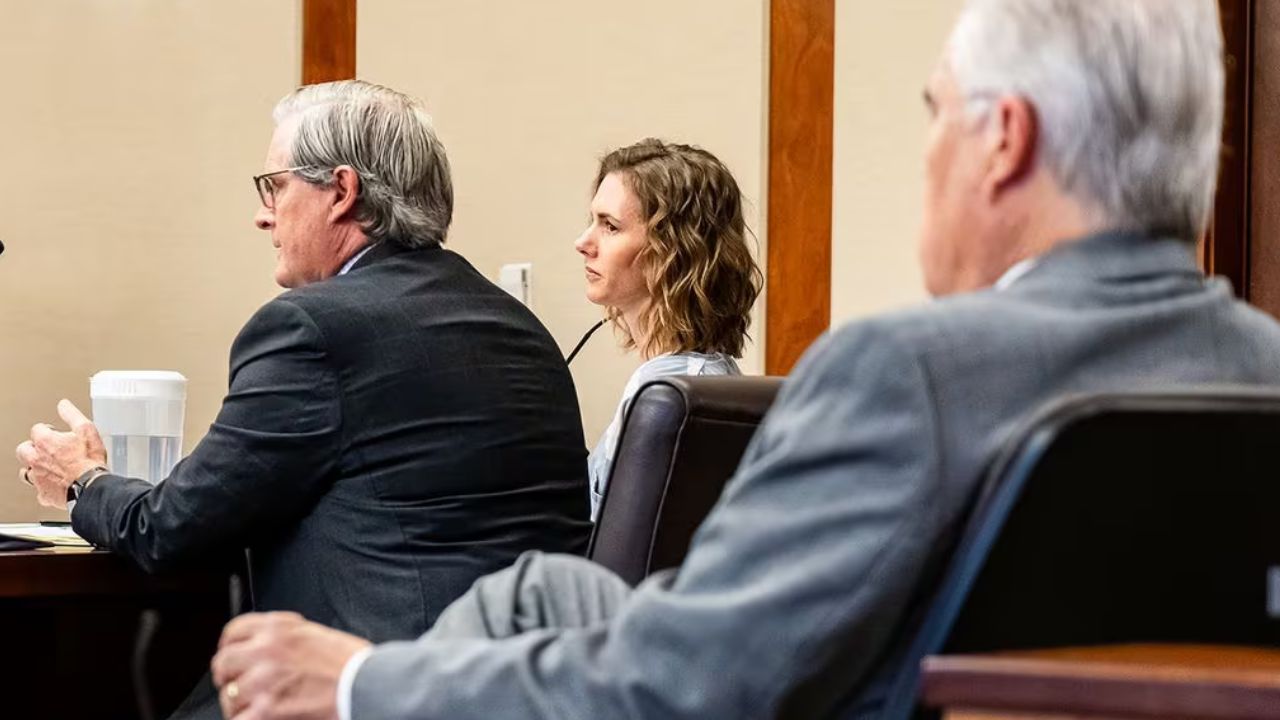
    A Utah mother-of-six who doled out parenting advice on a popular YouTube channel has been sentenced to prison for abusing her children, holding two of them in conditions prosecutors likened to concentration camps.

    Ruby Franke, 42, pleaded guilty in December to four counts of aggravated child abuse and was sentenced on Tuesday to one-to-15 years in prison on each charge.

    Franke’s business partner Jodi Hildebrandt, 54, whom she described as her “mentor,” received the same sentence.

    Beginning in 2015, Franke ran a since-deleted YouTube channel called “8 Passengers” which provided parenting advice. She would later feature on a YouTube channel run by Hildebrandt after separating from her husband.

    Utah prosecutor Eric Clarke said Franke and Hildebrandt held two of the children, then aged nine and 11, in a “concentration camp-like setting.”

    “The children were regularly denied food, water, beds to sleep in, and virtually all forms of entertainment,” Clarke said. “They were isolated from others, and were hidden when people came to visit the house.

    “They were also forced to do manual labor outdoors in the extreme summer heat, at times without shoes or socks,” the prosecutor said. “Both children had extensive physical injuries from the abuse that required hospitalization.”
    Clarke also said the children were emotionally abused, “to the extent that each believed, to some degree, that they deserved what was being done to them.

    Eventually, the older one “had the courage” to run away and ask a neighbor to call the police, Clarke said, adding “Heaven knows how much longer they could have survived in that situation.”

    Franke apologized for her actions at her sentencing hearing before Judge John Walton.

    “I was led to believe that this world was an evil place filled with cops who control, hospitals that injure, government agencies that brainwash, church leaders who lie and lust, husbands who refuse to protect and children who need abuse,” she said.

    She said her paranoia “culminated into criminal activity for which I stand before you today ready to take accountability.”

    Franke and Hildebrandt will serve a minimum of four years in prison but their exact prison terms will be decided by the Utah Board of Pardons and Parole.


  • Two People To Be Publicly Executed In Eastern Afghanistan

    Two People To Be Publicly Executed In Eastern Afghanistan

    Two people were due to be publicly executed in a football stadium in eastern Afghanistan on Thursday, provincial officials said, in the third and fourth death penalties carried out since the Taliban returned to power.

    The Ghazni province information and culture department said in a public notice that the execution was a qisas punishment — equating to “an eye-for-an-eye” — but did not initially provide details on the prisoners or their crimes.

    Although public executions were common during the Taliban’s first rule from 1996 to 2001, they have only carried out two others since surging back to power in August 2021. Both were for the crime of murder.

    There have been regular public floggings for other crimes, however, including theft, adultery and alcohol consumption.

    Taliban Supreme Leader Hibatullah Akhundzada last year ordered judges to fully implement all aspects of sharia — including qisas punishment.

    The last execution was carried out in June 2023, when a convicted murderer was shot dead in the grounds of a mosque in Laghman province in front of some 2,000 people.

  • Over 95 Percent Of Sudanese Cannot Afford A Meal A Day: WFP

    Over 95 Percent Of Sudanese Cannot Afford A Meal A Day: WFP

    Ten months into a war that has sent Sudan to the “verge of collapse”, the vast majority of its people are going hungry, the UN’s World Food Programme said Wednesday.

    “At this point, less than five percent of Sudanese can afford a square meal a day,” the WFP’s Sudan country director, Eddie Rowe, told reporters in Brussels.

    Since last April, Sudan has been gripped by fighting between the regular army and the paramilitary Rapid Support Forces, which has killed thousands and created what the United Nations calls “the world’s largest displacement crisis”.

    A combined 10.7 million people have been uprooted by the current war and previous conflicts, according to the UN.

    Nine million remain displaced within Sudan, where Rowe said a “lethal cocktail of continued conflict, stalled harvests and rampant and consistent displacement risks plunging millions more into a catastrophic humanitarian disaster.”

    Across Sudan, which the WFP says was already facing one of the world’s worst food crises before the war, 18 million people are facing acute food insecurity.

    Of those, Rowe said “close to five million are on the precipice of catastrophe” — enduring one of the worst emergency classifications the WFP uses, second only to famine.

    Aid groups have for months warned that as a result of hampered humanitarian access and severe underfunding, the spectre of famine looms over Sudan.

    But the same obstacles to aid delivery inhibit the ability to determine the extent of the catastrophe.

    According to Michael Dunford, WFP’s Eastern Africa regional director, there is a major issue in “the availability of the data to confirm one way or the other whether or not the thresholds (required to declare a famine) have been met”.

    With WFP only able to reach 10 percent of those in need, “there are large tracts of the country that we simply cannot access,” Dunford told reporters.

    Sudan’s most fertile regions could have helped ward off famine, if not for the fighting encroaching into the country’s agricultural heartlands.

    In December, a paramilitary advance brought the war to Al-Jazira state, just south of the capital Khartoum, which was set to produce the bulk of Sudan’s grains for the season.

    “Thousands of smallholder farms and even the large-scale schemes have been deserted, because people are on the move running away from the conflict,” Rowe said.

    “As we approach the hunger season,” he said, the crisis is only set to “further deteriorate”.

    The lean season, roughly from April to July, usually sees food prices run high as stocks dwindle ahead of the next harvest.

    With markets across the country already empty and an ongoing communications blackout hampering all transactions, Dunford says the future is bleak.

    “This is a country on the verge of collapse,” he said.

  • ChatGPT cranks out gibberish for hours

    ChatGPT cranks out gibberish for hours

    ChatGPT spewed nonsensical answers to user’s queries for hours Tuesday into Wednesday before eventually returning to its apparent senses.

    OpenAI did not explain what went awry with its generative artificial intelligence (AI) tool, considered the one to beat in the technology sector.

    “We are investigating reports of unexpected responses from ChatGPT,” OpenAI said on its status website when the software seemed to go wacky on Tuesday afternoon.

    ChatGPT was giving “peculiar” responses, generating nonexistent words, incomplete sentences and general gobbledygook, developers using the tool said in a discussion forum on the OpenAI website.

    “It gives me meaningless words followed by a bizarre list,” one developer lamented in the forum.

    “It feels as if my GPT is haunted or something has been compromised, either on my end or at OpenAI’s (end).”

    It wasn’t until more than 16 hours had passed that OpenAI updated the page with a message that ChatGPT was operating normally.

    The San Francisco based technology firm replied to an AFP query by directing it to the ChatGPT status page.

    OpenAI recently concluded a deal with investors that reportedly valued the start-up at $80 billion or more, after a roller-coaster year for the tech firm.

    The agreement, reported by the New York Times but not yet confirmed by OpenAI, would mean the value of the company — a world leader in generative AI — would have nearly tripled in under 10 months.

    OpenAI led a revolution in AI when it placed its ChatGPT program online in late 2022.

    The immediate success of the interface sparked tremendous interest in the cutting-edge technology, capable of producing text, sounds and images upon demand.

    OpenAI — which is also the maker of image-generating DALL-E — recently released a new tool named “Sora,” which can create realistic videos of up to a minute long via simple user prompts.

    Microsoft has invested some $13 billion in OpenAI, using the startup’s technology in Bing and other services.

    Microsoft is locked in fierce competition with Google to roll out new AI-infused tools, to the point that the US Federal Trade Commission in January launched an investigation into the enormous investments by Microsoft, Google and Amazon in such specialized start-ups.

  • Food watchdog lodges complaint over Nestle mineral water ‘fraud’

    Food watchdog lodges complaint over Nestle mineral water ‘fraud’

    Paris, France – Consumer watchdog Foodwatch said it was filing a legal complaint Wednesday against food giant Nestle and another group over them allegedly fraudulently treating water for their top mineral water brands.

    A government probe reported by media last month said about 30 percent of mineral water sold in France had undergone purification treatment only meant to be used on tap water.

    Foodwatch said it was lodging its complaint with a Paris court against Nestle Waters, behind brands such as Perrier and Vittel, and the Sources Alma group, which also owns several water labels.

    “This is a massive fraud for which Nestle Waters, the Sources Alma group and the French government must answer,” the European watchdog said.

    “Nobody, not even a multinational like Nestle, is above the law,” Foodwatch spokeswoman Ingrid Kragl said.

    The NGO claimed Nestle Waters and Sources Alma had “illegally processed their bottled waters and then sold them without informing consumers”.

    French law, based on a European Union directive, forbids such purification of mineral water, which is supposed to be of naturally high quality before bottling.

    French prosecutors last month said they had opened an investigation into suspected fraud by Nestle Waters after a complaint by France’s ARS health regulator.

    They spoke after Le Monde and Radio France reported that a government investigation had concluded in 2022 that “almost 30 percent of commercial brands undergo non-compliant treatments”.

    Nestle Waters said it put some top brands, such as Perrier and Vittel, through ultraviolet light and active carbon filters “to guarantee food safety”, and had informed French authorities about this in 2021.

    A government source told AFP that authorities had found “no health risk” linked to the bottled water.

    Foodwatch said it had also written to the European Commission, denouncing “the complacency of France, which… should have alerted European authorities and the other member states importing these waters”.

    max/spb/ah/rl

    © Agence France-Presse

  • Global operation smashes ‘most harmful cyber crime group’

    Global operation smashes ‘most harmful cyber crime group’

    LONDON: An international operation led by UK and US law enforcement has severely disrupted “the world’s most harmful cyber crime group”, the Russian-linked ransomware specialist LockBit, officials announced Tuesday.

    LockBit and its affiliates have targeted governments, major companies, schools and hospitals, causing billions of dollars of damage and extracting tens of millions in ransoms from victims.

    Britain’s National Crime Agency (NCA), working with the Federal Bureau of Investigation, Europol and agencies from nine other countries in Operation Cronos, said it had infiltrated LockBit’s network and taken control of its services.

    “We have hacked the hackers, we have taken control of their infrastructure, seized their source code, and obtained keys that will help victims decrypt their systems,” NCA director general Graeme Biggar told reporters in London.

    LockBit’s website — selling services that allow people to organise cyber attacks and hold data until a ransom is paid appears — was taken over on Monday evening.

    A message appeared on the site stating that it was “now under control of law enforcement”.

    “As of today LockBit is effectively redundant, LockBit has been locked out,” Biggar said.

    The US Justice Department (DOJ) said the agencies had seized control of “numerous public-facing websites used by LockBit to connect to the organization’s infrastructure” and taken control of servers used by LockBit administrators.

    The NCA added that it had obtained more than 1,000 decryption keys and will be contacting UK-based victims in the coming days and weeks to offer support and help them recover encrypted data.

    Biggar said the network had been behind 25 percent of all cyber attacks in the past year.

    Lockbit has targeted over 2,000 victims and received more than $120 million in ransom payments since it formed four years ago, according to the (DOJ).

    Those targeted have included Britain’s Royal Mail, US aircraft manufacturer Boeing, and a Canadian children’s hospital.

    In January 2023, US law enforcers shut down the Hive ransomware operation which had extorted some $100 million from more than 1,500 victims worldwide.

    Following that action, Lockbit had been seen as the biggest current threat.

    Hive and Lockbit are part of what cybersecurity experts call a “ransomware as a service” style, or RaaS — a business that leases its software and methods to others to use in extorting money.

  • UN experts urge probe of Israeli abuses of Palestinian women, girls

    UN experts urge probe of Israeli abuses of Palestinian women, girls

    Geneva, Switzerland – UN rights experts called Monday for an independent probe into alleged Israeli abuses against Palestinian women and girls, including killings, rapes and sexual assault.

    The statement by the seven independent UN experts prompted an angry reaction from Israel, which rejected the “despicable and unfounded claims”.

    The experts voiced alarm at “credible allegations of egregious human rights violations” targeting women and girls in the Gaza Strip and the West Bank.

    They cited reports of women and girls reportedly being “arbitrarily executed in Gaza, often together with family members, including their children”.

    “We are shocked by reports of the deliberate targeting and extrajudicial killing of Palestinian women and children in places where they sought refuge, or while fleeing,” they said.

    The independent experts, who are appointed by the UN Human Rights Council but who do not represent the United Nations, also pointed to the “arbitrary detention of hundreds of Palestinian women and girls”, including human rights defenders, journalists and humanitarians.

    They said many of those detained had reported been subjected to “inhuman and degrading treatment”, including severe beatings and being denied menstrual pads, food and medicine.

    They voiced particular alarm at reports of “multiple forms of sexual assault”, including reports of rapes of at least two female detainees, while others were “stripped naked and searched by male Israeli army officers”.

    Israel’s assault on Gaza has killed more than 29,000 people, mostly women and children, according to the health ministry.

    The experts called for an “independent, impartial, prompt, thorough and effective investigation” into the allegations, urging Israel to cooperate.

    The Israeli mission in Geneva dismissed the statement saying the experts were “motivated by their hatred for Israel, not by the truth”.

    It said Israeli authorities had received no complaints, but stood ready to investigate any “concrete claims of misconduct by its security forces when presented with credible allegations and evidence”.

  • UN Security Council vote on Gaza faces threat of US veto

    UN Security Council vote on Gaza faces threat of US veto

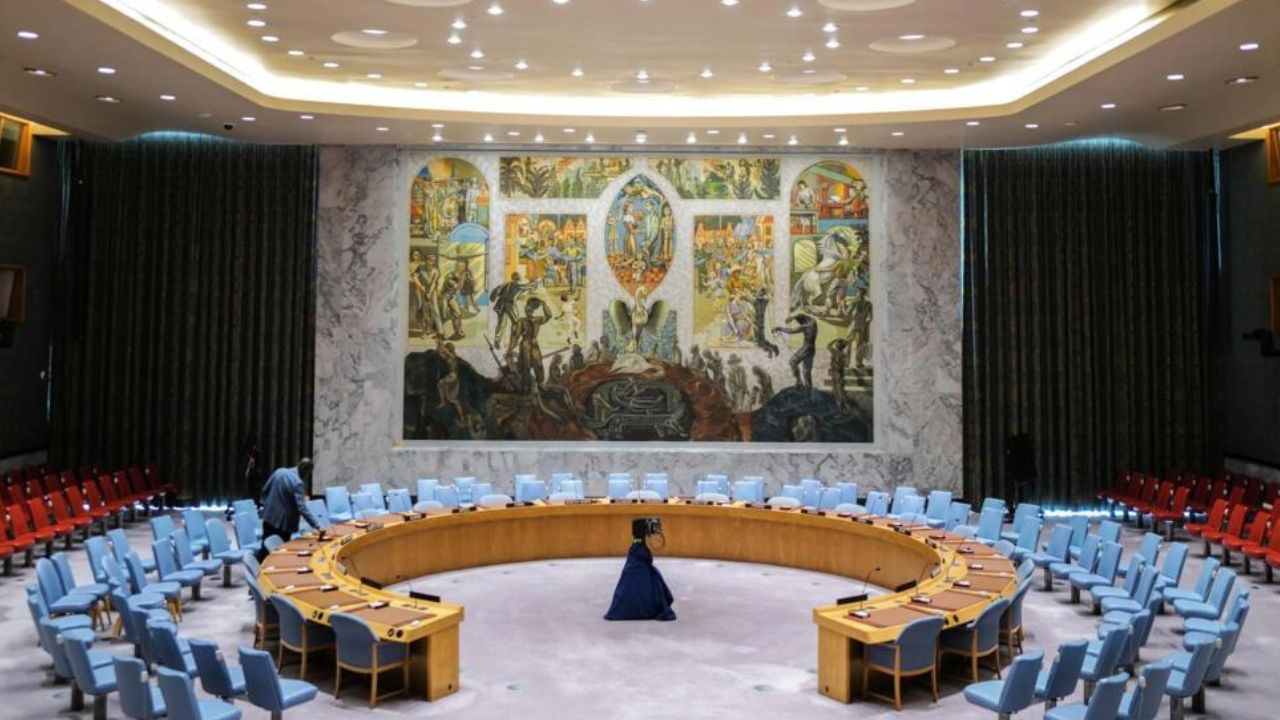
    United Nations (United States) (AFP) – The UN Security Council will vote on a new draft resolution Tuesday calling for an immediate ceasefire in Gaza, despite threat of a third US veto on such a text.

    The document, prepared by Algeria, “demands an immediate humanitarian ceasefire that must be respected by all parties.”

    The vote comes as Israel prepares to move into the southern Gaza Strip city of Rafah, where some 1.4 million people have fled, as part of its mission to destroy “Hamas”.

    However it is facing increased pressure to hold off, including from its closest ally the United States.

    The draft resolution opposes the “forced displacement of the Palestinian civilian population.”

    It additionally demands the release of all Hamas hostages.

    Similarly to other previous drafts spurned by the United States and Israel, the new text does not condemn Hamas’s October 7 assault.

    That attack left about 1,160 people dead in southern Israel, mostly civilians, according to an AFP tally of official Israeli figures.

    Israel’s retaliatory campaign has killed more than 29,000 people in Gaza, mostly women and children, according to the latest count by the health ministry.

    The United States warned over the weekend that Algeria’s text was not acceptable, threatening to veto it.

    “We don’t believe that this Council product will help the situation on the ground,” US deputy ambassador to the UN Robert Wood said Monday.

    “If this resolution does come to a vote, it will not go forward.”

    According to Wood, the passage of such a ceasefire resolution would endanger ongoing delicate diplomatic negotiations which could see the release of hostages from Gaza.

    The United States instead began circulating an alternate draft, seen by AFP Monday.

    While that text does include the word “ceasefire” — which the United States has previously avoided, vetoing two drafts in October and December which used the term — it does not call for the end of hostilities to happen immediately.

    ‘Moral obligation’

    Echoing recent comments by President Joe Biden, the US draft supports a “temporary ceasefire in Gaza as soon as practicable, based on the formula of all hostages being released.”

    It also mentions concern for Rafah, stating that “a major ground offensive should not proceed under current circumstances.”

    There is no “deadline” for a vote on the American draft, a senior US official said Monday, adding there would be no “rush.”

    But even if there is no hurry, the US text “as it is… cannot pass,” one diplomatic source said, citing several issues around the phrasing of “ceasefire” and the risk that any text introduced to the 15-member body by the United States might face a veto from Russia.

    In any case, the mere fact the United States has introduced a counter-resolution is likely to “make Israel nervous,” Richard Gowan, an analyst at the International Crisis Group, told AFP.

    “The US is finally using the Security Council as a platform to signal the limits of its patience with the Israeli campaign,” Gowan said.

    Despite the specter of a US veto, Palestinian Ambassador to the UN Riyad Mansour had insisted on a vote days ago, saying that the Arab Group had been “more than generous to give our colleagues additional time.”

    According to Gowan, “We are now grinding towards a US veto that nobody really wants, but nobody can avoid,” noting that the vote will fall within a few days of the second anniversary of Russia’s invasion of Ukraine.

    “I am sure that Russia will use the opportunity (of a US veto) to accuse the US of having double standards when it comes to dealing with civilian suffering in Ukraine and the Middle East,” Gowan said.

    Russian UN Ambassador Vasily Nebenzya said it is “sad that we cannot come (up) with a ceasefire… and that only one delegation is preventing that.”

    Chinese representative Jun Zhang said the Security Council has a “moral obligation” to take action “to stop the killings,” pointing out that the United States may veto such a move but meanwhile they are “always calling for protection of human rights.”

  • Palestinians call out Israel for ‘apartheid’ at UN top court

    Palestinians call out Israel for ‘apartheid’ at UN top court

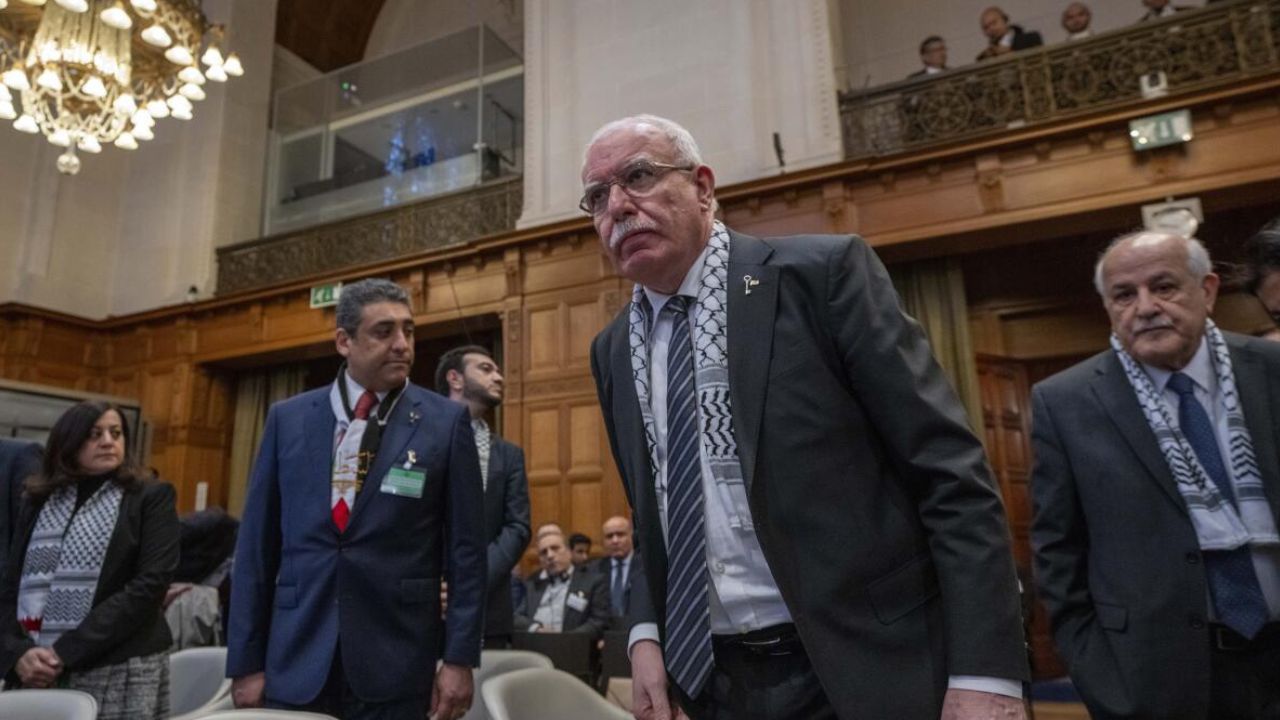
    The Hague (AFP) – Palestinian foreign minister Riyad Al-Maliki told the UN’s top court Monday his people were suffering “colonialism and apartheid” under the Israelis, urging judges to order an immediate and unconditional end to the occupation.

    “The Palestinians have endured colonialism and apartheid… There are those who are enraged by these words. They should be enraged by the reality we are suffering,” Al-Maliki told the International Court of Justice (ICJ).

    The ICJ is holding hearings all week on the legal implications of Israel’s occupation since 1967, with an unprecedented 52 countries, including the United States and Russia, expected to give evidence.

    Speaking in the Peace Palace in The Hague, where the ICJ sits, the minister urged judges to declare the occupation illegal and order it to stop “immediately, totally and unconditionally.”

    “Justice delayed is justice denied and the Palestinian people have been denied justice for far too long,” he said.

    “It is time to put an end to the double standards that have kept our people captive for far too long.”

    ‘Impunity and inaction’

    In December 2022, the UN General Assembly asked the ICJ for a non-binding “advisory opinion” on the “legal consequences arising from the policies and practices of Israel in the Occupied Palestinian Territory, including East Jerusalem.”

    While any ICJ opinion would be non-binding, it comes amid mounting international legal pressure on Israel over the intense attacks on Gaza.

    The hearings are separate from a high-profile case brought by South Africa alleging that Israel is committing genocidal acts during the current Gaza offensive.

    Al-Maliki charged however that “the Genocide underway in Gaza is a result of decades of impunity and inaction.”

    “Ending Israel’s impunity is a moral, political and legal imperative,” he said.

    In January, the ICJ ruled in that case that Israel must do everything in its power to prevent genocide and allow humanitarian aid into Gaza, stopping short of ordering a ceasefire.

    On Friday, it rejected South Africa’s bid to impose additional measures on Israel, but reiterated the need to carry out the ruling in full.

    ‘Prolonged occupation’

    The UN General Assembly asked the ICJ to consider two questions.

    Firstly, the court should examine the legal consequences of what the UN called “the ongoing violation by Israel of the right of the Palestinian people to self-determination”.

    This relates to the “prolonged occupation, settlement and annexation of the Palestinian territory occupied since 1967” and “measures aimed at altering the demographic composition, character and status of the Holy City of Jerusalem”.

    In June 1967, Israel crushed some of its Arab neighbours in a six-day war, seizing the West Bank including east Jerusalem from Jordan, the Golan Heights from Syria, and the Gaza Strip and Sinai Peninsula from Egypt.

    Israel then began to settle the 70,000 square kilometres (27,000 square miles) of seized Arab territory. The UN later declared the occupation of Palestinian territory illegal. Cairo regained Sinai under its 1979 peace deal with Israel.

    The ICJ has also been asked to look into the consequences of what it described as Israel’s “adoption of related discriminatory legislation and measures.”

    Secondly, the ICJ should advise on how Israel’s actions “affect the legal status of the occupation” and what are the consequences for the UN and other countries.

    The court will rule “urgently” on the affair, probably by the end of the year.

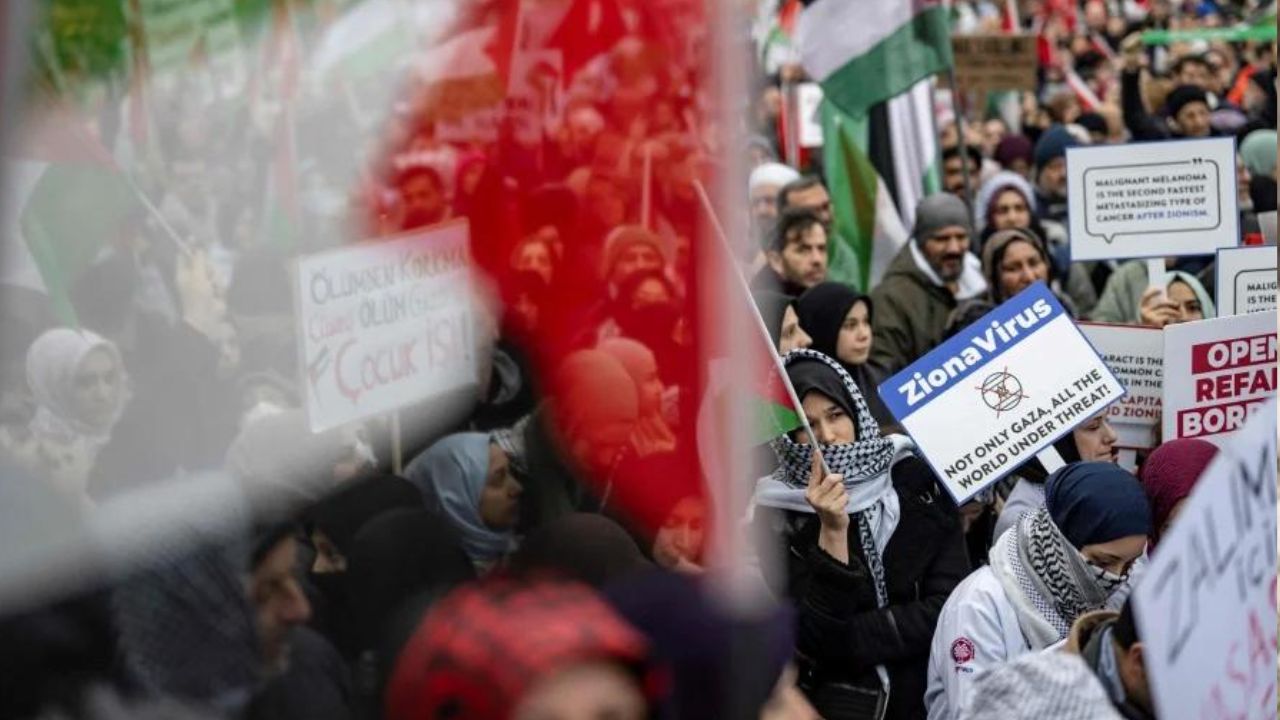
    Dozens of pro-Palestinian protesters demonstrated outside the court, waving flags and brandishing banners.

    “I really hope justice will prevail,” organiser Nadia Slimi told AFP.

    “I really hope all the combined efforts to pressure Israel, to demand a more humane policy, will finally lead to some steps to liberate the Palestinian people,” said the 27-year-old.

    ‘Despicable’

    The ICJ rules in disputes between states and its judgements are binding although it has little means to enforce them.

    However, in this case, the opinion it issues will be non-binding although most advisory opinions are in fact acted upon.

    Israel is not participating in the hearings and reacted angrily to the 2022 UN request, with Prime Minister Benjamin Netanyahu calling it “despicable” and “disgraceful”.

    Human Rights Watch (HRW) said that while advisory opinions are non-binding, “they can carry great moral and legal authority” and can eventually be inscribed in international law.

  • Navalny’s widow says ‘Putin killed my husband’

    Navalny’s widow says ‘Putin killed my husband’

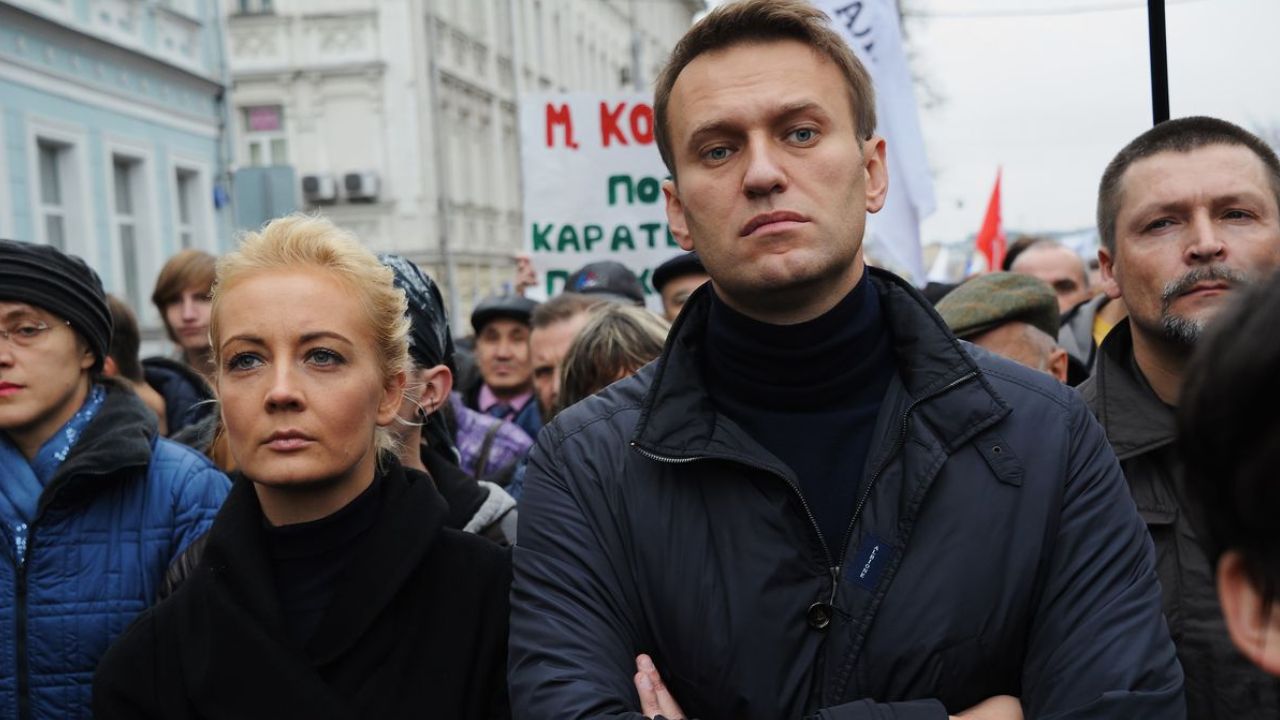
    Warsaw, Poland – Alexei Navalny’s widow said Monday that Russian President Vladimir Putin killed her husband, as she vowed to carry on his work, three days after he died in an Arctic prison.

    Holding back tears in a video address published Monday, Yulia Navalnaya said: “Three days ago, Vladimir Putin killed my husband, Alexei Navalny.”

    Prison authorities said Navalny died after losing consciousness following a walk in his prison colony in Kharp, 2,000 miles (1,200 kilometres) northeast of Moscow inside the Arctic circle.

    “Alexei died in a prison colony after three years of torment and torture,” Navalnaya said Monday.

    Navalnaya, who was by her husband’s side for more than a decade in his fight against Putin, vowed to continue his work.

    “The most important thing we can do for Alexei and for ourselves is to keep fighting, more desperately and more fiercely than before,” she said.

    “We need to seize every opportunity to fight against war, against corruption, against injustice, to fight for fair elections and the freedom of speech, to fight to take back our country.”

    She also vowed to uncover the people who she said had killed her husband.

    “We know exactly why Putin killed Alexei three days ago… We will definitely find out exactly who carried out this crime and how it was carried out. We will name names and show faces,” she said.

    The Kremlin said earlier on Monday that an investigation into Navalny’s death was ongoing and slammed Western governments that have said Putin carries responsibility for his death.

    Russian authorities have so far refused to hand over Navalny’s body to his mother and lawyer, enraging his supports who have said it was a move by the “killers” to “cover their tracks.”

    bur/yad

    © Agence France-Presse