Author: AFP

  • Netflix to stream WWE from 2025

    Netflix to stream WWE from 2025

    Netflix on Tuesday sealed a long-term broadcast deal with the WWE professional wrestling juggernaut, as the streaming giant pushes further into sporting events.

    Beginning in the United States in 2025, Netflix will become the exclusive new home of “Raw,” the WWE’s flagship program that has been broadcasting on television since 1993.

    The agreement will also see WWE shows and live events streamed across the globe as their rights become available.

    With an initial 10-year term for $5 billion, the deal has an option for Netflix to extend for an additional 10 years or opt-out after the initial five years.

    “This deal is transformative,” said Mark Shapiro, president of TKO, the parent company of the WWE.

    “It marries the can’t-miss WWE product with Netflix’s extraordinary global reach and locks in significant and predictable economics for many years,” he added.

    The three-hour show has helped launch the careers of Dwayne “The Rock” Johnson, “Stone Cold” Steve Austin and John Cena, among other stars.

    It is currently the most-watched show on the NBCUniversal-owned USA network in the United States.

    The WWE is a ratings blockbuster that owes much of its success to entrepreneur and promoter Vince McMahon.

    After buying what was then the World Wrestling Federation (WWF) from his father in 1982, he turned the second-rate league into an entertainment giant.

    Transformed into World Wrestling Entertainment in 2002, the league passed the billion-dollar mark in annual sales last year.

    The deal marks another move by streaming giants to build their portfolio of live sporting events.

    Netflix won the rights last month to a tennis duel between Rafael Nadal and Carlos Alcaraz and previously streamed a golf tournament featuring Formula One drivers and pros.

    Amazon announced last week that it would invest $115 million in Diamond Sports Group, the leading network of local sports channels in the United States, gaining regional rights for sports ranging from hockey to basketball.

    It had previously acquired certain rights to the English Premier League, the French Ligue 1, the French Open tennis tournament and the NFL American football league.

    Apple TV, for its part, owns global rights for US Major League Soccer.
  • More than half a million Afghans return from Pakistan

    More than half a million Afghans return from Pakistan

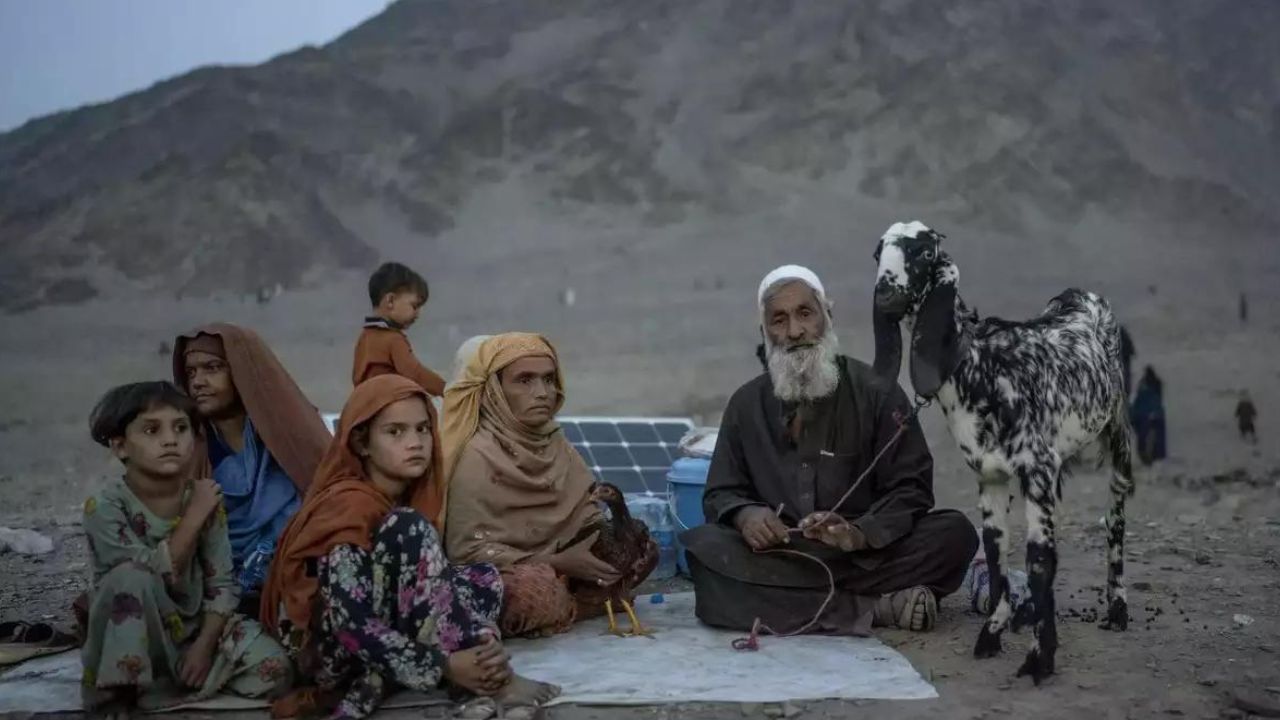
    More than 500,000 Afghans have fled Pakistan in the four months since Islamabad ordered undocumented migrants to leave or face arrest, the International Organization for Migration (IOM) said Monday.

    According to the latest figures reported by the UN migration agency, 500,200 Afghans left Pakistan between September 15, 2023 and January 13, 2024.

    Most rushed to the border in the days leading up to a November 1 exit deadline Islamabad set for the 1.7 million Afghans it said were living illegally in Pakistan, and as police opened dozens of holding centres.

    “Since the initial peak around November 1, the number of individuals crossing these official border points have consistently decreased but remains higher than pre-September 15th,” an IOM statement said.

    Pakistan defended the crackdown by pointing to security concerns in its regions bordering Afghanistan and pressure on its struggling economy.

    “Some Afghans forced to return may be at risk of persecution, arbitrary arrest and detention and/or torture or ill-treatment,” the UN’s Afghan mission said in a report on Monday.

    Meanwhile, the busiest border crossing between the two countries remained closed for the tenth day running in a dispute over document rules for commercial drivers.

    The row centres on demands for drivers from both sides to have visas and passports — documents many Afghans do not have — as Pakistan cracks down on cross-border movements.

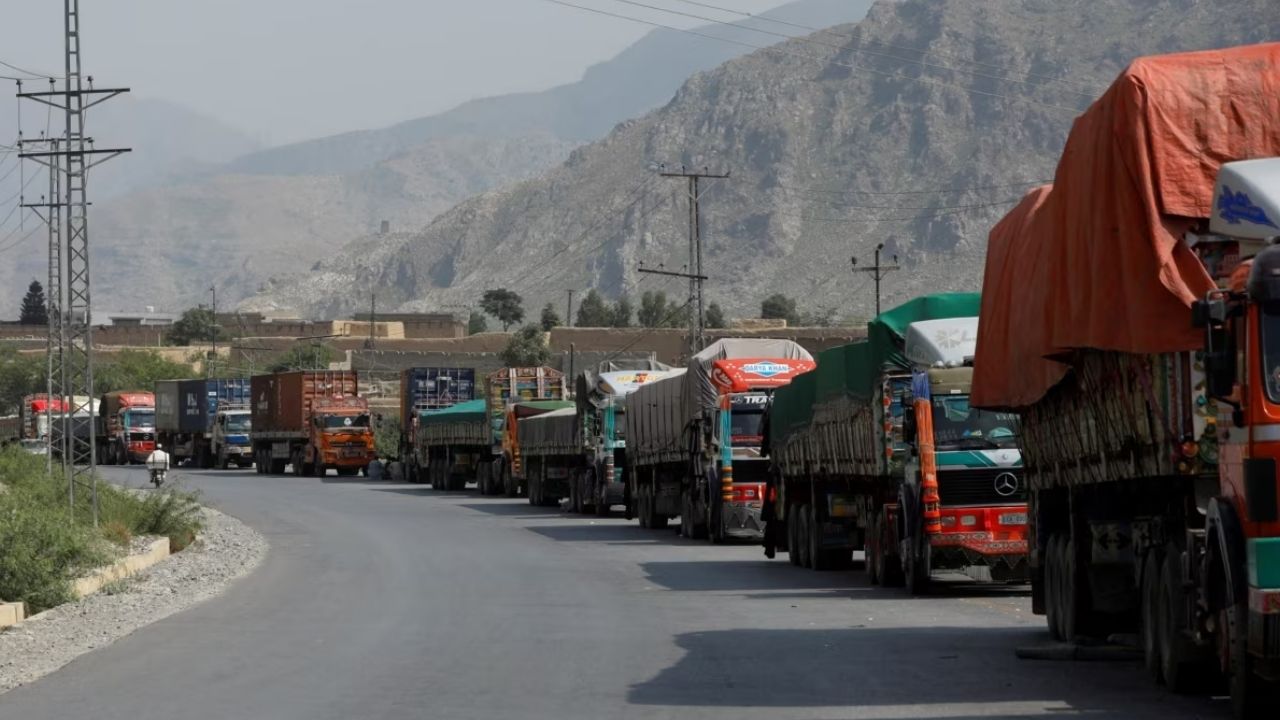
    More than 400 trucks were stranded on the Pakistan side of the Torkham crossing on Monday, according to a border official who asked not to be named.

    Relations between Pakistan and Afghanistan have grown increasingly fraught in recent months, with Islamabad accusing the Taliban government of failing to root out militants staging attacks in Pakistan from their soil.

    Kabul has always rejected the allegations.

    Millions of Afghans fleeing conflict have poured into Pakistan over the past four decades, including some 600,000 since the Taliban ousted the US-backed government and imposed its harsh interpretation of Islamic law.

    Some of the Afghans crossing into Afghanistan as a result of Islamabad’s eviction scheme were entering the country for the first time, having lived their whole lives in Pakistan.

    Upon arrival, migrants have received modest assistance from the government and NGOs in a country contending with one of the worst humanitarian crises in the world.

  • Pakistan-Afghan Border Crossing Reopens After Negotiations

    Pakistan-Afghan Border Crossing Reopens After Negotiations

    Pakistan and Afghanistan reopened a key trade crossing on Tuesday, officials on both sides said, after a row over travel papers as Islamabad cracks down on cross-border movements.

    The Torkham border closure since 12 January came after Islamabad imposed tighter controls requiring drivers from both sides to have visas and passports — documents many Afghans do not have.

    Ties between the two countries have increasingly frayed in recent months, with Islamabad accusing the Taliban government of failing to root out militants staging attacks in Pakistan from their soil.

    Kabul has always rejected the allegations.

    A Pakistan border official, who asked not to be named, confirmed the reopening to AFP after negotiations between Islamabad and Kabul, allowing hundreds of waiting trucks to cross.

    “It was agreed during the discussions that until 31 March, Pakistani and Afghan drivers can cross the border without a visa and passport,” he said.

    “However, starting on 1 April, both a visa and passport will be mandatory.”

    Afghan Torkham official Abdul Jabbar Hikmat confirmed lorries were allowed to cross again on Tuesday “without the need for passports and visas”.

    Pakistan’s casualties from armed groups hit a six-year high in 2023 with more than 1,500 civilians, security forces and militants killed, according to Islamabad’s Center for Research and Security Studies.

    The biggest militant threat to Pakistan is its domestic chapter of the Taliban movement, known as Tehreek-e-Taliban Pakistan (TTP).

    Pakistan officials said tighter restrictions on trade and on-off border closures are a pressure tactic to get the Taliban government to work with Pakistan on security.

    “Pakistan desires Afghanistan to adopt a tough stance against the TTP,” a senior provincial government official in Peshawar city who asked not to be named told AFP.

    “If they do not, the trade route will be intermittently closed for various reasons.”

    Islamabad has also recently forced out hundreds of thousands of undocumented Afghans living in Pakistan.

    More than 500,000 Afghans fled in the four months since Islamabad imposed a deadline ordering 1.7 million Afghans it says are living in the country illegally to leave or risk arrest and deportation.

    Millions of Afghans escaping conflict poured into Pakistan in past decades, including around 600,000 since the Taliban ousted the US-backed government and imposed its harsh interpretation of Islamic law.

    Some of the Afghans crossing into Afghanistan as a result of Islamabad’s eviction scheme were entering the country for the first time, having lived their whole lives in Pakistan.

    Upon arrival, migrants have received only modest assistance from the government and NGOs in a country contending with one of the worst humanitarian crises in the world.

  • Gaza activists urge voters to write ‘ceasefire’ on US primary ballots

    Gaza activists urge voters to write ‘ceasefire’ on US primary ballots

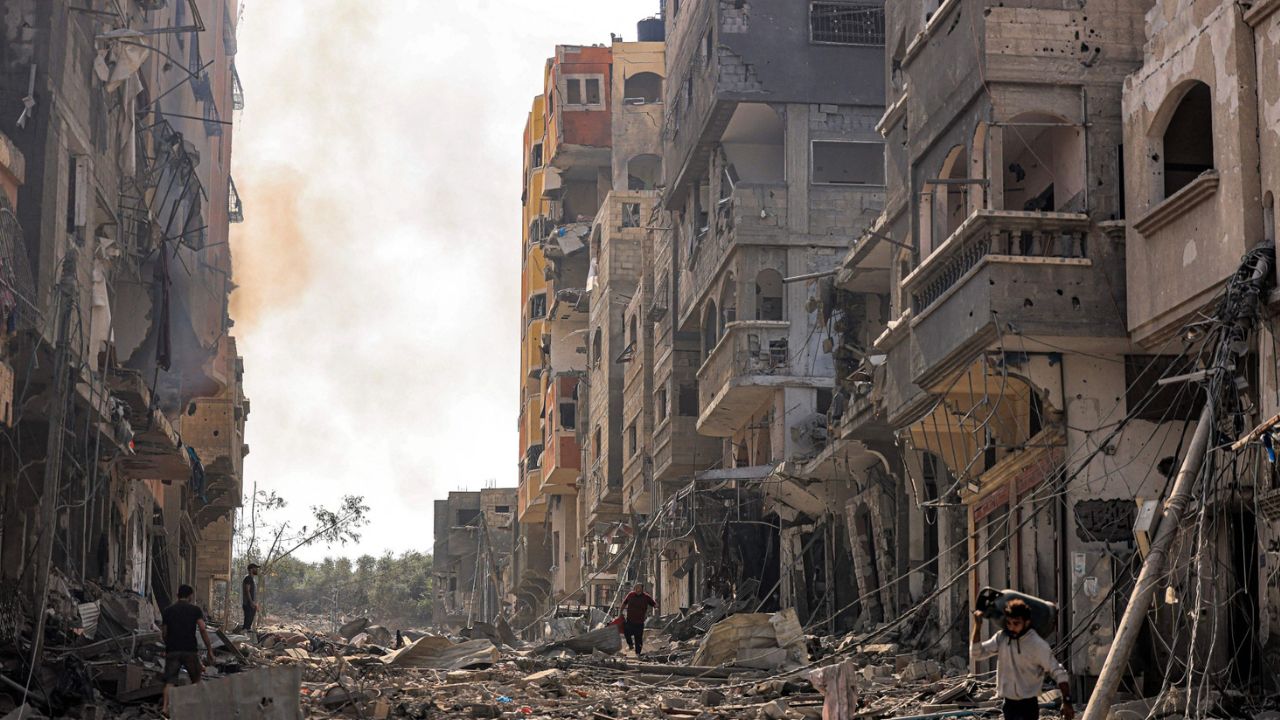
    Peace activists are urging US voters considering candidates for November’s presidential election to instead write “ceasefire” on their ballots in protest over Joe Biden’s handling of the Israeli attacks on Gaza.

    “Vote Ceasefire” — a coalition of local anti-war groups — says the effort allows Americans to give voice to their anger at the Democratic president over the mounting toll of civilian deaths in Gaza as Israel responds to the October 7 Hamas attacks.

    Voters in New Hampshire will pick their preferred candidate in either the Democratic or Republican nominating contests on Tuesday but the push is aimed at progressives wishing to put the White House on notice.

    “For the last three months, as the world has watched the war in Gaza continue to worsen, the Biden administration has refused all demands to call for a ceasefire and to end US support for Israel,” the campaign posted on X, formerly Twitter.

    “So we’re taking our fight to the place Democrats care about the most — the polls. While Joe Biden will almost certainly win the Democratic nomination later this year, he must know that the road to get there will be long and hard if he refuses to listen to his constituents.”

    “Vote Ceasefire” organizers have not indicated what kind of turnout would constitute a success for the campaign and it is unclear how much affect it will have.

    Biden himself is not on the ballot and is largely ignoring the contest, after New Hampshire officials clashed with the national party over scheduling.

    A separate campaign is urging supporters to write Biden’s name on the ballot in exactly the same manner that “Vote Ceasefire” is promoting.

    The outcome will not affect the nomination process in any case, as the Democratic National Committee has declared the New Hampshire primary illegitimate.

    Biden is expected to win the nomination comfortably.

    “I’m doing this as over 80 percent of Democratic voters are in favor of a ceasefire for Gaza and are opposed to the continuing slaughter of civilian men, women and children in Palestine, with the United States-supplied weapons,” campaign volunteer and former Democratic state representative Chris Balch said in a video posted to X.

    But self-help author Marianne Williamson, who is on the Democratic ballot, said the “Vote Ceasefire” campaign was doing nothing to help the citizens of Gaza.

    “A way to actually help create a ceasefire would be to vote for a candidate who has called for one from the very beginning,” she posted in response to the campaign’s social media statements.

  • UN migration agency needs $7.9 billion in 2024

    UN migration agency needs $7.9 billion in 2024

    The United Nations migration agency launched its first global annual appeal on Monday, requesting nearly $8 billion for this year alone to manage the growing scale of population displacement.

    The International Organization for Migration said it was seeking a total of $7.9 billion in 2024 to “save lives and protect people on the move, drive solutions to displacement, and facilitate safe pathways for regular migration”.

    “Irregular and forced migration have reached unprecedented levels and the challenges we face are increasingly complex,” IOM chief Amy Pope said in a statement.

    “The evidence is overwhelming that migration, when well-managed, is a major contributor to global prosperity and progress,” said Pope, who last October became the first woman to lead the organisation.

    “We are at a critical moment in time, and we have designed this appeal to help deliver on that promise,” she said.

    “We can and must do better.”

    IOM was founded more than 70 years ago, but only became a UN agency in 2016 as a smaller, parallel operation to the UNHCR, which focuses on refugees.

    It works in emergency situations, advocates for migrants’ rights, and sees humane and orderly migration as a benefit to people on the move and the societies they settle in.

    The agency said Monday that full funding of its appeal would allow it to serve almost 140 million people, including internally displaced people and the local communities that host them.

    It would also help IOM to expand its development work, aimed at helping prevent further displacement, it said.

    Breaking down the appeal, it said a full $3.4 billion of the requested funds would go towards saving lives and protecting those on the move.

    Another $2.7 would be used to work on solutions to displacement, including reducing the risks and impacts of climate change.

    The remainder would help facilitate regular pathways to migration and to help make IOM’s service delivery more effective.

    “This funding will address the large and widening gap between what we have, and what we need in order to do the job right,” Pope said.

    IOM said that its Missing Migrants Project showed that more than 60,000 people had died or disappeared during perilous migration journeys over the past nine years.

    “The consequences of underfunded, piecemeal assistance come at a greater cost, not just in terms of money but in greater danger to migrants through irregular migration, trafficking and smuggling,” it warned.

    Like a number of other UN agencies, IOM is calling for funds to be able to take a more longterm, preventative approach, instead of being forced to always respond in crisis mode.

    The agency said that properly funding its operations would help it streamline and optimise its response, and would effectively reduce the cost of crisis management.

    It also urged countries to recognise the benefits of migration.

    “Migration is a cornerstone of global development and prosperity,” it said, adding that “the 281 million international migrants generate 9.4 percent of global GDP”.

    “Well-managed migration has the potential to advance development outcomes, contribute to climate change adaptation, and promote a safer and more peaceful, sustainable, prosperous and equitable future.”

  • Ski industry in Indian-occupied Kashmir melts as temperatures rise 

    Ski industry in Indian-occupied Kashmir melts as temperatures rise 

    Winter in the Himalayas should mean blanketing snow, and for Gulmarg in Indian-administered Kashmir, one of the highest ski resorts in the world, that usually means thousands of tourists.

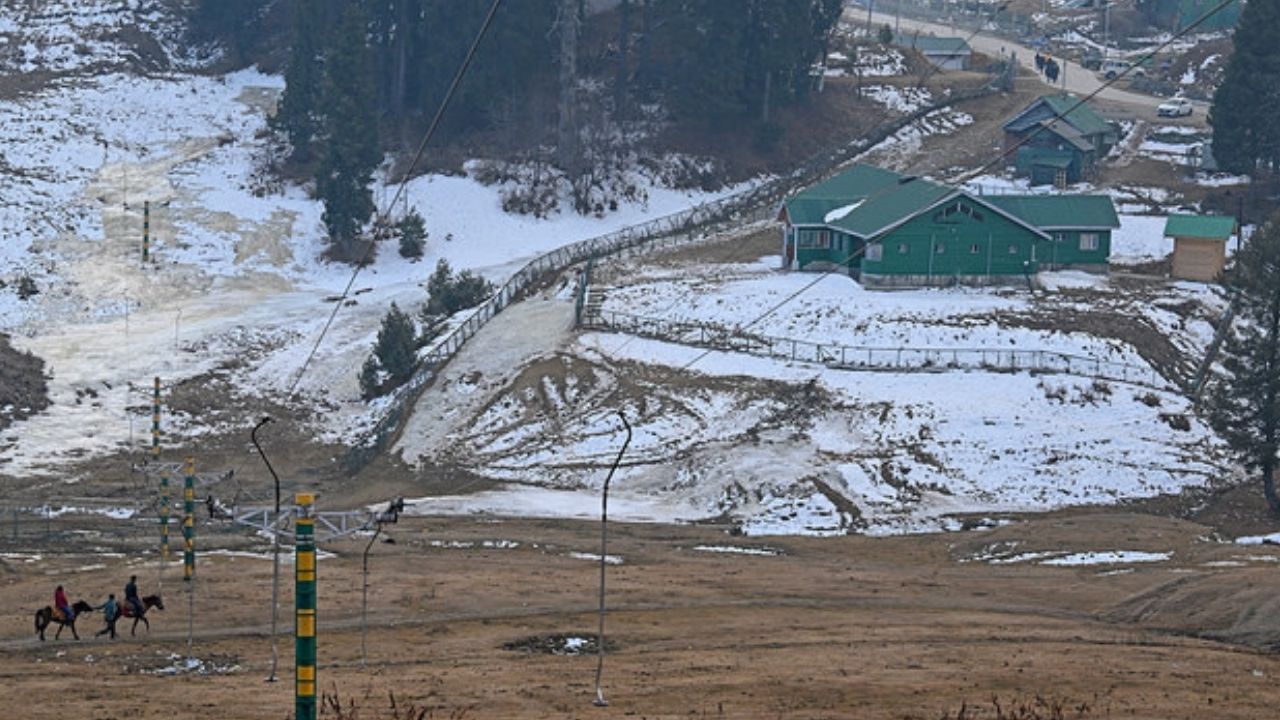
    This year, the deep powder once taken for granted is gone. The slopes are brown and bare, a stark example of the impact of the extreme weather caused by the rapidly heating planet, experts say.

    The lack of snow is not only hammering the ski industry but has a worrying impact on agriculture, the mainstay of Kashmir’s economy.

    “Seeing this snowless Gulmarg, I feel like crying every day,” said adventure tour operator Mubashir Khan, who has put wedding plans on hold with his business teetering near collapse.

    “In the 20 years of my working here, this is the first time I see no snow in Gulmarg in January,” said Majeed Bakshi, whose heliskiing service for high-spending tourists stands idle.

    A lone helicopter waits for the few tourists who have still come, offering flights over higher peaks that have a dusting of snow.

    “Our guests are mainly skiers, and they have all canceled their bookings,” said hotel manager Hamid Masoodi. “Those who come despite no snow are also disappointed.”

    Ski lifts are closed, rental shops are shut and a newly constructed ice rink is a pool of dank water.

    “The current dry spell is an extreme weather event — which are predicted to become more intense and frequent in the future,” said climate scientist Shakil Romshoo, from Kashmir’s Islamic University of Science and Technology.

    For decades, an insurgency seeking independence or a merger with Pakistan — and military operations to crush that movement — has seen tens of thousands of civilians, soldiers and rebels killed in Kashmir.

    The rebellion has lost much of its former strength, and India has been heavily promoting domestic tourism in the region, home to spectacular mountain scenery

    But in Gulmarg, hotel bookings have plunged by as much as three-quarters, tourism professionals say, as hundreds of guides and scooter drivers sit waiting in the sunshine, praying for snow.

    “Most foreigners who mainly come for skiing on the deep powder slopes have canceled,” Bakshi said. “I have lost about 70 percent of bookings so far.”

    Perched at 2,650 meters (8,694 feet), the Himalayan resort is also home to the Indian army’s High Altitude Warfare School, located close to the highly militarised Line of Control, the de facto border that divides contested Kashmir between India and Pakistan.

    Kashmir has recorded little rain, and temperatures are about six degrees Celsius (42.4 degrees Fahrenheit) higher than normal since autumn last year, according to meteorology officials.

    Last month, precipitation across Kashmir was down 80 percent from past years.

    Gulmarg received a few snow showers, but that soon melted.

    India’s Ministry of Earth Sciences said in a 2020 report they expected the Himalayas and Kashmir would be “particularly subject” to warming temperatures.

    Earlier this month, the UN’s World Meteorological Organization said the 2023 annual average global temperature was 1.45 degrees Celsius above pre-industrial levels (1850-1900) — the warmest year on record.

    The nine hottest individual years on record were the last nine.

    In Kashmir, the impact is clear. Gulmarg’s bowl-shaped landscape, beloved by tourists for the snow in winter and meadows of flowers in spring, is brown and bleak.

    Scientists warn rising global temperatures are unleashing a cascade of extreme weather events.

    Beyond the collapse of the skiing industry, many in the ecologically fragile region are worried about impending water shortages that would have a dire potential impact on agriculture.

    Romshoo, the climate scientist, said research indicates Kashmir “will experience more frequent and prolonged dry spells,” worsening in the decades ahead.

    Changing weather patterns have already altered farming practices.

    Snow melt usually helps refresh the usually full rivers, but this week, authorities in Kashmir warned of water shortages and the risk of forest fires, with many wooded areas tinder dry.

    Rice farmers needing plentiful water for their paddy fields have begun switching to fruit.

    But that crop is also at risk, with the dry spell and sunshine meaning some trees are already flowering, blossoming more than two months early.

  • Japan Literary Laureate Unashamed About Using ChatGPT

    Japan Literary Laureate Unashamed About Using ChatGPT

    The winner of Japan’s most prestigious literary award has acknowledged that about “five percent” of her futuristic novel was penned by ChatGPT, saying generative AI had helped unlock her potential.

    Since the 2022 launch of ChatGPT, an easy-to-use AI chatbot that can deliver an essay upon request within seconds, there have been growing worries about the impact on a range of sectors – books included.

    Lauded by a judge for being “almost flawless” and “universally enjoyable”, Rie Kudan’s latest novel, “Tokyo-to Dojo-to” (“Sympathy Tower Tokyo”), bagged the biannual Akutagawa Prize on Wednesday.

    Set in a futuristic Tokyo, the book revolves around a high-rise prison tower and its architect’s intolerance of criminals, with AI a recurring theme.

    The 33-year-old author openly admitted that AI heavily influenced her writing process as well.

    “I made active use of generative AI like ChatGPT in writing this book,” she told a ceremony following the winner’s announcement.

    “I would say about five percent of the book quoted verbatim the sentences generated by AI.”

    Outside of her creative activity, Kudan said she frequently toys with AI, confiding her innermost thoughts that “I can never talk to anyone else about”.

    ChatGPT’s responses sometimes inspired dialogue in the novel, she added.

    Going forward, she said she wants to keep “good relationships” with AI and “unleash my creativity” in co-existence with it.

    When contacted by AFP, the Society for the Promotion of Japanese Literature, the Akutagawa award’s organiser, declined to comment.

    On social media, opinions were divided on Kudan’s unorthodox approach to writing, with sceptics calling it morally questionable and potentially undeserving of the prize.

    “So she wrote the book by deftly using AI … Is that talented or not? I don’t know,” one wrote on X, formerly known as Twitter.

    But others celebrated her resourcefulness and the effort she put into experimenting with various prompts.

    “So this is how the Akutagawa laureate uses ChatGPT — not to slack off but to ‘unleash creativity’”, another social media user wrote.

    Titles that list ChatGPT as a co-author have been offered for sale through Amazon’s e-book self-publishing unit, although critics say the works are of poor quality.

    British author Salman Rushdie told a press conference at the Frankfurt Book Fair in October that recently someone asked an AI writing tool to produce 300 words in his style.

    “And what came out was pure garbage,” said the “Midnight’s Children” writer, to laughter from the audience.

    The technology also throws up a host of potential legal problems.

    Last year, John Grisham, Jodi Picoult and “Game of Thrones” author George RR Martin were among several writers who filed a class-action lawsuit against ChatGPT creator OpenAI over alleged copyright violation.

    Along with the Authors Guild, they accused the California-based company of using their books “without permission” to train ChatGPT’s large language models, algorithms capable of producing human-sounding text responses based on simple queries, according to the lawsuit.

  • Women’s Health Gap Costs $1 Trillion Worldwide: Report

    Women’s Health Gap Costs $1 Trillion Worldwide: Report

    The huge gap between how women and men’s health are treated costs $1 trillion a year worldwide, the World Economic Forum said on Wednesday.

    Women spend a quarter more of their lives suffering from poor health than men, a disparity that includes an unequal focus on men across medical research, diagnosis and treatment, the report said.

    Closing this gap would boost the global economy by $1 trillion annually by 2040 — a 1.7 percent increase in per capita GDP driven by women, it added.

    The report was released as the WEF hosts its 54th annual conference in Davos, Switzerland.

    The Swiss firm Ferring Pharmaceuticals and McKinsey Health Institute also contributed to the 42-page report.

    Every US dollar invested in women’s health would return three dollars in projected economic growth, the report said.

    A large part of this growth would come from sick women getting back into the workforce.

    The gender health gap causes around 75 million years of life lost due to poor health annually, equating to a week per woman every year, the report said.

    For example, addressing the inequities related to endometriosis and menopause — which only affect women and have long been considered under-studied — could contribute $130 billion to global GDP by 2040, it estimated.

    Research also suggests that fewer than half the women living with endometriosis have been properly diagnosed, the report added.

    The study also looked at how treatment and diagnosis has benefitted men more than women.

    Asthma inhalers, for example, have been found to be significantly less effective for women than men.

    Women are diagnosed later than men for 700 different diseases, previous research has shown. It also takes women two and a half years longer to be diagnosed with cancer.

    WEF healthcare head Shyam Bishen said the analysis demonstrates that “investing in women’s health must be a priority for every country”.

    “Beyond improving women’s quality of life, ensuring women have access to innovations in healthcare is one of the best investments that countries can make for their societies and their economies,” he said in a statement.

    The WEF announced it was launching the Global Alliance for Women’s Health, with $55 million pledged for women’s health.

  • Indian Americans Rise In US Politics, Navigate Identity

    Indian Americans Rise In US Politics, Navigate Identity

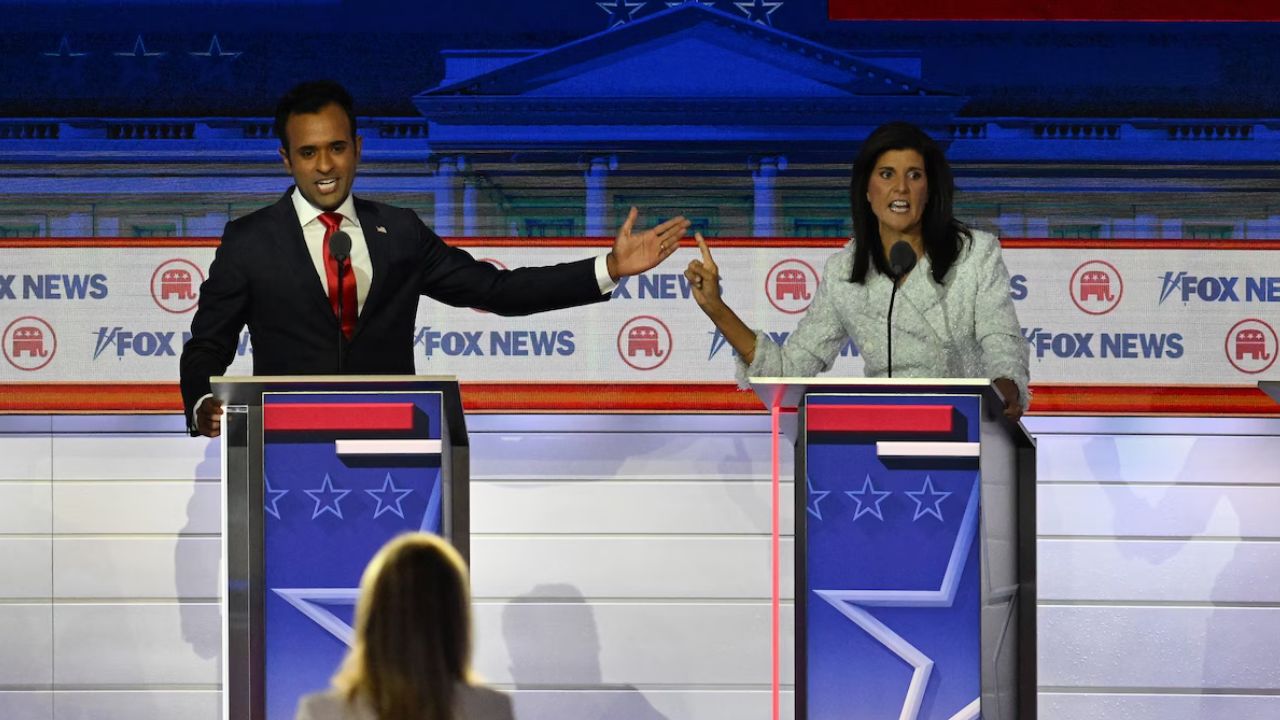
    Of the many attacks between this year’s US presidential candidates, some of the harshest have pitted Vivek Ramaswamy against Nikki Haley.

    Ramaswamy went so far as to hold up a sign at a debate calling the South Carolina former governor and UN ambassador corrupt over her corporate work — and she has hit back hard, calling him untrustworthy and berating him for mentioning her children.

    Personal attacks are routine in US politics, and both Haley and Ramaswamy, a 38-year-old entrepreneur who has never held elected office, are facing uphill climbs to wrest the Republican nomination from former president Donald Trump.

    But the two have something in common — they are children of Indian immigrants. Also expected on this year’s ballot is Democratic Vice President Kamala Harris, whose mother came from India and whose father was born in Jamaica.

    Indian Americans are split on whether the Ramaswamy versus Haley feud channels larger community tensions, but what is uncontestable is that Indian Americans are more politically prominent than ever before — and increasingly wearing their identity proudly.

    It is another sign of success for the community, whose average household income is the highest of any US ethnic group.

    Raj Goyle, a former state lawmaker in Kansas and co-founder of Indian American Impact, a South Asian American political group, said that ethnic groups in the United States historically have waited for a greater comfort level and critical mass before entering politics.

    “Indian Americans actually have had a quicker journey than other immigrant communities in terms of political success,” he said.

    He noted that Indian Americans are unusual as an immigrant group in that many arrived as educated professionals, highly regarded by other Americans.

    “When the first wave of us were elected, we had to think about how voters would react to our ethnicity,” Goyle said.

    While racism still exists, “Now, I think there’s a very good argument to make that it’s a huge plus.”

    While few give Ramaswamy much chance of winning the presidency, his candidacy marks a watershed in his embrace of his religion.

    Asked at a debate in Iowa about his religion, Ramaswamy said: “I am a Hindu. I won’t fake my identity.”

    Ramaswamy, who has made his name as a Trump-style rabble-rouser denouncing “woke” politics, has cast his Hinduism as in line with conservative Christian beliefs and has voiced opposition to gay marriage.

    He also explained to voters in farm state Iowa, which holds the nation’s first caucus, how he is a vegetarian due to his religion.

    Meanwhile, a Trump campaign aide, Chris LaCivita, told voters to “beware” of Ramaswamy’s diet, also calling him a “fraud.”

    While few give Ramaswamy much chance of winning the presidency, his candidacy marks a watershed in his embrace of his religion.

    Asked at a debate in Iowa about his religion, Ramaswamy said: “I am a Hindu. I won’t fake my identity.”

    Ramaswamy, who has made his name as a Trump-style rabble-rouser denouncing “woke” politics, has cast his Hinduism as in line with conservative Christian beliefs and has voiced opposition to gay marriage.

    He also explained to voters in farm state Iowa, which holds the nation’s first caucus, how he is a vegetarian due to his religion.

    Meanwhile, a Trump campaign aide, Chris LaCivita, told voters to “beware” of Ramaswamy’s diet, also calling him a “fraud.”

    Despite the prominence of Republicans like Haley, Ramaswamy and Jindal, the community has overwhelmingly voted Democratic.

    Dipka Bhambhani, an Indian American writer based in Washington, said the feud between Haley and Ramaswamy showed a divide within the community.

    Haley grew up helping with the bookkeeping at her parents’ clothing store, while Ramaswamy, an Ivy League graduate, was born in Ohio to an engineer father and psychiatrist mother and later married an Indian American doctor.

    “When I first saw the animus from Ramaswamy toward Haley, I knew what it was about. There are wealthy Indians out there who malign other Indians for deviating, exercising American choice in who they marry, how they worship and the like,” Bhambhani said.

    “Ramaswamy criticizing Haley has been (a source of) anguish for so many of us in the Indian community. There are enough spears thrown at people of color in this country. Do we really need an Indian man to take up arms against his Indian sister?”

    But she said the Indian American candidates at the end of the day were Americans, even as they brought Indian values such as commitment to family.

    “It would be nice to see someone in the presidency who embodies those Indian values,” she said.

  • Hamas says many hostages likely killed, blames Israel

    Hamas says many hostages likely killed, blames Israel

    Many of the hostages held by Hamas in the Gaza Strip are likely to have been killed, a spokesman for the group said Sunday, blaming the Israeli leadership for their fate.

    “The fate of many of the enemy’s hostages and detainees has become unknown in recent weeks and the rest have all entered the tunnel of the unknown due to the Zionist aggression,” Abu Obeida said in a televised statement.

    “Most likely, many of them were killed recently, the rest are in great danger every hour and the enemy’s leadership and army bear full responsibility.”
    Abu Obeida said the group’s allies from the “axis of resistance” had informed Hamas they would “expand their attacks” against Israeli troops in the coming days.

    “After 100 days of battle… this is the enemy’s leadership, gulping down pain and wading through the mud of failure and setback,” he said.