Author: Huba Shahid

  • Model Ayesha Tahir accuses Engine of using her face in AI-generated ads without consent

    Model Ayesha Tahir accuses Engine of using her face in AI-generated ads without consent

    Model Ayesha Tahir has accused Pakistani clothing brand Engine of using her face in AI-generated promotional materials without her consent or knowledge.

    Taking to her Instagram account, Tahir shared screenshots from the brand’s website and social media ads, clarifying that she never participated in a shoot for the specific collection in question.

    “I have not done any shoot for this collection or given consent for my likeness to be used in this way,” Tahir stated.

    She revealed that she initially attempted to resolve the matter privately but received no response from the brand. “Using someone’s face through AI without their permission is not okay, in any situation. Consent should always come first whether the content is real or digitally created.”

    In a subsequent Instagram story, the model raised alarm over how realistic the digital recreations appeared. “For a moment, I actually thought these might be real. That’s the scariest part. The whole web shoot is me. The sad thing about AI is that it tweaks something in every picture, so every image looks like me but also slightly different.”

    While the brand has now removed the AI-generated photos from their website, the allegations earlier sparked an immediate wave of support from the creative industry, with many calling for legal action and better digital rights protections.

    The Digital Rights Foundation (DRF) reached out to Tahir publicly, requesting she check her inbox for assistance.

    Prominent figures in the fashion and media industry also voiced their disapproval.

    “This is one of the most unethical things a brand has done, and if we don’t call it out now and make noise about it, it’ll set a dangerous precedent. Please report them and take legal action. @enginepakistan you cannot get away with this. This is a CRIME,” wrote content creator Wabisabifami.

    Maria Gilani called it “super unethical” while others, including Anooshalala, Ayesha Ahmad, Mahindar and Zara Peerzada echoed similar sentiments.

    “This is very bad. You should take immediate legal action. I make it very clear with brands that they cannot use my content as ads,” said Talha Amjad while stylist Mehak Saeed, Ayesha Hayat K and Sabah Bano Malik also expressed concern.

    The post also drew attention of mainstream celebrities as actor Hania Aamir reshared Tahir’s post on her story while Romaisa Khan commented, “What a shame.”

    Yratta Media, a leading cinematography house, suggested a physical protest at the store.

    While the majority of comments favored the model, some social media users defended the brand or questioned the motives behind the public accusation.

    “Nowadays, making accusations online has become the easiest way to gain attention,” one user commented, noting that Engine was a recognised name and there could be more to the story.

    Another user, echoed this sentiment: “It’s hard to believe they would risk their name like this without reason. We are only seeing one side of the story here.”

    Other commenters suggested that the industry needs to evolve, stating that models should include specific AI-usage clauses in their contracts and that brands should pay for “likeness resemblance” if they intend to use AI tools.


  • Karachi doctor injects poison to end own life after fight with wife

    Karachi doctor injects poison to end own life after fight with wife

    A doctor has died in Karachi’s North Nazimabad area after reportedly injecting himself with a poisonous substance following a dispute with his wife.

    According to police, the incident took place at a residence in Block C of North Nazimabad where the man administered the injection to himself. He was later shifted to hospital in critical condition.

    Police identified the deceased as 36-year-old Aziz, son of Moez. Station House Officer (SHO) North Nazimabad Shahid Baloch confirmed that Aziz worked as an anaesthetist and had been serving at several private hospitals in the city.

    According to the family’s account shared with police, Aziz had an argument with his wife earlier in the morning. After the dispute, his wife left the room.

    When she returned after some time, Aziz informed her that he had injected himself with an anaesthetic substance and that he had two to three minutes left to live. 

    His wife then contacted the Madadgar 15 police helpline to seek assistance. Police reached the house and shifted Aziz to Abbasi Shaheed Hospital in a semi-conscious state in a police mobile.

    Hospital officials said he later died during treatment.

    SHO Shahid Baloch said the deceased was the father of two sons. Police said legal formalities were completed after the death and the body was handed over to the family.

  • Mahnoor Rahim accuses Hum TV producer, Hania Amir’s ‘bestie’ of exploiting women, underage girls

    Mahnoor Rahim accuses Hum TV producer, Hania Amir’s ‘bestie’ of exploiting women, underage girls

    Social media content creator Mahnoor Rahim has accused Hum TV senior producer Umer Mukhtar of sending her inappropriate messages, and highlighted his close association with actor Hania Amir, a United Nations (UN) Women National Goodwill Ambassador tasked with promoting safe digital spaces for women.

    Rahim shared her experience in a video posted on social media, saying the messages started in 2023 while she was visiting her sister in Canada. She claimed Mukhtar sent her a direct message at 3 am for “chit-chat”, to which she initially responded, assuming the interaction might relate to work.

    However, the situation seemed to escalate and she later realised that Mukhtar was married. 

    Rahim said she confronted him about messaging her at night, to which he said he had only recently entered into a Nikah and was “not married”. She said she also reached out to Mukhtar’s wife with a screenshot of the messages, and the wife thanked her for letting her know.

    Making the claims in a video online, Rahim said she received numerous messages from women reporting similar interactions with Mukhtar, and some of them were underage at the time.

    “After the reel I posted yesterday, so many girls reached out with the same stories and screenshots of Umar Mukhtar,” she claimed, going on to talk about Mukhtar’s friendship with Hania Amir.

    The content creator said that Mukhtar’s interactions contradicted Amir’s mission as a UN Women Goodwill Ambassador, and questioned, “How are you creating a safe digital space for women when you’re besties with a man who’s exploiting underage girls?”

    Rahim said she reached out to Hania Amir directly, sharing screenshots and concerns about Mukhtar’s behavior, but did not receive a response.

    Other influencers also reacted to Rahim’s revelations.

    “He messaged me and said I can’t sleep, can you make me sleep on call, and I was like???” Quratulain Ahmed said. Reeja Jay said she was shocked to see this as it happened with her too.

    She urged others to protect themselves on social media, advising women to block accounts that send unsolicited messages, particularly at unusual hours. “If men are messaging you at 3 am or 6 am, block them right now.”

    The Current has reached out to Umer Mukhtar and a response is awaited. This story will be updated pending his reaction to the allegations.

  • That’s me and my mother’: Internet is relating to THIS scene from Kafeel

    That’s me and my mother’: Internet is relating to THIS scene from Kafeel

    A recent episode of ARY Digital’s hit drama Kafeel has sparked widespread reactions on social media, as viewers connect to a pivotal scene to real-life experiences of family conflict.

    As per the details, the episode focused on a tense moment in Zeba’s household when her daughter Javeria was dropped home by a classmate.

    In the scene, Zeba’s husband Jami confronts Javeria, dragging her inside the house and turning violent as he questions her.

    As tensions escalate, Zeba’s son repeatedly steps in to shield his sister, while Zeba later confronts Jami after he grabs a knife and threatens both his daughter and himself.

    The sequence ended with a physical struggle to stop him, followed by shots of the children breaking down in different corners of the house, with Subuk injured and Zoya experiencing a panic attack.

    The scene sparked strong reactions on social media as viewers said they could relate to it out of their own experiences of domestic conflicts.

    Audiences praised the drama for realistically portraying a dysfunctional household and highlighting its emotional toll on children. Several also noted that the story reflected the situation in many homes where family members endure abuse and distress while trying to protect one another.

    “This is literally me and my mother, we face this every day. Whenever I ask my mother to get divorce she says, don’t say it out loud, divorce is not easy when kids are involved,” wrote one user. 

    Another said, “This is the first time Pakistani drama is portraying the struggles of a dysfunctional family. Literal goosebumps and big time relate.” 

    Others echoed similar experiences, saying, “Only those people can understand this drama who have gone through the same situation.”

    “I have gone through this same since 15 years and haven’t taken any decision because I have a daughter [sic],” commented one user. 

    “Kafeel is almost every 3rd house story, every member of the family suffers in their own ways in spite of living in the same family [sic],” while one comment read, “It breaks me to the core to realise that how many people around us have to go through this in real life and have been living this life for years.”

    Subuk, Zeba’s son, also received praise for standing by his sister. One user wrote, “My brother is exactly the same and I am so lucky to have him by my side,” while another said, “Everyone should have a supportive brother like Subuk; the sisters’ lives would get easier.”

    Kafeel, written by Umera Ahmed and directed by Meesam Naqvi, depicts the harsh realities of domestic abuse, societal judgment and the burdens placed on women in toxic households.

  • Law minister defends 27th Amendment as experts, Amnesty International question ‘lack of judicial independence’

    Law minister defends 27th Amendment as experts, Amnesty International question ‘lack of judicial independence’

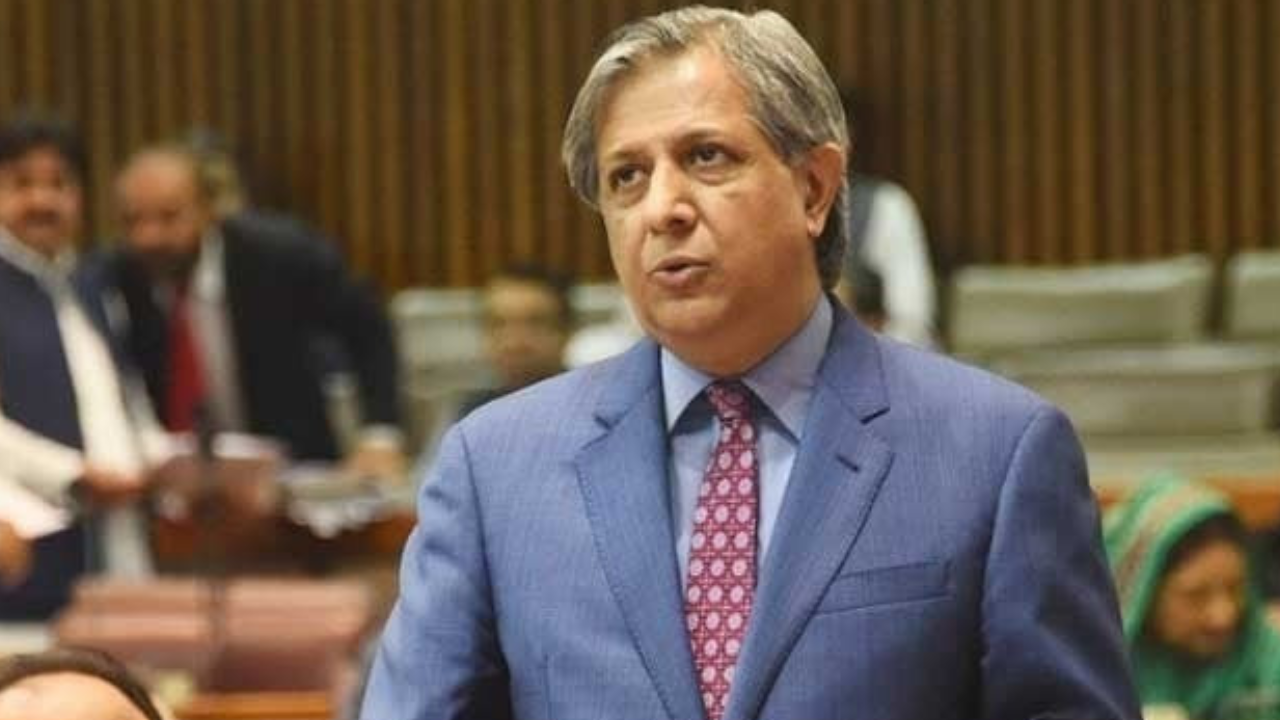
    Amid criticism that the 27th Amendment compromised judicial independence, Law Minister Azam Nazeer Tarar has defended the tweak, calling the establishment of the Federal Constitutional Court (FCC) a “cornerstone achievement” that strengthens Pakistan’s federal structure.

    The law minister made the remarks Thursday while speaking at the book launch of Tea Talk, a compilation of columns by Advocate Talat Abbas Khan, held at the Supreme Court Bar Association (SCBA). 

    His comments came in response to a report by Amnesty International, which described the amendment as an attack on the independence of the judiciary, the right to a fair trial and the rule of law.

    Rejecting the assessment, Tarar said the creation of the FCC was the central feature of the amendment and had long been part of Pakistan’s constitutional discourse. “This is a monumental contribution of Parliament to strengthen the federation,” he said, adding that the court ensured equal representation of all federating units.

    The law minister said the idea of a constitutional court was first articulated in the 2006 Charter of Democracy, which he said was endorsed by major political parties, including the Pakistan Muslim League-Nawaz (PML-N), Pakistan People’s Party (PPP), Pakistan Tehreek-e-Insaf (PTI) founder Imran Khan and Jamiat Ulema-e-Islam-Fazl (JUI-F) chief Maulana Fazlur Rehman.

    He urged critics to examine the intent behind the amendment before dismissing it.

    Referring to past judicial practice, Tarar said the demand for a separate constitutional court intensified after the Supreme Court’s (SC) use of suo motu powers under Article 184(3).

    The minister said the FCC was designed to address structural imbalances in judicial representation.

    He explained that apex court appointments were historically linked to the size of provincial high courts, resulting in a higher number of judges from Punjab due to the Lahore High Court’s (LHC) larger bench, and said that smaller provinces such as Balochistan, Sindh and Khyber Pakhtunkhwa had comparatively limited representation.

    According to Tarar, the FCC consists of 13 judges, with equal representation from all four provinces and one judge from Islamabad, which he described as part of the federation and therefore entitled to representation. 

    The statements come after members of the legal fraternity questioned the manner in which the FCC was constituted while an Amnesty International report said that the first batch of FCC judges and its chief justice were appointed by the president on the advice of the prime minister, bypassing the Judicial Commission of Pakistan (JCP) process under Article 175A.

    The report also raised concerns about future appointments, noting that changes introduced through the 26th Amendment altered the composition of the JCP, allowing parliamentary members to outnumber judicial members. 

    Amnesty further pointed out that the president has the authority to determine the number of FCC judges and noted that the chief justice and four judges were sworn in less than 24 hours after the amendment became law, without any stated criteria or justification.

    Legal experts said senior judges from Sindh, Balochistan, the SC and the Peshawar High Court (PHC) were bypassed.

  • IMF confirms $1.2bn release as Pakistan meets programme targets

    IMF confirms $1.2bn release as Pakistan meets programme targets

    The International Monetary Fund (IMF) has sanctioned an additional disbursement of approximately $1.2 billion for Pakistan through the Extended Fund Facility and the Resilience and Sustainability Facility. This approval came after the Fund’s Executive Board meeting in Washington, D.C., where the second review of the EFF and the first review of the RSF were finalized. 

    With this release, the cumulative disbursements under these two arrangements have reached around $3.3 billion. 

    In its statement, the Board highlighted that Pakistan’s “strong programme implementation, despite the recent catastrophic floods, has preserved stability and enhanced both financing and external conditions.”

    It noted that the focus of policy priorities remains on macroeconomic stability, reforms in public finance, enhancing competition and productivity, reforms involving state-owned enterprises, and improvements in the energy sector.

    Pakistan recorded a primary surplus of 1.3 percent of GDP in FY25, which the IMF stated aligned with programme goals. At the conclusion of FY25, gross reserves were $14.5 billion, an increase from $9.4 billion the previous year. The Board noted that inflation had risen due to the impact of floods’ on food prices, yet deemed this increase temporary.

    IMF Deputy Managing Director and Acting Chair Nigel Clarke stated that Pakistan must uphold policies that foster stability. “Given the unpredictable global environment, Pakistan needs to maintain prudent policies to solidify macroeconomic stability while speeding up the reforms required for stronger, private sector-led, and sustainable growth in the medium term,” he remarked.

    Regarding revenue enhancements, Clarke indicated that Pakistan must “progress with reforms to boost revenues through the simplification of tax policy and broadening the tax base,” stressing that this is crucial for fiscal sustainability and for creating opportunities for climate resilience, social protection, human capital, and public investment.

    Clarke emphasized that energy reform is pivotal to the programme. He mentioned that timely adjustments in power tariffs have “contributed to reducing the accumulation and flow of circular debt,” and stated that the following phase should focus on “sustainably lowering electricity production and distribution costs while tackling inefficiencies in the power and gas sectors.”

    The IMF noted that the RSF tranche will aid Pakistan’s climate initiatives. Clarke explained that the RSF supports efforts to “enhance natural disaster response and financing coordination, optimize the use of limited water resources, incorporate climate considerations in project selection and budgeting, and improve the comprehension of climate-related risks in financing decisions.” He pointed out that the recent floods highlighted the pressing need to progress on climate reforms.

    The IMF remarked on Pakistan’s release of the Governance and Corruption Diagnostic Assessment, noting that additional efforts are necessary regarding the governance of state-owned enterprises, privatization, the business climate, and enhancements in economic data and statistics.

  • Govt signals further amendments may be on the cards as judicial resignations continue

    Govt signals further amendments may be on the cards as judicial resignations continue

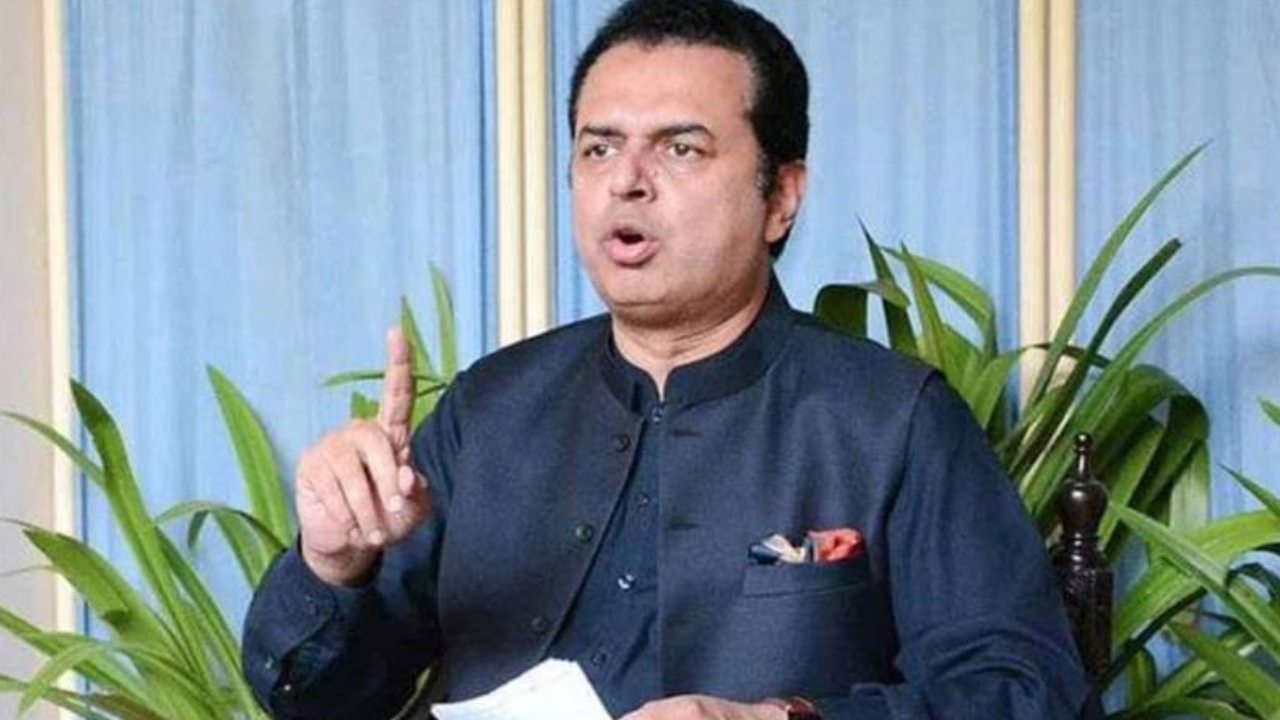
    Minister of State for Interior Talal Chaudhry stated on Sunday that the government, along with its coalition partners, is prepared to propose another constitutional amendment if necessary to ensure stability. 

    He noted that parliament has the authority to modify the Constitution, and this power could be utilized again should circumstances require it.

    While addressing a gathering in Faisalabad, Chaudhry remarked that the 26th and 27th Amendments have fostered stability, and future amendments would follow a similar protocol. 

    He emphasized that parliament will collaborate with other political parties whenever an amendment is warranted, asserting that the legislature should be acknowledged as the exclusive authority for such decisions.

    In response to inquiries about judges resigning after the enactment of the 27th Amendment, Chaudhry dismissed their resignations, attributing them to political motivations rather than constitutional issues. 

    He emphasized that judges swear an oath to the Constitution and do not function as a collective that resigns whenever changes are made by parliament. He reiterated that the Constitution embodies the collective will of parliament and the populace, rather than the individual preferences of members of the judiciary.

    He mentioned that all judiciary-related matters, including salaries and responsibilities, are within the jurisdiction of parliament. He characterized the resignations as being associated with rulings he deemed political in nature. 

    He also referenced previous court proceedings, including a comment made by former Chief Justice Umar Ata Bandial during cases involving Imran Khan, noting that the broader context has shifted since that time.

    Chaudhry pointed out that there has been significant utilization of suo motu powers in the past, claiming they were employed to unseat elected prime ministers and target governments. He stated that the amendments enacted by parliament were a direct response to that historical pattern.

    Regarding the Pakistan Tehreek-e-Insaf (PTI) party’s choice to abstain from the forthcoming by-elections in Faisalabad, he noted that the party tends to avoid elections where it anticipates facing opposition. 

    Additionally, he mentioned that security measures for the elections have been finalized through collaboration between the Election Commission of Pakistan and security agencies.

    The minister spoke at a press conference held at the Sunni Rizvi Mosque, where he gained support for his brother Bilal Badar Chaudhry in the by-elections. He expressed gratitude to Pir Faiz Rasool Rizvi for the endorsement, indicating that it would significantly influence various constituencies. He conveyed that religious institutions continue to provide guidance to communities and affect decision-making processes.

    Chaudhry also passed remarks regarding provincial matters, stating that the Khyber Pakhtunkhwa (KP) administration has been instructed to operate within constitutional boundaries. 

    He contrasted this with the progress taking place in Punjab under Chief Minister Maryam Nawaz, highlighting initiatives in the areas of transport, water, energy, housing, and infrastructure.

  • Asim Abbasi to co-direct BBC’s new Jane Austen spin-off series

    Asim Abbasi to co-direct BBC’s new Jane Austen spin-off series

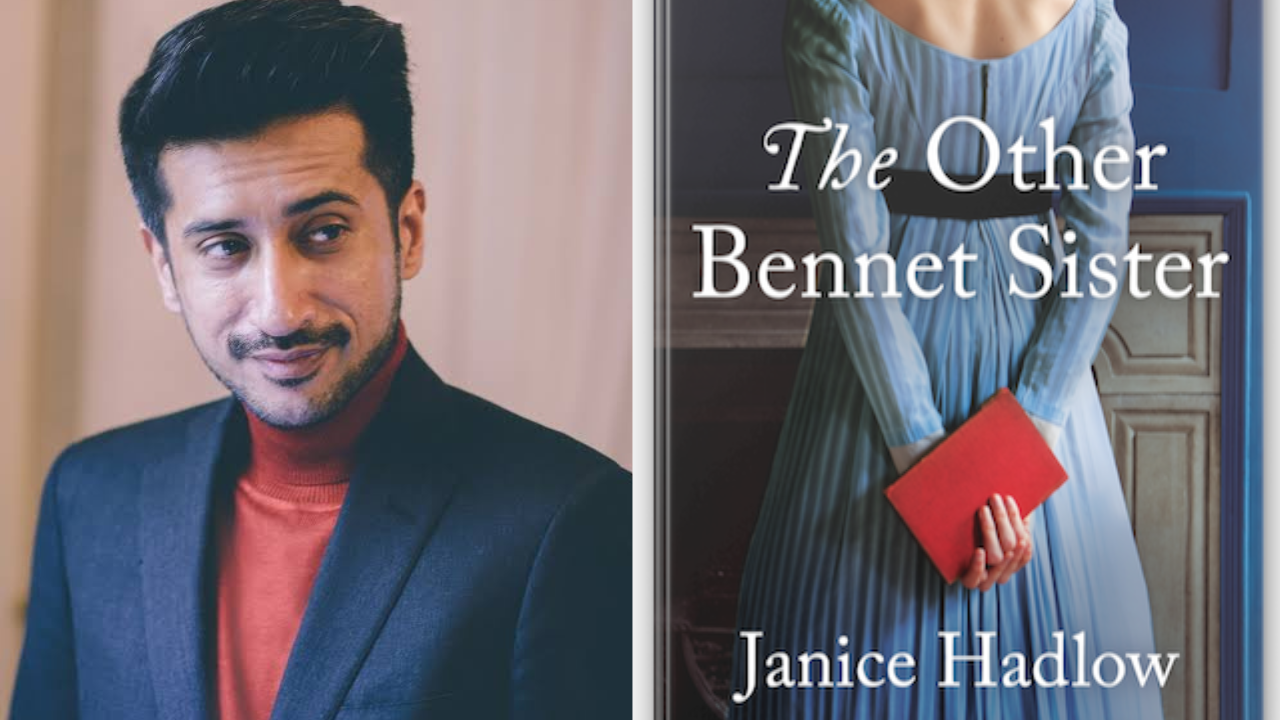
    Pakistani filmmaker Asim Abbasi has been appointed as the co-director for The Other Bennet Sister, an upcoming series from BBC and BritBox based on Janice Hadlow’s novel that reinterprets Pride and Prejudice from Mary Bennet’s viewpoint.

    Abbasi will collaborate with British director Jennifer Sheridan in sharing the directing duties. This ten-part drama centers on Mary Bennet as she emerges from her sisters’ shadows, exploring her journey toward self-discovery and autonomy. The series is set to debut in 2026 on BBC One, BBC iPlayer, and BritBox.

    Ella Bruccoleri, recognized for her performance in Bridgerton, will take on the role of Mary Bennet. The cast also includes Richard E. Grant and Ruth Jones as Mr. and Mrs. Bennet, along with Indira Varma, Richard Coyle, and Tanya Reynolds. Set in Regency-era England, the series follows Mary’s travels from her family home in Meryton to the social scenes of London and the Lake District, as she seeks her identity and purpose.

    Abbasi, who is renowned for his contributions to Pakistani cinema and streaming platforms, has established a reputation for innovative and genre-blending storytelling. His debut feature Cake (2018) was selected as Pakistan’s entry for the 2019 Oscars. In 2020, his web series Churails, released on ZEE5, received acclaim for its daring and female-centric narrative. His latest project, Barzakh (2024), featuring Fawad Khan and Sanam Saeed, delved into supernatural themes. He also directed an episode of the second season of The Famous Five.

    This represents Abbasi’s first significant partnership with the BBC. The adaptation presents him with an opportunity to engage with classic British literature while furthering his exploration of character-driven storytelling, a defining trait of his earlier works.

    Details about filming and production have not yet been revealed, but the project positions Abbasi alongside notable UK talents in an arena that has traditionally been led by British specialists in period dramas. His involvement highlights the increasing global recognition of South Asian filmmakers in the television industry.

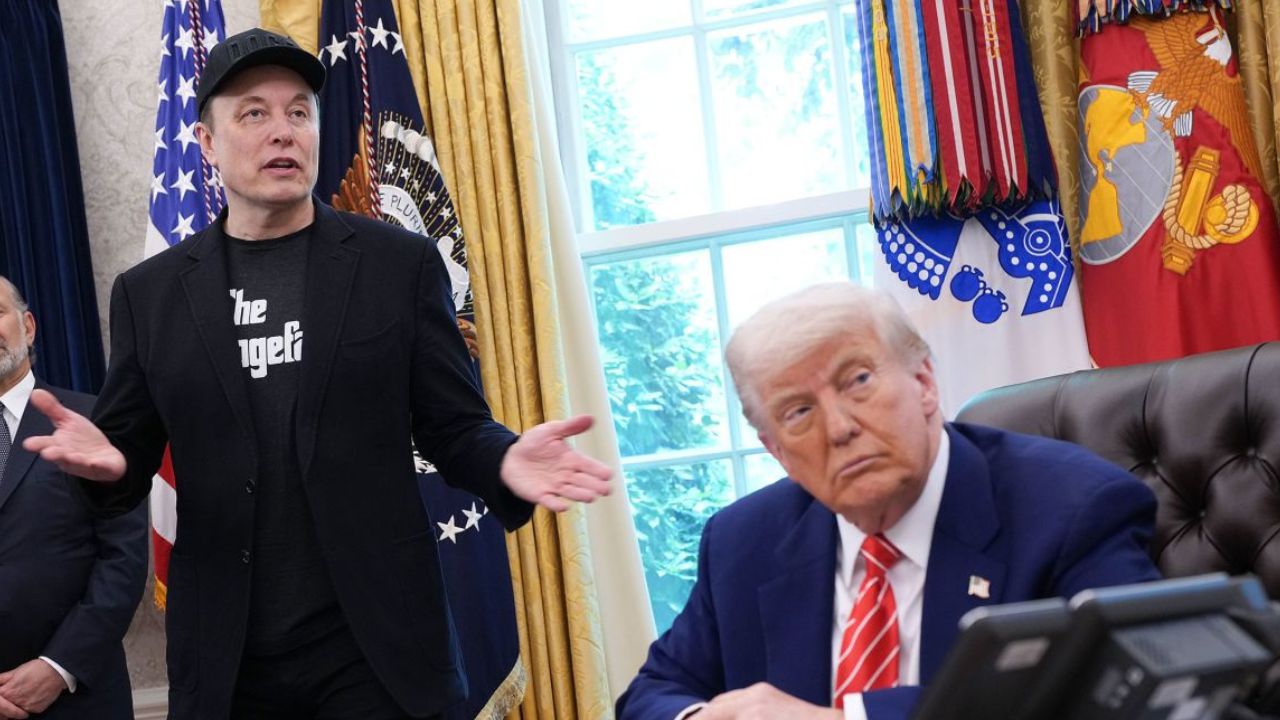
  • From partnership to public feud: Trump and Musk face off

    From partnership to public feud: Trump and Musk face off

    A public showdown between US President Donald Trump and Tesla CEO Elon Musk has escalated into a significant political and financial conflict, causing ripples throughout Washington and wiping billions off Tesla’s market value.

    The turmoil began after Musk criticised Trump’s recent tax and spending legislation, which has been central to the administration’s domestic priorities. Musk labelled the bill a “disgusting abomination” on his platform X, accusing Republican lawmakers of irresponsible spending and urging his followers to pressure Congress into rejecting it.

    President Trump, during a press conference with German Chancellor Friedrich Merz, expressed his “disappointment” with Musk’s comments and suggested that their long-standing partnership might be coming to an end. He questioned Musk’s motivations, implying that his criticism stemmed from the bill’s removal of electric vehicle incentives, a decision that could adversely affect Tesla.

    Musk countered, stating that personal benefit was not his concern. In a post on X, he remarked, “Keep the EV/solar incentive cuts, even though oil & gas subsidies remain, but get rid of the mountain of disgusting pork in the bill,” referencing what he believes to be unnecessary expenditures aimed at buying votes.

    The friction worsened on Thursday after Trump took to Truth Social to warn Musk against his government-associated ventures, stating, “The easiest way to save billions in our budget is to cancel Elon’s subsidies and contracts.” His threat specifically targeted companies like SpaceX and Starlink, which heavily depend on government financing.

    Musk retaliated, dismissing the threats and revealing that SpaceX would start shutting down its Dragon spacecraft operations vital for US missions to the International Space Station. He also hinted at potentially financially supporting political challengers to Trump-aligned Republicans, stirring concerns about fractures within the party ahead of the upcoming election cycle.

    Matters escalated further after Musk, without providing evidence, linked Trump to unreleased documents related to convicted sex offender Jeffrey Epstein. The White House dismissed the allegation, describing it as a distraction from Musk’s grievances regarding policy.

    Meanwhile, Tesla shares plummeted, losing 14% of their value, equating to a $150 billion loss. Analysts labelled it one of the company’s most challenging days in recent times. Dan Ives of Wedbush Securities noted that the public dispute had shaken investor trust and created uncertainty regarding Tesla’s regulatory outlook.

    Musk, who had been part of Trump’s administration as the head of the Department of Government Efficiency (nicknamed “Doge”), resigned from his role last week after 129 days. During his time in office, he implemented significant cuts, disbanding agencies like USAID and claiming to have saved $180 billion — a figure that critics dispute.

    The alliance between Trump and Musk began with Musk’s major financial support for Trump’s 2024 election campaign. Their partnership survived several controversies, including Musk’s unpredictable behaviour and clashes with top officials. But now, it has fallen apart, turning into mutual attacks and political fallout.

    Trump has attempted to mitigate tensions by refraining from mentioning Musk during a public event, but his social media updates indicated otherwise: the bond is severed. “Elon and I had a great relationship,” he remarked noticeably in the past tense.

    Some Republicans fear Musk’s rising influence and considerable wealth might encourage dissent within their party. Meanwhile, Democrats have largely kept quiet, seemingly pleased to observe two influential adversaries undermine each other.

    Musk concluded the day by reminding Trump and the public that although a presidency lasts four years, his own impact could extend for decades. “Trump has 3.5 years left as president,” he tweeted. “But I’ll be around for 40-plus years.”

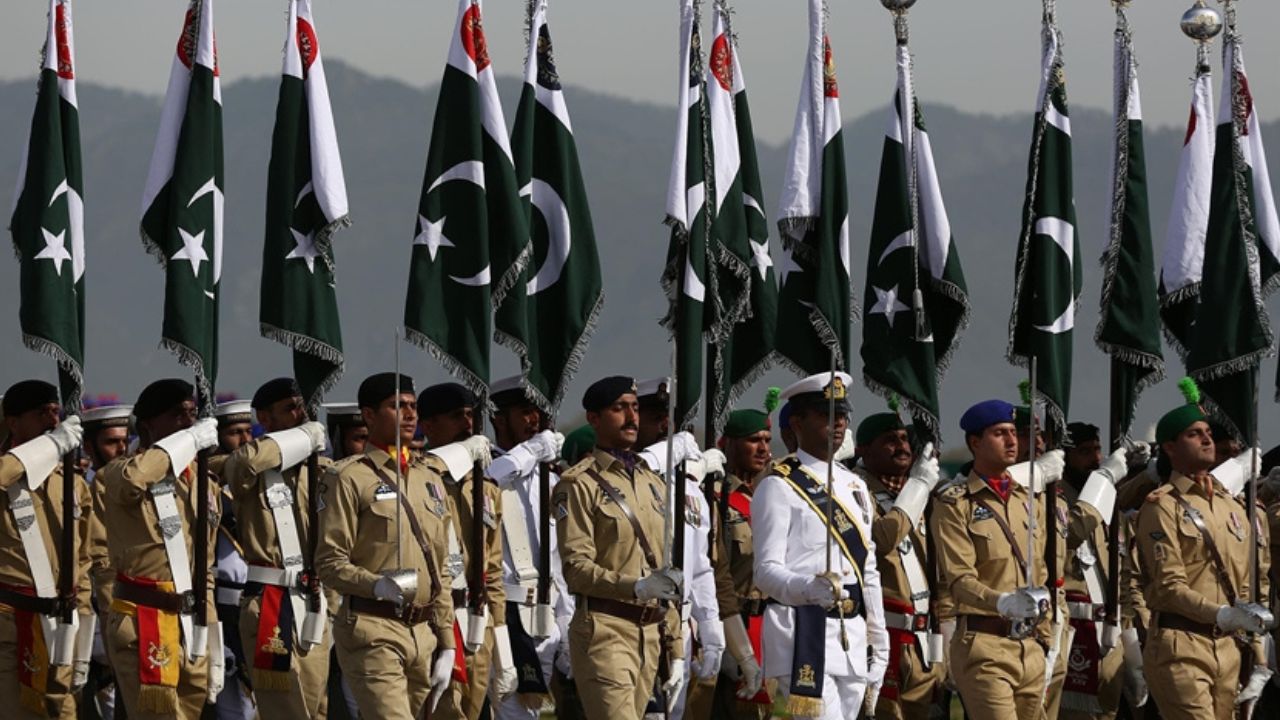
  • From Gulmarg to Bunyan-un-Marsoos: A history of Pakistani military operations against India

    From Gulmarg to Bunyan-un-Marsoos: A history of Pakistani military operations against India

    Pakistan has been avoiding escalation in its current conflict with India following the 22 April Pahalgam attack in Indian Illegally Occupied Jammu and Kashmir (IIOJK), which resulted in the deaths of 26 Hindu pilgrims. Since then, India has accused Pakistan of terrorist activity without carrying out an investigation or providing any solid evidence to support its claim.

    On 5 May, India initiated Operation Sindoor, a series of missile strikes targeting alleged militant camps in Pakistan and Pakistan-administered Jammu and Kashmir — including Kotli, Bahawalpur, Muridke, Bagh, and Muzaffarabad. Following additional attacks in the early hours of 10 May, Pakistan retaliated by launching Operation Bunyan al-Marsous, targeting Indian military facilities.

    The operation’s name, derived from a Quranic phrase meaning “a solidly cemented structure,” conveyed Pakistan’s message of resilience and unity — not an escalation of conflict.

    However, this is not the first time the two nuclear-capable neighbours have stood on the brink of all-out war.


    Operation Gulmarg (1947): The Initial Offensive

    Pakistan’s first military operation, Operation Gulmarg, named after the picturesque valley town in Kashmir, symbolised the belief that the liberation of Kashmir was both natural and destined.

    In October 1947, amid reports of Muslim massacres by Dogra forces and the Maharaja’s impending accession to India, Pakistani tribal militias, supported by army officers, invaded Kashmir. Their objective was to liberate the region before India could formally annexe it. As they advanced towards Srinagar, the Maharaja signed the accession document, prompting Indian troops to enter Kashmir, marking the beginning of the First Kashmir War and a conflict that persists to this day.

    Operations Gibraltar and Grand Slam (1965): The Gamble in Kashmir


    In August 1965, Pakistan launched Operation Gibraltar, named after the Islamic conquest of Spain, aiming to inspire rebellion in Indian-controlled Kashmir. Thousands of Pakistani soldiers, disguised as locals, infiltrated the region to incite an uprising. The mission failed, triggering a military response from India.

    To divert India’s attention, Pakistan followed up with Operation Grand Slam on September 1, targeting Akhnoor, a crucial Indian supply route. Though early advances showed promise, sudden changes in command stalled progress, leading to a full-scale war that ended in a military stalemate.

    Operation Chengiz Khan (1971): A Pre-emptive Strike That Misfired

    When tensions rose amid India’s support for separatists in East Pakistan, Pakistan launched Operation Chengiz Khan on December 3, 1971. It was named after the fearsome Mongol conqueror, while the operation aimed to disable Indian air power through surprise attacks on 11 Indian airbases. The damage, however, was minimal. India’s swift and decisive response led to a multi-front war, culminating in the fall of Dhaka and the creation of Bangladesh, Pakistan’s most devastating military and emotional loss.

    Operation Badr (1999): The Mountain Gamble

    In spring 1999, Pakistan initiated Operation Badr, named after the Prophet Muhammad (PBUH)’s first military victory. The plan involved Pakistani soldiers and Kashmiri fighters covertly occupying strategic peaks in the Kargil region, left vacant during winter by Indian forces. India discovered the intrusion in May, resulting in intense combat at high altitudes. Although tactically significant, the operation failed due to international pressure, especially from the United States, and led to Pakistan’s withdrawal. The conflict claimed hundreds of lives and damaged Pakistan’s diplomatic reputation.

    Operation Bunyan-un-Marsoos (2025): A Wall of Unity

    In 2025, as India carried out a new act of aggression under Operation Sindoor, Pakistan, after days of efforts to de-escalate, responded with Operation Bunyan al-Marsous on May 10.

    Named after a Quranic phrase from Surah As-Saff, meaning “a solidly cemented structure,” the operation symbolised national unity, steadfast defence, and spiritual strength. Pakistan’s strikes were precise and restrained, aimed at Indian military installations. It was not an escalation, but a firm signal that Pakistan would defend itself while resisting being dragged into India’s internal political drama.

    Once again, Indian media fulfilled its expected role. Instead of awaiting evidence, it marketed outrage as reality. News channels aired nationalistic montages, reporters shouted war cries, and anchors demanded retaliation, all before facts had emerged. This pattern, familiar to Pakistan, has played out repeatedly: where calls for peace are drowned out by sensationalist primetime theatrics. As a result, Pakistan, despite consistently advocating peace, finds itself forced to respond militarily, not out of choice, but necessity.