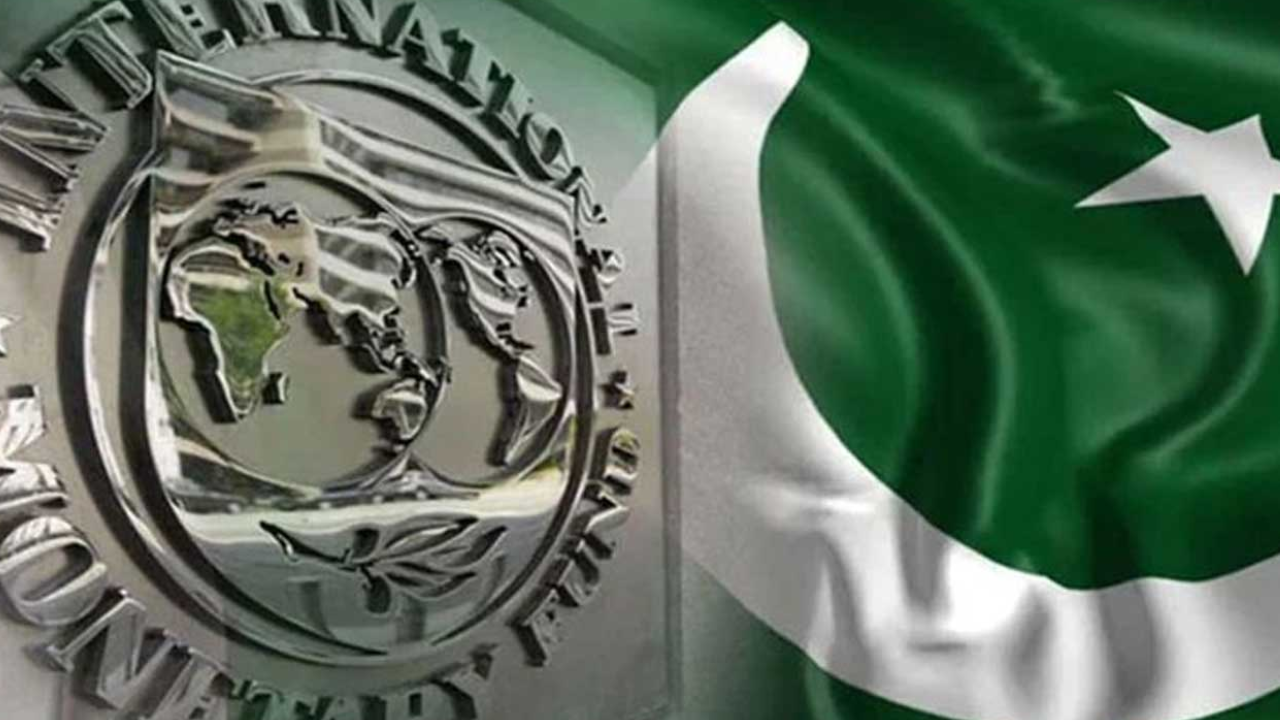
The International Monetary Fund (IMF) has sanctioned an additional disbursement of approximately $1.2 billion for Pakistan through the Extended Fund Facility and the Resilience and Sustainability Facility. This approval came after the Fund’s Executive Board meeting in Washington, D.C., where the second review of the EFF and the first review of the RSF were finalized.
With this release, the cumulative disbursements under these two arrangements have reached around $3.3 billion.
In its statement, the Board highlighted that Pakistan’s “strong programme implementation, despite the recent catastrophic floods, has preserved stability and enhanced both financing and external conditions.”
It noted that the focus of policy priorities remains on macroeconomic stability, reforms in public finance, enhancing competition and productivity, reforms involving state-owned enterprises, and improvements in the energy sector.
Pakistan recorded a primary surplus of 1.3 percent of GDP in FY25, which the IMF stated aligned with programme goals. At the conclusion of FY25, gross reserves were $14.5 billion, an increase from $9.4 billion the previous year. The Board noted that inflation had risen due to the impact of floods’ on food prices, yet deemed this increase temporary.
IMF Deputy Managing Director and Acting Chair Nigel Clarke stated that Pakistan must uphold policies that foster stability. “Given the unpredictable global environment, Pakistan needs to maintain prudent policies to solidify macroeconomic stability while speeding up the reforms required for stronger, private sector-led, and sustainable growth in the medium term,” he remarked.
Regarding revenue enhancements, Clarke indicated that Pakistan must “progress with reforms to boost revenues through the simplification of tax policy and broadening the tax base,” stressing that this is crucial for fiscal sustainability and for creating opportunities for climate resilience, social protection, human capital, and public investment.
Clarke emphasized that energy reform is pivotal to the programme. He mentioned that timely adjustments in power tariffs have “contributed to reducing the accumulation and flow of circular debt,” and stated that the following phase should focus on “sustainably lowering electricity production and distribution costs while tackling inefficiencies in the power and gas sectors.”
The IMF noted that the RSF tranche will aid Pakistan’s climate initiatives. Clarke explained that the RSF supports efforts to “enhance natural disaster response and financing coordination, optimize the use of limited water resources, incorporate climate considerations in project selection and budgeting, and improve the comprehension of climate-related risks in financing decisions.” He pointed out that the recent floods highlighted the pressing need to progress on climate reforms.
The IMF remarked on Pakistan’s release of the Governance and Corruption Diagnostic Assessment, noting that additional efforts are necessary regarding the governance of state-owned enterprises, privatization, the business climate, and enhancements in economic data and statistics.