Indian Filmmaker Vivek Agnihotri came under social media fire after stating that Imran Khan has “illegally” used ‘‘Hum Dekhenge” song in a video for his instagram handle.
The song was recently used in the Indian movie, The Kashmir Files.
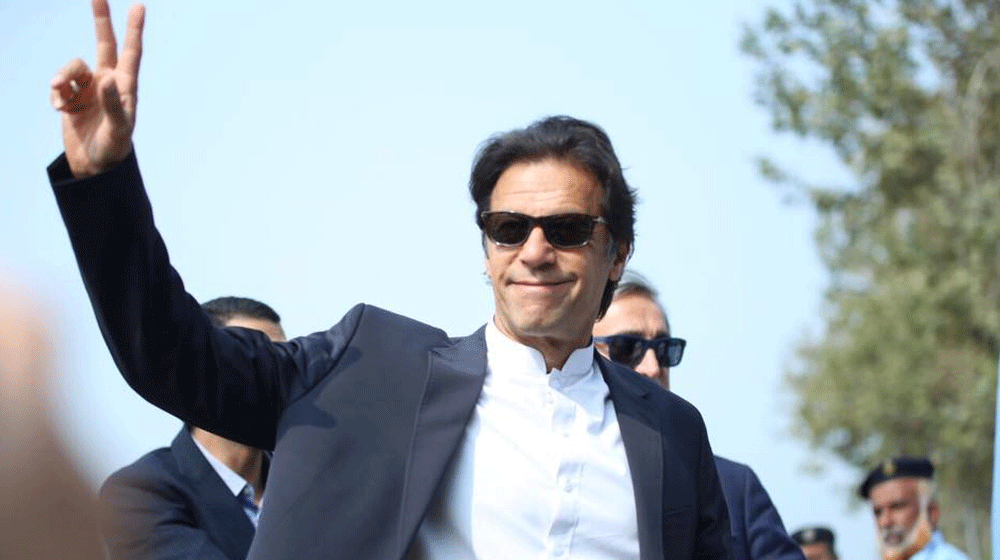
Vivek Agnihotri shared a clip of Prime Minister Imran Khan’s Instagram post. In the video “Hum Dekhenge” is playing in the background.
The Filmmaker, in his tweet wrote, “See the power of Indic cinema. The official account of @ImranKhanPTI is using the official song of #TheKashmirFiles illegally in his official video on Instagram.” This incident exposes the double standards of Pakistan when it comes to intellectual property and copyright infringement.”
Hum Dekhenge is a revolutionary poem written by Urdu poet Faiz Ahmed Faiz in 1979 after the military coup by Zia ul haq. It was first sung by Iqbal Bano and the poem has been part of the Pakistan socialist movement since the 1980s.
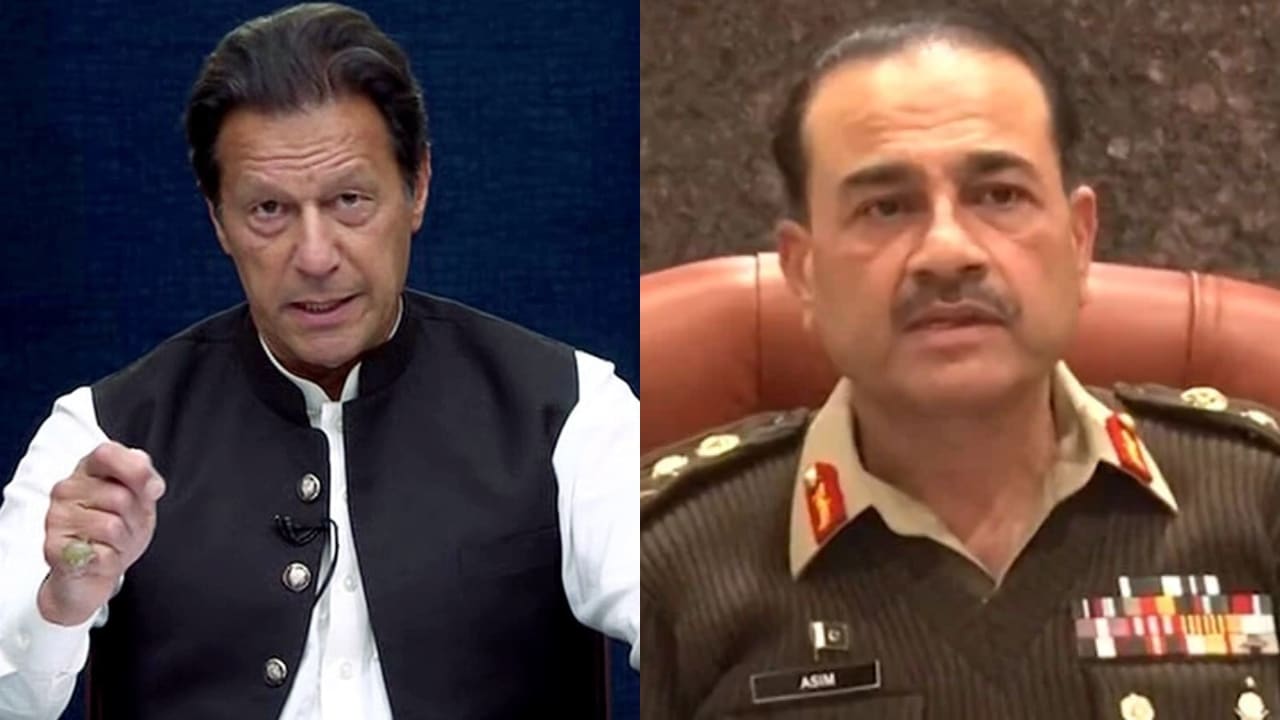
Pakistan Tehreek-e-Insaf (PTI) Chairman Imran Khan— who is currently facing charges on multiple counts in various cases—has said that there is only one man who is deciding every matter.
Without naming Chief of Army Staff (COAS) General Asim Munir, Imran said that one person fears that if he comes into power, his seat will be gone, however, he has no intention of doing that.
On Tuesday, the former PM was arrested from IHC by NAB authorities in the Al-Qadir case, however, two days later Supreme Court termed the arrest illegal.
In March, after the Zaman Park operation episode took place, Khan accused the establishment of interfering in politics, emphasising that nothing happens in the country without the permission of COAS Munir.
Islamabad High Court (IHC) has said that Pakistan Tehreek-e-Insaf (PTI) Chairman Imran Khan can’t be arrested till Monday morning.
Reportedly, Khan has been granted bail in all cases which were under the high court.
As there is a possibility that Khan can be arrested again, he has decided not to step out of court without a written order.
SC releases Imran but to be produced before Islamabad High Court tomorrow
On Thursday, the top court declared Khan’s arrest “illegal” and ask for his immediate release from National Accountability Bureau (NAB) custody.
The court also demanded that Khan should be produced before the court, then gave their verdict. The top court bench also directed Khan to present himself before IHC on Friday till then he can stay in Police Lines Guesthouse.
Khan also made some statements, he alleged that he was hit with sticks and was abducted like a terrorist.
He also said that he was under arrest and does not want unrest in the country. According to him, he was also unaware of the violent protests that were going on in support of him.
After the SC verdict in Khan’s favour, PTI called off protests in various cities.
Following are the remarks made by SC judges when they heard Khan’s plea against his arrest:
“The NAB authorities and the ICT Police shall ensure foolproof security to the petitioner [Imran} until his production in the Islamabad High Court in this regard,” the court order stated.
“Whilst the petitioner is in the Police Guest House, he shall be entitled to meet up to 10 guests. These persons shall be allowed to stay with the petitioner as long as desired by him”, court said.
Before Khan’s appearance before the top court, Chief Justice Umar Ata Bandial said that NAB had committed “contempt of court”. “They should have taken permission from the court’s registrar before the arrest. Court staffers were also subjected to abuse,” he added.
He emphasised that courts should be accessible to everyone for relief and that individuals should feel safe to approach the courts.
“No one can be arrested from the Supreme Court, a high court or an accountability court,” the CJP noted
Marriyum Aurangzeb says Supreme Court for providing ‘relief’ to Imran
Federal Information Minister Marriyum Aurangzeb censured the Supreme Court for providing “relief” to Imran.
“The SC is giving relief to a criminal, a terrorist, a gangster who leads armed groups,” said Aurangzeb.
“If courts support armed groups, encourage them, then similar relief should be given to all people,” said Marriyum.
“Real contempt of court happens when the country’s courts become shelters for armed groups and terrorists,” she added.
More than 60 domestic and international flights from various airlines have been cancelled due to the unstable situation in Pakistan, with many other flights being uncertain about their arrival and departure.
The cancellations have affected flights to major cities such as Karachi, Lahore, and Islamabad, where the number of passengers has decreased.
According to the airport schedule, more than 60 domestic and foreign flights from various airlines have been cancelled, including flights from Karachi to Jeddah, Madinah, Muscat, Dubai, Riyadh, Baghdad, and Baku. The arrival and departure schedule of Karachi Airport provides a comprehensive list of the affected flights, including those cancelled between Karachi and Islamabad, Lahore, Turbat, and Peshawar.
To ensure that their travel plans are not disrupted, passengers are advised to check with their airlines for the latest updates on flight status.
According to Minute Mirror, the following flights have been canceled according to the arrival and departure schedule of Karachi Airport:
Karachi to Jeddah: ER 811 and ER 812
Karachi to Medina: PK 743
Salam Air flight to Muscat: OV 292
Emirates Air flights to Dubai: EK 605 and 604, EK 609 and 608
Karachi to Muscat: WY 323 and 324
Karachi to Riyadh: PK 729
Flight to Baghdad: IF 331 and IF 332
PIA flight from Baku to Karachi: K 154
The following flights have been canceled between Karachi and Islamabad:
PK369
PF121
PF122
9P670
9P871
PA200
PF127
ER502
The following flights have been canceled between Lahore and Islamabad:
PK302
PK303
9P840
9P841
PF141
ER520
PA406
PK306
PF147
The following flights have been canceled between Karachi and Turbat:
PK501
The following flights have been canceled between Karachi and Peshawar:
If you’re looking to apply for studying abroad without any agent fees, follow these steps:
Steps to follow for studying abroad
Research:
Start by researching different universities and courses in the country you want to study in. Look for universities that offer scholarships or have affordable tuition fees for international students.
Choose a University:
Select a few universities that align with your academic goals and preferences. Consider factors like program quality, reputation, location, cost of living, and scholarship opportunities.
Check University Websites:
Visit the official websites of the selected universities and explore their admission sections. Look for information about the application process, required documents, deadlines, and any specific requirements for international students.
Fulfill Admission Requirements:
Ensure that you meet the admission requirements for your chosen university and program. This may include submitting academic transcripts, standardized test scores (such as the SAT or TOEFL), letters of recommendation, and a statement of purpose.
Apply Online:
Most universities provide an online application system. Create an account on the university’s admission portal and fill out the application form. Provide accurate and detailed information about your academic background, personal details, and any other required information.
Write a Statement of Purpose:
Draft a compelling statement of purpose (SOP) that explains your motivation for studying abroad, your academic and career goals, and how the chosen program aligns with them. Highlight your strengths and unique qualities that make you a suitable candidate.
Obtain Recommendation Letters:
Reach out to your professors, mentors, or employers who can write strong recommendation letters for you. Provide them with the necessary information about the university, program, and your achievements, so they can write personalized letters highlighting your skills and abilities.
Financial Planning:
Research scholarships, grants, or financial aid options available for international students. Many universities and external organizations offer scholarships based on merit, need, or specific criteria. Additionally, consider your personal finances and develop a plan to cover your tuition fees, living expenses, and any other costs.
Submit Application and Documents:
Complete the online application form and upload all required documents, including your academic transcripts, test scores, SOP, and recommendation letters. Ensure that all documents are properly attested or certified, if required.
Pay Application Fees:
Some universities charge an application fee. Check the payment methods accepted by the university and submit the application fee online.
Track Application Status:
After submitting your application, keep track of its status through the university’s admission portal or online system. Check for any additional documents or steps required.
Visa Application:
Once you receive an acceptance letter from a university, you’ll need to apply for a student visa. Research the visa requirements of the country you’ll be studying in and gather all the necessary documents, such as proof of admission, financial statements, and a valid passport.
Prepare for Interviews (if required):
Some universities may require an interview as part of the application process. Prepare for interviews by researching common interview questions and practicing your responses.
Follow Up:
Maintain regular communication with the university’s admission office to ensure that your application is complete and to address any inquiries or additional requirements.
Remember, while you can apply directly to universities, it’s always a good idea to seek guidance from educational consultants or study abroad forums to gather insights and advice from students who have gone through the application process.
The Asia Internet Coalition (AIC), an industry association of major internet and technology companies, has released a statement urging the Pakistani government to consider the serious consequences of their recent actions on the people and economy of the country.
The AIC has called for the immediate restoration of internet access in Pakistan. Jeff Paine, the Managing Director of the AIC, has expressed concern that the government’s actions will damage the country’s reputation as an investment destination, and has urged the government to focus on the opportunities presented by the digital economy to promote overall economic growth.
More than one hundred prominent members of the Pakistani business community, tech entrepreneurs, and civil society have condemned the government’s use of partial and complete internet shutdowns, as well as targeted content and app blocking.
These actions have been taken in response to recent nationwide protests. Tens of millions of Pakistanis rely on internet-dependent services for essential business activities, and by blocking or shutting down these services, the government is limiting civic space, creating economic uncertainty, and disrupting access to healthcare, emergency services, and financial services.
The government’s decision to shut down mobile internet services across the country has resulted in significant revenue losses for mobile phone companies and online taxi and bike services. This decision was made in response to the arrest of former Prime Minister Imran Khan, which led to nationwide protests.
As a result of the internet shutdown, online taxi and bike services have been unavailable for the past two days, causing inconvenience to commuters who depend on these services for transportation.
According to sources in the Pakistan Telecommunication Authority, there are no plans to restore internet access in the country today.
Pakistani cricketer Shoaib Malik and Indian tennis star Sania Mirza have been in the news due to rumours about their troubled marriage. Speculations about their alleged divorce have been in the news for quite some time now. Neither Sania nor Shoaib have addressed them or released a statement clarifying their stance.
Recently when Sania was talking to the media at an event, a journalist asked her how she manages her child as well as her career, she gave a befitting reply.
“Jaise wo (Shoaib Malik) manage karte hain, waise main manage karti hun. Aap agar Shoaib Malik ko wo sawaal puchenge, to main bhi aapka jawaab de dungi [I manage the way Shoaib manages, i will answer you when you will ask the same question from Shoaib].”
Sania Mirza and Shoaib Malik tied the knot on 12th April, 2010, followed by a valima ceremony in Sialkot. The couple welcomed their son Izhaan in 2018.
Tamim Daoud, a Palestinian boy who was about to turn five years old in June, was asleep at home in al-Remal, a neighbourhood in the centre of the Gaza Strip, on Monday night when he was awoken by the sound of Israeli bombs.
The bombing caused a residential building near Tamim’s home to be targeted, resulting in shattered windows and destruction in the neighbourhood.
Tamim became frightened and began to weep heavily, suffering from a panic attack that caused him to gasp for air. Although he eventually returned to sleep, he suffered from another panic attack about five hours later, which prompted his father to rush him to the hospital.
Tamim’s heartbeat was very faint, and despite medical treatment in the intensive care unit, he died at dawn.
As of Thursday afternoon, the latest round of Israeli attacks on Gaza had killed 28 Palestinians and five Islamic Jihad (IJ) commanders, with at least five children among the dead.
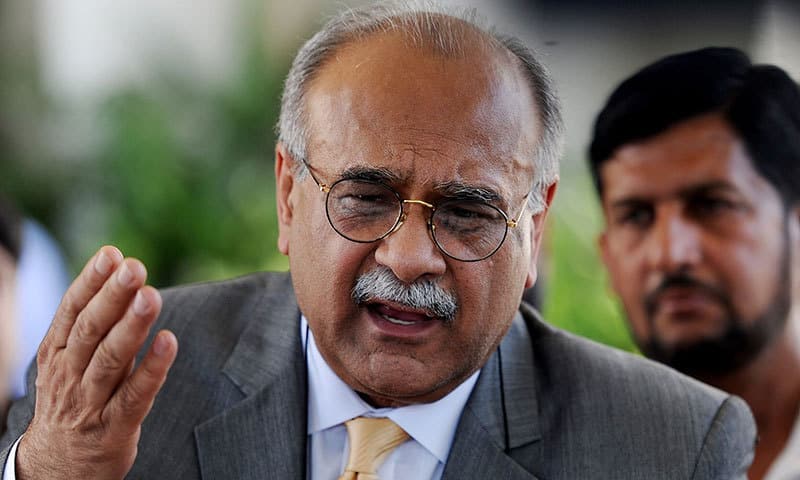
Pakistan Cricket Board (PCB) Management Committee Chairman Najam Sethi has disclosed the crux of his recent meeting with Asian Cricket Council (ACC) officials and the official broadcaster of Asia Cup 2023.
In BBC’s podcast ‘Stumped’, PCB Chairman Najam Sethi said that they had proposed a Hybrid Model a month ago to Board of Control for Cricket in India (BCCI) in which India will play their matches outside Pakistan and the rest of the teams will play their matches in Pakistan. “If India and Pakistan will meet in the final, we will play it at the neutral venue,” he said.
BCCI secretary and ACC Chairman Jay Shah rejected the proposal by raising questions about logistics.
“We have made it clear to them that it is we who decide where India can play their matches. If Sri Lanka suits us, we will choose Sri Lanka, but most probably we are prioritizing Dubai. First they have to consider and accept Hybrid Model then further talks begin,” Najam Sethi elaborated.
That sounds negotiable, the Podcast host said.
The PCB Chairman then said that they have proposed a revised version of ‘hybrid model’ in the recent meeting held twos days ago with ACC officials, in which the first four matches will be played in Pakistan and then the whole tournament will be shifted to Dubai.
The ACC then raised a question about the possiblity of travel between two countries with all the crew and equipment. Sethi clarified that the teams have to come Pakistan just once.
The podcaster asked Sethi how long it will take to negotiate, to which he replied, “Look, we only have three months left and we have to prepare. We have to selects the venues, we have to do arrangements for broadcasters. ACC have already wasted too much time, time is running out. ACC have to take a decision now”
Najam Sethi also said that the World Cup is coming up, and if India does not come to Pakistan, our government will not allow Pakistan to travel to India.
“If they don’t, why would we? Security risks are on both side,” Sethi concluded.
Pakistan has informed the International Monetary Fund (IMF) that it will not be implementing a fuel subsidy programme during ongoing negotiations for a $1.1 billion bailout for the country.
The IMF has stated that it will continue to engage with the government on the loan, despite increasing political tensions.
Prime Minister had previously proposed a fuel subsidy scheme in March, which would charge higher rates to affluent consumers to subsidise prices for the poor who have been hit hard by inflation.
However, the government has now committed not to implement this programme in the current fiscal year or beyond. Instead, it will not introduce new tax exemptions and will allow a market-based exchange rate for the rupee currency.
The IMF has said that Pakistan needs significant additional financing to complete the long-delayed ninth review of its bailout package.
Obtaining commitments of significant additional financing is essential before the IMF approves the release of pending bailout funds that are crucial for Pakistan to resolve an acute balance of payments crisis.
According to Dawn, the State Bank of Pakistan’s reserves fell to $4.38 billon on Thursday, which is barely a month’s worth of imports. The IMF has emphasised that Pakistan faces stagflation, large financing needs, and has been affected by several shocks, including severe floods.