Author: News Desk

  • ‘Fortune-cookie preacher’: Netizens slam Mufti Menk’s silence on Iran-Israel conflict

    ‘Fortune-cookie preacher’: Netizens slam Mufti Menk’s silence on Iran-Israel conflict

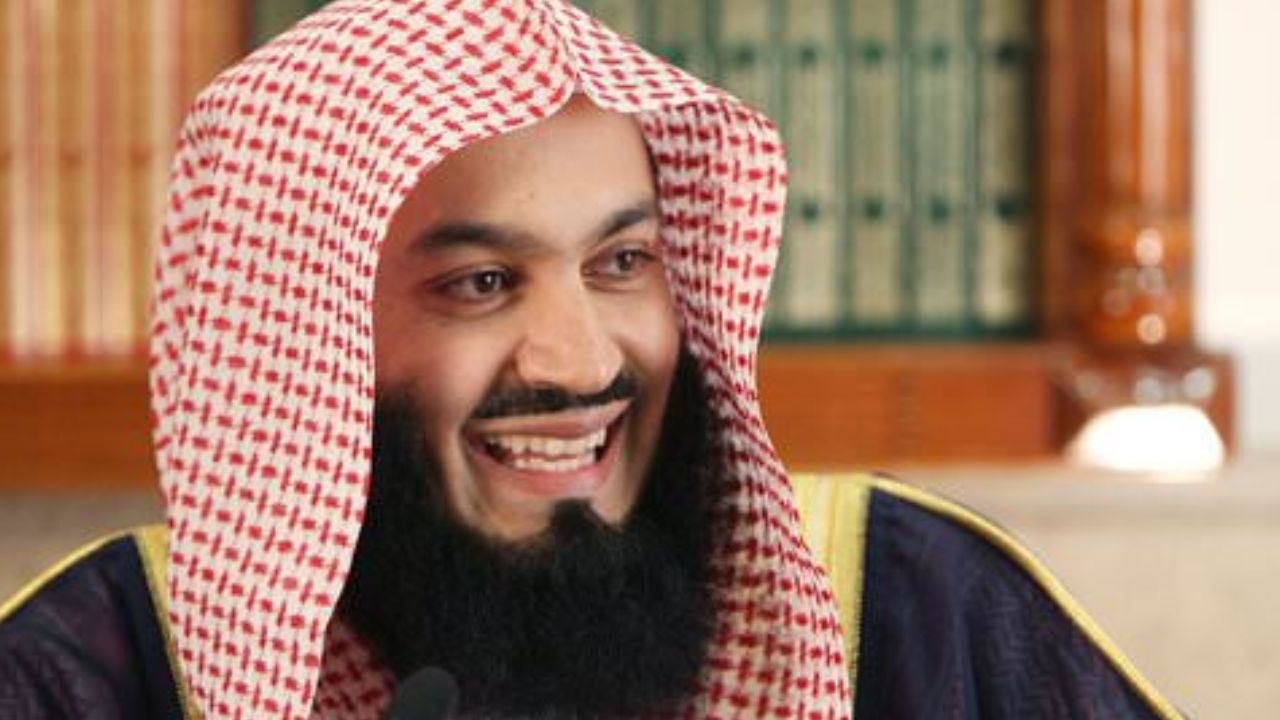
    Mufti Menk has faced intense criticism online after a post on X about remaining silent during uncertain situations was widely interpreted as referring to the ongoing conflict involving Iran, Israel and the United States (US).

    Menk, whose full name is Ismail Ibn Musa Menk, regularly shares sermons and lectures online and has more than 10 million followers on X. The backlash followed a post he shared on March 4.

    “When you don’t know EXACTLY what’s going on, it’s best not to say the wrong thing. Let those with a deeper understanding in that matter say what needs to be said. The Prophetic teaching to those who believe in the day of reckoning is to ‘utter what’s upright or remain silent,’” the post read.

    Users on X interpreted the post as referring to the illegal strike on Iran, where Israel and the United States have killed more than 1,000 people and damaged civilian infrastructure, according to international media reports.


    The reactions circulating on X were mainly in response to Menk’s post. Many questioned why a religious scholar with a large platform would avoid addressing the conflict directly. 


    Some users suggested that remaining silent in the face of suffering was equivalent to avoiding responsibility, saying scholars had a duty to speak against injustice and oppression. Others accused Menk of prioritising financial interests or public standing over openly criticising Israel.


    Several posts mocked the statement as a cautious attempt to avoid losing influence or income. One user wrote, “Translation: I don’t want to lose money by criticizing Israel too loudly.” 


    Another added, “Being a scholar you have a duty to speak truth and stand against tyrants but you remain silent for your personal gain and enjoying the luxury of the world.”


    Some comments accused Menk of choosing worldly gains over religious responsibility. One post said, “Guys i will try to translate this for you: Mufti menk choosing money/ duniya over DEEN!! He is a coward or MUNAFIQ , there is no 3rd option. Thank you for your attention for this matter!!” 

    Another described the approach as an Islam reduced to feel-good slogans: “This is the kind of Islam colonizers are comfortable promoting. An Islam reduced to self-help slogans. An Islam that speaks endlessly about ‘ignoring haters’ but falls silent in the face of tyrants.”

    Other users highlighted the contrast with the struggles of Muslims in Iran, saying that while they face attacks, Menk’s post offered only general guidance. 

    One wrote, “So instead of uttering what’s upright, you remained silent. I have never understood how so many people get taken in by fortune-cookie preachers of any religion who utter feel-good platitudes 24/7 but disappear the moment their voice could matter.” 

    Another added, “Islam and Muslims are under attack by zi0nist and this is what you tweet? Tweet about your brothers and sisters in Iran who are fighting the enemies of Islam alone and suffering.” Some summed up their frustration by saying, “save us from Sheikhs like this one.”

    Menk later shared a prayer on X, asking for guidance, steadfastness, contentment with divine decree, and protection from harm: “Almighty. Guide us towards goodness beyond this month for Your sake only. Keep us steadfast, enduring the trials You send our way. Grant us a soft heart, always content with Your Decree. Grant us sincerity, success & protect us from harm. Aameen.”
  • Pakistani man says he was pressured by Iran to kill Trump

    Pakistani man says he was pressured by Iran to kill Trump

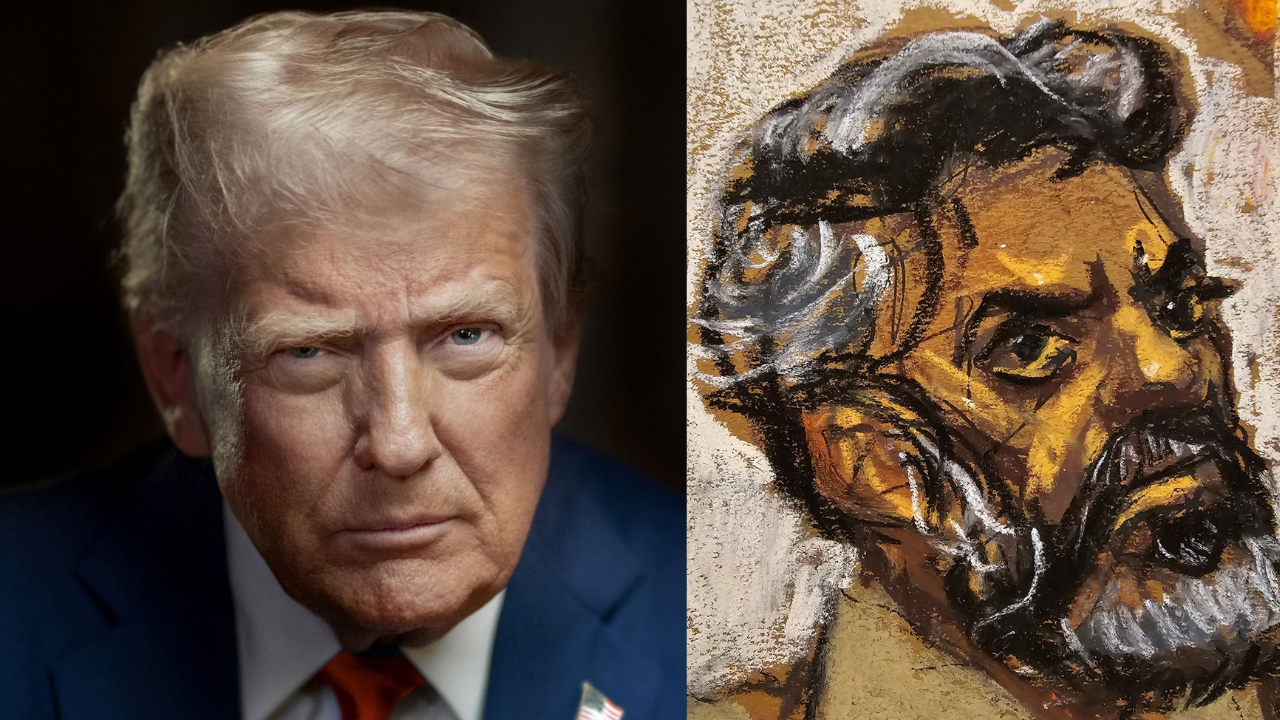
    A Pakistani man accused of plotting to kill  United States (US) President Donald Trump told jurors that he did not willingly collaborate with Iran’s Islamic Revolutionary Guard Corps (IRGC) in the plan, media reports have stated. 


    The Justice Department has alleged that Asif Merchant attempted to recruit individuals in the US to target Trump and other American politicians. The alleged plot was reportedly in retaliation for Washington’s killing of IRGC commander Qassem Soleimani.

    The IRGC, which combines military, economic, and intelligence influence, plays a central role in Iran’s operations.

    Merchant told the court, “I was not wanting to do this so willingly,” adding that he participated in the plot to protect his family in Tehran. He stated that he had never been explicitly ordered to kill a particular individual, but that his Iranian handler had mentioned three potential targets during conversations in the Iranian capital.

    Those named included Trump, Joe Biden, and Nikki Haley, a Republican candidate in the 2024 presidential election.

    Prosecutors have dismissed Merchant’s claims, citing a “lack of evidentiary support for a true duress or coercion,” according to a letter sent to the judge overseeing the case.

    The trial began last week, just days before Trump reportedly authorized strikes in Iran carried out alongside Israel. The strikes killed Iran’s Supreme Leader Ayatollah Ali Khamenei and other top officials.

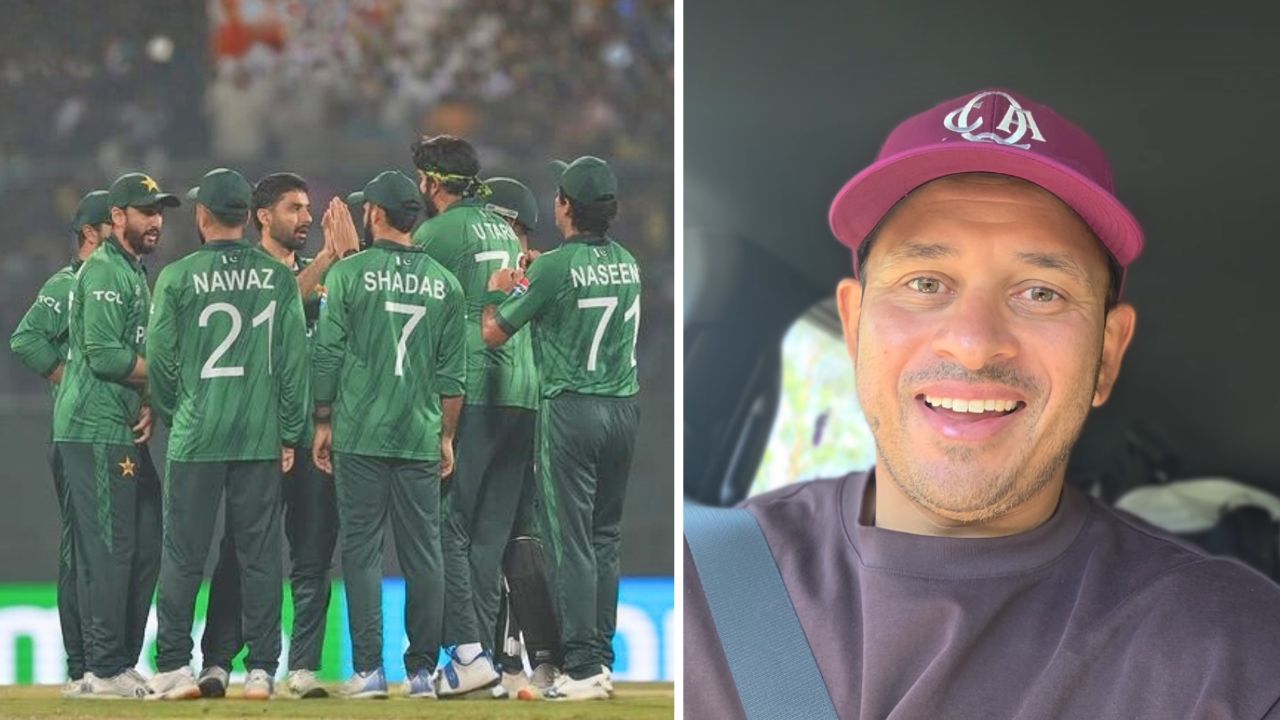
  • ‘I can’t believe it’: Usman Khawaja reacts to reports of PCB’s Rs5 million fine on Pakistan players

    ‘I can’t believe it’: Usman Khawaja reacts to reports of PCB’s Rs5 million fine on Pakistan players

    Former Australian batter Usman Khawaja has expressed surprise over reports that Pakistan players could face heavy fines following their disappointing campaign at the T20 World Cup.

    Khawaja shared his reaction in a video posted on social media after hearing that players might face penalties of up to Rs5 million each due to poor performances during the tournament.

    “I just heard that the Pakistani players got fined after the T20 World Cup. I mean, I didn’t believe it at first, but it must be true. It’s absolutely amazing that the PCB could think this is a good idea. Sorry, I’m laughing because I can’t. I can’t believe it,” Khawaja said.

    He questioned the logic behind punishing players for defeats and argued that such decisions only increase pressure on athletes who already face intense scrutiny.

    “Just think—what high-performance team in the entire world, let alone cricket, fines players for losing games? They’re not trying to lose! How does that even make them perform better next time? All it does is put more pressure and stress onto the players. They’re already under enough pressure. They’re Pakistani players. The whole country is watching. Even past selection decisions have put them under stress, and now, on top of that, you’re fining them. It’s in absolute shambles. I really feel for the Pakistani players,” he stated.

    Khawaja also said he felt sympathy for the squad and described the situation as another surprising episode in Pakistan cricket.

    “Poor Pakistani players. Yeah, I’m lost for words, honestly. That’s why I made this video. I can’t believe it. Every time I think Pakistan’s not going to surprise me, they surprise me. It’s like a drama series. I can’t wait for the next episode,” he added.

    Pakistan’s campaign in the tournament ended in the Super Eights stage. The 2009 champions managed only one win against a full-member side when they narrowly defeated Sri Lanka national cricket team in their final Super Eights match.

    The team earlier suffered defeats against India national cricket team and England national cricket team, while their match against New Zealand national cricket team ended without a result due to rain in Colombo.

    The early exit marked the second consecutive edition of the T20 World Cup where Pakistan failed to reach the semi finals. Pakistan last reached the final in 2022, where they finished runners up after losing to England in final.

    Following the team’s poor performance, PCB reportedly fined each player five million rupees.

  • Teenage girl tortured by armed men in Bannu; video spreads online

    Teenage girl tortured by armed men in Bannu; video spreads online

    A video showing armed men assaulting a teenaged girl in the Domel tehsil of Bannu is circulating on social media, prompting responses from political figures. 

    Local sources have said that the girl, identified as 15-year-old Hamshda, had been seen in Domel and nearby Township areas wearing male clothing and adopting a masculine appearance.

    According to sources, her family had warned her several times against dressing that way and moving around outside.

    They said that unidentified armed men allegedly abducted the girl and took her to an undisclosed location where she was subjected to torture.

    Footage of the incident was recorded and later shared on social media. In the video, the girl can be heard saying that she will not go out dressed in that manner or roam around with boys again.

    Sources said that she was later released after being made to promise that she would not repeat the actions.

    Police officials in Domel said that no formal complaint has been filed by any party so far and that no First Information Report (FIR) has been registered in connection with the case. They added that the incident is being examined and further developments will be shared.

    Meanwhile, a pamphlet attributed to the banned Tehreek-i-Taliban Pakistan (TTP) has also circulated online. The pamphlet says an inquiry will be conducted into the matter and that action will be taken if those responsible are found to have links with the group.

    Separately, Awami National Party (ANP) president Aimal Wali Khan condemned the alleged torture of the minor.

    “Punishing a child for earning a lawful livelihood is an insult to both humanity and Islam,” he said in a statement issued on Thursday.

    He questioned whether supporting one’s family through lawful means had become a crime and said militants were using religion as a shield while bringing disrepute to it.

    Referring to another case, he said a man who recorded a cricket video of young player Aina Wazir had also allegedly been abducted and tortured.

    Aimal Wali Khan also questioned the silence of the government and law enforcement agencies over such incidents.

    “No group has the authority to decide what is right or wrong or to determine punishments,” he said, adding that protecting the life, property and fundamental rights of citizens was the responsibility of the state and the government.

  • Gulf states review financial pledges amid escalating Middle East conflict

    Gulf states review financial pledges amid escalating Middle East conflict

    Gulf states are reviewing overseas investments and financial commitments as the war involving the United States (US), Israel and Iran places pressure on their budgets, an international media outlet has reported. 

    A Gulf official said that the situation could affect investment pledges to foreign governments or companies, sports sponsorships, business contracts and the sale of existing holdings.

    The official said that three of the four major Gulf economies — Saudi Arabia, United Arab Emirates (UAE), Kuwait and Qatar — had held discussions on the economic impact of the conflict but did not identify the countries involved.

    “A number of Gulf countries have begun an internal review to determine whether force majeure clauses can be invoked in current contracts, while also reviewing current and future investment commitments in order to alleviate some of the anticipated economic strain from the current war,” the official said. “Especially if the war and related expenses continue at the same pace.”

    They added that the move was precautionary and linked to “the budget strains these countries are facing due to reduced income from energy, due to the slowdown in output or the inability to ship, [and from the] tourism and aviation sectors, in addition to the increase in defence spending”.

    An adviser to a Gulf government said that the possibility of an investment review had drawn attention in Washington. Gulf states manage some of the world’s largest sovereign wealth funds, and Saudi Arabia, United Arab Emirates and Qatar last year pledged to invest hundreds of billions of dollars in the US after Donald Trump visited the region.

    The states have also financed international sporting events and invested in domestic projects aimed at diversifying their economies.

    Officials said that any reduction in investments in the US or other western countries could increase pressure on Donald Trump to pursue a diplomatic approach to end the war.

    The conflict between the US, Israel and Iran has affected Gulf countries as Tehran launched strikes against Washington’s regional allies. 

    Shipping traffic has slowed in the Strait of Hormuz, through which about one-fifth of global oil and gas supplies pass, with at least 10 tankers reported damaged in the Gulf.

    Qatar, the world’s second-largest liquefied natural gas producer, declared force majeure after suspending production following a drone attack on its main LNG facility.

    A major oil refinery in Saudi Arabia was also hit during the conflict.

    Iran has also targeted US bases and embassies in the region, as well as airports, hotels and residential buildings, disrupting air traffic and tourism.

    Gulf states had urged Donald Trump to delay military action and pursue diplomacy with Iran but later faced retaliatory attacks from Tehran.

    Khalaf Al Habtoor, a prominent Emirati businessman addressed Donald Trump in a post on X and criticised the decision to escalate the conflict.

    “A direct question: Who gave you the authority to drag our region into a war with #Iran? And on what basis did you make this dangerous decision?” he wrote. “Did you calculate the collateral damage before pulling the trigger?”

    He pointed out that Gulf countries were expected to help finance plans to rebuild Gaza and support broader regional initiatives.

    He added that Arab Gulf states had “contributed billions of dollars on the basis of supporting stability and development”, asking: “These countries have the right to ask today: where did this money go? Are we funding peace initiatives or funding a war that exposes us to danger?”

  • One in three Gen Z men say wife should obey husband

    One in three Gen Z men say wife should obey husband

    A global survey has found that men from Generation Z are more likely than older generations to support traditional views about gender roles within marriage and relationships.

    The survey of more than 23,000 people across 29 countries found that nearly one in three Gen Z males believe a wife should obey her husband.

    According to the study, 33 percent of Gen Z males said a husband should have the final word on important decisions in a marriage. Among baby boomer men, 13 percent agreed with the statement that a wife should always obey her husband.

    The survey defined Generation Z as people born between 1997 and 2012, while baby boomers were defined as those born between 1946 and 1964.

    Among women, 18 percent of Gen Z respondents agreed that a wife should obey her husband, compared with six percent of women from the baby boomer generation.

    The research was conducted by Ipsos in partnership with the Global Institute for Women’s Leadership at King’s College London and included respondents from countries including Great Britain, the United States, Brazil, Australia and India.

    The findings also showed differences between generations on other views about gender roles. About 24 percent of Gen Z males said women should not appear too independent or self-sufficient, compared with 12 percent of baby boomer men.


    More than half of Gen Z males, 59 percent said men were expected to do too much to support equality. Among baby boomers, 45 percent agreed with this view. Among women, the figures were 41 percent for Gen Z and 30 percent for baby boomers.

    At the same time, Gen Z males were also the group most likely to say that women with successful careers were more attractive to men, with 41 percent agreeing with the statement.

    Survey responses varied across countries. People in Indonesia and Malaysia were most likely to agree with the statement that a wife should obey her husband, at 66 percent and 60 percent respectively. The proportion was 23 percent in the United States and 13 percent in Great Britain.

    Professor Heejung Chung, director of the Global Institute for Women’s Leadership and leader of the research, said that some findings indicated continued support for gender equality.

    “I think there are a lot of grievances, a lot of fear of men losing social positions,” Chung said. “And there’s a vacuum that’s being filled with rhetoric and voices which are trying to pitch young men against gender equality, against young women, against migrants.”

    Julia Gillard, chair of the Global Institute for Women’s Leadership, said that the results raised concerns about expectations placed on both men and women.

    “Not only are many Gen Z men putting limiting expectations on women, they are also trapping themselves within restrictive gender norms,” she said. “We must continue to do more to dispel the idea of a zero-sum game in which women are the only beneficiaries of a gender-equal world.”

  • ‘Arijit Singh was trying to sound like Atif’: Palash Sen says Atif Aslam’s influence shaped Indian singers

    ‘Arijit Singh was trying to sound like Atif’: Palash Sen says Atif Aslam’s influence shaped Indian singers

    Indian singer Palash Sen has praised the lasting influence of Pakistani star Atif Aslam on the Indian music industry, saying that the singer’s unique voice and style inspired a generation of male vocalists, including Arijit Singh during the early phase of his career.

    Speaking during a recent interview with an Indian television channel, Sen said that many singers who came after Atif tried to follow his style of singing.

    “If you look closely, almost every singer who came after Atif tried to sing like him. Even the biggest singer in our country today, Arijit Singh—if you listen to his earlier songs, he was also trying to sound like Atif. Later, he developed a style of his own,” Sen said.

    Sen explained that this type of influence often appears in the music industry whenever a powerful voice changes the direction of popular singing.

    “In the same way, there was a time when singers like Kumar Sanu and Abhijeet were influenced by legends like Mohammed Rafi and Kishore Kumar. Influential singers always have a strong impact, and many people try to become like them. Their influence is very powerful,” he added.

    Atif Aslam remains one of the most successful singers to emerge from Pakistan and gain massive popularity in India and across South Asia. 

    He first rose to fame in the early 2000s with the song “Aadat”, composed with the band Jal, which quickly became a mega hit among young listeners.

    His career in Bollywood grew rapidly after he lent his voice to several popular songs. Some of his most well known tracks include “Tera Hone Laga Hoon” from Ajab Prem Ki Ghazab Kahani, “Pehli Nazar Mein” from Race, “Tu Jaane Na” from Ajab Prem Ki Ghazab Kahani, “Jeene Laga Hoon” from Ramaiya Vastavaiya, and “Dil Diyan Gallan” from Tiger Zinda Hai.

  • Another Indian Air Force jet crashes, killing two pilots

    Another Indian Air Force jet crashes, killing two pilots

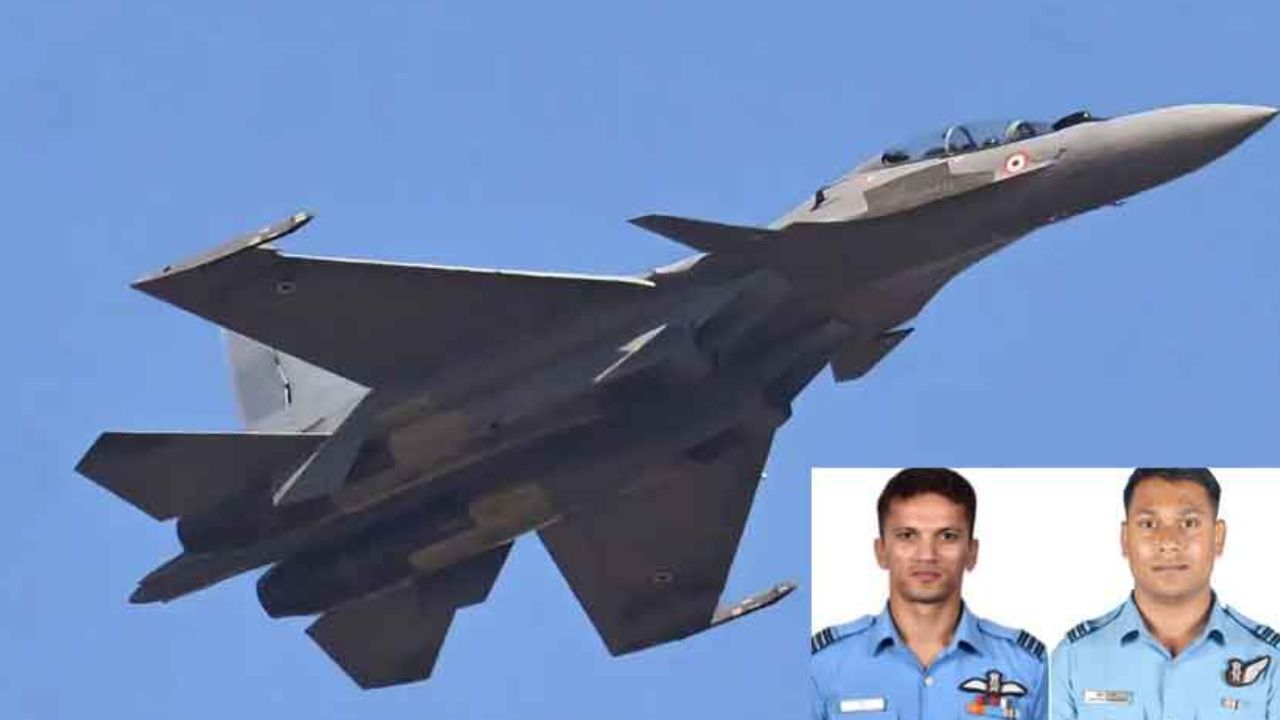
    Two Indian Air Force (IAF) pilots were killed after a Sukhoi Su-30 MKI fighter jet crashed in India’s northeastern state of Assam on Thursday.

    The IAF said that the pilots were Squadron Leader Anuj and Flight Lieutenant Purvesh Duragkar.

    In a post on X, the air force said that all personnel expressed condolences and stood with the families of the deceased pilots.

    According to officials, the aircraft was on a training mission and had taken off from Jorhat airbase. Communication with the aircraft was lost at 7:42pm.

    The jet later crashed in Karbi Anglong district, around 60 kilometres from the base.

    Residents in the area said they heard an explosion from the hills and saw flames rising from the crash site.

    India’s Defence Minister Rajnath Singh said he was saddened by the deaths of the two pilots. In a post on X, he wrote that their service to the country would be remembered.

    The Sukhoi Su-30MKI is a two-seat fighter aircraft developed by Russia’s Sukhoi. It is now built under licence by state-run aerospace major Hindustan Aeronautics Limited (HAL) for the IAF.

    The aircraft was inducted into the IAF in 1997 and the force operates more than 260 jets of the same type.

    A Sukhoi-30 aircraft crashed in Nashik in June 2024, while another jet of the same type went down in January 2023 after taking off from the Gwalior airbase.

    The crash took place weeks after the IAF lost a HAL Tejas jet when it overshot the runway at a frontline airbase and suffered damage to its airframe.

    Another Tejas aircraft crashed during a demonstration flight at the Dubai Airshow in November last year, killing the pilot.

  • PCB wants public apology from reporter on ‘fake news’ of fast bowler misbehaving with Sri Lankans

    PCB wants public apology from reporter on ‘fake news’ of fast bowler misbehaving with Sri Lankans

    Pakistan Cricket Board (PCB) has demanded a public apology after a media report accused national fast bowler Salman Mirza of misconduct during T20 World Cup in Sri Lanka.

    In a strong statement, PCB rejected the report and described it as agenda driven fake news that targeted the character of its players.

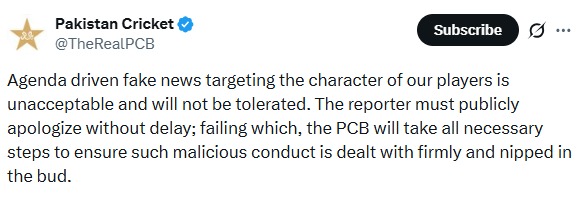
    “Agenda driven fake news targeting the character of our players is unacceptable and will not be tolerated,” said the PCB in a statement.

    The board warned that such claims were unacceptable and said it would take legal action if the journalist involved failed to issue a public apology.

    “The reporter must publicly apologize without delay; failing which, the PCB will take all necessary steps to ensure such malicious conduct is dealt with firmly and nipped in the bud,” the PCB said.

    The controversy began when a local sports journalist claimed that Mirza had behaved inappropriately with a hotel staff member during a recent tour. The report alleged that the staff member filed a complaint with the Pakistan team management, adding that the management reviewed the matter before imposing a heavy fine on the pacer.

    The Board quickly rejected the allegations and dismissed the claims as baseless.

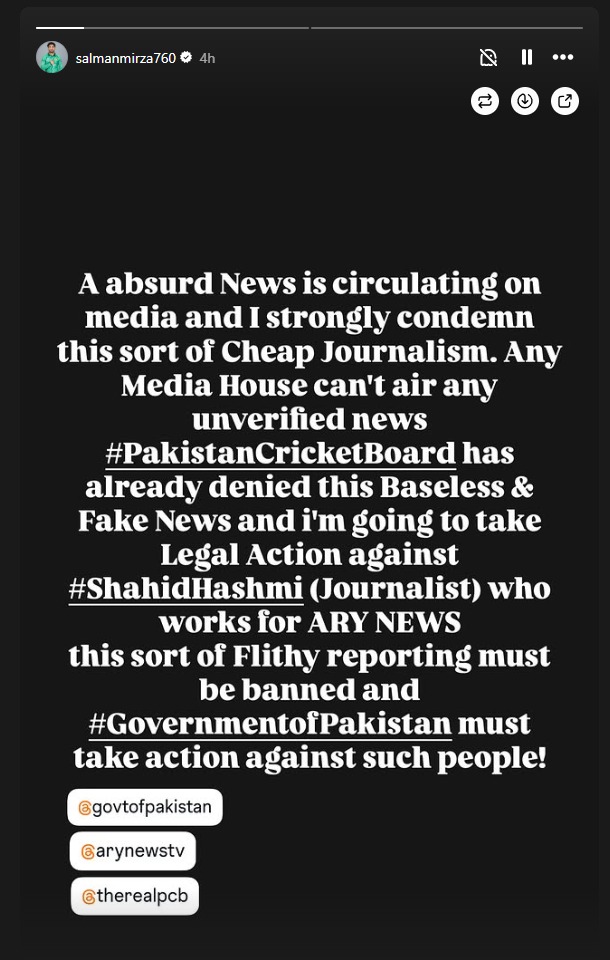
    Soon after the report circulated, Mirza also responded through his Instagram account. He strongly criticised the story and called it false and irresponsible journalism.

    “A absurd News is circulating on media and I strongly condemn this sort of Cheap Journalism. Any Media House can’t air any unverified news. #PakistanCricketBoard has already denied this Baseless & Fake News and i’m going to take Legal Action against #ShahidHashmi (Journalist) who works for ARY NEWS. This sort of Flithy reporting must be banned and #Governmentof Pakistan must take action against such people!” Mirza wrote.

    The fast bowler added that he plans to pursue legal action against journalist Shahid Hashmi over the report.

    The story first surfaced in Indian media and was later picked up by a prominent Pakistani mainstream channel. However, after PCB issued its statement, the report was removed from the outlet’s website and social media platforms. 

    The media organisation has not yet responded to PCB’s demand for a public apology.

  • Iran strikes Israeli airbase in 19th wave of missile attacks

    Iran strikes Israeli airbase in 19th wave of missile attacks

    The Middle East has spiralled into a multi-front war as Iran warned it will target Israel’s Dimona nuclear site if the US and Israel continue to pursue illegal regime change. This threat was conveyed as Tehran launched its “19th wave” of attacks, following a week of escalating strikes that have now pulled in Azerbaijan, Qatar, and Sri Lanka.

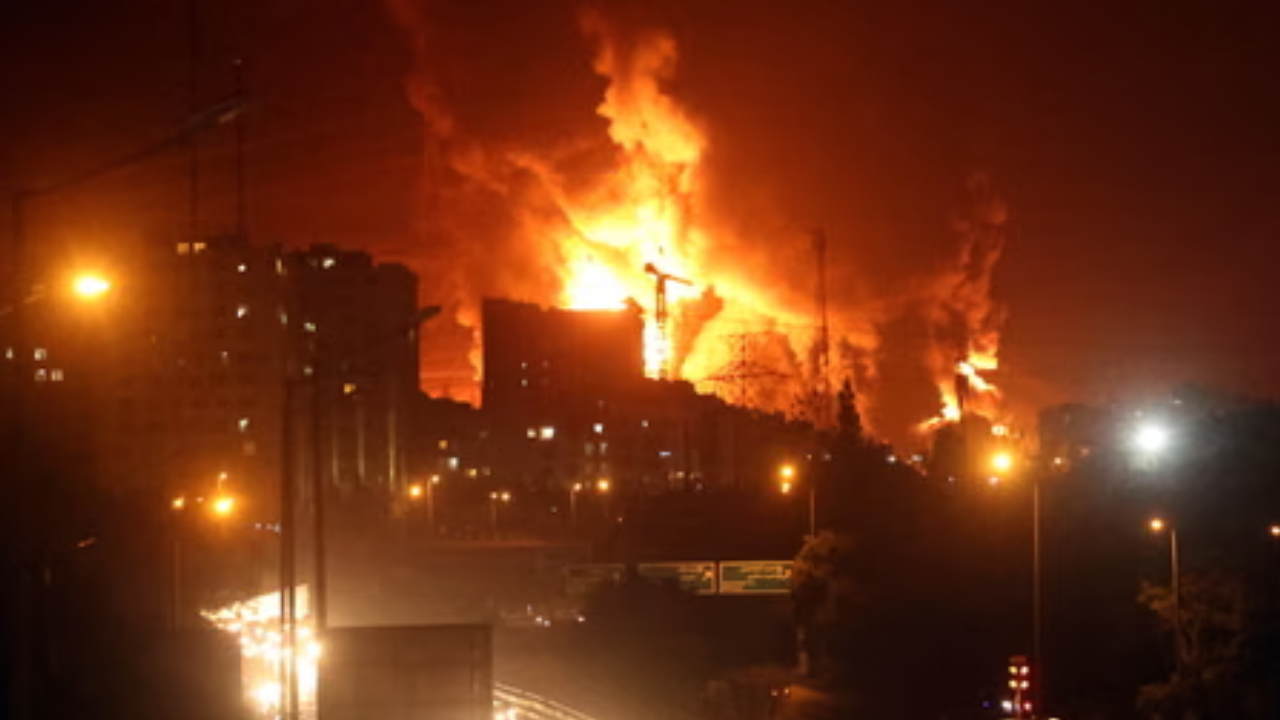
    In Tehran, a series of explosions hit the capital and the neighbouring city of Karaj on Thursday. The Israeli military confirmed it is targeting Iranian missile launchers, while Iran’s Revolutionary Guards (IRGC) claimed to have struck fuel tanks at Israel’s Ramat David Airbase using Arash attack drones.

    The maritime conflict has turned lethal. A US submarine sank the Iranian frigate IRIS Dena off the coast of Sri Lanka, killing at least 87 sailors. A second Iranian warship is now approaching Sri Lankan waters. Iranian Foreign Minister Abbas Araghchi stated that the US “perpetrated an atrocity at sea” and warned that Washington will “bitterly regret” the move.

    The spillover has reached the Caucasus and the Gulf. Azerbaijan’s defence ministry reported Iranian drone strikes on an airport in the Nakhichevan exclave, wounding two people. “These acts of attack will not go unanswered,” the ministry said, confirming it is preparing retaliatory measures. Meanwhile, explosions echoed over Doha and Manama as Qatari and Bahraini air defences intercepted incoming missiles. A tanker off the coast of Kuwait was also hit by a large explosion, causing an oil spill.

    In Washington DC, the US Senate voted 52-47 to block a bipartisan resolution that would have required President Donald Trump to seek congressional authorisation for the military campaign. Trump thanked NATO Secretary General Mark Rutte for his support, while Israel’s Defence Minister Israel Katz said US Defence Secretary Pete Hegseth urged him to “keep going to the end.”

    The economic fallout is immediate. Oil prices surged over 3 percent, with Brent crude reaching $83.99 per barrel. China has instructed its largest refiners to suspend diesel and gasoline exports as the Strait of Hormuz remains blocked. Inside Iran, a total internet blackout has exceeded 120 hours, with connectivity at only one percent.

    The conflict escalated following illegal joint US-Israeli strikes last Saturday, which Iranian media reported resulted in the assassination of Supreme Leader Ali Khamenei. Since then, US Central Command reports hitting over 1,250 targets, while the US State Department has urged Americans to leave 15 Middle Eastern countries.