Author: News Desk

  • Our desire for peace should not be mistaken as weakness: PM Shehbaz

    Our desire for peace should not be mistaken as weakness: PM Shehbaz

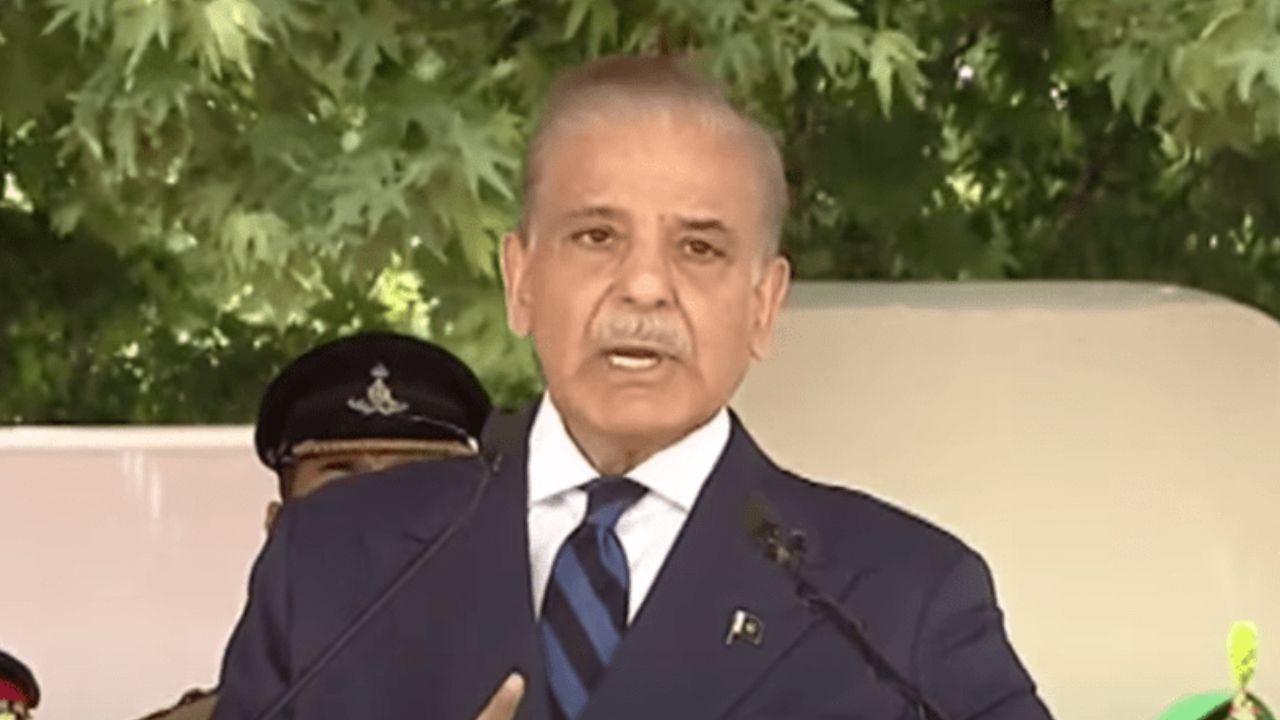
    As Indian continues with its warmongering following the Pahalgam terror attack in held Kashmir, Prime Minister (PM) Shehbaz Sharif on Saturday said that Pakistan’s desire for peace should not be mistaken for weakness.

    “Pakistan is a peace-loving country, and peace is our preference and desire, but it should not be mistaken for our weakness,” he said while addressing the passing out parade at the Pakistan Military Academy (PMA) Kakul.

    On New Delhi’s suspension of the Indus Water Treaty (IWT), the PM said that any attempt to stop, reduce or divert the flow of water belonging to Pakistan under the agreement would be responded to with full force and might.

    “Nobody should remain under any kind of impression and confusion,” he said.

    The premier further said that without verifiable evidence, Pakistan was blamed by the neighbouring country. He said a transparent investigation into such tragedies should be conducted, reiterating Pakistan’s openness to international scrutiny.

    PM Shehbaz, while recalling India’s 2019 airstrike and Pakistan’s retaliation, said the country had already proven its military capability through a “measured yet resolute” response.

    Reaffirming Pakistan’s support for Kashmiris’ right to self-determination, he said, “Founder of the nation, Quaid-e-Azam Mohammad Ali Jinnah, rightly said that Kashmir is the jugular vein of Pakistan. Let there be no doubt… we shall continue to support the right to self-determination of the Kashmiri people.”

    The premier also said that Pakistan had always condemned terrorism in all its forms and manifestations, and underscored that as the world’s frontline state against terrorism, the country had rendered countless sacrifices.

    “We do not and shall not tolerate any kind of terrorism… of any hue and colour… and that has been demonstrated beyond any ray of doubt,” he added.

  • Pakistani celebrities expose Indian media’s fake reporting after Pahalgam attack

    Pakistani celebrities expose Indian media’s fake reporting after Pahalgam attack

    Pakistani celebrities have expressed anger over the negative propaganda spread by Indian media, social media, and the government after the attack in Pahalgam, with some using strong words to warn the Modi government that “the consequences of taking the initiative will be bad.”

    Actor, producer, and director Yasir Nawaz, in a video message on Instagram, requested the Indian media and social media users to  “stop spreading misinformation, hatred, and propaganda,” adding, “Don’t be mistaken into thinking Pakistan will do nothing.”

    Actor and director Yasir Hussain also voiced his concerns, stating, “Just as India is a nuclear power, Pakistan also has an atomic bomb. Spreading hatred will have bad consequences, for which the Indians will be responsible.”

    He pointed out that “Indian YouTubers, bloggers, and media figures are busy spreading hateful and false information,” behaving as if Pakistan cannot respond.

    Yasir Hussain made it clear: “Pakistanis may have political differences among themselves, but when it comes to the country, they are united, and they stand with the Pakistan Army on the issue of war.”

    He also condemned the Pahalgam incident and expressed deep sorrow over the loss of human lives.

    Similarly, actor Shamoon Abbasi also criticised the Indian media and the Modi government for spreading hatred. He said, “After the Pahalgam incident, the Indian media spread so much false news that they even declared a living couple dead — and later, the couple had to come forward themselves to confirm they were alive.”

    According to Shamoon Abbasi, negative and hateful propaganda in India incited increased aggression among its people, with some even saying they would “enter Pakistan with bombs tied to their bodies.”

    He recalled that “the Indian government had similarly spread hateful propaganda during the Pulwama attack in 2016.”

    Addressing Indian Prime Minister Narendra Modi, Shamoon Abbasi said, “You look bad when talking about terrorism because you yourself have been promoting terrorism.”

    He added that “Modi has been spreading terrorism in occupied Kashmir for years, where innocent children, women, and youth are being killed.”

    Abbasi compared India and Israel, calling them “two sides of the same coin,” and said, “The Bharatiya Janata Party (BJP) has a long history of spreading terrorism and increasing problems.”

    He also remarked, “Whenever a Pakistani actor goes to India for work, the BJP spreads propaganda — even when Hania Aamir and Fawad Khan visited India.”

    Appealing to the Indian public, Shamoon Abbasi urged, “Wake up and understand the propaganda by your government and media. War is not the solution. Wars only destroy countries and nations.”

    Singer and actor Farhan Saeed also expressed his anger over the Indian media’s behaviour, writing on Instagram, “If a war breaks out between the two countries, the Indian media will be responsible for it.”

    Farhan added, “The Indian media has been doing such heinous propaganda in the past and will continue to do so. The Indian public needs to come to its senses.”

    According to him, “If war breaks out due to such propaganda, the ones spreading hatred will run away — and it will be the common people who suffer.”

    Singer Umair Jaswal also criticised the Indian media. Sharing a video of the couple wrongly declared dead, he called the Indian media’s behaviour “a game of the BJP.”

    He wrote, “The couple who were declared dead had to shout and prove they were alive. This is how the Indian media continues its negative propaganda.”

  • Pahalgam attack: Palestinian president ‘reaffirms support’ for India’s security, stability

    Pahalgam attack: Palestinian president ‘reaffirms support’ for India’s security, stability

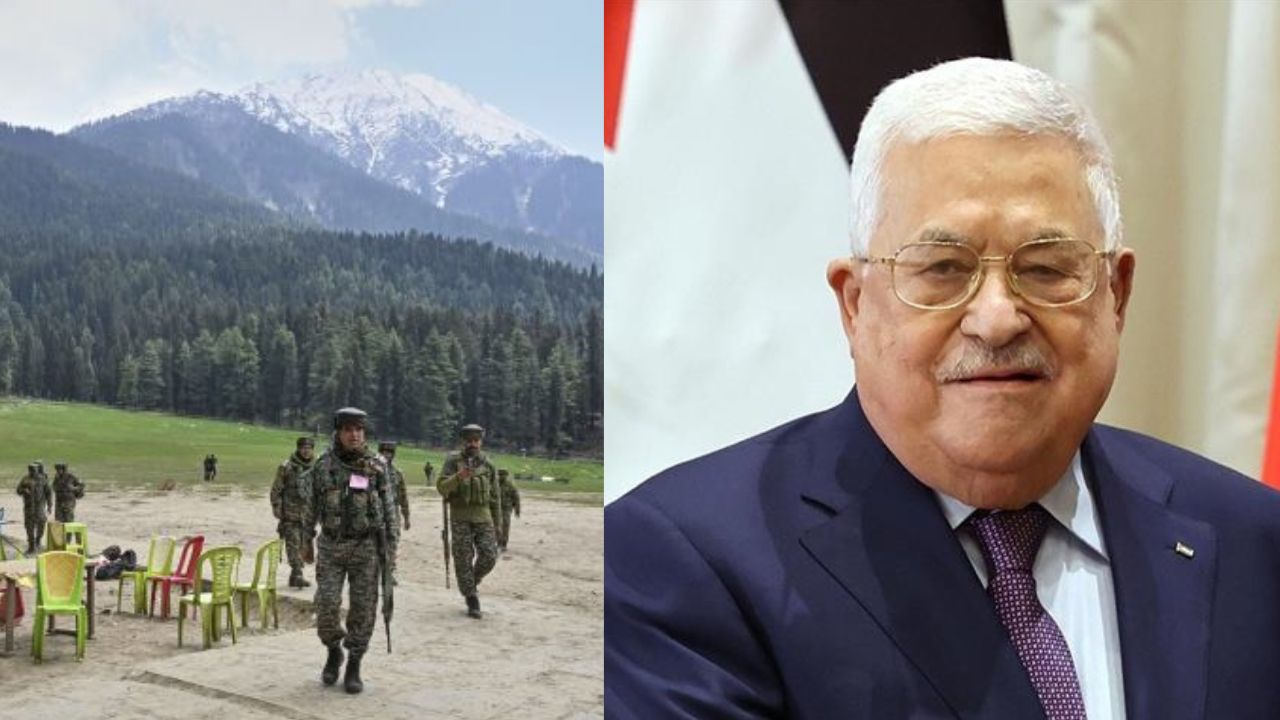
    Palestinian President Mahmoud Abbas has in a letter to Prime Minister (PM) Narendra Modi reaffirmed unwavering support for the security and stability of India following the attack in held Kashmir’s Pahalgam area, which claimed the lives of 26 civilians.

    Indian media reports quoted Abbas as condemning in his letter the “heinous attack”, expressing sorrow over the tragic shooting. The Palestinian president also extended heartfelt condolences to the country and the families of the victims of the attack.

    He prayed for the speedy recovery of those injured in the attack, reports said.

    “We have followed with sorrow the news of the tragic incident that claimed lives of and injured dozens of innocent civilian tourists in the regions of Jammu and Kashmir,” the letter read.

    “We pray for mercy and peace for the departed, a speedy recovery for the injured, and continued prosperity and well-being for India and its people. Please accept, Your Excellency, the expression of our deepest sympathy,” it added.

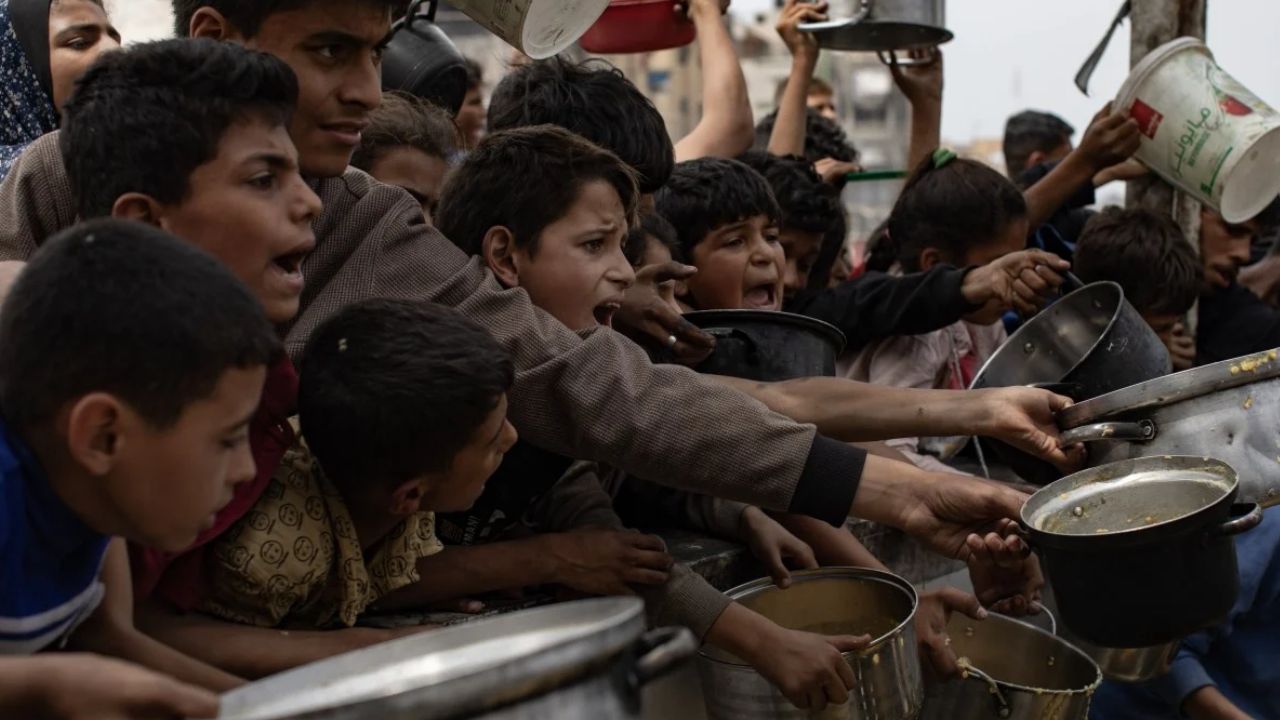
    Separately, the food shortage in Gaza has deteriorated as the UN’s World Food Programme (WFP) on Friday warned it has depleted all its food stocks in war-ravaged Gaza, where the entry of humanitarian aid has been blocked by Israel since March 2.

    “Today, WFP delivered its last remaining food stocks to hot meals kitchens in the Gaza Strip. These kitchens are expected to fully run out of food in the coming days,” WFP, one of the main providers of food assistance in Gaza, said in a statement.

  • ‘They’ll figure it out themselves’: Trump on ‘1,000-year-old’ Pak-India tensions over Kashmir

    ‘They’ll figure it out themselves’: Trump on ‘1,000-year-old’ Pak-India tensions over Kashmir

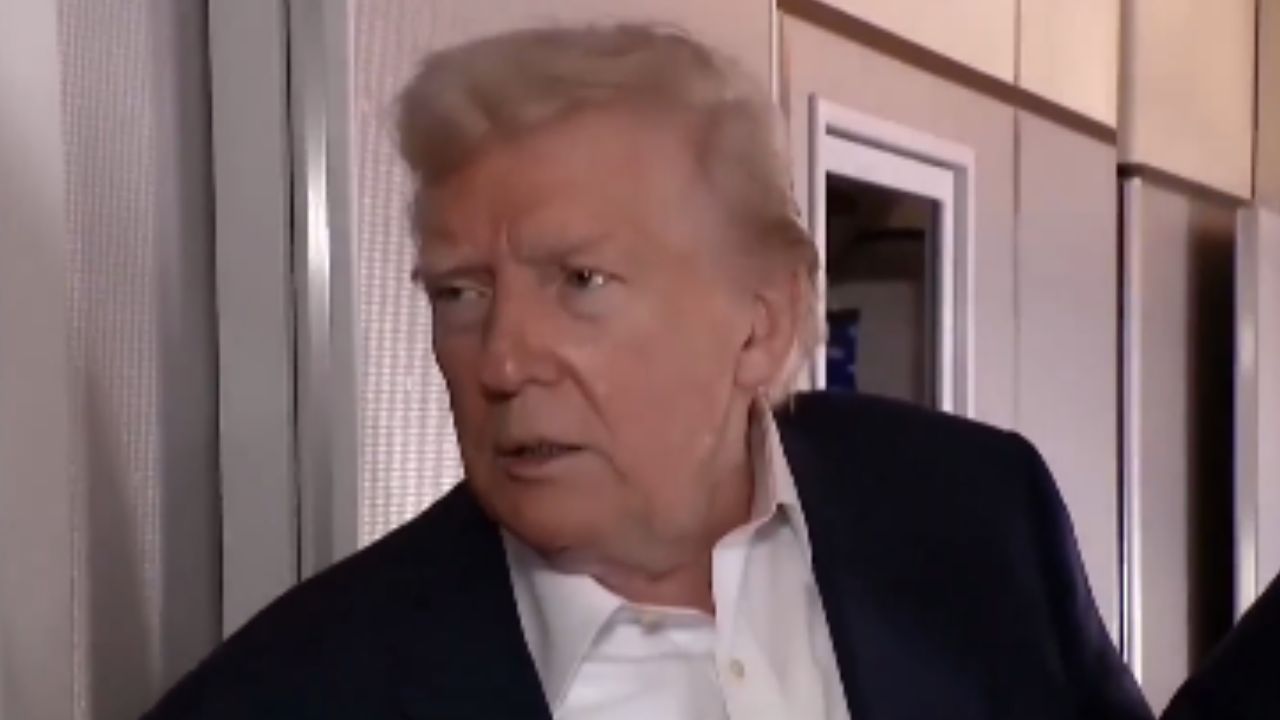
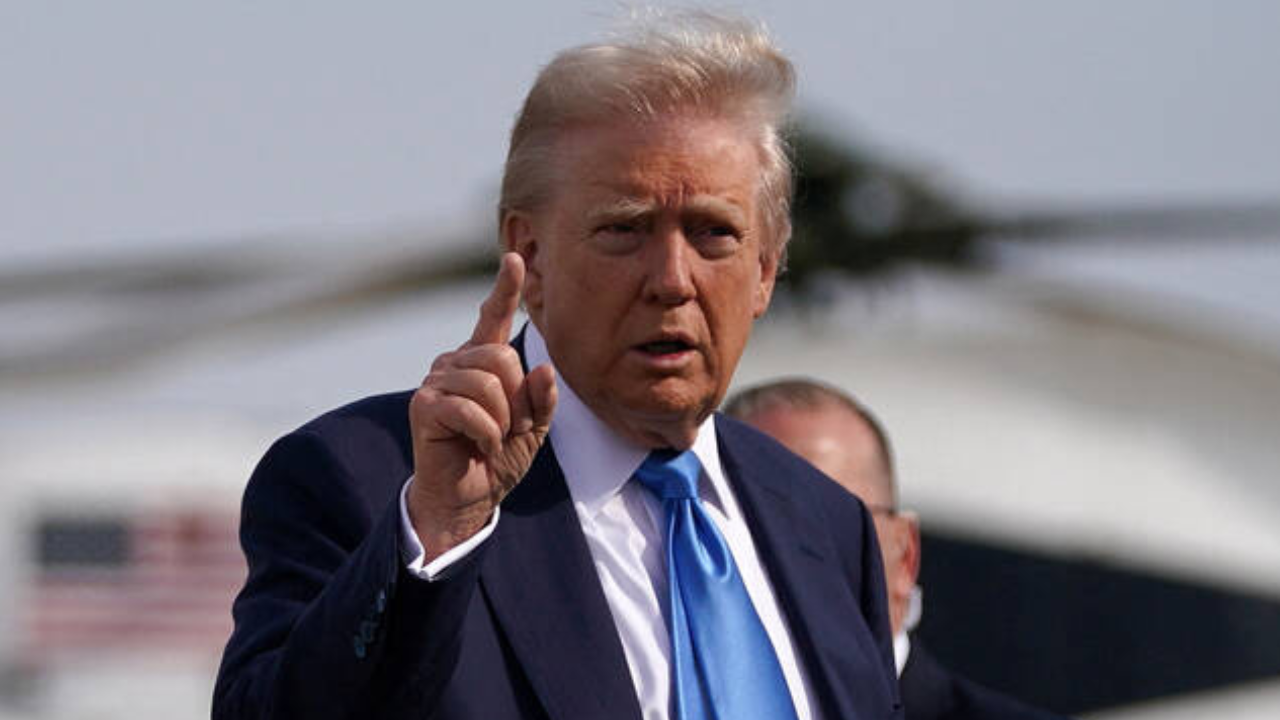
    United States (US) President Donald Trump has downplayed concerns over mounting tensions between Pakistan and India, saying he was close to both countries and “they’ll figure it out themselves, one way or the other”.

    During an interaction with reporters on Friday, Trump was asked aboard Air Force One about crumbling relations between India and Pakistan as the fallout deepens from a deadly attack on civilians by gunmen in Indian-administered Kashmir.

    “There have been tensions on that border for 1,500 years so, you know, it’s the same as it has been,” Trump told reporters. “But they’ll get it figured out, one way or another.”

    Kashmir has been divided between India and Pakistan since their independence in 1947, with both claiming the territory in full but governing separate portions of it.

    Rebel groups have waged an insurgency in Indian-controlled Kashmir since 1989, demanding independence or a merger with Pakistan.

    Tensions have flared since Tuesday, when 26 male tourists were killed by gunmen in the Kashmir town of Pahalgam.

    Indian police say the three gunmen are members of the Pakistan-based Lashkar-e-Taiba group, a UN-designated terrorist organisation.

    A day after the attack, New Delhi suspended a water-sharing treaty, announced the closure of the main land border crossing with Pakistan, downgraded diplomatic ties, and withdrew visas for Pakistanis.

    Denying any involvement, Islamabad called attempts to link Pakistan to the Pahalgam attack “frivolous” and vowed to respond to any Indian action

    Officials said Friday that there was an overnight exchange of fire between Indian and Pakistani forces at the Line of Control.

    “There’s great tension between Pakistan and India but there always has been,” Trump said.

  • Either our water or their blood will flow in Indus: Bilawal

    Either our water or their blood will flow in Indus: Bilawal

    Days after India unilaterally suspended the long-standing Indus Water Treaty (IWT) and threatened Pakistan with war, Pakistan Peoples Party (PPP) Chairman Bilawal Bhutto-Zardari has warned India against interrupting the country’s water supply, saying that Indus “is ours and will remain ours”.

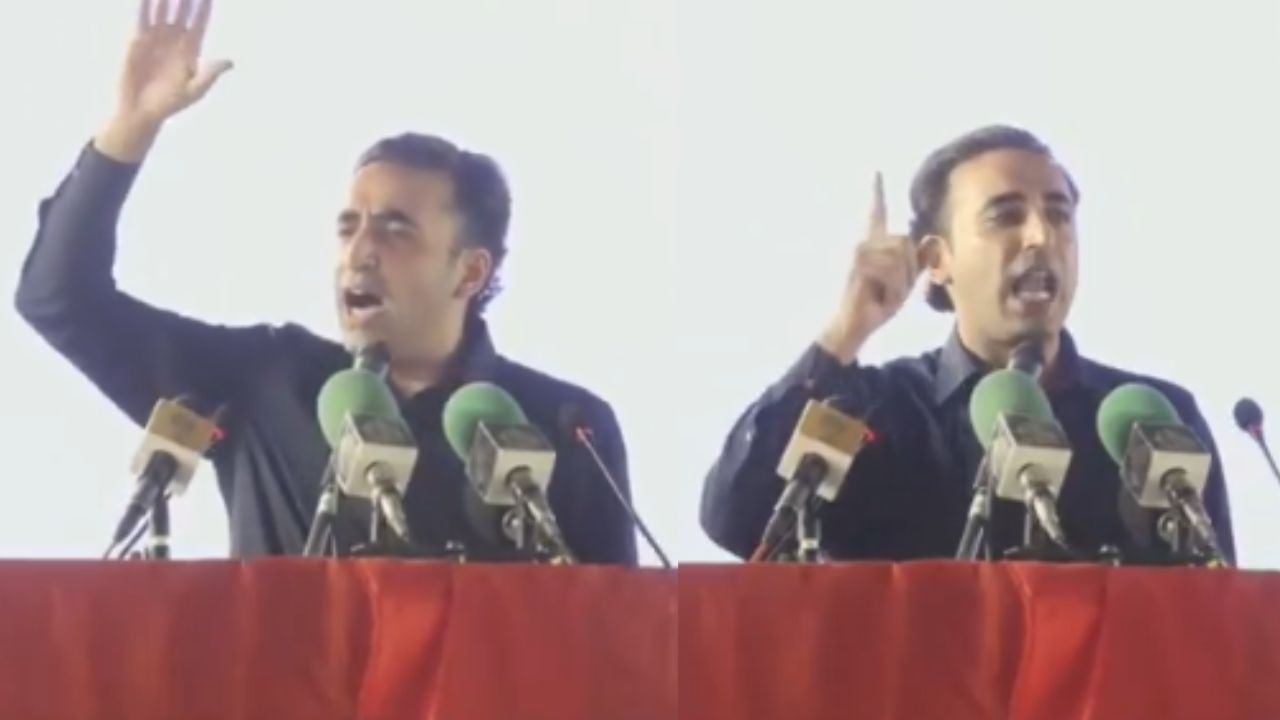
    “Baharat has attacked Sindhu [Indus]. We have condemned the terrorist attack in held Kashmir…. but Modi has made false allegations against Pakistan,” Bilawal said while addressing a public gathering in Sukkur.

    “Standing beside the Sindhu River, I want to say to Baharat that the Indus is ours and will remain ours… either our water will flow through it or their blood,” the PPP chief thundered.

    Bilawal said the struggle to protect the river would continue till India withdrew its decision, adding that the PPP stood with Prime Minister (PM) Shehbaz Sharif on the issue.

    Emphasising that existence of people of Pakistan was linked to the Indus, he said the people have had the river for thousands of years. “We are the heirs of this river, and we will protect it,” the PPP chief said and added that every Pakistani would become an ambassador of the Indus and protect it.

    On the canals issue, the chairman PPP congratulated the people, saying that it was the success of their peaceful struggle that the federal government had decided that no canals would be made without consensus in the Council of Common Interests (CCI).

    He noted that the CCI included representatives from both the federal government and all provinces, and before this agreement, decisions about building new canals could have been approved by majority vote, even without public consent.

    “But we are grateful to PM Shehbaz Sharif, who listened to your concerns, and now the majority parties in the council have agreed that no new canals will be constructed without your consent,” Bilawal said.

    Bilawal concluded by announcing that PPP will hold a grand public gathering in Mirpurkhas on May 1.

  • Hundreds of buildings damaged, dozens injured in 6.3 Ecuador quake

    Hundreds of buildings damaged, dozens injured in 6.3 Ecuador quake

    A shallow 6.3-magnitude earthquake left more than 30 people injured, damaged more than 800 buildings and caused widespread power cuts in the Ecuadoran port city of Esmeraldas on Friday.

    Ecuador’s emergency response services report 32 injured, 179 homes destroyed and 716 homes that have been damaged in the shake, which was felt as far away as the capital Quito.

    Fisherman Andres Mafare, aged 36, was walking to the port when he heard a loud crack followed by a strong earthquake that shook overhead cables.

    He raced home to try to find his wife and two sons. “I ran like crazy, and when I got here saw that my house had been destroyed,” he told AFP.

    An AFP reporter in Esmeraldas witnessed tumbled-down walls, facades that had collapsed onto a road in a pile of debris and several cracked buildings.

    Families stood around surveying the damage.

    “It was very strong,” former presidential candidate Yaku Perez told AFP at the scene.

    “It felt like an eternity, but I guess it was less than a minute.”

    The authorities said four health centers and 18 schools had been damaged, while the facade of a military building partially collapsed. Two roads and a bridge were also damaged.

    According to official estimates, about 80 percent of homes experienced power or phone outages.

    National oil company Petroecuador said it briefly “suspended operations” at the Esmeraldas refinery and a nearby pipeline.

    The refinery produces 111,000 barrels a day and the Transecuadorian Pipeline System transports 360,000 barrels a day.

    Daniel Noboa, the South American nation’s newly re-elected president, said he was rushing ministers to the scene to help coordinate the building of shelters and delivery of humanitarian aid.

    “The government is with you, and that’s how it will be going forward,” he said on social media.

    On the streets, residents navigated debris and collapsed walls.

    Mafare said he lost “material things, three or four walls… I know the authorities are going to help us,” referring to fellow residents of this impoverished area plagued by drug trafficking violence.

    The US Geological Survey and local monitors said the quake struck just off the coast at a depth of about 35 kilometers (22 miles) shortly before 7:00 am local time (1200 GMT).

    Ecuadorean authorities said there was no tsunami risk from the quake.


    – Country of Earthquakes –

    Ecuador sits on one of the most geologically active zones on Earth, and the fault between the Nazca and South American plates runs along its coast.

    The Geophysical Institute said that “the convergence of the Nazca and South American plates, which have a movement speed of 5.6 centimeters (2.2 inches) per year, is the process that generates the largest earthquakes in the country.”

    The tremor was felt in 10 of the country’s 24 provinces, including Manabi, Los Rios, Guayas and Pichincha, Ecuadorean officials said.

    There were no reports of injuries across the border in neighboring Colombia.

    Last week, Ecuador marked the anniversary of the 2016 earthquake that struck the coasts of Manabi and Esmeraldas. With a magnitude of 7.8, it left 673 dead and about 6,300 injured.

  • Ducky Bhai’s dangerous motorway stunt lands him in trouble

    Ducky Bhai’s dangerous motorway stunt lands him in trouble

    The National Highways and Motorways Police has taken action against popular Pakistani YouTuber Saad Rehman, widely known as Ducky Bhai, for performing risky stunts while driving.

    In a viral video shared on social media, Ducky Bhai was seen sleeping inside his moving car with his legs on the steering wheel while the vehicle was in auto mode. The stunt, recorded on the highway, sparked outrage online.

    Many users slammed the YouTuber’s reckless behaviour, calling it “irresponsible” and demanding strict action. Several even filed formal complaints with the National Highways and Motorways Police.

    Responding to the complaints, the police registered a case against Saad Rehman for overspeeding, reckless driving, and negligence.

    A spokesperson for the Motorway Police confirmed the viral video and stated that action has been officially initiated. The department has also shared a video message on social media warning others against similar acts.

  • FIA arrests leader of illegal organ transplantation group in Lahore

    FIA arrests leader of illegal organ transplantation group in Lahore

    The Federal Investigation Agency (FIA) Anti-Corruption Circle in Lahore has arrested the alleged leader of a group involved in unauthorised human organ transplantation.

    The action was taken following a formal complaint submitted by a citizen affected by the illegal procedure.

    The accused, Muhammad Irfan Aslam, allegedly created fake tissue matching reports to facilitate kidney transplants, according to the FIA spokesperson.

    Private healthcare facilities were used for these operations, which were not authorised by law or in accordance with medical standards.

    According to the initial investigation, the person had been avoiding law enforcement since 2024 and had ties to an organised network involved in the illegal trading of human organs.

    The network is believed to operate by exploiting patients in need of transplants, bypassing legal and ethical frameworks established for organ donation and surgery.

    FIA officials also mentioned that other suspects and facilitators involved in the network would be arrested soon.

    Authorities confirmed that violations of organ transplant rules would be dealt with in accordance with the relevant legislation.

  • All Gaza food stocks depleted as Israel blocks aid: WFP

    All Gaza food stocks depleted as Israel blocks aid: WFP

    The UN’s World Food Programme said Friday it had depleted its food stocks in genocide-ravaged Gaza, where Israel has blocked all aid for more than seven weeks.

    After 18 months of genocide, the situation in Gaza “is probably the worst” it has been, the UN’s humanitarian office has said, with the head of the world body’s Palestinian refugee agency decrying the aid stoppage on Friday as “politically motivated starvation”.

    WFP, one of the main providers of food assistance in the Palestinian territory, said it had “delivered its last remaining food stocks to hot meals kitchens in the Gaza Strip” on Friday.

    It said “these kitchens are expected to fully run out of food in the coming days”.

    Philippe Lazzarini, head of the UN Palestinian refugee agency UNRWA, said the crisis was “manmade”.

    “The Government of Israel continues to block the entry of food + other basics,” he wrote on X. “Nearly 2 months of siege. Calls to bring in supplies are going unheeded.”

    The World Health Organization said the situation was no different for medical supplies.

    After blocking aid during an impasse over the future of a ceasefire with Hamas, Israel resumed its bombardment of Gaza on March 18, followed by a ground offensive.

    Mohammed al-Mughayyir, an official with Gaza’s civil defence rescue agency, told AFP that the death toll from Israeli strikes on Friday had risen to at least 40.

    In the evening, the Israeli military issued an evacuation order for Palestinians in Zeitun and two nearby areas in the territory’s north ahead of another planned strike, saying it was responding to “terrorist activity” and “operating with force”.

    Gazans say they are threatened with death not just from bombardment, but from a lack of food.

    In addition to the WFP, aid agencies and Western governments have also voiced alarm.

    “We are literally dying of hunger,” Tasnim Abu Matar, a Gaza City resident, said earlier this week.


    – ‘Lifeline’ –

    “For weeks, hot meal kitchens have been the only consistent source of food assistance for people in Gaza. Despite reaching just half the population with only 25 percent of daily food needs, they have provided a critical lifeline,” the WFP said.

    The agency added that “more than 116,000 metric tons of food assistance –- enough to feed one million people for up to four months” was positioned at aid corridors ready to be brought in “as soon as borders reopen”.

    Following WFP’s warning, the World Health Organization’s chief said medical supplies were also “running out” in Gaza while 16 WHO trucks wait to enter.

    “This aid blockade must end. Lives depend on it”, Tedros Adhanom Ghebreyesus said on X.

    WFP added that all 25 bakeries it supports in Gaza were forced to close on March 31 as wheat flour and cooking oil ran out during “the longest closure the Gaza Strip has ever faced”.

    Israeli Defence Minister Israel Katz last week said his country would continue blocking aid because the tactic is “one of the main pressure levers preventing Hamas from using (aid) as a tool with the population”.

    On Wednesday, Germany, France and Britain called for an end to the “intolerable” blockade and warned of “an acute risk of starvation, epidemic disease and death”.

    The International Criminal Court in November issued an arrest warrant for Israeli Prime Minister Benjamin Netanyahu partly on suspicion of the war crime of starvation as a method of warfare.

    Netanyahu rejected the accusations as “absurd and false”.


    – ‘I found him on fire’ –

    At least 2,062 people have been killed in Gaza since Israel resumed its campaign against Hamas militants in mid-March.

    That brings the overall death toll of the genocide to 51,439, most of them civilians, according to the territory’s health ministry.

    Hamas’s October 2023 attack on Israel resulted in the deaths of 1,218 people, mostly civilians, according to an AFP count based on official Israeli figures. That began the Israeli genocide against Palestinians, which has killed more than 50,000 people in Gaza.

    Among the fatalities on Friday were five members of the al-Taima family killed when an air strike hit their makeshift tent in Al-Mawasi, near Khan Yunis, the civil defence’s Mughayyir said.

    Gaza resident Ramy, who gave only his first name, said he lost his three-year-old son in a strike on their tent.

    “When I couldn’t find him, I went back to the tent and I found him on fire,” Ramy said.

    Israel’s military has threatened an even larger offensive if militants do not soon free hostages who remain in Gaza.

    Israel says militants are still holding 58 people captured during their October 2023 attack, including 34 the Israeli military says are dead.

    Senior Hamas official Taher al-Nunu told AFP on Friday that a delegation from the group would meet with Egyptian mediators “tomorrow to discuss Hamas’s vision for ending the war”, reiterating the group’s weapons “are not up for negotiation”.

  • Trump says India, Pakistan to settle dispute ‘one way or another’

    Trump says India, Pakistan to settle dispute ‘one way or another’

    US President Donald Trump on Friday downplayed concerns over mounting tensions between India and Pakistan, saying the dispute between the nuclear-armed neighbours will get “figured out, one way or another.”

    Trump was asked aboard Air Force One about crumbling relations between India and Pakistan as the fallout deepens from a deadly attack on civilians by gunmen in Indian-administered Kashmir.

    “There have been tensions on that border for 1,500 years so, you know, it’s the same as it has been,” Trump told reporters.

    “But they’ll get it figured out, one way or another.”

    Kashmir has been divided between India and Pakistan since their independence in 1947, with both claiming the territory in full but governing separate portions of it.

    Rebel groups have waged an insurgency in Indian-controlled Kashmir since 1989, demanding independence or a merger with Pakistan.

    Tensions have flared since Tuesday, when 26 male tourists were killed by gunmen in the Kashmir town of Pahalgam.

    Indian police say the three gunmen are members of the Pakistan-based Lashkar-e-Taiba group, a UN-designated terrorist organisation.

    A day after the attack, New Delhi suspended a water-sharing treaty, announced the closure of the main land border crossing with Pakistan, downgraded diplomatic ties, and withdrew visas for Pakistanis.

    Denying any involvement, Islamabad called attempts to link Pakistan to the Pahalgam attack “frivolous” and vowed to respond to any Indian action.

    Officials said Friday that there was an overnight exchange of fire between Indian and Pakistani forces at the Line of Control.

    “There’s great tension between Pakistan and India but there always has been,” Trump said.