Author: News Desk

  • Salaried individuals pay Rs266 billion income tax in six months

    Salaried individuals pay Rs266 billion income tax in six months

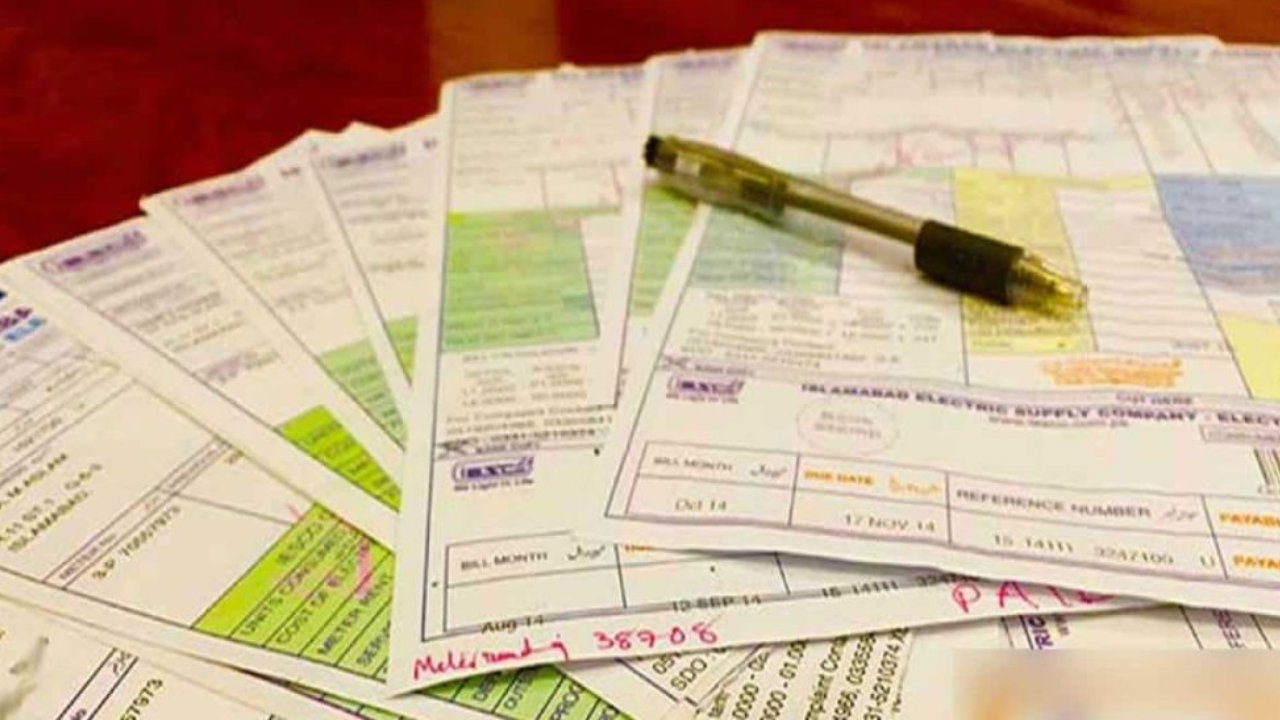
    Salaried individuals paid a whopping Rs266 billion in income tax during the first half of the current fiscal year, accounting for nearly one-tenth of the total income tax collected nationwide.


    According to provisional figures compiled by the Federal Board of Revenue (FBR) for the July–December period, tax payments from salaried employees in both the public and private sectors were more than twice the amount collected from the real estate sector during the same period.


    The data suggested that salaried individuals paid over Rs266 billion in income tax, marking an increase of Rs23 billion, or 9%, as compared to the corresponding period last year when income tax collection from salaried persons, excluding book adjustments, stood at Rs243 billion.


    Book adjustments refer to the process of reconciling the profit and loss figures recorded in book income with different rules and regulations for calculating taxable income as per the Income Tax Ordinance of 2001.


    Reports quoted sources as saying that once book adjustments are included, income tax contributions from salaried individuals had already crossed Rs300 billion by the end of the first half of the fiscal year.


    The figure also does not include payments made by certain contractual employees under Section 153-B of the income tax law.


    Despite this, the salaried class still bears a disproportionate tax burden, mostly because of what critics claim is the FBR’s dependence on a taxpayer base that has already been established. Large portions of the economy remain outside the tax net, with manufacturers and salaried persons continuing to be the main contributors. 


    The salaried class contributes about 38% of their gross income in taxes, which is far more than the average for the region and much more than contributions from industries like retail and real estate.


    Lt Gen Sarfraz Ahmed, the national coordinator of the Special Investment Facilitation Council (SIFC), also acknowledged the imbalance during a speech to the Pakistan Business Council (PBC) last month.

    He claimed that the government’s fiscal difficulties had resulted in an excessive reliance on taxes, specifically targeting documented and visible taxpayers.

    The data further showed that non-corporate employees contributed the highest share among salaried individuals, paying Rs117 billion in income tax – an increase of 14% from last year. 

    Employees in the corporate sector, on the other hand, paid Rs82 billion, reflecting a 13% rise as compared to the same period of the previous fiscal year.

    During the first half of the fiscal year, the FBR collected Rs3.03 trillion in income taxes overall. Nearly 10% of this amount came from salaried individuals, who pay taxes on their gross incomes without the ability to adjust expenses.

    Despite this contribution, FBR struggled to meet its downward-revised tax target of Rs6.5 trillion.

    To bridge the gap, it relied on advance collections and delayed the processing of taxpayers’ refunds. Even then, overall tax collection growth remained below 10%, roughly half the rate required to achieve the annual target.

    While provincial government employees paid Rs39 billion in income tax, a 7% decrease from the previous year, according to a breakdown of public-sector contributions, employees of the federal government paid Rs27 billion, registering an increase of 8%.

    The government’s recently implemented tax on wealthy pensioners, which is applied to pensions above Rs10 million per year, generated minimal revenue, indicating that full-year revenues might not be able to reach Rs1 billion.

    Meanwhile, the government last month once again allowed retired employees to draw more than one pension, a move that undermined its stated objective of pension reforms and expenditure reduction.

    Tax revenues from traders remained low. Restrictions on financial transactions by ineligible individuals were among the enforcement measures that were either diluted or rolled back.


    However, after higher rates for non-filers and the establishment of a new category for late filers, the real estate sector saw some increase in tax collection. Plot sales saw a two-thirds increase in withholding tax income to Rs87 billion, while plot purchases saw a 29% decline to Rs39 billion.


    Overall, withholding tax collections from the real estate sector reached Rs126 billion during the first half of the fiscal year, reflecting a 17% increase.
  • Four Pakistan kabaddi players banned for refusing doping tests

    Four Pakistan kabaddi players banned for refusing doping tests

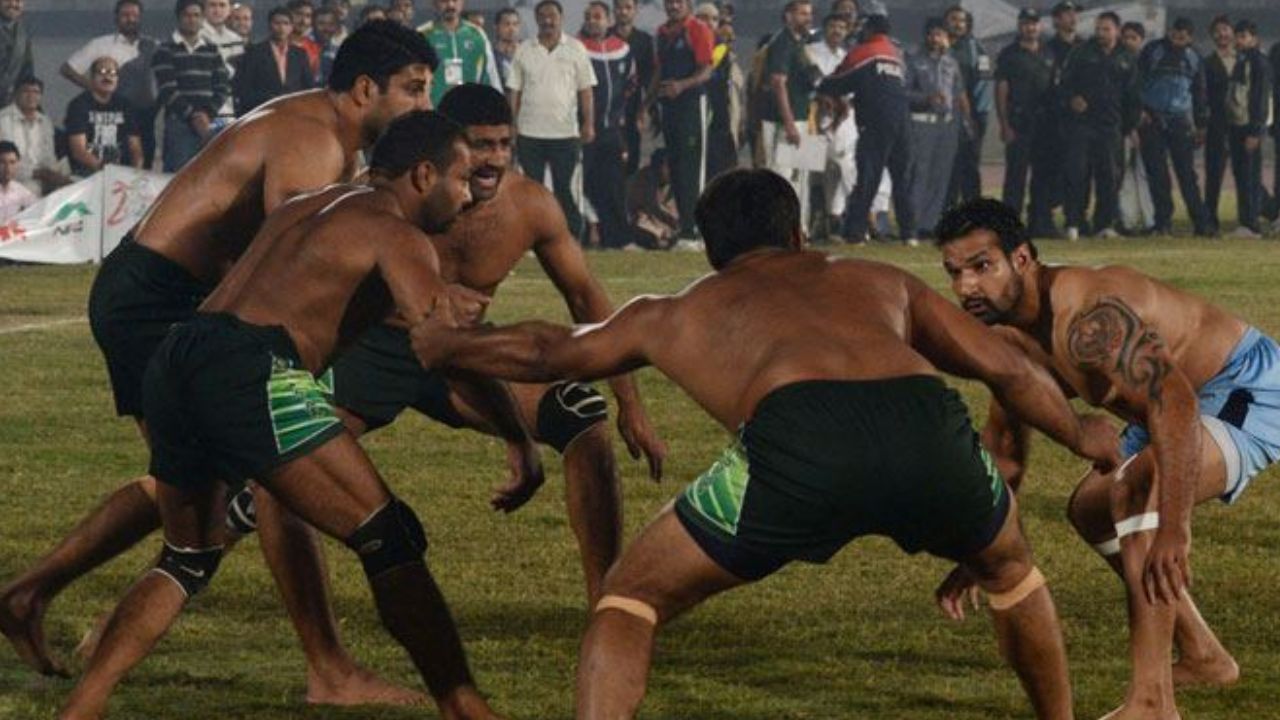
    The Anti-Doping Organization has banned four kabaddi players for four years after they refused to undergo doping tests during the National Championship in Lahore.

    The organisation issued a notification in this regard after Obaidullah Rajput, Malik Bin Yamin, Rana Haider and Kashif Sindhu refused to take the tests.

    The Pakistan Kabaddi Federation’s Disciplinary Committee has summoned a meeting on January 12 in Lahore, where all four players will appear to present their case.

    Earlier in December 2025, the federation faced controversy when Obaidullah also played for an Indian kabaddi team, wearing their jersey and waving the Indian flag at a tournament in Bahrain.

    Federation Secretary Rana Sarwar clarified that 16 Pakistani players participated in the Bahrain tournament without representing Pakistan’s national team. 

    The federation had neither granted permission for their participation nor issued No Objection Certificates (NOCs).

  • FIA files case against Faiz Hameed’s brother over land record fraud

    FIA files case against Faiz Hameed’s brother over land record fraud

    The Federal Investigation Agency’s (FIA) Anti-Corruption Cell on Monday registered a case against Najaf Hameed, the brother of former Inter-Services Intelligence (ISI) chief Faiz Hameed.

    The case also names Abdul Zahoor and Khalid Munir as suspects. The case relates to the alleged transfer of land through forged documents when Najaf Hameed was serving as a patwari (land record officer) in Islamabad.

    The FIA initiated the case after completing its preliminary inquiry. Officials said the investigation has begun.

    The FIR registered under sections 109, 409, 420, 468, and 471 of the Pakistan Penal Code (PPC) notes that fake registries and incomplete transfers of land were made in 2009 and 2010. Instead of transferring one kanal, only 10 marlas of land were reportedly transferred, while official records were tampered.

    In December last year, former director general (DG) Inter-Services Intelligence (ISI)  Faiz Hameed, was sentenced to 14 years of rigorous imprisonment. The charges against him included engaging in political activities, violating the Official Secrets Act, misuse of authority, and causing wrongful loss to individuals.

    According to the Inter-Services Public Relations (ISPR), a Field General Court Martial was initiated against Faiz Hameed on August 12, 2024, under provisions of the Pakistan Army Act. The proceedings spanned over 15 months.


    Authorities are carrying out further inquiries to establish the full extent of the alleged irregularities.

  • Punjab Bar Council restores licence of Rajab Butt’s lawyer

    Punjab Bar Council restores licence of Rajab Butt’s lawyer

    Punjab Bar Council (PbBC) has restored the practising licence of Advocate Mian Ali Ashfaq who represents YouTuber Rajab Butt.

    According to reports, the council made the decision on Tuesday, a day after Lahore High Court’s Justice Malik Awais Khalid heard a petition filed by Ashfaq challenging the suspension of his licence. The court summoned the complete record of the PbBC on the matter of the suspension. 

    “Keeping in view the above-mentioned facts and circumstances, and particularly the violation of Article 10-A of the Constitution of the Islamic Republic of Pakistan, 1973, the licence of Mr Ali Ashfaq to practice as an advocate is hereby restored,” PbBC Vice Chairman Muhammad Ashfaq Kahooti stated in Tuesday’s order.

    Tuesday’s order revealed that on the same day the council received the complaint against Ashfaq, “a short notice was issued to him and, without affording him a proper opportunity of hearing, his licence to practice as an advocate was suspended” by the bar’s executive committee.

    However, the order noted that the council turned down Ashfaq’s objection on the executive committee’s lack of authority as “the said contention is misconceived”.

    “The Punjab Bar Council is duly empowered to reprimand, suspend, remove from practice, or impose compensation, fine, or penalty upon any advocate found guilty of professional or other misconduct on a complaint under Section 41(1) and (2) of the said Act,” the order maintained.

    The PbBC stated that Ashfaq submitted an application on Tuesday in the form of an objection petition challenging his licence suspension. His application argued that the December 31 order violated Article 10-A of the Constitution and “principles of natural justice, as the order was passed in absentia without providing him an opportunity of hearing”.

    Ashfaq further contended that he had not “committed any misconduct either towards the legal fraternity or against the dignity of the legal profession”. 

    The lawyer described the complaint filed by KBA as “biased, mala fide, and motivated by certain members of its cabinet”.

    The PbBC had suspended Ashfaq’s licence on December 31 following a complaint from the president and general secretary of the Karachi Bar Association (KBA).

  • Used mobile imports to be banned under new manufacturing policy

    Used mobile imports to be banned under new manufacturing policy

    The federal government on Monday announced a ban on the import of used mobile phones under the proposed Mobile and Electronic Devices Manufacturing Policy 2026–33.

    The policy, prepared by the Engineering Development Board (EDB) in collaboration with local mobile phone manufacturers, aims to draw in global brands and encourage export-led growth through domestic production, in line with models adopted by countries such as India, Vietnam and Bangladesh.


    Stakeholders examined the policy framework’s objectives and implementation plan during a high-level meeting chaired by Special Assistant to the Prime Minister (SAPM) on Industries and Production Haroon Akhtar Khan.

    A detailed briefing was given on the proposed measures, including a comparison between local assembly and complete imports. Addressing the meeting, Haroon Akhtar Khan said the policy’s primary focus was to generate local employment and strengthen Pakistan’s industrial base.

    Under the policy guidelines, mandatory export targets were described as counterproductive, citing the auto sector as an example. Exports will need quality certification, but this shouldn’t be enforced coercively. The policy also proposes the establishment of government-run local laboratories, penalties tied into to performance targets, and a defined minimum number of parts for semi-knocked-down (SKD) kits 40 parts for smartphones and 15 for feature phones.


    It further recommends institutionalising valuation rulings with the participation of the EDB, the Pakistan Mobile Phone Manufacturers Association (PMPMA) and the Customs valuation directorate. To curb under-invoicing, both completely built units (CBUs) and locally manufactured mobile phones are proposed to be placed under the 3rd schedule of sales tax.

    Export targets are to be directly linked with the implementation of Tax Increment Financing (TIF), while the tariff gap between CBUs and SKDs is proposed to be maintained at a minimum of 30 percent. The policy also suggests the application of a TIF levy on both CBU and SKD imports and acknowledges that e-waste management remains a complex challenge.

    Haroon Akhtar Khan said phased localisation would be adopted to encourage foreign investment in high-tech manufacturing and ensure sustainable industrial growth. He added that the policy places particular emphasis on the local production of key components, including motherboards, printed circuit boards, electronic parts and display units.

    He restated Prime Minister Shehbaz Sharif’s plans to integrate Pakistan into global value chains and turn the nation into an export base for foreign companies. 


    Major international brands, such as Samsung, Xiaomi, Oppo, Vivo, and Nokia, were told by representatives of mobile manufacturers that they might become investors under the new policy framework.


    It was mentioned that growth in the mobile phone industry might benefit other electronic industries and support broader industrial development. 

    According to the SAPM, the policy’s goal is to establish an export-focused, globally competitive industrial structure that complies with international standards.


    Strict compliance mechanisms will be enforced under the policy, with incentives to be withdrawn and penalties imposed in cases of violations related to localisation targets, reporting requirements or operational obligations. Non-compliance could also result in the suspension of import licences and financial penalties, as decided by the committee.


    Mobile manufacturers stressed the need for quality certification for exports and called for the establishment of government-led local testing and certification facilities to meet international standards.

  • Govt to cut electricity rates through captive power levy

    Govt to cut electricity rates through captive power levy

    The federal government has decided to provide relief to electricity consumers by using revenue generated from a captive power levy, introduced under an agreement with the International Monetary Fund (IMF), to reduce electricity rates.

    The charge on captive power plants would be used to reduce electricity prices for all consumer categories, according to government sources. The federal cabinet has previously authorized the decision, supporting the direct transfer of the levy’s benefits to electricity consumers. 

    Officials said the government has finalised a plan under which the levy collected from captive power plants will not be adjusted on a monthly basis. Instead, electricity rates adjustments will be made at intervals of two months, allowing the accumulated amount to be reflected in consumer bills.

    The federal government has enforced a law introducing a phased levy of up to 20 percent on captive power plants operating on gas or liquefied natural gas (LNG). Under the first phase, a levy of five percent has been imposed with immediate effect.

    In the second phase, the levy will be increased to 10 percent. According to the implementation plan, the rate will rise further to 15 percent by February 2026 and reach 20 percent by August 2026. 

    Authorities said the increase in the levy rate is expected to expand the scope of electricity rate reduction as higher revenue is generated.

    Sources said every captive power plant using gas or LNG will be required to pay the levy to the federal government. The collected amount will be pooled and used specifically for lowering electricity rates in the power sector.

    The government has also outlined enforcement measures to ensure compliance. In cases where captive power plants fail to pay the levy, action will be initiated against the defaulting entities. If non-payment continues, gas supply to the concerned captive power plant will be disconnected.

    The move is part of the government’s broader plan to restructure the power sector following discussions with the IMF.

  • Avatar: Fire and Ash crosses $1 billion at global box office

    Avatar: Fire and Ash crosses $1 billion at global box office

    James Cameron’s science fiction epic Avatar: Fire and Ash has crossed $1 billion in global box office receipts, becoming the director’s fourth film to reach that milestone.

    The film, which returns audiences to the visually stunning planet of Pandora, has earned $1.03 billion in worldwide ticket sales, Walt Disney Studios announced on Sunday.

    Paul Dergarabedian, Comscore’s head of marketplace trends, said the franchise consistently draws audiences to theatres. He noted that the visually spectacular 3D films are “tailor-made” for the cinema experience.

    The original Avatar opened in 2009 and generated $2.9 billion in ticket sales worldwide, making it the highest-grossing movie ever in absolute dollars, according to Comscore. 

    However, the 1939 classic Gone With the Wind still holds the record even if box office returns account for inflation and average ticket prices over the decades.

    Thirteen years later, Avatar: The Way of Water opened in 2022 and grossed more than $2.3 billion globally. The sequel won an Oscar for best achievement in visual effects.

    Disney released the latest instalment in time for the holiday season. The film has racked up $306 million in the US and Canada, and $777.1 million internationally, the studio reported.

    Cameron’s first billion-dollar blockbuster came with Titanic in 1997, which has earned nearly $2.3 billion worldwide.

  • Sajjad Mehdi, son of Ustad Mehdi Hassan, passes away

    Sajjad Mehdi, son of Ustad Mehdi Hassan, passes away

    Sajjad Mehdi, son of legendary ghazal singer Ustad Mehdi Hassan, has died after suffering a heart attack.

    According to reports, family members rushed Sajjad to hospital immediately after the cardiac arrest, but doctors could not save him despite medical intervention.

    The deceased served as Deputy Superintendent of Police (DSP) in the Police Department and earned recognition for his professional integrity and commitment to public service.

    His funeral prayers will take place today after Zuhr in Lahore. The family has requested prayers for the elevation of his soul.

    Ustad Mehdi Hassan ranks among the subcontinent’s greatest classical vocalists, a true giant among luminaries. .

  • ICC fines Naseem Shah for breaching code of conduct

    ICC fines Naseem Shah for breaching code of conduct

    The International Cricket Council (ICC) has fined Pakistan fast bowler Naseem Shah for violating the code of conduct during the International League T20 final.

    The ICC penalised the 22-year-old, who represents Desert Vipers in the tournament, 10 percent of his match fee after he committed a Level 1 breach of the disciplinary code.

    The incident occurred on Sunday at Dubai International Cricket Stadium during the season four final between Desert Vipers and MI Emirates.

    Match officials found Naseem guilty of breaching Article 2.5 of the ICC Code of Conduct, which prohibits using provocative or insulting behaviour, language or gestures towards a batter following their dismissal.

    The confrontation began when MI Emirates captain Kieron Pollard defended a delivery from Naseem, and the ball travelled straight back to the bowler. 

    After collecting the ball, Naseem smiled at Pollard, prompting an aggressive response from the West Indian all-rounder. The exchange quickly escalated into a heated verbal altercation.

    Both players moved closer to each other during the dispute, with Pollard visibly angry while Naseem responded in kind. Umpires and Desert Vipers teammates intervened immediately to defuse the situation, though both cricketers remained visibly displeased.

    Despite the controversy, Desert Vipers claimed their first International League T20 title by defeating MI Emirates by 46 runs at the conclusion of the match.

  • No extension in Punjab winter vacations, schools to reopen on Jan 12

    No extension in Punjab winter vacations, schools to reopen on Jan 12

    Winter vacations in Punjab will not be extended beyond January 12 despite reports circulating on social media stating that cold weather might prompt an extension. 

    Addressing the speculation, Punjab Education Minister Rana Sikandar Hayat has said in a post on X that all schools and colleges across the province will reopen as scheduled on January 12, adding that there is no proposal under consideration to extend the winter break.

    Responding directly to online speculation, the minister said that the reports were “baseless and misleading” and urged the public to avoid sharing unverified information.

    He stated that there has been no change to the academic calendar,  instructing educational institutions to prepare for the resumption of classes on time.

    The clarification comes as cold weather continues across several parts of Punjab. According to the latest forecast, cold and dry conditions are expected to persist in most districts. Murree, Galiyat and nearby hilly areas may experience cloudy conditions, with light rain or snowfall possible during evening and night hours.

    While the Punjab government has rejected reports of extending winter vacations, developments related to private educational institutions have emerged from Sindh.

    The Grand Alliance of Private School Associations Sindh (GAPSAS) has announced a province-wide shutter-down strike for private schools and colleges on January 9. The decision was announced during a press conference at the Karachi Press Club, where alliance leaders raised concerns over actions taken by the Anti-Corruption Establishment (ACE) in relation to free admission verification.

    GAPSAS leaders said that following a Sindh High Court Sukkur Bench verdict issued on December 8, the Anti-Corruption department was assigned the task of verifying free admission lists submitted by regional directors. However, they alleged that the department has since started conducting direct inspections inside schools.

    The alliance stated that such inspections fall outside the legal framework of the Sindh Private Educational Institutions (Regulation and Control) Act 2013, under which the Directorate of Private Institutions is designated as the regulatory authority. They said involvement by any other department is unlawful.

    GAPSAS leaders also said the inspection process has created pressure for school administrations and students. 

    They further said parents are being repeatedly questioned despite already submitting required information and written undertakings to authorities.

    Calling for government intervention, the alliance urged the Sindh chief minister and education minister to stop direct Anti-Corruption Department entries into schools. They announced that a fresh petition will be filed in the Sindh High Court seeking to halt the ongoing verification process.