The Institute of Business Administration (IBA), Karachi and a real estate organisation, AAA Associates, have collaborated to introduce a scholarship endowment fund: AAA Associates Scholarship Endowment.
A Memorandum of Understanding (MoU) was signed between Executive Director, IBA, Dr S Akbar Zaidi and Managing Director, AAA Associates, Shahzad Ali Kiani, at the main campus. According to the press release, the motive of this initiative is to push forward the university’s financial assistance programme for meritorious students with the aid of the AAA.
Dawn News has reported that IBA supports approximately 30% of its student body every year through its financial assistance program.
Punjab’s Higher Education Department (HED) has decided to make another alteration to the intermediate test guidelines to facilitate private students in the province.
Private students will now be eligible to sit at the FSc yearly examinations, according to reports, with the latest modification due to take effect in the academic year 2023.
However, the students will be required to submit certificates to confirm their appearance in practical exams before taking the annual exams.
The students will be able to obtain these certificates from any college affiliated with any of the eight boards of secondary and intermediate education.
This change is undoubtedly great news for private candidates who wanted to enroll in sciences. Previously, private students were bound to choose between humanities and commerce.
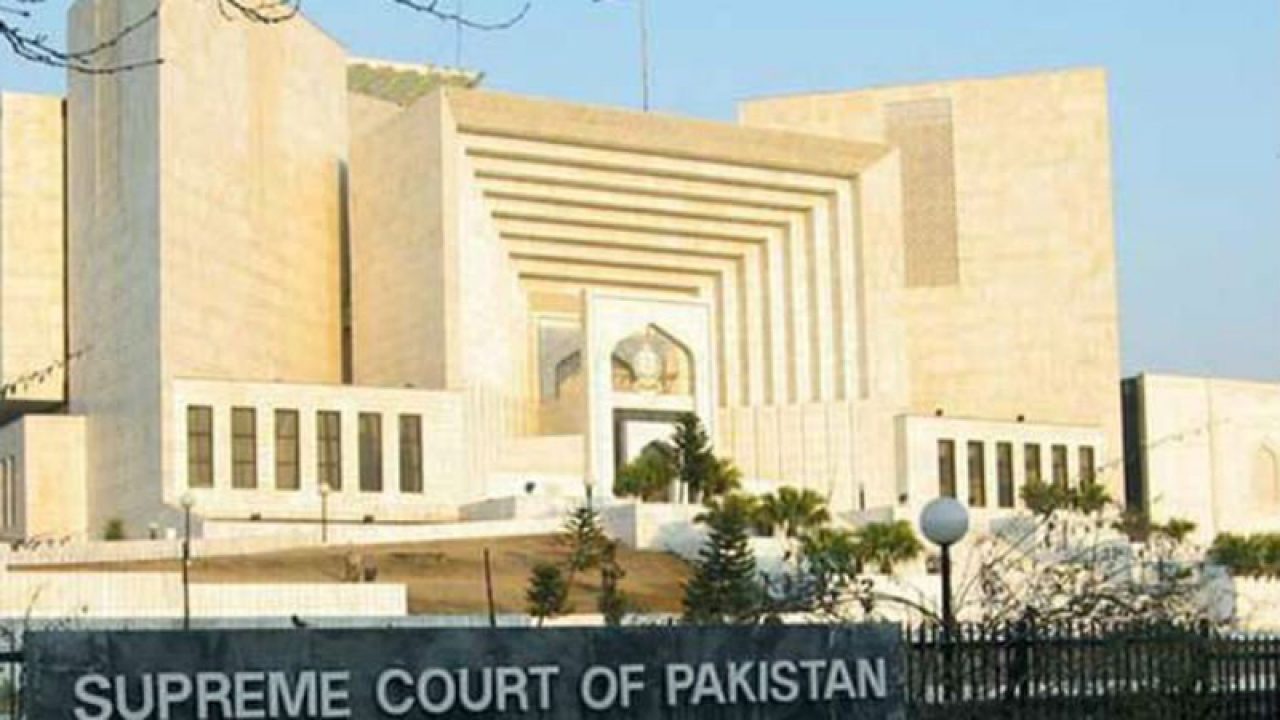
The Supreme Court of Pakistan (SC) on Wednesday ordered the Higher Education Commission (HEC) to close down campuses of private universities all over the country that are running illegally.
The SC remarked campuses of Preston University and Al Khair University have been set up illegally in Lahore and Karachi. Students sought help from the court about the HEC not issuing degrees to those who have studied from these universities.
The case was heard by a three-member bench headed by Justice Umar Ata Bandial.
The court gave directions to HEC to make special arrangements to award degrees to the students who had graduated from these illegal campuses. It also said that policies of HEC should be implemented with uniformity all over the country.
The bench gave remarks that there should be no compromise on the provision of higher education to all young students. Provincial and Federal governments need to work closely and cooperate to maintain the standards of HEC.
The SC noted that the issue was whether private universities are allowed to open sub-campuses outside their territorial limits or not. It added that HEC already made it very clear that they could set any sub-campuses and they issued many alerts as well.
Counsel for students, Ali Zafar said that the session court had ordered the National Accountability Bureau (NAB) to take action against these universities. However, Justice Bandial replied, “The HEC has the powers. There is no need for NAB to investigate the matter.”
The court said that the federal government would be ordered to change the laws if HEC is weak.
“The students had approached the Lahore High Court (LHC) for their degrees. The LHC declared the [sub-]campuses of private universities illegal,” the counsel added.
Justice Bandial acknowledged the high court verdict and emphasised pursuing the shut down of illegal campuses at the earliest.
The offices of Vice-Chancellor, registrar and public relations at Punjab University were ransacked by hundreds of students belonging to Islami Jamiat Talba (IJT) on Friday after a confrontation between two student groups, reports Dawn News.
The spokesperson for Punjab University, Khurram Shahzad, confirmed the incident in a statement that supporters of IJT broke into the premises of offices “following a fight between some students and outsiders” near the main cafeteria.
The complaint has been filed against students for legal action over the violent incident.
Shahzad said, “The university has taken measures to establish peace on the campus and only a few dozen students on all sides are trying to disturb the peaceful environment of the university. The administration is identifying these students with the help of footage and strict action will be taken against them as per the law.”
The Punjabi Council spokesperson, Khurram Gondal, claimed that the IJT activists got engaged in a clash with them on Friday after a disagreement arose over the posters of two events that needed to be displayed at the hostels that they were organising separately.
The dispute started three days ago when the Punjabi Council were organising a cultural programme and put their posters on display at the hostels, which later members of IJT replaced with their event poster.
According to Gondal, IJT activists tore and burned their posters and later the conflict escalated to a violent clash between student groups near the main cafeteria.
IJT members arranged the protest outside the Admin Block, demanding the arrest of those who were involved in the attack on them. They forcefully entered the premises of offices where they destroyed the doors and windows.
On the other hand, IJT spokesperson, Adeel Chaudhry said that they were protesting to demand action against the outsiders who were residing in the university’s hostels.
He demanded, “These outsiders should be arrested because they were creating a law-and-order situation at the campus.”
The police brought the situation under control when they reached the University and dispersed protesters.
#ImranKhanCancelExams and #ImranKhanJawabDou were among the top trends on Twitter as the National Command and Operation Centre (NCOC) and the Government of Pakistan refuse to cancel this year’s O’ and A’ Level exams and the board exams. Pakistan is currently experiencing a deadly third wave of COVID-19 with fears of an India-like situation and students are arguing that the exams not only pose a risk to their health but they have also been unable to prepare for them because of school closures. The high courts in Lahore, Islamabad, Peshawar and Karachi have also dismissed students petitions.
Students have expressed their worries and concerns over the matter on social media, tagging government accounts so that their pleas are heard. Other hashtags trending on social media included #CancelExamsPakistan2021 and #PMImranCancelExams. While some resorted to sharing memes, others threatened the PM Khan that they will not vote for him in the upcoming General Elections 2023.
Several celebrities and renowned personalities including Feroze Khan, Aagha Ali, Momina Mustehsan, Jibran Nasir and Waqar Zaka have also extended their support to students, urging the government to cancel exams.
Don’t you care about the future generation @ImranKhanPTI ? Kindly just tweet why u r not interested in replying to students of Pakistan ? Tweet hi tu karna hai ? Itni Ego Kis baat ki ? #imrankhanjawabdou
Sir we just want ur tweet, why u r not giving your input in cancelling the exams , I highly respect u for ur work for making Pakistan corruption free to tourism to tree plantation but why not just tweet about exams ? #ImranKhanJawabDou
If they want exams, we need proper physical classes. We want institutes to be opened. We want more time to prepare. That’s quiet simple. If institutes stay open we all are dying.but we are ready to die like this 🙌 #imrankhanjawabdou
Meanwhile, the Sindh High Court (SHC), Lahore High Court (LHC), Peshawar High Court (PHC) and Islamabad High Court (IHC) have all dismissed the petition of Cambridge students.
Unfortunately the Lahore High Court has dismissed our stay application on O/A level exams. I had little hope since our courts r reluctant to interfere in the policy matters decided by NCOC. However,with rising Covid cases I believe NCOC will make sane decision by cancelling exams
I would respectfully disagree with reason often given by Courts that if issue concerns 1000s why only few students come to Court. This is not the students' fault. Unions are banned, demonzied, no platforms for students to organize. This effort by O/A level students was remarkable pic.twitter.com/jKfPXQBZlB
Hon Lahore High has also dismissed the Petition against #Cambridge physical exams returning the onus to @OfficialNcoc to decide and do what is best. pic.twitter.com/f9BSJ4ez27
The SHC, in its judgement, maintained the NCOC and Shafqat Mahmood’s decision to hold physical exams for Cambridge but urged strict implementation of SOPs during the exams. It also made assurances regarding withdrawing from current exams anytime before the end of series with no extra fee as part of the order.
Minister for Education Shafqat Mehmood on April 18 had clarified that all Cambridge exams will proceed as per schedule, and will not be making use of teacher-assessed grades this year. AS and A’ Level exams are scheduled to begin from April 26, while O’ Level and IGCSE exams will start from May 10.
Matriculation and Intermediate board exams, on the other hand, have been deferred and will take place varyingly across provinces, starting late May.
One Rani Khan has set up the first transgender-only madrasa with her life savings.
Transgender people have faced discrimination in formal education system, although there is no official restriction on them attending schools or offering prayers in mosques.
“Families do not accept transgender people. They throw them out of their homes. Transgenders turn to wrongdoing. At one time, I was also one of them,” said Khan.
Rani Khan was disowned by her family at the age of 13 and forced into begging. She joined a transgender group at the age of 17. She earned living by dancing at weddings and other events.
However, she quit this work when a deceased fellow transgender persuaded her to do something for the community in a dream.
Khan studied Quran at home and attended religious schools before opening the two-room madrasa in October.
“I am teaching the Quran to please God, to make my life here and in the hereafter.”
She further said that the school did not receive aid from the government, although some officials promised to help students find jobs.
With the help of some donations, Rina is teaching her students how to sew and embroider in hopes of raising funds for the school by selling clothes.
Pakistan’s parliament recognised the third gender in 2018, giving such individuals fundamental rights such as the ability to vote and choose their gender on official documents.
Nonetheless, the transgender community remains on the margins in the country and often has to resort to begging, dancing and prostitution to make a living.
Pakistan’s 2017 census recorded about 10,000 transgender people, though trans rights groups say the number could now be well over 300,000 in the country of 220 million.
Students of the Institute of Business Administration (IBA) Karachi have launched an exclusivedating app for students only called ‘The Uni Dating.’ News of the dating app was posted on a Facebook group on Saturday and went viral like wildfire.
A picture of the dating app was posted along with a caption: “Hey guys, just wanted to grab a couple of minutes of your time. We had something special cooking for a while and finally it is here. We would like to introduce you to your own exclusive IBA dating site for current IBA students only. If you know how Tinder works, then you are in for a treat.”
If you click on the link, it will take you to the main page of the website. You will be asked to log in or sign up by providing your email address, along with the IBA student email address.
IBA students are not the only ones who have come up with something exclusive like this for their students. Students of the Lahore University of Management Sciences (LUMS) have also set up a matchmaking group on Facebook to help fellow Luminites find rishtas. The group is exclusive to LUMS students and alumni and outsiders are not entertained here.
What do you think of this dating app made specifically for IBA students? Share your thoughts in the comments section.
Public sector universities are facing a financial crunch due to budget cuts and the coronavirus pandemic. Despite tall claims, the Pakistan Tehreek-e-Insaf (PTI) government didn’t allocate much for the higher education and the budget for the Higher Education Commission (HEC) remains nominal.
Pakistan has at least 135 public-sector higher education institutions that cater to at least 1.8 million students, says a report in The News. But how much the country spends on its education? Not a lot when compared to other expenditures, such as defence and development.
Education:
The government had allocated Rs93 billion — Rs29.4bn is development budget — for the HEC for 2020-21 for development and non-development expenditures in the education sector. The HEC, however, had asked the government for a budget of Rs104bn, reported Dawn at the time.
The decision to keep the education budget static amid a pandemic has proved expensive, as a number of universities are struggling to make ends meet. According to The News, the University of Engineering and Technology (UET) Lahore, the University of Peshawar, Shah Abdul Latif University Khairpur, Quaid-e-Azam University (QAU) Islamabad and others are facing issues regarding finances.
Health:
Pakistan is one of the countries that do not spend a lot on health. In 2019-20, the federal government had budgeted Rs11 billion for the current expenditure on health, reported Express Tribune. However, the government funneled Rs1bn more into the budget to counter the coronavirus threat. In the current financial year, Pakistan more than doubled the health budget to Rs25.5 billion due to COVID-19.
However, the decision was still criticised as the country’s healthcare needed more than that to battle the deadly pandemic.
Defence:
The government spends a major chunk of its money on defence-related expenditures. In financial year 20-21, the allocations to the defence sector saw an 11 per cent increase from the previous year. Rs1,289 billion was allocated to the military.
According to Ayesha Siddiqa, the author of Military Inc., “major acquisitions by the armed forces, spending on the public sector development programme (PSDP), expenditure on the nuclear programme and para-military forces, payments for military pensions, a newly set-up national security division and a few other military expenditures are not reflected in the budget. If these were to be added to it, Pakistan’s defence spending would be even higher — at around $11bn”.
Development budget:
Due to the COVID-19 pandemic and a lull in economic activity, the government could increase its public-sector development spending. It had been budgeted at Rs1,324bn, 18pc below than last year’s budget.
Of this, federal PSDP had been allocated Rs650 billion, while Rs676 billion had been allocated to provinces, as per Dawn.
The administration of the University of Peshawar has announced that it will not able to “disburse full salary to its employees for the month January” due to the financial constraints.
In a notification issued by the registrar on Jan 21, the university said it will only be able to pay “basic and personal pay” due to lack of funds.
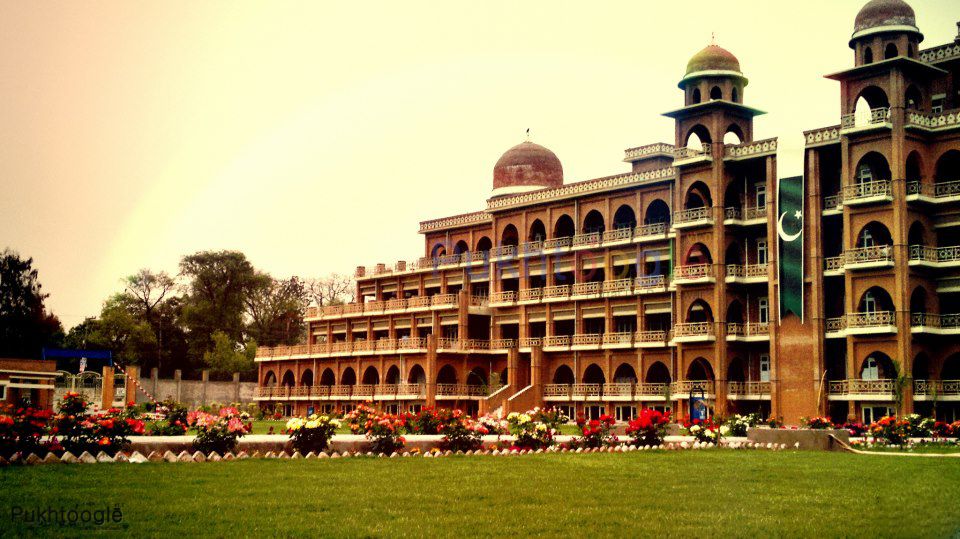
The mother of all universities in Pukhtunkhwa goes bankrupt. This province is being ruled, for the last 8 years, by the court declared Sadiq and Ameen who had declared Educational Emergency on the first day of his government back in 2013.#UOPpic.twitter.com/E4VSe3cj6q
The Current confirmed the veracity of the notification from the Peshawar University’s registrar office. A news report said that the university will pay its employees only 30 per cent of the salaries due to the constraints.
The registrar was quoted as saying that the provincial government had approved Rs250 million for the university, but Rs150 million only was released and the remaining funds were linked with the introduction of some reforms.
“We have requested the government for more money, but they haven’t responded to our request yet,” the registrar was quoted as saying.
Earlier this month, the Higher Education, Archives and Libraries Department of Khyber Pakhtunkhwa (KP) had issued a notification to the public sector universities directing to implement “no pension liability” for all future initial recruitments in addition to other strict measures to overcome the rising deficit.
The department had also directed delinking of the pay scales from the basic pay scale scheme and university pay scale, while further stating in a notification that government grant and other resources meant for higher education shall not be expended on meeting the shortfall of the schools run by the universities.
“These schools should have separate Board of Governors (BoG),” it had read.
Furthermore, house subsidy and requisition should be paid to the employees on the provincial government rates. All medical allowances in their current form had been abolished and shall be paid at the provincial government rates, it had said, adding that the maintenance cost, including repair, security and other facilities’ costs, should be fully recovered from the employees provided with accommodation by the universities.
“The universities will be assisted in the process of exploring new avenues of financial resources, including renting out academic blocks to other institutions,” the notification had said.
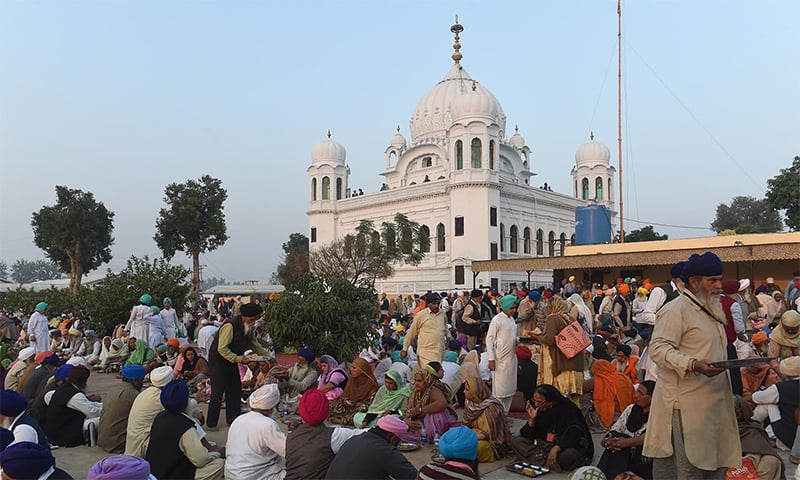
After the inauguration of the Kartarpur Corridor in November 2019, Pakistan has repositioned itself as an attractive destination for the global Sikh community for religious tourism. The numbers so far have not reached the expectations because of many reasons including among others the spread of the coronavirus and the heightened tension between India and Pakistan.
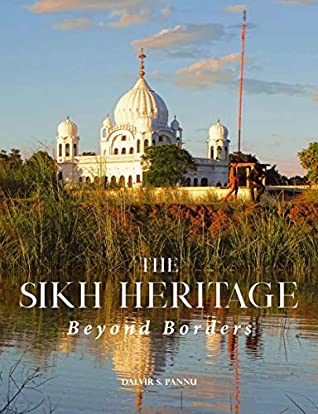
Despite many hurdles, the history of the land of Pakistan retains a rich potential for the Sikh diaspora to relive and reclaim their religious heritage. As an effort to highlight and elaborate the religious memorials, Gurdwara, and history of the important religious figures, we find an impressive effort of Dr Dalvir S. Pannu as, The Sikh Heritage: Beyond Borders of India and Pakistan.
The book is both a culmination of the writer’s ten years journey to explore the present condition of the memorial sites, also beautifully presented pictorially in it and a search for the authentic Sikh history with the help of archival and contemporary sources. The book also engages with the historical interaction between Muslims and Sikhs before 1947.
The book also engages with the historical interaction between Muslims and Sikhs before 1947.
To tell the story of eighty-four memorials in six districts of Punjab, the book sets off from the description of the Gurdwara Janam Asthan (the birthplace of Guru Nanak, the first of the ten Sikh Gurus), in the Nankana district.
Locating 13 more in Nankana, 03 in Sheikhupura and six in Sialkot, the book highlights the importance of Guru Nanak’s life to understand the development of Sikhism. One finds that Gurdwara Sacha Sauda in Sheikhupura commemorates the moment in Guru Nanak’s life when he gave twenty rupees to a group of hungry mendicants instead of using them for personal business purpose. The Gurdwara Babe Di Ber in Sialkot the meeting of Guru Nanak with a Muslim mystic whose anger with the locality was resolved by Guru by pointing out the importance of being forgiving.
Dr Pannu could locate the dilapidated remains of 17 memorials in the Kasur district. The remains of the memorials still exhibit dimly the frescoes on the walls and ceilings, paintings of the saints, dilapidating arches, inscriptions in Gurmukhi, and weakened parapets.
The book surprises its local Muslim reader with the recollection of the story of Baba Bulle Shah (1680-1757) taking refuge in a Gurdwara Sahib of Daftuh, the Union Council of the Kasur district. The famous poet, and later Sufi saint of the Muslims, took refuge in the Gurdwara to save his life from the angry Muslim mob of village Pandoke, his ancestral village.
The shared communal traditions engulf the reader further once the book ferrets out the shrines and memorials in Lahore. The half of the total number of Sikh shrines, the book mines them in Lahore highlighting the importance of the city not only as a center stage for the development of the Sikh religion but also for being a witness to a long history of mutual engagement, strife, and coexistence of Sikhs and Muslims.
One comes to know that Lahore is the birthplace of the sister of Guru Nanak and first GurSikh Bebe Nanki (1464-1518) in a village Chahal memorialized as Dera Chahal, and Guru Ram Das (1534-1581), the fourth of the ten Sikh Gurus, memorialized as Gurdwara Janam Asthan Guru Ram Das.
Lahore also became a place where a Mughal ruler martyred Guru Arjan (1563-1606), the fifth of the ten Sikh Gurus, and the site is memorialized as Gurdwara Dehra Sahib. The city has the site of Gurdwara Shaheed Ganj, memorialized as a site of a painful memory of Sikhs killed in hundreds during the period of Mughal Viceroys of Lahore, including Abdul Samad Khan (1713-1726), Zakariya Khan (1726-1745), and Mir Mannu (1748-1753).
The same city is also important for the shrines of figures including Pir Sheikh Abdul Qadir Jilani Sani (d. 1560), Wazir Khan (Sheikh Il mud Din Ansari, famous for making a grand mosque) and Hazrat Mian Mir (1550-1635), radiating the cheerful memories of friendly and intellectual interaction with Sikh Gurus.
The book ends its journey in the Narowal district at the Gurdwara Darbar Sahib, Kartarpur (God’s dwelling). The story of Gurdwara Darbar Sahib is also the story of the last eighteen years of the life of Guru Nanak who finally settled in this village and favored the life of the household instead of Udasis or life as a Divine Mission.
As the book collected its data before 2019, the story of the Gurdwara Darbar Sahib does not include the development of the site as a Gurdwara Kartarpur Corridor inaugurated in November 2019. However, the details of Guru Nanak’s household life introduce the reader with interesting anecdotes coloring Sikhism with the teachings of Guru in a more practical fashion.
The book is an outcome of the authentic and deep-seated urge to find one’s own identity in the communally divided region.
In the backdrop of the birth of Pakistan that entailed violent communal clashes resulted in the uprooting of almost 2 million Sikhs from the region of Pakistan and constant tension on the borders between India and Pakistan since then, there has been seldom space, especially during the whole twentieth century for conducting such a study.
This book is a witness to the beginning of a new turn in the history of Pakistan, when, instead of bracketing with the victims or perpetrators communally, the painful memories of violence can be commemorated from the humanistic perspective. The search of the Global Sikh community for the Sikhism within this region may become an opportunity for Pakistan to embrace its own heritage truly.