Category: Global

  • Bangladeshi students, who ousted former PM Hasina, set to launch political party

    Bangladeshi students, who ousted former PM Hasina, set to launch political party

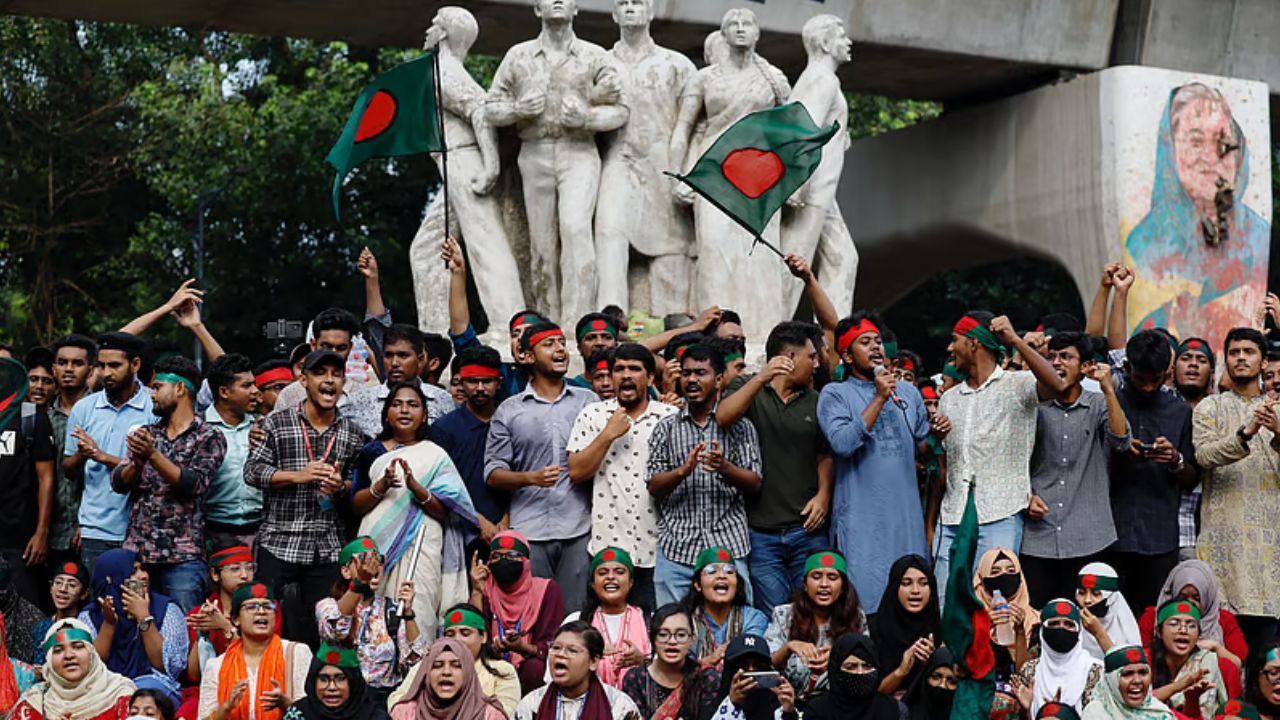
    Bangladeshi students who led last year’s protests, leading to the removal of Prime Minister Sheikh Hasina, are set to launch a political party this week, according to two sources familiar with the matter, Reuters reports.

    The Students Against Discrimination (SAD) group spearheaded the protests that began as a student-led movement against public sector job quotas but quickly morphed into a broader, nationwide uprising that forced Hasina to flee to India as the unrest peaked in early August.

    The student group is finalising plans to launch the new party during an event likely on Wednesday, said the sources who did not want to be named as they are not authorised to speak to the media.

    Nahid Islam, a student leader and adviser to the interim government that took charge of Bangladesh after Hasina’s exit, is expected to lead the party as convener, the sources said.

    Islam has been a key figure in advocating for student interests within the interim government, led by Nobel laureate Muhammad Yunus, which has been at the helm of Bangladesh since August 2024.

    He is expected to resign from his current role to focus on leading the new political party.

    Islam did not immediately respond to a request for comment.

    Yunus has said that elections could be held by the end of 2025, and many political analysts believe that a youth-led party could significantly reshape the country’s political landscape.

    Yunus has said he was not interested in running.

    Yunus’ office did not immediately respond to a request for comment on the launch of the student-led political party.

    The South Asian nation has been grappling with political unrest since Hasina left following weeks of protests during which more than 1,000 people were killed.

    Officials from Hasina’s former government and security apparatus systematically committed serious human rights violations against the protesters during the uprising, the UN Human Rights Commission said this month.


    Bangladesh arrests thousands as crime surges

    Bangladeshi security forces have arrested more than 8,600 people after a two-week crackdown targeting gangs allegedly connected to the ousted government of Sheikh Hasina, the government said on Monday.

    The arrests come as concern grows at rising crime levels in the capital, with police saying that the number of robberies has doubled since January last year.

    Jahangir Alam Chowdhury, head of the interior ministry in the interim government that took over after Hasina was ousted in the August 2024 student-led revolution, ordered officers to intensify “Operation Devil Hunt”.

    Police said security forces have arrested more than 8,600 people since the operation began on February 8.

  • Conservatives win German vote as far-right makes record gains

    Conservatives win German vote as far-right makes record gains

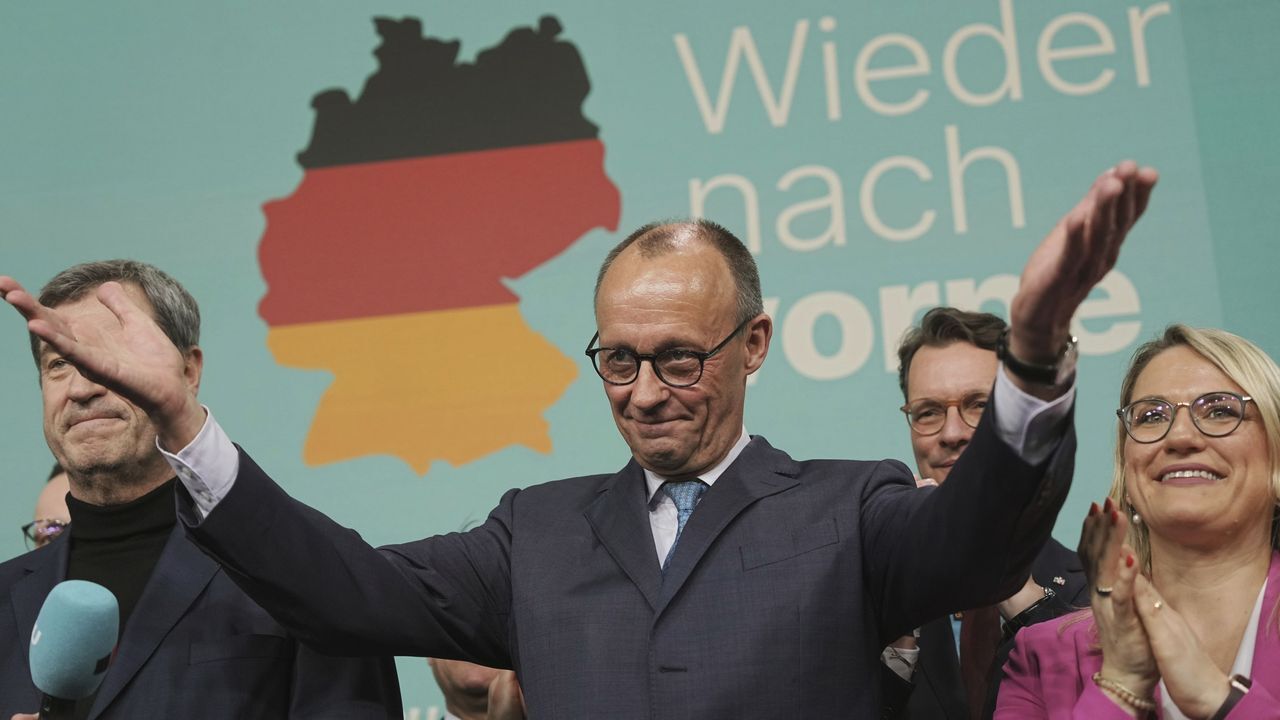
    Germany’s conservatives swept to victory in Sunday’s elections, with their leader Friedrich Merz set to become the next chancellor, followed by the far-right AfD in second place after record gains.

    Merz urged the speedy formation of a new coalition government, warning that as US President Donald Trump is driving rapid and disruptive changes, “the world isn’t waiting for us”.

    He stressed that — after Trump reached out to Russia and made comments fuelling doubts about the future strength of NATO — Europe must boost its defence capabilities and said that he has “no illusions at all about what is coming out of America”.

    The far-right Alternative for Germany (AfD) almost doubled its score to over 20 percent, boosted by fears over immigration and security after a spate of deadly attacks blamed on asylum seekers.

    Merz’s CDU/CSU alliance won more than 28 percent, according to projections at 2000 GMT, crushing the Social Democrats (SPD) of outgoing Chancellor Olaf Scholz, which were looking at a historic low of 16 percent.

    Merz — a long-time party rival of ex-chancellor Angela Merkel — has vowed a crackdown on irregular immigration. He hopes to win back votes from the AfD whose rise has stunned many in a country still seeking to atone for its dark Nazi history.

    For now, the AfD, basking in the vocal support of key Trump allies, is set to stay in opposition. All other parties have vowed to keep it out of power and behind a “firewall” of non-cooperation.

    But its jubilant leader Alice Weidel hailed the “historic” result and again said her party was ready to govern with the CDU/CSU.

    “I am very afraid of this shift to the right,” said retired teacher Hilke Reichersdorfer, 71, wearing a red scarf outside SPD headquarters. She voiced fears of a situation “like in other European countries or in America”.

    ‘Fate of Europe’

    Before Merz, 69, takes over, he will have to forge a new coalition government in Europe’s top economy, an often drawn-out process he has vowed to complete by Easter.

    This threatens to leave Berlin paralysed for weeks to come as Trump has forced head-spinning change and rattled European allies, especially over the Ukraine war.

    The German election came amid tectonic upheaval in US-Europe ties sparked by Trump going over the heads of European leaders to make a direct outreach to Russian President Vladimir Putin to end the three-year-old Ukraine war.

    “After Donald Trump’s statements in the last week it is clear that the Americans are largely indifferent to the fate of Europe,” Merz said in a post-election TV debate.

    He said his “absolute priority will be to strengthen Europe as quickly as possible so that, step by step, we can really achieve independence from the USA” in defence matters.

    To build a majority, Merz may first reach out to the SPD, though without Scholz, who apologised for his party’s “bitter” defeat.

    Merz could also approach the Greens, who scored 12 percent, although the CDU’s Bavarian sister party the CSU has so far rejected this.

    Another potential partner, the small FDP — which sparked the November breakup of Scholz’s government — stared down the barrel of narrowly missing the five-percent hurdle to return to parliament.

    This would impact the complex parliamentary arithmetic, as would the fate of the far-left BSW, which was just below the threshold late Sunday, at 4.9 percent.

    If the BSW eventually scrapes in, this will mean Merz needs two coalition allies — raising the spectre of yet another ideologically diverse alliance, like the failed alliance that was led by Scholz.

    ‘Last chance’

    In a strange twist to the polarised campaign, the AfD has basked in the support of Team Trump, which saw billionaire Elon Musk praising it as the only party that can “save Germany”.

    Merz said “the interventions from Washington were no less dramatic and impertinent than the interventions we have seen from Moscow, so we are under massive pressure from two sides”.

    The AfD, strongest in the ex-communist east, also made gains in western states for its best-ever result after Germany was shocked by a series of deadly attacks blamed on migrants.

    In December a car-ramming through a Christmas market crowd killed six people and wounded hundreds.

    A stabbing spree targeting kindergarten children followed, then another car-ramming attack, in Munich, and a knife attack at Berlin’s Holocaust memorial.

    Merz has argued that the next government must boldly address the AfD’s concerns on migration and also fix the ailing economy, warning that otherwise the far right might win next time around.

    “The stakes could not be higher”, argued political analyst and author Michael Broening.

    “Germany’s mainstream parties have consistently failed to convince voters to reject the far right, and this election could be their last chance to turn the tide.”

    Democratic forces must find solutions to the country’s problems, he added. “If Germany’s ‘establishment’ parties fail to deliver this time, they may not be the establishment for much longer”.

  • Asteroid hurling towards earth looks more dangerous by the minute

    Asteroid hurling towards earth looks more dangerous by the minute

    An asteroid hurling towards earth has clocked up a 3.1 percent chance of hitting the planet on December 22, 2032. 

    YR4 2024 now has the highest chance of hitting the earth among all space rocks studied by humans. At 3.1 percent, the chance of a collision appears to be quite tiny, however the probability is growing the more scientists study the asteroid. 

    As yet, scientists are unsure about what the rock is made up of or how big it is. Current estimates place it between 130 and 300 feet long. 

    If seven years from now, YR4 does manage to enter the earth’s atmosphere, it could probably hit an ocean, a prospect that scientists say is better than the asteroid hitting land. However, at its current pace and trajectory, the asteroid could potentially hit a major city, with Mumbai, Lagos and Bogota falling in its current path. 

    If the asteroid hits the ocean, its damage could possibly be limited to a tsunami, and not a very big one at that. However, if it hits land, it could prove catastrophic for the region. 

    Mark Boslough, a physicist at the Los Alamos National Laboratory, has told the media that it would be much worse if YR4 hits solid ground. “The asteroid would create an enormous explosion,” he said, adding that it would likely leave a massive crater. It also could create a “hot jet of asteroid vapor that would descend to the surface and incinerate everything” nearby.

    More about its potential impact will be known when we find out what its made of. 

    However, there’s not much need to panic right now as everything could change in seven years. Astronomers once predicted an asteroid much bigger than YR4 had a 2.7 percent chance of hitting Earth. Then those odds went down to zero.

  • US Senate confirms Trump loyalist Kash Patel to head FBI

    US Senate confirms Trump loyalist Kash Patel to head FBI

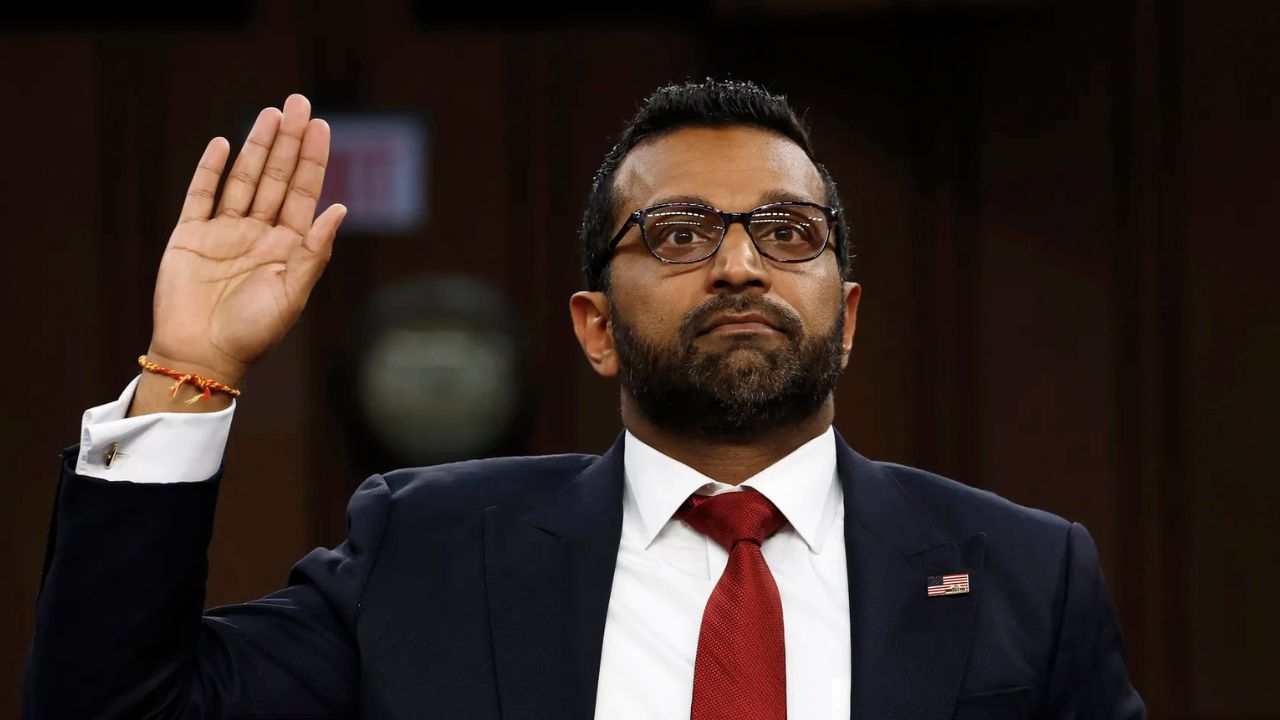
    The Republican-controlled US Senate on Thursday confirmed Kash Patel, a staunch loyalist who has threatened to go after President Donald Trump’s political enemies, as director of the FBI, the country’s top law enforcement agency.

    Patel, 44, whose nomination sparked fierce but ultimately futile opposition from Democrats, was approved by a 51-49 vote.

    The vote was split along party lines with the exception of two Republican senators, Susan Collins and Lisa Murkowski, who voted not to confirm Patel to head the 38,000-strong Federal Bureau of Investigation.

    Patel drew fire from Democrats for his promotion of conspiracy theories, his defense of pro-Trump rioters who attacked the Capitol on January 6, 2021, and his vow to root out members of a supposed “deep state” plotting to oppose the Republican president.

    Democratic Senator Dick Durbin, in a Senate speech opposing Patel’s nomination, said he is “dangerously, politically extreme” and has “repeatedly expressed his intention to use our nation’s most important law enforcement agency to retaliate against his political enemies.”

    The Senate has approved all of Trump’s cabinet picks so far, underscoring his iron grip on the Republican Party.

    Among them is Tulsi Gabbard, confirmed as the nation’s spy chief despite past support for adversarial nations including Russia and Syria, and vaccine skeptic Robert F. Kennedy Jr. to be health secretary.


    Patel, in a statement on X, said he was honored to become the FBI director.

    “The American people deserve an FBI that is transparent, accountable, and committed to justice,” he said.

    “The politicalization of our justice system has eroded public trust — but that ends today,” he added. “My mission as Director is clear: let good cops be cops — and rebuild trust in the FBI.

    “And to those who seek to harm Americans — consider this your warning,” he said. “We will hunt you down in every corner of this planet.”

    ‘Enemies list’

    Patel replaces Christopher Wray, who was named FBI chief by Trump during his first term.

    Relations between Wray and Trump became strained, however, and though he had three years left in his 10-year tenure, Wray resigned after Trump won November’s presidential election.

    A son of Indian immigrants and former federal prosecutor, the New York-born Patel served in several high-level posts during Trump’s first administration, including as senior director for counterterrorism on the National Security Council.

    There were fiery exchanges at Patel’s confirmation hearing last month as Democrats brought up a list of 60 supposed “deep state” actors — all critics of Trump — he included in a 2022 book, whom he said should be investigated or “otherwise reviled.”

    Patel has denied having an “enemies list” and told the Senate Judiciary Committee he was merely interested in bringing lawbreakers to book.

    “All FBI employees will be protected against political retribution,” he said.

    The FBI has been in turmoil since Trump took office and a number of agents have been fired or demoted including some involved in the prosecutions of Trump for seeking to overturn the 2020 election results and mishandling classified documents.

    Nine FBI employees have sued the Justice Department seeking to block efforts to collect information on agents who were involved in investigating Trump and the Capitol riot.

    In their complaint, the FBI agents said the efforts were part of a “purge” orchestrated by Trump as “politically motivated retribution.”

    Trump, on his first day in the White House, pardoned more than 1,500 of his supporters who stormed Congress in a bid to block certification of Democrat Joe Biden’s election victory.

  • Trump aide warns Zelensky to stop hurling ‘insults’, start negotiating

    Trump aide warns Zelensky to stop hurling ‘insults’, start negotiating

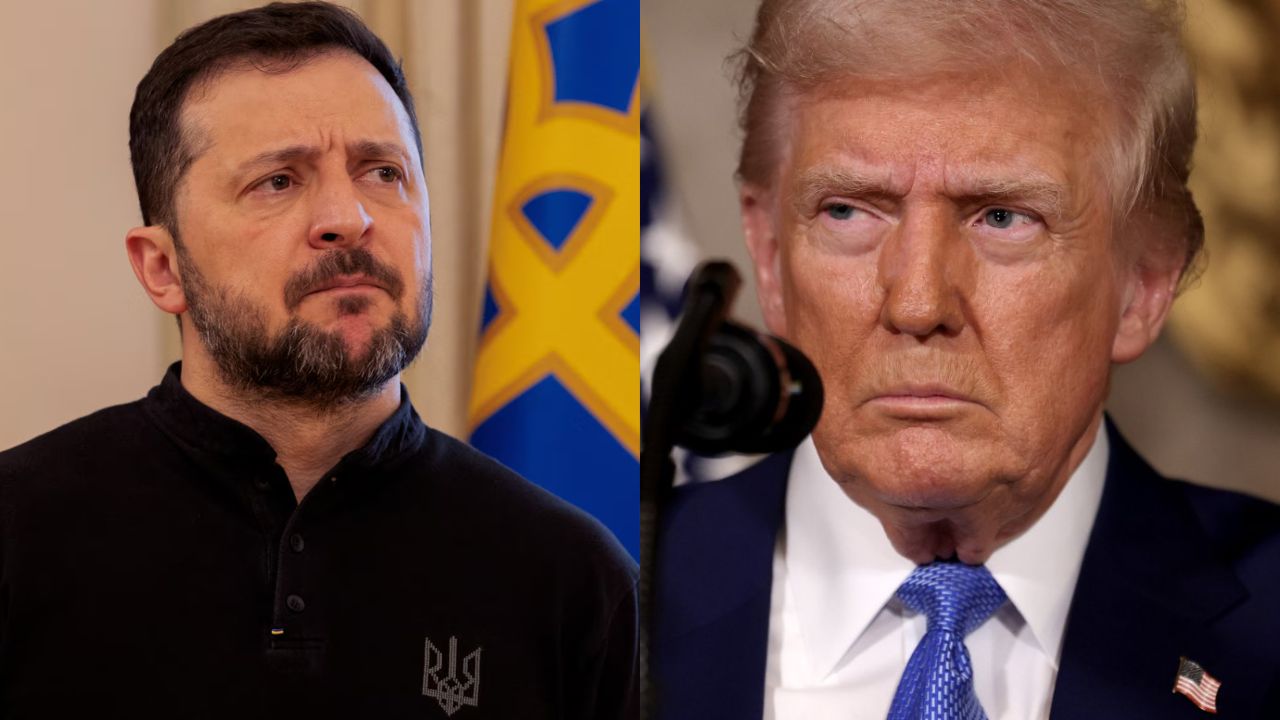
    The US national security advisor warned Ukraine’s leader to stop hurling “insults” at Donald Trump, as pressure built Friday on Volodymyr Zelensky to sign away precious mineral rights in exchange for Washington’s help defending against Russia.

    Tensions between Trump and Zelensky over the proposed mineral deal — which Kyiv has rejected — and Washington’s outreach to Moscow have exploded this week in a series of barbs traded at press conferences and on social media.

    Zelensky has warned that Trump has succumbed to Russian “disinformation”, while the US leader has accused his counterpart of starting the war and branded him a “dictator without elections”.

    “Some of the rhetoric coming out of Kyiv, frankly, and insults to President Trump were unacceptable,” US national security advisor Mike Waltz told a Thursday briefing at the White House.

    “President Trump is obviously very frustrated right now with President Zelensky, the fact that he hasn’t come to the table, that he hasn’t been willing to take this opportunity that we have offered,” he said.

    The United States is a vital financial and military supporter of Ukraine, but Trump has rattled Kyiv and its European backers by opening talks with Moscow they fear could end the war on terms that reward Russian President Vladimir Putin.

    The spat has turned personal with Trump falsely claiming Zelensky is hugely unpopular among his own people and the Ukrainian leader saying Trump lives in a Russian “disinformation space”.

    Tech tycoon and Trump backer Elon Musk weighed in Thursday, saying Ukrainians “despised” their president and that the US leader was right to leave him out of talks with Russia.

    Amid the war of words, Zelensky said Thursday he had held a “productive meeting” with US envoy Keith Kellogg in Kyiv.

    “We had a detailed conversation about the battlefield situation, how to return our prisoners of war, and effective security guarantees,” Zelensky said on social media after the meeting.

    “Strong Ukraine-U.S. relations benefit the entire world,” he added.

    However, there was no joint press conference or statements after the discussions, as would typically accompany such a visit.


    ‘Unacceptable’

    Trump is calling for Kyiv to hand over access to its mineral wealth as compensation for tens of billions of dollars in US aid delivered under his predecessor Joe Biden.

    Zelensky rejected a deal proposed by Trump as it did not include “security guarantees” — Kyiv’s key demand from its Western backers in any agreement with Russia to halt the fighting.

    The feud marks a dramatic reversal from US policy under Biden, who lauded Zelensky as a hero, shipped vast supplies of arms to Kyiv and hammered Moscow with sanctions.

    Trump has instead criticised Zelensky and blamed him for starting the war that began with Russia’s full-scale invasion three years ago.

    “A Dictator without Elections, Zelensky better move fast or he is not going to have a Country left,” he wrote on his Truth Social platform on Wednesday.

    Zelensky was elected in 2019 for a five-year term and has remained leader in line with Ukrainian rules under martial law, imposed as his country fights for its survival.

    While Zelensky’s popularity has fallen, the percentage of Ukrainians who trust him has never dipped below 50 percent since the conflict started, according to the Kyiv International Institute of Sociology (KIIS).


    Shock at Trump attack

    Trump’s invective drew shock reactions from Europe.

    German Chancellor Olaf Scholz said it was “wrong and dangerous” to call Zelensky a dictator.

    The White House said France’s Emmanuel Macron and Britain’s Keir Starmer will visit Trump next week after European leaders held emergency summits in recent days over how to deal with Trump’s threats to overhaul decades of transatlantic security ties.

    The Kremlin, buoyed by its rapprochement with Washington, has hailed Trump’s comments.

    Russia, which for years has railed against the US military presence in Europe, wants a reorganisation of the continent’s security framework as part of any deal to end the Ukraine fighting.

    Putin said Wednesday that US allies “only have themselves to blame for what’s happening,” suggesting they were paying the price for opposing Trump’s return to the White House.

    Neither Kyiv nor European countries were invited to high-level talks between top diplomats from Russia and the US in Saudi Arabia earlier this week, deepening fears they are being sidelined.

  • Hospitalised Pope Francis still makes nightly call to Gaza

    Hospitalised Pope Francis still makes nightly call to Gaza

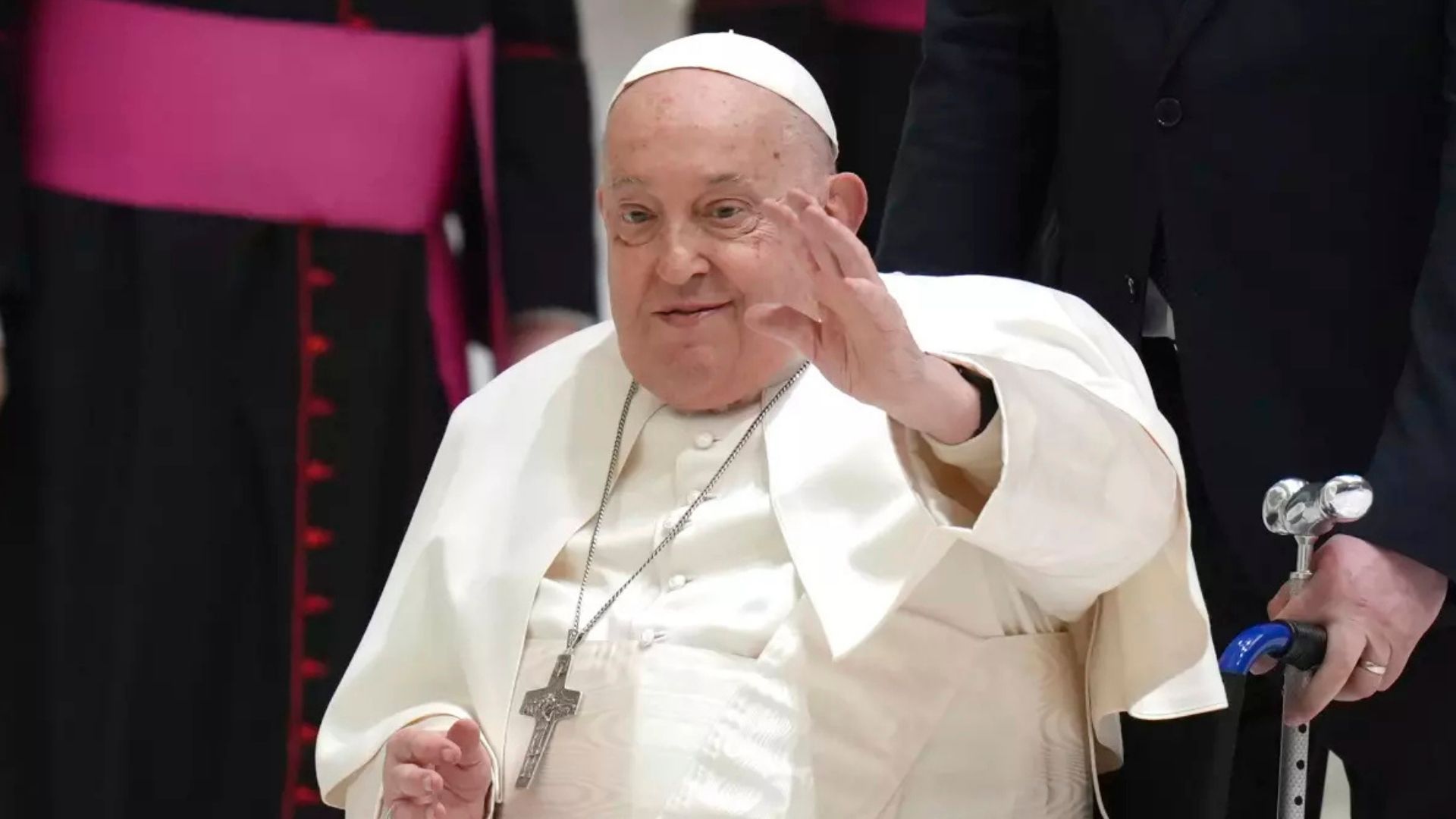
    Pope Francis, the head of the Catholic Church, has been admitted in hospital for bronchitis which turned into pneumonia in both his lungs. However, despite being quite unwell, the 88-year-old Pontiff is still making his nightly call to Gaza from his hospital bed. 

    Sometimes the Pope uses a video call and sometimes a text message to stay in touch with a small Catholic parish in the Gaza strip. Reverend Gabriel Romanelli, the priest of the church in Gaza, has confirmed to Vatican News that the Pope calls every night at 8 pm Palestine time, maintaining the almost daily contact he begun when Israel started its onslaught on the Gaza strip. 

    “Although we had a blackout in the whole area of Gaza City, he insisted and managed to contact us with a video call,” the Reverend told the Vatican media outlet, adding that the Pope inquires about the parishioners and gives blessings. 

    A video of the Pope saying “Asalam o Alaikum” to Muslims present at the church went viral a few weeks ago. Francis, the first Jesuit head of the Roman Catholic Church, has been a vocal opponent of Israel’s war on Gaza, going so far as to suggest that the occupying country must be investigated for war crimes. 

    He has also called Israel’s actions in the besieged strip “terrorism”, pleading for an end to the genocide multiple times. 

    The vocal opposition warned him the wrath of powerful Zionists, including the entire Israeli government, however, the Pope has not budged from his point of view. 

    Concerns for the Pope’s health peaked day before yesterday when his doctors said that his medical situation is “complex”. The next day, the Vatican said that though the Pope remains stable, slight improvement in his blood work shows that inflammation in his body is going down. As of Thursday, the Pope is said to have gotten out of his hospital bed to sit in an armchair for breakfast while his fever has also dissipated. 

    The pneumonia still afflicts him, Vatican spokesperson Matteo Bruni confirmed on Thursday, but it is now limited to certain spots in the lungs instead of being spread throughout.

  • Arab leaders meet to counter Trump’s Gaza plan

    Arab leaders meet to counter Trump’s Gaza plan

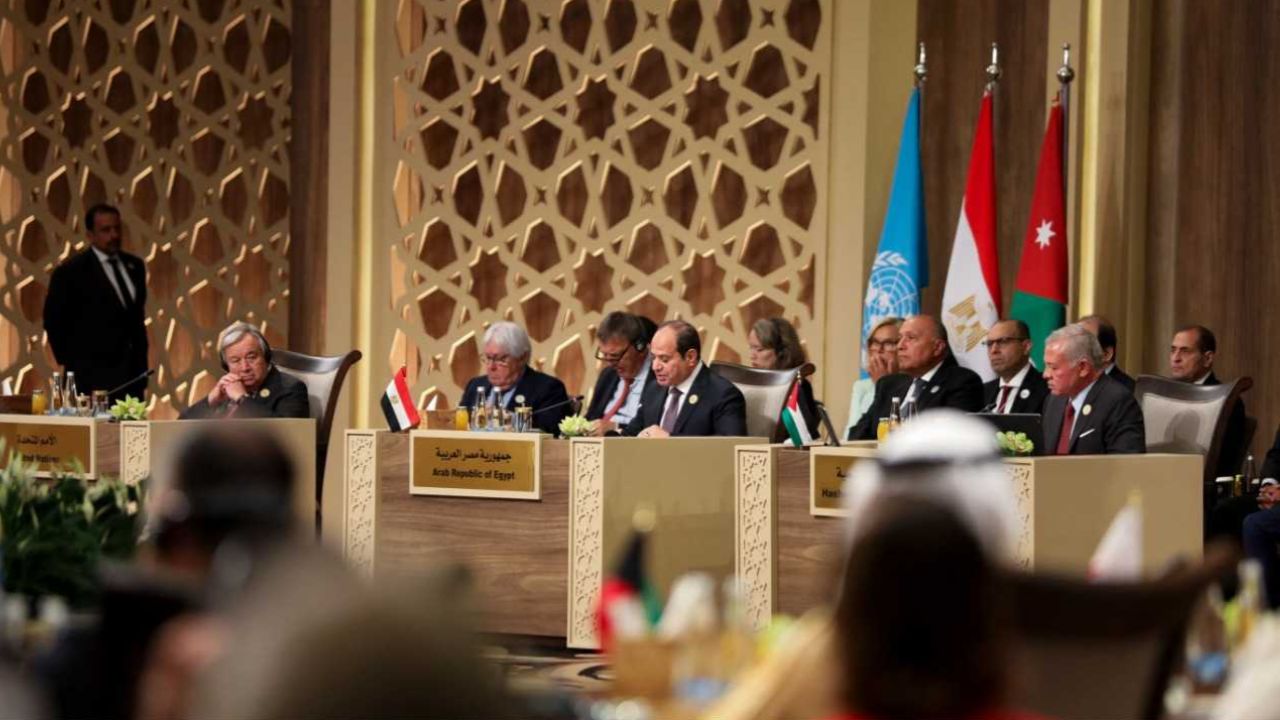
    Arab leaders will gather in Saudi Arabia on Friday to counter President Donald Trump’s plan for US control of Gaza and the expulsion of its inhabitants, diplomatic and government sources said.

    The plan stirred rare unity among Arab states which roundly rejected the idea, but they could still disagree over who will govern the Palestinian territory and who will pay for reconstruction.

    Umer Karim, an expert on Saudi foreign policy, told AFP the summit would be the “most consequential” in decades in relation to the wider Arab world and the Palestinian issue.

    Trump provoked international outrage when he announced that the United States would “take over the Gaza Strip”, moving 2.4 million Gazans living there to neighbouring Egypt and Jordan.

    A source close to the Saudi government told AFP Arab leaders would discuss “a reconstruction plan counter to Trump’s plan for Gaza”.

    Meeting with Trump in Washington on February 11, Jordan’s King Abdullah II said Egypt would present a plan for a way forward.

    The Saudi source said the talks would discuss “a version of the Egyptian plan” the king mentioned.

    Friday’s summit was originally planned for Saudi Arabia, Egypt, the United Arab Emirates, Qatar and Jordan.

    However, it has been expanded to include the six Gulf Cooperation Council (GCC) countries and the Palestinian Authority.

    For Palestinians, any attempt to force them from Gaza would have echoes of what the Arab world calls the “Nakba” or catastrophe, when hundreds of thousands of Palestinians fled in the fighting that accompanied Israel’s creation in 1948.

    Reconstruction

    Reconstruction will be a critical issue at the summit after Trump highlighted this as the key reason for moving its inhabitants out while Gaza’s infrastructure is rebuilt.

    Egypt has not yet announced its counter-initiative, but Egyptian former diplomat Mohamed Hegazy described a plan “in three technical phases over a period of three to five years”.

    The first would be a six-month “early recovery phase”, said the member of the Egyptian Council for Foreign Affairs, a think tank with strong ties to decision-making circles in Cairo.

    “Heavy machinery will be brought in to remove debris, while designated safe zones will be identified within Gaza to temporarily relocate residents,” Hegazy said.

    The second phase will require an international conference to provide details of reconstruction and would focus on rebuilding utility infrastructure, he said.

    “The final phase will oversee the urban planning of Gaza, the construction of housing units, and the provision of educational and healthcare services.”

    A UN estimate on Tuesday put the cost of rebuilding at more than $53 billion, including more than $20 billion over the first three years.

    The last phase would include “launching a political track to implement the two-state solution and so that there is… an incentive for a sustainable truce”.

    Umer Karim believes that adopting this plan would require “a degree of Arab unity not seen before in decades”.

    Finance

    One Arab diplomat familiar with the Gulf told AFP: “In the end, the biggest challenge facing the Egyptian plan is how to finance it.

    “Some countries like Kuwait will inject funds, perhaps for humanitarian reasons, but other Gulf states will set specific conditions before any financial transfer.”

    Karim said the “Saudis and Emiratis won’t spend any money if (the) Qataris and Egyptians don’t guarantee something on Hamas”.

    Egypt’s plan seeks to address the complex issue of post-war oversight for Gaza, which Hamas has controlled since 2007, with “a Palestinian administration that is not aligned with any faction”.

    It will comprise “experts” and will not be “factionally affiliated and is politically and legally subordinate to the Palestinian Authority”, Hegazy said.

    The Cairo initiative also envisions a Palestinian Authority-affiliated police force supplemented with security forces from Egypt, Arab states and other countries.

    Differences remain, however.

    Hegazy said that Hamas “will retreat from the political scene in the coming period”, while the Saudi source said Riyadh envisions a Gaza Strip controlled by the Palestinian Authority.

    Qatar, a key mediator in the war, believes the Palestinians themselves must decide Gaza’s future.

    “I think all regional actors understand that any alternative plan they propose cannot include Hamas in any form as presence of Hamas will make it unpalatable for the US administration and Israel,” Karim said.

    “So overall some things within the Strip have to fundamentally change in order for this plan to at least have a chance.”

  • Sri Lanka train derailed after smashing into elephants

    Sri Lanka train derailed after smashing into elephants

    A Sri Lankan passenger train derailed Thursday after smashing into a family of elephants, with no passengers injured but six animals killed in the island’s worst such wildlife accident, police said.

    The express train was travelling near a wildlife reserve at Habarana, some 180 kilometres (110 miles) east of the capital Colombo, when it hit the herd crossing the line before dawn.

    “The train derailed, but there were no casualties among the passengers,” police said, adding that wildlife authorities were treating two elephants who survived the crash.

    Videos shot after the accident showed one elephant standing guard over an injured youngster lying beside the tracks, with the tips of their trunks curled together.

    Killing or harming elephants is a criminal offence in Sri Lanka, which has an estimated 7,000 wild elephants, with the animals considered a national treasure, partly due to their significance in Buddhist culture.

    Two baby elephants and their pregnant mother were killed in a similar accident by a train in the same area in September 2018.

    Since then, the authorities ordered train drivers to observe speed limits to minimise injury to elephants when going through areas where they cross the lines.

    The elephant deaths comes days after the authorities expressed concern over the growing impact of conflict between humans and elephants, as the ancient habitat of the animals is increasingly encroached upon.

    Farmers scratching a living from smallholder plots often fight back against elephants raiding their crops.

    Deputy Minister of Environment Anton Jayakody told AFP on Sunday that 150 people and 450 elephants were killed in clashes in 2023.

    That is an increase on the previous year, when 145 people and 433 elephants were killed, according to official data.

    Just those two years represent more than a tenth of the island’s elephants.

    But Jayakody said he was confident the government could find solutions.

    “We are planning to introduce multiple barriers — these may include electric fences, trenches, or other deterrents — to make it more difficult for wild elephants to stray into villages,” Jayakody said.

    A study last year detailed how Asian elephants loudly mourn and bury their dead calves, in a report that details animal behaviour reminiscent of human funeral rites.

    Elephants are known for their social and cooperative behaviour but calf burial had previously only been “briefly studied” in African elephants — remaining unexplored among their smaller Asian cousins, according to the study in the Journal of Threatened Taxa.

    Asian elephants are recognised as endangered by the International Union for Conservation of Nature.

    An estimated 26,000 of them live in the wild, mostly in India with some in Southeast Asia, surviving for an average of 60-70 years outside captivity.

  • ‘Nobody can argue with me’; Trump says he will impose tariffs on India

    ‘Nobody can argue with me’; Trump says he will impose tariffs on India

    Just one day after hosting Indian Prime Minister Narendra Modi at the White House, US President Donald Trump has signalled that he will definitely be imposing tariffs on the country. 

    Talking to Sean Hannity on Fox News on Tuesday night, Trump, accompanied by Elon Musk, clearly said that he will charge the same tariffs that India charges the US.

    “Every country in the world takes advantage of us, and they do it with tariffs. They make it impossible for him [Musk] to sell a car, practically, in, as an example, India,” Donald Trump told Hannity. 

    “I told Prime Minister (Narendra) Modi yesterday, ‘Here’s what we’re going to do: reciprocal. Whatever you charge, I’m charging.’ Modi goes, ‘No, no, I don’t like that.’ ‘No, no, whatever you charge, I’m going to charge.’ I’m doing that with every country,” he said in the interview. 

    Elon Musk, owner of the electric vehicle brand Tesla, then chimed in to say that “Auto imports are 100 percent” in India on foreign manufacturer cars. 

    Trump then said that India asks car manufacturers to make their cars in India, a practice he stressed was “unfair” to the American economy. 

    Trump’s proposal is to impose the same tariff on India as India does on American products. “Nobody can argue with me,” President Trump insisted. “If I said 25 per cent, they’d say, ‘Oh, that’s terrible.’ I don’t say that anymore… because I say, ‘Whatever they charge, we’ll charge.’ And you know what? They stop.”

  • Israeli companies display weapons at UAE defence fair

    Israeli companies display weapons at UAE defence fair

    Israeli arms manufacturers on Monday showcased their weapons and other products at a defence fair in the United Arab Emirates, amid a fragile ceasefire in a 15-month war that has devastated the Gaza Strip.

    An Israeli pavilion stands among industry giants at the International Defence Exhibition (IDEX) and the Naval Defence and Maritime Security Exhibition (NAVDEX), held in the Gulf country’s capital Abu Dhabi until Friday.

    “We are very pleased to be here,” said Boaz Levy, the president and CEO of IAI, ranked among the 100 largest arms companies in the world in 2023, according to the Stockholm International Peace Research Institute (SIPRI).

    Last year, as civilian casualties mounted in Gaza, the French government banned Israeli companies from setting up stands or exhibiting hardware at the Euronaval defence trade fair. The decision was later thrown out by a Paris court.

    According to SIPRI, the three Israeli manufacturers in the ranking, prominently featured at the Abu Dhabi show, recorded a record turnover of $13.6 billion in 2023, driven by Israel’s offensive on Gaza.

    But for Levy, this has not stopped them from collaborating with allies in the region.

    “Of course, some of our products are there (in Gaza), but we are a company that deals with technology and giving the end user the capabilities… required in the field, and that’s what we are doing on a day-to-day basis,” he said.

    The UAE normalised ties with Israel in 2020 under the Abraham Accords brokered by the United States during the first Donald Trump administration.

    Since then, Israeli arm manufacturer EMTAN has attended every defence fair in Abu Dhabi.

    “We work a lot with the Abraham” countries, said sales manager Ron Pollak, whose firm makes small arms, rifles, pistols and submachine guns.

    “We really, really enjoy the hospitality and the friendship that we encounter here in the UAE.”