Category: Lifestyle

  • Public holiday announced in Lahore

    Public holiday announced in Lahore

    On August 26, the High Court declared a holiday for courts on the occasion of the annual Urs of Data Ganj Bakhsh.


    The notification was issued following the approval of Acting Chief Justice Abid Aziz Sheikh.


    Both session courts and civil courts in Lahore will also remain closed on August 26, says the official notification.


    The event draws thousands of devotees to Lahore each year as they gather to pay tribute to the saint, widely known for his spiritual influence and teachings.

    On the occasion of annual Urs of Data Ganj Bakhsh, the High Court has declared a holiday for courts on August 26.


    The notification was issued following the approval of Acting Chief Justice Abid Aziz Sheikh.


    Both session courts and civil courts in Lahore will also remain closed on August 26, says the official notification.


    The event draws thousands of devotees to Lahore each year as they gather to pay tribute to the saint, widely known for his spiritual influence and teachings.

  • Sukkur submerged as rain breaks 77-year record

    Sukkur submerged as rain breaks 77-year record

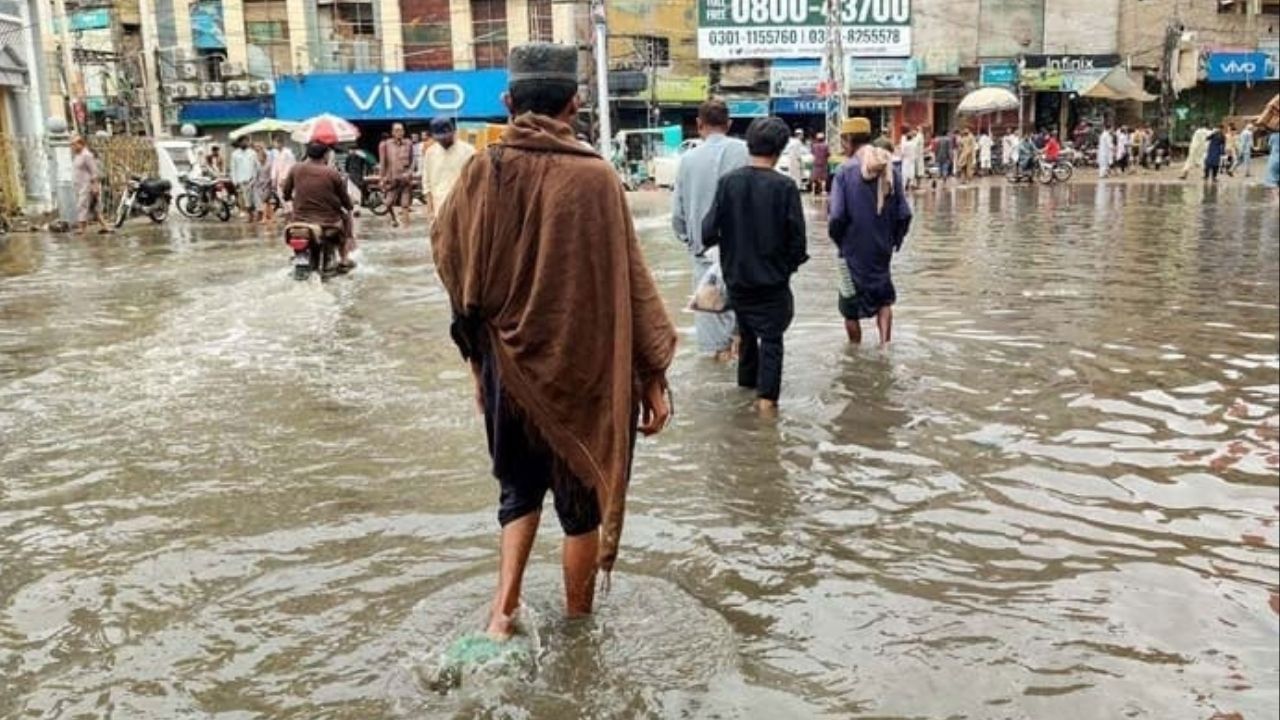
    Sukkur was rocked by torrential rainfall over the weekend, and the city’s mayor, Arslan Sheikh, claimed that the Sindhi town recorded the heaviest rainfall in 77 years.


    Reports suggest that 292 mm of rain fell on the city and the adjoining areas of Larkana and Nowshehru Feroze, which were also submerged under torrential downpours.

    The Deputy Commissioner of the city informed Geo News that 24 people were injured in various incidents during the two-day rain, whereas 48 houses were damaged, and five animals died due to electrocution.


    Earlier, it was claimed that the city had received 300 mm of rain, but Chief Meteorologist Sardar Sarfraz denied the claim and said that 116 mm of rain was recorded in Sukkur during 48 hours while 134 mm of rain was recorded in Rohri.

    Several hours have passed since the torrential rain in Sukkur stopped but the work of draining the rainwater is still going on.

    Citizens remained unhappy with local administration as the entire city became waterlogged. Roads are flooded while the railway station and nearby areas are still submerged in water.

    On the other hand, the district administration claims that more than 95 percent of the city’s areas have been cleared. Old Sukkur, Shalimar, Bakhar Chowk, Commercial Center Ghanta Ghar and surrounding commercial centres have been drained, but water is still present at Sukkur Railway Station.


    Power was restored in Sukkur after 40 hours.


    Bilawal Bhutto Zardari has asked Sindh Chief Minister Murad Ali Shah for a report on the situation caused by the rains.

  • When can super blue moon be seen in Pakistan?

    When can super blue moon be seen in Pakistan?

    The first super blue moon of the year will be seen in Pakistan at 11:26 PM tonight (Monday).

    Pakistan’s space research agency SUPARCO has announced that the next three super moons will be seen on September 18, October 17 and November 15.
    Today is the first super blue moon of the year, which will make the moon appear bigger and brighter.

    A blue moon does not mean that the moon will turn blue. The name is rooted in an incident that happened centuries ago. A volcanic eruption in the 19th century caused a change in the colour of the sky, causing the full moon to appear blue, known as the Blue Moon.

    Types of Blue moon

    There are 2 types of blue moon, one is seasonal blue moon and the other is monthly blue moon.

    A seasonal blue moon is the third of four full moons in a season, and a similar blue moon will appear on the horizon on August 19 in Pakistan.


    The occurrence of the second full moon in a month of the Gregorian calendar is called the Monthly Blue Moon.

    Blue Moon in Pakistan

    The moon that will rise in the sky on August 19 will be at a distance of 226,000 miles from the Earth, which will appear 14 percent larger and 30 percent brighter than usual.

    This month’s seasonal super blue moon is also special because it will take until 2037 to see one after that, but the seasonal blue moon will happen much sooner.

    It should be noted that the supermoon will be in the sky for four consecutive months in 2024: August, September, October, and November.

  • India’s water terrorism causes high water levels in Chenab; residents advised to evacuate

    India’s water terrorism causes high water levels in Chenab; residents advised to evacuate

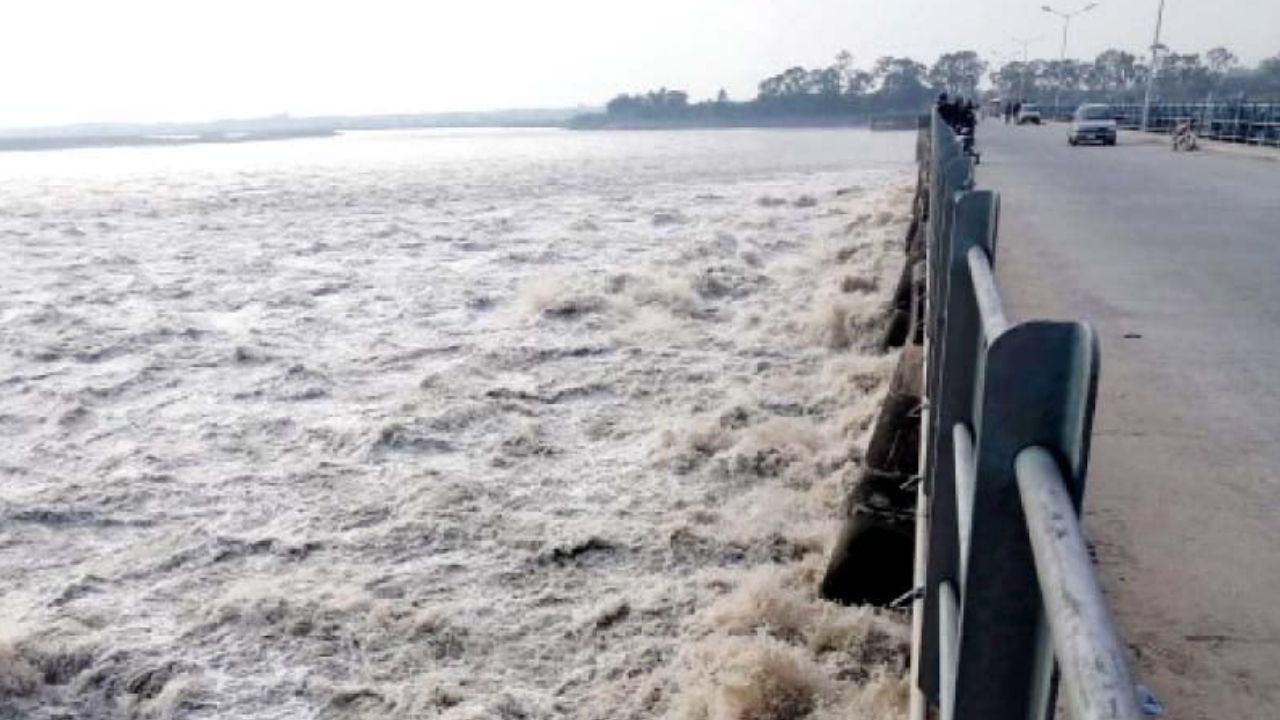
    The water level in the Chenab river is rising after India released water, and residents of the area have been advised to evacuate.

    As per the Provincial Disaster Management Authority (PDMA), the water level at Kadirabad Barrage in the Chenab River is escalating at an alarming rate, expected to reach 250,000 cusecs. A total of 40,000 to 55,000 cusecs of water is anticipated at Jasar and Shahdara in the Ravi River, prompting immediate relocation for the residents.

    Torrential rain in Rajanpur and Koh Sulaiman

    On the other hand, torrential rain has been recorded in the mountainous areas of Rajanpur and Koh Sulaiman.

    According to the Flood Control Room, the rains have raised the water levels in the rain canals, with 19,606 cubic feet of water passing through Barsati Nala Kahasultan and 11,450 cubic feet passing through Nala Chhachhar.

    2,340 cusecs of water is passing through Kalabaga, while the continuous rise in the water level in the Indus river is recording a moderate flood at Kot Mithan.

  • Sindh floods push low-income families to marry off daughters for financial help

    Sindh floods push low-income families to marry off daughters for financial help

    As monsoon rains were about to break over Pakistan, 14-year-old Shamila and her 13-year-old sister Amina were married off in exchange for money, a decision their parents made to help the family survive the threat of floods.

    “I was happy to hear I was getting married… I thought my life would become easier,” Shamila told AFP after her wedding to a man twice her age in hope of a more prosperous life.

    “But I have nothing more. And with the rain, I fear I will have even less, if that is possible.”

    Pakistan’s high rate of marriages for underage girls had been inching lower in recent years, but after unprecedented floods in 2022, rights workers warn such weddings are now on the rise due to climate-driven economic insecurity.

    The summer monsoon between July and September is vital for the livelihoods of millions of farmers and food security, but scientists say climate change is making them heavier and longer, raising the risk of landslides, floods and long-term crop damage.

    Many villages in the agricultural belt of Sindh have not recovered from the 2022 floods, which plunged a third of the country underwater, displaced millions and ruined harvests.

    “This has led to a new trend of ‘monsoon brides’,” said Mashooque Birhmani, the founder of the NGO Sujag Sansar, which works with religious scholars to combat child marriage.

    “Families will find any means of survival. The first and most obvious way is to give their daughters away in marriage in exchange for money.”

    Birhmani said since the 2022 floods, child marriage has spiked in villages in Dadu district, one of the worst-hit areas that for months resembled a lake.

    In Khan Mohammad Mallah village, where Shamila and Amina were married in a joint ceremony in June, 45 underage girls have become wives since the last monsoon — 15 of them in May and June this year.

    “Before the 2022 rains, there was no such need to get girls married so young in our area,” said village elder Mai Hajani, 65.

    “They would work on the land, make rope for wooden beds, the men would be busy with fishing and agriculture. There was always work to be done”.

    Parents told AFP that they hurried the marriage of their daughters to save them from poverty, usually in exchange for money.

    Shamila’s mother-in-law, Bibi Sachal, said they gave 200,000 Pakistan Rupees ($720) to the young bride’s parents –- a major sum in a region where most families survive on around one dollar a day.

    – ‘I thought I would get lipstick’ –

    Najma Ali was initially swept up in the excitement of becoming a wife when she married at 14 in 2022 and began living with her in-laws, as is tradition in Pakistan.

    “My husband gave my parents 250,000 rupees for our wedding. But it was on loan (from a third party) that he has no way of paying back now,” she said.

    “I thought I would get lipstick, makeup, clothes and crockery,” she told AFP, cradling her six-month-old baby.

    “Now I am back home with a husband and a baby because we have nothing to eat.”

    Their village, which lies on the banks of a canal in the Main Nara Valley, is barren and there are no fish left in the polluted water — its stench overwhelms the area.

    “We had lush rice fields where girls used to work,” said Hakim Zaadi, 58, the village matron and Najma’s mother.

    “They would grow many vegetables, which are all dead now because the water in the ground is poisonous. This has happened especially after 2022,” she added.

    “The girls were not a burden on us before then. At the age girls used to get married, they now have five children, and they come back to live with their parents because their husbands are jobless.”

    – ‘I want to study’ –

    Child marriages are common in parts of Pakistan, which has the sixth-highest number of girls married before the age of 18 in the world, according to government data published in December.

    The legal age for marriage varies from 16 to 18 in different regions, but the law is rarely enforced.

    UNICEF has reported “significant strides” in reducing child marriage, but evidence shows that extreme weather events put girls at risk.

    “We would expect to see an 18 percent increase in the prevalence of child marriage, equivalent to erasing five years of progress,” it said in a report after the 2022 floods.

    Dildar Ali Sheikh, 31, had planned to marry off his eldest daughter Mehtab while living in an aid camp after being displaced by the floods.

    “When I was there, I thought to myself ‘we should get our daughter married so at least she can eat and have basic facilities’,” the daily wage labourer told AFP.

    Mehtab was just 10 years old.

    “The night I decided to get her married, I couldn’t sleep,” said her mother, Sumbal Ali Sheikh, who was 18 when she married.

    An intervention from the NGO Sujag Sansar led to the wedding being postponed, and Mehtab was enrolled in a sewing workshop, allowing her to earn a small income while continuing her education.

    But when the monsoon rains fall, she is overcome by dread that her promised wedding will also arrive.

    “I have told my father I want to study,” she said. “I see married girls around me who have very challenging lives and I don’t want this for myself.”

  • Punjab to reward star students, teachers in a big way

    Punjab to reward star students, teachers in a big way

    Punjab Chief Minister Maryam Nawaz approved awarding prizes to position holders of all the boards in Punjab, and the teachers of the students will also be rewarded.

    CM Punjab approved the students’ scholarship, according to which the Punjab government will pay all the educational expenses of 25 thousand students, which will cost more than Rs. 120 billion annually.

    A transport program for female students is also being started. In the first phase, buses will be given to 60 girls’ colleges.

    The Chief Minister also approved the establishment of IT hubs in all districts and ordered immediate steps. Maryam Nawaz presided over the special meeting and directed necessary steps for the laptop scheme.

    The decisions were taken in a meeting chaired by Maryam Nawaz, in which Senior Provincial Minister Maryam Aurangzeb, Provincial Education Minister Rana Sikandar Hayat, Chief Secretary Zahid Akhtar Zaman, Principal Secretary Sajid Zafar Dal and Secretary Higher Education Doctor Farrukh Naveed were also present.

  • Justice still pending as Jaranwala incident marks one year

    Justice still pending as Jaranwala incident marks one year

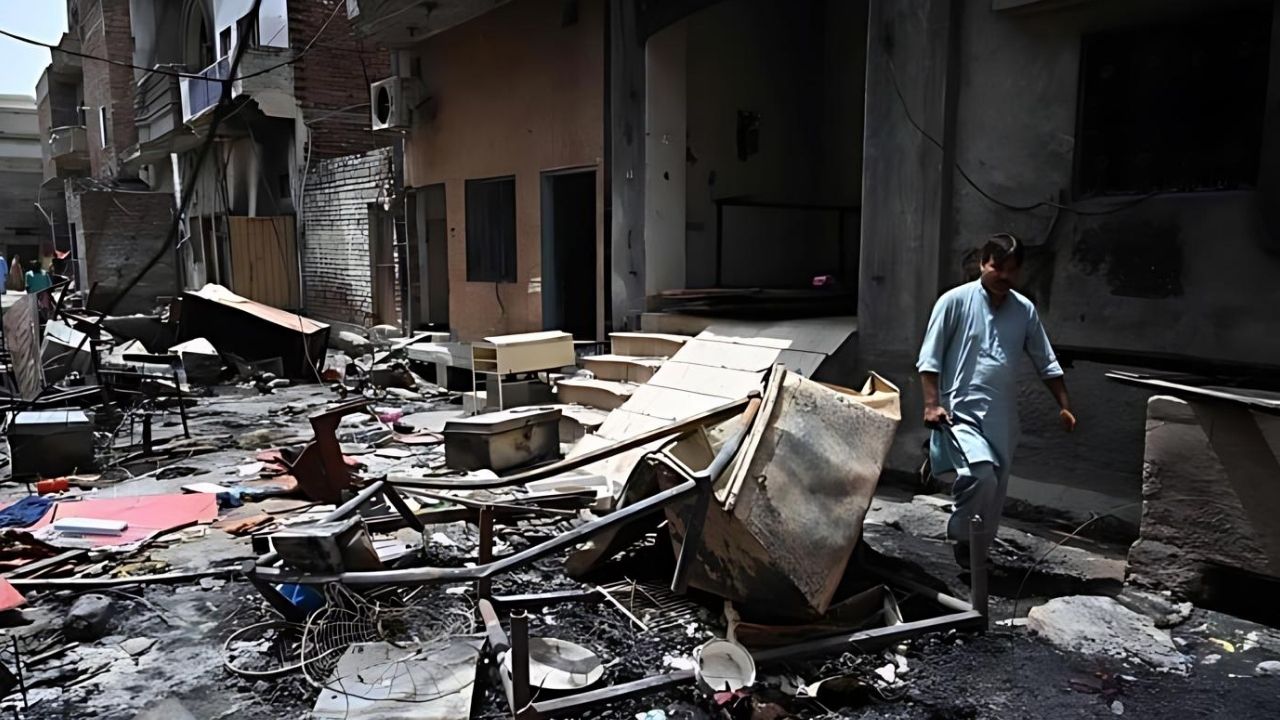
    The Christian community in Jaranwala is still awaiting justice one year after the mob attack on their community. The government of Pakistan had promised to provide justice to the victims of the vandalized Christian community and to punish those involved in the violence, but their efforts appear to have been ineffective.

    On August 16, 2023, two Christian residents were allegedly accused of blasphemy, a charge that was later disproved. Despite this, a large mob went on to vandalize 20 churches and around 80 Christian homes.

    Amnesty International has reported that more than 40 percent of the affected Christian families are still awaiting government compensation.

    Out of the 5,213 suspects, 380 were arrested, but 305 individuals were released on court orders.

    Only 85 out of 146 families have received compensation so far, while 61 are still waiting for their due.

    ‘’We saw our houses in complete shambles as the building would soon collapse. To date, we have received no support. My husband is unemployed for a year because no one hires him (due to stigma). Many people received the promised compensation of 2 million rupees (US$7,200), but we did not receive it’’ said Jaranwala resident Christian Khalida Bano.

    The apex court disapproved the police report on the Jaranwala incident in February 2024, stating that it lacked the required information.

    One year later, trials against the culprits have yet to commence.

  • First case of monkeypox appears in Pakistan

    First case of monkeypox appears in Pakistan

    One day after the World Health Organisation (WHO) declared the monkeypox outbreak a “public health emergency of international concern”, Pakistan yesterday reported this year’s first case of the virus diagnosed in a man from Khyber Pakhtunkhwa after the patient recently returned from Saudi Arabia.

    Consequently, the health ministry has ordered the Border Health Services to strictly monitor all entry points.

    In the past year, Pakistan has confirmed nine cases of Mpox, all among travellers returning from the Middle East and other countries.

    WHO officials confirmed the first infection with a new strain of the mpox virus in Sweden, linking it to a growing outbreak in Africa.

    There have been 27,000 cases and more than 1,100 deaths, mainly among children, in Congo since the current outbreak began in January 2023.

  • ‘It’s not possible’; Reporting in internet-challenged Pakistan

    ‘It’s not possible’; Reporting in internet-challenged Pakistan

    With the primary shift from newspapers to television channels and now to digital media applications, the dissemination of information has become increasingly competitive for newsrooms, with the latest updates just a click away.

    “Delays can be managed with newspapers, but today everything is in your hands—specifically, mobile phones,” says Raees Ansari, Bureau Chief of Geo News in Lahore.

    “Every single second is crucial in reporting now; some footage needs to be sent and put on air instantly. But due to poor network conditions and slow WhatsApp, content is not being sent on time, which is affecting our professional activities,” he reveals.

    Over the past week, internet users across Pakistan have reported network disruptions, with WhatsApp, Facebook, and Instagram experiencing slowdowns, hindering online activities. The Pakistan Telecommunication Authority (PTA) has denied any connection between these issues and the alleged firewall installation.

    Since the ban on X (formerly Twitter) on February 17, 2024, many have turned to Virtual Private Networks (VPNs). The ongoing disturbances, however, have complicated internet usage, which is crucial for a number of professions.

    Sumaira Raja, an investigative reporter, who is mostly found out on the field, complains of encountering issues with not only the internet but also phone signals which often prevents her from conveying news on time.

    “I also experience delays with receiving beepers, as head office frequently reports that the number is not available due to poor signals. This situation makes it very difficult to do my job. I’ve tried using a VPN, but it hasn’t worked,” Raja says.

    Sports journalist Faizan Lakhani recalls when javelin champion Arshad Nadeem returned to Pakistan on August 17 after winning the gold medal at the Paris Olympics, all the visuals sent through WhatsApp by reporters were delayed, and they struggled to download them unless they used a VPN.

    “This situation is very challenging and affects our workflow. When reporters are working on a story or covering an event, they need to stay connected with the desk. We usually rely on voice notes to pass instructions, but since we started encountering this issue, we are struggling with that method too,” he says.

    “We have been told that the network disruption is because of the firewall installation. While things are becoming easier around the world, it has been getting harder for us. Everything is happening with the help of technology and the current situation is a major challenge.” says Ansari.

    What’s happening?

    A highly placed source in the IT industry identifies that filtering of content delivery networks (CDNs) through Firewall is causing content to be routed via internet backbone rather than CDNs.

    “This means that around 4 TBs of internet traffic previously served through CDNs, hosted in Pakistan, is becoming ineffective. When all traffic goes on backbone bypassing CDNs, it’s causing massive slowdown at many western destinations that’s happening now,” he explains.

    Recently, Fiverr, an online marketplace for freelance services, warned clients that Pakistani freelancers may experience delays due to internet issues and the use of VPNs to change their locations.

    “Brace for impact. God save the internet in Pakistan”, says the IT expert.

    Background

    It all started on February 17, 2024, about a week into the new government, when X (formerly Twitter) was banned.

    Initially, amid the uproar, the government remained silent on the matter while the Pakistan Telecommunication Authority (PTA) seemed aloof until the High Courts of Sindh and Islamabad intervened. The PTA eventually admitted that the ban on X was imposed on the orders of the Ministry of Interior based on reports from intelligence agencies.

    The government eventually justified the ban by attributing it to national security concerns, citing ‘digital terrorism‘ and online propaganda as among the threats.

    Earlier in August, Provincial Information Minister Azma Bokhari stated that the government is not against social media but wants to focus on rules and regulations, which, if enforced, could lead to the removal of the ban on X.

    The disruption has now extended beyond X, affecting other widely used apps along with the internet.

    Ironically, since the February 2024 election, the new government has emphasised the need to grow the tech industry in Pakistan.

    In March, Lahore Knowledge Park (a science park) was handed over to the Punjab Central Business District Development Authority with the approval of Chief Minister Punjab Maryam Nawaz, with the goal of establishing Pakistan’s largest IT city.

    In June, Prime Minister Shehbaz Sharif visited Shenzhen— the tech hub in China— in hopes of future collaboration. Ironically, he posted on X (Twitter), expressing how “impressed” he was by the “city’s skyline and development that symbolizes modern-day China.”

    Given the lack of proper infrastructure in the country amid burgeoning surveillance, how will Pakistan evolve in the rapidly transforming digital world? It remains to be seen – but likely we won’t be able to download it.

  • Sindh High Court orders all signboards removed from Karachi

    Sindh High Court orders all signboards removed from Karachi

    The Sindh High Court has ordered the removal of all signboards across Karachi within four weeks.


    The court also warned that contempt of court proceedings will be taken if court orders are not implemented.

    The Court heard a case regarding installing signboards, political banners, and advertisements on government properties and public places. The judge also expressed anger at Mayor Karachi and others for not implementing the Supreme Court’s orders.

    The court also directed the Karachi Metropolitan Corporation, Karachi Development Authority, Defence Housing Authority, Cantonment Boards and others to remove the signboards across the city and submit a report by implementing the orders in the light of the Supreme Court order.

    The court said that if the court orders are not implemented within four weeks, contempt of court action will be taken against Mayor Karachi, DG KDA and others.

    The court ordered that cases be filed against those who put up illegal boards and said that anyone who has put up illegal boards should file a report. The banners were removed despite the order, and no cases were filed.

    The petitioner’s lawyer said that the Supreme Court had ordered the removal of signboards on government property. At the same time, the KMC included the installation of signboards on government property in its rules.