Category: Lifestyle

  • More than 50 per cent of candidates failed in Urdu CSS exam in last three years

    In a surprising statistic, in the three last years at least 54.53 per cent of candidates, who appeared for the Central Superior Services (CSS) Examination failed Pakistan’s national language Urdu subject.

    In 2019, 30 per cent of candidates failed in Urdu, while in 2020 and 2021, the rate of failure shot up to 59 per cent and 73 per cent.

    Regarding the success rate in English, 35,000 out of 49,500 candidates failed in the subject in 2019 with a rate of failure of 73 per cent, which got better in 2020 when only 39 per cent got failed. However, in 2021, 92 per cent failed the subject.

    The details of the candidates were presented in the National Assembly (NA) on Friday.

  • Fourteen killed in lightning strikes in India

    Lightning strikes in the Indian state of West Bengal have killed at least 14 people. The disaster management department confirmed that four individuals lost their lives in Purba Bardhaman district, while two each were killed in Murshidabad and North 24 Parganas districts.


    According to police officials in West Bengal, an additional six deaths were reported in the Paschim Midnapore and Howrah Rural districts.
    “Three deaths each were reported from Paschim Midnapore and Howrah rural,” an official said.


    Officials have stated that the majority of the victims were farmers who were working in agricultural fields and were struck by lightning after moderate rainfalls.

  • Mattel introduces Barbie doll with Down’s syndrome

    Mattel introduces Barbie doll with Down’s syndrome

    On Tuesday, powerhouse toy producer Mattel unveiled their first-ever Barbie doll that represents an individual with Down’s syndrome. The doll was developed in collaboration with the National Down Syndrome Society (NDSS) to ensure that it accurately depicts a person who has the genetic disorder. Mattel consulted with the NDSS to incorporate specific design features and clothing that carry significance to represent the community.


    “Barbie plays an important role in a child’s early experiences, and we are dedicated to doing our part to counter social stigma through play,” said Lisa McKnight, executive vice president and global head of Barbie and dolls at Mattel.


    “Our goal is to enable all children to see themselves in Barbie, while also encouraging children to play with dolls who do not look like themselves,” she added in a statement.


    Down’s syndrome is a genetic condition that results in the presence of an additional chromosome, leading to differences in physical and cognitive development. Mattel had previously introduced a range of Barbie dolls that honored feminists and other inspiring figures. With the introduction of the new Down syndrome Barbie, the total number of different looks available in the Barbie collection is 175, according to Mattel.

  • Pakistan’s first female architect Yasmeen Lari receives Royal Gold Medal from King Charles

    Pakistan’s first female architect Yasmeen Lari has been granted the prestigious Royal Gold Medal for architecture from King Charles, making it the first architecture medal of his reign.

    The renowned Lari received the award in recognition for her role in designing homes for Pakistan’s vulnerable and poverty striken community, after retirement from her practice:

    “Whilst recognising the importance of her role in practice, as a symbol of change in Pakistan, it is the work she has undertaken since her retirement in 2000 that the Royal Gold Medal celebrates.”

    “In the last 23 years Lari and The Heritage Foundation of Pakistan, which she founded with her husband, have reacted imaginatively and creatively to the physical and psychological damage that a number of major natural disasters, earthquakes, floods and conflicts have inflicted on the people of Pakistan.”

    Lari was born in Dera Ghazi Khan and shifted to London with her family when she was 15, where she studied at the Oxford Brookes University, moving back to Karachi in 1964 and opening Lari Associates alongside her husband.

    The duo also founded the Heritage Foundation of Pakistan in 1980, which has been spearheading conservation projects around rural villages in Pakistan, earning it the Recognition Award from the United Nations.

    She received the Sitara-e-Imtiaz in 2006 and the Fukoka Award in 2016 for her services to arts and culture.

  • Sri Lanka is not sending elephants to Pakistan

    Sri Lanka’s High Commission in Pakistan has denied reports that the island nation plans to give two elephants to the country.

    Media reports had stated last week that Sri Lanka was gifting two elephants to Pakistan, after the demise of the Karachi Zoo’s Tanzanian elephant Noor Jehan. The pachyderm died after a very public battle with illness exacerbated by neglect from Zoo officials.

    The news was met with backlash from Pakistani social media users, including celebrities like Nadia Jamil, who took to Twitter to condemn the possibility, pointing out that Pakistan had no proper policy about the well-being and care of Zoo animals, which had led to Noor Jehan’s death.

    However, a tweet posted by the Sri Lankan High Commission has put the rumors to rest.

    “Sri Lanka has not taken action or discussed in providing Elephants to the Zoo’s in Karachi or Lahore, neither Government of Pakistan has made any such request. This post indicate the correct position in view of certain articles in media and discussions on going on social media.”

    The post did clarify that there was some truth to the claims, because the Sri Lankan Honorary Counsel in Lahore Yasin Joyia, had discussed the possibility of providing elephants to Pakistan, but he did not hold any authority to execute such decisions.

  • Pakistan asks WHO to provide monkeypox vaccine

    Pakistan asks WHO to provide monkeypox vaccine

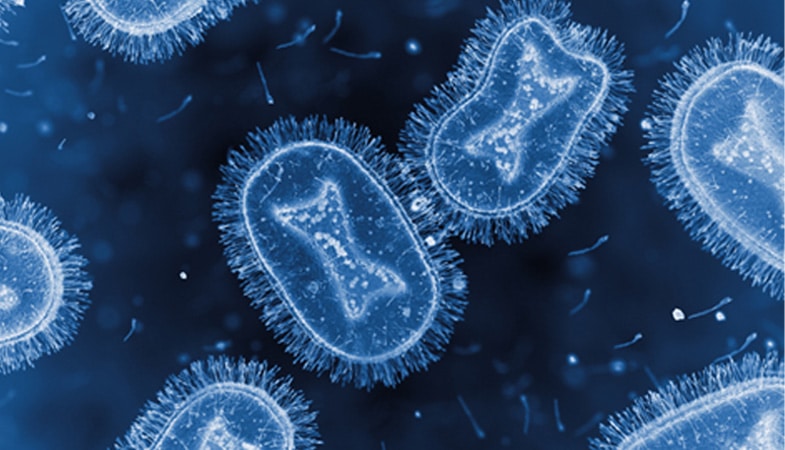
    According to The News, officials in the National Health Services, Regulations and Coordination (NHS,R&C) have said that Pakistan plans to ask the World Health Organization (WHO) for vaccines to prevent monkeypox (mpox).


    “During a National Command and Operation Center (NCOC) meeting held on Wednesday to discuss the monkeypox situation in the country, it was decided that WHO would be requested a sizeable quantity of vaccine to immunise healthcare providers and infectious diseases experts who would be on the frontline to deal with the confirmed and suspected cases of the infectious disease”, an official of the NHS, R&C said.


    The Ministry of National Health Services Regulations and Coordination on Tuesday confirmed the first case of monkeypox in the country.

    Monkeypox is a viral disease brought on by the monkeypox virus, a germ from the orthopox virus genus.


    Humans can contract the monkey pox virus through coming into personal contact with an infected person, contaminated objects or infected animals.

  • Video: Racist Italian students mock Asian family and Pakistani girl

    A TikTok video showing three Italian girls mocking and laughing at an Asian American family including a Pakistani girl, on a train ride from Lake Como to Milan, has gone viral on TikTok.

    The incident was captured by Mahnoor Euceph, a Pakistani film director, who was traveling with her half-Chinese boyfriend and his Chinese mother and white father.


    The video has been viewed over 17.4 million times. In the footage, the three Italian women can be seen repeatedly laughing and attempting to imitate the Chinese language while looking at Euceph and her companions.


    “They were the most calm during the video but you can still hear them saying ni hao and get a vibe of their general attitude,” read the caption of the video . “Never in my life have I experienced such blatant racism.”


    Mehreen wrote that many of her Asian friends had shared their stories of experiencing racism in Italy and Europe with her.
    Social media users identified the three students and the universities they study at. Two of those universities are carrying out an investigation.

  • We asked ChatGPT to write a story about crime in Karachi

    We asked ChatGPT to write a story about crime in Karachi

    ChatGPT is all the rage across the world, changing the landscape in more ways than one. Quickly and with ease, it has redefined everything- from writing essays, CVs, acing college exams and even penning novels!

    If ChatGPT is good at writing fiction, then can it paint a fair picture of Karachi’s street crime and give us a good short story about it? We decided to take the challenge and pitched the idea to ChatGPT and here are the results:

    “The sun had set yet the humidity in Karachi hadn’t reduced one bit. The bustling streets continued to be a buzz of traffic, street vendors, and people going about their business. However, with the rise of darkness, a sense of fear crept in the city. Crime was all too familiar, and the residents of Karachi knew to be cautious when stepping out after dark.

    One such resident of Karachi was Ali. He was an honest man, who had built a life of his own after years of struggle. From selling snacks on the streets to owning a small clothing store in one of the famous markets of Karachi, Ali had come a long way. However, his success story had come with a price. The local mafia bosses would continuously extort him, and although Ali always tried to avoid any trouble, he knew it was only a matter of time before things would go out of hand.

    One evening, as Ali was closing down his shop, he was approached by two men who stood lurking near his stall. They looked as if they were from the mafia and had an unmistakable air of danger around them. Ali knew better than to get into trouble with them and tried to avoid any conversation. However, it was too late. Before he knew it, the men had grabbed him by his collar and pulled him towards them.

    “We need the money, Ali; you’d better be quick in delivering it. We don’t want to get our hands dirty,” one of the men sneered.

    “I don’t have any money, I swear,” Ali tried to explain, hoping the men would let him go.

    “Stop lying, Ali. You think we don’t know how well your business is doing in recent times. We want our share of it, and you better do it quick,” the other man shouted.

    Ali realized he was in a sticky situation, and there was no way out. The mafia bosses wouldn’t leave him alone, but continuing to pay them would only put him and his family at risk. He needed a plan to protect himself and his loved ones.

    Despite the intimidation that he was facing, Ali remained calm and thought things through. He knew there was only one way out – to report everything to the police. But that, he knew, was easier said than done. The police had their fair share of corrupt officers, and with the mafia’s influence, it would be difficult to get any help. But Ali had no other choice. He had worked hard to build his life, and he wasn’t going to let anyone ruin it for him.

    The next day, Ali gathered all his courage and walked into the nearest police station. He narrated everything that had happened to him over the years to the police. Initially, the police officers seemed skeptical, but as Ali presented all the necessary evidence he had collected, they began to take him seriously.

    After a few weeks of investigations, the police finally made their move. Undercover officers managed to gather evidence against the mafia bosses, and with the help of Ali’s testimony, they were able to make arrests. The mafia bosses were tried in court and sentenced to jail time.

    In a single stroke, Ali had managed to rid himself of the mafia’s world and restore his business back to being his own. He felt a sense of pride for having stood up to the people who had been victimizing him for years. For the first time in a while, he felt like he had control over his life and could continue to run his business without any interference.

    As Karachi busied itself through its daily grind, Ali went on with his life, passing through the same bustling streets each day, yet with a newfound sense of confidence. The thing with crime in Karachi was that it never quite left you alone. But with the realization that he could stand up for himself, Ali knew that he had taken the first step towards taking control of his life.”


  • Hospital screenings to be sped up as fear of monkeypox spreads 

    Hospital screenings to be sped up as fear of monkeypox spreads 

    The Ministry of Health has instructed officials to accelerate passenger screening procedures at airports and establish quarantine units in hospitals to limit the spread of monkeypox disease. 

    According to the ministry, there have been 87,000 confirmed cases of monkeypox worldwide, resulting in 119 deaths in different countries. In Pakistan, 22 suspected cases have been sent to the National Institutes of Health (NIH) in Islamabad for testing since May 2022.

    The Ministry of National Health Services Regulations and Coordination on Tuesday  confirmed the first case of monkeypox in the country, Geo news has reported.

    Monkeypox is a viral disease brought on by the monkeypox virus, a germ from the orthopox virus genus.

    Humans can contract the monkey pox virus through coming into personal contact with an infected person, contaminated objects or infected animals.

  • Study suggests eating french fries may be linked to anxiety, depression

    Study suggests eating french fries may be linked to anxiety, depression

    A group of researchers based in Hangzhou, China have discovered that people who consume fried foods regularly, particularly fried potatoes, are more likely to have a 12 per cent increased risk of experiencing anxiety and a 7 per cent higher risk of depression compared to those who do not eat fried foods.


    According to the research, the association between consuming fried foods and an increased risk of anxiety and depression is more evident in young men and younger individuals. Fried foods are widely known to be linked with a multitude of health problems such as obesity, high blood pressure and clogged vessels.


    The study, which was published in the journal PNAS, suggests that reducing the consumption of fried foods could be significant in maintaining good mental health. However, experts in the field of nutrition cautioned that the findings are preliminary and it’s not yet clear whether fried foods are the cause of mental health issues or if people experiencing depression or anxiety tend to consume more fried foods.


    In the study, which spanned 11.3 years and involved 140,728 participants, those who consumed fried foods were evaluated. After excluding individuals who were diagnosed with depression within the first two years, it was discovered that 8,294 cases of anxiety and 12,735 cases of depression were recorded among those who consumed fried food.

    Additionally, the study revealed that consuming fried potatoes, specifically, increased the risk of depression by 2 per cent compared to consuming fried white meat. The research also indicated that participants who regularly consumed more than one serving of fried food were more likely to be younger men.