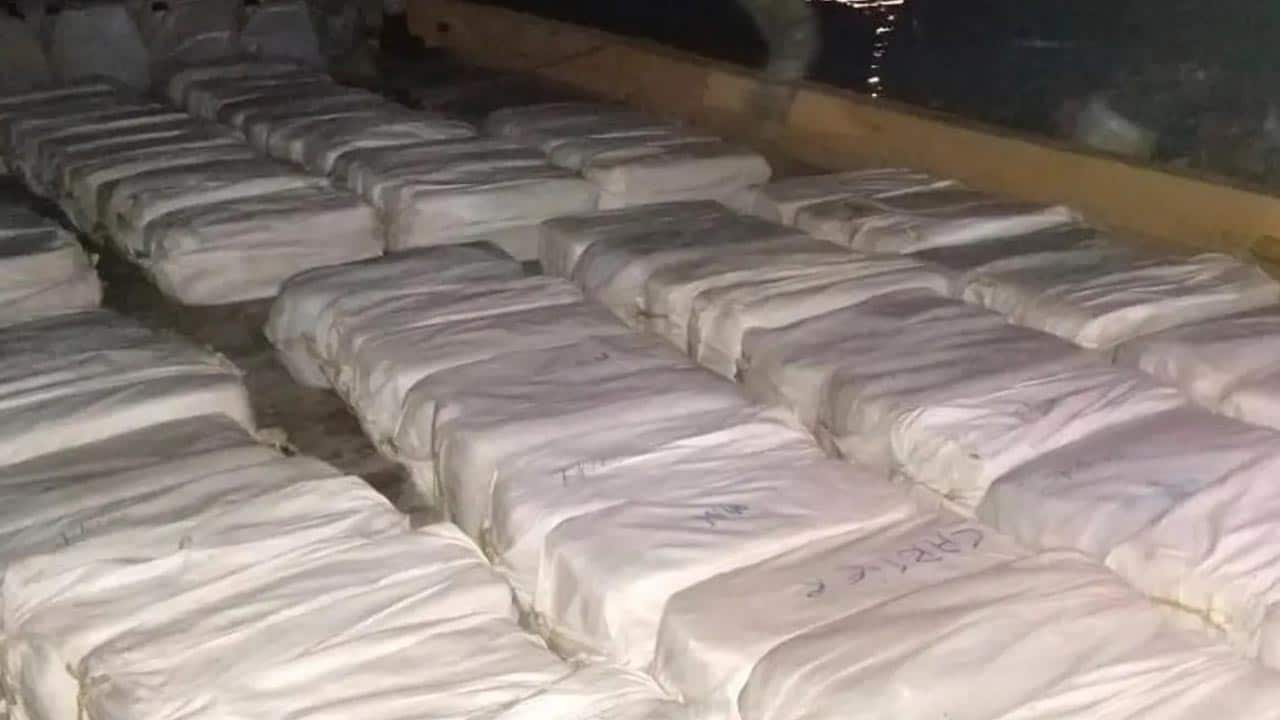
During an operation on Sunday, the Anti-Narcotics Force (ANF) was able to recover more than a tonne of drugs and take two suspects into custody.
According to a spokesman for the ANF headquarters, the ANF carried out a raid in the Islamabad area after receiving a tip, seizing nearly one tonne of drugs, including 1,020 kg of hash and 28.8 kg of heroin, as well as two members of an inter-provincial drug smuggling ring.
The refrigerated container contained medicines that were being transported out of Balochistan. After filing a case against the accused, ANF began a new investigation to find other gang members, he continued.
In other news, the Airports Security Force (ASF) recovered 7 kg of heroin on Sunday as a result of two separate raids at the airports in Lahore and Karachi.
Asif Ali, a passenger travelling from Lahore to Bangkok, had 5.12 kg of heroin hidden in his hand luggage, according to Anti Narcotic Force (ANF) officers. The accused had expertly concealed the heroin in his hand luggage.
In the second operation, which was carried out at the Karachi Airport, 1.47 kg of heroin was found in Ahmed Sher’s suitcase, who was travelling from Karachi to Medina.
While ASF representatives said that the accused had been given to ANF for additional legal proceedings, including drug charges.
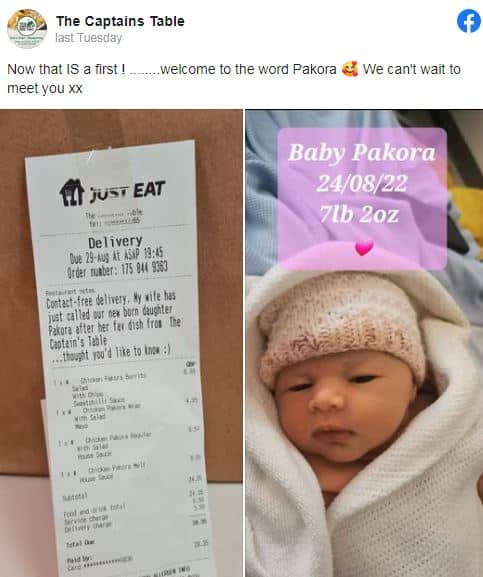
Claim: A couple in the United Kingdom named their baby ‘Pakora’.
Fact: No, the couple did not name their baby Pakora. The incident was a joke made by the owner of a restaurant.
News reports have been making rounds on social media about a UK couple naming their baby after the desi fried snack Pakora (fritters). The unusual news is being widely talked about on social media, generating a lot of mirth and decisive views.
The Captain’s Table, a restaurant in Newtownabbey, Ireland, took to Facebook to share the news. The eatery shared the receipt of an order placed by the UK couple and also a picture of the baby girl born on August 24.
“My wife has just called our newborn daughter Pakora after her fav dish from The Captain’s Table,” read the note.
However, the owner of the restaurant, Hilary Braniff, later clarified that the post was only a joke. She made the story up to “bring a little cheer to the industry” which is reeling under the rising costs and increasing energy bills.
Braniff claimed that she just wanted to share the post and brighten up people’s day.
The girl in the picture is the granddaughter of the restaurant owner, and her name is Grace. “I just thought I would do a post – my two favourite things in the world are chicken pakora and my baby granddaughter. I thought I would combine the two things for a bit of fun really,” she said.
A Bentley Mulsanne that was stolen from London, United Kingdom (UK), has been recovered by the Collectorate of Customs Enforcement (CCE) in Defence Housing Authority (DHA) Karachi.
According to Geo, the British intelligence agency reportedly informed the CCE, Karachi, through reliable sources that a grey Bentley Mulsanne, V8 Automatic, with the VIN numbers SCBBA63Y7FC001375 and CKB304693, which was stolen from London, was parked in DHA, Karachi.
The conduct of the nation’s various agencies has been under intense scrutiny following an extraordinary incident in which a stolen car from London was found in Karachi thanks to information provided by the UK intelligence agency.
To check the accuracy of the report, the CCE team has mounted strict monitoring at the mentioned place. The car that was discovered parked within the house’s car porch was found during a physical search by the department.
When the light grey fabric was removed, a grey Bentley Mulsanne with the Pakistani registration number BRS-279(2020 Sindh) was discovered at the back of the vehicle, and a white handcrafted number plate with the letters BRS-279 was discovered at the front.
The vehicle’s chassis number, however, matched the information provided about the stolen car. As a result, the department has detained the owner and the car for additional inquiry.
The vehicle’s owner revealed during the opening stages of the investigation that another person had sold the vehicle to him and had taken full responsibility for obtaining the necessary clearances from the relevant authorities.
On the basis of his information, the department also detained the individual who identified himself as a broker and revealed the identity of the primary offender, who is still at large.
The registration of such a pricey vehicle required NOC from Pakistan Customs, receipt of duty and tax payments, and selling approval from the Ministry of Foreign Affairs, according to sources in the customs department.
Surprisingly, the Sindh Excise and Taxation department registered this stolen car without following all the legal procedures, proving that Sindh Excise officers were involved in these illegal acts.
The case has been filed, and further investigation is being conducted to bring the guilty parties to justice.
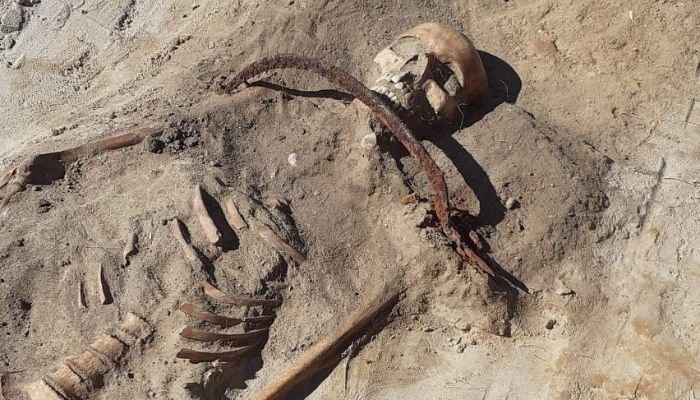
The remains of a ‘female vampire’ have been discovered by archaeologists at a 17th-century graveyard in Poland.
Professor Dariusz Poliński along with his team were conducting research in the area when they found a female skeleton pinned to the ground with a sickle around the throat.
Her toe was found padlocked to keep her from ‘returning from the dead’. This strengthened the theory that the female was considered a vampire at the time of her death.
The practice of putting a sickle around the neck of the deceased was used in 1600s by superstitious Poles to restrain a deceased person from coming back to life. The discovery of one around the skeleton’s neck further strengthened the supposition that people considered her a vampire.
“The sickle was not laid flat but placed on the neck in such a way that if the deceased had tried to get up… the head would have been cut off or injured,” Poliński said while talking to Daily Mail.
AA silk cap was also found at the site, which suggested that the woman held a high social status during her lifetime.
These unusual burial practices became common in Poland in 17th century. Natives believed that ‘vampires’ could return and wreak havoc on local villagers. However, the criteria of classifying someone a vampire is uncertain till date according to Poliński.
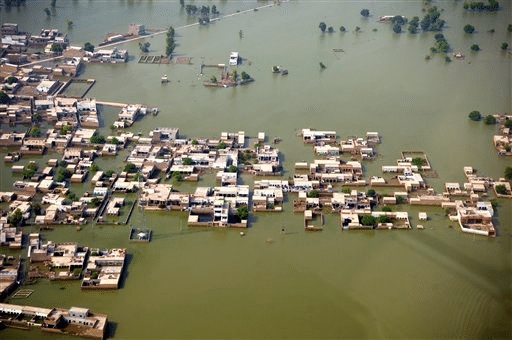
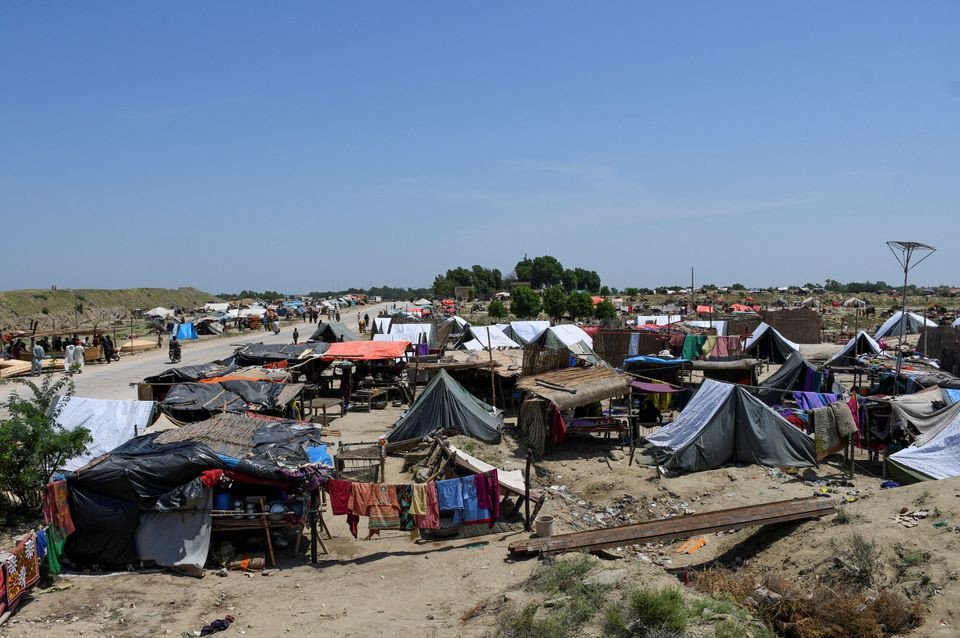
Hundreds of flood affectees in Rajanpur district, Punjab, are awaiting government aid as they continue to camp on roads to escape the devastation of high water levels in their villages and towns, reports Ilyas Gabol for Samaa News.
According to the affectees, no one from the government has reached out to them with relief packages.
“No one has come here to deliver relief package to us despite several claims by the government that aid is being disbursed among the needy persons,” a flood victim told Samaa.
Another woman said, “We are helplessly sitting on the side of the road fending for ourselves and cooking whatever is available.”
She requested the authorities to send help immediately.
’90 per cent of people still await assistance’: Faisal Edhi
Faisal Edhi of the Edhi Foundation said that the situation is critical and warned that it’s going to worsen.
He highlighted that people’s participation in relief work as compared to the 2010 floods and 2005 earthquake in Pakistan isn’t sufficient.
Edhi revealed that despite a great deal of effort made by the Edhi Foundation, government and Non-Governmental Organisations (NGOs), help has reached 10 percent of people. “90 per cent of them still await assistance,” he observed.
“There are people who say that they don’t want to come to the streets with their children. They only ask for food. Water has entered their houses,” he said.
Moreover, he said he fears that international migration from Pakistan will begin as thirty to forty million people have been affected by the catastrophe.
In the last 24 hours, 57 more deaths have occurred which has taken the death toll to 1,265.
The Central Command of the United States military will send a team to Pakistan which will assess the damages caused by the floods.
According to a press release issued by Centcom Communication Director Colonel Joe Buccino on September 2, General Michael contacted Chief of Army Staff (COAS) General Qamar Javed Bajwa by telephone and offered condolences over the loss of lives in historic floods across the country.
As per the statement, an assessment team will be travelling to Islamabad to assess what possible help the Department of Defence (DoD) may offer to USAID as part of the United States’ response to the flooding disaster in Pakistan.
USAID announced earlier this week that the US will provide $30 million in humanitarian assistance to Pakistan to deal with damage caused by devastating floods.
Heavy monsoon rains in the country have triggered massive floods that have submerged a third of the country and killed at least 1,208 people.
Approximately 116 districts across the four provinces have been affected. Infrastructure, including bridges, roads, schools, homes and hospitals. According to the World Health Organisation (WHO), 888 health facilities have been inundated with flood water
The devasting floods have killed at least 1,191 people in the country. Balochistan and Sindh are the most affected provinces of the country. Hundreds of thousands of people who were displaced by the floods since June are currently residing in camps or with host families.
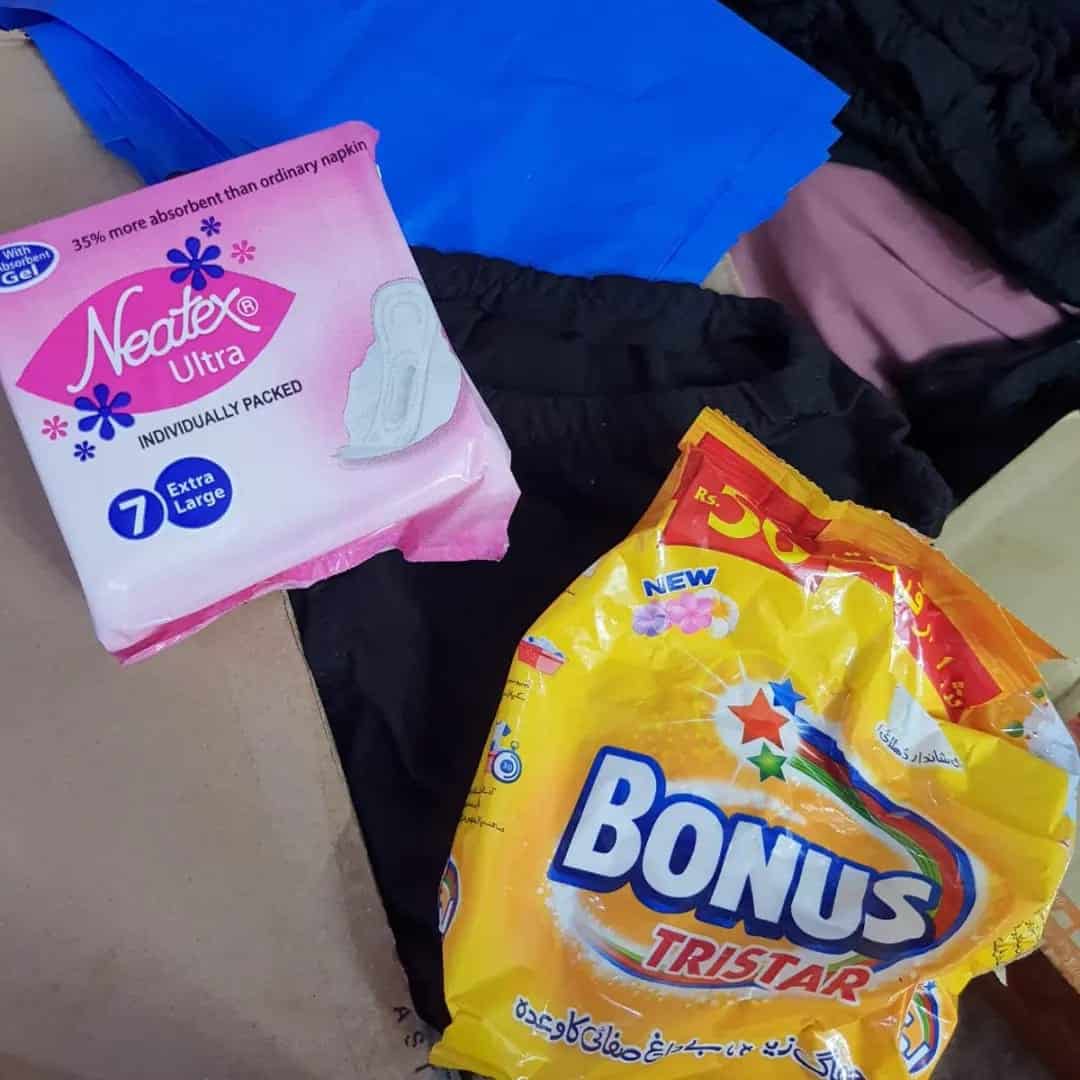
As per an estimate, 8.2 million women in flood-affected areas are of reproductive age. Menstruating women in disaster-hit areas require access to safe and clean menstruation hygine products.
Many organisations are donating sanitary pads for women. However, a debate has been going around for days that whether sanitary pads should be donated or not. Some give the arguments that rural women do not use and do not know how to use sanitary pads, and donating them sanitary pads is a waste of already limited resources. While others give an argument that disposing of sanitary pads pollutes the environment.
“One study has suggested that there may be an increased risk of urogenital infections, such as yeast infection, vaginosis or urinary tract infections, when women and girls are not able to bathe and/or change or clean their menstrual supplies regularly,” a report published by the United Nations Population Fund reads.
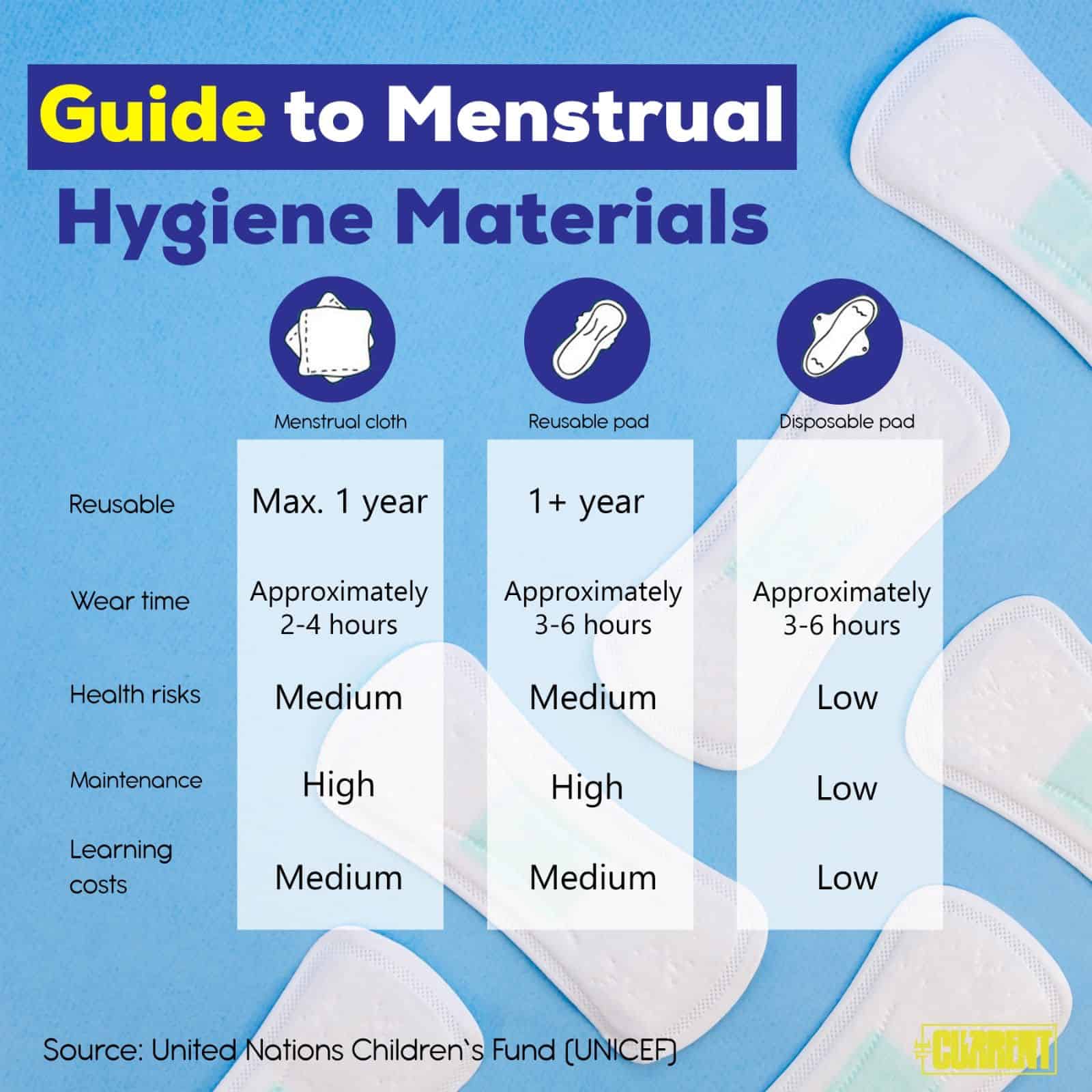
Here is the United Nations Children’s Fund (UNICEF) Guide to Menstrual Hygiene Materials:
Pads are arguably the most widely used period product the sanitary pad/napkin has been commercially available for more than a century. They are worn inside the user’s underwear and absorb menstrual blood through layers of absorbent material, often rayon, cotton, and plastic. Pad design has changed over the decades to become considerably more absorbent and pleasant, with a wide selection available to suit different flows.
Talking about the arguments going around regarding the negative consequences of using disposable pads environment Lawyer Ahmad Rafay Alam while talking to The Current about the issues said, “Women are as entitled to their dignity as men. Screaming plastic pollution at a time like this is disingenuous at best. We can work out plastic pollution issues soon. Let’s first deal with the millions of women who menstruate.”
Dr Alia Haider, who is working for the relief of flood victims in Khyber Pakhtunkhwa (KP), while talking to The Current said that women in flood-affected areas do not have access to sanitary pads or the clothes they would normally use, as all of their belongings were completely destroyed.
Talking about the need of donating sanitary pads in flood-affected areas Haider said, “It would be very unfair to give women medicines but not sanitary pads,” adding that sanitary pads are not a luxury but a basic human need.
However, she said that donating sanitary pads is not enough, a tutorial about how to use them should be sent along or people distributing them should go and teach the flood-affected women.
“When I was working in medical camps in those areas, women came to me and said they don’t need it because they don’t know how to use them, then I used to take a group of 10 to 15 women in a room and used to teach them how to use sanitary pads. I made sure that they know that these are disposable.
She continued by adding, “We can also find and coordinate with women from those communities and backgrounds who know how to use sanitary pads and they can teach their fellow community members” So we need to connect with them on a community level.”
“When I was in Rajanpur, Taunsa, a woman did not know how to use sanitary pads so a guy came to me and said do get it to them. I asked the guy if he knows someone who knows how to use sanitary pads, to which the boy replied that his wife knows how to use them. Then I asked him to bring his wife, she knew how to use it and she offered that she would teach women in that community how to use sanitary pads.”
“We can’t sit idle and say oh my God that this is not the need of the time. Not maintaining menstrual hygiene can lead to many issues including Urinary tract infection (UTI), fungal infection, and prolonged use of clothing cause menorrhagia (excessive bleeding). During my visit to flood-affected areas, almost 60 to 70 per cent of women were suffering from Menorrhagia and other infections.”
She said that she does not think there is any other option than sanitary pads because even if they are provided with clothes, they will not have the resources to wash them or reuse them. Sanitary pads are accessible and disposable so they are the best option available according to Dr Alia’s assessment.
Where can you donate?
Bushra Mahnoor, who is leading a campaign called “Mahwari Justice” along with her friend Anum, while talking to The Current said that they started the campaign when the floods hit Pakistan at the end of June.
Mahwari is an Urdu word for Menstruation and Mahwari Justice means justice for women who menstruate and who are in dire need of menstrual assistance.
Talking about why she felt compelled to start the campaign, Bushra said,” I was a kid when the 2010 foods hit Pakistan. A lot of areas near my hometown Attock were flooded. My parents would collect goods and would take them to relief camps.”
Once when she went along with her parents to a relief camp, she saw a girl who was a year or two older than her. The girl’s shirt and shalwar (trousers) were spotted with large blood stains.
“My mother approached the girl and gave her a shawl to cover herself and a piece of clothing to use [as a pad]. The young girl explained to my mother that her periods started in the relief camp and she had nothing to use as a sanitary cloth. The girl was using her dupatta to manage periods but it was barely doing the job.”
“When floods hit Pakistan this year, the image of that little girl flashed into my mind and I knew I had to do something,” said Mahnoor. She then contacted Anum and they both decided that they had to do something for the women in flood-affected areas.
“Women and their needs get neglected not only by the state but by relief campaigners as well.”
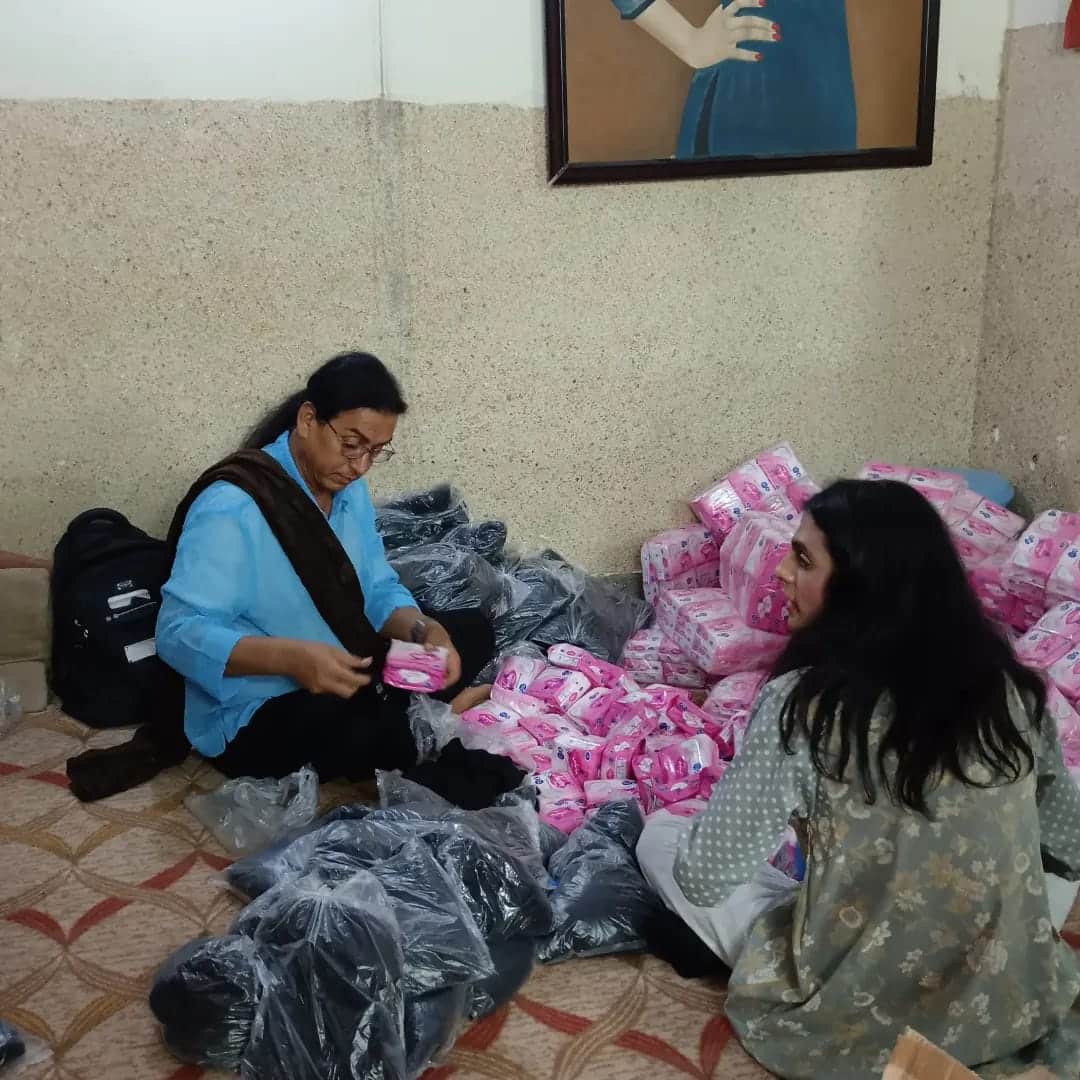
Mahnoor told The Current that Mahwari Justice is collecting sanitary napkins, cloth pads, cotton pads, underwear and sheets which they then donate to women in disaster-hit areas.
“There are many people who are saying that women in rural areas do not use sanitary pads. Why don’t they use sanitary pads? Because they do not have access to them and the critique is mostly coming from those who maybe have never used a cloth pad in their lives,” she stated.
Bushra comes from a lower-income background and for most of her life, she used a cloth pad. “Do you even realise, how uncomfortable and how unhygienic and how itchy the cloth pads are?” she wondered, adding: “I had to use cloth pads because we did not have the resources to buy sanitary napkins. It was difficult to afford sanitary napkins for six people every month.”
Mahoor further said that she agrees that sanitary pads have many problems too, but she does not understand why people think it is okay to preach about climate impact when an urgent crisis has hit the country.
“Pakistan is only contributing one per cent to the global carbon emission and women in rural areas do not make even a fraction of that one per cent.” She said she doesn’t understand why people are so worried about the waste that will be generated.
Anum Khalid, who started this campaign with Mahnoor while talking to The Current said, “If a flood victim is thirsty and you are giving them water in a plastic bottle, does that not harm the environment?”.
She continued by saying, “Bushra and I started this campaign to provide immediate relief to women or other menstruators from the issues they face from continuous bleeding.”
United Nations (UN)’s report on Guide to Menstrual Hygiene products suggests that consultation should be done on what products women are comfortable using because different materials and products are utilised for this purpose.
Anam said that they now send information about how to use sanitary pads along with their sanitary kits. They are also providing cloth pads for women in the areas where women ask for them because of their cultural preferences.
She continued by adding that our volunteers are teaching women in rural areas in their own language how to correctly use sanitary napkins.
She concluded by saying that the debate about whether something is a luxury or a basic need in times of crisis was tragic. “Our justice campaign, I believe, is helping to change the belief that sanitary pads are luxury,” she stressed.
🚨Appeal for donations 🚨
Help us reach more flood-affected women and girls!
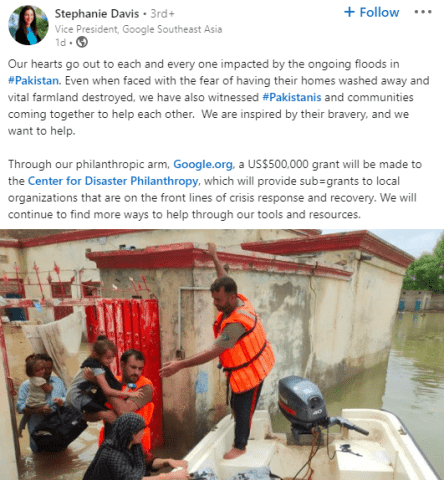
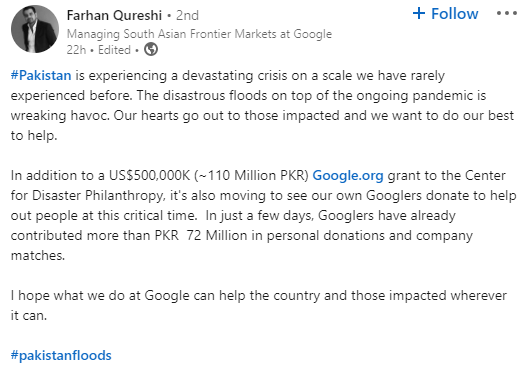
Tech giant Google has announced that it will donate $500,000 (Rs110 million) for flood relief efforts in Pakistan.
Google Southeast Asia Vice President Stephanie Davis posted on LinkedIn that the tech giant would donate the amount to the Centre for Disaster Philanthropy through Google.org.
In a post, she wrote: “Our hearts go out to each and everyone impacted by the ongoing floods in Pakistan. Even when faced with the fear of having their homes washed away and vital farmland destroyed, we have also witnessed Pakistanis and communities coming together to help each other. We are inspired by their bravery, and we want to help.”
She added that the company would find more ways to help Pakistan through its tools and resources.
Separately, Google’s Regional Head for South Asian Frontier Markets Farhan Qureshi said Google employees have contributed over Rs72 million so far in personal donations and company matches.
Earlier this week, Apple Chief Executive Officer Tim Cook said his company would donate to relief and recovery efforts on the ground.
“The floods in Pakistan and surrounding areas are devastating humanitarian disasters. Our thoughts are with those that have lost loved ones, the many displaced families, and all those affected,” he tweeted.
The floods in Pakistan and surrounding areas are devastating humanitarian disasters. Our thoughts are with those that have lost loved ones, the many displaced families, and all those affected. Apple will donate to relief and recovery efforts on the ground.
Suzuki has also decided to offer aid to Pakistan in support of the flood victims. According to an official notification, the company will offer a relief fund of 10 million Japanese Yen (Rs15.6 million).
Water levels continued to rise on Friday as the overall death toll from the devastating floods has crossed 1,200.
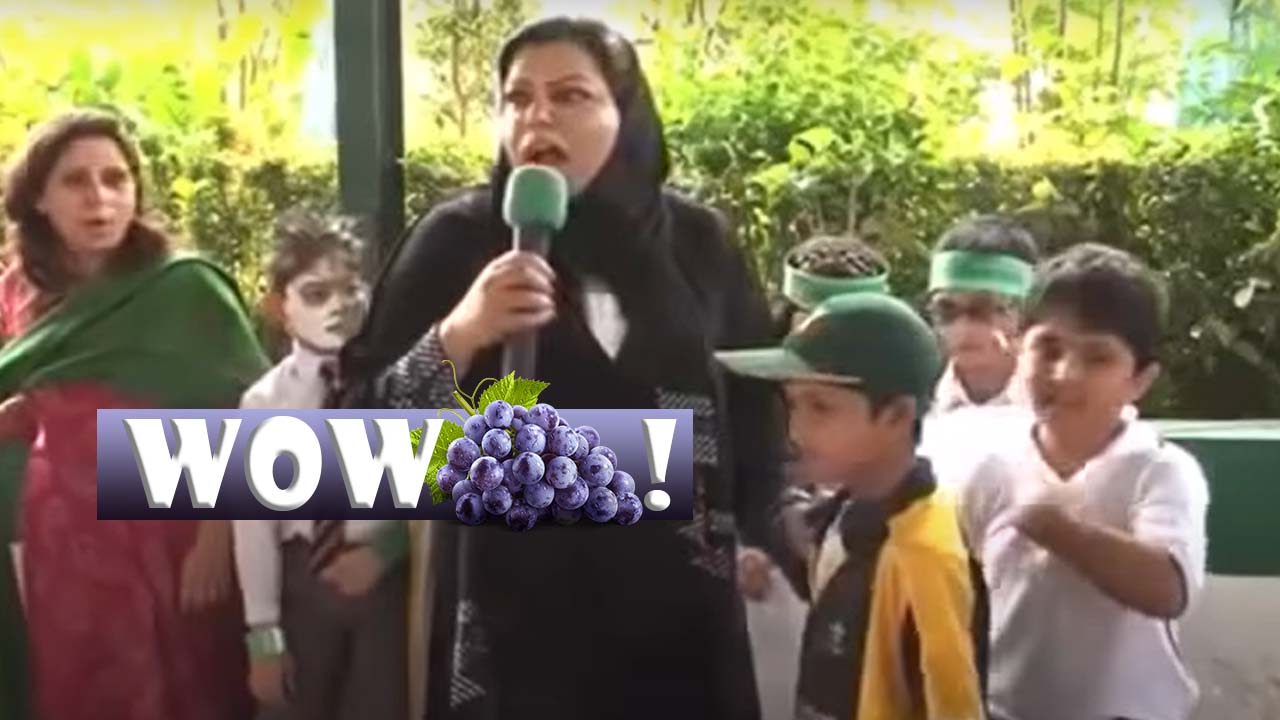
The “wow grape” meme that won the hearts of many people across the world is due to be auctioned as a Non-Fungible Token (NFT) on September 30, 2022, on the digital art marketplace Foundation.
When a YouTube channel posted a video of a celebration at a Pakistani school in Saudi Arabia, a school teacher, Sehar Kamran’s “wow grape” moment became meme material for netizens.
Snippets from the video quickly went popular on the internet, becoming a frequent model for the creation of memes that inundated social media.
The tagline “wow, great” was actually misunderstood as “wow grape” by internet users. Since then, the phrase “wow grape” has appeared regularly in texts, images, gifs, and videos on the internet.
The auction will be held in partnership with the Sweden/Pakistan-based software business, Maqssoft, with Sehar Kamran’s permission.
Reportedly, a percentage of the earnings from NFT sales will go toward the rehabilitation of flood victims in Pakistan.
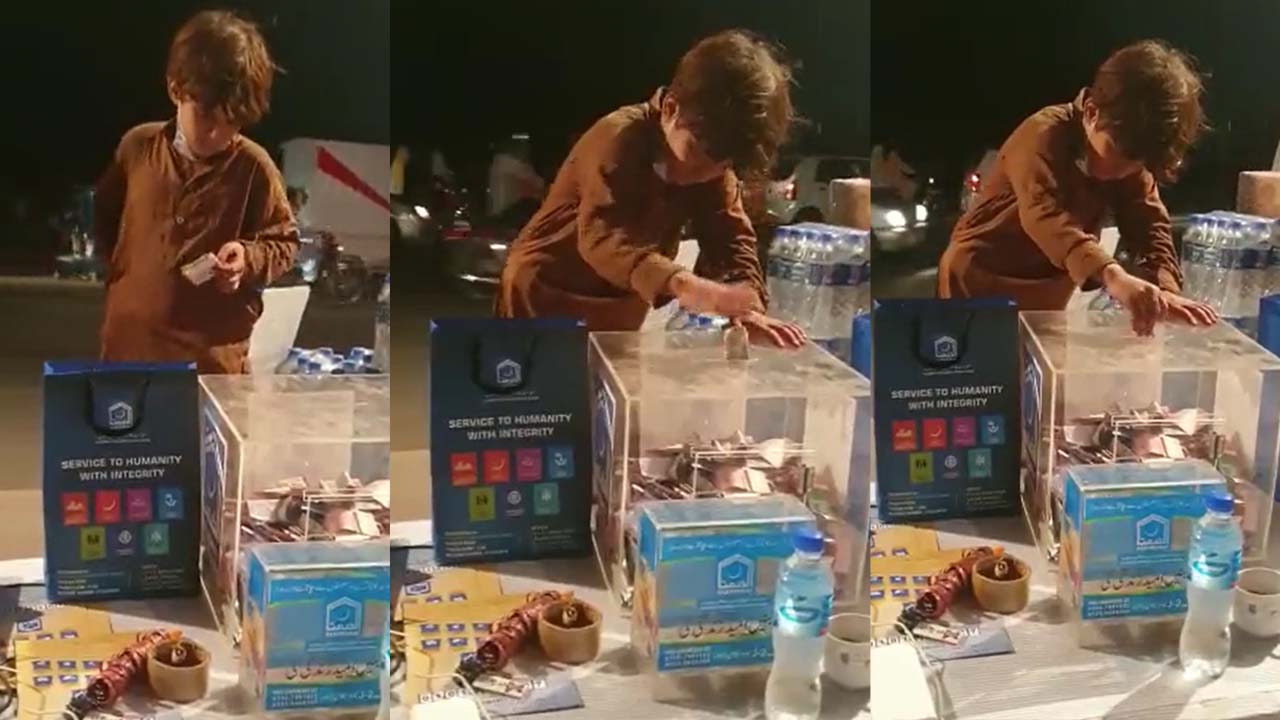
A charity organisation, Alkhidmat Foundation Pakistan, posted a video of a young boy donating Rs30 for flood relief efforts.
The shoe polisher has been donating to the flood relief camp at Thokar Niaz Baig in Lahore for the last five days, according to the Alkhidmat Foundation.
It went on to say that since he did not have any money to donate the day before yesterday, he shined some shoes and donated Rs30 of the Rs60 he had earned.
In the emotional video, the boy can be seen searching his pockets for money before putting it inside the contribution box.
جوتے پالش کرنے والا یہ ننھا سا بچہ مسلسل پانچ روز سے الخدمت فلڈ ریلیف کیمپ میں سیلاب زدگان کے لیے پیسے جمع کروا کرجارہا ہے۔ پرسوں اس بچے کے پاس پیسے نہیں تھے تو پہلے بچے نے جوتے پالش کیے اور 60 میں سے تیس روپے عطیہ کرگیا۔ 📍Location: Thokar Niaz Baig (Alkhidmat Relief Camp) pic.twitter.com/IjxrpWdLwj
The post has been retweeted 8k times and received over 24k likes, with others applauding the noble gesture from a poor youngster. Some netizens stated that it is a lesson for people who earn a lot of money but do not contribute or have a big enough heart to donate enough money in such instances.