Researchers from Shah Abdul Latif University’s Department of Archeology have found traces of a third-century settlement in Brahmanabad, Sindh. Brahmanabad is believed to have been set up in the eighth-century by Muhammad Bin Qasim. The area was the historical capital of the Muslim Caliphate in Sindh during the eighth century, under the Umayyad Caliphate and then under the Abbasid Caliphate from the year 750 AD to 1006 AD.
According to a report in Arab News, a team of around 20 archaeologists started excavation on the site in December as part of a joint project of the Sindh culture department and Shah Abdul Latif University in Khairpur. The supervision was led by Dr Ghulam Muhiuddin Veesar.
Speaking to the publication, Veesar said: “Through [the] material we got, we can say that this settlement of Brahmanabad also existed in the third century AD and people lived here, proving that the settlement is of a pre-Islamic era.”
“We have done both vertical and horizontal excavations so that we may know its cultural phases to determine when the settlement started, how long people were living there,” said Dr Veesar, adding: “Another important feature we found is that the whole settlement is established on a riverbed. They formed the settlement on mounds of natural silt sand dunes of river bed.”
Sindh Minister for Culture, Syed Sardar Ali Shah referred to the findings as of “high importance”.
“It is a great achievement,” he said. “The detailed report is awaited, but in the future, these findings can be helpful in connecting the linkage with other archaeological sites like Mohenjo Daro.”
This is the third such excavation on the archaeological site in the last 180 years. The first one took place in 1854 during British rule and the second one was in 1962 by a government of Pakistan team.
As many as 50 rare Himalayan ibex, including females with their young ones, were spotted by officials of the World Wide Fund (WWF) near Khyber village in Hunza Valley.
According to WWF, the Himalayan Ibex is found at an average altitude of 3,660 meters and they usually come down the mountain due to snow and in search of food in the winter season.
Elaborating further, the animal rights body said: “The population faces numerous threats across its range in Pakistan, from habitat loss to illegal hunting, climate change, and lack of awareness about the species.”
“Despite these challenges, a significant increase has been recorded in their population as a result of continued and concerted efforts of the local community, Gilgit-Baltistan Wildlife Department and WWF,” it added.
A survey conducted in 2019 by the government and local communities revealed that almost 1500 ibex were sighted in Ghulkin catchments in recent years.
“The sighting of such a large herd is a welcome indicator of the conservation success of WWF in its fiftieth year in Pakistan,” expressed WWF-Pakistan Senior Director Programmes Rab Nawaz.
Brace yourselves for some great news! On a recent trip to Gilgit-Baltistan, our team spotted a herd of about 50 Himalayan ibex near #Khyber village, #Hunza Valley.
When it comes to cleaning the beach and making sure it is trash-free, Wasim Akram and Shaniera Akram are on the forefront. The two have endlessly campaigned and worked towards keeping the beach clean by mobilising the government, authorities and residents of the city.
However, this time Shaniera is heartbroken over the fact that no matter how many times they clean the beach, it becomes a mess again.
“Every six months, we make conscious efforts to get this place cleaned up,” wrote Shaniera in a post on social media post. “We work hard to ensure there is no plastic waste lying around and polluting our beaches. Yet, even after two days of a clean-up, there is even more plastic wastage than the last time.”
“Seeing this is heartbreaking, not only because our efforts are not showing any results but also because this plastic waste will be our downfall,” said Akram further, urging everyone to “protect the environment, recycle and reuse your plastic products, reduce your contribution to plastic waste.”
Later, in a tweet, Shaniera urged food giants of Pakistan to take making recyclable packaging for their products.
Food giants in Pakistan need to take responsibility by recycling their own cans,drink bottles,chip packets & food containers they sell us! The best marketing tool today, is the promise of a better tomorrow. You want us to buy your product then start impressing us the right way!
Last week,Shaniera penned a love letter for Karachi and expressed her love for the city by praising its resilience and diversity and comparing it to an eagle that looks into the eye withoutfright and remains devoted to where it belongs.
The government has reportedly issued special permits to seven-members of Dubai’s royal family to hunt the internationally protected Houbara bustard during the 2020-21 hunting season.
As per details, the permit has been issued to Dubai ruler Sheikh Mohammed bin Rashid Al-Maktoum and six other members of the ruling family including the crown prince, deputy ruler and finance and industries minister, deputy police chief, an army official, two other members of the royal family, and a businessman.
The hunting permits were reportedly issued by Prime Minister Imran Khan himself who earlier opposed the hunting of rare bird, while in opposition.
It is pertinent to add here that local citizens are not allowed to hunt the migratory bird wrongly prized as an aphrodisiac and classified as vulnerable by conservationists.
Talking about the hunting of the Houbara bustard Muhammad bin Naveed, an animal rights activist and member of Friends of Islamabad Zoo said: “Houbara bustards have become an unfortunate tool for so-called diplomacy with our Arab allies where again we are using animals and their lives to play politics.”
He further added: “No government in the past or now has stood up to the killing of Houbara bustards by Arab royal families simply because they pay a lot to be here and contribute to the local economy. I think we, as a nation, and our Arab allies need to think if such activities have any place in the 21st century and why we are using animals to propagate outdated traditions that are not even a part of our culture.”
Earlier in December 2020, it was reported that at least 18 Saudi and Qatari royals, including Saudi Crown Prince Muhammad Bin Salman, will visit Pakistan to hunt the rare houbara bustard after the confirmation of their special hunting licences.
WhatsApp is facing massive criticism after users raised security issues ever since the Facebook-owned messaging app updated its new privacy policy. WhatsApp has now released an official statement clearing all speculations surrounding new terms of service and policies.
Taking to Twitter, the messaging app has said that the policy update does not affect users’ privacy with friends or family. The app also shared a list of things that the company won’t be sharing with Facebook.
We want to address some rumors and be 100% clear we continue to protect your private messages with end-to-end encryption. pic.twitter.com/6qDnzQ98MP
Addressing the issue of group privacy, the company has said: “We don’t share this data with Facebook for ads. Again, these private chats are end-to-end encrypted so we can’t see their content”.
For users who want additional security, the company has suggested that they can also change message settings to “disappear from chats after you send them”.
The messaging giant has also issued clarification about the rumor that the company store messages of its users. It said, “WhatsApp will not store your text messages and other media files, even on its own servers. They are only stored offline on your own device”.
Furthermore, the app clarified that WhatsApp does not share your contacts with Facebook, location and logs of the messages and calls.
ICYMI WhatsApp has updated its privacy policy that states the company will now be sharing the customer data with Facebook and it is mandatory for the users to accept the privacy if they want to continue using the app. Following the announcement, hilarious memes on the matter took over social media.
The Hazara University in Mansehra has issued a new dress code for students, faculty members and administrative staff.
According to the notification issued on January 6, female students have been advised to wear abaya/scarf/dupatta in neutral colours without any decorative material. They have also been asked to wear shalwar qameez with dupatta or chaddar.
Jeans, tights, t-shirts, shorts with jeans or tights, heavy makeup and jewellery have been banned at the university, while female students have also been advised against carrying heavy hand bags.
The notification further recommends a dress code for male students which includes, dress pants with dress shirts, dress shoes with socks, shalwar qameez, and warm caps in the winters.
Shorts, cut-off/toran/skin-fitted jeans, chappals/sleepers of any kind/jewellery, long hair, ponytails, and un-presentable bread have been strictly prohibited for the male students, according to the notification.
Furthermore, staff and faculty members have been advised to wear “neat, clean and presentable dress and black gown during lectures”.
“Cut-off/toran/skin-fitted jeans, chappals/sleepers of any kind and jewellery are strictly not recommended for faculty members and staff,” reads the notification.
Wearing ID cards at all times has also been made compulsory for both students and faculty members.
Though the new recommendations by Hazara University are being strongly criticised on social media, Spokesperson for the KP government and adviser to CM on Information Kamran Bangash, while talking to Gulf News, welcomed the step saying: “This will end the dress competition between the students and teachers, helping the poor students and their parents. It will also help them focus on their studies.”
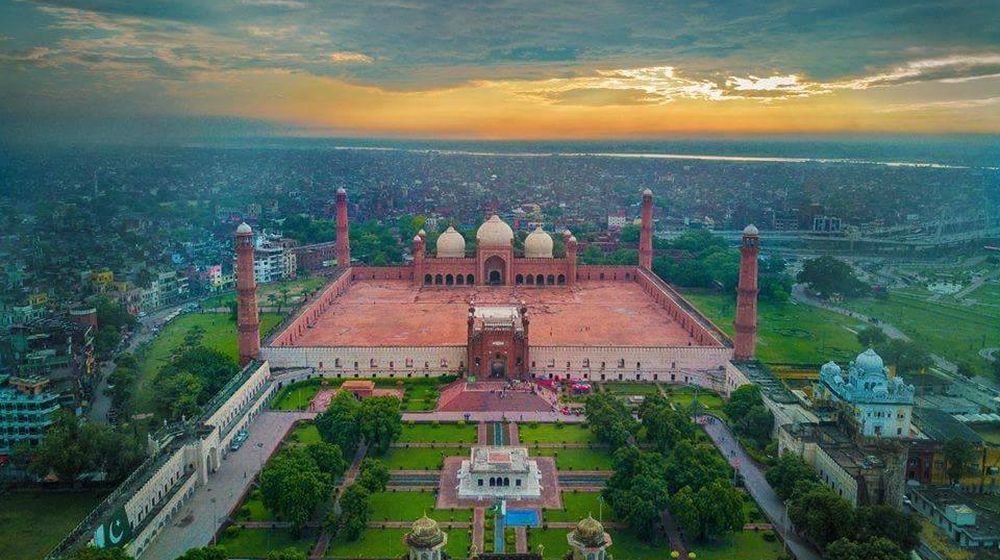
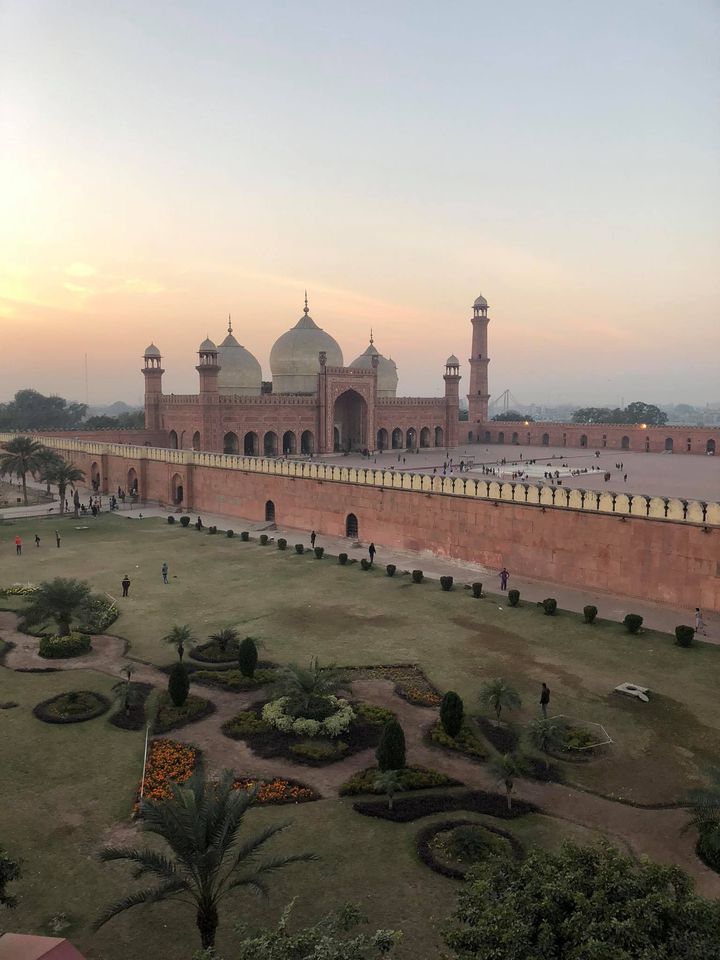
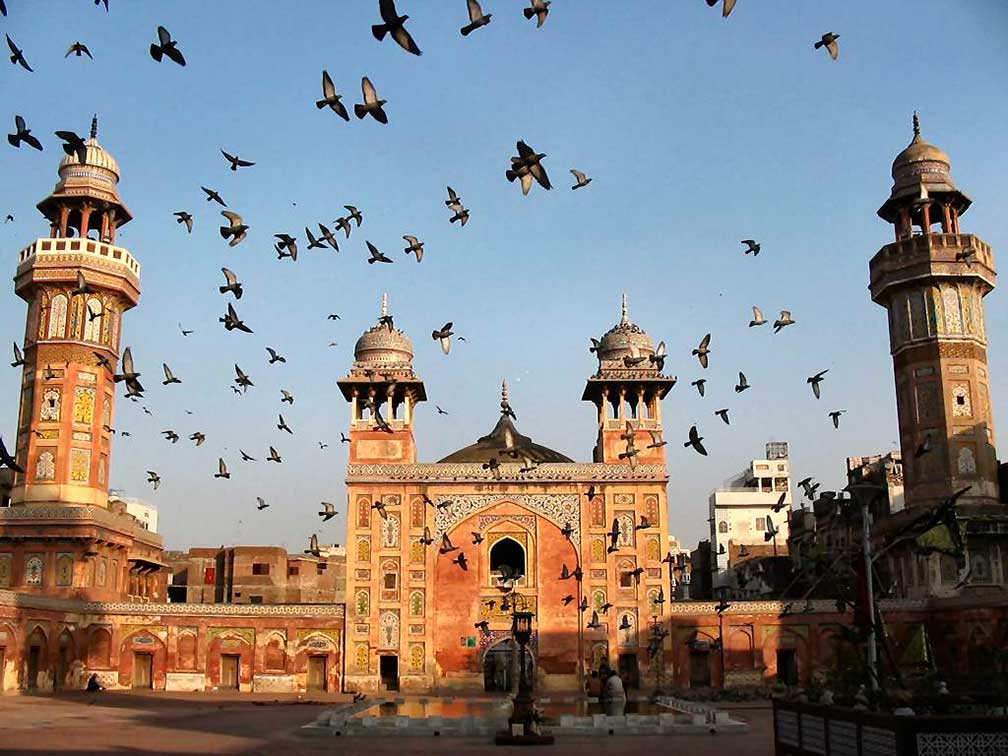
Lahore has been listed among the world’s most-loved cities by the New York Times.
The New York Times recently published a piece in which the publication asked people about the places that delighted or comforted them in 2020. While it received more than 2000 suggestions, only 52 of them got the chance to be featured in the publication’s article. According to the American daily, Lahore is among the most-loved cities for its food, culture, and historical architecture.
“Especially in winter, this city nourishes you. It opens its arms to you, then feeds you and wraps you in a hug,” wrote the author while expressing the beauty of the city.
Lahoris are admired for their hospitality and the city is loved for its rich historical architecture.
Other tourist spots on the list include Andros of Greece, Lebanon’s Beirut, Romania, Siberia, Jordan’s Wadi Rum and Kaliya Dhrow, India.
It is pertinent to add there that even Turkish actor Engin Altan Düzyatan couldn’t resist saying “Lahore, Lahore hai” during his visit to the city.
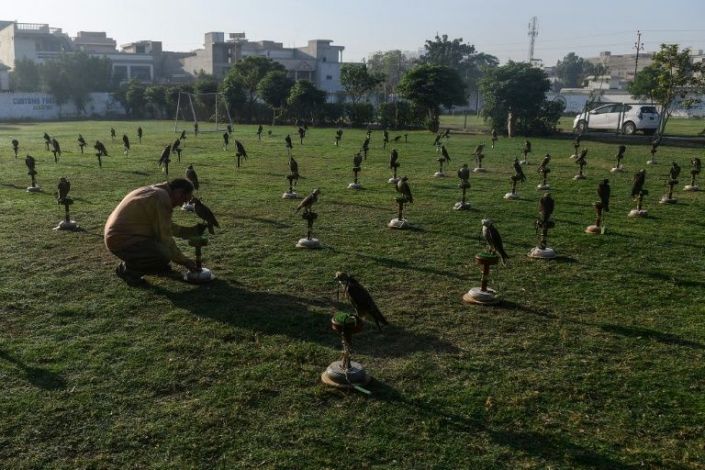
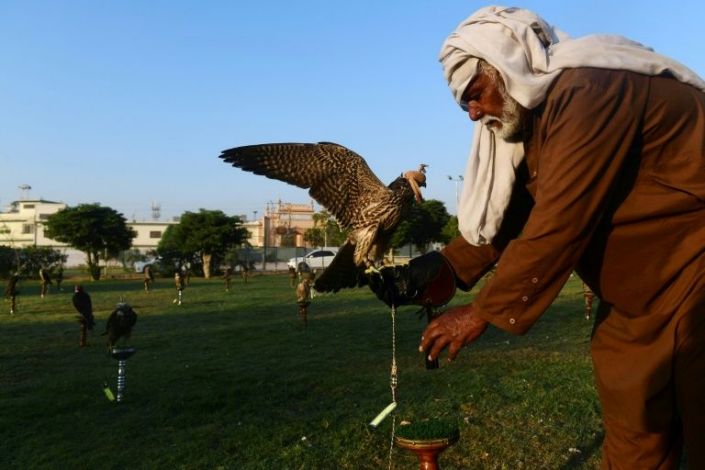
Since learning to capture birds as a teen, Muhammad Rafiq has amassed a small fortune in Pakistan trapping and trafficking falcons — including some endangered species — for wealthy Gulf Arabs.
A single falcon can fetch up to tens of thousands of dollars on the black market, which allowed Rafiq to renovate his family home.
“Every season, dealers come from Karachi and leave their contacts with us, and we call them back if we catch something,” said the 32-year-old, from a nearby coastal village.
He recently trapped a peregrine falcon on a one-week hunting mission.
“I desperately needed money,” he told AFP. “And God has listened to me.”
For years, Pakistan has stood at the nexus of the falcon trade, both as a source of the birds of prey, and then as a destination to hunt with them.
Falcon poaching is officially banned, but demand for the birds is rising, according to the World Wildlife Fund in Pakistan.
It estimates that up to 700 falcons were illegally smuggled out of the country last year alone, often by organised criminal networks.
Their destination is normally Gulf countries, where falconry is a treasured tradition.
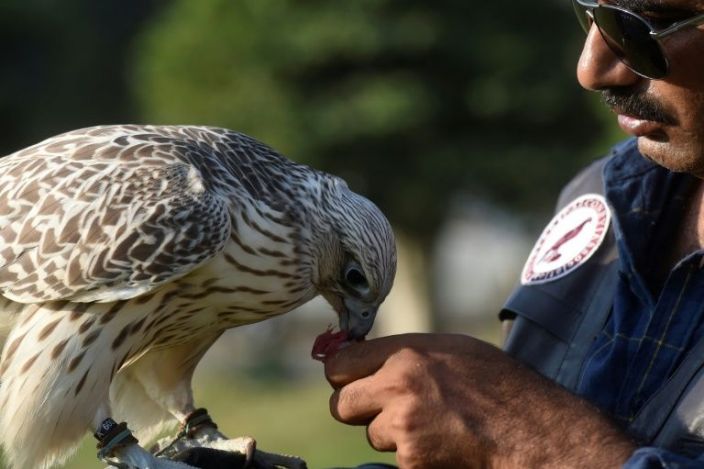
Owners treat the birds “like their own children”, said Margit Muller, the director of Abu Dhabi’s falcon hospital, which treats 11,000 falcons annually, a number that has more than doubled in the past 10 years.
One conservationist told AFP an Arab falconer usually owns around five to six hundred birds, most of which will be captured in the wild in Pakistan or Mongolia.
Wild birds are prized over those bred in captivity because they are believed to be better hunters, though there is no evidence to support those claims.
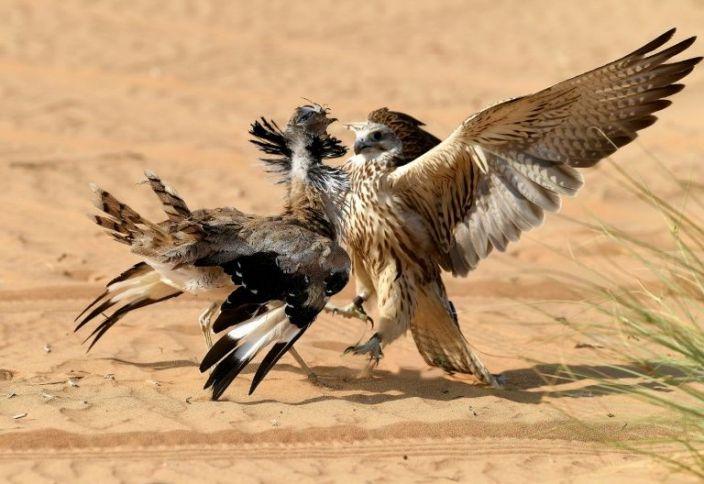
Every winter, lavish hunting parties from the Gulf flock to Pakistan’s sprawling deserts, where they are given permits to use their falcons to hunt the houbara bustards, a migratory bird wrongly prized as an aphrodisiac and classified as vulnerable by conservationists.
These excursions have cast a spotlight on the deep ties between Pakistan and its allies in the Gulf. For decades, the Gulf states have propped up Islamabad’s ramshackle finances with generous loans, with one of the expectations being that they can continue to use Pakistan as a hunting playground.
Saudi Crown Prince Mohammed bin Salman and two other royals were granted permission to catch bustards by Prime Minister Imran Khan’s government in December last year, a soft diplomacy tactic that Khan had openly disagreed with when he was in the opposition.
The government also presents falcons as gifts to world leaders.
“Our officials are working like pimps for the Arabs,” a government official requesting anonymity told AFP.
A brief ban on the bustard hunts was overturned in 2016 by the Supreme Court, but conservationists are now pushing for the export of falcons to be regulated in an ongoing case at the Islamabad High Court.
Every year, falcons escape the harsh Siberian winter and fly thousands of miles to warmer regions, including southern Pakistan.
During the migratory season, wildlife traffickers descend on villages along the Arabian Sea coastline, offering fishermen cash to briefly abandon their boats and try their hand at poaching.
“We pay them in advance, send food to their families and if they catch a bird that is precious, we happily give them motorbikes,” said one trafficker who spoke to AFP on the condition of anonymity.
A range of tactics can be employed — sticky liquids, net traps or, most commonly, using smaller birds as bait.
Poachers especially target the peregrine falcon, whose populations remain stable — but also the saker, which is endangered.
Bob Dalton, a veteran falcon conservationist, helped oversee the rehabilitation of dozens of falcons seized by Pakistani authorities in October, with officials estimating the cache to be worth well over $1 million.
“The illegal trade is growing, there is more money being spent, more pursuit from the Gulf,” he told AFP.
“With the exception of one or two species, most falcon populations are in decline or on the point of being unstable.”
With ongoing efforts to curtail rampant poaching failing, some officials in Pakistan have suggested regulating the falcon trapping market, inspired by a scheme involving another rare native species, the markhor — an elusive mountain goat with striking twisted horns found in Pakistan’s mountainous north.
Every year, foreigners shell out tens of thousands of dollars for a handful of trophy hunting permits, providing a financial incentive for communities to prevent poaching. Naeem Ashraf Raja, the director of the biodiversity at the ministry of climate change, said markhor numbers have rebounded as a result of this controversial conservation method.
With hunting parties set to descend on Pakistan again over the next few months, Kamran Khan Yousafzai, the president of Pakistan’s Falconry Association, said the country desperately needs to implement a sustainable wildlife programme.
“Arab falconers can’t resist coming to Pakistan. They have been coming to these hunting grounds for generations, and unless they face any real problems, they are not going to search for new destinations.”
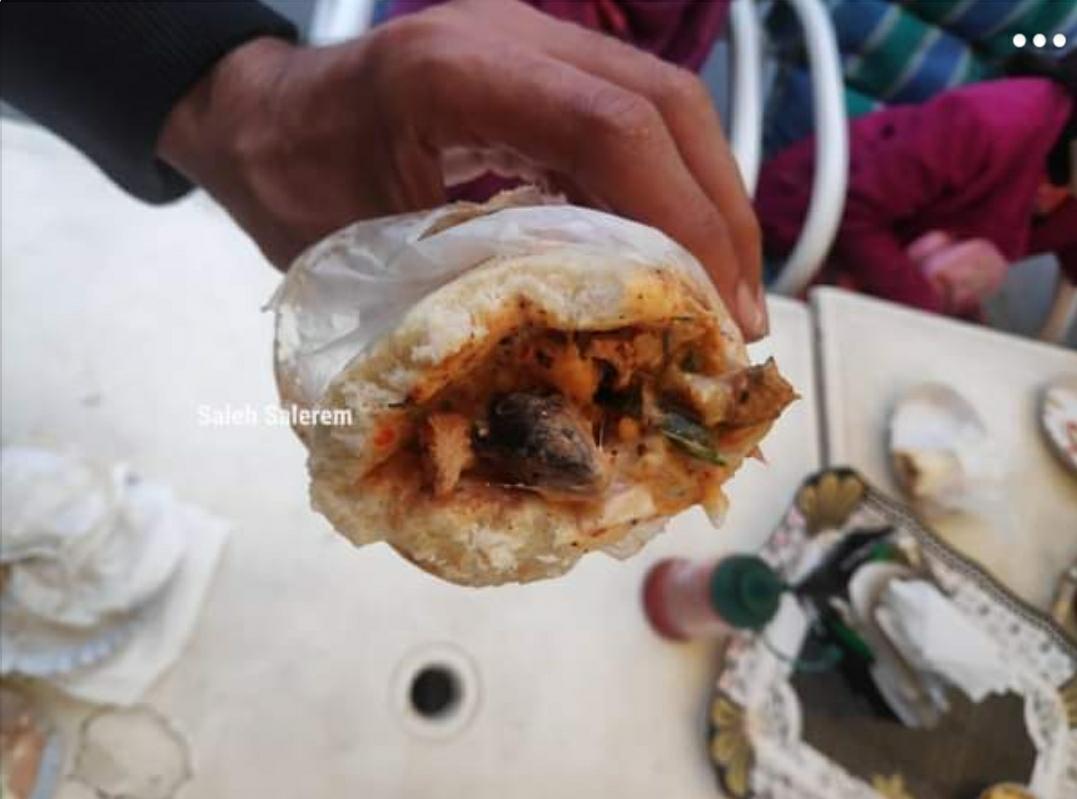
The Dolphin Squad in Lahore has sealed a local eatery in Bahria Town Lahore, near the ‘Eiffel Tower parking’ when a family eating there found a dead rat inside a shawarma sandwich.
Saleh Saleem posted about the horrific incident on Facebook, stating that his 10-year-old niece was about to eat the Middle Eastern dish but before taking a bite, found the rat in her meal. “These people are playing with the lives of people and also have the audacity to argue about it,” Saleh said in his post.
Saleh also stated that the dolphin squad sealed the restaurant and a ‘key witness’ helped to get the restaurant sealed.
Watch what Saleh’s mother had to say to the chef after they told him about the rat.