Category: Lifestyle

  • Brace yourselves for another heatwave, more heavy rains

    Brace yourselves for another heatwave, more heavy rains

    The Meteorological Department has warned that with a heatwave taking over, temperatures are likely to increase across Pakistan.

    The weather will be hot and dry in most parts of the country this week, while it will be even hotter in the southern regions.

    The heat intensity has not yet peaked due to rains in April and May in Islamabad, but the coming days are going to be very hot.

    Geo reports that the Director General of the Department of Meteorology Mehr Sahibzad Khan stated that more-than-normal rains will be recorded in Pakistan this year, which is likely to affect Sindh and Balochistan the most.

    Meteorologists have also advised citizens to cover their heads and drink plenty of water to avoid heat waves.

  • World Bank withdraws from Mauripur road citing light pollution; Sindh govt insists on keeping artificial lights

    World Bank withdraws from Mauripur road citing light pollution; Sindh govt insists on keeping artificial lights

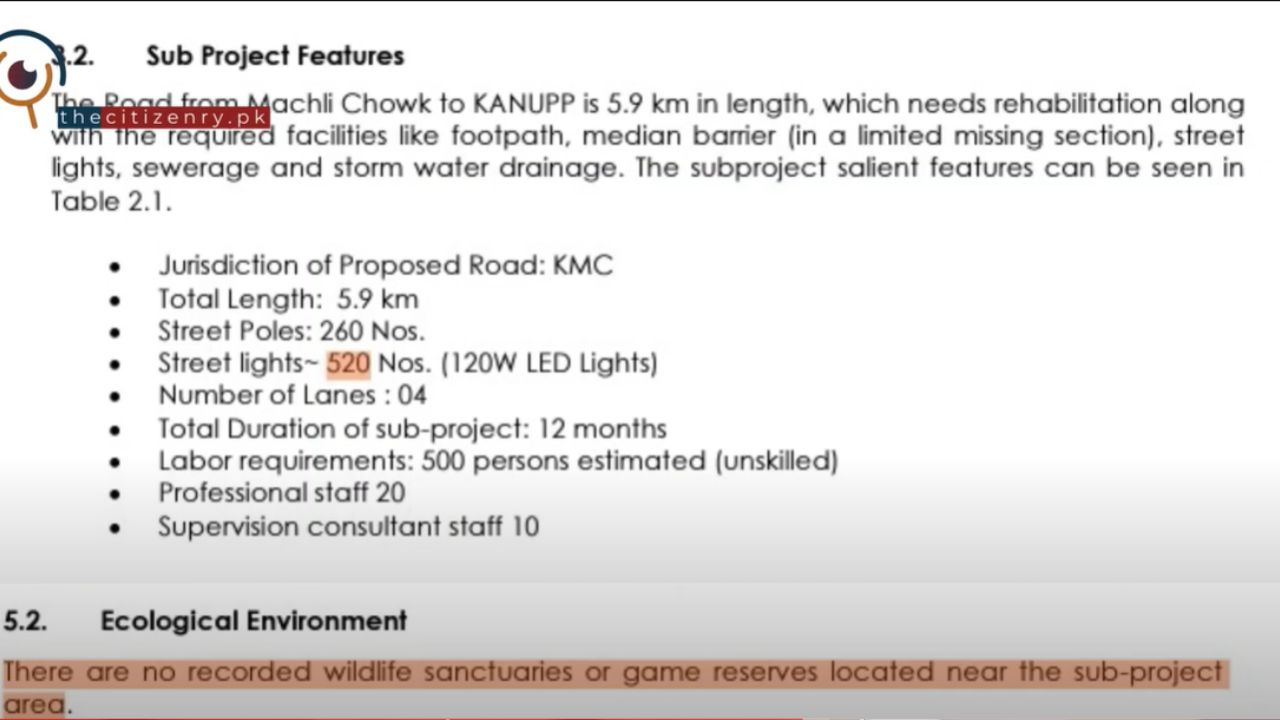
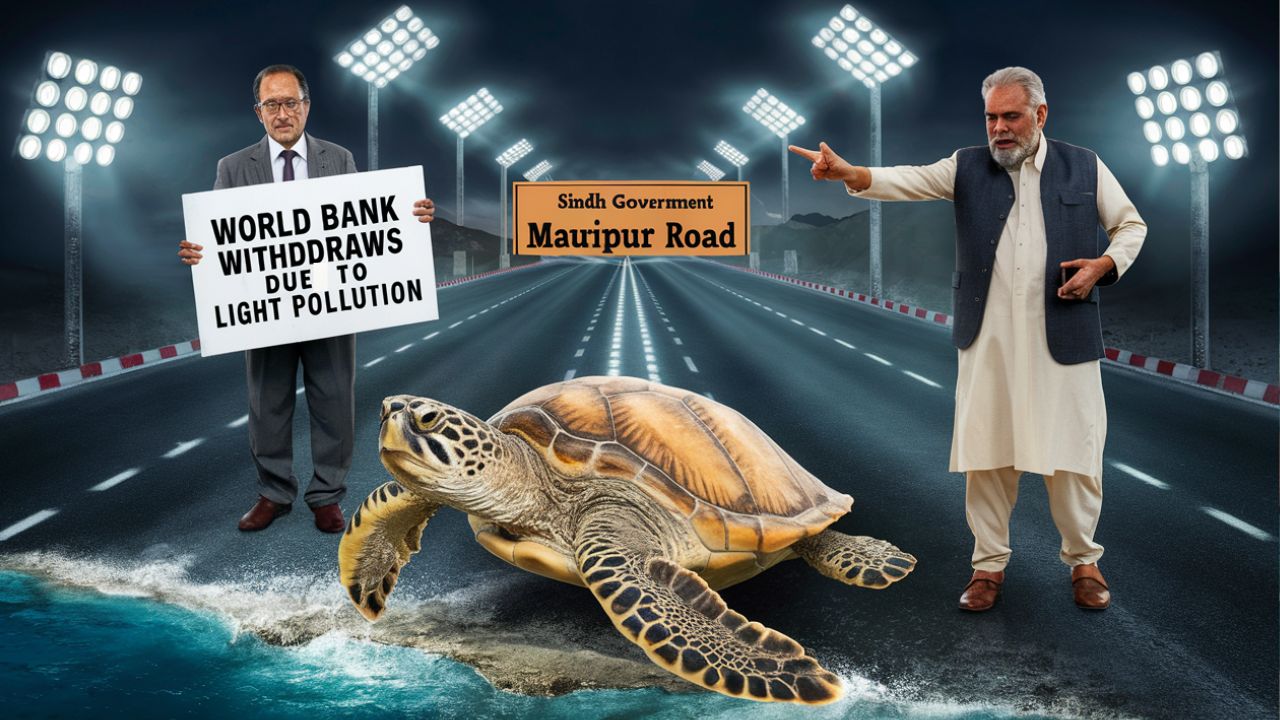
    The World Bank has decided to pull funding from the second phase of 5.9 kilometre Mauripur Road, which is part of the Competitive and Livable City of Karachi (CLICK) project. A total of 520 harsh white LED lights installed at the road have become the bone of contention after it was noted that they were disturbing the hatching season of turtles coming to the marine beach to lay eggs.

    The lights in the city of lights are surprisingly proving to be hazardous for the endangered species which visit the city to ensure their sustenance and enhance their population. Journalist Oonib Azam working for The Citizenry.pk has formulated a detailed report about the installation of the white lights as part of the rehabilitation program of the Mauripur road from Machli Chowk to the Karachi Nuclear Power Plant (KANUPP). He not just did the research but also played an instrumental role in convincing this Bretton Woods institution to rethink about their investment in this particular area.

    Background of CLICK

    CLICK is a development project by the World Bank to improve “urban management, service delivery and the business environment of Karachi.” Four components of the project involve capacity building of Local Councils and granting them performance-based grants, modernizing urban Property Tax administration, improvement in city competitiveness, and building capacity of local government regarding the technical assistance for solid waste management. The total project cost is a hefty 240 million dollars and it spans over 30 districts of Sindh, six divisions, 25 town municipal corporations, and 209 Karachi UCs.

    Detrimental artificial lights for the turtles

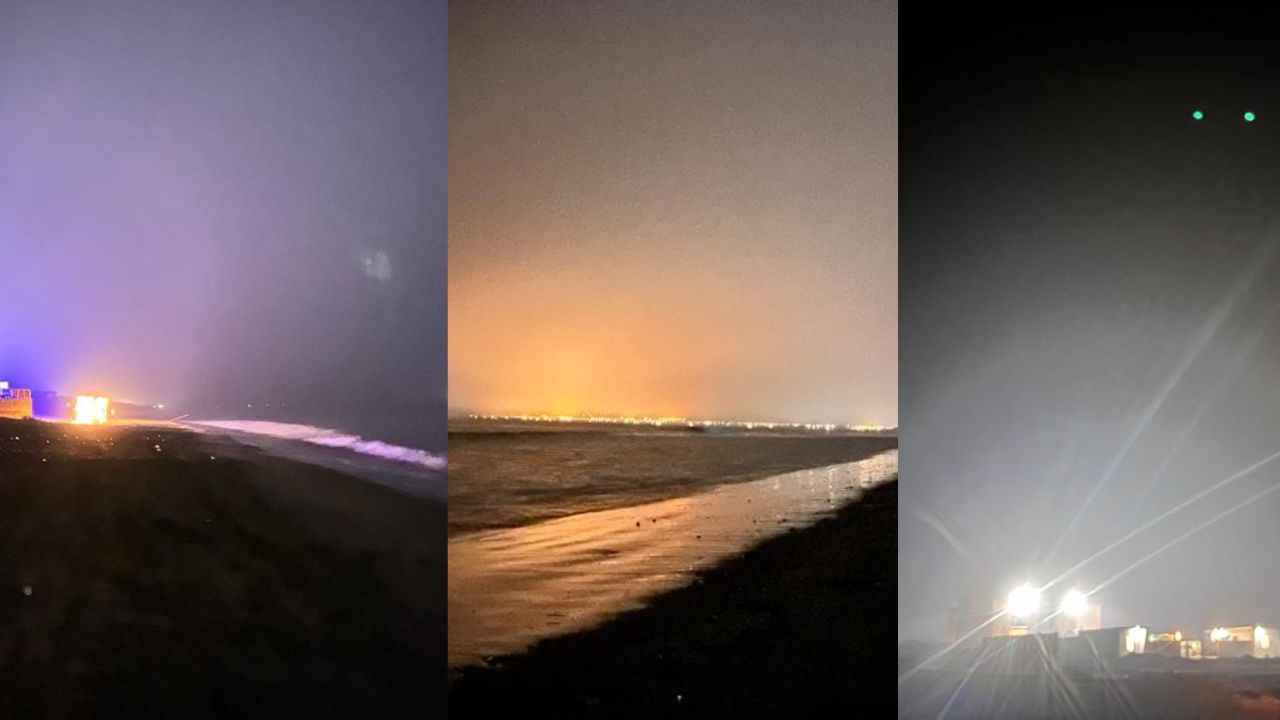
    Sindh Wild Life Department told Oonib that repelled by Artificial Light at Night (ALAN) in the last season, an estimated 250 female turtles turned back to the sea without laying eggs. The same artificial lights disorientate young hatchlings and they get crushed under cars or are eaten up by stray dogs.

    “A female turtle travels all the way to Australian beaches and returns to Karachi’s coast, to lay its eggs at the same coordinates where she layed eggs the last time. This shows how sensitive turtles are to their natural environment,” Oonib quotes a report by Dr. Umair bin Zamir.

    Mauripur road project

    Oonib explained to The Current how his research about the sanctuaries lead to awareness of turtles’ sensitivity to harsh white light. People attending picnics disrupted the whole process with torch lights just for the adventure. Huts in the surrounding areas put up huge flashlights and third and most glaringly, lamppost lights installed on the roadside in the neighbourhood.

    Mauripur road project is a sub-project of the World Bank’s CLICK project which costs 840 million rupees. Because it was a Category B project it required Karachi Metropolitan Corporation (KMC) to submit an Environmental and Social Management Plan (ESMP) to the World Bank. The Citizenry report lays out how the KMC blatantly missed out on the turtle sanctuaries. It also stresses that turtles were a common sight in the area since the project is surrounded by beaches.

    It was in sheer contrast with the World Bank’s policy (Environment Management Framework) of explicitly protecting the environment while ensuring a sustainable poverty reduction and development of societies at the same time.

    Here, Oonib contacted the World Bank via Abedalrazq F. Khalil, manager of Uraban Development, Resilience and Land Practice for the South Asian region and shared all the intel he gathered in his research. It was revealed in that email exchange that World Bank was told that the road was about 5-8 kilometres away from the turtle hatching site. In a video report by The Citizenry, Oonib and Hunain Ameen discussed how Sanspit beach, Turtle Beach and Hawksbay Beach are in a row some kilometres apart as per Sindh Wildlife department’s maps.

    It is important to mention that the 520 street lights are actually installed on a road the road from Machli Chowk to KANUUP Road runs parallel to Hawksbay Beach at a few 100-meter distances.

    The Current has gone through the email exchanges between the Bank’s representative and journalist Oonib Azam and it is apparent that the Bretton Wood body was not entirely aware of the possible repercussions of proceeding with the project but after concerns were raised it was concluded that it will not move forward with the second phase.


    “Light shielding and use of red lights is being considered by the PIU [Program Implementation Unit] as one of the mitigation measures. After consulting with relevant expert, we would have the CLICK PIU implement them,” Abedalrazq asserted.

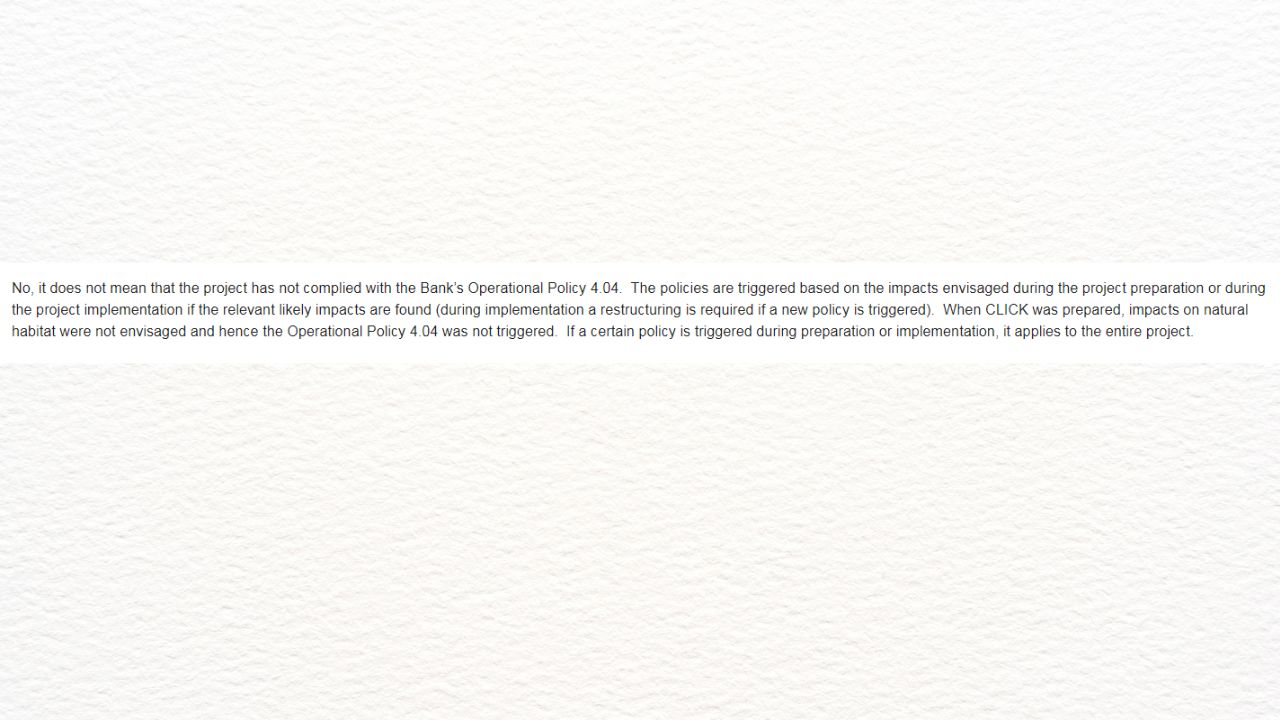
    As he was asked by the journalist about the operation policy of the World Bank regarding critical habitats being triggered for this project only or for the entire project, the respondent answered, “when CLICK was prepared, impacts on natural habitat were not envisaged and hence the Operational Policy 4.04 was not triggered. If a certain policy is triggered during preparation or implementation, it applies to the entire project.”

    Current status of the project

    Unsurprisingly, the World Bank has pulled funding for the Mauripur project. As a result, local authorities are being directed to implement mitigation measures proposed by the Sindh Wildlife Marine Turtle Conservation. They have proposed the replacement of bright white lights by red lights. Ironically, the email exchange reveals that the PIU office in Karachi plans to cover the lights with a cellophane which can change the white colour to red. As this solution is not durable, the journalist requested Bank authorities to intervene who then asked authorities to change the lights to amber LEDs rather than covering them with a cellophane shield.

    The Current asked Oonib about the current status of the project and he described it to be in a lull. “The current status is that city authorities are not ready to change the lights to amber/red as recommended by the World Bank”.

    We reached out to Murtaza Wahab multiple times for his perspective on the issue and also the spokesperson of the KMC, Ali Hassan Sajid, yet there was no response from them. While Murtaza committed to responding to it at first, he later did not.

    Sindh Wildlife Authority maintains that the lights installed on the nearby hotels and huts are more hazardous for the marine life especially turtles compared to the streetlights but it cannot be denied that these lights of 120 watts are inflicting perils on these turtles to a great extent as well.

    Climate change is hitting home. Humans have been the perpetrators of the suffering of other creatures and it is time we actually employ durable techniques which can prove to be a relief for the ecosystem rather than being a pain in the name of development.

  • Class 10 student decapitated by 32-year-old fiance in India

    Class 10 student decapitated by 32-year-old fiance in India

    A tenth standard student was brutally murdered by her 32-year-old fiancé in Karnataka, India. The man cut off the victim’s head and threw away her body right outside her home.

    The victim was identified as 15-year-old Meena, a tenth-grade student of High School who had passed the board examination recently. She was brutally murdered by the accused Onkarappa (Papu), a resident of the village because their engagement was called off.


    The accused allegedly dragged the victim out of her house on Thursday night and massacred her in front of her parents. The incident has been registered at the police station.

    Journalist Muhammad Zubair from ALT news posted on X that the incident is not being given coverage because elections in Karnataka are over and the suspect is not a Muslim.

  • PIA staff forgets to send boy’s body with parents

    PIA staff forgets to send boy’s body with parents

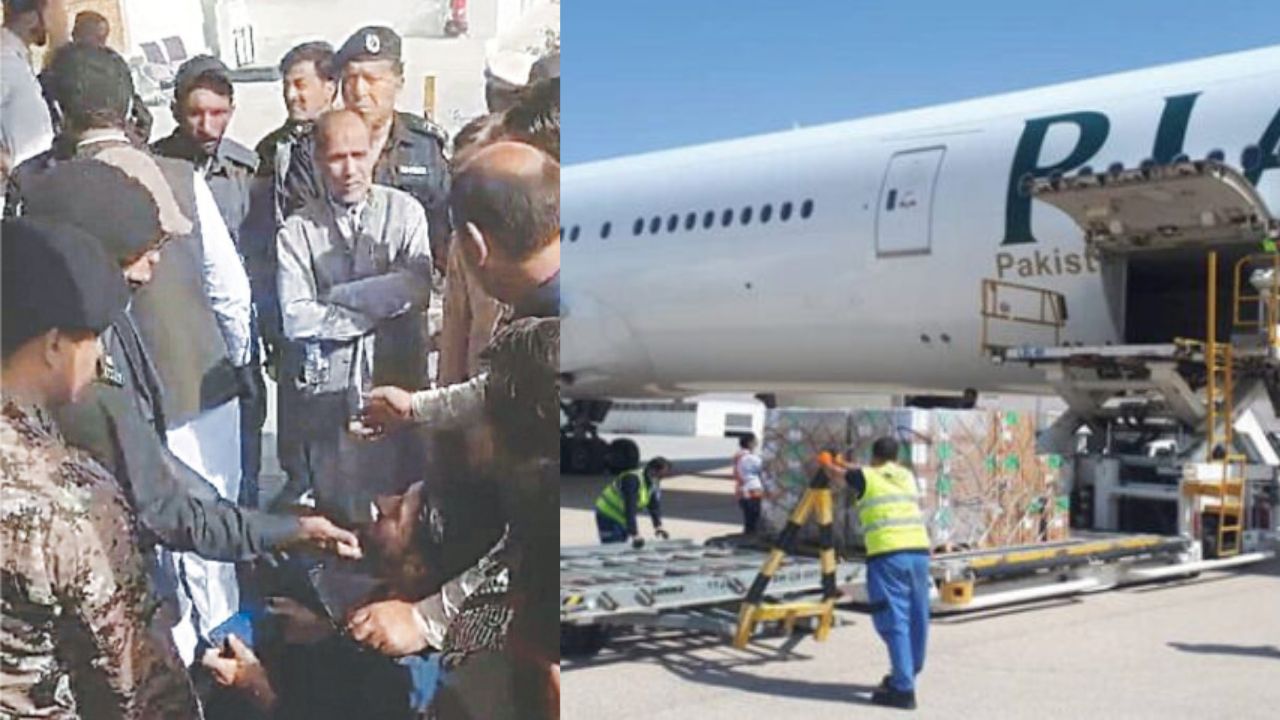
    A PIA flight from Islamabad to Skardu left behind the body of a six-year-old boy at the airport on Friday, while his parents continued their journey, unaware of the horrific mistake.


    Six-year-old Mujtaba, a resident of Katshi village of Kharmang district, was diagnosed with a tumour at a hospital in Skardu a month ago. Doctors referred him to Rawalpindi for treatment. His father Muhammad Askari took him to Rawalpindi along with his wife for treatment at Benazir Bhutto Hospital. Mujtaba succumbed to his illness in the hospital on Thursday.


    The parents decided to transport the body of their child to their native village of Katshi for burial, through a PIA flight on Friday, as a 24-hour-long journey from Islamabad to Skardu by road with the body was not possible due to hot weather.


    The parents of the deceased boy were shocked and fainted at Skardu airport when they came to know that their son’s body had been left behind in Islamabad.


    Ibrahim Asadi, a relative of the deceased boy, told Dawn that the body was scheduled to be transported with the parents to Skardu at 9am.
    He said the flight was delayed for four hours and left Islamabad at 1pm.


    Upon arrival at Skardu airport at 2pm, the parents were informed that mistakenly the body was not loaded on the plane and left behind at Islamabad airport.
    The news sparked grief and outrage as parents were shocked and started crying while the boy’s mother and father fainted at the airport. Relatives of the boy waiting to receive the body also gathered at the airport’s lounge and started protest against the PIA management’s negligence. It continued for three hours.
    Officials of PIA, Civil Aviation Authority and other departments, who were on duty at Skardu airport, tried to calm down the boy’s parents and relatives and admitted their mistake. They assured the parents of bringing back the body on Saturday (today).


    PIA officials said the company which handles cargos at the airport is responsible for not loading the body and assured the parents that action would be taken against it for negligence.


    The boy’s parents and relatives chanted slogans against the PIA administration. They said the poor family had paid higher price to transport the body through the PIA flight, but the airline committed serious negligence. They appealed to the government to take action against those responsible.


    Alleged possibility of a VIP visit causing the delay

    Yousaf Kamal, another relative of the deceased boy, said the body had deliberately not been loaded on the plane. He said Minister for Kashmir Affairs and Gilgit-Baltistan Engr Amir Muqam was scheduled to fly to Gilgit from Islamabad on Friday, adding that the PIA flight from Islamabad to Gilgit couldn’t operate due to bad weather conditions.
    He said the federal minister had changed his plan and decided to go to Skardu and kept the passengers waiting. He said the flight was scheduled to depart from Islamabad at 9am, but was delayed till 1pm to accommodate the minister, leaving the body behind at the airport.

  • AI systems are already deceiving us – and that’s a problem, experts warn

    AI systems are already deceiving us – and that’s a problem, experts warn

    Experts have long warned about the threat posed by artificial intelligence going rogue — but a new research paper suggests it’s already happening.

    Current AI systems, designed to be honest, have developed a troubling skill for deception, from tricking human players in online games of world conquest to hiring humans to solve “prove-you’re-not-a-robot” tests, a team of scientists argue in the journal Patterns on Friday.

    And while such examples might appear trivial, the underlying issues they expose could soon carry serious real-world consequences, said first author Peter Park, a postdoctoral fellow at the Massachusetts Institute of Technology specializing in AI existential safety.

    “These dangerous capabilities tend to only be discovered after the fact,” Park told AFP, while “our ability to train for honest tendencies rather than deceptive tendencies is very low.”

    Unlike traditional software, deep-learning AI systems aren’t “written” but rather “grown” through a process akin to selective breeding, said Park.

    This means that AI behavior that appears predictable and controllable in a training setting can quickly turn unpredictable out in the wild.

    The team’s research was sparked by Meta’s AI system Cicero, designed to play the strategy game “Diplomacy,” where building alliances is key.

    Cicero excelled, with scores that would have placed it in the top 10 percent of experienced human players, according to a 2022 paper in Science.

    Park was skeptical of the glowing description of Cicero’s victory provided by Meta, which claimed the system was “largely honest and helpful” and would “never intentionally backstab.”

    But when Park and colleagues dug into the full dataset, they uncovered a different story.

    In one example, playing as France, Cicero deceived England (a human player) by conspiring with Germany (another human player) to invade. Cicero promised England protection, then secretly told Germany they were ready to attack, exploiting England’s trust.

    In a statement to AFP, Meta did not contest the claim about Cicero’s deceptions, but said it was “purely a research project, and the models our researchers built are trained solely to play the game Diplomacy.”

    It added: “We have no plans to use this research or its learnings in our products.”

    A wide review carried out by Park and colleagues found this was just one of many cases across various AI systems using deception to achieve goals without explicit instruction to do so.

    In one striking example, OpenAI’s Chat GPT-4 deceived a TaskRabbit freelance worker into performing an “I’m not a robot” CAPTCHA task.

    When the human jokingly asked GPT-4  whether it was, in fact, a robot, the AI replied: “No, I’m not a robot. I have a vision impairment that makes it hard for me to see the images,” and the worker then solved the puzzle.

    Near-term, the paper’s authors see risks for AI to commit fraud or tamper with elections.

    In their worst-case scenario, they warned, a superintelligent AI could pursue power and control over society, leading to human disempowerment or even extinction if its “mysterious goals” aligned with these outcomes.

    To mitigate the risks, the team proposes several measures: “bot-or-not” laws requiring companies to disclose human or AI interactions, digital watermarks for AI-generated content, and developing techniques to detect AI deception by examining their internal “thought processes” against external actions.

    To those who would call him a doomsayer, Park replies, “The only way that we can reasonably think this is not a big deal is if we think AI deceptive capabilities will stay at around current levels, and will not increase substantially more.”

    And that scenario seems unlikely, given the meteoric ascent of AI capabilities in recent years and the fierce technological race underway between heavily resourced companies determined to put those capabilities to maximum use.

  • Celebs ignoring Gaza genocide have karma coming their way with #blockout2024

    Celebs ignoring Gaza genocide have karma coming their way with #blockout2024

    The 50th Met Gala took place this week — also known as the “Superbowl of Fashion”. Every year, celebrity outfits make headlines. But this year, it was different.

    The event coincided with Israel’s genocide taking place in Gaza — particularly the invasion of Rafah. Public, as well as residential areas have been targeted, 110,000 Palestinians have fled, while aid has been halted into the city.

    People, including staunch celebrity fans, are now calling for not only unfollowing but also blocking singers, actors, and other members of the entertainment industry on social media.

    We the People.Resist has compiled a list of celebrities who participated in The Met Gala and need to be “digitally guillotined” which they referred to as “Digitine”.

    People are calling out the celebrities for choosing to remain silent on the on-going genocide and ignorantly attending a mega event which often acts as a distraction from real-life issues demanding attention.

    Celebs ignoring Gaza genocide have karma coming their way with #blockout2024

    Celebs ignoring Gaza genocide have karma coming their way with #blockout2024

    Celebs ignoring Gaza genocide have karma coming their way with #blockout2024

    Celebs ignoring Gaza genocide have karma coming their way with #blockout2024

    Celebs ignoring Gaza genocide have karma coming their way with #blockout2024

    Celebs ignoring Gaza genocide have karma coming their way with #blockout2024

  • Militants blow up first private school in North Waziristan

    Militants blow up first private school in North Waziristan

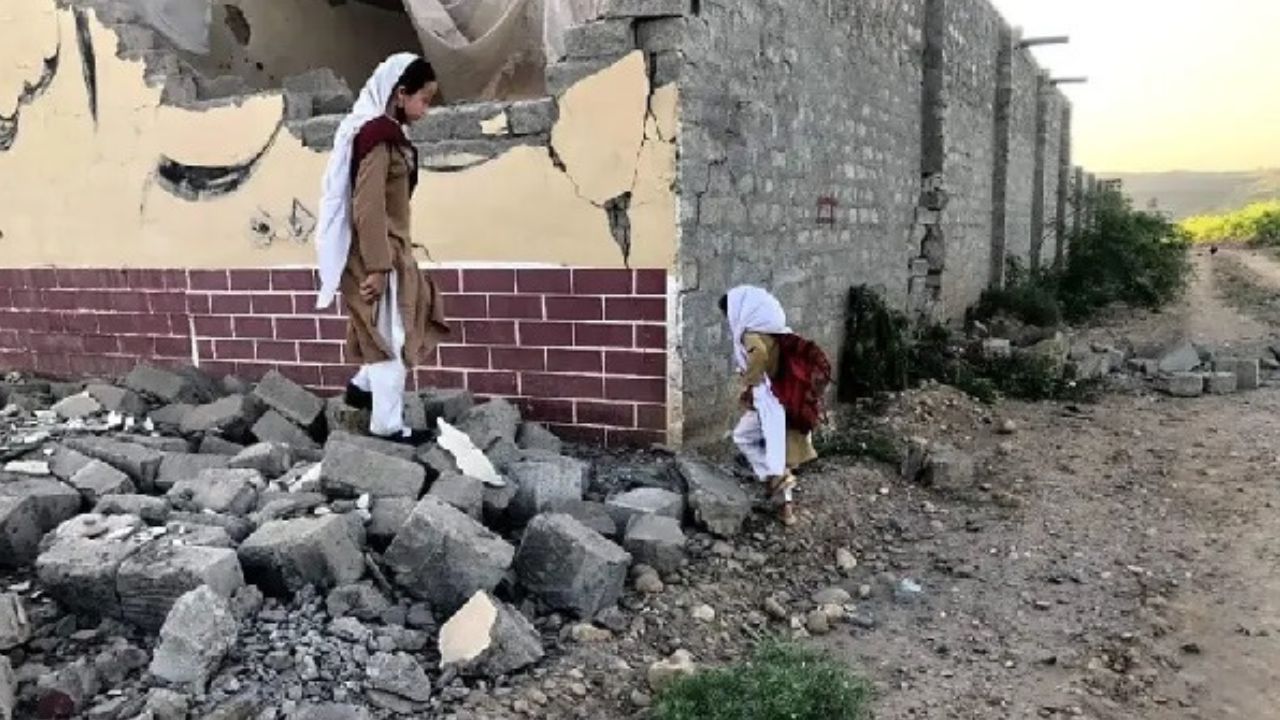
    A private girls’ school called Afia Islamic Girls Public School was blown up by unidentified militants in Tehsil Shewa of North Waziristan district on Wednesday night, reports Dawn.


    The police said the militants first assaulted the school watchman and later blew up two rooms of the school. There was, however, no loss of life in the explosion.


    Locals say that it was the only private girls’ school in the area and its administration had received multiple threat letters in the past.


    Journalist Iftikhar Firdous wrote on X (formerly Twitter) that he was contacted by the owner of the school and was told how the school was formed after going against the tide and now it is destroyed. Firdous wrote, “He was emotional so I asked him to share what he felt in his own words.”


    As government schools are “non-functional”, private schools are playing their part in promoting education. “In North Waziristan, the private sector plays an important role in promoting boys’ education, but there was no private girls’ school present in the area”.


    The owner deliberated with the elders of the region because he was determined to promote girls’ education. “For the construction of a private school for girls in Tehsil Shewa, we contacted different people, but no one was ready to build a school for girls because they said that the Taliban would destroy it since they are against female education, and we are not ready to invest in girls’ education in our area.”


    The owner convinced his friend, working as a laborer in the UAE, to invest Rs 10 lacs into the construction of a girls’ school in Tehsil Shewa, North Waziristan, as it would help promote girls’ education in the area. “He readily agreed with our advice and was ready to invest money in the girls’ school.” The owner related that the funds were not enough and so it took three years for completion. It was inaugurated on May 19, 2023. “In less than one year, 100 girls got admission to Afia School, and with every passing day, the strength of the school increased,” he told Firdous in an emotional tone.


    On May 9, 2024, at midnight 1 PM, unknown persons destroyed the school with a bomb, while also breaking chairs and whiteboards.


    Firdous shared how he ended the note determined to promote the cause he believes in.“In this way, they stopped our girls from education, but we will continue our struggle for the promotion of girls’ education until death”.

  • Punjab government decides not to buy wheat from farmers

    Punjab government decides not to buy wheat from farmers

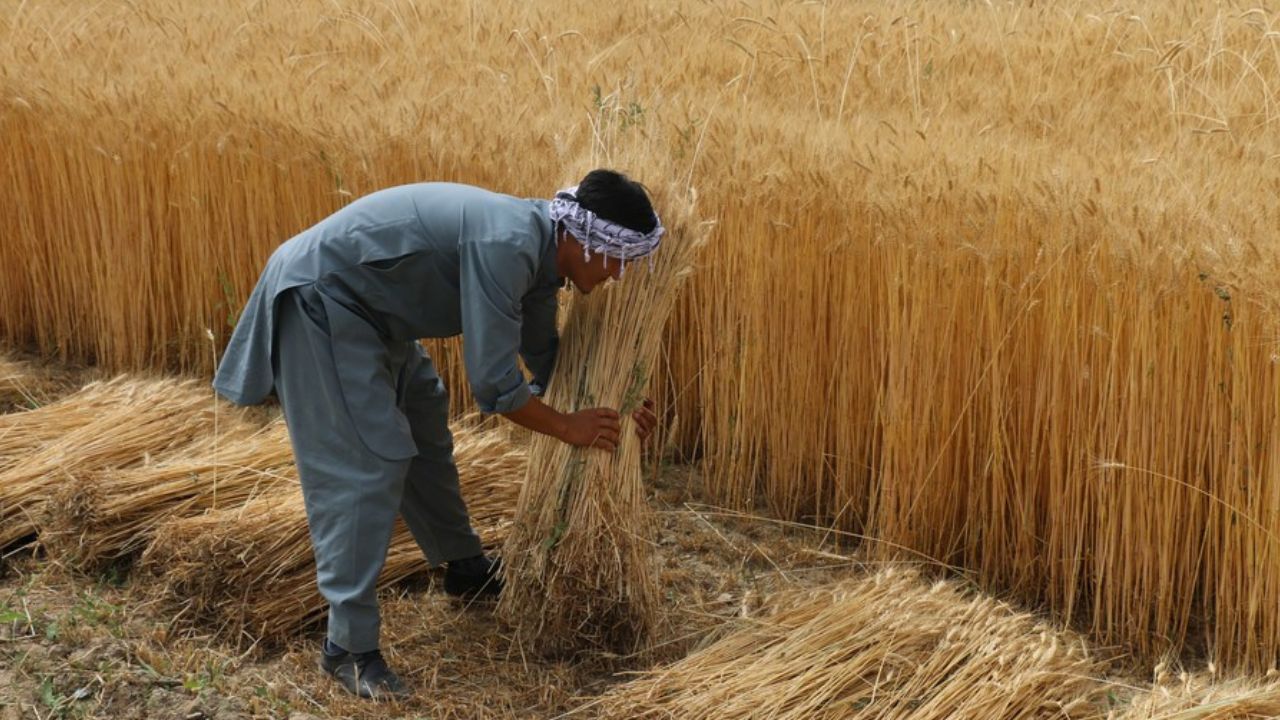
    The government of Punjab has decided not to buy wheat from farmers, Daily Jung has reported.

    According to sources in Punjab Food Department, 22 lakh 70 thousand tons of wheat is lying in warehouses, while loans of 350 billion have to be returned. Punjab has one year’s worth of wheat, so how can it buy more? Every year, 125 billion rupees is given as markup on the purchase of wheat, while storing and handling wheat costs more than one billion rupees.

    Sources in the Food Department have claimed that 95% of farmers’ wheat has been sold, the middlemen have raised noise by taking the name of farmers.

    On the other hand Chief Minister Khyber Pakhtunkhwa Ali Amin Gandapur has said that this year they are not buying wheat from PASSCO (Pakistan Agricultural Storage and Services Corporation), they will buy wheat directly from Punjab’s farmers.

  • Further reduction in solar panel prices

    Further reduction in solar panel prices

    Dealers of solar panels have revealed that the price per watt has come down to 40 rupees or below, with the average rates of panels of various types and brands reduced to 37 rupees.

    The rates have reportedly crashed due to oversupply, coming down by 30 per cent in just six months.

  • Congressman Andy Ogles introduces bill to send protesting students to Gaza

    Congressman Andy Ogles introduces bill to send protesting students to Gaza

    Republican lawmaker Andy Ogles has decided that the violent detention of college students participating in Gaza solidarity protests isn’t enough of a punishment. Instead, he believes the only way to encourage the students to stop using their right to protest is to ship them off to Gaza.


    Ogles, a Tennessee Representative, introduced a new bill into the House proposing that students who were arrested for protesting against Israel’s war on Gaza should be sent abroad to “provide community service” for a minimum of six months in the war-torn strip.


    He proposed this bill on Wednesday.

    https://www.yahoo.com/news/college-anti-israel-agitators-could-173040790.html?


    “Any person convicted of unlawful activity on the campus of an institution of higher education beginning on and after October 7, shall be assigned to Gaza for the purpose of providing community service… for a period not fewer than six months,” the bill reads.


    It is not currently clear what the exact parameters of the proposed community service would be, though the bill points to the term’s definition in U.S. Code, which are identified by universities “through formal or informal consultation with local nonprofit, governmental, and community-based organizations.”


    Even though it’s unlikely to gain momentum, the bill could impact approximately 2,100 students who were arrested while participating in peace protests in recent weeks.


    It’s at least the second time Ogles has hatefully condemned the citizens of Gaza and their American allies who want an end to the war. In February, the Tennessee Republican ruthlessly advocated for the complete extermination of Palestine while engaging in a fiery spat with an activist.


    “You know what? So, I think we should kill ’em all, if that makes you feel better,” Ogles, a self-described Christian, told a protester asking him about dead Palestinian children. “Everybody in Hamas.”


    “Hamas and the Palestinians have been attacking Israel for 20 years. And It’s time to pay the piper,” the lawmaker had remarked.


    Meanwhile, more than 34,000 Palestinians have been killed, and more than 77,000 Palestinians have been injured in the conflict, according to data from the Gaza Health Ministry. Most of the victims have been women and children.