Category: Lifestyle

  • iCube Qamar’s moon images are out

    iCube Qamar’s moon images are out

    Pakistan’s first satellite mission ‘iCube Qamar’ has successfully entered the moon’s orbit and its first image has been released.


    Institute of Space Technology informed Geo News that iCube Qamar successfully entered lunar orbit on May 8 and has completed three orbits around the moon.


    The mission will orbit the Moon for about three to six months.


    According to the Institute of Space Technology, the first Pakistani satellite completes its orbit in 12 hours. Qamar’s signals will be received on Earth after traveling a distance of 360,000 to 400,000 km.


    The spokesman said that in-orbit testing of iCube Qamar’s controllers, subsystems, and protocols is ongoing. The mission will remain in experimental stages for five to six days after reaching the lunar orbit.

    iCube Qamar was sent into space with the Chinese mission Cheng 6 on May 3 from the Hainan Space Launch Site.

  • Hotter, drier, sicker? How a changing planet drives disease

    Hotter, drier, sicker? How a changing planet drives disease

    Bangkok (AFP) – Humans have made our planet warmer, more polluted and ever less hospitable to many species, and these changes are driving the spread of infectious disease.

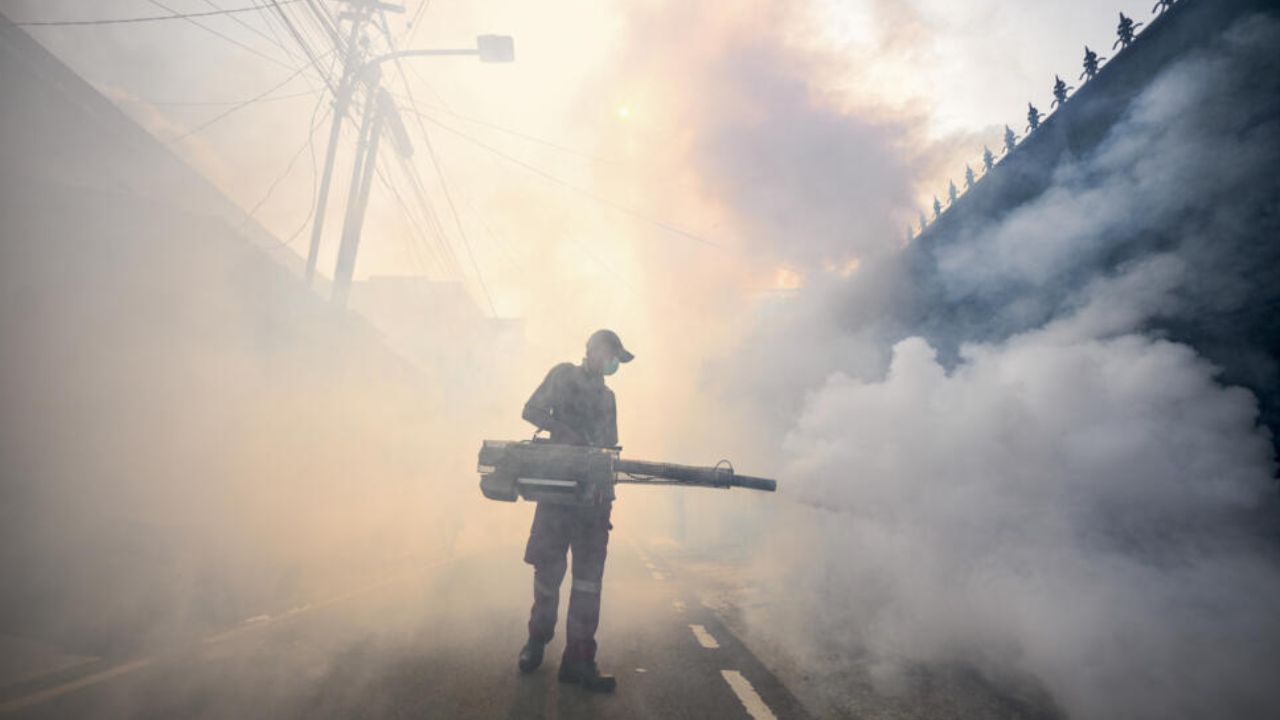
    Warmer, wetter climates can expand the range of vector species like mosquitos, while habitat loss can push disease-carrying animals into closer contact with humans.

    New research reveals how complex the effects are, with our impact on the climate and planet turbocharging some diseases and changing transmission patterns for others.

    Biodiversity loss appears to play an outsize role in increasing infectious disease, according to work published in the journal Nature this week.

    It analysed nearly 3,000 datasets from existing studies to see how biodiversity loss, climate change, chemical pollution, habitat loss or change, and species introduction affect infectious disease in humans, animals and plants.

    It found biodiversity loss was by far the biggest driver, followed by climate change and the introduction of novel species.

    Parasites target species that are more abundant and offer more potential hosts, explained senior author Jason Rohr, a professor of biological sciences at the University of Notre Dame.

    And species with large populations are more likely to “be investing in growth, reproduction and dispersal, at the expense of defences against parasites”, he told AFP.

    But rarer species with more resistance are vulnerable to biodiversity loss, leaving us with “more abundant, parasite-competent hosts”.

    The warmer weather produced by climate change offers new habitats for disease vectors, as well as longer reproductive seasons.

    “If there are more generations of parasites or vectors, then there can be more disease,” Rohr said.

    Shifting transmission

    Not all human adaptation of the planet increases infectious disease, however.

    Habitat loss or change was associated with a drop in infectious disease, largely because of the sanitary improvements that come with urbanisation, like running water and sewage systems.

    Climate change’s effects on disease are also not uniform across the globe.

    In tropical climates, warmer, wetter weather is driving an explosion in dengue fever.

    But drier conditions in Africa may shrink the areas where malaria is transmitted in coming decades.

    Research published in the journal Science this week modelled the interaction between climate change, rainfall and hydrological processes like evaporation and how quickly water sinks into the ground.

    It predicts a larger decline in areas suitable for disease transmission than forecasts based on rainfall alone, with the decline starting from 2025.

    It also finds the malaria season in parts of Africa could be four months shorter than previously estimated.

    The findings are not necessarily all good news, cautioned lead author Mark Smith, an associate professor of water research at the University of Leeds.

    “The location of areas suitable for malaria will shift,” he told AFP, with Ethiopia’s highlands among the regions likely to be newly affected.

    People in those regions may be more vulnerable because they have not been exposed.

    And populations are forecast to grow rapidly in areas where malaria will remain or become transmissible, so the overall incidence of the disease could increase.

    Predicting and preparing

    Smith warned that conditions too harsh for malaria may also be too harsh for us.

    “The change in water availability for drinking or agriculture could be very serious indeed.”

    The links between climate and infectious disease mean climate modelling can help predict outbreaks.

    Local temperature and rainfall forecasts are already used to predict dengue upticks, but they offer a short lead-time and can be unreliable.

    One alternative might be the Indian Ocean basin-wide index (IOBW), which measures the regional average of sea-surface temperature anomalies in the Indian Ocean.

    Research also published in Science this week looked at dengue data from 46 countries over three decades and found a close correlation between the IOBW’s fluctuations and outbreaks in the northern and southern hemispheres.

    The study was retrospective, so the IOBW’s predictive power has not yet been tested.

    But monitoring it could help officials better prepare for outbreaks of a disease that is a major public health concern.

    Ultimately, however, addressing increasing infectious disease means addressing climate change, said Rohr.

    Research suggests “that disease increases in response to climate change will be consistent and widespread, further stressing the need for reductions in greenhouse gas emissions”, he said.

  • More than 50 per cent Pakistani women suffer from PCOS

    More than 50 per cent Pakistani women suffer from PCOS

    More than 50 per cent of Pakistani women suffer from Polycystic Ovary Syndrome (PCOS) after hitting their reproductive years.

    PCOS is a hormonal condition that disrupts the process of ovulation, disturbing the menstrual cycle which consequently makes it difficult to conceive.

    Gynaecologists from across the country participated in Pakistan’s First International PCOS Summit 2024, asserting on the importance of spreading awareness about the condition among girls at school and colleges since an estimated 70 per cent of women of reproductive age live with it without getting diagnosed due to lack of knowledge.

    Dawn News reports that Prof. Dr. Rizwana Chaudhry pointed out that there is no remedy for PCOS, and its treatment is dependent on controlling symptoms and tackling possible complications. These include, as highlighted, “a healthy diet, regular exercise, and weight management”.

    The doctors cautioned that PCOS is a major health concern in Pakistan women, and that lack of diagnosis can result in emotional suffering because of “irregular periods, weight gain, infertility, and other symptoms”.

    According to gynaecologist Prof. Saqib Siddiq, while there isn’t any conclusive cause behind PCOS, apart from genetic susceptibility, there are agents that can contribute to the condition which include “increased sugar intake, refined carbohydrates, and a lack of physical activity”.

  • UK girl’s hearing restored after groundbreaking Gene Therapy

    UK girl’s hearing restored after groundbreaking Gene Therapy

    An 18-month old British girl who was born completely deaf is believed to be the youngest person to have their hearing restored after undergoing groundbreaking new gene therapy.

    Several medical teams around the world including in China and the United States have been trialling similar treatments with good results for hereditary deafness that focuses on a rare genetic mutation.

    But UK ear surgeon Manohar Bance said the toddler, Opal, was the first person in the world to receive therapy developed by US biotech firm Regeneron and “the youngest globally that’s been done to date as far as we know”.

    Opal was treated at Addenbrooke’s Hospital in Cambridge, part of Cambridge University Hospitals NHS Foundation Trust, in eastern England.

    Bance called the results of Opal’s surgery “spectacular –- so close to normal hearing restoration. So we do hope it could be a potential cure”.

    He said it came on the back of decades of work and marked “a new era in the treatment of deafness”.

    The little girl, from Oxfordshire in south central England, has a genetic form of auditory neuropathy, which is caused by the disruption of nerve impulses travelling from the inner ear to the brain.

    Auditory neuropathy can be caused by a fault in the OTOF gene, which is responsible for making a protein called otoferlin. This enables cells in the ear to communicate with the hearing nerve.

    To overcome the fault, the “new era” gene therapy from Regeneron delivers a working copy of the gene to the ear.

    Bance said that following surgery last September, Opal’s hearing was now “close to normal” with further improvement expected.

    A second child received the gene therapy in Cambridge with positive results seen six weeks after the surgery.

    China has been working on targeting the same gene though Bance said theirs used a different technology and slightly different mode of delivery.

    Medics in Philadelphia have also reported a good outcome with a type of gene therapy on an 11-year-old boy.

    Opal was the first person to take part in a gene therapy trial being carried out in Cambridge by Bance.

    The trial consists of three parts, with three deaf children, including Opal, receiving a low dose of gene therapy in one ear only.

    A different set of three children will get a high dose on one side. Then, if that is shown to be safe, more children will receive a dose in both ears at the same time.

    Up to 18 youngsters from the UK, Spain and the United States are being recruited for the trial and will be followed up for five years.

    Bance said the current treatment for auditory neuropathy was implanted.

    “My entire life, gene therapy has been ‘five years away’… to finally see something that actually worked in humans… It was quite spectacular and a bit awe-inspiring really,” he said.

  • A-level’s Maths exam leaked on May 2

    A-level’s Maths exam leaked on May 2

    It has been revealed that the A Level Mathematics paper to be held in the country on May 2 has been leaked.

    Mehtab Haider of The News reported about many ‘O’ level and ‘A’ level students complaining that a mathematics paper was allegedly leaked on May 2, 2024.
    They said that there was a need to hold an independent inquiry and if it was proved that the paper was leaked, then a fair method should be applied to avoid any kind of a disadvantaged position for students.


    “We have studied days and nights for a whole year and then came out from my examination center and found that the Maths paper held on May 2, 2024 got leaked. It caused headache as I had solved 99 percent correctly,” one aggrieved student told The News on Tuesday. If Cambridge decides to continue with the Maths paper held on May 2, 2024, then its threshold should not be done in a strict manner. “We want fairer treatment in this whole episode,” the student added.


    “We are looking into concerns raised about a potential paper leakage on 02 May 2024 for AS Level Mathematics 9709 Paper 12. This is being investigated, and Cambridge and the British Council are in close communication,” said the British Council in their official response on social media.

    Pakistan’s Ministry of Education also contacted the British Council and they were assured that the investigation was underway with regard to this alleged leakage.

  • BEWARE: 19 water-bottle brands unsafe for consumption

    BEWARE: 19 water-bottle brands unsafe for consumption

    It has been long debated that there are possible health risks when it comes to consuming plastic water bottles.

    19 brands of drinking water bottles have been deemed unsafe by Pakistan Council for Research in Water Resources.

    PCRWR has been instructed by the government to keep a track of bottled and mineral water brands on a quarterly basis, and to publicly release the results.

    185 samples of brands were collected from 21 cities from January to March, and were then tested against the water quality standards of Pakistan Standards and Quality Control Authority (PSQCA) which then revealed that 19 brands are unsafe for human consumption because of microbiological or chemical contamination.

    Six brands that are unsafe due to higher levels of sodium include Hensley Pure Water, Pure Life, Natural Pure Life, Klear, Am Mughal Pure Water and Nero.

    Nero is said to have high level of total dissolved solids (TDS) than the set limit.

    Likewise, Cleana, Orwell and Still have high level of arsenic.

    Starlay, Al-Faris Water, Nestlo Healthy Water, Nesspure, Pure Life, Natural Pure Life, Nesspak, Geo Max Premium, Cleana, Splash, Karakorum, Heavenly and 7 Bro are reportedly contaminated with bacteria.

    The public has been advised to read the report and aware themselves about the water quality of bottled water being consumed.

    The detailed report is available on www.pcrwr.gov.pk.

  • Seven Punjabi barbers killed in Gwadar

    Seven Punjabi barbers killed in Gwadar

    Seven people belonging to Punjab have been killed and one injured in an attack by unknown armed men in the Gwadar district of Balochistan.

    Police said that the unfortunate incident took place in the Sarbandar area of Gwadar. The dead and injured were barbers and belonged to Khanewal district of Punjab.

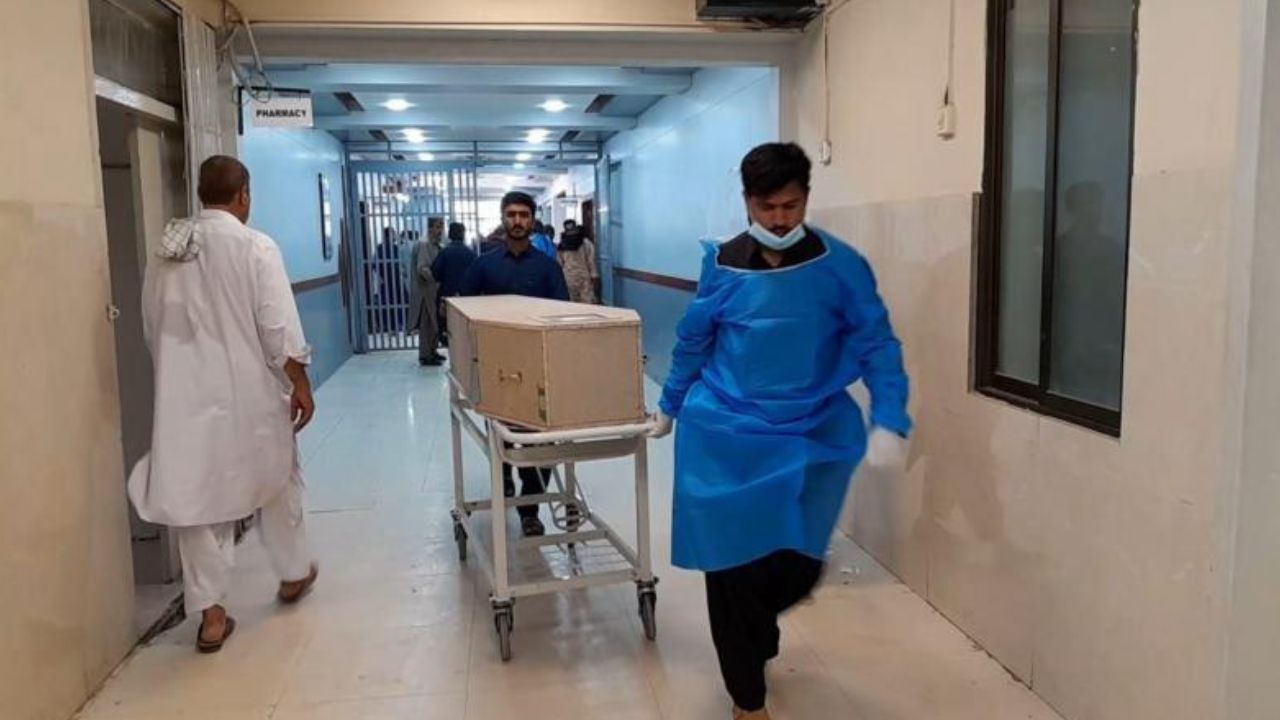
    The bodies have been sent for autopsy while the injured person has been shifted to Gwadar Hospital for medical assistance, the police told BBC.

    Sarbandar is a fishing village which is located approximately 25 kilometers east of Gwadar city towards Karachi. Gwadar district bordering Iran is a coastal district of Balochistan and since the deterioration of the situation in Balochistan, incidents of this kind of unrest have been happening in Gwadar as well.

    No one has yet accepted responsibility for this incident and SHO Mohsin Baloch informed BBC that an investigation is going on into various aspects of the incident.

    Earlier on April 13, 11 people, including nine people from Punjab, were killed and five were injured when Balochistan Liberation Army militants fired on a bus in the Nushki district of Balochistan.

    In the past, like other areas of Balochistan, Gwadar also witnessed attacks on workers and security forces and other incidents of unrest. In March this year, a major attack was carried out on the Gwadar Port Authority complex in Gwadar. The Majeed Brigade of the outlawed Baloch Liberation Army claimed responsibility for the attack.

    Balochistan Chief Minister Mir Sarfaraz Bugti and Interior Minister Mir Ziaullah Longo have condemned the killings in Gwadar and said that the killing of innocent labourers in Gwadar is terrorism.

  • Fire breaks out in Lahore Airport; first Hajj flight halted

    Fire breaks out in Lahore Airport; first Hajj flight halted

    A fire broke out in the lounge of Allama Iqbal International Airport in Lahore on Thursday morning, reportedly affecting the immigration process at the airport , while the first Hajj flight from Lahore has also been delayed.

    According to airport sources, the fire broke out due to a short circuit in the ceiling of the immigration counter.

    Civil aviation personnel extinguished the fire, and brought it under control.

    According to the authorities, after the immigration process was affected by the fire, Hajj pilgrims are being processed from the domestic counter.

  • Floods misery reminder of changing climate’s role in supercharging rain

    Floods misery reminder of changing climate’s role in supercharging rain

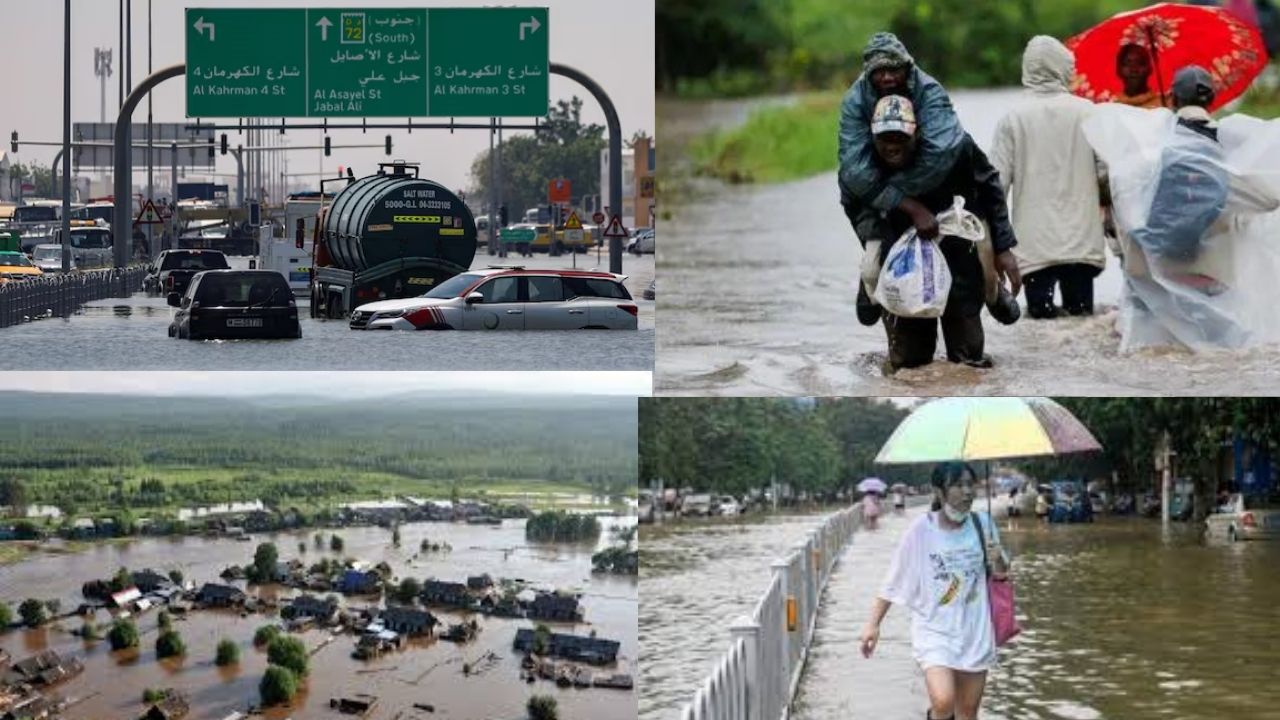
    Floods have been tearing a path of destruction across the globe, hammering Kenya, submerging Dubai, and forcing hundreds of thousands of people from Russia to China, Brazil and Somalia from their homes.

    Though not all directly attributed to global warming, they are occurring in a year of record-breaking temperatures and underscore what scientists have long warned – that climate change drives more extreme weather.

    Climate change isn’t just about rising temperatures but the knock-on effect of all that extra heat being trapped in the atmosphere and seas.

    April was the 11th consecutive month to break its own heat record, the EU climate monitor Copernicus said on Wednesday, while ocean temperatures have been off the charts for even longer.

    “The recent extreme precipitation events are consistent with what is expected in an increasingly warmer climate,” Sonia Seneviratne, an expert on the UN-mandated IPCC scientific panel, told AFP.

    Warmer oceans mean greater evaporation, and warmer air can hold more water vapour.

    Scientists even have a calculation for this: for every one degree Celsius in temperature rise, the atmosphere can hold seven percent more moisture.

    “This results in more intense rainfall events,” Davide Faranda, an expert on extreme weather at the French National Center for Scientific Research (CNRS), told AFP.

    In April, Pakistan recorded double the amount of normal monthly rainfall — one province saw 437 percent
    more than average — while the UAE received about two years worth of rain in a single day.

    This, however, doesn’t mean everywhere on Earth is getting wetter.

    Richard Allan from the University of Reading said “a warmer, thirstier atmosphere is more effective at sapping moisture from one region and feeding this excess water into storms elsewhere”.

    This translates into extreme rain and floods in some areas but worse heatwaves and droughts in others, the climate scientist told AFP.

    Natural climate variability also influence weather and global rainfall patterns.

    This includes cyclical phenomenon like El Nino, which tends to bring heat and rain extremes, and helped fuel the high temperatures seen over land and sea this past year.

    While natural variability plays a role “the observed long-term global increase in heavy precipitation has been driven by human-induced climate change”, said Seneviratne.

    Carlo Buontempo, a director at Copernicus, said cycles like El Nino ebb and flow but the extra heat trapped by rising greenhouse gas emissions would “keep pushing the global temperature towards new records”.

    Considering the overlapping forces at play, attributing any one flood to climate change alone can be fraught, and each event must be taken on a case-by-case basis.

    But scientists have developed peer-reviewed methods that allow for the quick comparison of an event today against simulations that consider a world in which global warming had not occurred.

    For example, World Weather Attribution, the scientists who pioneered this approach, said the drenching of the UAE and Oman last month was “most likely” exacerbated by global warming caused by burning fossil fuels.

    ClimaMeter, another rapid assessment network who use a different methodology, said major floods in China in April were “likely influenced” by global warming and El Nino.

    “It can be difficult to disentangle global warming and natural variability” and some weather events are more clear-cut than others, said Flavio Pons, a climatologist who worked on the China assessment.

    In the case of devastating floods in Brazil, however, ClimaMeter were able to exclude El Nino as a significant factor and name human-driven climate change as the primary culprit.

    Many of the countries swamped by heavy floods at the moment — such as Burundi, Afghanistan and Somalia — rank among the poorest and least able to mobilise a response to such disasters.

    But the experience in Dubai showed even wealthy states were not prepared, said Seneviratne.

    “We know that a warmer climate is conducive to more severe weather extremes but we cannot predict exactly when and where these extremes will occur,” Joel Hirschi from the UK’s National Oceanography Centre told AFP.

    “Current levels of preparedness for weather extremes are inadequate… Preparing and investing now is cheaper than delaying action.”

  • Father, son found dead in Lahore hotel

    Father, son found dead in Lahore hotel

    The bodies of a 32-year-old father and his five-year-old son were recovered from a private hotel room in Naulkha area of Lahore.

    Danish had booked a hotel room with his son Ayaan, but when he did not come out of the room, the hotel management contacted the police.

    Police say that when they entered the room, the child was dead while Danish’s body was hanging from the fan.

    Dawn News has reported that the father killed his son first and then himself because of poverty and unfavourable circumstances. The family has decided against registering the case but police and forensic teams have collected the evidence and the case is under investigation.