Category: Lifestyle

  • Petroleum, gas reserves discovered in Sindh

    Petroleum, gas reserves discovered in Sindh

    Mari Petroleum company has discovered new gas and oil reserves in Dharki town of Ghotki district in Sindh, reports Geo News.

    The new discovery will yield 2.5 million cubic feet of gas per day while 1040 barrels of crude oil will be obtained, says a statement issued by Mari Petrolem.

    Significant oil reserves were discovered in the well Shoal-1 of the Mari field. The work on Shoal-1 started on January 27, 2024. Mari Petroleum says the well was successfully drilled to a depth of 1,136 meters.

    Faheem Haider, Managing Director (MD) of Mari Petroleum, described the discovery as a remarkable achievement for the company’s scientists and engineers.

  • Teacher doesn’t take wedding day chuti in Sindh

    Teacher doesn’t take wedding day chuti in Sindh

    Teacher doesn’t take wedding day chuti in Sindh

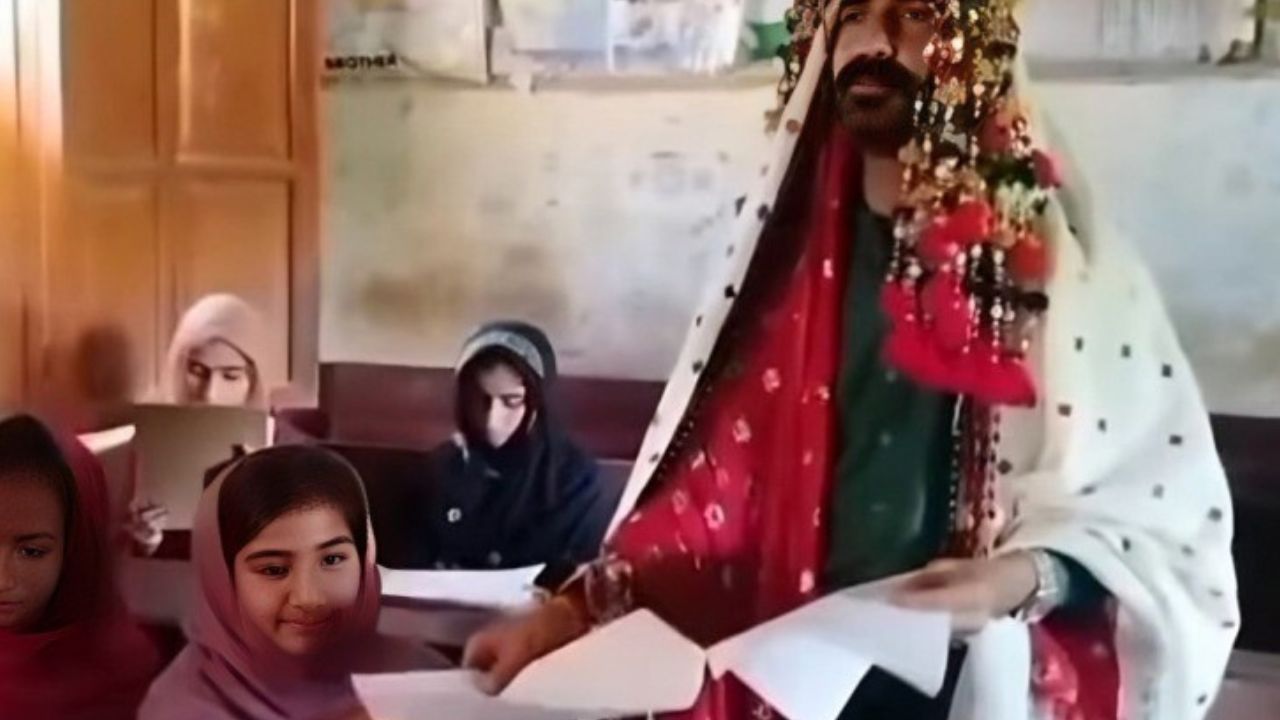
    Sheeraz Rasool Khaskheli, a teacher in Chambar, Tando Allahyar, went to school on his wedding day to collect exam papers from his students. He wore his wedding dress and took the papers before heading home for his wedding. A photo and video of him taking papers has become popular on social media.

    Sheeraz Rasool said it was important to take the exam papers even on his wedding day, showing his dedication to his job as a teacher.

  • X working with Pakistan govt to ‘understand concerns’ over ban

    X working with Pakistan govt to ‘understand concerns’ over ban

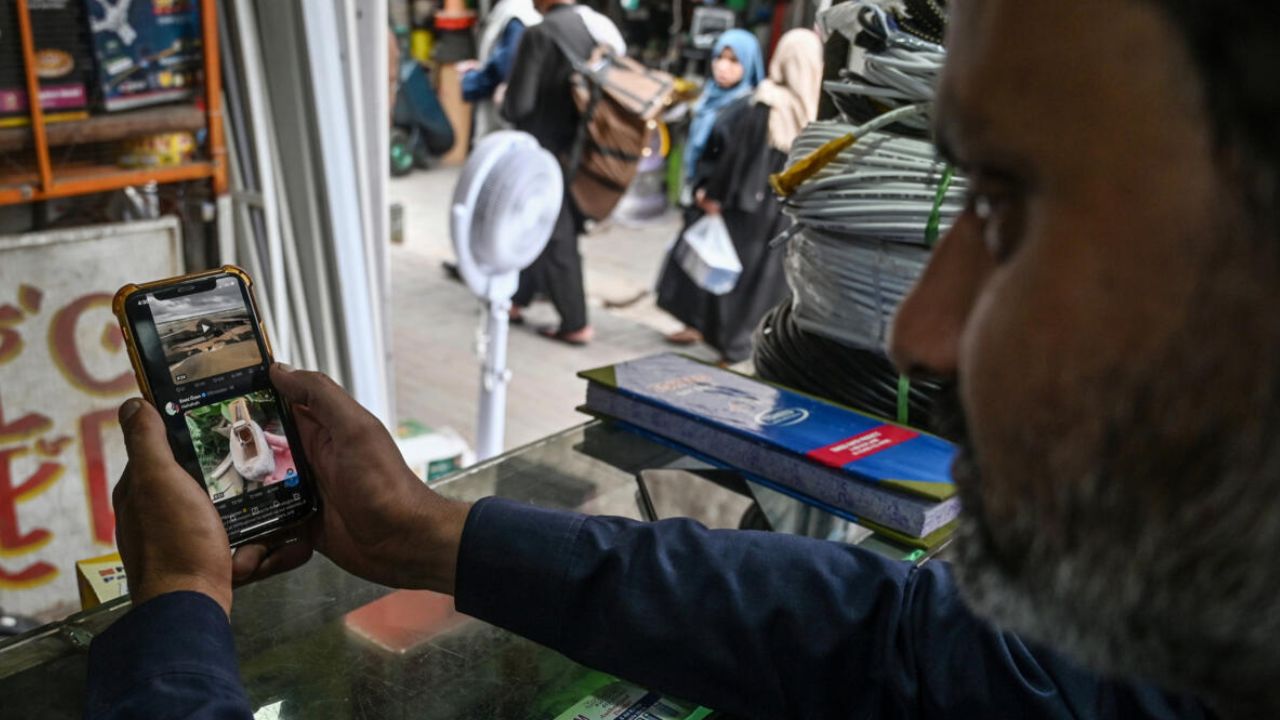
    Islamabad, Pakistan – Social media platform X said Thursday it would work with Pakistan’s government “to understand its concerns” after authorities insisted an ongoing two-month ban was based on security grounds.

    The platform, formerly known as Twitter, has been rarely accessible since February 17, when jailed former prime minister Imran Khan’s party called for protests following a government official’s admission of vote manipulation in the February election.

    “We continue to work with the Pakistani Government to understand their concerns,” X’s Global Government Affairs team posted, in their first comments since the site was disrupted.

    The Interior Ministry on Wednesday said X was blocked on security grounds, according to a report submitted to the Islamabad High Court where one of several challenges to the ban is being heard.

    On the same day, the Sindh High Court ordered the government to restore access to social media platform X within a week.

    “The Sindh High Court has given the government one week to withdraw the letter, failing which, on the next date, they will pass appropriate orders,” Moiz Jaaferi, a lawyer challenging the ban, told AFP.

    The court’s full decision is expected to be published this week.

    Both the government and the Pakistan Telecommunication Authority (PTA) had for weeks refused to comment on the outages.

    “It is the sole prerogative and domain of the federal government to decide what falls within the preview of terms of ‘defence’ or ‘security’ of Pakistan and what steps are necessary to be taken to safeguard National Security,” said the interior ministry’s report, submitted by senior official Khurram Agha.

    The interior ministry suggested intelligence agencies were behind the order.

    The closure of a social media service “when there is request from any security or intelligence agency” is “well within the scope of provisions of the PTA act”, the report said.

    Digital rights activists, however, said it was designed to quash dissent after February 8 polls that were fraught with claims of rigging.

    Access to X has been sporadic, occasionally available for short cycles based on the internet service provider, forcing users to use virtual private networks.

    Mobile services were cut across Pakistan on election day, with the interior ministry also citing security reasons.

    It was followed by a long delay in issuing voting results, giving rise to allegations of tampering.

    Khan’s opposition party had already faced heavy censorship in the weeks before the election, banned from television channels and from holding rallies, forcing its campaign online.

    Despite the crackdown, his party won the most seats but was kept from power by a coalition of rival parties that had the backing of the military.

    stm-ecl/jts/ssy

    © Agence France-Presse

  • Meta shouldn’t force users to pay for data protection: EU watchdog

    Meta shouldn’t force users to pay for data protection: EU watchdog

    Brussels, Belgium – Facebook owner Meta and other online platforms must not force users to pay for the right to data protection enshrined in EU law when offering ad-free subscriptions, the European data regulator said Wednesday.

    “Online platforms should give users a real choice when employing ‘consent or pay’ models,” the European Data Protection Board (EDPB) chair Anu Talus said in a statement.

    “The models we have today usually require individuals to either give away all their data or to pay,” she said. “As a result, most users consent to the processing in order to use a service, and they do not understand the full implications of their choices.”

    Meta in November launched a “pay or consent” system allowing users to withhold use of their data for ad targeting in exchange for a monthly fee — a model that has faced several challenges from privacy and consumer advocates.

    Meta has long profited from selling user data to advertisers but this business model has led to multiple battles with EU regulators over data privacy.

    The latest announcement came after the data protection authorities of The Netherlands, Norway and the German state of Hamburg went to the EDPB for an opinion regarding the pay-or-consent model used by Meta.

    The Silicon Valley company allows users of Instagram and Facebook in Europe to pay between 10 and 13 euros (around $11 and $14) a month to opt out of data sharing.

    Meta pointed to an EU court ruling last year that it said opened the way for subscriptions as a “legally valid” option. “Today’s EDPB opinion does not alter that judgment and subscription for no ads complies with EU laws,” a Meta spokesperson said.

    Meta is waiting for a decision on its model by the data privacy regulator in Ireland where the company is headquartered.

    ‘Binary choice’

    All digital platforms must comply with the European Union’s mammoth general data protection regulation (GDPR), which has been at the root of EU court cases against Meta.

    The EDPB in its opinion argued that Meta’s model was at odds with the GDPR’s requirement that consent for data use must be freely given.

    “In most cases, it will not be possible for large online platforms to comply with the requirements for valid consent if they confront users only with a binary choice between consenting to processing of personal data for behavioural advertising purposes and paying a fee,” the opinion read.

    The EDPB also warned the type of subscription service put forward by Meta “should not be the default way forward” for platforms.

    It suggested that platforms should consider an alternative that would give users the right to reject being tracked for advertising purposes without the need to pay.

    Privacy defenders welcomed the opinion.

    “Overall, Meta is out of options in the EU. It must now give users a genuine yes/no option for personalised advertising,” said prominent online privacy activist Max Schrems.

    “We know that ‘Pay or Okay’ shifts consent rates from about three percent to more than 99 percent — so it is as far from ‘freely given’ consent as North Korea is from a democracy,” said Schrems.

    Tech lobby group CCIA however warned the EDPB risked “opening a Pandora’s Box”.

    “Forcing businesses to offer services at a loss is unprecedented and sends the wrong signals,” said CCIA Europe’s senior policy manager, Claudia Canelles Quaroni.

    “All companies should be able to offer paid-for versions of their services.”

    raz/gv

    © Agence France-Presse

  • British Muslim student loses prayer ban challenge in London High Court

    British Muslim student loses prayer ban challenge in London High Court

    A British Muslim student has lost a High Court case over permission to pray at school.

    The student approached the court after not being allowed to pray at Michaela School in Brent, London.

    Michaela School was founded by current head teacher Catherine Burbal Singh and about half of the school’s 700 students are Muslim.

    The student had argued that the policy of not allowing prayer was discriminatory, but the school was of the view that allowing prayer would affect social cohesion among students, reported BBC.

    He also questioned why the student was given legal aid of GBP 150,000 for the case when her mother wants to admit another girl in the same school.

    Equalities Minister Kemi Badenoch said the court decision is a victory against activists who want to bring down public institutions.

    The head teacher has made it clear to the parents that if you don’t like the school, don’t bring the children here.

  • Maryam sends McDonald’s to children, teachers, deletes post after social media uproar

    Maryam sends McDonald’s to children, teachers, deletes post after social media uproar

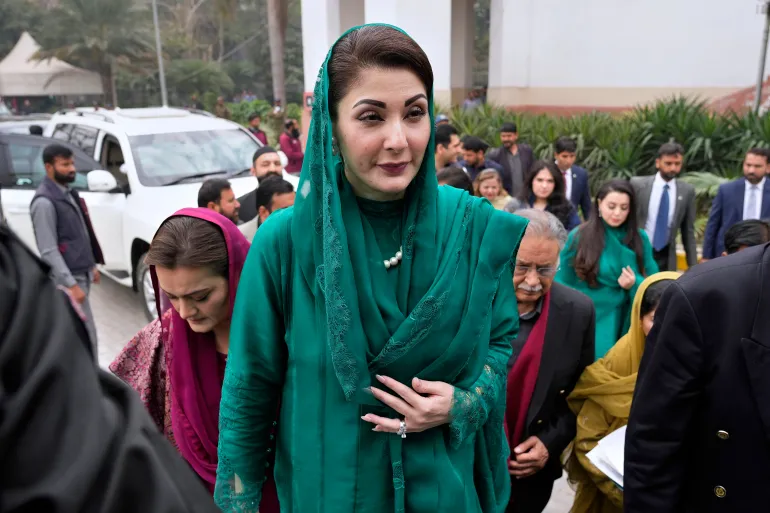
    Chief Minister of Punjab Maryam Nawaz got into trouble when Punjab government sent McDonald’s meal bags as a gift to school children in Murree on Tuesday.

    The famous fast-food chain faced boycotts and protests internationally when it announced shortly after the October 7 attacks, that it would give free meals to the Israeli military. In many countries throughout the world, including Pakistan, McDonald’s was subjected to boycotts on allegations of aiding Israel’s genocide in Gaza.

    On Monday, Maryam Nawaz visited a government girls high school in Murree where she inquired about the facilities in school, including health facilities.

    The very next day, the provincial government sent McDonald’s meal bags for the children.

    The PML-N’s also shared videos with their followers on X.

  • Largest black hole discovered in Milky Way

    Largest black hole discovered in Milky Way

    PARIS: Astronomers identified the largest stellar black hole yet discovered in the Milky Way, with a mass 33 times that of the Sun, according to a study published on Tuesday.

    The black hole, named Gaia BH3, was discovered “by chance” from data collected by the European Space Agency’s Gaia mission, said an astronomer from the National Centre for Scientific Research (CNRS) at the Observatoire de Paris, Pasquale Panuzzo.

    Gaia, which is dedicated to mapping the Milky Way galaxy, located BH3 2,000 light years away from Earth in the Aquila constellation.

    As Gaia’s telescope can give a precise position of stars in the sky, astronomers were able to characterise their orbits and measure the mass of the star’s invisible companion — 33 times that of the Sun.

    Further observations from on-the-ground telescopes confirmed that it was a black hole with a mass far greater than the stellar black holes already in the Milky Way.

    “No one was expecting to find a high-mass black hole lurking nearby, undetected so far. This is the kind of discovery you make once in your research life,” Panuzzo said in a press release.

    The stellar black hole was discovered when scientists spotted a “wobbling” motion on the companion star that was orbiting it.

    Stellar black holes are created from the collapse of massive stars at the end of their lives and are smaller than supermassive black holes whose creation is still unknown.

    Such giants have already been detected in distant galaxies via gravitational waves. But “never in ours”, said Panuzzo.

    BH3 is a “dormant” black hole and is too far away from its companion star to strip it of its matter and therefore emits no X-rays — making it difficult to detect.

    Gaia’s telescope identified the first two inactive black holes (Gaia BH1 and Gaia BH2) in the Milky Way.

    Gaia has been operating 1.5 million kilometres from Earth for the past 10 years and in 2022 delivered a 3D map of the positions and motions of more than 1.8 billion stars.

  • Interior Minister Mohsin Naqvi supports stricter rules on social media use

    Interior Minister Mohsin Naqvi supports stricter rules on social media use

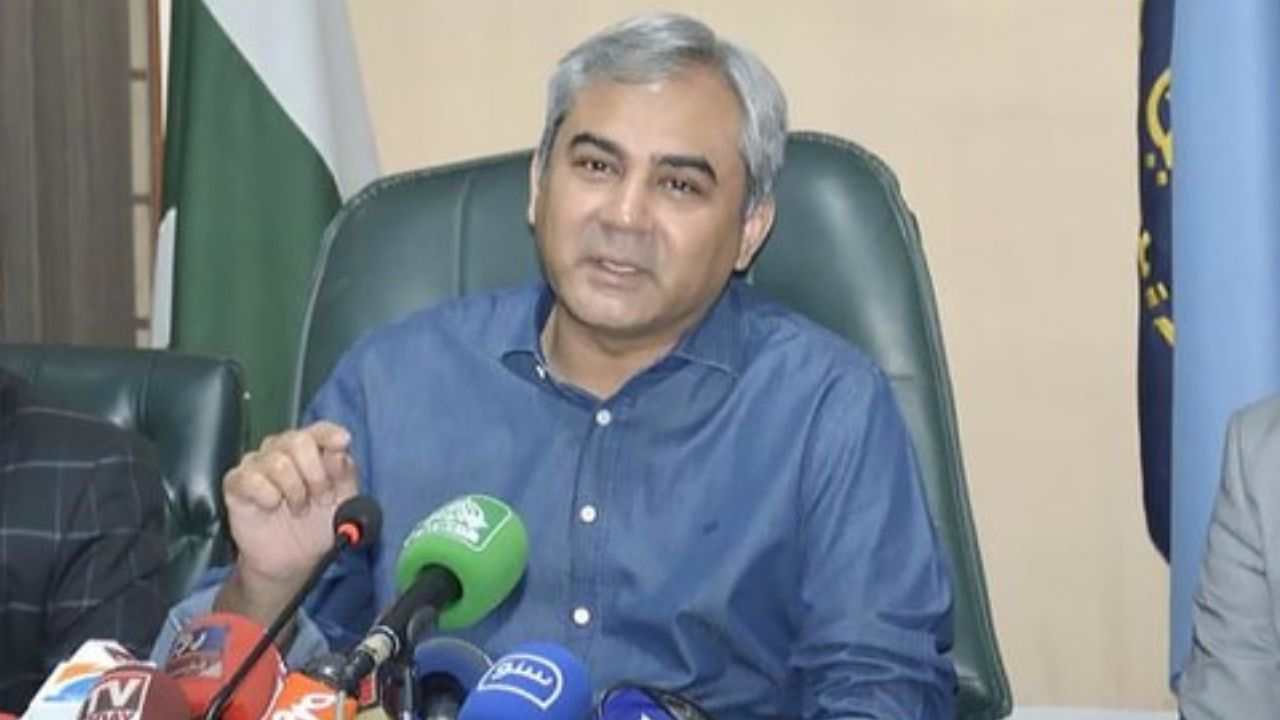
    During a press conference in Lahore held on Monday, federal Interior Minister Mohsin Naqvi pointed out that everyone knows how people who share fake videos in the United Arab Emirates or the UK are treated by those countries.

    He added that while there should be freedom of speech in Pakistan, there must also be a law under which a person making a false accusation can be arrested.

    As for the issue of the increased street crime in Karachi, the Interior Minister acknowledged the fact that the crimes are taking place in the city, but he also asserted that the police are fighting there on a daily basis.

  • Lahore High Court annuls clause of age difference between boy and girl in constitution

    Lahore High Court annuls clause of age difference between boy and girl in constitution

    The Lahore High Court (LHC) has ordered the amendment of Child Marriage Act 1929, a law made 95 years ago under which the legal age of marriage for a boy is 18 years and for a girl is 16 years, annulling the provision of age difference between males and females.

    Justice Shahid Kareem of Lahore High Court issued a five-page written judgment in which it is said that there is a need to take effective measures against child marriage. The high court declared “discriminatory” the specific portion of the legislation — Section 2(a) and (b) of the 95-year-old Act — which fixes different legal ages for males and females eligible for marriage.

    “The extract set out above makes a compelling case based on physiological and sociological factors for the executive to step up and take effective measures to counter the debilitating effect of child marriage,” the verdict read.

    The court decision said that under the constitution, all citizens are equal in the eyes of the law, no citizen can be discriminated against, whereas in the Child Marriage Act, 1929, the age difference between a boy and a girl is discrimination, making this age difference unconstitutional and void.

    It is said that the government should amend the Child Marriage Act in 15 days in the light of the court decision, reports The News.

    “In sum, the words in section 2(a) viz. “if a male ….and if a female is under sixteen years of age” being unconstitutional are held to be without lawful authority and of no legal effect. They are struck down,” the verdict stressed and added “The Govt of Punjab (its relevant department) is directed to issue the revised version of 1929 Act (based on this judgment) within the next fifteen days.”

  • Post-nikkah living arrangements spark debate on X

    Post-nikkah living arrangements spark debate on X

    In a recent X storm, a debate erupted over the issue of post-Nikkah living arrangements.

    An X (formerly Twitter) user asserted that if a girl demands that her husband gets her a separate house after nikkah, it is her right to do so.

    Lo and behold, the post sparked reactions, with opinions sharply divided.

    Another user, while acknowledging the importance of discussing living arrangements before Nikkah, expressed concern over the notion of leaving behind the husband’s elderly parents, suggesting it could be unfair, especially when they are in need of help in old age.

    She also reflected on the generational differences in mindset, expressing a sense of apprehensiveness about the younger generation – Gen Z.

    This was interjected with sarcasm as another user, pointing at the fact that women, too, have parents that they leave behind, said— it is not that they are raised by “wolves”.

    This remark highlighted the underlying tensions and biases surrounding traditional gender roles and societal expectations placed on women.

    More reactions: