Following the demolition of a World War I memorial in Islamabad, the remains of a Mughal-era building in Rehara village have also been destroyed to make way for a private housing project.
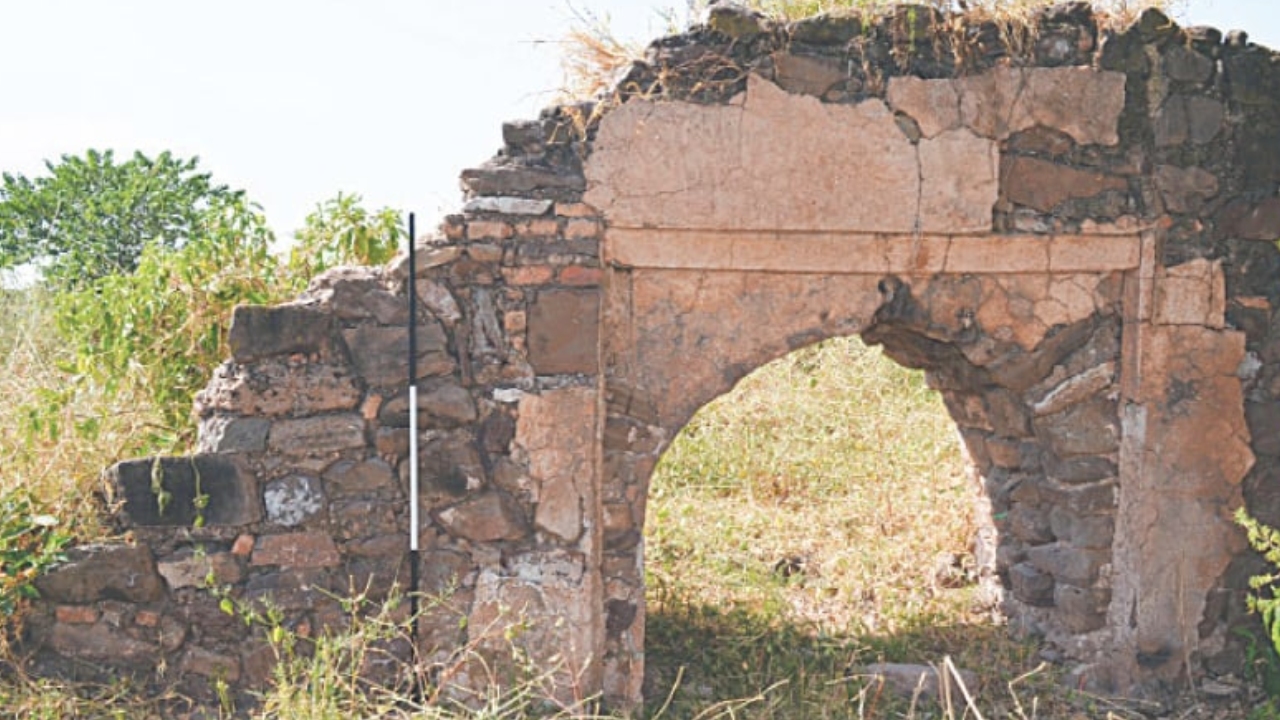
The 16th-century structure was located about 200 meters from the British-era obelisk at the archaeological site. According to the Department of Archaeology and Museums (DOAM), the building was possibly constructed during the reign of Mughal Emperor Akbar and was the oldest historical ruin in the area.
A DOAM official told a private media outlest that the building’s above-ground arch and the remaining structure, including an 8×4.5 meters main chamber with 1.5-meter-thick walls built from limestone and sandstone blocks, had been demolished. “These elements required careful excavation,” the official said.
A departmental team that visited the site confirmed that the remnants, visible in earlier photographs, had been completely removed.
Documents reviewed by a private media outlet show that the Department of Archaeology and Museums (DOAM) had written to the Capital Development Authority (CDA), the developing partner of the housing scheme, seeking records to enable protection of historical sites. The department said it had been corresponding with CDA’s revenue department since 2020 regarding the war memorial and the Mughal-era Rehara structure.
An official from the Ministry of National Heritage and Culture said, “The CDA has not once responded to the numerous letters DOAM has written in the last six years.”
DOAM has clarified its position regarding the World War I monument, stating that it was not protected under the Antiquities Act 1975 and that a no-objection certificate was not required for its removal. Earlier, the department had claimed it did not permit CDA to demolish the monuments.
The department added that while the monument was within Islamabad Capital Territory, efforts were being made to place it under formal protection. DOAM cited lack of finances and other legal requirements as reasons why the memorial could not be notified as a protected site.
In a statement, DOAM said, “The monument possesses cultural and historical significance. In line with internationally recognised best practices for commemorative and historical structures, DOAM was consulted and provided advisory guidance to first protect the monument under the Antiquities Act 1975, but it was not done.”
The department also stated, “It is better to re-erect the monument at the same place with grace and dignity as it was erected for the same village of Rehara.”