Category: National

  • Despite ‘serious progress’, Pakistan fails to exit FATF grey list

    Despite ‘serious progress’, Pakistan fails to exit FATF grey list

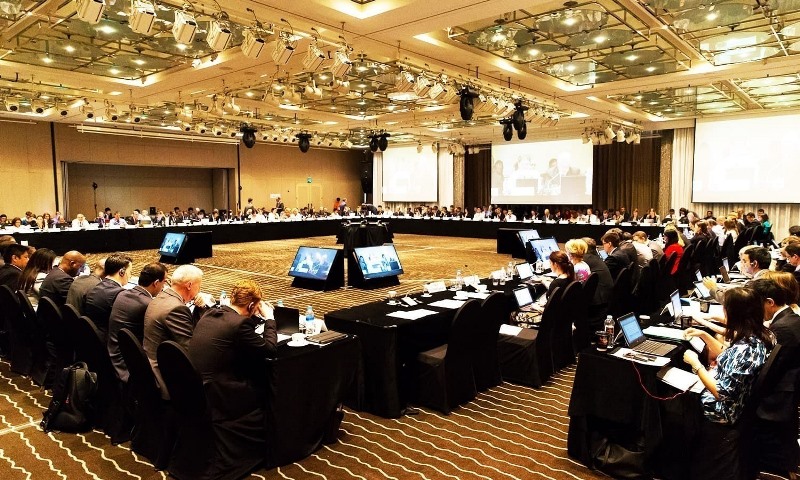
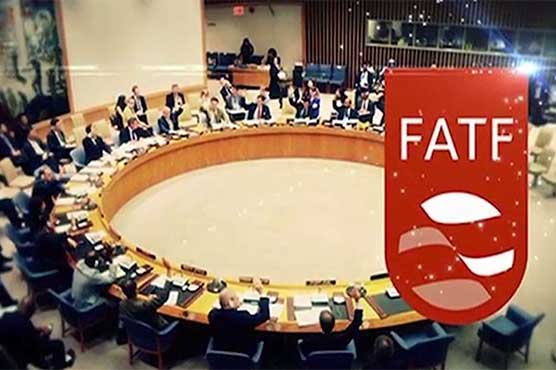
    Pakistan was retained in the “grey list” of the Financial Action Task Force (FATF), which examined its efforts to counter terror financing and money laundering. The decision was taken at the meeting of the multilateral watchdog on Thursday.

    “Pakistan should continue to work on implementing the three remaining items in its action plan to address its strategically important deficiencies, namely by: demonstrating that TF investigations and prosecutions target persons and entities acting on behalf or at the direction of designated persons or entities; demonstrating that TF prosecutions result in effective, proportionate and dissuasive sanctions and demonstrating effective implementation of targeted financial sanctions against all 1267 and 1373 designated terrorists, specifically those acting for or on their behalf,” the FATF said in a statement.

    The anti-terror financing organisation noted that Islamabad has largely addressed 24 of the 27 action items and gave Islamabad time till June 2021 to complete the full action plan.

    FATF president Marcus Pleyer said that Pakistan has made “significant progress” but “some serious deficiencies remain” and all these deficiencies are “in the realm of terror financing”. Pleyer added that Pakistan “remains under increased monitoring”.

    Reacting to the FATF decision, Federal Minister Hammad Azhar said Pakistan had completed “almost 90 per cent” of its current FATF action plan with 24 out of 27 items rated as ‘largely addressed’ and the remaining three items ‘partially addressed’.

    “FATF has acknowledged Pakistan’s high-level political commitment since 2018 that led to significant progress. It was also noted by FATF member countries that Pakistan is subject to perhaps the most challenging & comprehensive action plan ever given to any country,” he tweeted, saying the country was also subject to dual evaluation processes of FATF with differing timelines.

    MOROCCO, SENEGAL ON GREY LIST:

    The FATF during its plenary kept North Korea and Iran as the only two countries on its blacklist but added four new places to its watch list for increased monitoring, according to Pleyer.

    The countries added to the grey list are Morocco, Burkina Faso, Senegal and the Cayman Islands.

    With the four additions, the list now has 19 countries and territories that FATF said were only partially fulfilling international rules for fighting terrorism financing and money laundering.

  • What did PM Imran’s Sri Lanka trip cost taxpayers?

    What did PM Imran’s Sri Lanka trip cost taxpayers?

    Prime Minister (PM) Imran Khan’s ongoing tour of Sri Lanka cost taxpayers a mere $34,800 (Rs5,507,771 or Rs5.5 million), his special assistant on political communication, Dr Shahbaz Gill, has revealed in a tweet.

    The 2016 visit of former premier Nawaz Sharif to Sri Lanka, on the other hand, had cost the treasury $276,266, he stated further.

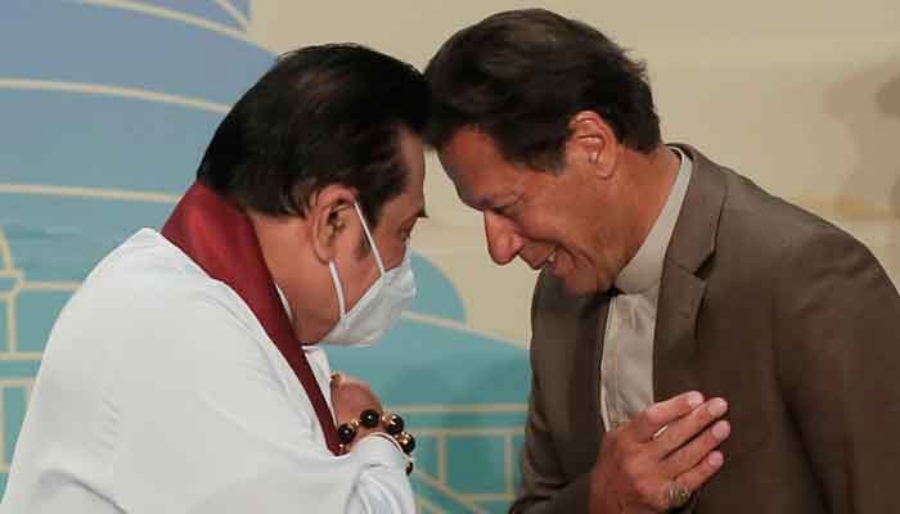
    During his two-day-long visit to the country, PM Imran met President Gotabaya Rajapaksa and his Sri Lankan counterpart besides notable business personalities.

    While Gill went on to say that PM Imran’s trip had proven to be more fruitful as compared to that of Nawaz, Minister for Communications and Postal Services Murad Saeed also claimed that the incumbent premier’s Sri Lanka visit cost the treasury “just $34,000”.

    The minister further said the premier had cut his office’s expenses by 49%. He maintained the incumbent government was carefully spending public funds that were a sacred trust.

    Saeed’s statements come a week after it was reported that the expenditures of PM House and Office have reportedly reduced by 49% and 29%, respectively.

    According to reports, the total expenditure of the PM House narrowed down to Rs280 million (Rs28 crores) in 2020 from Rs339 million (Rs33 crores) in 2019 and Rs590 million (Rs59 crores) in 2018 — the year when the Pakistan Tehreek-e-Insaf (PTI) was handed reins of the country.

    The PM Office witnessed a considerable decrease in its expenditure from 2018 to 2020, but last year was slightly more than in 2019. It stood at Rs334 million (Rs33 crores) in 2020, Rs305 million (Rs30 crores) in 2019 and Rs514 million (Rs51 crores) in 2018.

    The premier, since assuming office in 2018, has been pushing for austerity measures to save taxpayers’ money and reduce the burden on the national exchequer.

    Despite the steps taken by PM Imran in this regard, the austerity drive has faced multiple setbacks owing to the apparent reluctance of the lawmakers in cutting down expenses.

  • PTI leaders fed up with PM Imran, claims Maryam

    PTI leaders fed up with PM Imran, claims Maryam

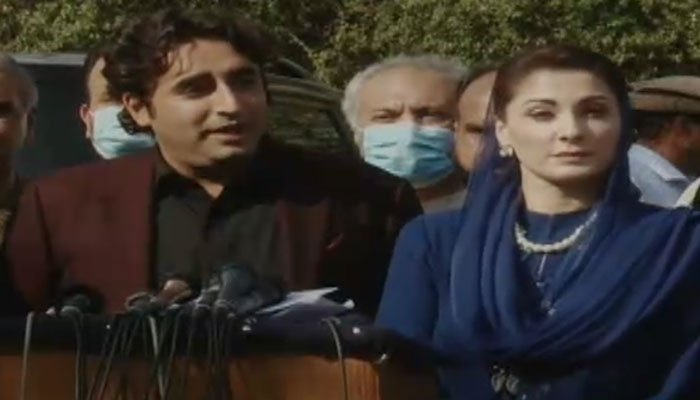
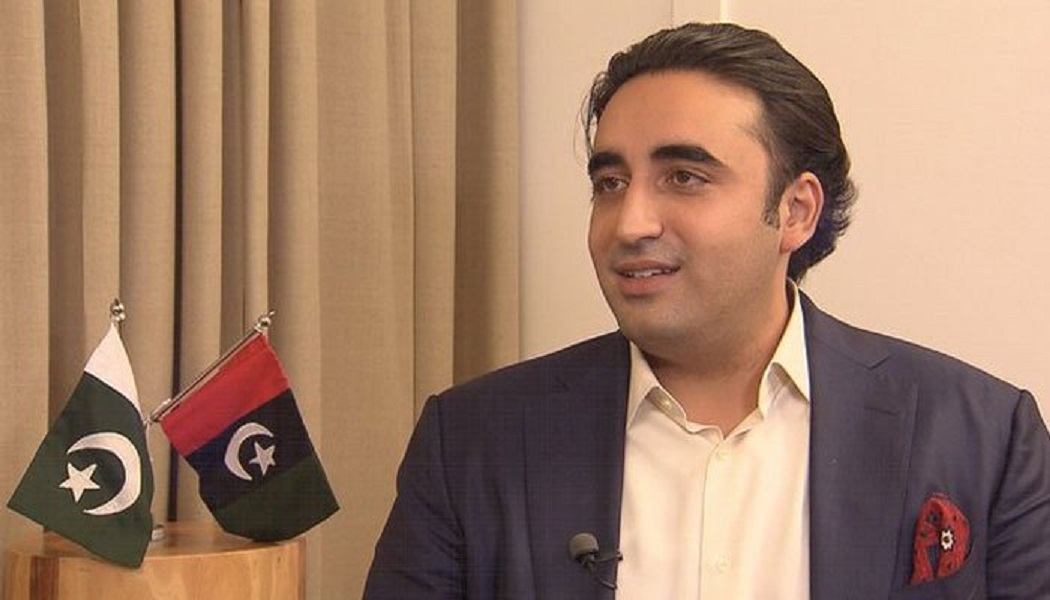
    Pakistan Muslim League-Nawaz (PML-N) Vice President Maryam Nawaz and Pakistan People’s Party (PPP) Chairperson Bilawal Bhutto-Zardari on Thursday held a meeting to discuss the strategy ahead of the Senate election.

    Addressing a joint press conference in Lahore, Maryam claimed that Prime Minister Imran Khan was increasingly becoming unpopular within the Pakistan Tehreek-e-Insaf (PTI). Maryam added that she hoped that every pro-democracy would oppose Imran Khan in the Senate elections.

    The PML-N vice president also reaffirmed her support for joint opposition candidate Yousaf Raza Gillani, saying the PML-N fully backs Gillani.

    “I hope every pro-democracy person will not vote for the PTI [in the Senate elections] because we think the PTI is guilty of crimes against the people and Imran Khan is guilty of crimes against the nation,” added Maryam.

    Talking to reporters, PPP chief Bilawal said that the government had suffered defeats in the recent by-elections. “The people have rejected them in every by-election,” he said.

    According to the PPP chairman, the PDM’s decision to contest the by-polls and the upcoming Senate elections has made the government anxious about its future.

    The PPP leader said that the PDM was not bringing about a no-confidence movement against the government at the moment and was only contesting the Senate elections.

    Speaking about the Senate elections, the PPP head said his party would ask every lawmaker for a vote in the Senate election.

    Bilawal said that the PDM believed in the constitution and in the principal that each democratic government should complete its constitutional tenure. However, he said that the current system was an unjust one where political allies of the incumbent government were “tied together” to it by force.

  • ‘Bewafa’: Students react to Shafqat Mahmood announcing schools to open from March 1

    ‘Bewafa’: Students react to Shafqat Mahmood announcing schools to open from March 1

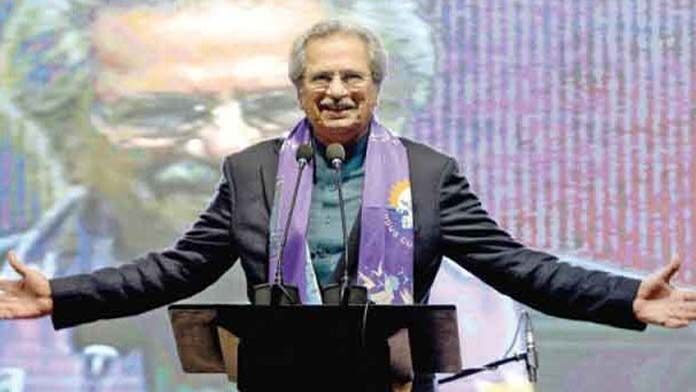
    Federal Minister for Education Shafqat Mahmood has once again given ‘memers’ a chance to show off their skills. Breaking the hearts of a lot of Pakistani students, the ‘Bewafa‘ minister announced that schools will be resuming from March 1.

    Following the announcement, social media was filled with memes with students expressing their heartbreak and sadness over the decision.   

    https://twitter.com/MemebyPutin/status/1364824875110645764?s=20

    Read more – Sarfaraz vs Hafeez memes break the internet

    https://twitter.com/PakistanAug1947/status/1364871706012246017?s=20
  • Pakistan faces an unexpected dilemma: too much electricity

    Pakistan faces an unexpected dilemma: too much electricity

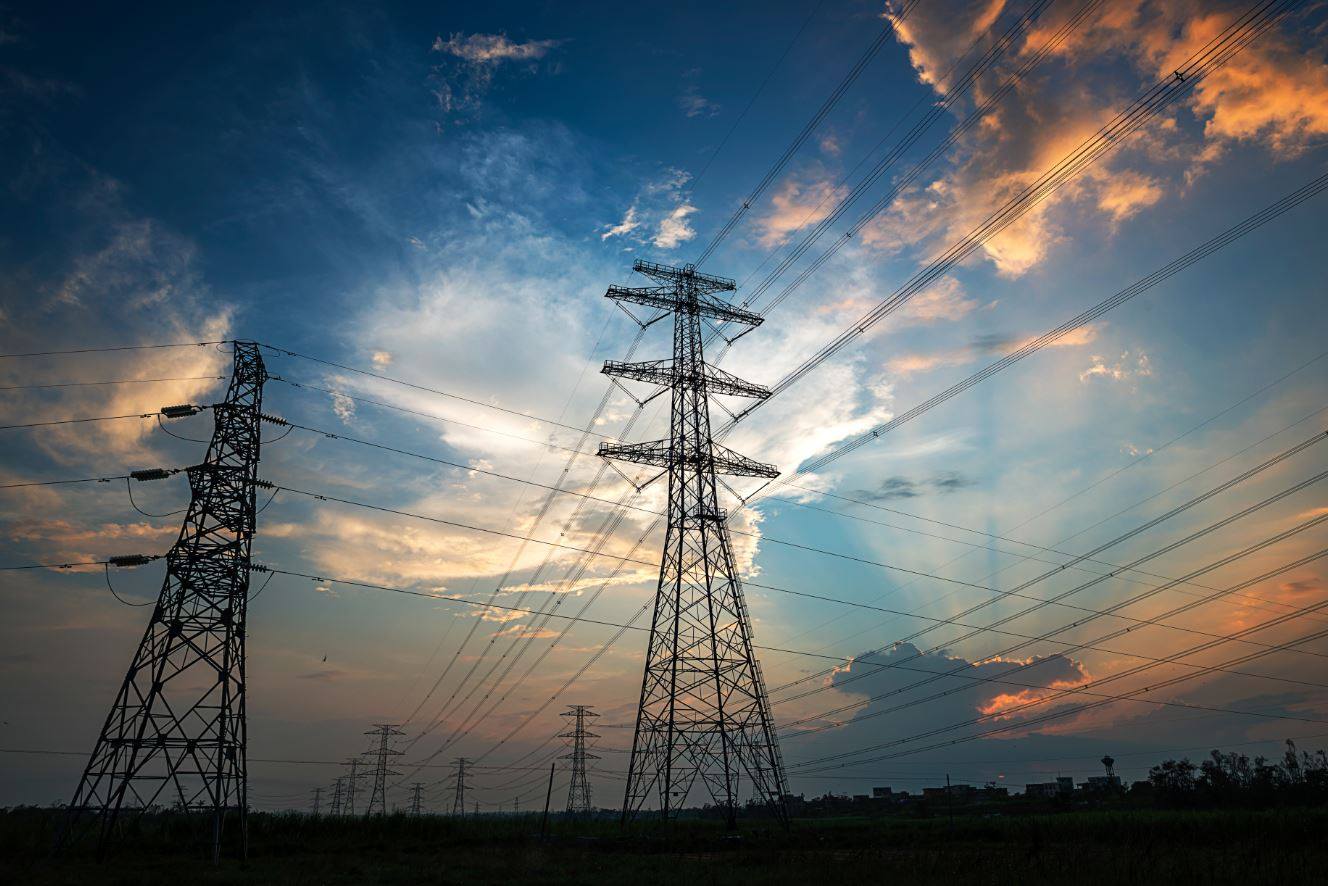
    After suffering decades of electricity shortages that left families and businesses in the dark, Pakistan finds itself with a new problem: more electrical generating capacity than it needs.

    Large-scale construction of new power plants — largely coal-fired ones funded by China — has dramatically boosted the country’s energy capacity.

    “It’s true. We are producing much more than we need,” Tabish Gauhar, special assistant to the prime minister on power, told the Thomson Reuters Foundation by telephone.

    But even as supply surges, electric power is still not reaching up to 50 million people in Pakistan who need it, according to a 2018 World Bank report, though the expansion of transmission lines is planned.

    Power outages also remain common, with a transmission problem just last month leaving many of the country’s major cities in the dark.

    Excess fossil fuel energy capacity also is boosting electricity costs — and raising questions about whether the country will now manage to achieve its climate change goals, with scientists saying coal needs to rapidly disappear from the world’s energy mix to prevent the worst impacts of climate change.

    RENEWABLES AIM?

    Last year, Prime Minister Imran Khan promised that Pakistan by 2030 would produce 60 percent of its electrical power from renewable sources.

    Currently, the country gets 64 percent of its electricity from fossil fuels, with another 27 percent from hydropower, 5 percent from nuclear power and just 4 percent from renewables such as solar and wind, Gauhar said.

    The country has already scrapped plans for two Chinese-funded coal plants — but another seven commissioned as part of the sweeping China-Pakistan Economic Corridor (CPEC) project have gone ahead, and are expected to add up to 6,600 megawatts of capacity to the grid.

    China has also funded new renewable energy but at a smaller scale, with six wind farms set to generate just under 400 MW of power, a 100 MW solar project and four hydropower plants expected to produce 3,400 MW by 2027.

    CPEC aims to boost road, rail and air transport links and trade between China, Pakistan and other countries in the region, as well as boosting energy production.

    Vaqar Zakaria, the head of Hagler Bailly Pakistan, an environmental consultancy firm based in Islamabad, said Pakistan’s coal-heavy power expansion was in line with its own former national aims.

    “I think blaming the Chinese may not entirely be fair as setting up projects on local and imported coal was our country policy and priority,” he said.

    Officials at the Chinese embassy in Islamabad did not respond to calls and emails asking for comment.

    As new largely coal-fired plants come online, Pakistan is expected by 2023 to have 50 percent more power capacity than currently needed.

    Because the government must repay loans taken to build the plants and has signed contracts to buy their power, the overcapacity is producing costs “the government has to pay to the power producers under binding contracts, regardless of actual need,” Gauhar said.

    “Our fixed-capacity charges have gone through the roof,” he added.

    Those costs currently stand at 850 billion rupees ($5.3 billion) a year, but will rise to almost 1,450 billion rupees ($9 billion) a year by 2023 as new largely coal-fired power plants still being built come online, he said.

    That is driving up rates consumers pay for power — 30 percent in the last two years, Gauhar said — a problem likely to continue unless Pakistan can find more buyers for its new generating capacity, such as by boosting manufacturing or pushing the use of electric vehicles.

    The government plans to decommission some older fossil fuel plants to cut overcapacity, he said – but it also pushing ahead to add new wind, solar and hydropower capacity to the grid to meet its climate goals.

    The government is holding talks to renegotiate tariff rates with the country’s independent power producers, including fossil fuel, hydro, wind and solar companies, he said.

    Whether it will seek similar rate renegotiations on Chinese-funded plants still in the pipeline, or longer debt repayment periods, remains unclear.

    GAINING POWER

    When electricity projects now in the pipeline are completed in the next few years, Pakistan will have about 38,000 MW of capacity, Gauhar said.

    But its current summertime peak demand is 25,000 MW, with electricity use falling to 12,000 MW in the winter, he said.

    Saadia Qayyum, an energy specialist with the World Bank, said energy over-production was a better problem to have than undersupply as it allowed for growth – but the country needed new ways to use the electricity.

    But incentivising electric transport, for instance, will be less than a green solution if a big share of the country’s new electricity is produced by coal plants, energy analysts said.

    Gauhar said the government is offering discounted electricity tariffs to industrial customers, to try to lure those now dependent on their own gas-fired plants back to the national grid.

    But demand for grid power “is a function of price, availability and reliability”, noted Zakaria, the environmental analyst – and high prices are likely to suppress demand and incentivise power theft, a serious problem in the country.

    He predicted high-end residential and commercial customers would end up footing the bill for the excess generation capacity, as industries and agriculture receive power subsidies.

    That could mean “paying customers will use less electricity, further worsening the situation”, particularly as more see an economic advantage in buying their own solar panels.

    Despite the country’s energy surplus, the World Bank is investing $450 million over the next four years in renewable power in Pakistan, to try to cut the nation’s reliance on fossil fuel imports and lower energy costs, Qayyum said.

    Gauhar said Pakistan would need some level of fossil-fuel-powered energy in coming years to help balance “intermittent” sources like solar and wind which do not generate electricity 24 hours a day.

    But he said the long-term plan, still being discussed, was to have coal plants contribute no more than 15 percent of the country’s electricity capacity.
  • Govt reacts to Firdous Ashiq Awan’s ‘leaked video of planning Rana Sanaullah’s arrest’

    A viral video has shown Punjab Chief Minister (CM) Firdous Ashiq Awan discussing over the phone rival Pakistan Muslim League-Nawaz (PML-N) leader Rana Sanaullah’s arrest, which the opposition claims “exposes ruling Pakistan Tehreek-e-Insaf’s (PTI) politics of vengeance”.

    As per the details, a viral video deemed as leaked showed the Punjab government official saying to an unknown caller that Sanaullah had “once again escaped proceedings” and the government was filing a case against him.

    While opposition leaders claimed that Awan was speaking to Interior Minister Sheikh Rasheed and planning the PML-N stalwart’s arrest, the government is claiming that she was talking to family of the late Majid Mehar.

    Mehar was one of the two people who died during violence that marred the electoral exercise in NA-75, Sialkot-IV Daska. Eight others were also injured in the incident that took place while the PML-N — a component of the 10-party PDM — led in the by-election last week.

    https://twitter.com/MashwaniAzhar/status/1364549713643585543

    “She was speaking to the family of Majid Mehar, who lost his life in Daska,” Punjab CM’s aide on digital media, Azhar Mashwani, tweeted.

    He maintained that the family was holding Rana Sanaullah responsible for Mehar’s death.

  • FATF grey-listing has cost Pakistan $38bn since 2008: report

    FATF grey-listing has cost Pakistan $38bn since 2008: report

    The Financial Action Task Force’s (FATF) decision to place Pakistan on the grey list three times since 2008 has cost Islamabad $38 billion, reported Express Tribune.

    The newspaper quoted a report published by an independent think-thank, Tabadlab, stated that grey-listing events spanning from 2008 to 2019, may have resulted in cumulative GDP losses worth $38 billion.

    According to the report, the losses are worked out on the basis of reduction in consumption expenditures, exports, and foreign direct investment (FDI). The report has attributed most of these losses to the reduction in household and government consumption expenditures.

    “The author of the research paper argued that the data suggested that Pakistan’s removal from the grey list has at times led to the revival of the economy, as evident from an increase in the level of GDP for the years 2017 and 2018 when Pakistan was not on the grey-list,” Tribune reported.

    Pakistan was first placed on the list in 2008 for one year. In 2012, Islamabad was penalised by the FATF again and this time it was removed from the list after three years. In 2018, the country found itself on the FATF list again and has been trying to get off it ever since.

    France and some other European countries have recommended the Financial Action Task Force (FATF) to continue to keep Pakistan on the grey list, saying Islamabad has allegedly failed to comply with the conditions set by the global watchdog, according to a report in Dawn newspaper.

    The decision on whether Pakistan will remain or remove from the list will be announced on Feb 25 (today) after a three-day-long plenary meeting of the global watchdog.

  • Open ballot in Senate polls: What do legal experts have to say?

    While the government continues to stress the need for open ballot/show of hands in the forthcoming Senate election to curb horse-trading marring the process of induction of lawmakers into the upper house of the parliament, the opposition is continuing to allege that it is meant to serve the political interests of the ruling party as it “loses control over its own legislators”.

    The judiciary, on the other hand, has observed that matters related to ballot secrecy had been left to the parliament and would be decided by it.

    Chief Justice of Pakistan (CJP) Gulzar Ahmed, during the hearing of the presidential reference on holding Senate elections through open ballot on Wednesday, said that the judiciary was not the parliament and neither could it reduce its authority.

    According to Dawn, the CJP observed that it has to be seen how parties decide who to vote for. “Do parties have minutes of their meetings?” he asked.

    He said the court had three questions in front of it:

    • Is Article 226 applicable to the Senate elections or not?
    • Can proportional representation be done through single transferable vote?
    • Are elections conducted according to the Constitution secret?

    But with the verdict on the procedure to hold the election likely to come out soon, what do legal experts have to say?

    In this regard, The Current reached out to lawyers Reema Omer and Muhammad Ahmad Pansota…

    REEMA OMER:

    This is exactly the question before the Supreme Court (SC): if SC opines Senate elections are “under the constitution”, Article 226 says they shall be by secret ballot. Any change, therefore, will require a constitutional amendment and amending the Elections Act (EA) either by an Act of Parliament or an ordinance won’t be enough.

    In 2003, the Indian Parliament introduced open ballot in Rajya Sabha elections through amending the Representation of People Act (India’s equivalent of their Elections Act). However, this was possible because unlike the Pakistani constitution, the Indian constitution identifies which elections will be by secret ballot and leaves this question open for all other elections.

    In my view, in Pakistan’s context, this change cannot be done without a constitutional amendment. The government’s argument is that the procedure for Senate election is in the EA and Election Commission of Pakistan (ECP) conducts this election (unlike speaker and Senate chairperson).

    This is why Senate elections fall under the elections act and not the constitution.

    The logical extension of this argument is that the general election where we all vote by secret ballot isn’t under the constitution either as that too is conducted by the election commission. This raises the possibility that the government could through an ordinance even make voting in the general election open. Surely, allowing such a scenario is deeply troubling.

    It’s also important to note the question before the SC is not whether Senate elections should be by open ballot or not: the desirability or necessity of this move is not being determined by the SC. The court is only clarifying the procedure through which this can be done — whether by constitutional amendment or amendment of the EA.

    Since the reference is under the court’s advisory jurisdiction, there are also limitations on how far the court can go in such proceedings.

    Reports from SC proceedings, in this case, suggest the court is also looking at the possibility of reinterpreting “secret ballot” to allow votes to be identifiable. This would in effect be equivalent to the SC amending the constitution itself, which goes against the very foundation of our constitutional framework and separation of powers.

    Let’s hope the SC sticks to the question in the reference before it and allows parliament to decide questions of desirability.

    MUHAMMAD AHMAD PANSOTA:

    The government’s uncertainty about the conduct of Senate elections through an open ballot adopting three different routes has ignited a constitutional and political debate across the country.

    Referral of issue to the SC invoking its advisory jurisdiction under Article 186 of the Constitution for an opinion, tabling of constitutional amendment seeking amendment in Article 226 of the Constitution and then finally the passing of an ordinance on the subject by the president has certainly added to the already existing confusion on the subject.

    Article 59 (2) of the Constitution states that the election of the Senate has to take place through a system of proportional representation and the members of the Senate should hold office for a term of 6 years. Article 218 (1) of the Constitution further states that the ECP is empowered to conduct elections of both houses: Senate and the National Assembly and Article 218 (3) embodies a duty on the ECP to conduct the elections in the best possible manner; in a fair, just and honest exercise–in accordance with the law. Confusion appears as a result of article 226, which says that the Constitution stipulates that all elections which are conducted “under the constitution”, except for the positions of Prime Minister and Chief Minister shall be by a secret ballot.

    Chapter VII of the EA, section 122(6) provides that “poll for election of members of Senate shall be held by secret ballot”.

    This gives rise to a million-dollar question i.e. whether the Senate is an election under the constitution and, if not, can the government amend section 122(6) of the EA?

    Recently through a presidential ordinance, section 122(6) of the EA has been amended so as to allow for open and identifiable ballot subject to the outcome of the Reference No.1 0f 2021 pending before the SC to determine whether the election of the Senate falls under the Constitution or not?

    Supreme Court through its judgment bearing CAS No.760-765 of 2016 titled as “Province of Sindh vs. MQM etc.” declared local government elections could be conducted through either secret or open ballot so long as the applicable law stated its legislative preference.

    The government, in light of the above judgment, could have either amended the law through an ordinance or an act of parliament. The government chooses to promulgate the ordinance which, in my view, appears to be legal and constitutional, however, should not have been passed before the decision of the reference.

    Dragging the courts into politics is not an appreciable move when the same could have been achieved without filing the said reference.

  • Pakistan, India agree to respect ceasefire, other agreements along LoC

    Pakistan, India agree to respect ceasefire, other agreements along LoC

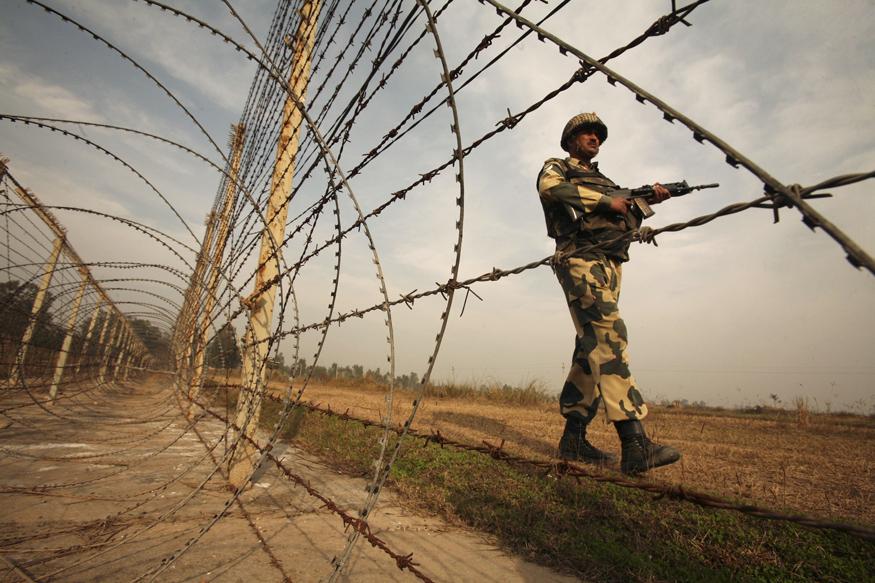
    After discussions between the Director Generals of Military Operations of Pakistan and India, the two sides have agreed to a ceasefire agreement along the Line of Control and all other sectors with effect from midnight of February 24 to 25.

    According to a statement issued by the Inter-Services Public Relations (ISPR), the two Director Generals of Military Operations held discussions over the established mechanism of hotline contact. “The two sides reviewed the situation along Line of Control and all other sectors in a free, frank and cordial atmosphere,” it added.

    Both sides agreed for strict observance of all agreements, understandings and ceasefire along the LoC and all other sectors, with effect from last midnight. Both sides reiterated that existing, mechanisms of hotline contact and border flag meetings will be utilized to resolve any unforeseen situation or misunderstanding.

    During the discussions, both sides reiterated that existing mechanisms of hotline contact and border flag meetings will be utilised to resolve any unforeseen situation or misunderstanding.

    ISPR Director General Major General Babar Iftikhar reportedly said: “There has been contact between India and Pakistan on a hotline level since 1987. Frequently, the DGMOs of both countries stay in contact through this established mechanism.”

    He said that there has been a spike in ceasefire violations along the LoC since 2014. “Both the DGMOs have agreed that the existing 2003 understanding should be implemented in letter and spirit.”

    The discussion between the two armies took place at a time when a large number of ceasefire violations were taking place along the LoC.

  • Senate election: Bilawal says establishment is ‘neutral’

    Senate election: Bilawal says establishment is ‘neutral’

    Pakistan People’s Party (PPP) Chairperson Bilawal Bhutto-Zardari has said that the military establishment is playing a neutral role in the lead up to the Senate elections.

    Addressing a press conference in Lahore, the PPP chief said that his party criticises the state institutions when they act beyond their constitutional role. “It is heartening to see that they are not transgressing their boundaries,” the opposition leader added. He said that if the establishment is neutral, then we should welcome this.

    According to Bilawal, the Pakistan Democratic Movement is giving the “incapable government” a tough time. He said the PDM has aiming to strengthen democracy in Pakistan.

    “The responsibility of the opposition is to fight for the rights of people. Now we have exposed this selected and incapable government not only before the people of Pakistan but also before the entire world. This government tried to carry out massive rigging in the Daska by-election, but was exposed.”

    He thanked PML-N and JUI leadership for accepting PPP candidate Syed Yousaf Raza Gillani as the candidate of PDM for the Senate seat from Islamabad.

    “The march will also begin by the end of the month of March. It is time to say that just one more push is needed for the wall to fall,” he said.