Category: National

  • Terrorist involved in murder of four women killed in Waziristan operation: ISPR

    The security forces have killed a key militant leader who was involved in the killing of four women aid workers in North Waziristan, said the Inter-Services Public Relations (ISPR) in a statement on Tuesday.

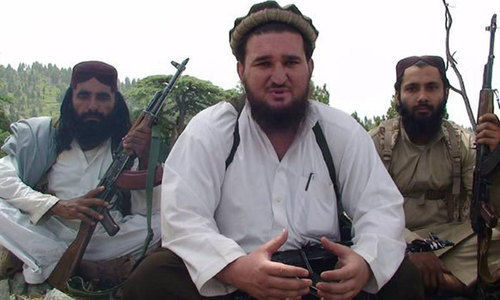
    Commander of militant outfit Tehreek-e-Taliban Pakistan (TTP) Hassan alias Sajna was killed in a security operation in the restive district near the Afghan border, the army said.

    The statement said Sajna was involved in the Monday morning killing of four aid workers associated with a local women’s skills development program in Mirali, a town in North Waziristan.

    Security forces conducted an intelligence-based operation in Mirali and killed militant commander Sajna of the TTP’s Hafiz Gul Bahadur group during an exchange of fire, it was quoted by Anadolu Agency as saying.

    Bahadur, who is believed to have been operating from Afghanistan, is leading his own militant group within the TTP.

    Sajna, the statement said, remained involved in terrorist activities against the security forces and civilians, including “bomb blasts, kidnapping for ransom, target killings, and extortion,” in addition to the recruitment of terrorists.

    North Waziristan — once dubbed the heartland of militancy — is one of seven former semi-autonomous tribal regions in Pakistan where the army has carried out a series of operations since 2014 to eliminate the TTP network.

    Successive operations have pushed the TTP towards neighboring Afghanistan and Islamabad claims the terrorist network has now set up bases across the border to attack Pakistani security forces.
  • Speaker Asad Qaiser lauds Shehzad Roy for his efforts against corporal punishment

    In a move welcomed by child rights organisations, the National Assembly on Tuesday passed The ICT Prohibition of Corporal Punishment Bill prohibiting corporal punishment in the capital, setting punishments for people physically punishing children.

    Speaker National Assembly Asad Qaiser lauded singer Shehzad Roy for his efforts against corporal punishment.

    The proposed law will cancel out the provisions of Section 89 of the Pakistan Penal Code, which allows physical punishment “for the benefit” of the child by guardians and teachers.

    Section 89 of the Pakistan Penal Code:

    Section 89 of the Pakistan Penal Code 1860 (No XLV) allows parents, teachers and other guardians to use moderate and reasonable corporal punishment as a means to correct the behaviour of children below 12 years of age.

    The bill was tabled by PML-N MNA Mehnaz Akbar Aziz. It will become a law after the Senate passes it and the president signs it.

    Last year, The Islamabad High Court (IHC) suspended Section 89 of the Pakistan Penal Code (PPC) and banned the practice of corporal (physical) punishment by parents, guardians and teachers on children. The decision was announced after singer-activist Shehzad Roy filed a petition in court to ban the use of violence to discipline children.

  • ‘Multiple’ army officials complicit in terrorist Ehsanullah Ehsan’s escape, says ISPR DG

    ‘Multiple’ army officials complicit in terrorist Ehsanullah Ehsan’s escape, says ISPR DG

    Pakistan Army spokesperson Major General Babar Iftikhar has said that former Tehreek-e-Taliban Pakistan mouthpiece Ehsanullah Ehsan had managed to escape the custody with the help of “more than one army officials”.

    According to a report in Independent Urdu that quotes Gen Iftikhar, the military is in the process of fixing responsibility in the case. “The details of the proceedings [against the accused] would be shared with the media soon,” the Inter-Services Public Relations (ISPR) chief said in a conversation with the reporters of foreign media outlets.

    Last week, a Twitter handle, now suspended, allegedly operated by Ehsanullah Ehsan threatened Pakistani Nobel laureate Malala Yousafzai. Malala had responded to the tweet, asking the military’s media wing and PM Imran as to how did the Ehsan even escape.

    The government had denied that the account belonged to the infamous terrorist, but Ziauddin Yousafzai, father of Malala, asserted that it was the Twitter handle of the ex-TTP spokesperson. Ehsanullah had also confirmed this in an audio message to BBC Urdu, saying his account was suspended over threats to Malala but he would come back with a new Twitter handle soon.

    However, the ISPR DG told reporters that he doesn’t think the account belonged to the ex-TTP spokesperson. “The attempts are being made to arrest the Taliban spokesperson, but at present, we have no idea where is he hiding,” he was quoted by the outlet as saying.

    Ehsan is infamous for issuing claims of carrying out TTP attacks and has been linked to some of the country’s most deadly incidents of terror. These include the massacre of children at Army Public School (APS) Peshawar, bombing at a park in Lahore on Easter in 2016, and the targeting of Malala.

    He surrendered to authorities in 2017 and later gave interviews to a Pakistani TV channel, leading to criticism and controversy that a terrorist was given airtime. It angered many in the country who believed he was being pampered by authorities after years of helping lead a violent insurgency. Ehsan mysteriously escaped custody last year, which, according to SAMAA, was also confirmed by the army.

  • PM offers Sri Lanka to join CPEC, says trade links vital to eradicate poverty

    PM offers Sri Lanka to join CPEC, says trade links vital to eradicate poverty

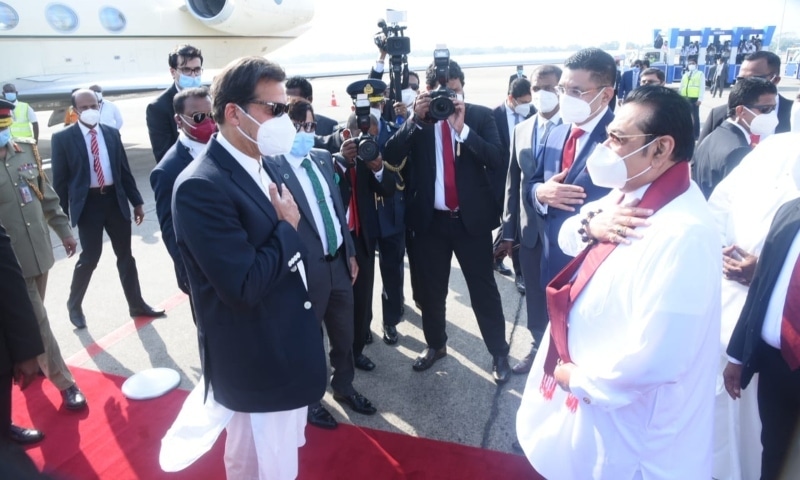
    Prime Minister Imran Khan on Wednesday invited the Sri Lankan businessmen to invest in Pakistan, saying trade connectivity among the countries of the Asian sub-continent was vital for poverty alleviation.

    Addressing the Pakistan-Sri Lanka Trade and Investment Conference held in Colombo which he jointly chaired with his Sri Lanka counterpart Mahinda Rajapaksa, Imran proposed establishing trade links, as existed among the European countries, for the prosperity of the Asian sub-continent.

    The PM also urged the Sri Lankan government to become part of the China-Pakistan Economic Corridor (CPEC), saying joining the Belt and Road Initiative could open up new avenues for Sri Lanka with an opportunity to establish trade links with the Central Asian states via Gwadar.

    The PM, who is in Colombo on a two-day official visit, said political stability in the region by maintaining good relations with neighbouring countries would ensure a business-friendly environment.

    He said Pakistan and Sri Lanka could explore the idea of generating wealth through joint business activities and diverting the wealth to alleviate poverty. Imran offered the Sri Lankan businessmen to explore the immense opportunities offered by the government of Pakistan in the form of ease-of-doing business. He said his government would welcome and facilitate investment from the island nation.

    The PM mentioned that as Pakistan and Sri Lanka both suffered the brunt of terrorism in the past, their journey together towards development could make a difference. He expressed intent for Pakistan to learn from Sri Lanka’s advanced tourism industry and mentioned that he made the tourism minister part of his delegation to explore the area.

    Imran said Pakistan has a lot of undiscovered sites of religious tourism, including the Gandhara civilization. He added that a recently discovered 40-feet-long Sleeping Buddha could be of special interest for Sri Lankan tourists.

    In an effort to maintain good relations with neighbouring states, Imran Khan recalled his offer to Indian Prime Minister Narendra Modi for a dialogue to resolve all outstanding issues including the Kashmir dispute. To encourage trade ties with neighbours, he said, “maintaining amiable relations and living like civilized nations must be a priority”.

    Imran Khan emphasized that with 1.3 billion people, the South Asian region needed to resolve its mutual conflicts through dialogue for sustainable prosperity.

    On Tuesday, Pakistan and Sri Lanka agreed to further strengthen bilateral relations in diverse areas, including trade, investment, science and technology, and culture, as Prime Minister Imran Khan urged the Sri Lankan counterpart to become part of the CPEC.

    “My visit is aimed at strengthening bilateral relationship [with Sri Lanka], especially trade and economic ties through enhanced connectivity…,” Prime Minister Imran Khan said while addressing a joint press conference with his Sri Lankan counterpart Mahinda Rajapaksa after holding one-on-one and delegation-level talks.

  • No one, including Gen (r) Asim Bajwa, above law: Alvi reacts to corruption allegations against CPEC chairman

    No one, including Gen (r) Asim Bajwa, above law: Alvi reacts to corruption allegations against CPEC chairman

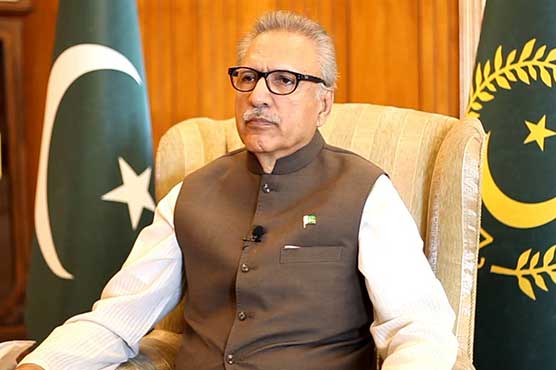
    President Arif Alvi has said the National Accountability Bureau (NAB) should take notice of corruption allegations against former chief military spokesperson and China-Pakistan Economic Corridor (CPEC) Chairman Asim Saleem Bajwa as no one is above the law.

    https://twitter.com/SpotlightAajtv/status/1364265897221791745

    The president made these comments in response to a question by Aaj TV host Munizae Jahangir over rampant corruption in Pakistan. The president said that Pakistan has suffered due to corruption over the past 70 years, adding that his government’s focus should be on curbing corruption. “I am very serious about it; it is very painful for me,” the president said.

    At this, the host asked about allegations against Gen Bajwa, saying the opposition has accused the government of refusing to take action against the ex-general despite graft allegations. The president responded that if the general is accused of corruption then there should be a probe against him.

    “Who will launch this investigation?” asked Jahangir. “NAB [National Accountability Bureau] should,” Alvi responded.

    “No one is above the law, even Prime Minister Imran Khan,” Alvi said, adding that as the president of Pakistan he will never endorse corruption.

    The president also talked about defence budget, saying this has strengthened Pakistan over the years. “The budget has decreased compared to inflation,” the president claimed.

    “In principle, you agree that parliament should debate the defence budget and that everyone accused of corruption, whether it is a bureaucrat, a politician or a general, must be held accountable,” the host asked. “I fully agree [with you],” said the president, adding that parliament is the supreme authority to discuss such matters.

  • Daska by-polls: RO proposes re-polling at 14 stations over discrepancies in results

    Daska by-polls: RO proposes re-polling at 14 stations over discrepancies in results

    Daska (NA-75) by-polls Returning Officer Athar Abbas has proposed re-polling at 14 stations, saying the presiding officers were seemingly involved in tampering with the final result.

    During his appearance before the Election Commission of Pakistan committee on Tuesday, Abbas said that the initial investigation has revealed that the presiding officers manipulated the result. The ECP has taken up a plea filed by PML-N candidate from the constituency Nousheen Iftikhar. The five-member bench which heard the case was headed by Chief Election Commissioner (CEC) Sikandar Sultan Raja.

    According to the PML-N candidate, she got 5,000 votes from the contested polling stations against PTI leader Ali Asjad Malhi’s 6,705 votes. The number of rejected votes was 139 and turnout remained at 45.16 per cent.

    Whereas, the form-45 sent in by presiding officers after a delay of six hours showed that the vote gap between the PML-N and PTI candidates was 9,263 instead of 1,705. The form puts the number of rejected votes at 1,731 and the turnout at 75.34pc.

    The RO’s report quoted by Dawn said at least 20 presiding officers went missing for an entire night after the vote count at their station. It added that the presiding officers also appeared before the ECP panel after much delay.

    “The replies of almost all the presiding officers were stereotype that they were able to complete the counting process by 10 to 10.30pm and started back journey to the office of returning officer on the transport provided by the Election Commission and in escort of police but due to fog, they reached the office of returning officer at about 4.30am and most of them stated their phone batteries were low and they were having no chargers, in response to the questions that they were supposed to send snapshots of the result of the count through WhatsApp but they did not do the same,” the report read.

    As per the report, there was no discrepancy in the record of three out of 23 polling stations from where the presiding officers had disappeared. The returning officer has proposed re-polling at 14 polling stations were there was a marked difference between the number of polled votes in two different sets of form-45.

    On Friday, at least two people were shot dead as a result of firing at the polling place. Both the Pakistan Muslim League-Nawaz and the Pakistan Tehreek-e-Insaf (PTI) had alleged irregularities during the by-election on the National Assembly seat in Daska. Subsequently, the ECP withheld the results, saying it suspected irregularities in 20 polling stations.

    The commission had said results of the NA-75 constituency were received with “unnecessary delay”, adding that it tried to contact the presiding officers several times but with no success.

    In the backdrop of these allegations, the PM, in a series of tweet on Monday night, reaffirmed his pledge to hold transparent elections in Pakistan. “Have always struggled for fair & free elections. So even though there is no legal compulsion to do so before ECP announces results, I would request our PTI candidate to ask for re-polling in the 20 polling stations Opposition is crying hoarse over in the Daska NA 75 by- election,” Imran had tweeted.

  • UK councillor suspended for attending wedding in Pakistan amid COVID

    UK councillor suspended for attending wedding in Pakistan amid COVID

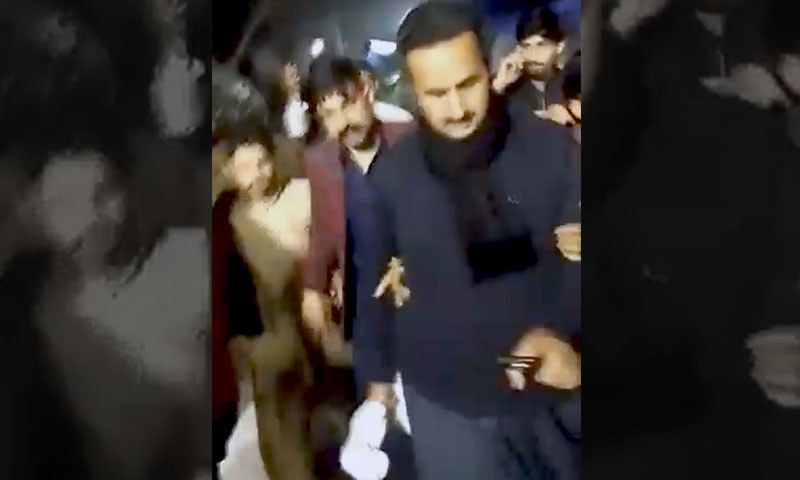
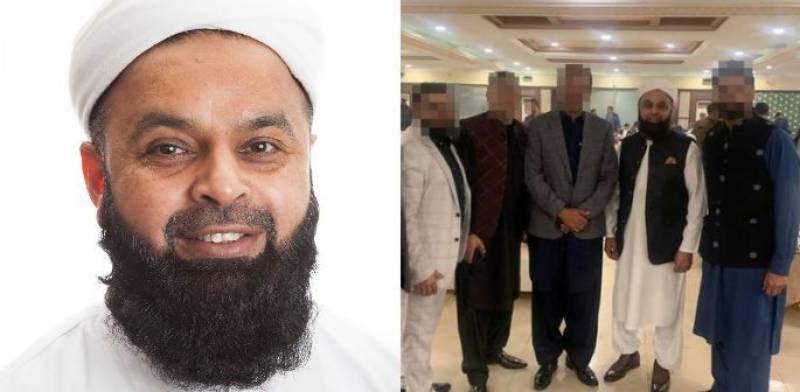
    The United Kingdom’s Labour Party has suspended Whalley Range councillor Aftab Razaq for violating coronavirus protocols after he attended a wedding in Pakistan.

    BBC reported that photos were shared on Facebook last weekend allegedly showing Manchester City Councillor Aftab Razaq at the celebration in the city of Kharian. Under the current COVID-19 rules in the UK, it is illegal to travel abroad for holidays and other leisure purposes.

    Councillor Pat Karney, secretary of Manchester Labour, explained that he would “thoroughly investigate the matter”. He told BBC that the Labour group had seen the photographs but “despite their best efforts”, they have not been able to contact the Whalley Range councillor who was vaccinated against COVID in Jan 2021.

    “All Manchester councillors must rigorously abide by Covid regulations and we will take action against any individual who does not,” Karney told BBC.

  • Karachi police pop their rollerblades on to catch criminals

    Karachi police pop their rollerblades on to catch criminals

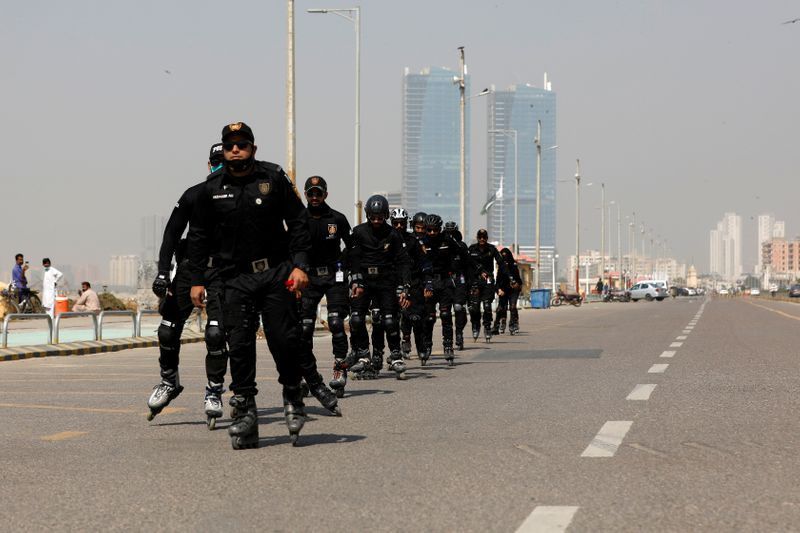
    Police in Karachi are deploying an armed rollerblading unit to curb theft and harassment on the teeming streets of the port city.

    Gliding in a circle with their weapons pointed inwards, and lifting and lowering the guns in unison, the 20-member unit clad in black undergoes rigorous training.

    “We felt we needed to come up with an innovative approach to control street crime,” said Farrukh Ali, chief of the unit, explaining that officers on rollerblades could more easily chase thieves on motorcycles through the city of 20 million.

    Ali conceded that rollerblading police could not be deployed across many parts of Karachi due to the poor road conditions and uneven footpaths, but said they would be sent to public places with a higher incidence of theft and harassment.

    “This is just the beginning,” said Aneela Aslam, a policewoman on the unit. “This rollerblading will really benefit us. With this training, we can reach narrow alleys very quickly where it is usually difficult to go.”

    Safety concerns were raised when initial footage of the Karachi unit’s training showed officers carrying heavier weapons, but Ali said the unit would only carry handguns, reducing the risk of bullets richocheting.

    The rollerblading police – who follow in the footsteps of similar units in Europe and elsewhere – are expected to begin officially next month, but they were recently spotted outside the venue of the Pakistan Super League cricket tournament.

    And they have already begun patrolling Karachi’s bustling beachfront.

    “Seeing them here in clean uniforms since the morning gives us a sense of security, as even in daytime, snatchings occur here,” said pedestrian Muhammad Azeem.

  • Broadsheet ends up paying £20,000 to Sharifs in London lawsuit

    The company hired by Pakistan to trace assets of the Sharif family in London, Broadsheet LLC, has ended up paying £20,000 (Rs4.5 million or Rs45 lacs) to the Sharifs in the lawsuit before the London High Court, Geo News reported.

    According to reports, Broadsheet has made the payment for the settlement of the Sharif family’s legal costs after having withdrawn the Avenfield Apartments attachment application for the seizure and sale of four Avenfield Apartments in the Broadsheet vs Pakistan/National Accountability Bureau (NAB) case.

    Lawyers acting for the Sharif family have confirmed that the payment has been received in their bank account whereas Broadsheet’s lawyers have also confirmed making the payment.

    Sharing the development on Twitter, Maryam said those who had gone to identify corruption, ended up paying Rs4.5 million to save themselves.

    “Nawaz Sharif had left it up to Allah,” she tweeted, adding that Prime Minister (PM) Imran Khan and his team will also have to “pay their fines” that will be from their own pockets and not the treasury.

  • Countrywide blackout caused by human error, NA body told

    Countrywide blackout caused by human error, NA body told

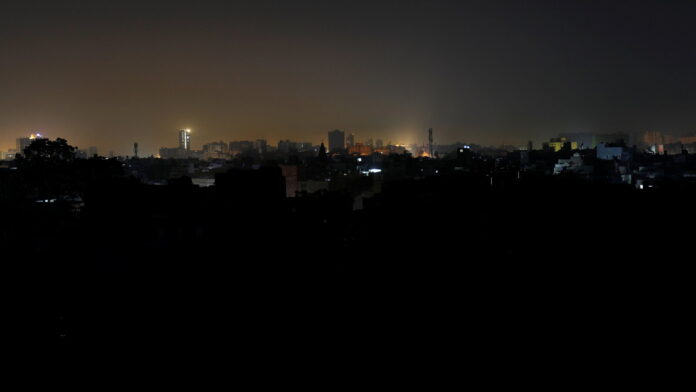
    The inquiry committee probing last month’s countrywide blackout has held officials of the Guddu Thermal Power Plant responsible for the nationwide power outage.

    “The problem occurred due to a human error at the Guddu power station. The error led to the tripping of the entire power system. The fault occurred as some officials did not follow standard operating procedures (SOPs) during the maintenance work,” said Secretary Power Ali Raza Bhutta while briefing the members of the National Assembly Standing Committee on Energy.

    “Due to a mistake, the Guddu Thermal Power Plant tripped and there was a complete blackout. At the time of the blackout, the power consumption in the country stood at 10,000 megawatts,” he added.

    The entire country plunged into darkness on January 9 after the National Transmission and Despatch Company (NTDC) power system got hit by a major breakdown due to the tripping around midnight.

    Moreover, Netblocks monitor internet outages had said that internet connectivity in the country collapsed as a result of the blackout.

    The power secretary further said that “the officials of Guddu Thermal Power Plant along with those who have not improved the NTDC system are nominated by the inquiry committee for investigation. The committee has proposed to take measures to ensure that the failure of one plant does not trip the entire system in future”.

    On January 10, the government had blamed the old transmission system for the breakdown. Energy Minister Omar Ayub Khan had said that “during the past tenures, no attention was paid to the improvement of the transmission system on modern lines. Under the government of Pakistan Muslim League-Nawaz (PML-N), the country saw eight major power breakdowns”.

    “When the incumbent government assumed office, no work had been done to upgrade the transmission system. We are now investing in the transmission and distribution system. A $6 billion transmission line has been laid in Matiari,” added the minister at the time.

    So far, nine energy projects have been completed under the China Pakistan Energy Corridor (CPEC), contributing 5340 MW of electricity to the main grid, which would meet the vital needs for industry, agriculture, and domestic consumers.

    Out of 22 projects, another eight are about to be completed and would pump in an additional 4470 MW of electricity to the national grid. Another five projects are in the planning and implementation phase.