Category: National

  • Pak-Saudi pact: Islamabad to sign defence cooperation agreements with UAE, Qatar?

    Pak-Saudi pact: Islamabad to sign defence cooperation agreements with UAE, Qatar?

    A South Asia security researcher at the University of Technology Sydney, Muhammad Faisal, has said that the Strategic Mutual Defence Agreement (SMDA) between Pakistan and the Kingdom of Saudi Arabia (KSA) could serve as a template for Islamabad to engage in similar bilateral defence cooperation pacts with the United Arab Emirates (UAE) and Qatar.

    “In the immediate term, this agreement will consolidate and formalise multi-prong defence cooperation already underway, and new avenues to expand it via joint trainings, defence production and potential expansion of Pakistani troops contingent in Saudi Arabia will be explored,” Al Jazeera quoted Faisal as saying.

    “These events [Israeli strikes in Iran and Doha] have exacerbated security anxieties of the Gulf states while jeopardising confidence in the US security umbrella as the ultimate shield. As Gulf states look to bolster their security, regional countries such as Pakistan, Egypt and Turkiye emerge as natural partners,” he added.

    The statement came as Pakistani Defence Minister Khawaja Asif said “the door had not been closed” and there was a possibility of other countries joining the Pakistan-Saudi Arabia security pact.

    “It is too early to speak of other countries joining the agreement; the door has not been closed,” the defence czar said.

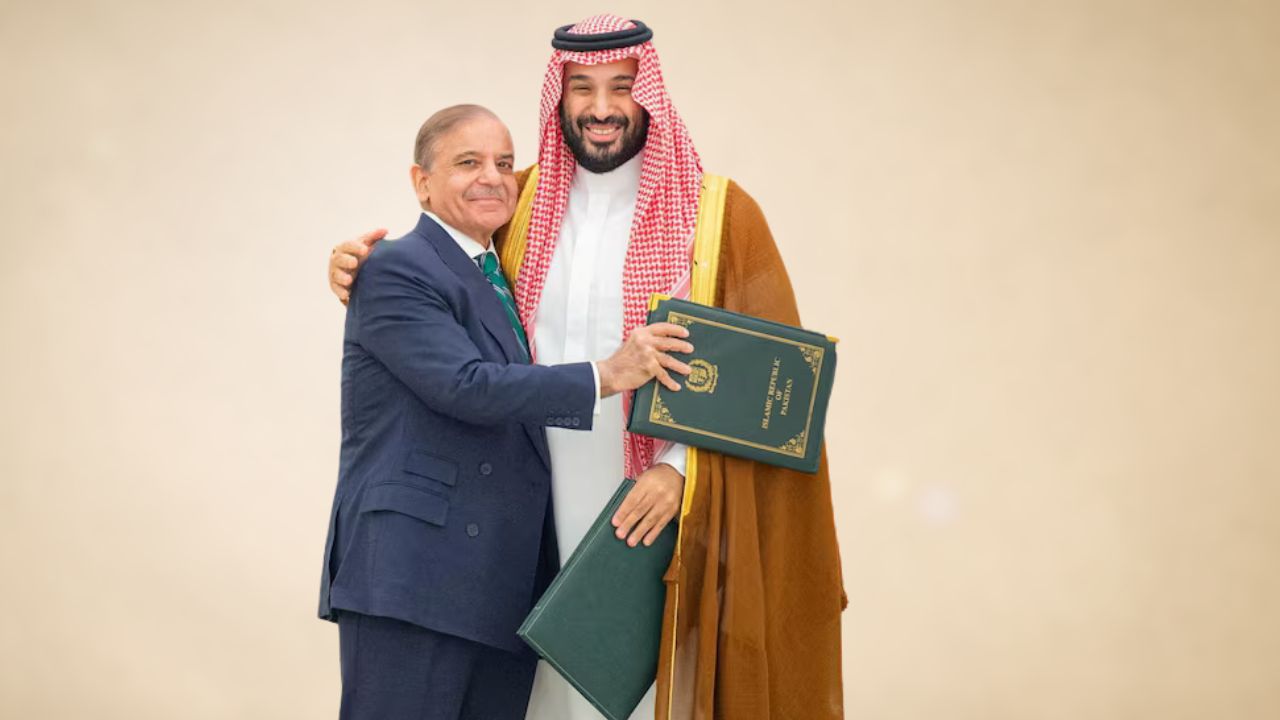
    Asif was appearing on a private media outlet a day after the Prime Minister’s Office (PMO) late Wednesday night announced the signing of the agreement, stating that “any aggression against either country shall be considered an act of aggression against both”.

    “This agreement, which reflects the shared commitment of both nations to enhance their security and to achieve security and peace in the region and the world, aims to develop aspects of defence cooperation between the two countries and strengthen joint deterrence against any aggression,” read a statement issued by the PMO.

    It may be noted that the agreement was signed after Israel’s illegal strikes on Qatar, bordering Saudi Arabia, on September 9, mounting security concerns and a lack of trust in the US’ ability to keep Israel on a leash by Gulf countries.
  • PTI distances itself from petition seeking conjugal rights for jailed Imran Khan, wife

    PTI distances itself from petition seeking conjugal rights for jailed Imran Khan, wife

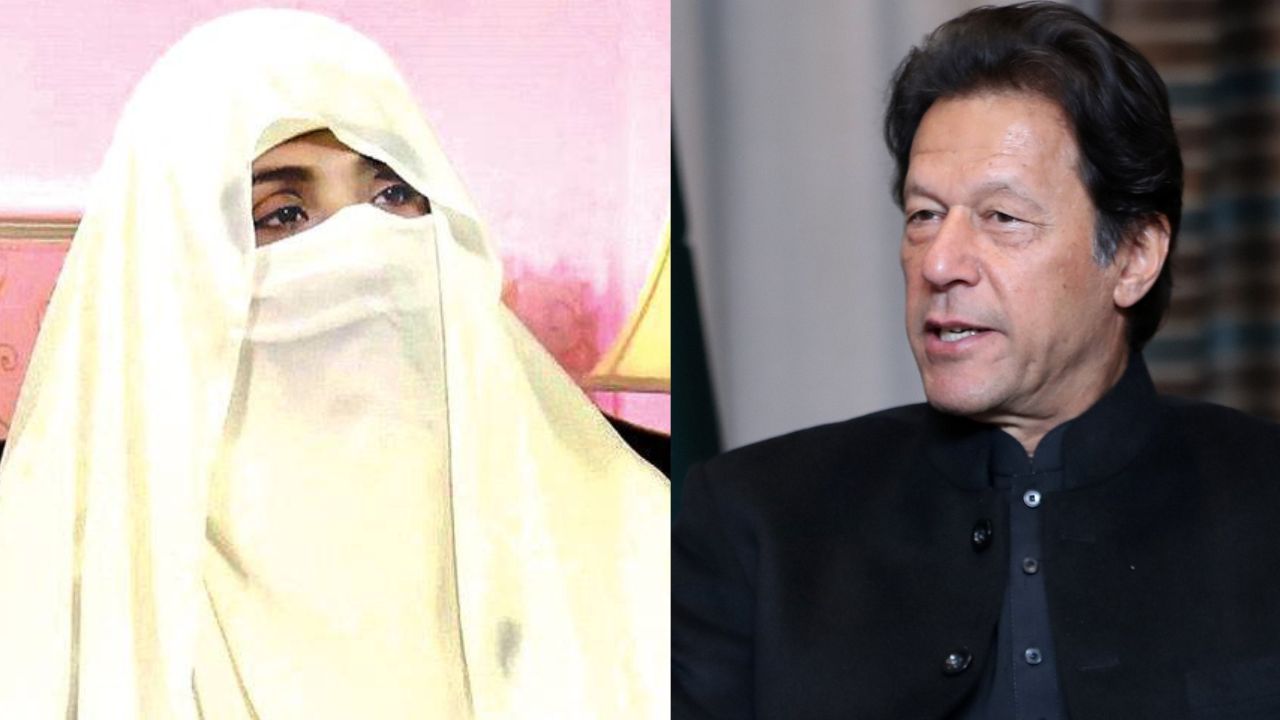
    Pakistan Tehreek-e-Insaf (PTI) has condemned and dissociated itself from a petition for conjugal rights recently filed in the Islamabad High Court (IHC) in the name of incarcerated former premier Imran Khan and his spouse Bushra Bibi.

    “PTI, with deep regret and grave concern, clarifies that the petition filed in the Islamabad High Court under the names of former Prime Minister Imran Khan and his respected wife, Bushra Bibi, regarding ‘Conjugal Rights’ has no connection whatsoever with Imran Khan, Bushra Bibi, their family, PTI, or their legal team,” said the PTI central information department in a statement issued on Friday.

    The statement further noted that the petition was filed by an individual named Shahid Yaqoob, who has no association with Imran Khan, his family, or any member of PTI. 

    In the statement, PTI declared the act “utterly deplorable, obscene, and vile,” adding that the party considers it not only morally unacceptable but also lacking any political or legal basis.

    “PTI strongly condemns such activities and requests the public and media not to associate any unverified claims in this matter with PTI or its leadership.”

    The statement concluded by clarifying that the defence of the rights and dignity of Imran Khan and his wife is being undertaken by PTI and their legal team, and “this shameful and condemnable act by an unrelated party is disgraceful”.

    The petition was filed on Friday under Article 199 of the Constitution by Yaqoob, a resident of Islamabad and a supporter of Khan, in the IHC, seeking permission for the founder of PTI and Bushra Bibi to exercise their conjugal rights while confined in Adiala Jail, Rawalpindi.

    In the petition, Yaqoob argued that denying conjugal rights violates constitutional protections, international conventions, and previous court rulings. The plea referred to the UN Standard Minimum Rules for the Treatment of Prisoners (Nelson Mandela Rules), the International Covenant on Civil and Political Rights, and the European Convention on Human Rights, all of which safeguard the right to family life.

    The petitioner also cited a 2010 notification issued by the Sindh Home Department, following Supreme Court directions, which allowed convicted prisoners to have conjugal visits every three months.

    It further relied on the Federal Shariat Court’s landmark judgement that recognised conjugal rights for prisoners as a fundamental entitlement and requested the IHC to order the implementation of SC and Federal Shariat Court directives.

  • Girls shine, Punjab Group of Colleges among private colleges dominate Intermediate Part II results

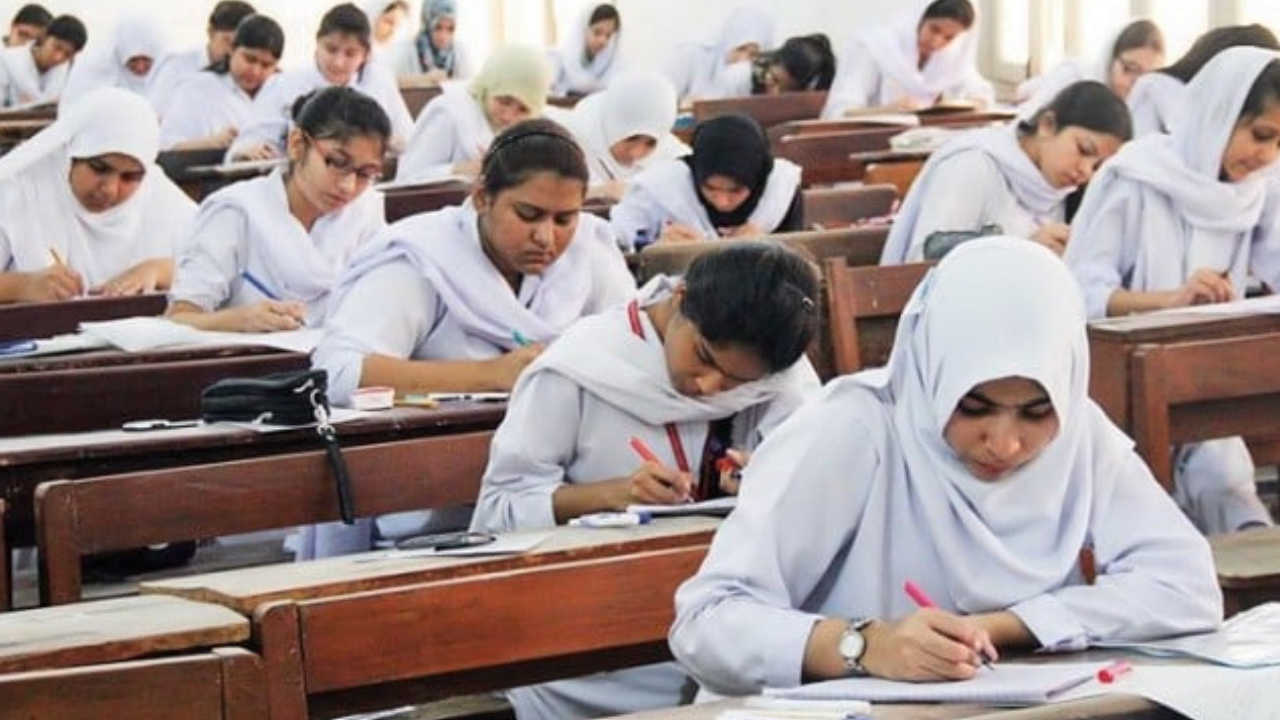
    Girls shine, Punjab Group of Colleges among private colleges dominate Intermediate Part II results

    In affirmation of academic excellence, private colleges have emerged as a dominant force, securing 283 of the top 335 positions in the 2025 Punjab Boards Intermediate Part II results that were officially unveiled on September 18.

    As per the details, private colleges secured an impressive 84% share in top positions announced by ten Boards of Intermediate and Secondary Education (BISEs), including Lahore, Faisalabad, Gujranwala, Multan, Rawalpindi, Sargodha, Bahawalpur, Sahiwal, Dera Ghazi Khan and the federal board.

    Among them, Punjab Group of Colleges (PGC) stood out as the undisputed leader, clinching 143 top spots, which accounts for 51% of all private educational institutions positions.

    Meanwhile, the passing percentage in Lahore stood at 60.86% in the board-wise result analysis. The same was reported as 73.71% in Faisalabad, 63.10% in Gujranwala, 68.83% in Sargodha, 54.12% in Rawalpindi, 63.54% in Multan, 63.53% in Bahawalpur and 58.88% in Sahiwal. As many as 74.86% students passed in Dera Ghazi Khan and 81.10% in the federal board.

    Government and semi-government institutions, by comparison, secured 52 positions, making it 16%.

    Female students once again outshone their male counterparts across all academic streams, both regular and private. This consistent trend reinforces the growing academic prowess of young women in Punjab and highlights the shifting dynamics in educational achievements.

    With girls leading the charge and private institutions setting new standards, the 2025 results paint a promising picture for the future of education in the province.

  • Lahore reports first locally-transmitted mpox case

    Lahore reports first locally-transmitted mpox case

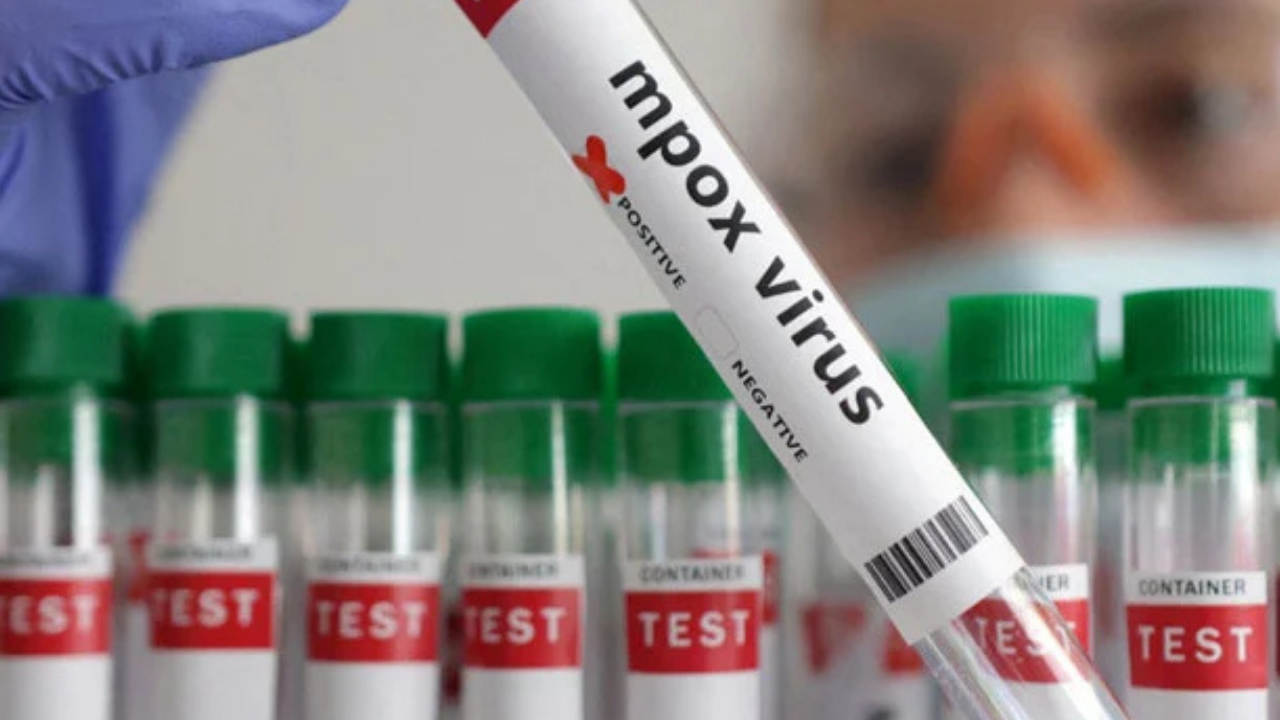
    Health officials in Lahore have reported the city’s first case of Mpox after a 48-year-old patient tested positive. 

    The individual, who had a liver transplant in 2021, was admitted to Lahore General Hospital (LGH) three days ago due to symptoms that led doctors to request further testing. His samples were sent to the Institute of Public Health (IPH) that confirmed the infection.

    According to LGH Medical Superintendent Dr Faryaad Hussain, the patient’s medical background, including a weakened immune system post-transplant, had heightened his vulnerability to infections. He added that the patient was currently under medical care and hospital staff were adhering to protocols to mitigate the risk of transmission. 

    What has alarmed health officials is that the patient has no history of international travel. 

    Dr Hussain said that health teams have been dispatched to trace the patient’s contacts to determine how he may have contracted the illness. The case is being explored as a potential instance of local transmission. 

    Representatives from the health department said that the patient was receiving treatment in isolation and that his condition was being closely monitored. They also said that precautionary measures were being implemented throughout the facility to safeguard other patients and staff. 

    Mpox, often referred to as Monkeypox, is a viral illness that spreads through close physical contact. It typically manifests with symptoms such as fever, rash and swollen lymph nodes. While Pakistan has experienced isolated cases linked to travel in recent years, this latest case is the first confirmed in Lahore without any foreign connection. 

    Public health officials said that surveillance efforts are being enhanced in the city to detect any potential additional cases. They urged residents to stay vigilant for symptoms and to seek medical attention if they exhibit signs consistent with the disease.

    It may be noted that mpox is treatable through supportive care to manage symptoms with antiviral medications used for severe cases. Though there is no specific cure, most people recover within two to four weeks with supportive care like pain relievers and rest.

    Antiviral treatment may be recommended for individuals at higher risk of severe illness, such as those with compromised immune systems.

  • US wants Bagram airbase back from Taliban, says Trump

    US wants Bagram airbase back from Taliban, says Trump

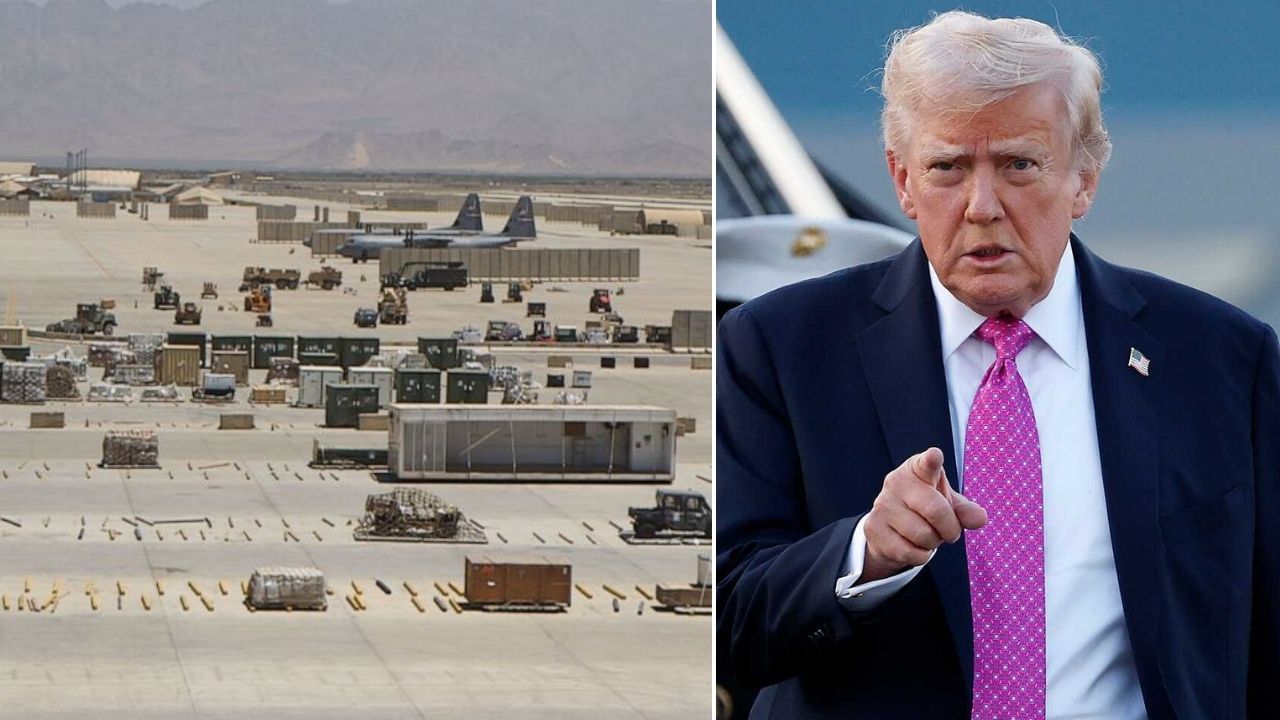
    President Donald Trump said on Thursday that the United States (US) is seeking to take back Bagram air base, located in Afghanistan.

    The Soviet-era airstrip served as the primary base for US forces in Afghanistan from shortly after the September 11, 2001, attacks at the World Trade Centre until their withdrawal in August 2021.

    The US military death toll in the Afghan war since 2001 was about 2,500. Soon after the US pullout, Taliban fighters regained control of Kabul in August 2021.

    During a joint news conference with British Prime Minister (PM) Keir Starmer at Chequers in London, President Trump said, “One of the biggest airbases in the world. We gave it to them for nothing. We’re trying to get it back, by the way.”

    “We’re trying to get it back because they need things from us. We want that base back. But one of the reasons we want the base is, as you know, it’s an hour away from where China makes its nuclear weapons,” he added.

    Criticising his predecessor, Democrat President Joe Biden, over the tumultuous US withdrawal from Afghanistan during his era, President Trump claimed that it left American weapons and other military assets, including bases, in the hands of the Taliban.

    Meanwhile, regarding the Ukraine-Russia conflict, he said that he had thought the Ukraine war would be solved “within days” of his entering the White House.

    “The one that I thought would be easiest … because of my relationship with President Putin, but he’s let me down. He’s really let me down … I thought it might be among the easiest of the group,” President Trump lamented.

    When pressed to tell whether he is ready to impose additional sanctions on Russia, President Trump claimed that Europe needed to take action first to end oil purchases from Russia.

    “If the price of oil comes down, Putin’s going to drop out. He’s going to have no choice,” he said, adding, “I’m willing to do other things, but not when the people that I’m fighting for are buying oil from Russia.”

  • ‘Pakistan is in a very good place’: South Asia analyst on Islamabad-Riyadh defence pact

    ‘Pakistan is in a very good place’: South Asia analyst on Islamabad-Riyadh defence pact

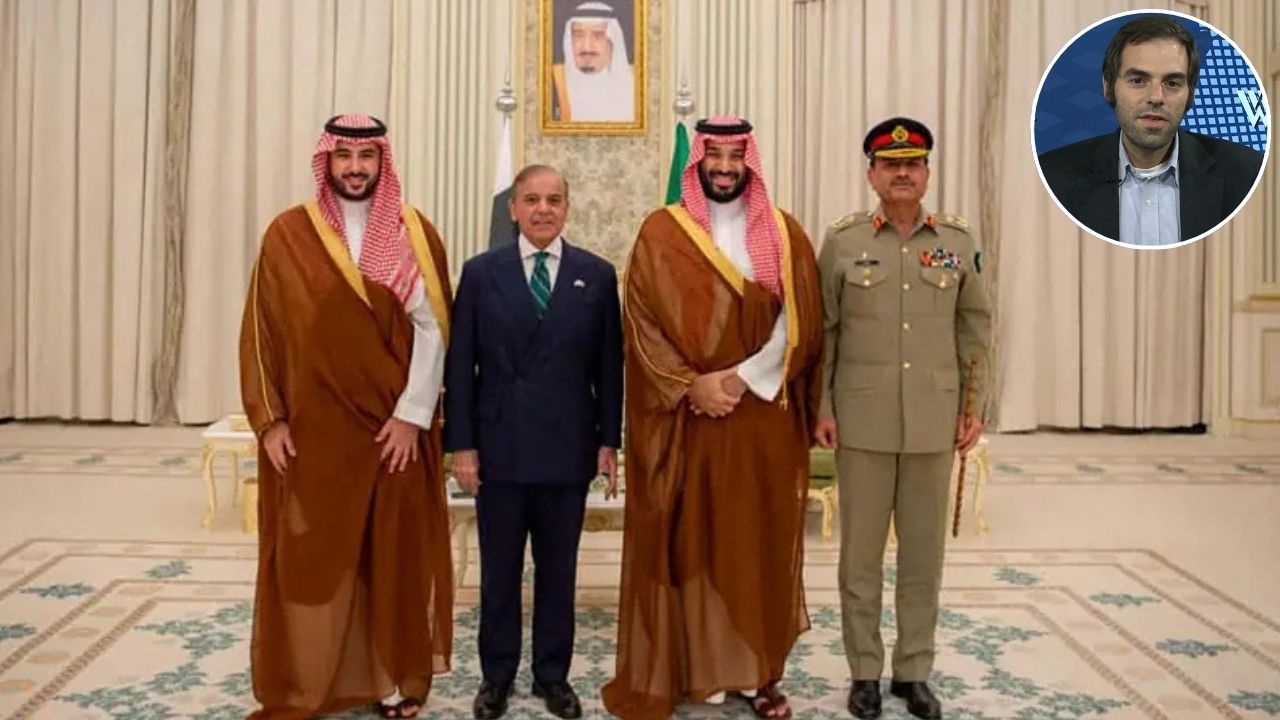
    South Asia Analyst and writer Michael Kugelman has said that “Pakistan is in a very good place” as Islamabad and Riyadh on Wednesday signed a formal mutual defence pact.

    The signing of the pact was announced in a statement issued from the Prime Minister’s Office (PMO) late Wednesday, stating that “any aggression against either country shall be considered an act of aggression against both”.


    “This agreement, which reflects the shared commitment of both nations to enhance their security and to achieve security and peace in the region and the world, aims to develop aspects of defence cooperation between the two countries and strengthen joint deterrence against any aggression,” the statement read.

    The statement further said that the agreement was signed based on the “historic partnership extending for nearly eight decades … based on the bonds of brotherhood and Islamic solidarity, … shared strategic interests and close defence cooperation”, between Islamabad and Riyadh.


    The development came a week after illegal Israeli strikes on Qatar heightened security concerns in the Middle East and months after Pakistan shot down six Indian fighter jets, including three French-made Gen 4.5 Rafales on the night of May 6 and 7 during the conflict with India. 

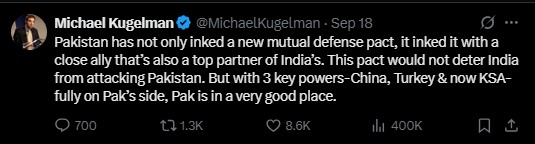
    “Pakistan has not only inked a new mutual defence pact, it inked it with a close ally that’s also a top partner of India’s. This pact would not deter India from attacking Pakistan. But with 3 key powers-China, Turkey & now KSA (Kingdom of Saudi Arabia)—fully on Pak’s side, Pak is in a very good place,” said Kugelman in a post on X (formerly Twitter) on Thursday.

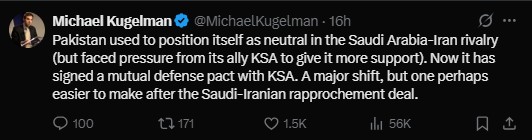
    In another post on the same day, the analyst maintained that Islamabad used to position itself as “neutral in the Riyadh-Tehran rivalry”; however, it faced pressure from its ally, Saudi Arabia, to give it “more support”.

    Declaring the defence pact signed between Pakistan and Saudi Arabia “a major shift” of the latter country’s policy, he said it was “perhaps easier to make after the Saudi-Iranian rapprochement deal”.

  • Islamabad, Beijing agree to operationalise China-Gwadar-Africa corridor

    Islamabad, Beijing agree to operationalise China-Gwadar-Africa corridor

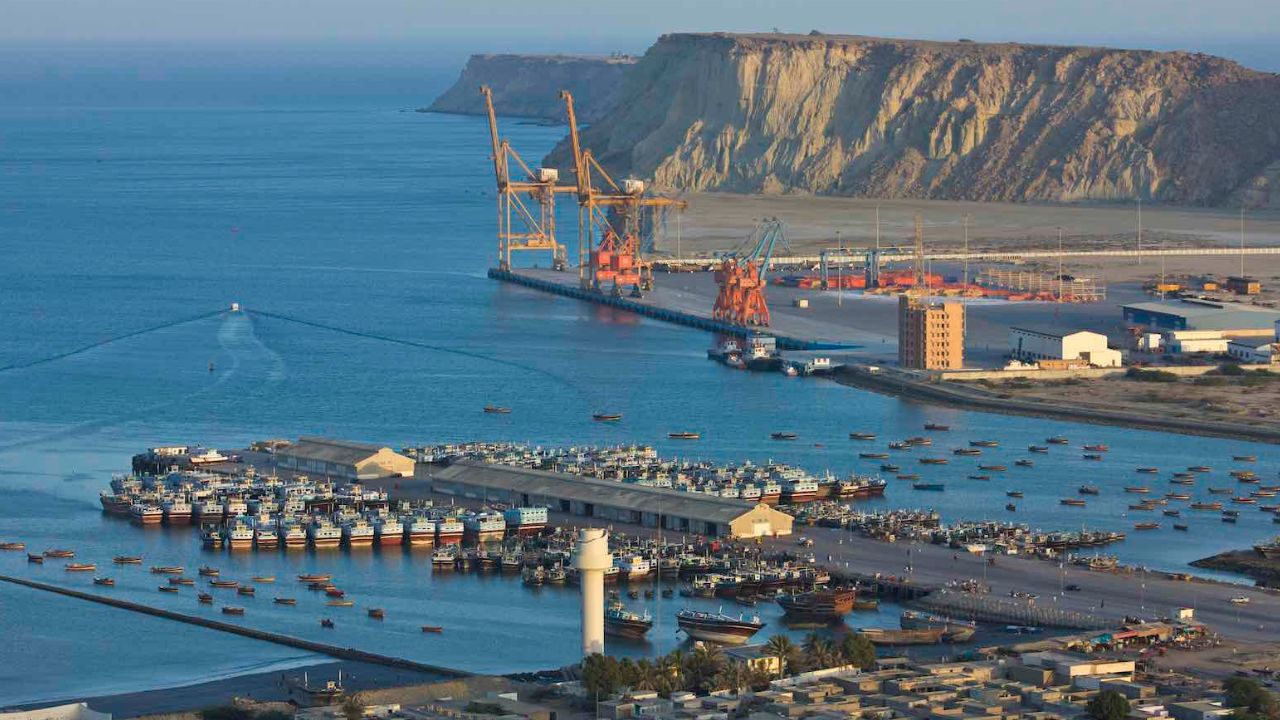
    Pakistan and China have agreed to operationalise the China-Gwadar-Africa shipping corridor under the five-year maritime action plan for 2025-2029, a leading English daily has reported.

    According to reports, five feeder routes and bonded warehouses will also be operationalised for trade expansion.

    While Islamabad and Beijing are set to finalise the action plan aimed at developing a regional trade corridor, Gwadar will be positioned as a model “Green Port”. Feasibility studies will be carried out, and short-route infrastructure will be built alongside enhanced connectivity linking Gwadar with the Islamabad-Türkiye-Iran rail and road corridors.

    Gwadar is to be developed as a trade hub for Central Asian Republics (CARs), Afghanistan and West Asia with expanded transhipment facilities.

    Islamabad and Beijing will also strategise to promote Gwadar Free Zone resource utilisation. A total of 15 industries, including seafood, dates and tuna processing plants, along with petrochemical facilities, will be developed in the North Free Zone.

    Single Point Mooring connectivity will be expanded while car manufacturing plants and other industries are expected to be relocated from China.

    Memorandums of Understanding (MoUs) will be signed with Pakistani business entities for the operationalisation of Gwadar Port and Free Zone through joint cooperation and collaboration.

    Additionally, Pakistan and China will launch blue economy training for 1,000 locals in fisheries, aquaculture and logistics at the Gwadar Blue Economy Centre. These initiatives are projected to generate 25,000 jobs with a 30 per cent contribution to Gwadar’s Gross Domestic Product (GDP) by 2027.

  • ‘Terrorist groups from Afghanistan pose gravest threat,’ Pakistan tells UNSC

    ‘Terrorist groups from Afghanistan pose gravest threat,’ Pakistan tells UNSC

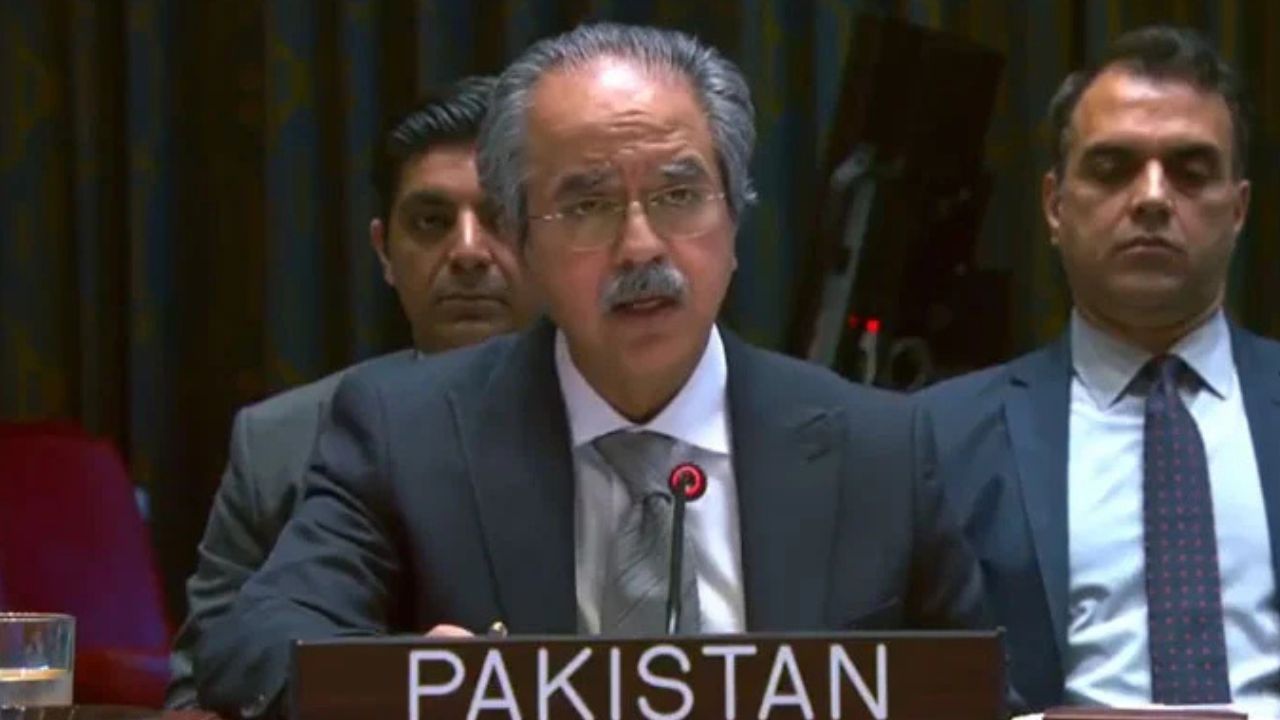
    Pakistan has told the United Nations Security Council (UNSC) that terrorist groups operating from sanctuaries inside neighbouring Afghanistan remain the gravest threat to its national security, calling on the issue to be addressed as a priority for regional peace.

    Speaking at the council’s briefing on Afghanistan, Pakistan’s Permanent Representative to the UN Ambassador Asim Iftikhar Ahmad underscored that Islamic State-Khorasan, Al-Qaeda, Tehreek-e-Taliban Pakistan (TTP), East Turkestan Islamic Movement (ETIM), Balochistan Liberation Army (BLA), the Majeed Brigade and others were among the terrorist entities that continued to operate from Afghan sanctuaries.

    Ahmad said more than 60 terrorist camps were functioning as hubs for cross-border infiltration and attacks. “We have credible evidence of collaboration among these groups through joint training, illicit weapons trade, refuge to terrorists and coordinated attacks aimed at civilians, security forces and development projects in Pakistan.”

    He said the threat extended to cyberspace where about 70 propaganda accounts traced back to Afghan IP addresses were spreading extremist messaging. “Curbing these networks requires full cooperation from social media platforms,” he stressed.

    The envoy said Pakistan and China had jointly requested the UN’s 1267 Sanctions Committee to list the BLA and Majeed Brigade and expressed hope for swift action on the proposal. He detailed that the outlawed TTP had an estimated 6,000 fighters, as according to him, it was the largest terrorist group on Afghan soil.

    He added that Pakistan had thwarted several infiltration bids, seizing sophisticated military-grade weapons left behind by foreign forces during their withdrawal from Afghanistan.

    “These efforts come at a heavy price […] just this month, 12 Pakistani soldiers were martyred in a single incident,” he noted.

    Drawing attention to Afghanistan’s economic and humanitarian crisis, the ambassador pointed out that the UN’s 2025 Humanitarian Needs and Response Plan had received only 27 per cent of its required funding. He further highlighted that Pakistan hosted millions of Afghan refugees for over four decades, often with inadequate international assistance, and called for a fairer sharing of the burden.

    Ahmad acknowledged that civil war in Afghanistan had ended for the first time in 40 years; however, the situation remained deeply worrying, stressing that sustained engagement rather than isolation was the only way to achieve peace.

  • ‘A new era has begun’: Netizens react as Pakistan, Saudi Arabia signed defence pact

    ‘A new era has begun’: Netizens react as Pakistan, Saudi Arabia signed defence pact

    Pakistani social media users have reacted positively after the only Muslim country that possesses nuclear weapons and the oil-rich Kingdom of Saudi Arabia (KSA) on Wednesday signed a formal mutual defence pact in Riyadh.

    The signing of the pact was announced in a statement issued from the Prime Minister’s Office (PMO) late Wednesday, stating that “any aggression against either country shall be considered an act of aggression against both”.

    “This agreement, which reflects the shared commitment of both nations to enhance their security and to achieve security and peace in the region and the world, aims to develop aspects of defence cooperation between the two countries and strengthen joint deterrence against any aggression,” the statement read.

    The statement further said that the agreement was signed based on the “historic partnership extending for nearly eight decades … based on the bonds of brotherhood and Islamic solidarity, … shared strategic interests and close defence cooperation”, between Islamabad and Riyadh.

    The development came a week after illegal Israeli strikes on Qatar heightened security concerns in the Middle East and months after Pakistan shot down six Indian fighter jets, including three French made Gen 4.5 Rafales on the night of May 6 and 7 during the conflict with India. 

    Internet users were quick to react to the historic pact, with some highlighting Pakistan’s growing strategic importance in the region.

    Veteran Journalist Matiullah Jan wrote on X (formerly Twitter), “The defence pact between Pakistan and Saudi Arabia seems to be a game changer. The United States has apparently lost its credibility as a defense ally due to Israel’s attack on Qatar and [the] alleged complicity of US forces stationed there.”

    He maintained that Pakistan’s recent triumph over Indian aggression has put the country in a leadership role in the Muslim world.

    “As one who has been advocating ‘Grand Bargain’ between Pakistan & oil-rich Muslim countries, leveraging Pakistan military might with Muslim countries economic strength, Pakistan-Saudi Defence Pact is hugely welcome development for Muslim Ummah Solidarity, bidding goodbye to West dependency! 52 years ago, in October 1973 War, Pakistan protected Arab Security!” analyst Mushahid Hussain Sayed said.

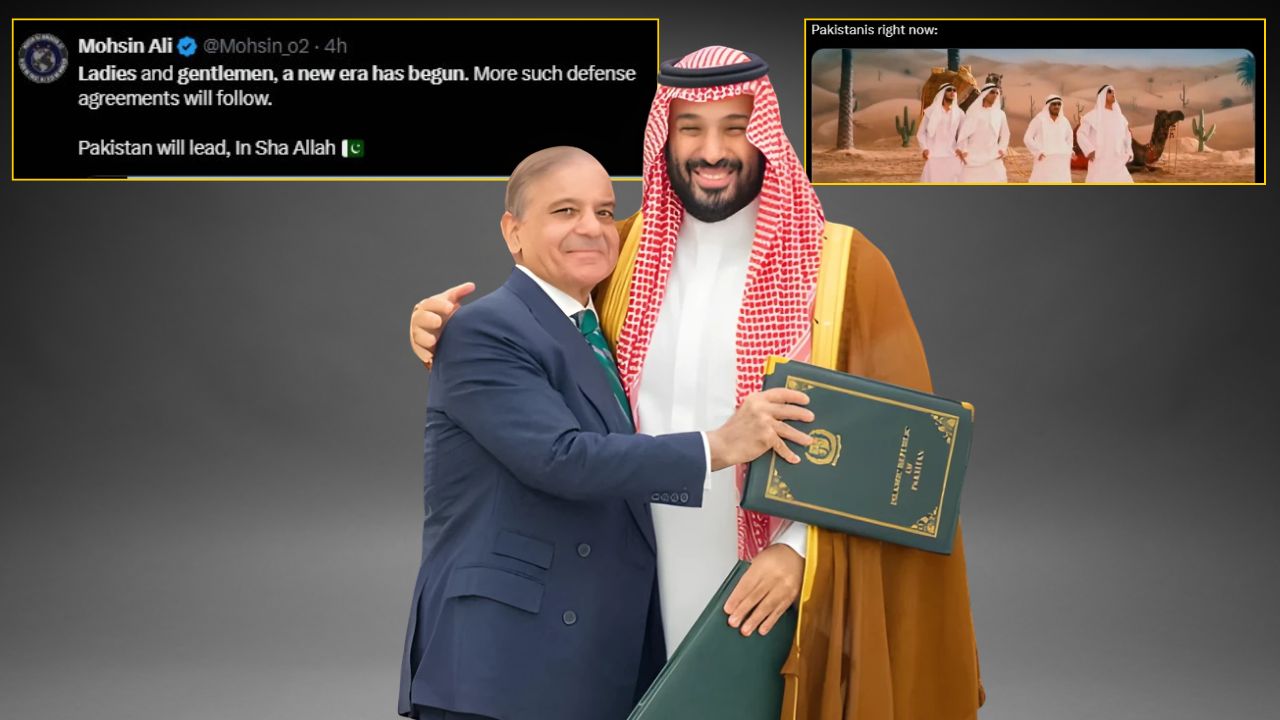
    One of the social media users expressed optimism about the future alliance. “Ladies and gentlemen, a new era has begun. More such defence agreements will follow. Pakistan will lead, In Sha Allah”

    “Every Pakistani should feel proud of Pakistan today. This is how important our country is in the region, a new chapter of beautiful friendship between Pakistan and Saudi Arabia,” opined one person. 

    Some netizens rebuked India’s apparent “strategy” to diplomatically isolate Pakistan on the international stage. “If the Indian strategy of the past 11 years was to diplomatically isolate Pakistan, it is not going too well in 2025. China, [the] United States, and now Saudi Arabia,” said a netizen, highlighting the thaw between Islamabad and Washington DC, as both signed a mineral pact recently.

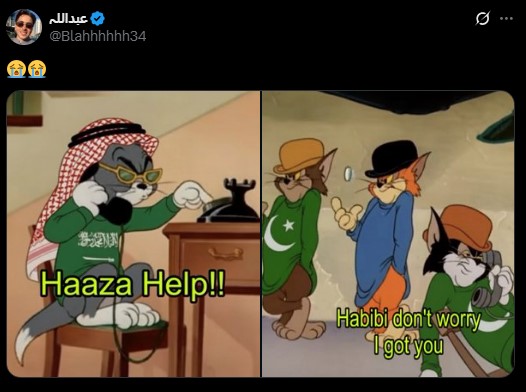
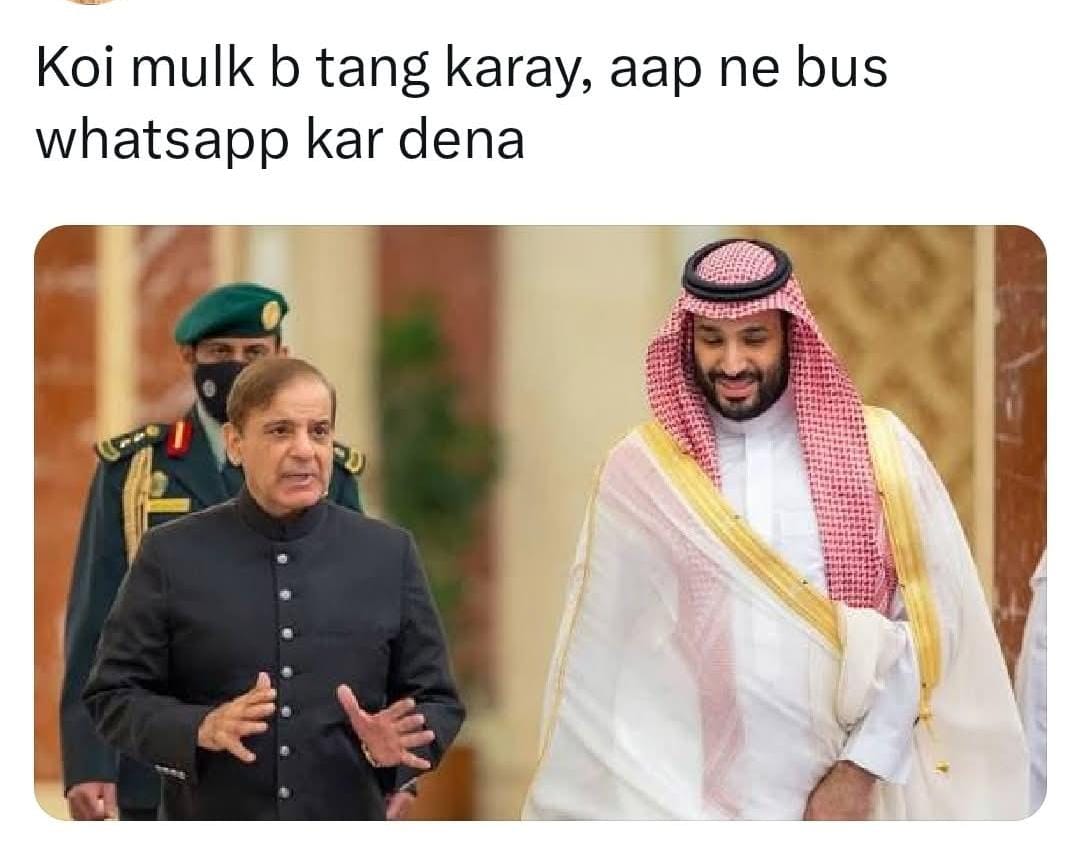
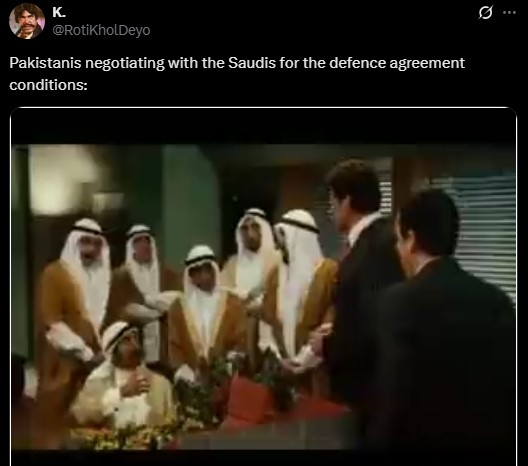
    Meanwhile, many celebrated the announcement by sharing memes across social media platforms. Here are some of them:

  • Seaview mystery; Bodies of retired army major, woman found in car in Karachi

    Seaview mystery; Bodies of retired army major, woman found in car in Karachi

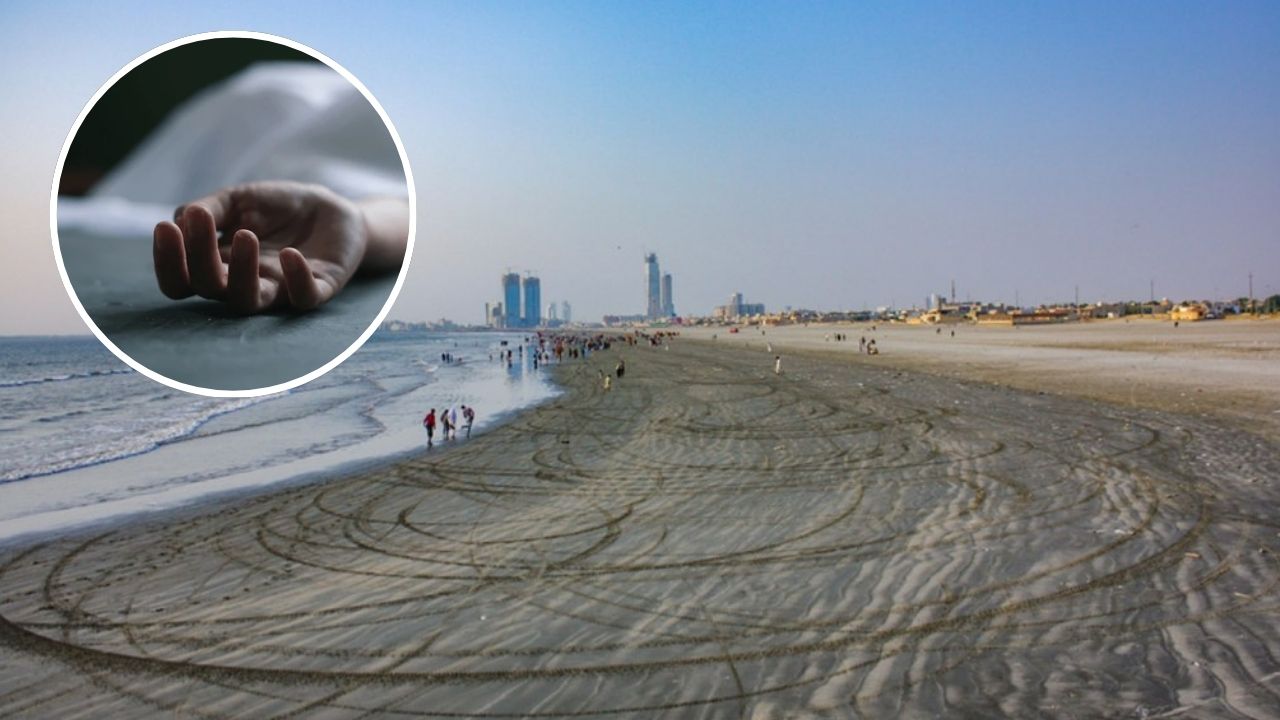
    The bodies of a retired army major and a woman were discovered inside a Toyota Prado at the Karachi Seaview Apartments parking lot early Wednesday morning. 

    Police reported that according to doctors, the two individuals had likely been dead for about 24 hours before their bodies were found.

    The retired major, a resident of the same apartments, was also an employee of the National Highway Authority. His son reported him missing on Monday night after he did not return home or answer his phone.

    South DIG Syed Asad Raza told a local newspaper that an initial investigation suggests the victims were sitting in the vehicle’s back seat with the engine and air-conditioner running. Investigators believe fumes or smoke from the exhaust system may have entered the car, causing them to die from suffocation.

    Police transported the bodies to Jinnah Postgraduate Medical Centre for medico-legal procedures. Police surgeon Dr. Summaiya Syed stated that there were no signs of torture or strangulation. The official cause of death is pending, and all relevant samples have been collected.

    Police identified the woman as a resident of the Federal B Area. They located her husband and handed over her body to the family after completing the necessary formalities.