Category: Politics

  • Live proceedings of case against dismissal of ex-judge Shaukat Siddiqui

    Live proceedings of case against dismissal of ex-judge Shaukat Siddiqui

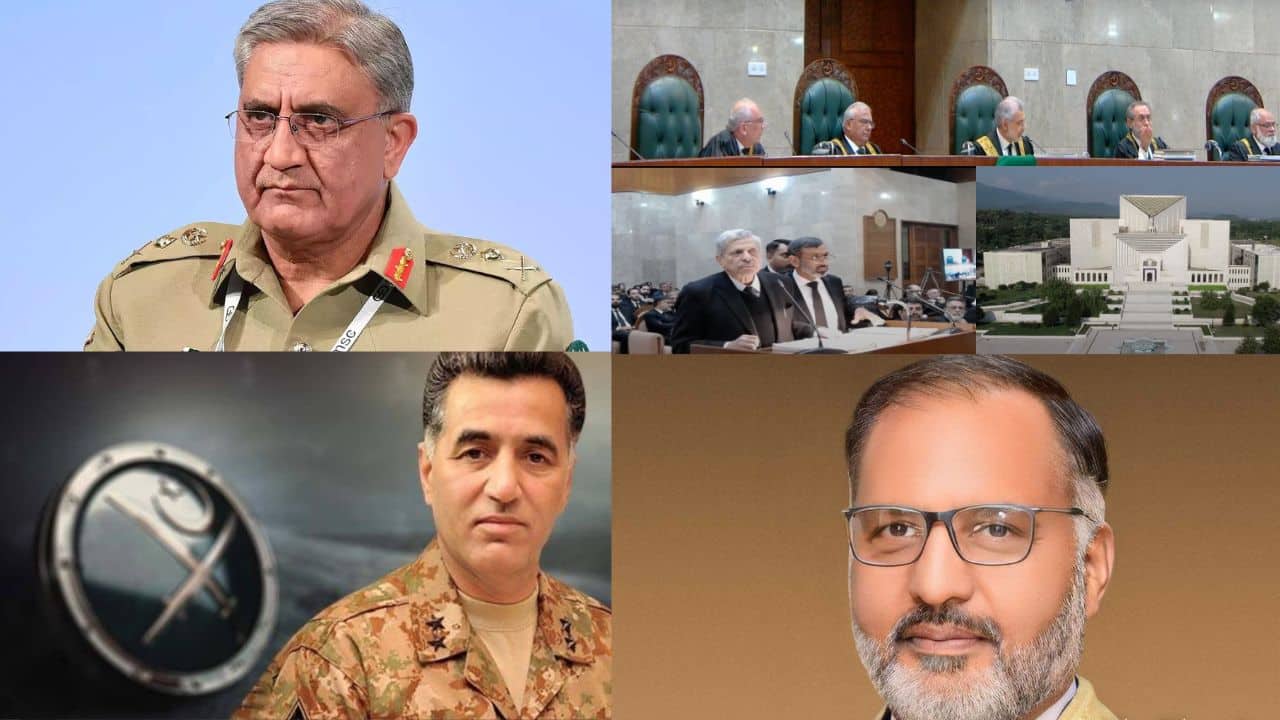
    The Supreme Court (SC) on Thursday resumed the hearing of a plea filed by former Islamabad High Court (IHC) judge Shaukat Aziz Siddiqui and ordered him to nominate former Inter-Services Intelligence (ISI) chief General Faiz Hamid and others in the plea against his dismissal.

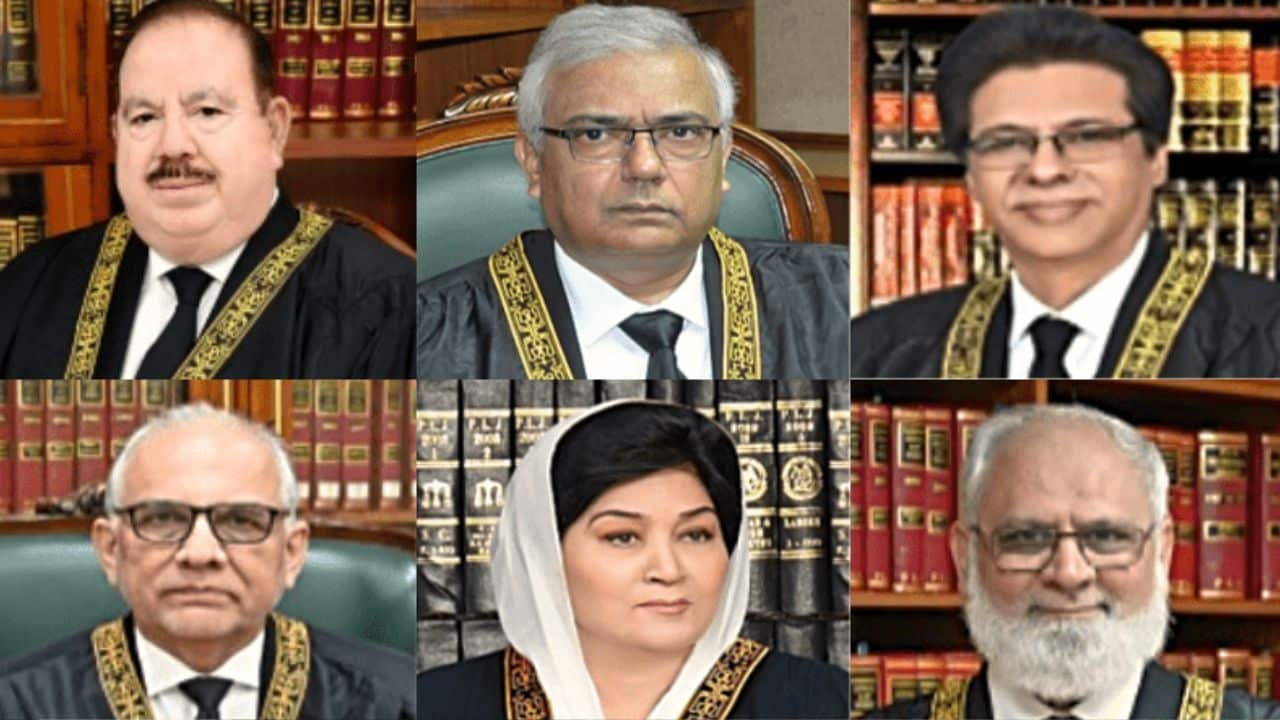
    A five-member bench led by Chief Justice of Pakistan Qazi Faez Isa heard the case. The other members of the bench are Justice Aminuddin Khan, Justice Irfan Saadat Khan, Justice Jamal Khan Mandokhail, and Justice Syed Hasan Azhar Rizvi.

    The proceedings were broadcast live on the apex court’s website as well as on its YouTube channel.

    Lawyer Hamid Khan represented the former IHC judge in the case.

    Siddiqui has filed a miscellaneous application with the Supreme Court along with the case related to his dismissal from office. 

    The former judge has requested to make former army chief Gen (retd) Qamar Javed Bajwa and former ISI head Faiz Hameed parties in the case related to his suspension.

    The case was fixed for hearing earlier this month after the judge filed a miscellaneous application with the Supreme Court to conduct an early hearing of his plea against the decision by the Supreme Judicial Council (SJC) on his dismissal.

    Order

    The SC order, issued by the bench, mentioned that allegations were levelled against some personalities who were not present at the case’s hearing. It added that those accused in the case must be made parties.

    “How will he, who is not a party, present his position in front of the court?” the order read.

    The order also mentioned that the bench will not be available to hear the petition from Monday due to winter vacations.

    The case

    President Arif Alvi on October 11, 2018, removed Justice Shaukat Aziz Siddiqui as judge of the Islamabad High Court (IHC) on the recommendation of the Supreme Judicial Council (SCJ).

    The president took the decision under Article 209(5)on the SJC recommendation under Article 209(6) read with Article 48(1) of the Constitution, a notification issued by the Ministry of Law and Justice stated.

    The council unanimously opined that while delivering the speech before the District Bar Association in Rawalpindi on July 21, Justice Shaukat Aziz Siddiqui, an IHC judge, displayed conduct unbecoming of a high court judge.

    Judges on the panel included: Then Chief Justice of Pakistan Mian Saqib Nisar, Justice Asif Saeed Khosa, Justice Gulzar Ahmad, Lahore High Court’s Chief Justice Yawar Ali, and Chief Justice of the Sindh High Court Justice Ahmed Ali Sheikh.

    Justice Khosa said that the judge in question chose to address a meeting of the district bar association, Rawalpindi on July 21 at a time when many inquiries were pending against him before the SJC under Article 209.

    In his speech, Siddiqui accused the Inter-Services Intelligence (ISI) of manipulating judicial proceedings, especially in the Panamagate case.

    The ex-judge had submitted a plea against the Supreme Judicial Council’s (SJC) decision to dismiss him after a complaint was filed against him for inflammatory speeches.
  • Aleema Khan fears Imran Khan may get death penalty in cipher case

    Aleema Khan fears Imran Khan may get death penalty in cipher case

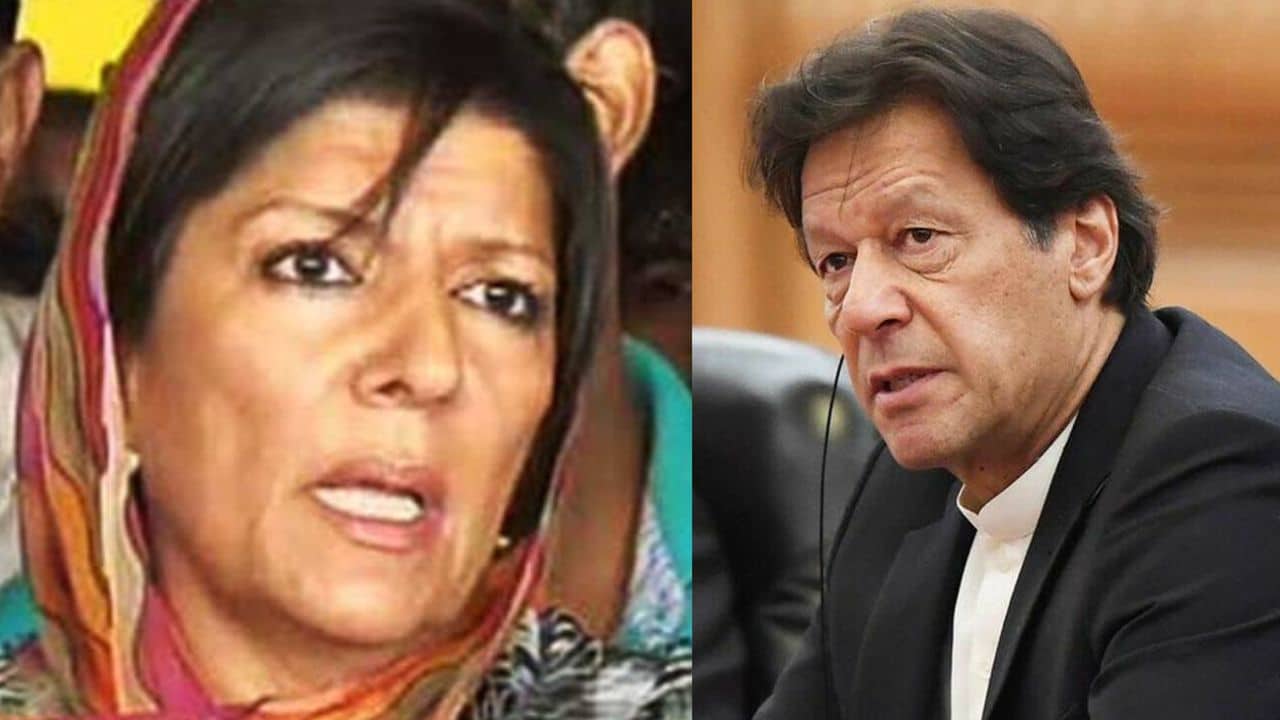
    Pakistan Tehreek-e-Insaf (PTI) ex-chairman Imran Khan’s sister, Aleema Khan, has expressed concern that her brother might get the death penalty in the cipher case, as per a report of The News on Thursday.

    Speaking to journalists outside Adiala jail, Aleema Khan said that she has doubts on the former prime minister’s trial as she can’t see justice being served.

    A day earlier, a special court established under the official secret act indicted Imran Khan and PTI’s vice president Shah Mahmood Qureshi in a cypher case.

    While discussing her brother’s trial, Aleema mentioned that cubicles had been made, and she couldn’t understand the reason for that.

    “Our entire family was in the courtroom, and it was locked from outside,” she said, adding that they were chased and threatened when they were coming for hearing.

    “We have no fear, but there can be no fair trial without the media,” she said, adding that journalists were not being allowed to attend the trial.

    “It seems that we are not in our country but in some other country. It is very sad to see what is happening to us in our own country,” she added.

  • Iran executes murderer of Ayatollah Abbas Ali Soleimani

    Iran executes murderer of Ayatollah Abbas Ali Soleimani

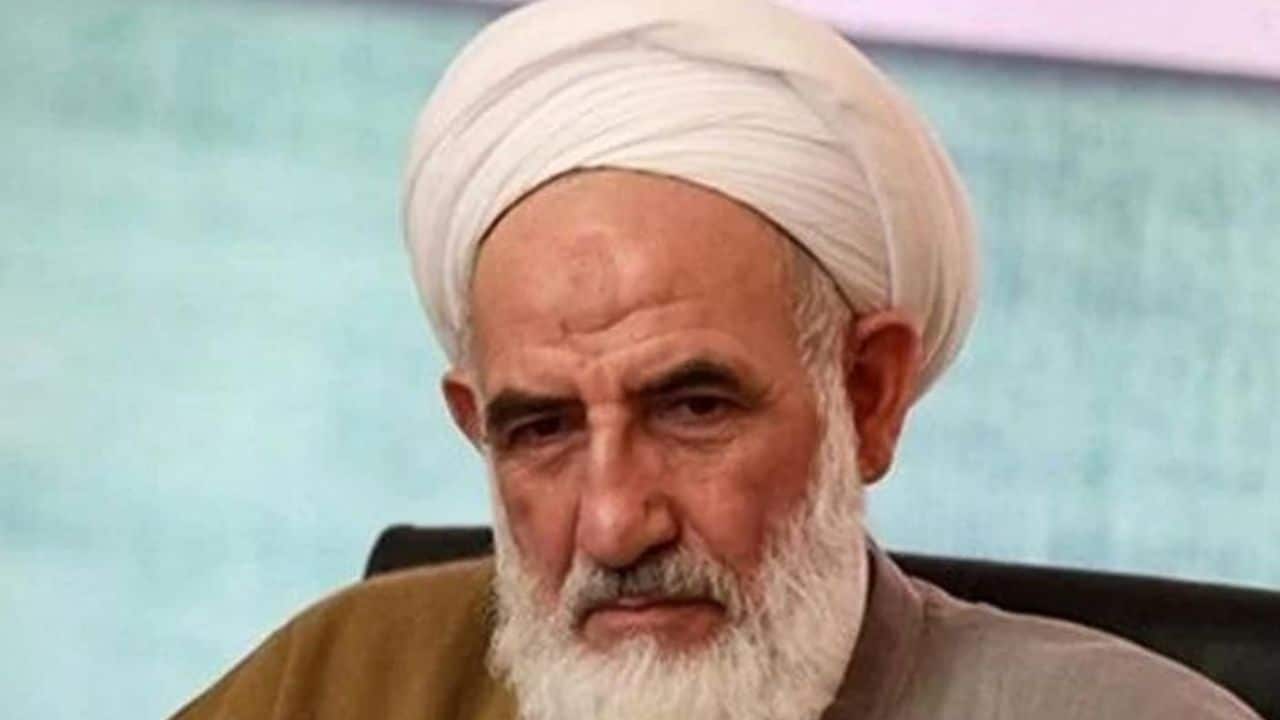
    Iranian authorities executed a man convicted of killing a powerful cleric in April, the judiciary said Wednesday.

    Ayatollah Abbas Ali Soleimani, a member of the Assembly of Experts that selects the country’s supreme leader, was killed on April 26 in a bank in Babolsar city in the northern province of Mazandaran.

    The murderer, who has not been named, was a security guard at the bank. CCTV footage published by local media showed him shooting the cleric from behind as he was sitting in a chair.

    “The sentence of qesas (Islamic law of retribution) for the murderer of Martyr Ayatollah Abbas Ali Soleimani was carried out today after being approved by the country’s Supreme Court,” a local official said, according to the judiciary’s Mizan Online website.

    Under Islamic law, the sentence of qesas can be dropped if the victim’s family agrees to spare the convict.

    Soleimani, 75, was previously a representative of Supreme Leader Ayatollah Ali Khamenei and led Friday prayers in the cities of Kashan and Zahedan.

    The 88-strong Assembly of Experts is tasked with supervising, dismissing, and electing the supreme leader. It is headed by ultra-conservative 96-year-old cleric Ahmad Jannati.

    Its members are elected for eight-year terms, but candidates are closely vetted.

    In April 2022, two clerics died in a knife attack in Iran’s second city of Mashhad. A 21-year-old suspected jihadist, Abdolatif Moradi, was hanged two months later for the crime.

    Rights group Amnesty International says Iran executes more people than any country except China.

    It has executed more than 600 people so far this year, already the highest figure in eight years, according to a report last month by the Norway-based Iran Human Rights group.

  • Imran Khan and Shah Mahmood Qureshi indicted in cipher case again

    Imran Khan and Shah Mahmood Qureshi indicted in cipher case again

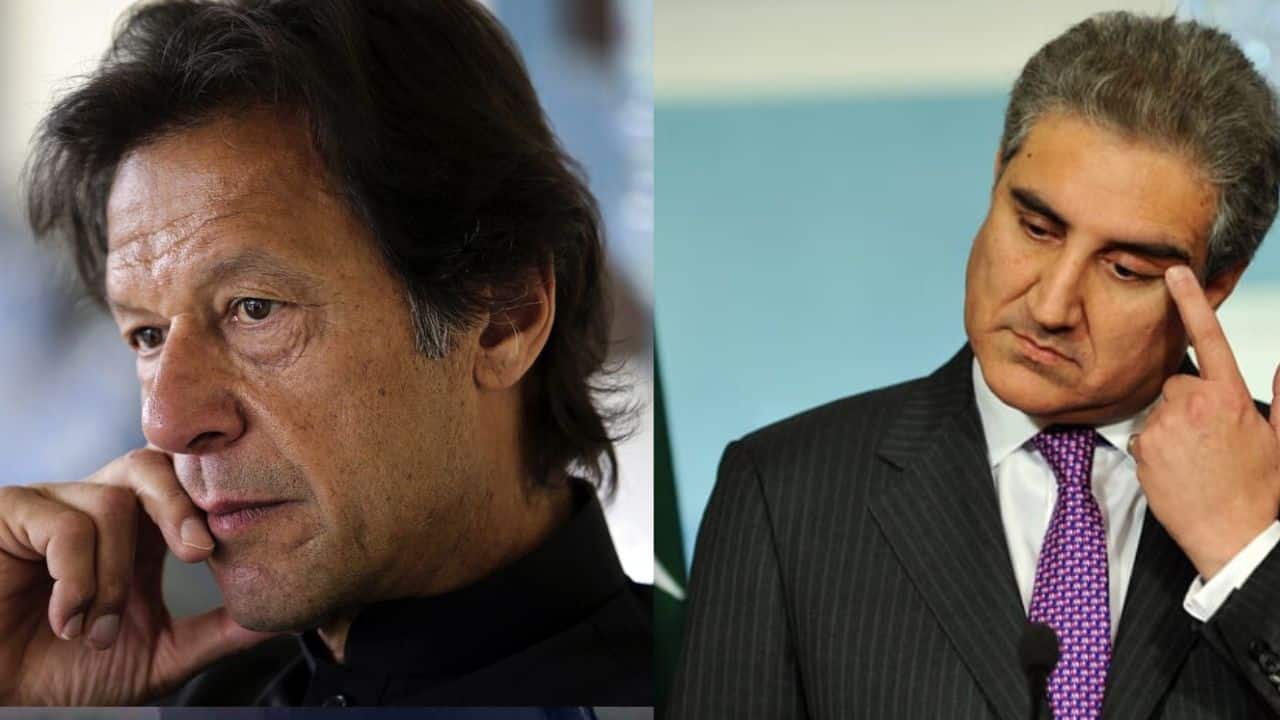
    Pakistan Tehreek-e-Insaf’s (PTI) former chairman Imran Khan and the party’s vice chairman, Shah Mahmood Qureshi, were indicted again in the cipher case on Wednesday.

    A special court established under the Official Secret Act 2023 indicted both PTI leaders with Judge Abdul Hasnat Zulqarnain announcing the decision.

    Both leaders were found guilty of misusing a diplomatic cable issued by the Pakistan embassy in Washington DC for political purposes.

    During the hearing, Federal Investigation Agency (FIA) Special Prosecutors Shah Khawar and Zulfiqar Abbas Naqvi appeared in court, while Imran Khan and Shah Mahmood Qureshi were represented by their lawyers.

    The regular trial of the cipher case against the former prime minister and ex-foreign minister will begin in Adiala Jail in Rawalpindi.

    A hearing was also held on Tuesday, where family members of PTI leaders were also present. Some journalists were also present to witness the proceedings.

    Earlier, after Khan and Qureshi challenged their indictment in the case, the Islamabad High Court (IHC) declared their jail trial “null and void” while allowing intra-court appeals in the case.

  • No issue in delay for free and fair elections, says Maulana Fazlur Rehman

    No issue in delay for free and fair elections, says Maulana Fazlur Rehman

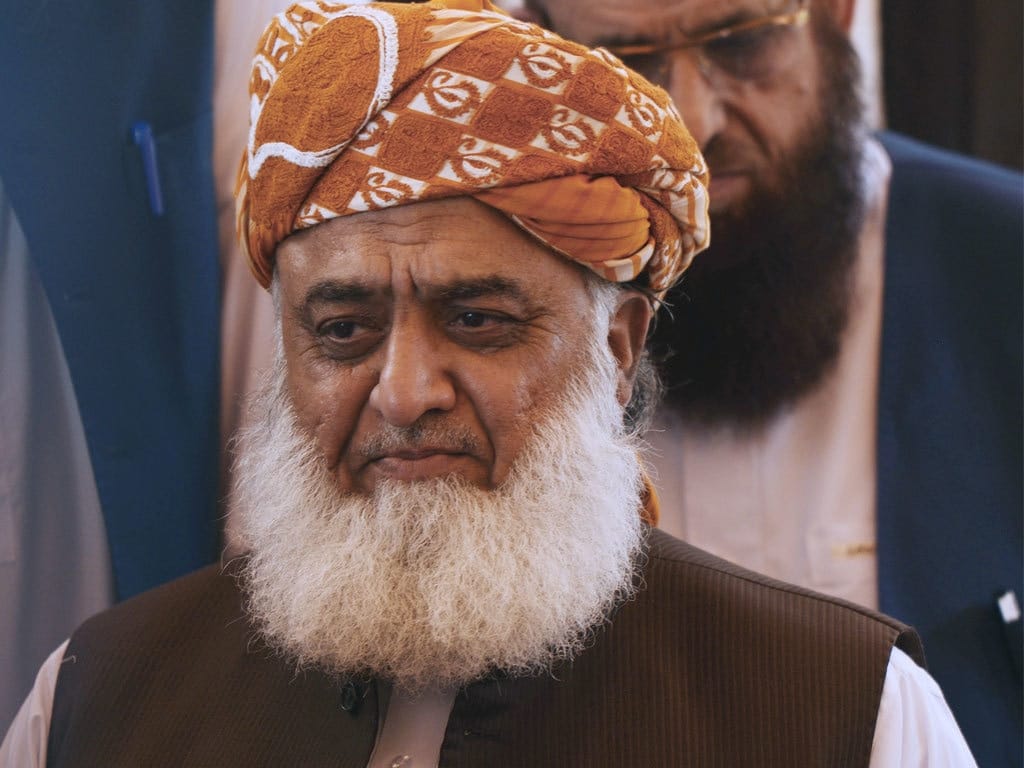
    Jamiat Ulema-e-Islam (JUI-F) Chief Maulana Fazlur Rehman said on Wednesday that a delay of a few days in the general election will not make any difference. Pakistan People’s Party (PPP) co-chairman and former president Asif Ali Zardari also made the same statement a few days earlier.

    Maulana Fazlur Rehman said in an interview that there is no issue if the delay of a few days in the election can help in conducting free and fair polls.

    Earlier this week, the PPP co-chairman also said that there is no issue with a delay of about 10 days.

    The JUI-F head also said that he is not backing any political agenda while demanding a delay in the polls, asking that the Election Commission of Pakistan (ECP) should consider all the concerns, including the weather conditions in high-altitude regions.

    Postponement of elections also occurred after the assassination of former Prime Minister Benazir Bhutto, and it’s a valid reason for people to accept a delay in polls, he added.

    Maulana also warned that his party would come out on the streets and protest if the election were postponed indefinitely.

  • Civilians to be tried in military court; Supreme Court decides

    Civilians to be tried in military court; Supreme Court decides

    The Supreme Court has, by a majority of 5-1, suspended its October 23 order that declared the trials of civilians in military courts null and void regarding the May 9 riots.

    The decision came in response to intra-court appeals (ICAs) filed by the federal and provincial governments, as well as the defense ministry, challenging the earlier verdict.

    A six-member bench of the Supreme Court, headed by Justice Sardar Tariq Masood and comprising Justice Aminuddin Khan, Justice Muhammad Ali Mazhar, Justice Syed Hasan Azhar Rizvi, Justice Musarrat Hilali, and Justice Irfan Saadat Khan heard the set of intra-court appeals.

    Justice Hilali differed with the majority decision.

    On October 23, a five-member apex court bench headed by Justice Ahsan unanimously admitted the pleas and nullified the government’s decision to try civilians in military courts in connection with the May 9 riots which erupted after the arrest of Pakistan Tehreek-e-Insaf (PTI)-then chairman Imran Khan.

    Four judges out of the five declared that Section 2(1)(d) of the Army Act and 59(4) (civil offences) are “ultra vires the Constitution and of no legal effect”.

    “Without prejudice to the generality of the foregoing the trials of civilians and accused persons, being around 103 persons […] shall be tried by criminal courts of competent jurisdiction established under the ordinary and/or special law of the land in relation to such offences of which they may stand accused,” the short order read.

    Following its verdict, the federal and the provincial governments along with the defence ministry filed intra-court appeals (ICAs). However, the caretaker government of Sindh refused to file any plea against the SC order.

    Justice Masood, who faced objections regarding his inclusion in the bench, refused to recuse himself.

    Former Chief Justice Jawwad S Khawaja and others had raised concerns about Justice Masood’s previous expressions on the matter, but the judge maintained his position.

    The Supreme Court’s recent decision to suspend the October 23 verdict means that the trials of 103 civilians will continue, with the final ruling conditional upon the Supreme Court’s subsequent orders.

  • Hammad Azhar, Murad Saeed among PTI leaders declared ‘Ishtehari’

    Hammad Azhar, Murad Saeed among PTI leaders declared ‘Ishtehari’

    An anti-terrorism court has declared several leaders of the Pakistan Tehreek-i-Insaf (PTI) proclaimed offenders (POs) in three cases related to the May 9 riots.

    The decision was made by Judge Abher Gul Khan in response to separate applications filed by the investigating officers (IOs) of the cases.

    The IOs reported that despite strenuous efforts, the suspects, fearing arrest, had gone into hiding, making their apprehension challenging. Non-bailable arrest warrants had previously been issued against them, but the suspects failed to surrender to the law, prompting the police to request the court to declare them POs.

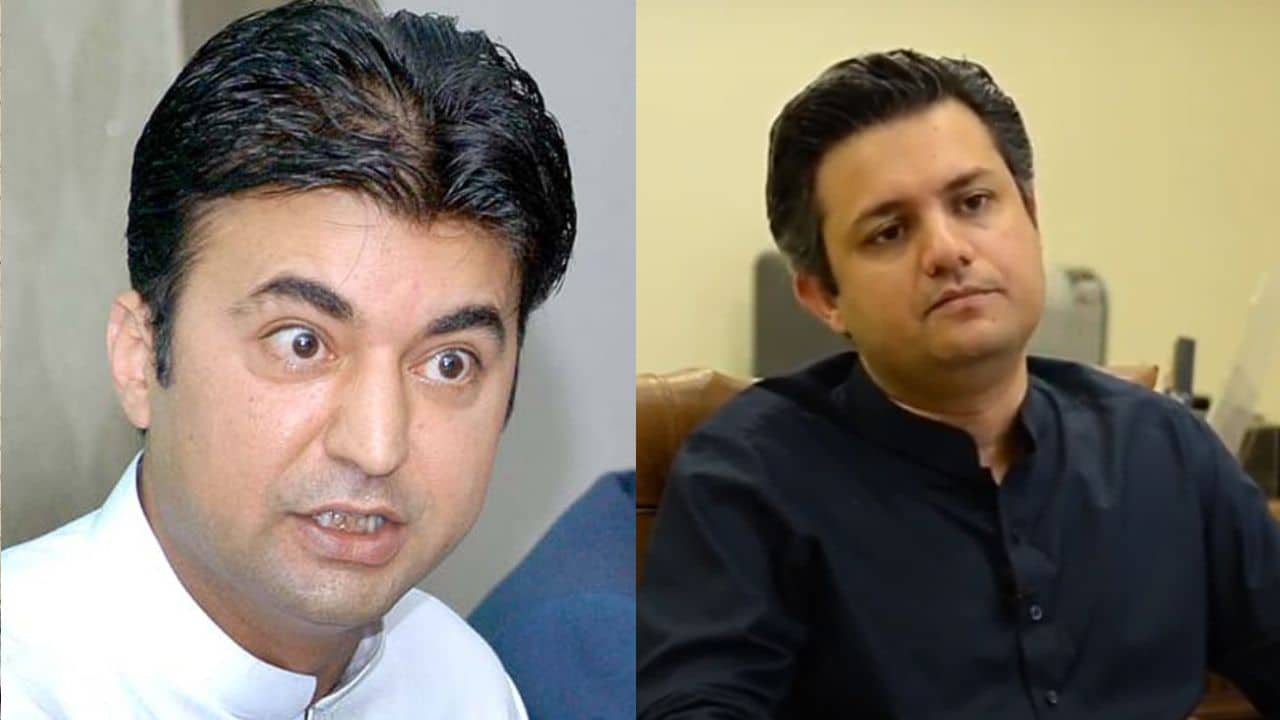
    Those declared POs in two cases of torching police vehicles near Jinnah House and Sher Pao Bridge are Hammad Azhar, Murad Saeed, Farrukh Habib, Azam Swati, Mian Aslam Iqbal, Hamid Raza, Karamat Khokhar, Khalid Gujjar, Sajjad Ahmad and Zubair Khan Niazi.

    In the third case, which pertains to burning the PML-N office in Model Town, Fawad Chaudhry, Hammad Azhar, Jamshed Iqbal Cheema and his wife Musarrat Cheema, Zubair Khan Niazi, Ghulam Abbas, Farhat Abbas and Hamid Raza had been declared POs.

    The judge also directed the IOs to submit details regarding moveable and immovable assets of the suspects so that proceedings for the attachment of their properties under section 88 of the Criminal Procedure Code (CrPC) could be started.

    It is noteworthy that several of these PTI leaders have already been declared POs in other cases related to the May 9 protests, including the attacks on Jinnah House and Askari Tower.

    Hamza Shehbaz wants an exemption

    In a separate legal development, an accountability court issued a notice to the National Accountability Bureau (NAB) on an application submitted by former chief minister Hamza Shehbaz. Hamza sought permanent exemption from personal appearance in the trial proceedings of the Ramzan Sugar Mills reference.

    Appearing before the court with his lawyer, Hamza Shehbaz’s application prompted the court to direct a NAB prosecutor to submit a reply by January 12. The NAB had reopened the reference, initially closed under defunct amendments to the National Accountability Ordinance 1999, following a Supreme Court decision that struck down those amendments.

    In the Ramzan Sugar Mills reference, NAB alleged that Shehbaz Sharif, then chief minister, and his son Hamza, in abetment and connivance, caused a loss of Rs213 million to the national exchequer by misusing their authority. The allegations revolve around the construction of a drain in Chiniot district primarily for the use of Ramzan Sugar Mills owned by Hamza and his brother Suleman.

  • Chances high for Nawaz to contest election after victory in Al-Azizia reference

    Chances high for Nawaz to contest election after victory in Al-Azizia reference

    The Pakistan Muslim League-Nawaz (PML-N) showed confidence regarding the “eligibility” of party head Nawaz Sharif to contest in the upcoming general election after the Islamabad High Court (IHC) acquitted him in Al-Azizia reference on Tuesday.

    This significant development can increase the chances of the PML-N supremo becoming a prime minister for the fourth time. Party leader Azam Nazeer Tarar has claimed that Nawaz Sharif is now eligible to take part in the election after the IHC’s verdict.

    “Today, Nawaz Sharif stands eligible to contest the elections. He will participate in the polls,” the former law minister said.

    PML-N spokesperson Marriyum Aurangzeb was also grateful after the acquittal.

    “Today, the reality of these false cases has been exposed to the nation,” she said, regretting that getting justice took seven years.

    Marriyum Aurangzeb also said that the people of the country faced severe difficulties during these years.

    “InshaAllah, Nawaz Sharif will become the prime minister for the fourth time with the nation’s votes,” she said, expressing hope that the PML-N supremo will lead the country to “prosperity.”

  • PPP leader Abdul Qadir Baloch proposes election delay in security challenged regions

    PPP leader Abdul Qadir Baloch proposes election delay in security challenged regions

    Former federal minister and Pakistan People’s Party (PPP) leader Abdul Qadir Baloch has recommended postponing the general elections in areas that are not safe or facing security challenges.

    The PPP leader said in an interview on Saturday that by-polls can be conducted in these areas later, stressing that it will not be good to postpone general elections due to just six or seven constituencies.

    “Attacks by TTP in Balochistan are way higher than those by Baloch separatists,” the PPP leader said, adding that the terrorist organisation often targets Kalat, Mastung, and neighbouring areas.

    He also said that security threats are real because Baloch separatists don’t believe in the politics of parliament, calling the elements a hurdle for politicians to run their election campaigns.

    Abdul Qadir Baloch then said that interior minister Sarfraz Bugti should not have publicly talked to the media about threats to Jamiat Ulema-e-Islam (JUI-F) chief Maulana Fazlur Rehman, adding that it’s the caretaker government’s responsibility to give security to all politicians.

  • NAWAZ IS FREE in Al Azizia Steel Mills Case

    NAWAZ IS FREE in Al Azizia Steel Mills Case

    The Islamabad High Court (IHC) on Tuesday acquitted former prime minister and Pakistan Muslim League-Nawaz (PML-N) supremo Nawaz Sharif in the Al-Azizia reference, the biggest hurdle in the way of him contesting in the general elections.
    The only obstacle now for the former prime minister to contest an election is his lifetime disqualification as a parliamentarian.

    “It is unfortunate that if a former prime minister is facing such sham cases, then [we can’t imagine] what is happening to a common man,” senior lawyer Irfan Qadir told Geo News, calling upon the judges who convicted Nawaz to apologise to the nation.

    He also stated that, in response to the contentious Panama verdict, the Supreme Court had directed the National Accountability Bureau (NAB) to initiate legal proceedings against Nawaz by filing references.