Category: Politics

  • 23 soldiers martyred in a terrorist attack in DI Khan: ISPR

    23 soldiers martyred in a terrorist attack in DI Khan: ISPR

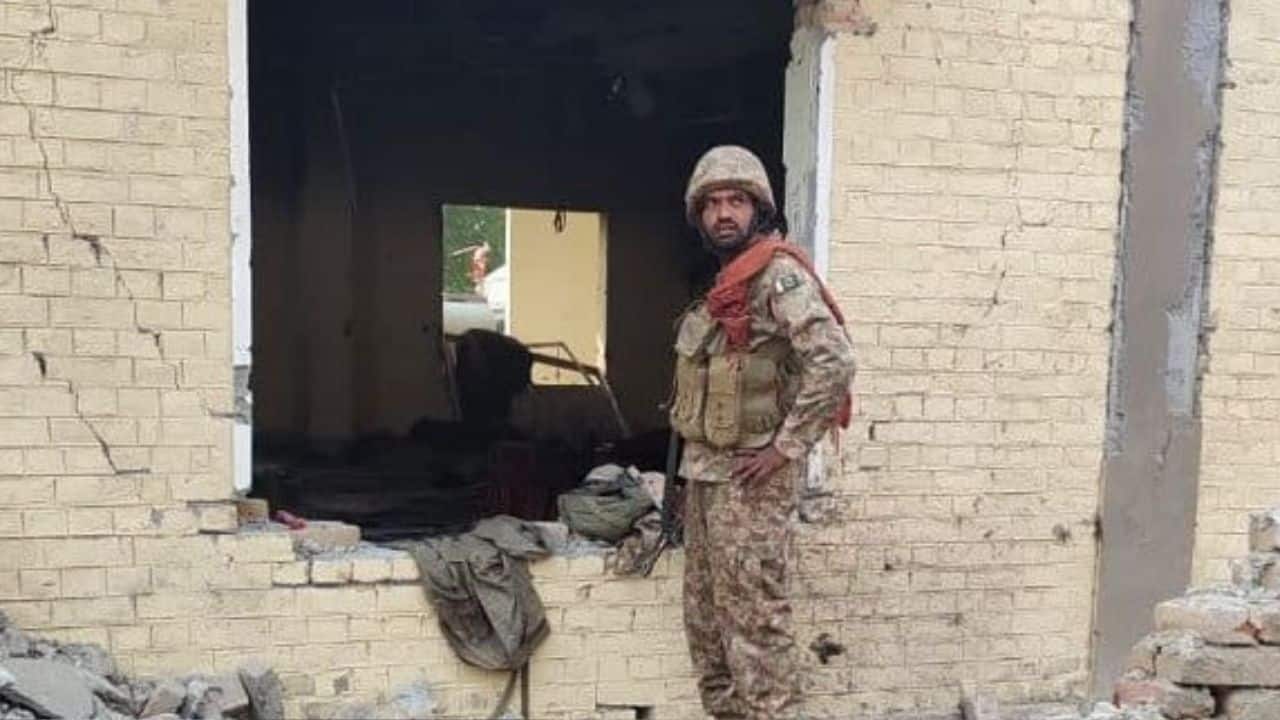
    At least 23 soldiers of the Pakistan army were martyred after militants attacked a checkpost with an explosive-laden truck in Khyber-Paktunkhwa’s Dera Ismail Khan district, the Inter-Services Public Relations (ISPR) said on Tuesday.

    The ISPR added that the terrorists rammed the truck after their attempts to gain entry were “effectively thwarted”.
    “The attempt to enter the post was effectively thwarted which forced the terrorists to ram an explosive laden vehicle into the post, followed by a suicide bombing attack.

    “The resulting blasts led to the collapse of the building, causing multiple casualties; 23 brave soldiers embraced shahadat, while all six terrorists were effectively engaged and sent to hell,” the ISPR said.


    It added that sanitisation operations were being conducted to eliminate any other terrorists present in the area. “Security forces of Pakistan are determined to wipe out the menace of terrorism from the country and such sacrifices of our brave soldiers further strengthens our resolve,” the ISPR said.
    Separately, 17 terrorists were killed in an intelligence-based operation in the Darazinda area of Dera Ismail Khan.


    “During the conduct of the operation, terrorists’ hideout was busted and 17 terrorists were sent to hell,” the military’s media affairs wing said.


    ️ The ISPR further stated that two soldiers embraced martyrdom while four more terrorists were neutralised in another IBO in the Kulachi area.


    “️ The killed terrorists were actively involved in numerous terrorist activities against security forces as well as killing of innocent civilians. Weapons, ammunition and explosives were also recovered during the operations,” it added.


    This is the military’s highest single-day death toll from terrorist attacks reported this year. Before this, 12 soldiers were martyred in separate military operations in the Zhob and Sui areas of Balochistan in July.
  • Zardari accuses Jemima of paying UK bloggers to support Khan

    Zardari accuses Jemima of paying UK bloggers to support Khan

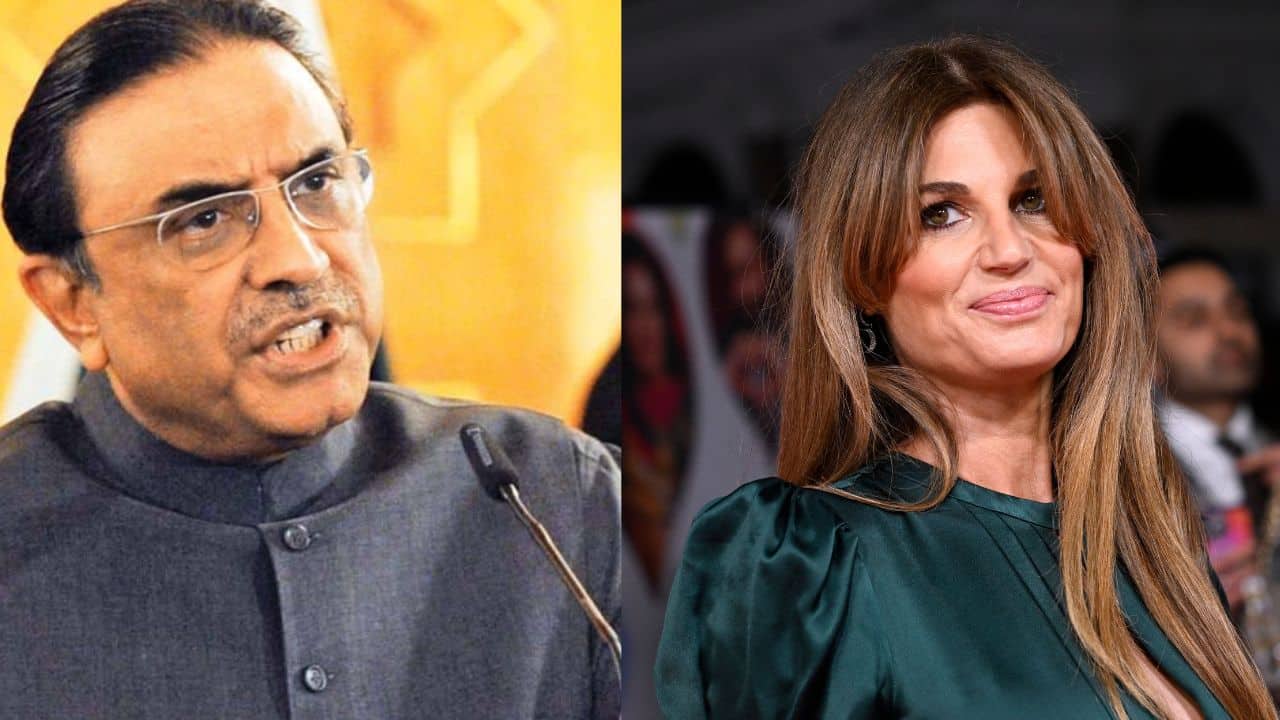
    Pakistan People’s Party (PPP) co-chairman and former president of Pakistan Asif Ali Zardari has accused Jemima Goldsmith, the ex-wife of former Prime Minister Imran Khan, of paying vloggers while sitting abroad.

    In an interview on Aaj News with Asma Shirazi, the former president stated that a lobby with “multiple interests” has been funding and backing vloggers.

    The former president further added that it was a conspiracy to bring Pakistan Tehreek-e-Insaf’s (PTI) ex-Chairman Imran Khan into power, adding that some people wanted to extend his rule until 2035.

    “He [Khan] would have sold Pakistan, and the country would have defaulted if I had not ousted that person… Sometimes a puppet does not know what its handler is doing to it.”

    Asif Ali Zardari also said that “I can be a candidate for prime ministership and Bilawal too. Even Khursheed Shah can be the candidate.”

    On the other hand, PTI supporters are showing support to Jemima on X (previously Twitter), with #StayStrongJemimaKhan trending on the platform.

  • Supreme Court approves live telecast of Zulfikar Ali Bhutto reference case

    Supreme Court approves live telecast of Zulfikar Ali Bhutto reference case

    The Supreme Court (SC) has approved a live telecast of a 12-year-old presidential reference regarding the contentious death sentence of former Prime Minister Zulfikar Ali Bhutto.

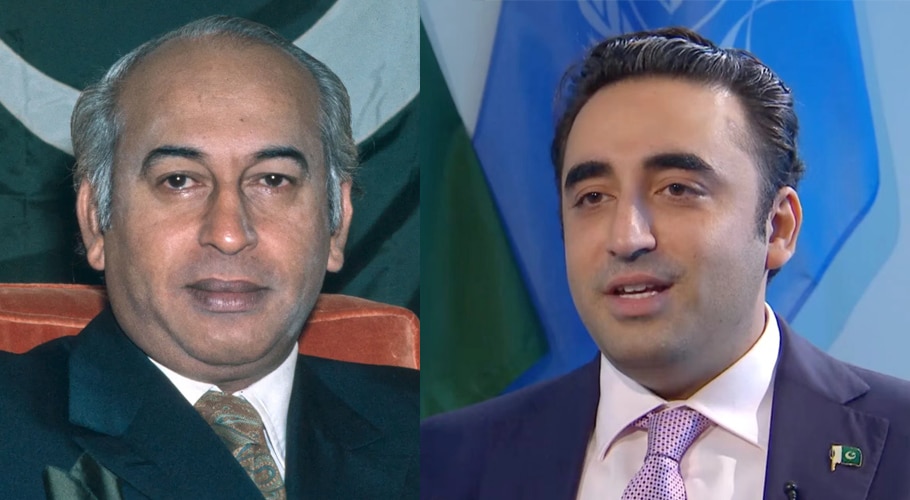
    On Monday, Pakistan People’s Party (PPP) Chairman and former foreign minister Bilawal Bhutto Zardari requested live broadcast of the hearing of the Zulfikar Ali Bhutto reference.

    The Chief Justice of Pakistan (CJP) Qazi Faez Isa is heading a nine-member, larger SC bench that is going to hear the 12-year-old presidential reference regarding the controversial death sentence awarded to the former prime minister.

    The decision to fix the case was made under Section 2(1) of the Supreme Court (Practice and Procedure) Act, 2023, by a three-member committee comprising CJP Isa, Justice Sardar Tariq Masood and Justice Ijazul Ahsan.

    Last week, the SC appointed a panel of two judges, Justice Athar Minallah and Justice Muhammad Ali Mazhar, to decide on the issue of the live broadcasting of 12-year-old presidential reference after former president Asif Ali Zardari the approached SC in 2011 to revisit the trial of the former prime minister.

    Previously, an 11-member apex court bench headed by Chief Justice Iftikhar Chaudhry conducted five hearings on the presidential reference. The last hearing in the said case was on November 11, 2022.

  • ‘I am not a traitor’: Imran Riaz speaks up for first time after disappearance

    ‘I am not a traitor’: Imran Riaz speaks up for first time after disappearance

    Anchorperson and YouTuber Imran Riaz Khan has given an interview for the first time following his recovery after disappearing in May.

    “It is unfortunate if I ever thought that someone’s disappearance may be in the interest of the state”, he said when questioned about his previous stance when he advocated that missing persons are not innocent.

    During a podcast with his lawyer, Mian Ali Ashfaq, ‘Cross-Examination’, he said that “The pain is worse when you are tortured by your own people.”

    He however did not reveal his whereabouts during his disappearance, nor what conditions he was kept in.

    In response to the arrest of former Prime Minister Imran Khan on May 9, there were violent demonstrations in various cities of the country and attacks on military installations and buildings.

    The police arrested PTI leaders and activists besides Imran Riaz, who, according to the authorities, was allegedly trying to go abroad from Sialkot airport.

    After his release on May 11, according to police, he went missing outside the prison and returned home several months later in September.

    “I am not a traitor”

    Imran Riaz Khan asserted that he is not a traitor nor did he meet with any enemy of the state.

    “No one should be treated as if he is an enemy of the country,” he said.

    ‘Enforced disappearance is not justified’

    In the past, Imran Riaz Khan used to take on those who criticized the state institutions in the country.

    In one of his vlogs he criticised Gulalai Ismail, a social activist who supports the Pashtun Protection Movement (PTM), stating ‘She is one of those women who burns one’s own house to prove their own selves truthful… They do this to become famous in the west.”

    This was at a time when Gulalai had taken refuge in the United States.

    Similarly, Imran Riaz Khan pointed to one of the protests organised for the recovery of missing persons and said that “These people betray the country and attack the institutions.”

    Imran Riaz now admits that he did not feel the gravity of the issue as much as he does now.

    “I regret today that I ever thought in my life that if someone disappeared, it could be in the interest of the state,” adding that he apologises to all the people who he hurt.

    He asserted that there is no justification for enforced disappearances and that if a person is a criminal, they should be brought before the law.

    Nonetheless, Imran Riaz still supports the PECA law, under which journalists can be prosecuted for criticising state institutions in online content.

    He said that PECA should be applied to journalists too, adding that dragging issues through the mud is not journalism.
    “I am in favour of the strictness of the law but against its misuse,” he said.

  • Indian Supreme Court validates the revocation of Article-370

    Indian Supreme Court validates the revocation of Article-370

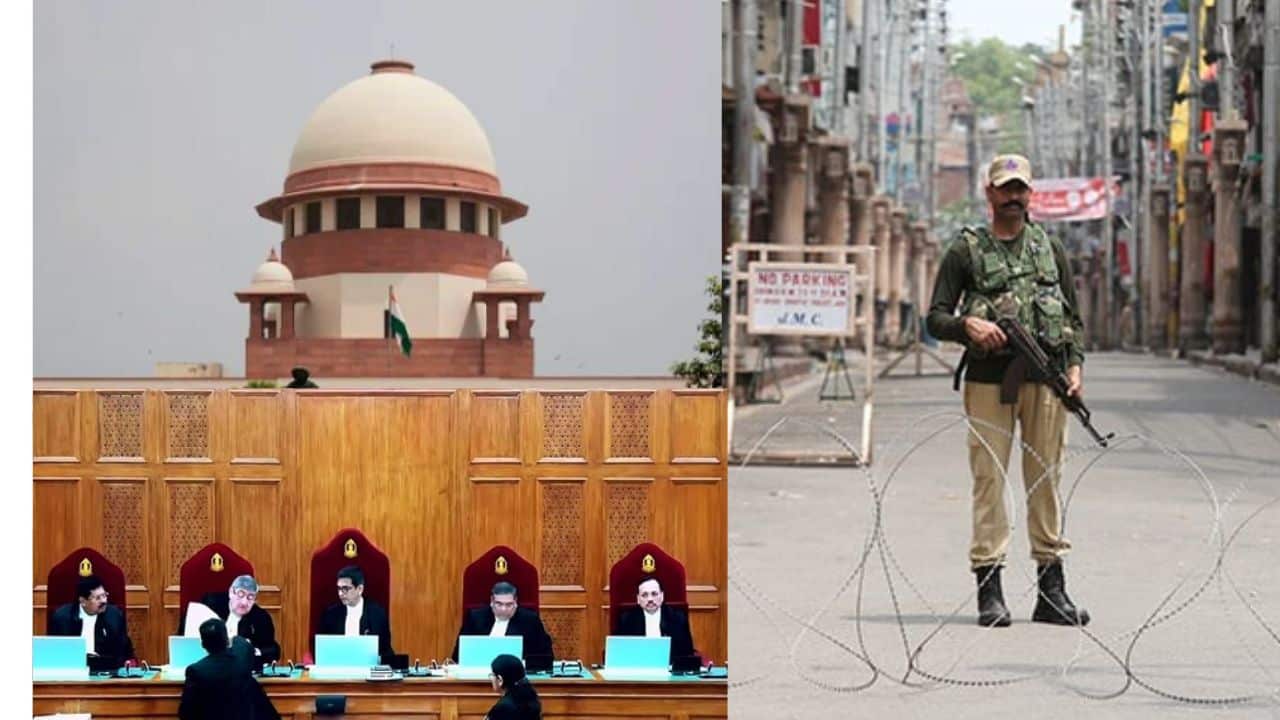
    A five-judge constitution bench, presided by Chief Justice of India DY Chandrachud, has given its verdict on the Union government’s 2019 move to amend Article 370 of the constitution, the abrogation of which ended the special status of Jammu and Kashmir.


    The decision was reserved earlier on September 5 this year, after 16 days of hearings.

    The unanimous verdict by the panel of five judges came in response to more than a dozen petitions challenging the revocation and a subsequent decision to split the region into two federally administered territories, the central government, on the other hand, had defended its action, asserting there was no “constitutional fraud” in nullifying the provision.

    Chief Justice said that Jammu and Kashmir held no internal sovereignty after accession to India. The court maintains that the president has the right to abrogate any of the articles in the Constitution. The same was carried out on August 5 2019.

    The order also declared that the reorganisation of the erstwhile state into Union Territories in 2019 was a temporary move, it directed the Centre for the restoration of statehood and for Legislative Assembly elections to be held.

    However, Justice Kaul recommended in his opinion that a Truth and Reconciliation Commission should be set up in Jammu and Kashmir, for the acknowledgement of acts of rights violations in the region.

    The revocation was one of Mr Modi’s poll promises in 2019 and the court’s decision comes months before he seeks a third term. Local politicians in the region have expressed disappointment over the order.

    Former Chief Minister Omar Abdullah posted on X (formerly Twitter) that he was “disappointed but not disheartened”. An hour later, he also posted Faiz Ahmed Faiz poem, “Dil na umeed to nahi, na kaam he to hai”.

    Meanwhile, Narendra Modi, Prime Minister of India wrote this decision is “a resounding declaration of hope, progress and unity”.

    Amit Shah, a major proponent of Hindutva supremacy and Indian Home Minister, criticised India’s first Prime Minister, Jawaharlal Nehru, on the Kashmir issue, saying in Parliament, “I say this with full responsibility that Kashmir suffered due to two blunders by Nehru. First, the ceasefire (with Pakistan) was announced when our forces were winning…before winning the whole of Kashmir. The second blunder was to take the Kashmir issue to the United Nations.”

    Today he posted on Twitter that because of this decision “separatism and stone pelting are now things of the past.”

    Asaduddin Owaisi says, ” We are disappointed by this verdict.”


    “Pakistan categorically rejects the judgement announced by the Supreme Court of India on the status of Indian Illegally Occupied Jammu and Kashmir (IIOJK),” states the statement released by the Ministry of Foreign Affairs in Pakistan.

    Caretaker Foreign Minister of Pakistan Jalil Abbas Jilani posted on Twitter that “The judicial endorsement by the Indian Supreme Court has no legal value.”

  • PPP leader Abdul Qadir Baloch proposes election delay in security challenged regions

    PPP leader Abdul Qadir Baloch proposes election delay in security challenged regions

    Former federal minister and Pakistan People’s Party (PPP) leader Abdul Qadir Baloch has recommended postponing the general elections in areas that are not safe or facing security challenges.

    The PPP leader said in an interview on Saturday that by-polls can be conducted in these areas later, stressing that it will not be good to postpone general elections due to just six or seven constituencies.

    “Attacks by TTP in Balochistan are way higher than those by Baloch separatists,” the PPP leader said, adding that the terrorist organisation often targets Kalat, Mastung, and neighbouring areas.

    He also said that security threats are real because Baloch separatists don’t believe in the politics of parliament, calling the elements a hurdle for politicians to run their election campaigns.

    Abdul Qadir Baloch then said that interior minister Sarfraz Bugti should not have publicly talked to the media about threats to Jamiat Ulema-e-Islam (JUI-F) chief Maulana Fazlur Rehman, adding that it’s the caretaker government’s responsibility to give security to all politicians.

  • Rao Anwar targets Asif Zardari in new interview

    Rao Anwar targets Asif Zardari in new interview

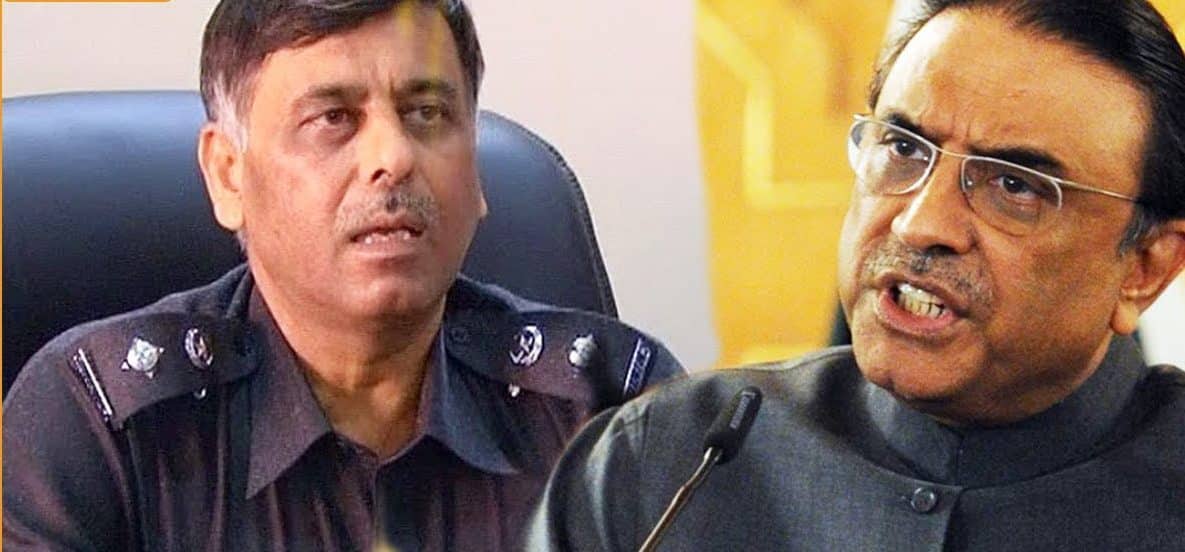
    The controversial former Senior Superintendent of Police (SSP) Malir, Rao Anwar, has targeted former President and co-chairman of Pakistan People’s Party (PPP) Asif Ali Zardari in an interview, offering details of alleged corruption within the Sindh government.

    Talking to SAMAA, Rao Anwar claimed that Asif Ali Zardari was involved in corruption of RS 700 billion, stating, “Asif Ali Zardari is the king of the system mafia. In the last five years, 700 billion rupees have been laundered outside Pakistan.”

    He also disclosed that after 2013, Sindh police had also been involved in seizing individuals’ land. He criticised the Sindh government, saying that instead of controlling crimes in Karachi and interior Sindh, they were busy doing other activities.

    Rao, one of the most contentious police officers in Karachi, retired in 2019, mired in allegations of extra judicial murder among other serious charges. He had been charged with carrying out fake encounters and involvement in corrupt practices, including orchestrating the murder of Naqeebullah Mehsud, an aspiring model from Waziristan. Later, an anti-terrorism court acquitted the former SSP.

  • IPP will provide a list of constituencies to PML-N for seat adjustments today

    IPP will provide a list of constituencies to PML-N for seat adjustments today

    The Istehkam-e-Pakistan Party (IPP) has made a list of constituencies of national and provincial assembly seats where it wants seat settlement with Pakistan Muslim League-Nawaz (PML-N), as per a report in The News.

    A source revealed to The News that the IPP committee, in which Ishaq Khakwani, Awn Chaudhry, and Nauman Langrial are included, has made a list of candidates which will be provided to PML-N on Monday.

    As the country gears up for general elections, political parties are making alliances with multiple political stakeholders to win the forthcoming polls on February 8 next year.

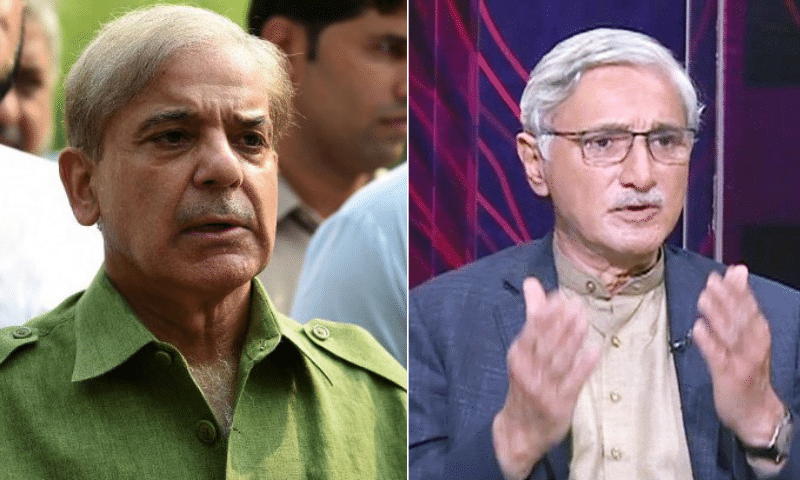
    PML-N president Shehbaz Sharif met with the IPP’s patron chief, Jahangir Tareen in Lahore a few weeks ago, to discuss the issue of seat adjustment in the upcoming general elections, which are going to be held on February 8, 2024.

    According to multiple media reports, the IPP wants seat adjustments with PML-N on 20 National Assembly (NA) seats and 44 Provincial Assembly (Punjab) seats.

    However, sources in the IPP claimed that the figures reported by different TV channels were exaggerated and that the party will ask for seat adjustments in about eight to 10 NA constituencies and 15 to 20 PA constituencies.

  • December 11: Global strike for Palestine

    Palestinian activists and organisations across the world have called for a global strike on Monday, December 11, to demand immediate ceasefire of the Israeli attacks on Gaza that have intensified with time.

    Palestinian coalition, National and Islamic Forces, called for a strike and people across the world, to strike “all aspects of public life” in support of Gaza.

    “We expect the entire globe to join the strike, which comes in the context of a broad international movement involving influential figures. This movement stands against the open genocide in Gaza, the ethnic cleansing and the colonial settlement in the West Bank,” the statement released by the coalition read.

    “The strike also opposes attempts to undermine the just national cause of the Palestinian people,” it said.

    People around the world have been called to unanimously express their solidarity with Palestinians who are currently suffering the consequences of Israeli atrocities being committed in Gaza. So far, more than 18,000 people have been killed and more than 49,000 people have been wounded.

  • UN needs $46.4 billion for aid in ‘bleak’ 2024

    UN needs $46.4 billion for aid in ‘bleak’ 2024

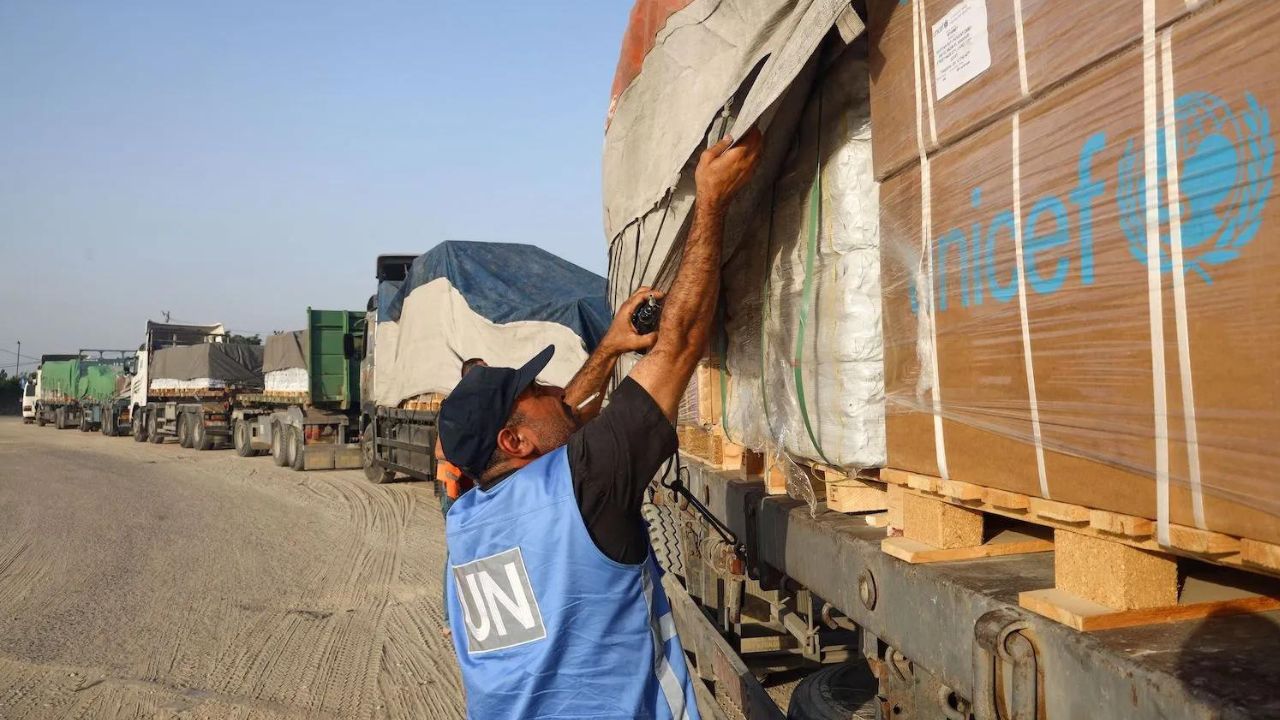
    Geneva, Switzerland – The United Nations said Monday that it needed $46.4 billion next year to bring life-saving help to around 180 million people in desperate circumstances around the world.

    The UN said the global humanitarian outlook for 2024 was “bleak”, with conflicts, climate emergencies and collapsing economies “wreaking havoc” on the most vulnerable.

    While global attention focuses on the conflict raging in the Gaza Strip, the UN said the wider Middle East, Sudan and Afghanistan were among the hotspots that also needed major international aid operations.

    But the size of the annual appeal and the number of people it aims to reach were scaled back compared to 2023, following a decrease in donations.

    “Humanitarians are saving lives, fighting hunger, protecting children, pushing back epidemics, and providing shelter and sanitation in many of the world’s most inhumane contexts,” UN aid chief Martin Griffiths said in a statement.

    “But the necessary support from the international community is not keeping pace with the needs,” he said.

    The 2023 appeal was for $56.7 billion but received just 35 percent of that amount, one of the worst funding shortfall in years. It allowed UN agencies to deliver assistance and protection to 128 million people.

    With a few weeks left to go, 2023 is likely to be the first year since 2010 when humanitarian donations declined compared to the previous year.

    The UN therefore scaled down its appeal to $46.4 billion this time around, and will focus on those in the gravest need.

    72 countries

    Launching the 2024 Global Humanitarian Overview, Griffiths said the sum was nonetheless a “massive ask” and would be tough to raise, with many donor countries facing their own cost of living crises.

    “Without adequate funding, we cannot provide life-saving assistance. And if we cannot provide that assistance, people will pay with their lives,” he said.

    The appeal covers aid for 72 countries: 26 states in crisis and 46 neighbouring nations dealing with the knock-on effects, such as an influx of refugees.

    The five largest single-country appeals are for Syria ($4.4 billion), Ukraine ($3.1 billion), Afghanistan ($3 billion), Ethiopia ($2.9 billion) and Yemen ($2.8 billion).

    Griffiths said there would be 300 million people in need around the world next year — a figure down from 363 million last year.

    But the UN aims to reach only 180.5 million of those, with NGOs and aid agencies targeting the remainder — not to mention front-line countries and communities themselves who provide the first help.

    Climate impact

    The Middle East and North Africa require $13.9 billion, the largest total for any region in 2024.

    Beyond Syria, the Palestinian territories and Yemen, Griffiths also pointed to Sudan and its neighbours, and to Ukraine, Afghanistan, Venezuela and Myanmar as hotspots that needed sustained global attention.

    Ukraine is going through a “desperate winter” with the prospect of more warfare on the other side, he said.

    With the Gaza war between Israel and Hamas, plus Russia’s war in Ukraine, Griffiths said it was hard for the Sudan crisis to get the attention it deserved in foreign capitals.

    More broadly, Griffiths said climate change would increasingly impact the work of humanitarian aid workers, who would have to learn how to better use climate data to focus aid resources.

    “There is no doubt about the climate confronting and competing with conflict as the driver of need,” he said.

    “Climate displaces more children now than conflict. It was never thus before,” he said.