Category: Tech

  • Unlock your phone or face criminalises jail: New law refusal to share passwords with police

    Unlock your phone or face criminalises jail: New law refusal to share passwords with police

    Authorities in Hong Kong can now require individuals to hand over passwords for electronic devices under changes linked to the national security framework, with penalties for non-compliance and for providing incorrect information.

    Under the updated rules, law enforcement officers in Hong Kong can demand access to phones and computers from individuals suspected of offences under the law. Refusal to provide passwords or decryption assistance can result in up to one year in prison and a fine of up to HK$100,000 (around $12,700). Providing “false or misleading information” can lead to a prison term of up to three years and a fine of up to HK$500,000.

    The changes were introduced through amendments to a bylaw under Hong Kong’s national security law. The law itself was introduced in Hong Kong in 2020 following large-scale protests the previous year.

    Officials in Hong Kong said that the amendmentswould ensure that “activities endangering national security can be effectively prevented, suppressed and punished, and at the same time the lawful rights and interests of individuals and organisations are adequately protected”.

    The updated provisions also allow customs authorities in Hong Kong to seize items they consider to have “seditious intention”.

    The announcement was made by Hong Kong’s leader John Lee, bypassing the legislative council.

    The United States Department of State issued a warning following the changes, stating that the rules apply broadly to anyone present in Hong Kong. “It is now a criminal offense to refuse to give the Hong Kong police the passwords or decryption assistance to access all personal electronic devices including cellphones and laptops. This legal change applies to everyone, including U.S. citizens, in Hong Kong, arriving or just transiting Hong Kong International Airport,” the department said.

    The department also cautioned that even passengers passing through Hong Kong International Airport could be subject to device searches.

    Authorities in Hong Kong have maintained that the national security law targets acts such as terrorism, secession, subversion and collusion with external forces. However, critics have said the provisions cover a wide range of offences that are not clearly defined.


  • OpenAI shuts down video generation tool Sora, ending $1bn Disney partnership

    OpenAI shuts down video generation tool Sora, ending $1bn Disney partnership

    OpenAI has discontinued its AI video tool Sora, a move that caught partner teams at Walt Disney Co off guard.

    On Monday evening, teams from both companies were working on a project linked to Sora. Around 30 minutes after that meeting, Disney’s team was informed that OpenAI would be shutting down the tool.

    The decision was announced publicly on Tuesday.

    The development also brings an end to a proposed $1 billion agreement between the two companies. The deal, announced a little over three months ago, involved Disney investing $1 billion in OpenAI over three years and allowing the use of more than 200 of its characters in AI-generated short videos. 

    OpenAI’s decision reflects a shift in its business priorities toward areas such as coding tools and enterprise services.

    The announcement also came as a surprise to some employees working at Sora, who were informed of the change on Tuesday morning. This followed a company blog post published a day earlier outlining safety standards for the tool.

    “We’re saying goodbye to Sora … we know this news is disappointing,” the Sora team said in a post on X, adding that details about timelines for the app, its Application Programming Interface (API), and user data handling would be shared later.

    OpenAI is now directing its efforts toward other areas, including robotics and artificial general intelligence. As part of this shift, Fidji Simo’s role was changed from CEO of applications to CEO of AGI deployment.

    In a separate move, OpenAI CEO Sam Altman said the company’s safety and security teams would no longer report directly to him.

    A Disney spokesperson said the company respects “OpenAI’s decision to exit the video generation business and to shift its priorities elsewhere”.

    OpenAI first introduced Sora in early 2024, presenting a system capable of generating video from text prompts. The standalone app was launched in September 2025, allowing users to create and share AI-generated content.

    The decision comes as competition in the AI sector increases, particularly in enterprise and coding-focused products. Rival firms, including Anthropic, have expanded their focus on coding-based models with its Claude Code product gaining traction among developers.

  • AI just learned how to speak fluent LinkedIn

    AI just learned how to speak fluent LinkedIn

    A new AI-powered translator is turning ordinary text into the language of LinkedIn, and it is gaining attention across social media platforms. Kagi, a Palo Alto-based search engine, introduced the “LinkedIn Speak” feature as part of its suite of AI tools.

    The translator automatically converts simple statements into posts that resemble typical LinkedIn updates, complete with phrases emphasizing personal growth, reflection, and career development.

    The tool is designed to replicate the structure often seen on LinkedIn, where short, punchy sentences combine with calls to action and mentions of achievements. Users can enter any text and receive an instant translation. For example, when prompted to translate “I need a job,” the tool produced: “I’m excited to announce that I’m officially transitioning into a new chapter and am actively seeking my next challenge! I’m looking to bring my expertise and passion to a forward-thinking team where I can drive impact and continue to grow professionally. If you know of any opportunities or would be open to connecting, I’d love to chat! #OpenToWork #NewBeginnings #CareerGrowth.”

    Kagi already offered a “Corporate Jargon” translator, which turns plain language into formal business terminology. Using the same prompt, it produced: “I am currently seeking to pivot into a new strategic role where I can leverage my core competencies and provide immediate value-add to a high-growth organization. I am actively exploring opportunities to align my professional roadmap with a disruptive team to drive scalable results and optimize overall ROI.”

    The LinkedIn translator has drawn diverse reactions across social media platforms including X and LinkedIn. Some users have shared humorous responses. One user wrote: “My toddler woke me up at 5 AM,” which was converted by the translator into: “My 5 AM wake-up call from my toddler isn’t just a disruption—it’s a master class in discipline and early morning productivity. Success doesn’t wait for the sun to rise. It starts with showing up, staying resilient, and embracing the grind before the rest of the world even hits snoozer. Grateful for these daily reminders that leadership starts at home.  #EntrepreneurMindset #EarlyRiser #Leadership.”

    Reactions to the tool highlight its dual impact. One user wrote that they “never loved and hated something so much at the same time.” 

    Others suggested future applications, such as converting AI prompts back into plain English or decoding common business buzzwords. Comments included: “Finally, a way to decode all those ‘synergistic partnerships’ and ‘outside-the-box thinking’ buzzwords!” and “Some day there will be a tool where AI prompts will be converted to human language.” 

    Some users noted that the translator could also work in reverse, turning LinkedIn posts back into plain English for clarity.

    The feature is part of Kagi’s broader focus on privacy and ad-free search, which the company emphasizes as a key differentiator from other search services.

  • Smartphones on instalments about to become reality as 5G launches in Pakistan

    Smartphones on instalments about to become reality as 5G launches in Pakistan

    Pakistan is preparing a policy to allow citizens to purchase smartphones on instalments as part of efforts to expand access to digital services, IT Minister Shaza Fatima Khawaja said on Thursday.

    Speaking at an event in Islamabad where additional telecom spectrum was released to operators, the minister said that the government was working on a framework that would enable people to obtain smart mobile devices through instalment plans.

    “Pakistan will soon have a policy to have smart mobile devices on instalments,” she said. “This will help the spread of smart phones among all segments of the society.”

    Fatima also said that a growing number of mobile phones used in Pakistan are now assembled or manufactured within the country, pointing to changes in the local mobile device sector.

    She said that internet access had become essential in Pakistan and noted that additional infrastructure had recently been added to support connectivity.

    “Internet is a basic need of Pakistan today and three new submarine cables have landed in Pakistan increasing the availability of internet,” the minister said.

    The remarks came during a ceremony where 480 MHz of spectrum was released to three telecom operators, increasing the country’s total available spectrum to more than 7,500 MHz. According to the minister, the move will expand network capacity.

    “Our capacity has now increased three times,” she said, adding that preparations for next-generation connectivity were already under way.

    “5G pilot launch will start in major cities from next week,” Fatima said. 

    The allocation of frequency slots took place at the Pakistan Telecommunication Authority and was attended by senior management from Jazz, Ufone and Zong.

    According to officials present at the event, the telecom companies acknowledged the transparency of the spectrum auction process and said testing of 5G services had already started in several locations.

    She also said that the government was working to establish an AI Council that would bring together professionals to help shape policy on artificial intelligence. She added that the initiative forms part of broader government efforts aimed at strengthening the country’s digital economy and promoting work in emerging technologies.

    Addressing taxation on mobile phones, the minister said the IT ministry and the telecom regulator had advocated reducing taxes on mobile devices. However, she said decisions on such taxes are made by the Federal Board of Revenue.

  • Pakistan completes 5G auction; 480MHz sold for $507 million

    Pakistan completes 5G auction; 480MHz sold for $507 million

    Pakistan concluded its 5G spectrum auction on Tuesday, selling 480 megahertz for $507 million by the end of the third round of bidding.

    The auction saw participation from three telecom operators, Zong, Jazz, and Ufone competing primarily for the 2600 megahertz frequency band. Zong secured 110MHz, Ufone 180MHz, and Jazz 190MHz.

    Pakistan Telecommunication Authority (PTA) had offered multiple frequency bands, including 700 MHz for $32.5 million, 1800 MHz for $16.8 million, 2100 MHz for $70 million, 2300 MHz for $10 million, 2600 MHz for $12.5 million, and 3500 MHz for $6.5 million per lot.

    The bidding process began in the presence of Finance Minister Muhammad Aurangzeb, Information Minister Attaullah Tarrar, former IT Minister Syed Aminul Haque, and the chairperson of the National Assembly Standing Committee on IT and Telecom, along with committee members.

    After the first round, the compiled results were released. PTA had offered 190MHz in lots of 10MHz each, but bidders requested 30 lots. Eleven additional lots totaling 110MHz were added to the auction, and the PTA increased the bid price of the 2600MHz band by five percent of its base price.

    For the 3500MHz band, 28 lots of 10MHz were available, but bids were placed for only 20 lots. Breaks were observed before the second and third rounds of bidding.

    Addressing the event, Finance Minister Aurangzeb acknowledged the role of the spectrum committee and the IT ministry in ensuring the auction. He said, “I’ve always said digital is not an end in itself; it’s a means to an end. Faster, cheaper, better it’s as simple as that.”

    He added, “When we talk about jobs, when we talk about how the private sector has to lead the country, this is exactly what the government should be doing … providing the ecosystem and helping out.” 

    He also mentioned the relevance of the auction to new technologies, including AI, blockchain, and Web 3.0, as well as its role in supporting 5G rollout.

    IT Minister Shaza Fatima Khawaja called the day “maybe one of the most important days in the history of Pakistan” and highlighted challenges in connectivity due to the absence of major auctions since the introduction of 3G and 4G. 

    She said the spectrum availability would double and users could expect improved 4G quality within four to five months.

    Shaza also outlined government efforts in satellite internet, international cable connections, and fibre network expansion, noting the removal of right of way charges to reduce internet costs.

    Telecom companies described spectrum as an invisible infrastructure central to digital connectivity.

  • Chinese aerospace group plans $10bn investment in Pakistan

    Chinese aerospace group plans $10bn investment in Pakistan

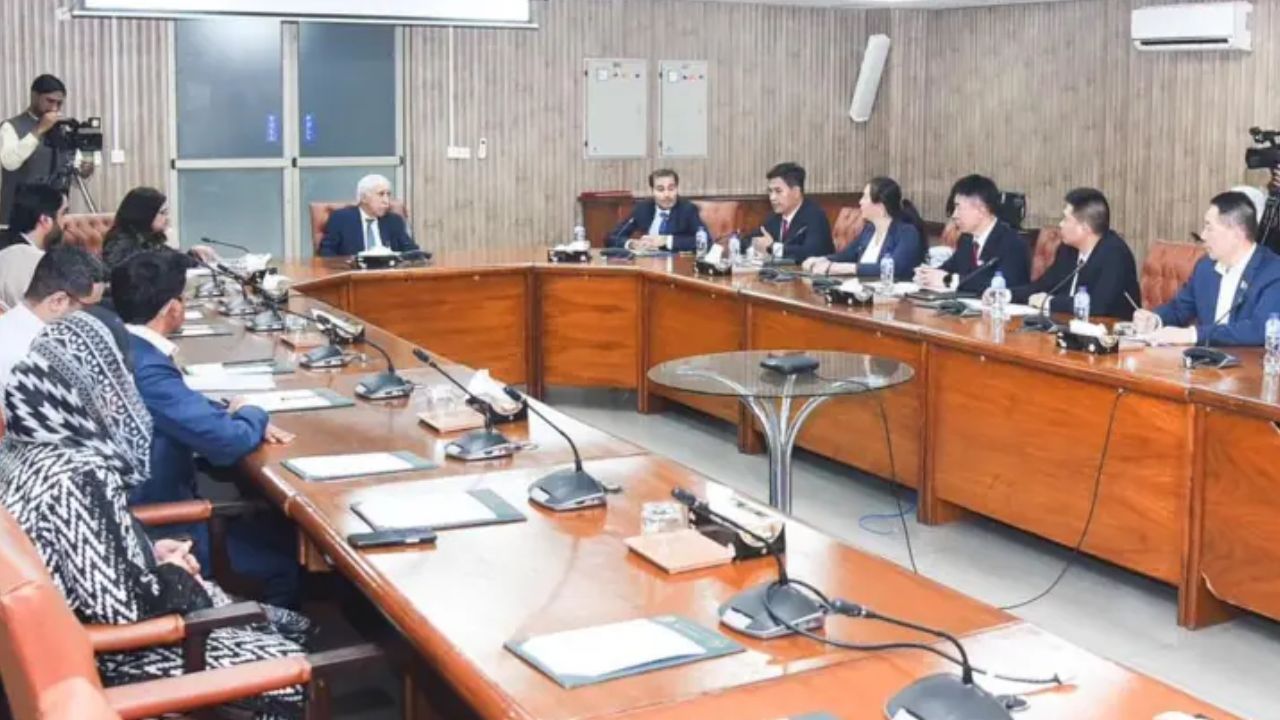
    The Chinese Aerospace Development Industry Investment Group has expressed interest in investing up to $10 billion in Pakistan across mining, advanced technology and industrial development sectors.

    As per the details, a high-level delegation from the group, led by party secretary and chairman of the board, Lu Jinhai, met Minister for Board of Investment (BOI) Qaiser Ahmed Sheikh on Thursday.

    The delegation said that it aims to collaborate with Pakistan on skill development and long-term economic and technological projects.

    The delegation added that it is willing to support Pakistan in the One Belt One Road (OBOR) initiative and strengthen regional connectivity and economic cooperation.

    Sheikh said that Pakistan offers extensive investment opportunities due to its strategic location connecting South Asia, Central Asia and the Middle East.  He said that the country’s large population and young workforce provide significant potential for investors, and that attractive incentives are available.

    The delegation briefed the minister on the company’s operations and global profile, saying that Aerospace Development Industry Investment Group is an international investment firm with an AAA corporate credit rating. 

    The firm is involved in strategic industrial investments including aerospace, artificial intelligence, electric vehicles, drone technologies and energy projects.

  • PTA says regulators are responsible for consumer protection after social media claims

    PTA says regulators are responsible for consumer protection after social media claims

    Pakistan Telecommunication Authority (PTA) has issued a clarification in response to concerns circulating on social media regarding mobile tariffs, service quality and unauthorized balance deductions, stating that the regulator remains responsible for consumer protection within the telecom sector.

    In its clarification, the authority said that the concerns pertain to pricing practices, service quality and service activations without subscriber consent, adding that the sector remains regulated through defined regulatory frameworks.

    The authority referred to the Mobile Tariff Regulations, 2025, under which mobile operators designated as having Significant Market Power (SMP) are required to seek prior approval before introducing or revising tariffs. PTA said operators falling outside the SMP category may determine tariffs based on commercial considerations, but these remain subject to regulatory oversight if pricing is found to affect consumer interests.

    PTA said the tariff framework is designed to maintain consistency while allowing operators to operate within regulatory limits. It added that the authority retains the power to intervene where tariff structures are found to be non-compliant or harmful to users.

    On service quality, PTA said it is working towards network improvement through regulatory measures and upcoming sector developments. The authority confirmed that a spectrum auction is planned for March 2026, which will require mobile operators to invest in new spectrum and network infrastructure. According to PTA, the auction is expected to support improvements in coverage, network performance and data speeds.


    PTA  also said consumers facing issues related to billing, service quality or unauthorized activations may register complaints through the toll-free helpline 0800-55050 or via the PTA Complaint Management System available on the authority’s official website.

  • UK proposes 48-hour rule for removing intimate images from tech platforms

    UK proposes 48-hour rule for removing intimate images from tech platforms

    Under a proposed UK law, tech platforms operating in the country would be required to remove intimate images shared without consent within 48 hours. The government said tackling such abuse should carry the same urgency as Child Sexual Abuse Material (CSAM) and terrorist content.

    Failure to comply could result in fines of up to 10 percent of a company’s global revenue or the blocking of its services in the UK.

    UK Prime Minister Keir Starmer told BBC Breakfast that the measures form part of an “ongoing battle” with platform providers on behalf of victims. He added that the rule would allow a victim of intimate image abuse “doesn’t have to do a sort of whack-a-mole chasing wherever this image is next going up”. 

    Keir noted that tech companies are “already under that duty when it comes to terrorist material so it can be done. It’s a known mechanism,” and said the government “needs to pursue this with the same vigour”.

    The proposals are being introduced as an amendment to the Crime and Policing Bill, currently under consideration in the House of Lords. Once implemented, victims would only need to flag an image once instead of contacting multiple platforms. Companies would also have to prevent the images from being re-uploaded after removal.

    The plans would give internet service providers guidance to block access to sites hosting illegal content, targeting rogue platforms currently outside the scope of the Online Safety Act.

    Janaya Walker, interim director of the End Violence Against Women Coalition, said the move places the responsibility on tech companies to act.  Technology Secretary Liz Kendall said: “The days of tech firms having a free pass are over… no woman should have to chase platform after platform, waiting days for an image to come down”.

    Keir also said enforcement would involve fines and other measures determined by a “combination of oversight bodies in relation to what’s online and then it will be a criminal matter”.

  • Zuckerberg defends Meta as addiction claims reach jury

    Zuckerberg defends Meta as addiction claims reach jury

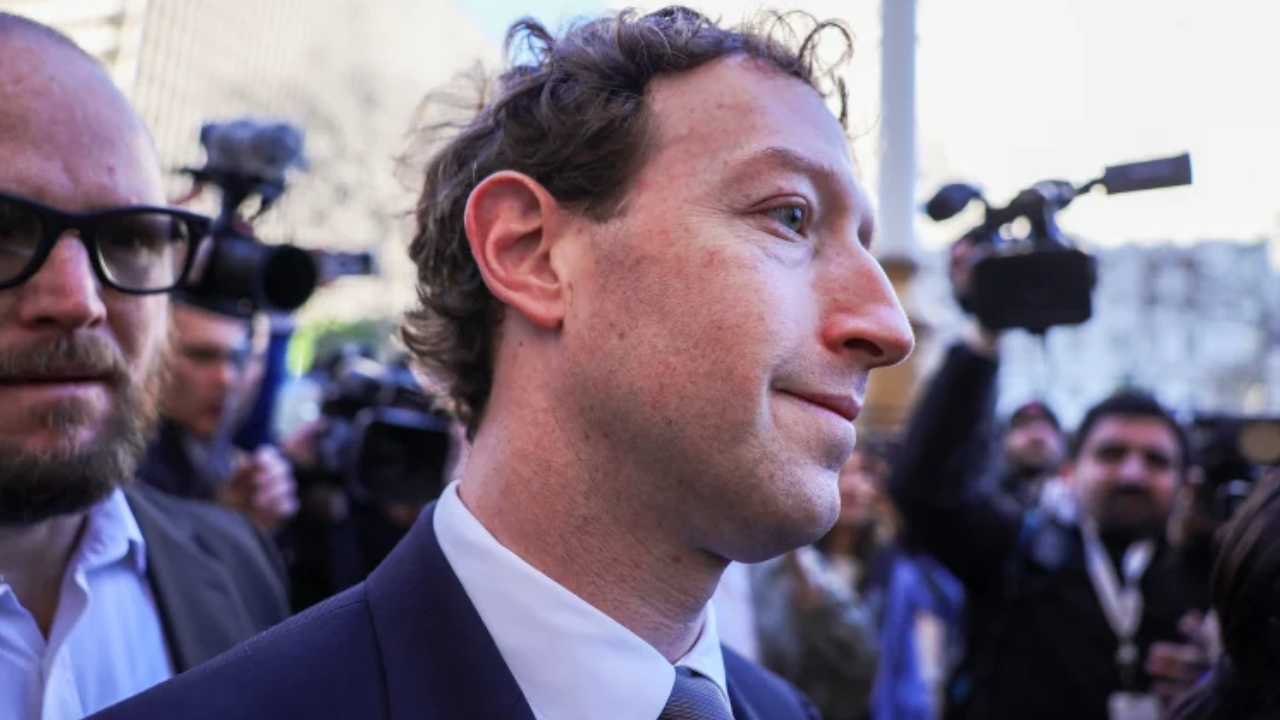
    Mark Zuckerberg has defended Meta Platforms during testimony in a social media addiction trial, rejecting claims that the company targeted young users and arguing that internal communications presented in court were being taken out of context.

    Appearing before a jury, Mark Zuckerberg said lawyers for the plaintiffs were “mischaracterising” emails, messages and research documents cited to support allegations that Meta’s platforms encouraged excessive use among children and teenagers. 

    The case focuses on whether social media services, including Instagram, are addictive for young users.

    The proceedings mark Zuckerberg’s first jury trial appearance and come amid legal challenges faced by Meta Platforms, which owns Instagram, WhatsApp and Facebook. YouTube is also named as a defendant. TikTok and Snapchat had been part of the lawsuit but reached settlements shortly before the trial began. The settlement terms were not made public.

    Meta has said it restricts users under 13 and has taken steps to address concerns related to younger audiences. During questioning, however, Mark Lanier, a lawyer for a woman who accuses Meta of harming her mental health when she was a child, presented internal documents showing discussions among senior Meta staff about teenaged and younger users.

    One email from 2019, addressed to Zuckerberg and other executives, raised concerns about what it described as “unenforced” age limits. The message stated this made it “difficult to claim we’re doing all we can,” according to the email sent by Nick Clegg, who previously served as the UK’s deputy prime minister.

    Lanier also cited a 2019 research report conducted by an external firm for Instagram. The report stated that teens felt “hooked despite how it makes them feel” and described what it called “an addicts’ narrative” around Instagram use. The findings noted that teen users said the platform could make them feel good or bad and that they wished they spent less time thinking about it. Zuckerberg responded that the research was not carried out internally at Meta.

    Under questioning by Meta lawyer Paul Schmidt, Zuckerberg said the same report also highlighted “positive” aspects of Instagram use. 

    Lanier presented a 2018 internal presentation referring to the retention of “tweens” on Instagram, despite company policies barring such users. Zuckerberg said he regretted not moving faster to identify users under 13 but said the company reached “the right place over time.” He added that teen users accounted for “less than one percent” of Meta’s advertising revenue and said the document had been taken out of context.

    Zuckerberg told the court that Meta had discussed building versions of its products for children under 13 “in a regulated way,” citing Messenger Kids, which he said he uses with his own children. “You’re mischaracterising what I’m saying,” he told Lanier. “I’m not surprised that people internally were studying this.”

    Schmidt referenced tools introduced by Instagram in 2018 that allow users to set daily limits, receive alerts about time spent and disable notifications at night. Lanier later cited an internal document showing that use of these tools among teens was limited, with 1.1 percent of teen users opting for daily time limits.

  • Meta secures AI patent to keep dead alive on social media

    Meta secures AI patent to keep dead alive on social media

    Meta Platforms, the parent company of Facebook, Instagram and WhatsApp, has been granted a patent for an artificial intelligence system capable of replicating a user’s social media activity, including posting, commenting and responding to messages after their death.

    Filed in 2023 and approved in late December, the patent outlines a system that trains a large language model on a user’s historical activity to recreate their online behavior.

    The filing, which lists Meta Chief Technology Officer Andrew Bosworth as the primary author, describes how the AI could generate posts, likes, comments and direct message replies using data such as past content, interactions and engagement history. 

    While it could also simulate video or audio calls, according to the patent, the system may maintain a user’s presence during long absences or after death, noting that inactivity has a lasting impact on the experience of followers who cannot interact with the user.

    Meta has stated the patent is conceptual and has no immediate plans to develop or deploy the system. A company spokesperson said that patents are often filed to protect ideas that may never be commercialised.

    However, the concept aligns with remarks made by CEO Mark Zuckerberg in 2023, when he suggested AI could help people interact with digital representations of loved ones, provided it operates with user consent.

    It merits a mention that the concept is not unique. Microsoft patented a chatbot in 2021 designed to simulate deceased individuals, public figures or fictional characters. Several startups have since launched services offering AI-driven memorial avatars. 

    The technology raises legal and ethical questions, particularly regarding post-mortem privacy, as noted by Edina Harbinja, a University of Birmingham professor specialising in digital rights.

    Public response to the news has been largely critical. Users expressed concern over the potential for AI to manipulate the digital identities of the deceased.

    “Imagine arguing with someone online and they’ve been dead for three years,” wrote one user, while another said, “That should be illegal. How can they co-opt the words and data and digital likeness of a dead person without that person’s permission or the permission of their family?” 

    Others highlighted risks to social networks, noting, “Imagine finding out months later that your friend who died was actually an AI chatbot. This isn’t about personal choice when it affects everyone in someone’s network.” 

    Comparisons to fictional scenarios also appeared, with one reaction stating, “So Black Mirror was a product roadmap.”

    One comment used the news to make a joke about politics, stating, “Oh my god. We’re never getting rid of Trump.”