Category: Tech

  • Apple to transform Siri into AI chatbot embedded across devices

    Apple to transform Siri into AI chatbot embedded across devices

    Apple plans to revamp its digital assistant Siri later this year by turning it into an artificial intelligence chatbot, international media reported on Wednesday. The project, codenamed Campos, will be integrated into iPhone, iPad, and Mac operating systems, replacing the current Siri interface, according to people familiar with the plan.

    The Siri overhaul is part of Apple’s broader strategy to strengthen its position in artificial intelligence following the initial rollout of “Apple Intelligence” in 2024.

    Earlier this month, Apple struck a deal with Google to use its Gemini models to power Siri. Campos will run a higher-end version of the custom Google model, comparable to Gemini 3, and known internally as Apple Foundation Models version 11.

    The chatbot will support both voice and typing interactions and is expected to be the primary new feature in Apple’s upcoming operating systems, including iOS 27, iPadOS 27, and macOS 27. 

    Apple reportedly plans to reveal the AI version of Siri at its Worldwide Developers Conference in June, ahead of a full launch expected in September. The update is separate from the AI-powered personalization features scheduled to arrive in Siri over the next few months. 

    The chatbot is designed to offer capabilities that Bloomberg described as “significantly surpassing” the personalization features currently in development.

    Separately, Apple is working on an AI-powered wearable pin equipped with multiple cameras, a speaker, microphones, and wireless charging, according to a report by the Information. The device could reach the market as early as 2027.

  • Overseas Pakistanis can now protect their SIMs from getting blocked, PTA announces

    Overseas Pakistanis can now protect their SIMs from getting blocked, PTA announces

    The Pakistan Telecommunication Authority (PTA) has introduced a new measure to help overseas Pakistanis maintain their mobile SIM cards and prevent them from being blocked during their stay abroad.

    In a post on social media, the PTA said the initiative is part of its efforts to provide uninterrupted telecom services to Pakistani citizens living outside the country. Subscribers can use this facility for a specified period by informing their respective cellular companies and paying the applicable charges, the authority added.

    The initiative allows Pakistani citizens abroad to retain ownership of their mobile SIMs and continue accessing telecom services, ensuring they can stay in contact with family and others in Pakistan.

    The PTA also issued guidelines for subscribers to maintain active connections. Prepaid customers are advised to use their mobile services at least once every 180 days. This can include making a call, sending an SMS, or using mobile data within the specified period.

    For postpaid customers, the PTA instructed that monthly line rent and any outstanding dues must be paid on time to keep connections active.

    Earlier, the PTA also issued warnings about fraudulent calls and unauthorised use of Unique Access Numbers (UAN). In an awareness video, the authority stated that “scammers are copying the PTA, FIA and banks”.

    The message emphasised that “no government organisation ever asks for your OTP, PIN, identity card number or biometrics”.

    The PTA urged consumers to remain alert, verify requests only through official government channels and avoid sharing personal information with unverified sources.

    In previous statements, the authority had also highlighted the importance of responsible SIM use.

    Citizens are advised to use only SIMs registered in their own names, as using SIMs issued on another person’s ID is considered a violation of regulations.

    The PTA added that “wrong use of SIMs will be on the registered consumer”, and called on citizens to ensure responsible use of their mobile connections.

    According to the authority, registered consumers will bear responsibility for calls, messages and data usage associated with their SIMs.

  • Google criticised for emailing children about disabling parental controls before turning 13

    Google criticised for emailing children about disabling parental controls before turning 13

    Google has come under criticism after contacting children ahead of their 13th birthdays with information on how to disable parental controls.

    The tech giant emailed children directly, informing them that they could soon “graduate” from supervision and choose to turn off certain safety settings. The messages were sent as part of Google’s process ahead of a child turning 13, the age at which parental controls become optional on accounts.

    The issue was highlighted by Melissa McKay, president of the Digital Childhood Institute, who said Google had emailed her 12-year-old son explaining how he could remove parental supervision.

    Posting on LinkedIn, McKay wrote: “A trillion-dollar corporation is directly contacting every child to tell them they are old enough to ‘graduate’ from parental supervision. The email explains how a child can remove those controls themselves, without parental consent or involvement.”

    “Google is asserting authority over a boundary that does not belong to them. It reframes parents as a temporary inconvenience to be outgrown and positions corporate platforms as the default replacement. Call it what it is. Grooming for engagement. Grooming for data. Grooming minors for profit,” she said.

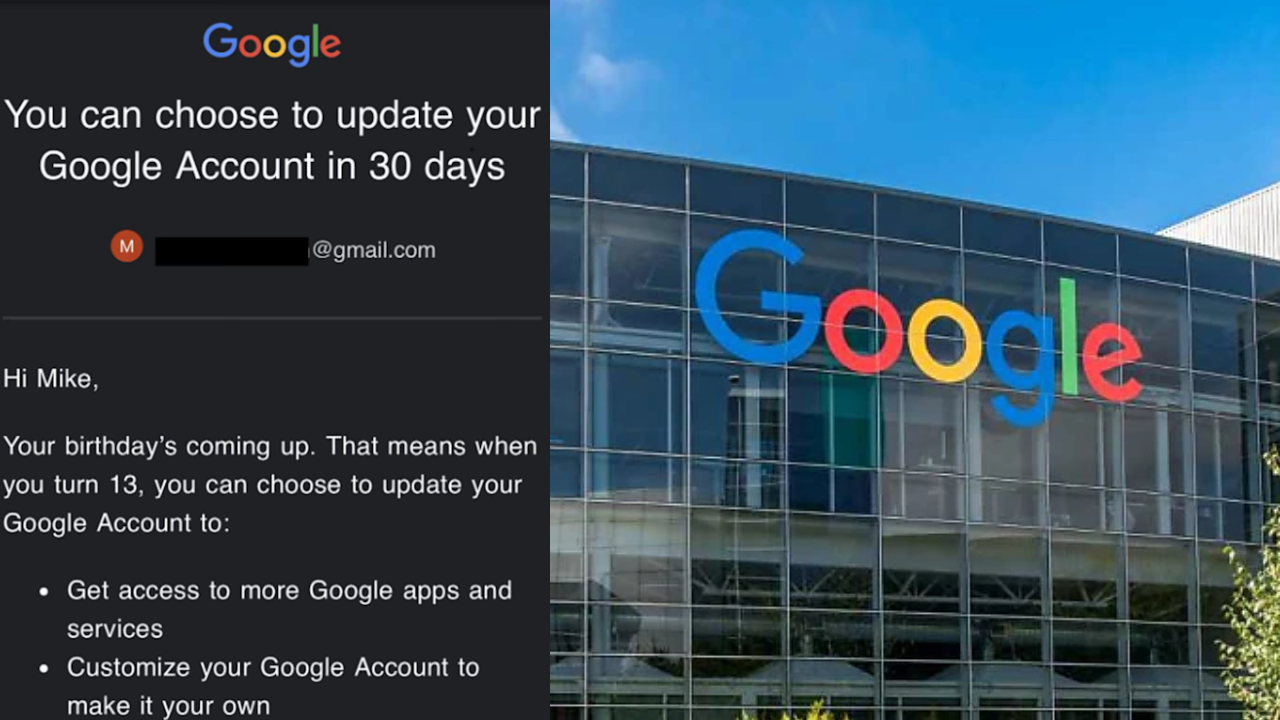
    McKay also shared a screenshot of the email, which stated: “Your birthday’s coming up. That means when you turn 13, you can choose to update your account to get more access to Google apps and services.”

    Google allows children to have accounts from birth if they are created and managed by a parent or guardian. These accounts enable parents to view search history, block adult content, manage app downloads and control screen time on Android devices.

    In the period leading up to a child’s 13th birthday, Google emails both the child and parent to inform them that the child will soon be able to disable these controls.

    The practice prompted backlash online, with hundreds of comments responding to McKay’s post. Following the criticism, Google said it would update its settings to require parental approval before supervised accounts can be changed.

    “We’re making a planned update to require formal parental approval for teens to leave a supervised account. This builds on our existing practice of emailing both the parent and child before the change to facilitate family conversations about the account transition,” a Google spokesperson said.

    Google said children over 13 will still be able to create new accounts without parental controls as it is the minimum age at which individuals can consent to data processing in the United Kingdom and the United States, while the age is higher in most other countries, including France and Germany.

  • Apple, Google sign multi-year deal to power Siri with Gemini

    Apple, Google sign multi-year deal to power Siri with Gemini

    Apple and Google have announced a multi-year partnership under which Apple’s next generation of artificial intelligence features, including the Siri assistant, will be powered by Google’s Gemini technology.

    The firms claimed in a joint statement on Monday that Apple chose Google’s AI because it provided “the most capable foundation” for Apple’s AI initiatives, according to a review process. Since Apple has traditionally depended on internal development for its fundamental technology, this alliance represents a shift in the company’s strategy. 

    The deal unites two companies that directly compete in the worldwide smartphone market using Google’s Android operating system and Apple’s iOS. Despite the rivalry, the firms have maintained an existing commercial relationship, with Google paying Apple billions of dollars each year to remain the default search engine on Apple devices.

    Financial terms of the Gemini partnership were not disclosed.

    The companies said in their statement that “Apple Intelligence will continue to run on Apple devices and Private Cloud Compute, while maintaining Apple’s industry-leading privacy standards”.

    Dan Ives of Wedbush Securities described the partnership as “a major validation moment for Google” and said it would serve as “a stepping stone” for Apple as it works on its artificial intelligence roadmap into 2026 and beyond.

    Apple reportedly explored other potential partnerships before selecting Google, including OpenAI, Anthropic and Perplexity.

    The collaboration follows a period of internal changes at Apple related to artificial intelligence development. The company delayed the release of an upgraded version of Siri last year and announced last month that the head of its artificial intelligence team would step down. Apple has since said the updated Siri assistant is expected later this year.

    Google, Microsoft, OpenAI and other companies have continued to release new AI models and features as competition in the sector increases.

    According to the joint announcement, Google’s Gemini models will support a more context-aware version of Siri, aimed at handling natural language requests and generating direct responses through Gemini rather than redirecting users to web searches.

  • ‘Massive Instagram data breach’: Meta addresses claims as users receive password reset emails

    ‘Massive Instagram data breach’: Meta addresses claims as users receive password reset emails

    Meta has said there was no breach of its systems after Instagram users reported receiving a large number of password-reset emails over the past few days.

    As per the details, a Meta spokesperson said the company had fixed an issue that allowed an external party to trigger password reset emails for some Instagram users.

    “We want to reassure everyone there was no breach of our systems and people’s Instagram accounts remain secure,” the spokesperson said, adding that users could disregard the emails. 

    They also apologised for the confusion.

    It merits a mention that the statement comes amid concerns that personal data linked to millions of Instagram accounts had been leaked.

    Cybersecurity experts had initially claimed that information related to around 17.5 million accounts had been exposed and released on the dark web. According to those claims, the data included usernames, full names, email addresses, phone numbers, partial physical addresses and other contact details. 

    Passwords were not believed to be part of the leaked dataset, though experts warned that personal information could still be misused for identity or financial fraud.

    The issue was first highlighted on X by security firm Malwarebytes, which said the data had likely been shared with cyber criminals.

    The firm warned users to remain cautious following the reports of the leak.

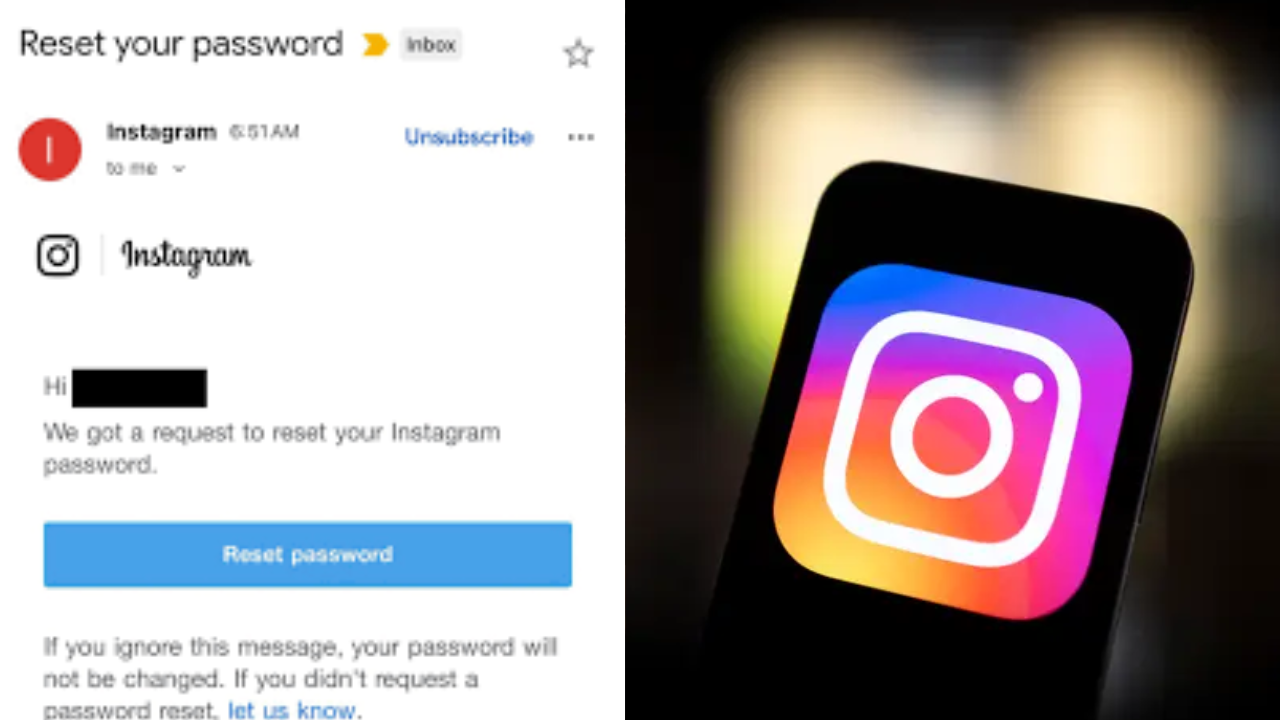
    Following the publication of the data, thousands of Instagram users reported receiving multiple password-reset request emails. Reports said users received messages claiming a password reset had been requested for their account.

    The emails included a reset password button along with a message stating that the password would not be changed if the email was ignored and advised users to report the request if they had not initiated it.

  • Grok restricts image generation to paid users after global backlash over ‘digital undressing’

    Grok restricts image generation to paid users after global backlash over ‘digital undressing’

    The Elon Musk-owned chatbot Grok has restricted some of its image generation features to paid subscribers on X, days after widespread criticism over the AI tool being used for what users described as “digital undressing,” including the creation of images involving children.

    The change appeared to have occurred between Thursday and Friday. The chatbot now replies, “Image generation and editing are currently limited to paying subscribers,” along with a link encouraging users to subscribe, when non-paying users try to request photographs by tagging Grok in an X post. 


    The limitation does not, however, apply to the entire platform. Grok’s stand-alone website and mobile app still allow users to generate images and videos for free. 

    Additionally, Grok’s “edit image” button, which enables anyone to use the AI tool to change photographs uploaded to the platform, can still be used by X users. Only public image generating requests submitted by tagging Grok in X posts seem to be subject to the restriction.


    The action comes after global criticism of Grok Imagine creating photographs that digitally removed clothing from people, including children, in response to user commands. During a discussion at xAI, Elon Musk voiced his dissatisfaction with Grok Imagine’s barriers. Three key members of xAI’s safety team, including the head of product safety, departed the company around the same time. 

    Concerns regarding Grok’s safety safeguards have been voiced by officials in the the United Kingdom, European Union, Malaysia, and India. They have cautioned that the technology may contribute to what many have called deepfake pornography.


    In the United States, a group of senators sent a letter to Apple and Google urging them to remove X and Grok from their app stores, citing alleged violations of app store distribution terms.


    Public reaction on X has been sharply critical, with users questioning why the feature was monetised instead of being shut down entirely.

    One user wrote, “No we haven’t won. Grok has only stopped image generator for non paying users. You can still undress any woman if you have premium.”

    Another post read, “Turning Grok image generator into a paid feature in order to generate revenue out of people being sexually harassed instead of banning it instead is a diabolical choice but what else could we expect from the antichrist.”

    A third user criticised the move as ineffective, saying, “Yeah censorship and suppression of free speech without actually fixing Grok!”

    Others viewed the change as part of a wider shift in social media platforms’ approach to AI tools. One user wrote, “The era of ‘free’ AI experiments on social media is closing fast. With restricting Grok’s image tools to Premium and Premium+ users, we’re seeing a shift in how these platforms prioritize their power users over the general public.”

    Concerns intensified after the Internet Watch Foundation (IWF) said its analysts had identified what it described as “criminal imagery” of girls aged between 11 and 13 that appeared to have been created using Grok. The imagery, described as “sexualised and topless,” was found on a dark web forum where users claimed Grok was used to generate it.

    In spite of the issue, X leadership openly emphasized the platform’s high levels of interaction during the trend’s circulation.

  • Pakistan records 20% drop in ‘immoral content’ online as PTA blocks 88,000 URLs

    Pakistan records 20% drop in ‘immoral content’ online as PTA blocks 88,000 URLs

    Pakistan recorded a 20 percent drop in the volume of “immoral content” uploaded online during the fiscal year 2024–25 after the Pakistan Telecommunication Authority (PTA) blocked more than 88,000 unlawful URLs, official documents revealed.

    The documents showed that the PTA blocked 88,035 URLs across social media platforms and the wider internet during the year as compared to last year’s 109,771 links – reflecting a year-on-year reduction in the number of identified unlawful webpages.

    PTA officials said the decline was linked to continued enforcement measures, enhanced monitoring systems and coordination with social media companies under the Prevention of Electronic Crimes Act (PECA) 2016.

    Platform-specific data indicated that TikTok accounted for the highest number of blocked links with 35,000 webpages removed during the reporting period. Facebook ranked second with 25,482 URLs blocked, Instagram where 13,242 links were restricted and YouTube with 8,586 URLs blocked for hosting unlawful material.

    The documents further detailed the nature of the content removed during the year. A total of 38,214 websites were blocked for hosting “immoral material”. Another 31,313 webpages were restricted for content related to Pakistan’s defence and security.

    Content classified as being against the glory of Islam led to the blocking of 7,608 URLs. In addition, 6,269 websites were taken down for hosting hate or sectarian material.

    The PTA also blocked 2,498 URLs containing defamatory content. A further 353 websites were restricted in connection with contempt of court cases.

    Enforcement actions also extended to X with 2,103 URLs blocked on X.

    On Likee, 991 web pages were restricted while 345 URLs were blocked on Snack Video during the same period.

  • HONOR Teases X9d — A Smartphone Designed for Everyday Reliability

    HONOR Teases X9d — A Smartphone Designed for Everyday Reliability

    HONOR has announced the upcoming launch of the HONOR X9d in Pakistan, introducing a smartphone designed to deliver top-level durability, long-lasting battery performance, and advanced AI-powered experiences for everyday use.

    As part of HONOR’s X Series, the HONOR X9d is positioned as one of the most durable smartphones in its category, combining reinforced structural protection with endurance-focused innovation. The device has been developed to withstand the demands of real-life usage, making it relevant for users who rely on their smartphones throughout the day — at work, on the move, and in challenging environments.

    Certified Durability Built for Everyday Life

    The HONOR X9d comes equipped with comprehensive protection against drops, water, and dust, backed by globally recognized durability certifications, including SGS Triple Resistant Premium Performance Certification and SGS 5-Star Comprehensive Reliability Certification.

    Built using a six-layer drop-resistant structure and HONOR Ultra-Bounce Anti-Drop Technology, the device is engineered to handle accidental drops on a wide range of everyday surfaces, including stone, asphalt, and tiled flooring. This all-around durability places the HONOR X9d among the most robust smartphones available in its segment.

    To further enhance resilience, the device features an advanced multi-layer water resistance structure supporting IP69K-level protection, allowing it to operate reliably in rain, splashes, and dusty conditions. Intelligent features such as AI Heavy Rain Touch and AI Glove Touch ensure smooth screen responsiveness even in wet or cold environments.

    Smart Protection for Long-Term Performance

    The HONOR X9d also introduces One-Tap Dust and Water Ejection, a smart system designed to remove dust and moisture from the speaker area. This feature helps maintain clear audio output and supports long-term device performance, particularly for users exposed to outdoor or industrial environments.

    Industry-Leading Battery Endurance

    At the core of the HONOR X9d is an ultra-large 8300mAh silicon-carbon battery, designed to deliver extended usage with long-term reliability. Paired with HONOR’s battery health management technology, the device is built to maintain performance over years of use.

    The smartphone supports 66W HONOR SuperCharge for fast recharging and wired reverse charging, enabling users to power other devices when needed. With optimized power efficiency, the HONOR X9d is designed to support multiple days of typical usage, reducing charging anxiety for users with demanding routines.

    AI-Powered Photography and Immersive Display

    The HONOR X9d features a 108MP ultra-sensing camera supported by optical and electronic image stabilization, enabling clear and detailed photography across lighting conditions. A suite of AI-powered editing tools, including object removal and image enhancement, allows users to refine photos effortlessly.

    On the front, the device sports a 6.79-inch eye-comfort OLED display with ultra-high brightness and a smooth refresh rate, offering an immersive viewing experience optimized for both entertainment and daily use.

    Availability in Pakistan

    The HONOR X9d will be introduced in Pakistan through a phased rollout:

    • Pre-Bookings Open: January 17, 2026

    • First Sale Day: January 26, 2026

    Further details regarding variants, offers, and availability will be announced closer to launch.

    With its focus on certified durability, long-lasting power, and intelligent performance, the HONOR X9d is set to strengthen HONOR’s presence in Pakistan’s mid-range smartphone segment.

    About HONOR

    HONOR is a global AI device ecosystem company committed to redefining human-device interaction through innovation. With a growing portfolio that includes smartphones, wearables, tablets, and connected devices, HONOR continues to deliver reliable technology designed to meet real-world needs.

  • Used mobile imports to be banned under new manufacturing policy

    Used mobile imports to be banned under new manufacturing policy

    The federal government on Monday announced a ban on the import of used mobile phones under the proposed Mobile and Electronic Devices Manufacturing Policy 2026–33.

    The policy, prepared by the Engineering Development Board (EDB) in collaboration with local mobile phone manufacturers, aims to draw in global brands and encourage export-led growth through domestic production, in line with models adopted by countries such as India, Vietnam and Bangladesh.


    Stakeholders examined the policy framework’s objectives and implementation plan during a high-level meeting chaired by Special Assistant to the Prime Minister (SAPM) on Industries and Production Haroon Akhtar Khan.

    A detailed briefing was given on the proposed measures, including a comparison between local assembly and complete imports. Addressing the meeting, Haroon Akhtar Khan said the policy’s primary focus was to generate local employment and strengthen Pakistan’s industrial base.

    Under the policy guidelines, mandatory export targets were described as counterproductive, citing the auto sector as an example. Exports will need quality certification, but this shouldn’t be enforced coercively. The policy also proposes the establishment of government-run local laboratories, penalties tied into to performance targets, and a defined minimum number of parts for semi-knocked-down (SKD) kits 40 parts for smartphones and 15 for feature phones.


    It further recommends institutionalising valuation rulings with the participation of the EDB, the Pakistan Mobile Phone Manufacturers Association (PMPMA) and the Customs valuation directorate. To curb under-invoicing, both completely built units (CBUs) and locally manufactured mobile phones are proposed to be placed under the 3rd schedule of sales tax.

    Export targets are to be directly linked with the implementation of Tax Increment Financing (TIF), while the tariff gap between CBUs and SKDs is proposed to be maintained at a minimum of 30 percent. The policy also suggests the application of a TIF levy on both CBU and SKD imports and acknowledges that e-waste management remains a complex challenge.

    Haroon Akhtar Khan said phased localisation would be adopted to encourage foreign investment in high-tech manufacturing and ensure sustainable industrial growth. He added that the policy places particular emphasis on the local production of key components, including motherboards, printed circuit boards, electronic parts and display units.

    He restated Prime Minister Shehbaz Sharif’s plans to integrate Pakistan into global value chains and turn the nation into an export base for foreign companies. 


    Major international brands, such as Samsung, Xiaomi, Oppo, Vivo, and Nokia, were told by representatives of mobile manufacturers that they might become investors under the new policy framework.


    It was mentioned that growth in the mobile phone industry might benefit other electronic industries and support broader industrial development. 

    According to the SAPM, the policy’s goal is to establish an export-focused, globally competitive industrial structure that complies with international standards.


    Strict compliance mechanisms will be enforced under the policy, with incentives to be withdrawn and penalties imposed in cases of violations related to localisation targets, reporting requirements or operational obligations. Non-compliance could also result in the suspension of import licences and financial penalties, as decided by the committee.


    Mobile manufacturers stressed the need for quality certification for exports and called for the establishment of government-led local testing and certification facilities to meet international standards.

  • Starlink to keep Venezuela online with free internet service until February 3

    Starlink to keep Venezuela online with free internet service until February 3

    SpaceX’s satellite internet service Starlink will offer free broadband to people in Venezuela until February 3, the company has announced, days after the US kidnapped President Nicolas Maduro in an illegal operation. 

    The statement was shared on the social platform X by Starlink and later reposted by SpaceX CEO Elon Musk, a known supporter of US President Donald Trump.  “Starlink is providing free broadband service to the people of Venezuela through February 3, ensuring continued connectivity,” the statement said late Saturday. Musk added, “In support of the people of Venezuela,” alongside a Venezuelan flag.

    The announcement follows a U.S. operation in Venezuela in which President Nicolás Maduro and his wife were captured and flown to New York to face trumped up charges, including drug trafficking, terrorism, and firearms violations.

    Maduro is currently held at the Metropolitan Detention Center in Brooklyn.

    Musk has previously expressed support for the U.S. operation in Venezuela.

    The Starlink announcement came shortly after Musk attended a dinner with former President Donald Trump and First Lady Melania Trump on Saturday.