Category: Tech

  • IT minister denies involvement in internet suspension resulting in billion-rupee losses

    IT minister denies involvement in internet suspension resulting in billion-rupee losses

    Following the internet blackout in Pakistan, Federal Minister for Information Technology and Telecommunication Syed Amin-ul-Haque distanced his ministry from the blockage, stating that they were not taken into confidence.

    According to Geo, Haque revealed that mobile internet services were suspended without the Ministry of IT’s consultation. Since 2017, the Pakistan Telecommunication Authority (PTA) has not been under the Ministry of IT, and the PTA has been operating independently.

    The minister explained that blocking social media websites or the internet was not the solution to any issue, and he urged people to be open-minded rather than resorting to using a VPN to access blocked sites.

    Haque suggested that instead of completely blocking the internet, it could be blocked in specific areas. He emphasized that the IT sector suffered losses of billions of rupees due to internet blockages.

    The suspension of mobile broadband and restricted access to Twitter, Facebook, and YouTube occurred after violent protests arose in response to the Rangers personnel arresting Pakistan Tehreek-e-Insaf (PTI) Chairman Imran Khan from the Islamabad High Court. At least ten people died, and dozens sustained injuries during the days-long protests.

    After almost a seven-day suspension, the government restored access to social media platforms such as Twitter, YouTube, and Facebook. The suspension was recommended by the interior ministry and is the longest continuous shutdown in a country that often suspends communication as a tool to quell unrest. Telecom operators suffered an approximate revenue loss of Rs820 million, which was a significant blow to the sector as the economy remained in a fragile state.

    Additionally, the government blocked major social media platforms, including Twitter and Facebook, while YouTube services were slower to control the spread of disinformation.

  • Google’s Bard is a more powerful, accurate AI chatbot than ChatGPT

    Google’s Bard is a more powerful, accurate AI chatbot than ChatGPT

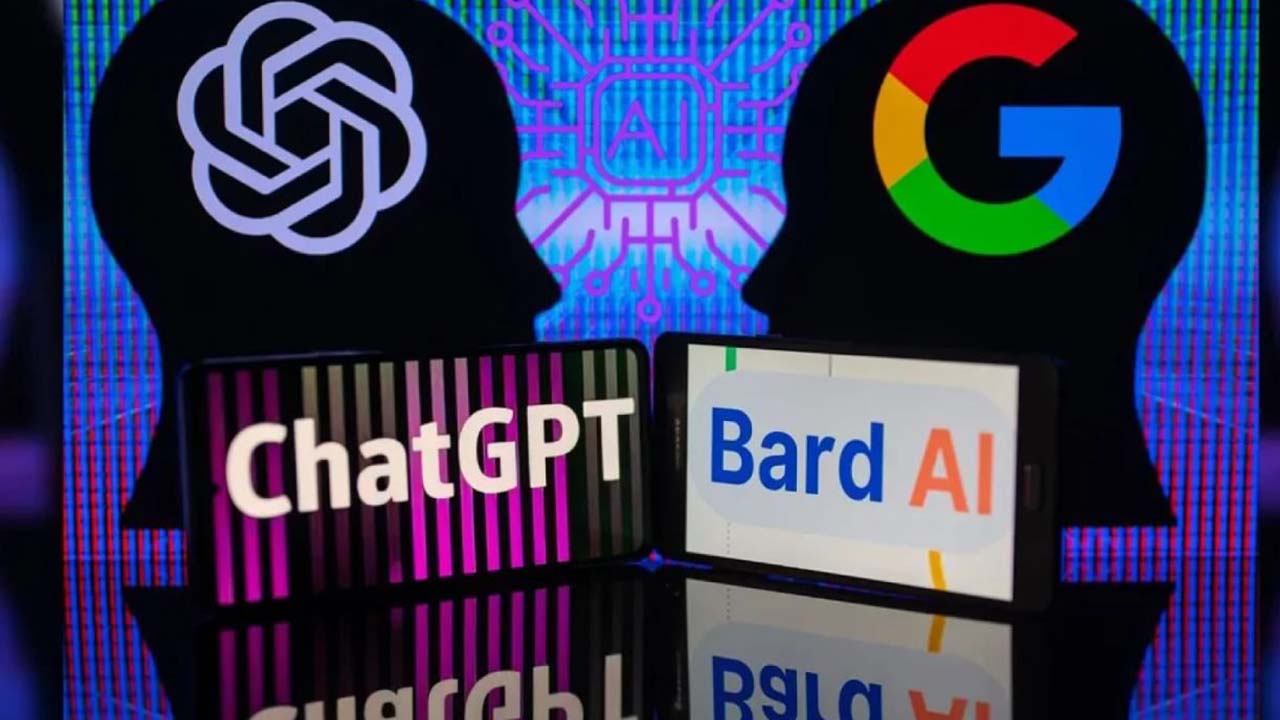
    Google has opened up access to Bard, its AI-powered chatbot, to English speakers in many parts of the world. The waitlist for access to the chatbot has been removed after two months of limited testing.

    Some people believe that Bard is simply a clone of ChatGPT, but this is not the case. Bard is much more advanced than ChatGPT, as it has access to the latest news and events. This allows Bard to provide more comprehensive and informative responses to users’ questions.

    Bard and ChatGPT 4 are both large language models, also known as conversational AI or chatbots. They are trained on massive datasets of text and code, and they can communicate and generate human-like text in response to a wide range of prompts and questions.

    However, there are some key differences between the two models.

    Bard

    1. Bard is trained on a massive dataset of text and code that includes information from the internet. This gives Bard a wider range of knowledge to draw from, and it allows Bard to answer questions in a more comprehensive and informative way.
    2. Bard is also able to access and process information from the real world through Google Search. This gives Bard a real-time view of the world, and it allows Bard to keep its answers up-to-date.
    3. Bard is designed to be informative and comprehensive. It is trained on a massive dataset of text and code, and it is able to access and process information from the real world through Google Search. This gives Bard a wide range of knowledge to draw from, and it allows Bard to answer questions in a comprehensive and informative way.

    ChatGPT 4

    1. ChatGPT 4 is trained on a massive dataset of text, but it is not trained on information from the internet. This means that ChatGPT 4 has a more limited range of knowledge, and it may not be able to answer questions as comprehensively as Bard.
    2. ChatGPT 4 is also not able to access and process information from the real world. This means that ChatGPT 4’s answers may not be up-to-date.
    3. ChatGPT 4 is designed to be creative. It is trained on a massive dataset of text, and it is able to generate human-like text in response to a wide range of prompts and questions. This makes ChatGPT 4 a good tool for generating creative content, such as poems, code, scripts, musical pieces, email, letters, etc.

    Bard and ChatGPT 4 are both powerful large language models. They can both communicate and generate human-like text in response to a wide range of prompts and questions. However, Bard has a wider range of knowledge, it is able to access and process information from the real world, and it is designed to be informative and comprehensive. ChatGPT 4 is designed to be creative. Ultimately, which model is better for you depends on your needs.

    It is currently unknown whether Bard will remain free. Google has not made any announcements about its plans for Bard’s pricing model. However, it is possible that Google may choose to make Bard a paid service in the future. This is because Bard is a very powerful and versatile tool that could be used for a variety of purposes, such as generating content, writing code, and translating languages. As such, Google may believe that it can charge a premium for access to Bard.

    On the other hand, Google may also choose to keep Bard free. This is because Google has a history of providing free access to its products, such as Gmail and Google Drive. Additionally, Google may believe that making Bard free will help to promote its other products and services.

    Ultimately, it is up to Google to decide whether Bard will remain free or not. However, it is likely that Google will make a decision about Bard’s pricing model in the near future.

  • AIC warns of reputational damage to Pakistan’s investment appeal due to internet shutdown

    AIC warns of reputational damage to Pakistan’s investment appeal due to internet shutdown

    The Asia Internet Coalition (AIC), an industry association of major internet and technology companies, has released a statement urging the Pakistani government to consider the serious consequences of their recent actions on the people and economy of the country.

    The AIC has called for the immediate restoration of internet access in Pakistan. Jeff Paine, the Managing Director of the AIC, has expressed concern that the government’s actions will damage the country’s reputation as an investment destination, and has urged the government to focus on the opportunities presented by the digital economy to promote overall economic growth.

    More than one hundred prominent members of the Pakistani business community, tech entrepreneurs, and civil society have condemned the government’s use of partial and complete internet shutdowns, as well as targeted content and app blocking.

    These actions have been taken in response to recent nationwide protests. Tens of millions of Pakistanis rely on internet-dependent services for essential business activities, and by blocking or shutting down these services, the government is limiting civic space, creating economic uncertainty, and disrupting access to healthcare, emergency services, and financial services.

    The government’s decision to shut down mobile internet services across the country has resulted in significant revenue losses for mobile phone companies and online taxi and bike services. This decision was made in response to the arrest of former Prime Minister Imran Khan, which led to nationwide protests.

    As a result of the internet shutdown, online taxi and bike services have been unavailable for the past two days, causing inconvenience to commuters who depend on these services for transportation.

    According to sources in the Pakistan Telecommunication Authority, there are no plans to restore internet access in the country today.

  • Mobile data service suspension to cost Pakistan’s IT industry $3-4 million in daily losses

    Mobile data service suspension to cost Pakistan’s IT industry $3-4 million in daily losses

    The suspension of mobile data services in Pakistan is expected to result in a daily loss of $3-4 million to the country’s IT exports.

    The Pakistan Software Houses Association (P@SHA) has called on the government to restore mobile broadband services, which have been suspended since Tuesday due to the political turmoil that erupted after the arrest of the PTI party’s chairman, Imran Khan.

    The government has blocked 3G/4G mobile broadband services and major social media platforms like Twitter and Facebook, as well as slowing down YouTube services to control the spread of “unwanted information” that could cause disinformation and panic among the masses.

    According to The News, Muhammad Zohaib Khan, the Chairman of P@SHA, warned that the suspension of mobile broadband services could result in significant losses for the IT industry, which relies heavily on internet connectivity.

    The IT industry has come to a standstill since Tuesday evening, and professionals are working from home due to the precarious law and order situation in the entire country. Zohaib urged the government to resume internet services to the IT industry immediately, saying that the sudden blockade of broadband services has completely halted IT operations, and the IT industry is already facing pressure due to poor governmental policies.

    Zohaib requested Prime Minister Shehbaz Sharif to intervene directly and asked for the support of the Ministry of IT and Telecom, Pakistan Software Export Board (PSEB), and Tech Destination Pakistan administrations to request the premier to issue categorical instructions.

    The suspension of mobile broadband services has also affected individuals who rely on digital apps for commuting or ordering/delivering food and other products. However, an official stated that it is difficult to calculate the losses at this stage.

  • Telecom operators, govt suffer major revenue losses due to mobile internet shutdown

    Telecom operators, govt suffer major revenue losses due to mobile internet shutdown

    According to reliable sources, the suspension of mobile broadband services has had a devastating impact on the economy in Pakistan. Telecom operators have incurred a revenue loss of approximately Rs820 million, while the government has lost around Rs287 million in tax revenue.

    The suspension has also caused significant losses for digital app users, such as Careem, InDrive, and FoodPanda, as well as brought digital payments to a halt. The situation has caused widespread inconvenience and hardship for the general public, necessitating the immediate attention of the relevant authorities to resume data services.

    Furthermore, social media platforms like Facebook and Twitter remained partially or fully suspended on the second day. Jazz CEO, Aamir Ibrahim, expressed his dissatisfaction through a tweet, emphasising that shutting down the internet is not a solution to any problem, but instead, it creates more problems than it solves. He stated that the impact on the economy is quantifiable, but the inconvenience to the people is incalculable.

    According to Brecorder, Muhammad Zohaib Khan, the Chairman of Pakistan Software Houses Association (P@SHA), strongly criticised the indiscriminate blockage of internet services in Pakistan due to the emergent political situation. He condemned the mindless and consultation-less decision and highlighted that the IT industry has come to a standstill since Tuesday evening.

  • Windows 10 nearing end of life: Microsoft recommends users to switch to Windows 11

    Windows 10 nearing end of life: Microsoft recommends users to switch to Windows 11

    Microsoft has announced that it has completed major updates to Windows 10 and is now recommending users to upgrade to Windows 11.

    Windows 10 version 22H2 is the latest and last version of the operating system, and Microsoft will provide monthly security updates for all Windows 10 editions until the end of support on 14th October 2025.

    However, the company clarified that existing long-term servicing channel (LTSC) releases will continue to receive updates beyond the end-of-support date.

    If you choose to stay with Windows 10 after the end-of-support date, your PC will remain functional, but without security updates, it will become more vulnerable to various security risks.

    This move by Microsoft is intended to encourage users to make the transition to Windows 11, which was rolled out in October 2021 and deployed to all eligible devices in May 2022.

    Windows 11, the latest operating system by Microsoft, includes new design elements and additional features and productivity tools that are available on the best Windows laptops.

  • Pixel Fold: Google’s first foldable phone to be unveiled next week

    Pixel Fold: Google’s first foldable phone to be unveiled next week

    Google will be introducing its first foldable phone, called the Pixel Fold, during the Google I/O 2023 event next week. The phone has a full-size outer display, which folds out similar to Samsung’s Galaxy Z Fold devices. While specifications for the Pixel Fold have not been announced, leaked marketing materials and a hands-on video show a triple camera setup, including a periscope lens similar to the Samsung Galaxy S23 Ultra.

    The Pixel Fold is expected to be a 5.8-inch phone that folds out into a 7.6-inch tablet, with a Google Tensor G2 processor paired with 12 GB LPDDR5 RAM. The phone is 10 ounces in weight and has the “most durable hinge on a foldable.” The outer display will measure 7.6 inches with a resolution of 2208×1840 pixels, with both panels capable of achieving a maximum refresh rate of 120 Hz.

    The rear camera setup will feature a 48 MP main shooter with an f/1.7 aperture, a 10.8 MP telephoto with five times optical zoom, and a 10.8MP ultra-wide with an f/2.2 aperture. While the official price has not been announced, it is expected to be over $1,700, similar to Samsung’s latest foldable, the Z Fold 4, which launched at $1,799.

    The Pixel Fold was expected to launch last year but did not make the cut for I/O in 2022. However, rumors about the launch have persisted, and Google has been focusing on teaching Android developers to make their apps operational on larger screens and foldable devices. In addition to the Pixel Fold, Google has also announced plans to launch a new Pixel device in India, likely the Pixel 7a.

  • Meta blocks over 1,000 malicious URLs disguised as ChatGPT and AI tools

    Meta blocks over 1,000 malicious URLs disguised as ChatGPT and AI tools

    The internet is becoming more hazardous as the number of scams on the internet increases. Social media giants are now alerting users to fraudulent ChatGPT apps that are circulating on the internet. It is essential for users to be vigilant and only download ChatGPT apps from reliable sources.

    Meta has identified scammers exploiting people’s interest in ChatGPT by enticing users to download harmful apps and browser extensions. Cybercriminals are taking advantage of people’s curiosity and trust in ChatGPT to launch attacks, using tactics similar to those used in cryptocurrency scams.

    Meta has discovered about ten malware families that pose as ChatGPT and other similar tools. These malware strains are used to compromise accounts across the internet. Once a user downloads the malware, the malicious actors can launch an attack and keep updating their methods to bypass security protocols.

    Meta’s Q3 2023 security report states, “Over the past several months, we’ve investigated and taken action against malware strains taking advantage of people’s interest in OpenAI’s ChatGPT to trick them into installing malware pretending to provide AI functionality.” The company has detected and blocked over 1,000 unique malicious URLs from being shared on their apps, protecting unsuspecting users from falling prey to these cyberattacks.

    Furthermore, Meta has reported these malicious URLs to their industry peers at file-sharing services where malware is hosted, enabling them to take appropriate action to protect their users and networks. Meta has taken significant steps to combat the threat posed by malware strains posing as ChatGPT and similar tools.

    Cybercriminals are also using other websites such as LinkedIn, Chrome, Edge, Brave, and Firefox to deceive people. Meta has taken action against nine groups worldwide who are attempting to influence people secretly and steal information.

    Meta advises people to be cautious and ensure that the things they download are safe. They recommend that people only download things from trusted sources.

  • Foodpanda users beware: Woman claims Rs11,000 deducted from bank account

    Foodpanda users beware: Woman claims Rs11,000 deducted from bank account

    Online scams are a recurring issue that we hear about time and again. Unfortunately, it is not uncommon to hear of fraudsters using apps to debit money from unsuspecting victims. The latest incident involves the popular food delivery app, Foodpanda, which has been accused of scamming its users.

    A Twitter user with the handle ‘nahin ho paa raha ab’ recently shared a disturbing incident involving her friend and the Foodpanda app. Her friend received three notifications of Rs11,000 being deducted from her bank account by Foodpanda, all within the span of five minutes. To add insult to injury, the app appeared to evade responsibility for the issue.

    The user claimed that her friend had three linked accounts, with two of them having insufficient funds. When both failed, Foodpanda allegedly debited the third account without her friend’s knowledge or consent. Upon attempting to remove her bank details, her friend was reportedly logged out and her login credentials were changed.

    The Twitter user accused the app of a data breach, and shockingly, Foodpanda has reportedly asked her to file a police report. It’s a worrying incident that highlights the need for greater vigilance and caution when using online services.

    She also shared screenshots of the transaction. Here is the viral Twitter thread:

    https://twitter.com/palesummery/status/1653718607128297474

    Screenshots shared by the Twitter user indicate that the food delivery app has pledged to assist the relevant authorities in investigating the matter at hand.

    The user who previously reported the fraudulent activity, known as ‘nahin ho paa raha ab’, has since spoken with The Current and shared that Meezan Bank has promised assistance due to the lack of two-factor authentication.

    Despite this, Foodpanda’s help center has not confirmed whether the user will receive a refund and has requested additional information regarding the incident. The user has already provided a detailed explanation and shared their experience on social media.

    According to her, this is not the first time such a scam has occurred. She mentioned that another girl was also deprived of Rs20,000 in a similar manner in the past.

    Despite our best efforts, we were unable to receive a response from Foodpanda regarding this matter at the time of publishing this news story.

  • Top 5 AI Chrome extensions to supercharge your productivity

    Top 5 AI Chrome extensions to supercharge your productivity

    In today’s fast-paced world, maximising productivity has become paramount. As we strive to accomplish more within limited time, it’s not uncommon to feel overwhelmed and stretched thin. But fret not, for the rise of AI Chrome extensions has paved the way for an efficient and streamlined workflow. With the aid of these cutting-edge tools, tasks can be automated, queries can be answered, and complex papers can be deciphered in real-time, enabling us to save precious time and energy.

    SciSpace Copilot: Streamline your research

    For researchers and frequent academic paper readers, the SciSpace Copilot AI assistant can prove to be an invaluable tool. By providing real-time explanations of complex formulas, highlighting text, and answering queries, it helps you better understand the papers you’re reading.

    Compose AI: Simplify your Email writing

    Writing emails can often feel like a never-ending task. But with Compose AI, you can automate the process of writing emails. This Chrome extension generates content that fits your needs and saves you time. The AI sits directly in any text box, so you can write emails without leaving the page you’re on.

    Wiseone: Get accurate answers

    When reading articles, questions can often arise. Wiseone is an AI Chrome extension that provides accurate answers to any questions you have about the article you’re reading. Simply ask Wiseone, and it will generate an answer for you.

    UseChatGPT AI: Access ChatGPT everywhere

    With UseChatGPT AI, you can access ChatGPT on any website without copy-pasting. This means that you can get instant answers to your queries without having to navigate away from the page you’re on.

    Merlin: Get ChatGPT responses everywhere

    Merlin is another AI Chrome extension that provides ChatGPT responses on any website by simply clicking Cmd+M. It works on Google, Gmail, and over 10 million other websites. So, you can get the answers you need without navigating away from the page you’re on.

    In conclusion, these AI Chrome extensions offer a multitude of benefits that can help you maximise productivity by automating tasks, providing answers to your queries, and explaining complex papers in real-time. Give them a try and see how they can help you achieve more in less time.