Category: Tech

  • Motorway police introduces anti-sleep device for drivers

    In a bid to curb traffic accidents, the National Highways and Motorway Police has introduced an alarm-like device to keep drivers from falling asleep at the steering wheel, and claims that it will significantly reduce the rate of accidents on the motorway.

    The device is designed to be worn on their ears and has sensors that set off an alarm if and when a driver’s head tilts forward due to drowsiness. The alarm is a loud beep that sounds off near the ears of the driver. As reported by a motorway policeman who demonstrated the use of the device in a video, it actually costs Rs. 750 but will be made available for public use at Rs. 300 with the help of an unnamed donor.

    The policeman also informed the media that the department will introduce the device in coordination with the traders associations and local administrations. He added that roadside stalls will be placed in each area to sell the device to the public. The motorway police department affirmed that most of the accidents on the motorway are caused by drivers who fall asleep while driving, because of which hundreds of citizens lose their lives on a regular basis. It added that the new devices can be worn by both drivers and passengers to prevent such catastrophes.

  • Facts that you did not know about Pakistan’s digital scene

    Moiz Sayed, who is Google’s Industry Head for Pakistan, Bangladesh, and Sri Lanka has shed light on what brands in Pakistan can achieve if marketers adopt a shift in mindset and break away from traditional forms of marketing and advertising in the digital era.

    Compared to the 90s, the way Pakistanis communicate and connect has changed drastically. “Pakistan now has 169 million cellular subscribers, 85 million 3G+ subscribers, and 87 million broadband, subscribers.”

    In the digital era, advertisement budgets appear to follow a traditional model, based on strategies that have succeeded in the past. “I’ve realised our industry believes Pakistan has limited internet penetration and poor access to smartphones, thus thinking digital won’t have sufficient reach.”

    Here are some of the facts presented in the article regarding Pakistan’s digital scene that you did not know :

    Fact 1 : Despite being in the digital era 65-70% of current ad spend being allocated to TV by default in Pakistan.

    Fact 2 : Most brands only leverage 20%-30% of the available reach on YouTube among their target audience.

    Fact 3 : Over 90% of the campaigns don’t capture their full target audience because of low funding. 

    Fact 4 : YouTube brand campaigns Drove an 89% increase in awareness and consideration of brands.

    Fact 5 :95% brands saw a significant offline sales lift after a YouTube campaign.

    Fact 6 : YouTube has a reach of over 36 million people

    Fact 7 : Watch time for YouTube has grown to 45% from 2019 to 2020

    How Nestlé Pakistan challenged traditional thinking

    The company focused on their Cerelac brand.They did a two-years of brand activity, which included studying media investments, impressions, sales volume, and revenue across TV and YouTube.

    This is what they found out :

     67% incremental increase in sales per dollar on YouTube than TV.

    The study revealed that even without increasing the overall media budget, they could improve the incremental sales per dollar by 21% by simply reducing the dark periods of online video.

    Constant coverage on YouTube could generate 40% more impressions per week than the 2019 average.

    A similar study from Nestle Australia revealed that in more than 93% cases, YouTube had greater incremental sales per impressions than TV.

    After the analysis, Nestle has since taken a more data-centric approach, rather than only relying on their past experience to guide their media strategy. Moiz suggests that experiment with new channels to keep up with ever-changing consumer behaviors.

    This article was originally published on Think with Google.

  • Naya Pakistan: PM appoints former Silicon Valley, IBM executive as special tech zones chief

    Naya Pakistan: PM appoints former Silicon Valley, IBM executive as special tech zones chief

    Prime Minister (PM) Imran Khan has appointed Amer Ahmed Hashmi as chairperson for the Special Technology Zones Authority (STZA).

    According to the ordinance passed on Dec 2 for the establishment of Special Technology Zones Authority, the new authority will focus on the growth of scientific and technological ecosystem in the country, primarily by fostering the development of technology zones and high-tech industrial parks, thereby contributing to the acceleration of the evolution of the national system of innovation.

    Headquartered in Islamabad, the federal body will help promote the global competitiveness of the domestic technology sector, as well as provide institutional and legislative support to attract foreign direct investments in the high-tech sector.

    Amer Ahmed Hashmi

    The prime minister would serve as the president of the Board of Governors of the STZ Authority.

    As a global strategist, IT executive, and entrepreneur, Amer Hashmi possesses diverse global experience in organisational leadership with companies like IBM and MCI Systemhouse. He was the founding CEO of Si3 – Pakistan’s pioneering technology outsourcing firm that helped stimulate IT systems integration in public and private organizations in Pakistan. His work has been featured in Forbes Asia, Businessweek & Financial Times UK.

    Hashmi spent the last 10 years building a knowledge ecosystem in his capacity as advisor and chief strategy officer at National University of Sciences & Technology (NUST).

    He was also the chairman of executive committee of NUST Science & Technology Park and founding president of the Global Think Tank Network (GTTN).

    Hashmi is a graduate of York University, Toronto, and has been trained in several technical and specialised programmes, including executive leadership on ‘Innovation for Economic Development’ from Harvard’s Kennedy School of government.

  • WhatsApp will stop working on selected iPhones, Android devices from 2021

    WhatsApp will stop working on selected iPhones, Android devices from 2021

    Facebook-owned messaging app WhatsApp has announced that it will end support on some old Android and iOS smartphones from 2021.

    As per reports, WhatsApp is ending support for Android phones and iPhones that run on a dated operating system. The app will stop working on smartphones that are not running on at least iOS 9 or Android 4.0.3 operating systems.

    The iPhone models include all iPhone 4 and earlier models. However, if you have iPhone 4S, iPhone 5, iPhone 5S, iPhone 5C, iPhone 6, and iPhone 6S, you will have to update your phone to iOS 9 or later if you want to continue using WhatsApp.

    The iPhone 6S, 6 Plus, and iPhone SE first generation can be updated to iOS 14.

    Similary, Android phones that do not have Android 4.0.3 will lose access to WhatsApp. This includes models like HTC Desire, LG Optimus Black, Motorola Droid Razr, the Samsung Galaxy S2 and some other Android phones.

    Some users may still continue to access WhatsApp on their older smartphones as their operating systems may have received a patch with an update

    How to check the operating system running on your phone?

    In order to find out what operating system your phone is running on, iPhone users can go to Settings > General > Information, where you will find information about the software version on your iPhone. 

    On the other hand, Android users can go to Settings > About Phone to see which Android version their smartphone is running on.

  • Rise in mobile phones import by 63%: PTA

    The country has witnessed a 63% increase in the import of mobile devices via legal channels for the year 2018-19, according to Pakistan Telecommunication Authority (PTA).

    Since the implementation of the Device Identification Registration and Blocking System (DIRBS), around 17.2 million devices were imported in 2018 while 28.02 million were imported in 2019.

    This year Pakistan has imported around 32.83 million devices so far, as per PTA’s press release.

    PTA implemented DIRBS System in December 2018, with the aim to curtail counterfeit mobile phone usage, discourage mobile phone theft and protect consumer interest. Through DIRBS, PTA has identified and blocked 24.3 Million fake replica mobile devices and 657,645 IMEIs that were duplicated.

    The implementation of DIRBS has also been the catalyst for local mobile devices manufacturing, leading to the establishment of 29 local assembly facilities. Since 2019, over 20 million devices have produced in these facilities.

    Moreover, the Federal Board of Revenue (FBR) has collected a total of Rs90 billion in customs duties on formal imports during January 2010-November 2020. This is Rs68 billion more custom duties as compared to custom duties collected in 2018. i.e. Rs22 billion.

    DIRBS has enabled FBR to collect Rs9bn revenue under the individual category from January 2019 to Dec 3, 2020. The PTA said it was an untapped area and no revenue was being collected in this category before the implementation of DIRBS.

  • ‘Wapistani’: A new programme for Pakistanis wishing to return to the country

    ‘Wapistani’: A new programme for Pakistanis wishing to return to the country

    The Indus Valley Capital has announced the launch of a dedicated programme for returning Pakistani, known as Wapistani, at 021Disrupt 2020, an online conference by Nest I/O.

    This announcement was made by Aatif Awan, the Founder & Managing Partner at the Indus Valley Capital.

    Indus Valley Capital is an early stage venture capital fund investing in Pakistani startups. This fund has a well-established network that is deployed to help early stage startups build products that can be scaled to hundreds of millions.

    Awan explained that the Wapistani programme aims to make the move to Pakistan easier for Pakistanis who are returning to the country.

    Indus Valley Capital plans to bring back 200 Wapistanis within the next 2 years through this programme.

    Wapistani will help returning Pakistani in three main areas:

    1- Career: This program will help returning Pakistanis in making the right career decisions through personalized intros and connections with top startups looking for senior or specialized talent.

    2- Concierge: There will be dedicated resources to help returning Pakistanis with important life choices related to housing, children’s schooling and medical care.

    3- Community: This programme will build a network of Wapistanis, who are moving back to the country at the same time.

    Indus Valley Capital is targeting people in tech, who plan on moving back in the next 6 months.

  • Pakistan to host maiden e-sports tournament in March: Fawad Chaudhry

    Pakistan to host maiden e-sports tournament in March: Fawad Chaudhry

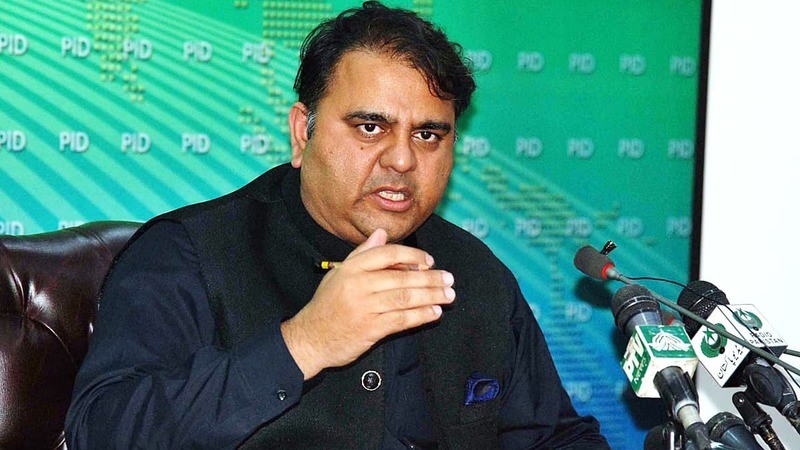
    Federal Minister for Science and Technology Fawad Chaudhry, in a recent interview with Waqar Zaka, hinted towards Pakistan’s first e-sports tournament. The minister added that the tournament will be held in March with the help of private sponsorships.

    In the interview, Fawad said that e-gaming is a big industry worth 90 billion dollars.

    “Through the e-sports tournament, the gaming industry in Pakistan will also get a boost on the international level,” he stated.

    Chaudhry went on to add that “gaming is a high earning industry and has a 20 per cent growth per annum”.

    He further said that his ministry will give financial support to gamers who want to go abroad to participate in international tournaments.

    “A separate link will be generated by the science and tech ministry where gamers can send their profiles”, he added.

  • Snapchat is offering users $1 million a day to use a new feature

    Snapchat is offering users $1 million a day to use a new feature

    Snapchat is rolling out a new tool for its application to feature popular videos, called Spotlight and is offering $1 million a day to creators of top-performing posts. To earn the money, video submitters to Spotlight don’t have to have large followers or even have public profiles. Instead, an algorithm will determine what to show Snapchat users based on how often others view their content.

    The new feature will help Snapchat in a competitive market for posting entertaining videos online, dominated by Facebook, Instagram and Google’s YouTube, with China-based ByteDance Ltd.’s TikTok rising fast among younger audiences. Snap Chief Executive Officer Evan Spiegel has eschewed public metrics, such as likes and follows, that drive the market for influencers, the most-followed users on photo-sharing apps.

    Social media platforms are striving to attract the makers of quality content. TikTok plans to spend more than $1 billion in the US in the next three years on video-makers. Instagram has been paying some of TikTok’s top stars to test out its TikTok copycat feature, ‘Reels’. Instagram also recently started for the first time sharing revenue on video ads with creators, as YouTube does.

    Snap shares have almost tripled this year to a record $45.38 earlier this month as young people turn to Snapchat to message friends videos during the coronavirus. The app also features television shows and magazines designed for a young audience on mobile. ‘Spotlight’ will initially launch in the US, Canada, Australia, New Zealand, the UK, Ireland, Norway, Sweden, Denmark, Germany, and France.

  • Pakistan becomes founding member of Digital Cooperation Organization

    Pakistan has joined the Digital Cooperation Organization (DCO) as a founding member.

    The organisation has been established under an initiative of the Kingdom of Saudi Arabia that has also invited other countries to join as founding members, including Bahrain, Egypt, Jordan, Kuwait and the UAE.

    The organisation was launched at a virtual event on Thursday, hosted by Saudi Arabia Minister of Communication and Information Technology Abdullah Al-Swaha. Foreign Minister Makhdoom Shah Mahmood Qureshi participated with a video statement.

    The foreign minister noted that the creation of DCO would cater to the growing need for international cooperation and collaboration in the digital domain at a time when the digital economy is estimated to be worth over $11 trillion and set to expand further in the aftermath of the COVID-19 pandemic.

    The organisation will offer a platform to promote the global digital agenda in the scientific, health, educational, commercial, social, agricultural, investment and security spheres.

  • Ministry of Science and Tech to introduce a video games certification programme

    Ministry of Science and Tech to introduce a video games certification programme

    Federal Minister of Science and Technology Fawad Chaudhry, announced a special programme of animation and video games certification to encourage young people to be part of the multi-billion dollar gaming industry.

    The minister said that they are looking to make people a part of the $900 million programming industry. He said that this new programme is especially targeted at those uninterested in studying and looking into video game development instead. According to him, the certification program should prove to be a “game-changer” for many. The tweet does not reveal any details, but since the Minister talks about Smartphone games, we can expect the program to lean more towards phone apps and games.

    The new initiative will be providing animation and video games certification programmes to young people in order to boost the local gaming industry.