Blog

  • $307bn outflow risk for Gulf banks if conflict escalates

    $307bn outflow risk for Gulf banks if conflict escalates

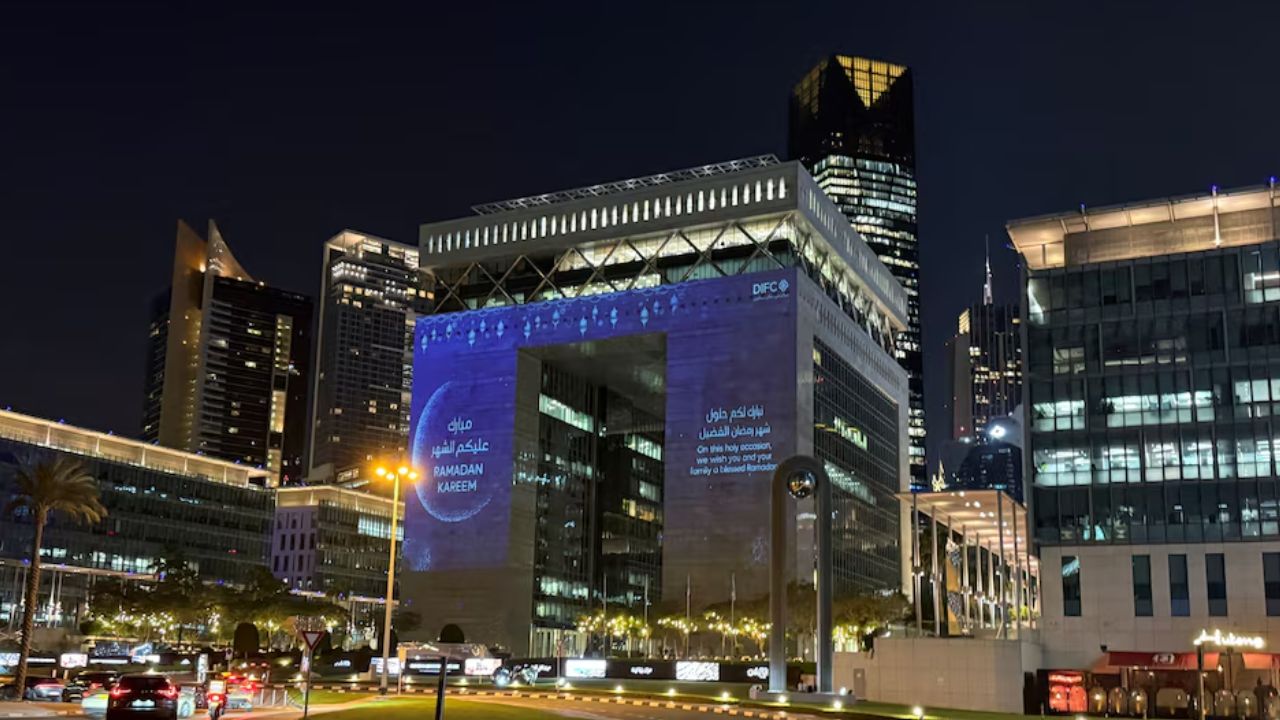
    Gulf banks could face domestic deposit outflows of $307 billion if the Middle East conflict deepens, S&P Global Ratings stated in a report.

    The agency noted that there has been no evidence of major outflows of foreign or local funding so far, adding that banking systems in the Gulf have remained stable since the conflict began last month. 

    However, it cautioned that a prolonged conflict could trigger a shift of funds between banks within the same systems as well as external and domestic funding exits.

    S&P’s base case assumes the most intense phase of the US-Israeli war on Iran will last between two to four weeks. In a report dated March 16, it added that spillovers and intermittent security incidents could extend beyond that period.

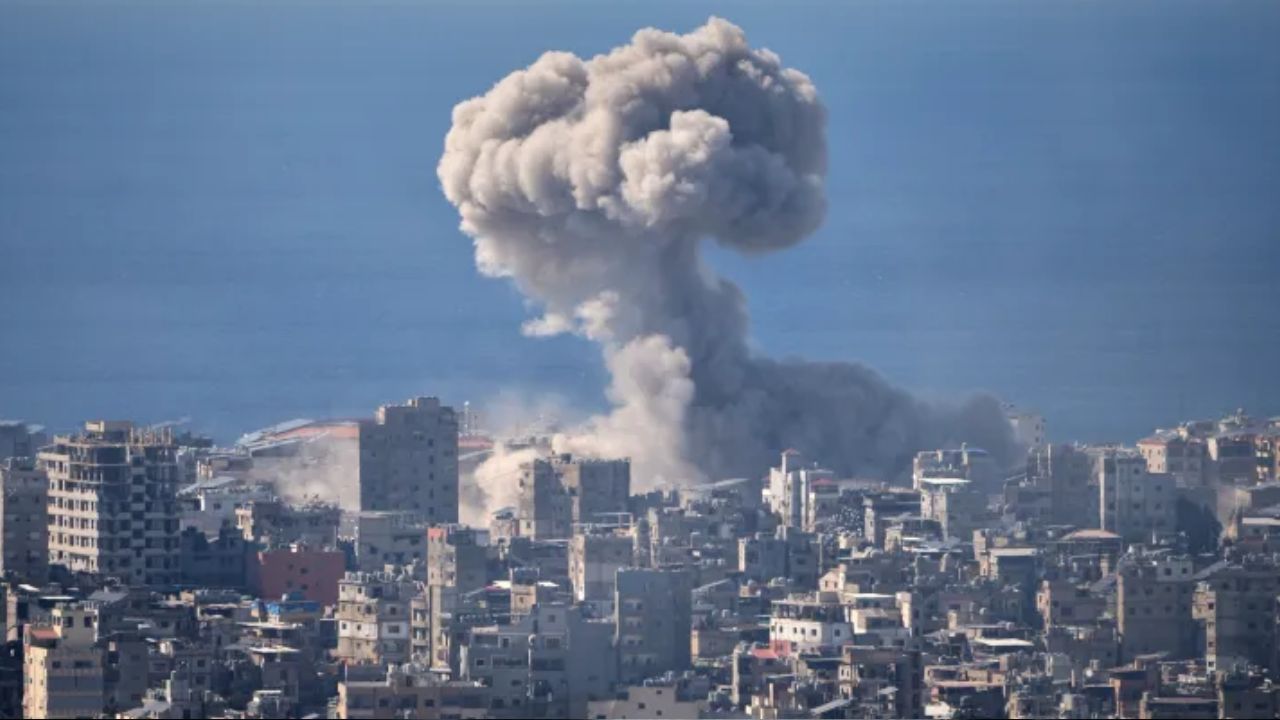
    The war, now in its third week, has disrupted energy markets and transport as it spread across the region, with multiple attacks reported in Dubai and other Gulf states.

    The situation has affected banking operations, with some international lenders shutting most UAE client-facing services after Iran’s IRGC threatened attacks on economic centres and banks linked to the US and Israel.

    Banks have said they continue to serve clients through digital channels, although disruptions to digital infrastructure have been reported.

    Amazon Web Services reported on March 2 that drones struck three of its facilities in the UAE and Bahrain, disrupting cloud and IT services, with some banking customers briefly losing access to online accounts.


    S&P noted that some banks have set up data centres and backup facilities outside the region, where permitted by regulators, which helped limit the impact of the strikes.

    Under a stress scenario, S&P estimated domestic deposit outflows across the six Gulf Cooperation Council (GCC) banking systems could reach $307 billion based on year-end 2025 figures.

    Banks currently hold around $312 billion in cash or at central banks to absorb such outflows, with an additional buffer of about $630 billion available after liquidating investment portfolios at a 20 percent haircut, the agency added.

    “Overall, the risk appears manageable,” S&P said, adding that four of the six GCC countries are considered highly supportive of their banking systems and that regulators have increased supervision since the conflict began.

    It noted that Bahraini retail banks appear more exposed due to a recent rise in external debt.

    The UAE central bank has sought to reassure markets, with Governor Khaled Mohamed Balama stating earlier this month that the banking sector has continued to operate normally.

    UAE banks have seen growth in credit demand as governments increased spending on sectors including tourism and infrastructure.

    The central bank said total assets rose 17.1 percent to 5.34 trillion dirhams ($1.45 trillion) in 2025 from a year earlier, while the loan portfolio expanded nearly 18 percent and deposits increased around 16 percent over the same period.

    S&P stated that the full impact on loan books will take time to materialise, identifying logistics, transportation, tourism, real estate, retail and hospitality as among the most exposed sectors.

    Under a high-stress scenario, assuming either a 50 percent increase in non-performing loans (NPL) or an NPL ratio of seven percent of total loans, cumulative losses across the region’s top 45 banks could reach around $37 billion, it added.

    The agency stated that GCC banks are entering the stress period from a position of strength, drawing comparisons with the 2020 COVID-19 shock when regulators introduced measures to absorb loan impairments, and added that a similar response is expected if conditions worsen.

    UAE bank shares have recorded double-digit declines across major lenders since the conflict began.

  • ‘Signed to God’: Sidhu Moosewala’s Pakistan tour announced

    ‘Signed to God’: Sidhu Moosewala’s Pakistan tour announced

    Three years after his tragic death, Indian Punjabi singer Sidhu Moosewala is set to return, not in person, but as a digital avatar for a global AI-powered tour in 2026.

    The late Punjabi singer’s team has announced the “Signed to God” tour, which will feature his AI-powered hologram performing across multiple countries, including the United States, Canada, the UAE, India, the United Kingdom, Australia, and Pakistan.

    The announcement of a Pakistan leg has excited the rapper’s fans, as Moosewala enjoyed massive popularity in the country during his lifetime.

    Sidhu Moosewala, whose real name was Shubhdeep Singh Sidhu, was shot dead on May 29, 2022, in Mansa district of India’s Punjab. 

    Moosewala was one of the most influential Punjabi artists of his generation. He started his career as a lyricist before rising to fame as a singer with tracks like “So High,” “Issa Jatt,” and “295.” 

    His debut album PBX 1 topped the Billboard Canadian Albums chart, marking a major milestone for a Punjabi artist.

    Sidhu Moose Wala has had multiple songs released posthumously since his death in May 2022. Notable posthumous tracks include “SYL” (his first release after death), “Vaar”, “Mera Na” (with Burna Boy), “Chorni” (with DIVINE), “Watch Out”, “Drippy”, “410”, “Attach”, and “Lock”. 

    His songs regularly crossed millions of views on digital platforms, making him one of the most streamed Punjabi artists worldwide.

  • Fakhar Zaman breaks silence on fitness after selection debate

    Fakhar Zaman breaks silence on fitness after selection debate

    Pakistan batter Fakhar Zaman has responded to discussions about his fitness, clarifying rumours about his condition after questions surfaced on social media.

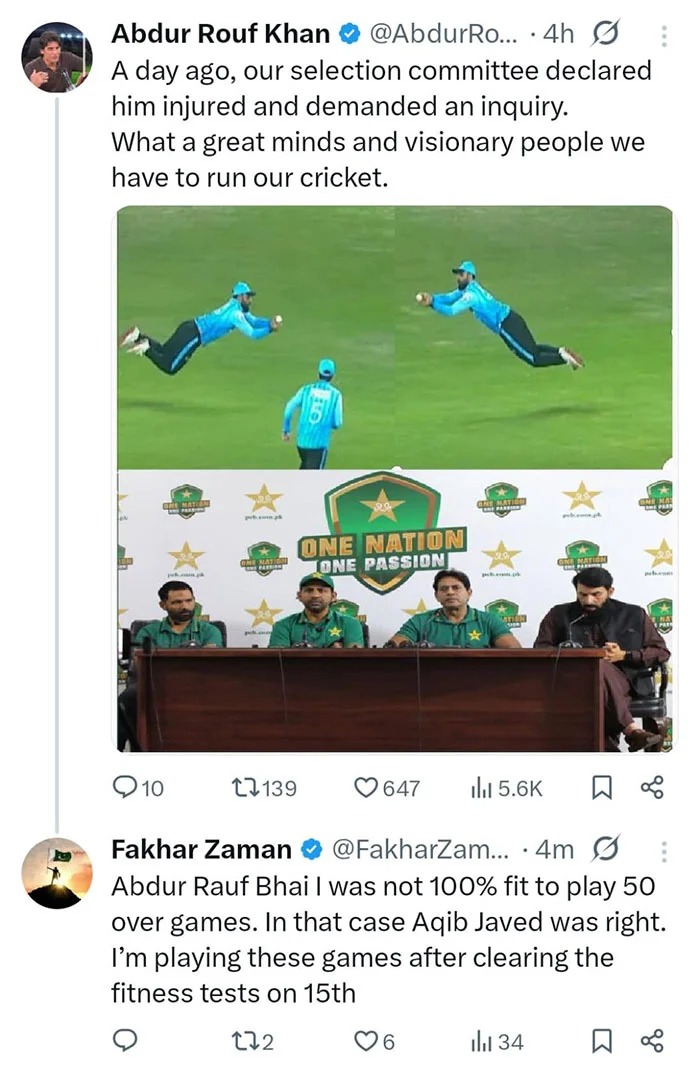
    The left-handed opener said he was not fully fit for 50-over cricket and supported selector Aaqib Javed’s stance.

    “I was not 100% fit to play 50-over games. In that case Aqib Javed was right,” Fakhar wrote in response to former cricketer Abdur Rauf.

    Fakhar added that he returned to action only after passing the required fitness test.

    “I’m playing these games after clearing the fitness tests on 15th March,” he said, referring to his participation in the National T20 tournament.

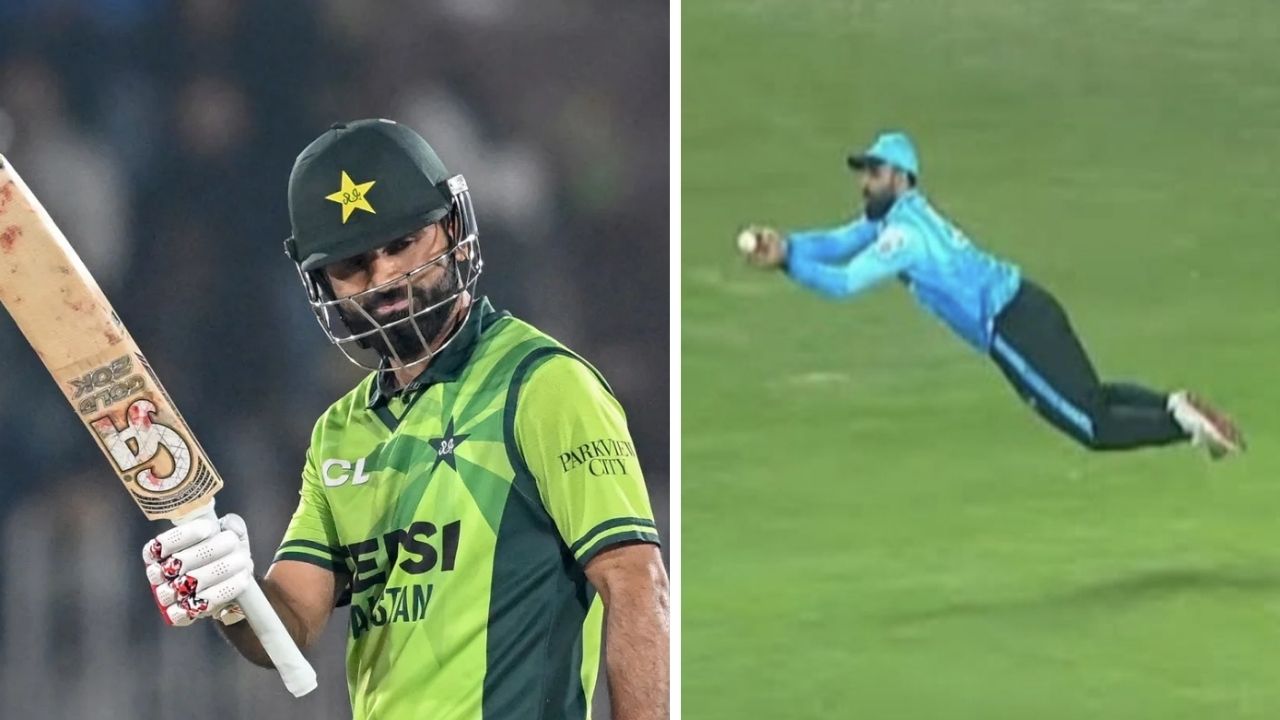
    The clarification came after Abdur Rauf questioned the selection committee’s stance by sharing Fakhar’s fielding picture online.

    “A day ago, our selection committee declared him injured and demanded an inquiry. What great minds and visionary people we have to run our cricket,” Rauf wrote while sharing his picture from the National T20 Cup.

    Fakhar was earlier declared unfit for Pakistan’s recent ODI tour of Bangladesh, which kept him out of the squad.

    Meanwhile, Aaqib Javed also raised concerns about fitness monitoring within the team setup. Speaking at a press conference last week, he said both Fakhar Zaman and Babar Azam were dealing with injuries after the T20 World Cup.

    “Fakhar Zaman and Babar Azam’s injuries are under inquiry,” Javed said.

    It is worth noting that Fakhar played only two matches in the recent T20 World Cup, scoring 109 runs at a strike rate of 187.93.

  • Rajab Butt’s mother reportedly says family will ‘forgive’ Emaan if she returns home

    Rajab Butt’s mother reportedly says family will ‘forgive’ Emaan if she returns home

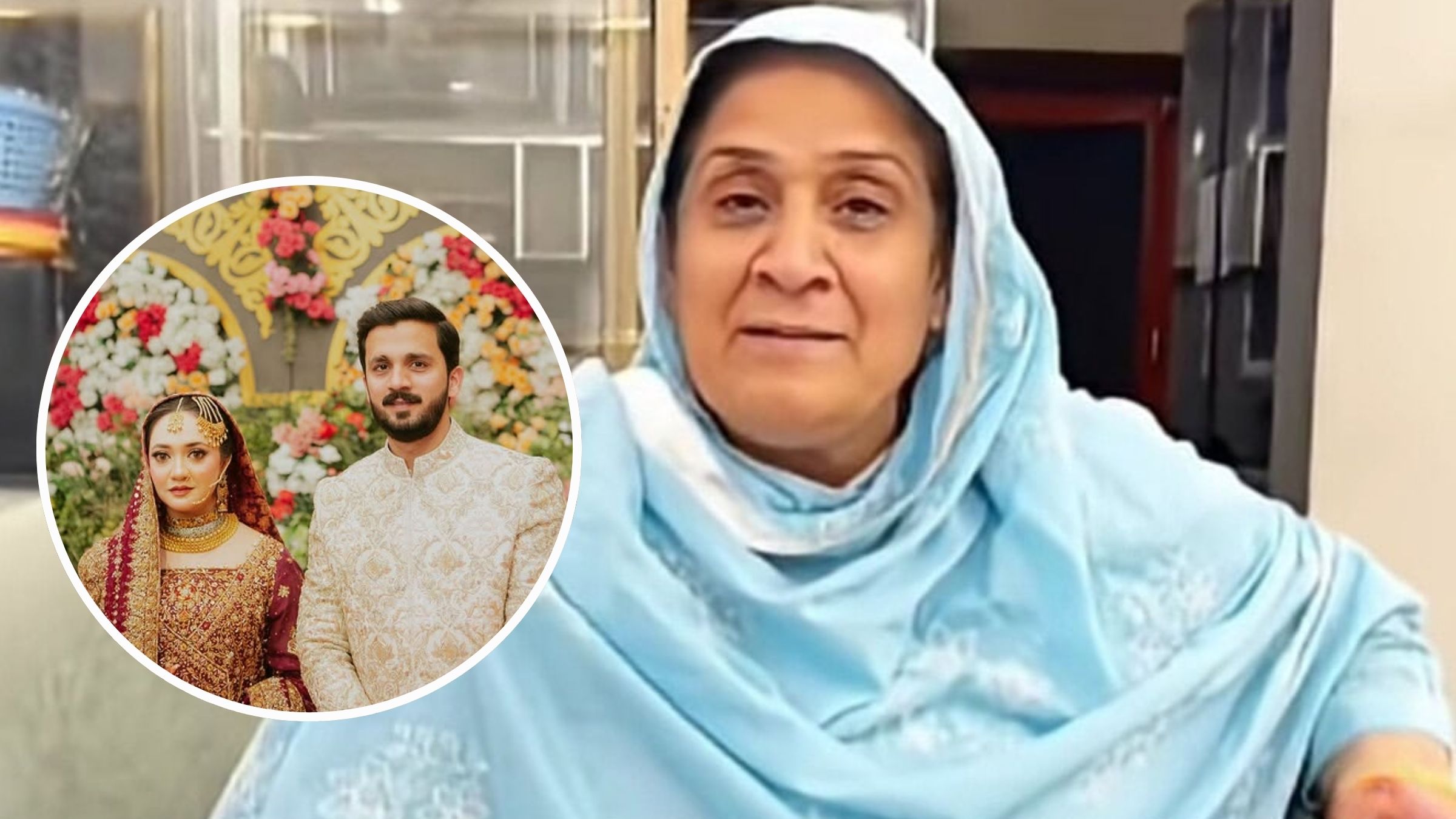
    YouTuber Rajab Butt’s mother has reportedly spoken out amid ongoing tensions between her son and his wife Emaan Fatima, saying that the family is ready to forgive her if she chooses to return.

    An audio message attributed to Rajab Butt’s mother has gone viral on social media, in which she urged her daughter-in-law to come back and save her marriage.

    She said, “That foolish girl is ruining her home. By God, if she returns today, we will forgive her and forget everything.”

    She further appealed to Iman Fatima to take a step toward reconciliation. “She should come back and save her home. At least she should message or call us. I want her to save her marriage,” she said.

    Expressing her willingness to resolve the matter, she added, “I have forgotten everything. I am only thinking about saving their marriage. If she comes back and Rajab gets angry, I will step in between them.”

    She also said that she understands the situation from a mother’s perspective. “I am also a mother of a daughter, so I do not wish bad for anyone’s daughter,” she stated.

    Rajab Butt married Iman Fatima in 2024, with the wedding events gaining significant attention on social media.

    However, their relationship has faced difficulties after marriage, and reports suggest the situation has now reached the point of divorce.

  • Pakistan targets terror proxies in Kabul, Nangarhar: Tarar

    Pakistan targets terror proxies in Kabul, Nangarhar: Tarar

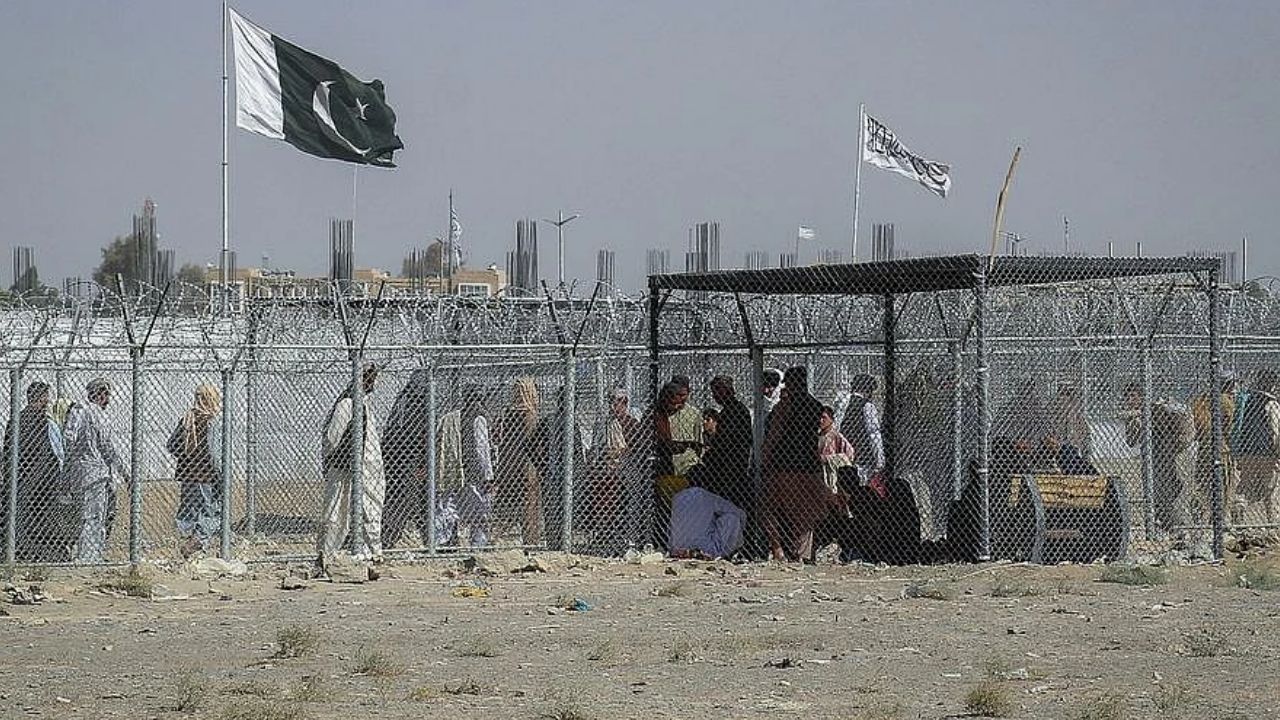
    Pakistan’s armed forces carried out airstrikes late on March 16 under ‘Operation Ghazab-lil Haq’, targeting sites in Kabul and Nangarhar, Information Minister Attaullah Tarar said on Tuesday.

    “Technical support infrastructure and ammunition storage facilities at two locations in Kabul were effectively destroyed. The visible secondary detonations after the strikes clearly indicate the presence of large ammunition depots,” Tarar wrote on X.

    He stated that four sites were also struck in Nangarhar, targeting logistics, ammunition and technical infrastructure.

    According to Tarar, the strikes were limited to infrastructure used by the Afghan Taliban regime to support its “multiple terror proxies”, including Fitna Al Khawarij and Fitna Al Hindustan, terms used by Pakistani authorities for Tehreek-e-Taliban Pakistan (TTP) and the Balochistan Liberation Army (BLA).

    “False claims made by the propagandists Taliban regime cannot befool the Afghans and the world from their heinous actions supporting and sponsoring terrorism in the region,” he stated.

    In a fact check issued on Tuesday at 12:48pm by Fact Checker Ministry of Information and Broadcasting (MoIB) stated that the Omid Hospital, which was claimed to have been hit, is located several kilometres away from Camp Phoenix.

    The ministry stated that the hospital is a multi-storey structure, while the site targeted was identified as a military ammunition and equipment storage facility.

    It also questioned the claim regarding a drug rehabilitation facility, stating: “Another important question also lingers, as to why would an alleged drug rehabilitation facility be co-located with lethal ammunition storage site in a military camp?”


    The operation was launched last month following border clashes after Afghan Taliban forces opened fire at multiple locations, prompting retaliation by Pakistan.

    “Operations under Ghazab Lil Haq to safeguard Pakistani citizens against terrorism waged by Master Terror Proxy will continue until the desired objectives are fully achieved,” Tarar said.

    Reports quoted security sources as saying that operations were also carried out in the Kurram sector, targeting positions used by Afghan Taliban operatives and Fitna al-Khawarij.

    They reported that several positions were hit and casualties were caused, while others withdrew.

    In Bajaur, Pakistani forces carried out retaliatory strikes near the border, targeting positions using guided missiles, security sources added.

    Pakistan has previously conducted airstrikes targeting Tehreek-e-Taliban Pakistan (TTP) and Islamic State Khorasan Province positions inside Afghanistan following attacks in Pakistan.

    Islamabad has maintained that TTP leadership operates from Afghan territory, an allegation Afghan authorities have denied.

  • Trump claims strikes on Iran prevented ‘World War III’ as regional death toll climbs

    Trump claims strikes on Iran prevented ‘World War III’ as regional death toll climbs

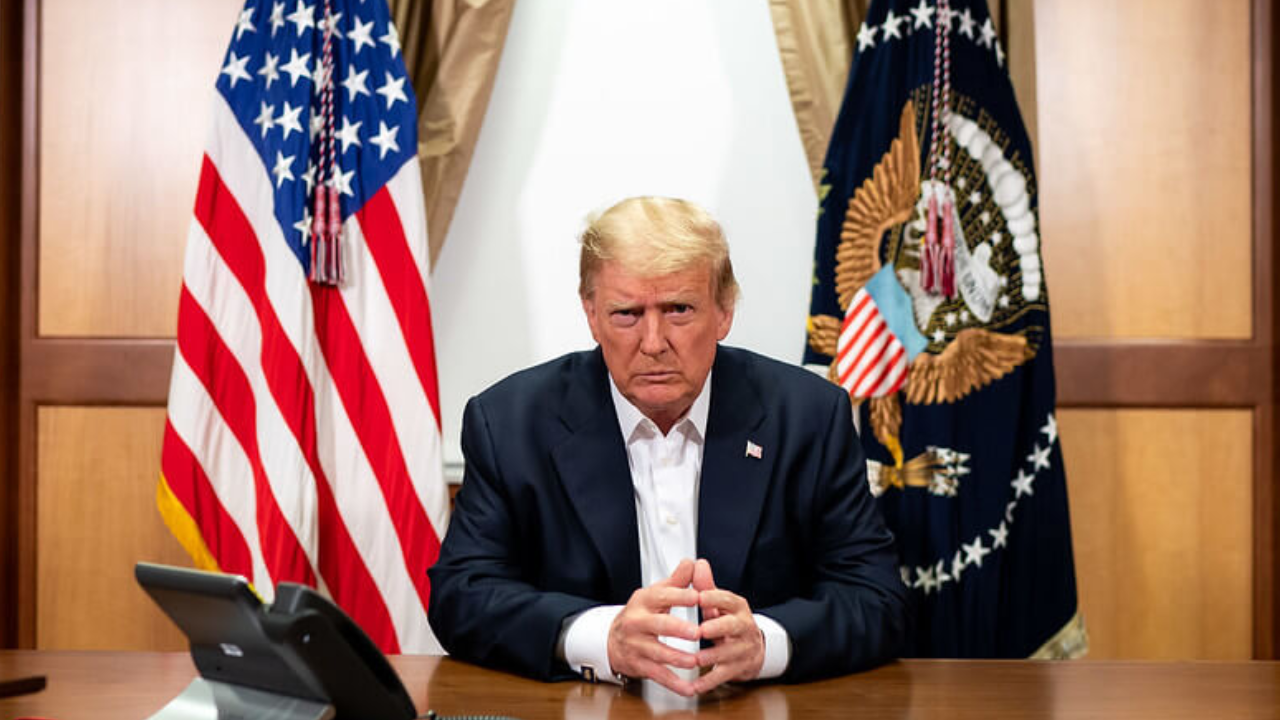
    US President Donald Trump has claimed that his administration’s illegal military actions against Iran prevented a nuclear conflict that would have evolved into “World War III.” Speaking from the Oval Office, Trump stated that had he not “decimated” Iran’s nuclear programme, Tehran would have possessed a nuclear weapon within a month and used it against Israel and the wider Middle East.

    “A nuclear war that would have evolved into World War III, and more important, this is a war that there would have been nothing left,” Trump said. He reiterated that Iran currently has “no navy, no air force, no anti-aircraft weapons, and no leadership.” 

    Referring to communications between Washington DC and Tehran, he remarked, “My biggest problem is I have no idea who we’re talking to because nobody ever heard of any of these people, they’re all dead.”

    Trump also noted that while the US is destroying Iranian minelaying ships in the Strait of Hormuz, the threat to navigation remains. “All it takes is one,” he said, adding that “it’s a little unfair. You win a war, but they have no right to be doing what they’re doing.”

    The Israeli government has also released images showing Prime Minister Benjamin Netanyahu ordering the “elimination” of senior Iranian figures. Israeli Defence Minister Israel Katz claimed that Iran’s National Security Chief Ali Larijani and Basij paramilitary head Gholamreza Soleimani were killed in overnight strikes. 

    While Israeli officials told Reuters that Larijani was a specific target of raids in Tehran, Shiraz, and Tabriz, his fate remains unconfirmed.

    A handwritten letter in Farsi was recently posted to Larijani’s X account, purportedly written for the funerals of Iranian navy personnel. If Larijani’s death is confirmed, he would be the most senior official killed since the death of Supreme Leader Ayatollah Ali Khamenei on the first day of the conflict.

    The Israeli military confirmed that dozens of jets targeted Iranian security command centres, including the Intelligence Ministry and Basij militia sites. Meanwhile, Iran’s internet blackout has entered its 18th day. Tehran’s governor, Mohammad Sadegh Motamadian, reported that 12,000 buildings in the capital have been damaged or destroyed, with at least 503 deaths and 5,700 injuries recorded in the province so far.

    Regional spillover continues as the UAE Ministry of Defence confirmed its air defences intercepted missiles and drones targeting the country. Similar interceptions were reported in Qatar and Saudi Arabia, where six drones were destroyed in the eastern region. British Airways has suspended all flights to the Middle East until the end of May.

    In response to the strikes, Iran’s Parliament Speaker Mohammad Bagher Ghalibaf stated that the US would not dictate the post-war order in the Middle East. “The order here will change, but it will not be an order in which the will of the United States prevails,” he said, calling for a “regional, indigenous order.”

    China has announced it will provide emergency humanitarian assistance to Iran, Lebanon, Jordan, and Iraq to alleviate the humanitarian impact of the three-week conflict.

  • Top five cringeworthy, bizarre moments from this year’s Ramzan transmissions

    Top five cringeworthy, bizarre moments from this year’s Ramzan transmissions

    This year’s Ramzan transmissions have featured moments that left viewers questioning the content being aired across major channels. From unconventional questions to unexpected quiz responses, the broadcasts have raised eyebrows on social media.

    One such moment occurred during Express TV’s Piyara Ramzan when a caller asked a question about breaking a fast in an unusual situation. The caller said, “If I do not have water or dates with me at the time of iftar, can I break my fast with a cigarette?” The question quickly circulated on social media as viewers reacted uncredulously to the exchange.

    Another call on the same transmission, hosted by Javeria Saud, involved a university student seeking advice about money given for charity. The caller explained his situation, saying, “I study at a university and I have a girlfriend who wants me to take her shopping for Eid. She has been insisting on it, but I am not earning right now and I do not have money. My parents gave me some money to donate as charity. Can I use that money to take her shopping instead?”

    The religious scholar on the program responded firmly: “You should fear God. The foundation of this relationship is not correct in the first place. Why are you trying to turn something that is not permissible into something permissible? How could you even think of using a sacred form of charity in this way?”

    A similar exchange appeared on a Samaa Digital podcast hosted by Falak Chohan, where another caller asked a question related to charity and personal relationships. The caller said, “My girlfriend is facing financial difficulties. Can I give her zakat?”
    The religious scholar responded by questioning the premise of the request. He said, “The question itself is wrong. May God guide all of us. This is not a permissible relationship. Why don’t you give it to someone from your own relatives instead?”

    Meanwhile, a moment from ARY Digital’s Shan-e-Ramzan also gained attention during a quiz segment hosted by Waseem Badami. During the round, a participant was shown a picture of political leader Maryam Nawaz and was asked to identify the person in the image. The participant replied, “Benezir Bhutto.”

    Another clip that circulated online came from Ramzan Pakistan, airing on PTV Network and hosted by Jugan Kazim and Ahsan Khan. During a discussion segment, Ahsan Khan asked a guest to suggest five top series on Netflix or Amazon that people should watch, a question that prompted discussion on social media about the type of topics being introduced during Ramzan programming.

    These incidents have highlighted a shift in Ramzan programming, where religious guidance and entertainment intersect, sometimes in unexpected ways, prompting discussion among audiences about the relevance and approach of live transmissions during the holy month.

  • Citizen asks IHC to order early Eid moon sighting to avoid crowding in markets

    Citizen asks IHC to order early Eid moon sighting to avoid crowding in markets

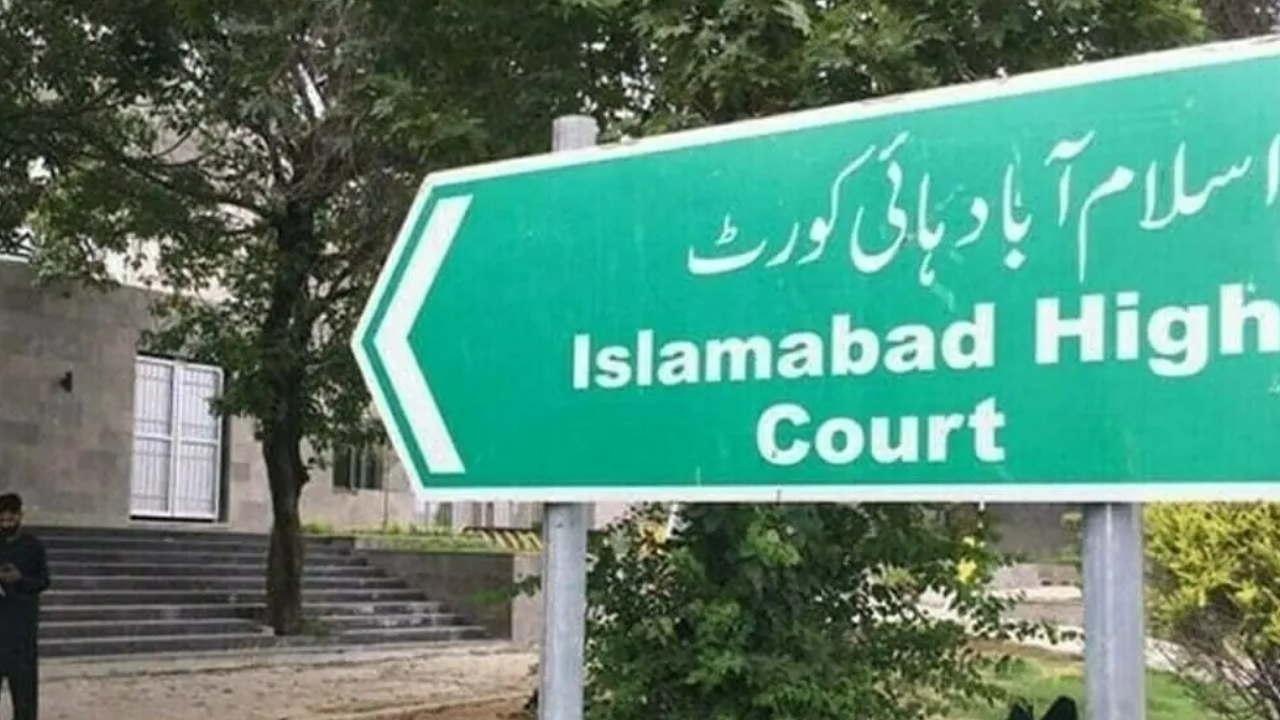
    A petition has been filed in the Islamabad High Court (IHC) seeking directions for the early announcement of the Eid ul Fitr moon sighting to avoid confusion among the public and manage crowds in markets.

    The plea was submitted by Islamabad resident Abdullah Shafiq Jan in his personal capacity. In the application, the petitioner requested the court to direct the Central Ruet-e-Hilal Committee to announce the sighting of the Eid moon immediately after it is confirmed.

    According to the petition, delays in the official announcement often create uncertainty among citizens regarding the start of Eid ul Fitr.

    The petitioner stated that such delays also affect religious practices, saying that many people offer Taraweeh prayers before the official declaration of the moon sighting.

    “Delays in announcing the moon sighting often lead people to perform Taraweeh prayers before the official declaration, which creates confusion among the public,” the petition stated.

    The application further pointed to the impact of late-night announcements on public movement and market activity.

    It said that when the moon sighting is announced late at night, people rush to markets for last-minute Eid shopping, resulting in overcrowding in commercial areas.

    The petitioner told the court that the sudden increase in shoppers creates management issues for authorities responsible for maintaining order in public places.

    He argued that announcing the moon sighting earlier would help authorities regulate crowds and take necessary steps to manage movement in markets.

    The petition also requested the court to issue directions regarding market operations in order to reduce pressure on commercial centres.

    The petitioner asked the court to direct the authorities to keep markets closed except for outlets selling Eid-related items so that crowds can be controlled and public safety can be ensured.

    Through the plea, he urged the court to instruct the Central Ruet-e-Hilal Committee to announce the sighting of the Eid ul Fitr moon as soon as the crescent is sighted.

  • Neymar left out of Brazil squad for FIFA World Cup warm-ups

    Neymar left out of Brazil squad for FIFA World Cup warm-ups

    Neymar Jr has been left out of Brazil’s latest squad as head coach Carlo Ancelotti continues preparations for the 2026 FIFA World Cup.

    Brazil will face France on March 26 in Boston before taking on Croatia on March 31 in Orlando as part of their build-up to the tournament, which will take place in the United States, Mexico and Canada.

    Neymar’s omission comes after concerns over his fitness. The 34-year-old recently missed a match for Santos FC citing muscle fatigue. Ancelotti had planned to assess him during that game but decided not to include him after he failed to reach full match fitness.

    Brazil’s all-time leading scorer with 79 goals has not played for the national team since he suffered a serious knee injury in October 2023. He returned to club football last year but has struggled to maintain consistent form and fitness.

    Ancelotti made it clear that the forward still remains in contention for the World Cup. “Neymar can be at the World Cup if he’s 100%,” he said. “I didn’t call him up because he’s not 100%. Neymar has to be training and playing.”

    Neymar expressed disappointment over the decision but said he will stay focused on his recovery and performances.

    In his absence, Brazil has turned to younger attacking options. Endrick returns to the squad, while Igor Thiago earns his first call-up.

    Brazil will also play Egypt in June before opening their World Cup campaign against Morocco on June 13.

  • Four Pakistanis killed in 18 day Iran war

    Four Pakistanis killed in 18 day Iran war

    A Pakistani national was killed in Abu Dhabi after debris from an intercepted missile fell in the Bani Yas area, Al Jazeera reported on Tuesday, citing the Abu Dhabi Media Office.


    Since the US-Israel attack on Iran began 18 days ago, three Pakistanis have lost their lives in the conflict and one killed near Balochistan due to falling debris from a missile. 

    The incident occurred as missile and drone activity linked to the ongoing regional conflict continues to affect parts of the Gulf.

    The Abu Dhabi Media Office identified the victim as a Pakistani national and stated that the death was caused by falling debris following an interception.

    Earlier incidents have also involved Pakistani nationals during aerial interceptions in the UAE.

    On February 28, a Pakistani citizen died during the interception of an Iranian missile after strikes on Iran triggered retaliatory attacks. On March 8, another Pakistani was killed in Dubai’s Al Barsha area when debris from an interception fell onto a vehicle.

    Prime Minister (PM) Shehbaz Sharif had expressed grief over the deaths and directed authorities to facilitate the repatriation of the bodies.

    On the same day, a fisherman from Gwadar was killed in Iranian waters after debris from a missile struck his boat. Local officials identified him as Muhammad Tayyab, a resident of Gwadar district in Balochistan.

    On March 6, falling debris in Abu Dhabi injured six Pakistani and Nepalese nationals following the interception of a drone.

    The conflict began on February 28 after the United States and Israel carried out strikes on Iran, followed by missile and drone attacks targeting locations across the region.