Blog

  • Foreign exchange reserves register modest rise to $14.55 billion

    Foreign exchange reserves register modest rise to $14.55 billion

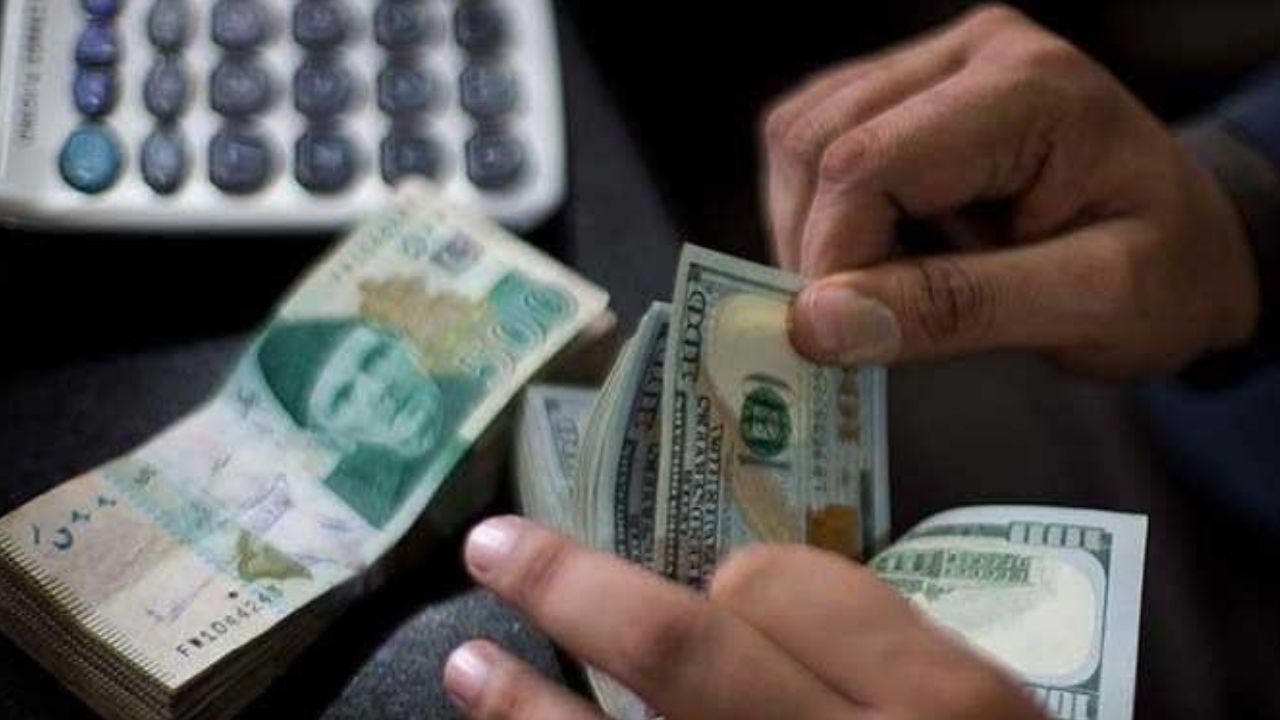
    Pakistan’s foreign exchange reserves saw a modest uptick during the week ending November 14, 2025, with the State Bank of Pakistan (SBP) reporting a $27 million increase. The central bank’s holdings rose to $14.551 billion, according to data released Thursday.

    The SBP’s weekly report placed the country’s total liquid reserves at $19.738 billion. Of this, commercial banks accounted for $5.187 billion, while the SBP held the majority share.

    To stabilise the money market, the SBP injected over Rs645 billion through both conventional and Shariah-compliant open market operations (OMOs). The one-day reverse repo OMO drew strong participation, with banks offering Rs512.6 billion—fully accepted at an 11.10% return. The realized value stood at Rs497.186 billion, with all seven submitted quotes cleared.

    In parallel, the SBP conducted a Shariah-compliant Mudarabah-based OMO, underscoring its dual liquidity management framework. Offers totaled Rs146.5 billion, of which Rs132.5 billion were accepted at an 11.08% return. Four out of five bids were cleared, with a realized value of Rs133.237 billion.

    Meanwhile, gold prices in Pakistan slipped on Thursday amid cautious investor sentiment. The decline followed stronger-than-expected U.S. jobs data for September, which prompted traders to reassess expectations for Federal Reserve policy.

    In the local market, gold per tola fell by Rs5,000 to Rs426,562, while 10 grams dropped Rs4,286 to Rs365,708, according to the All-Pakistan Gems and Jewellers Sarafa Association. This came a day after prices had surged by Rs7,900 to Rs431,562.

    Interactive Commodities Director Adnan Agar noted that gold was trading around $4,090, reflecting a $67–73 increase. “The trend is slightly downward and the market is moving slowly,” he said, highlighting key levels at $4,000–4,020 on the downside and $4,155 on the upside. A close below $4,000 could trigger further losses, while crossing $4,155 may spark a rebound.

  • Sikandar Raza says Zimbabwe eyeing to defeat Pakistan in second tri-series clash

    Sikandar Raza says Zimbabwe eyeing to defeat Pakistan in second tri-series clash

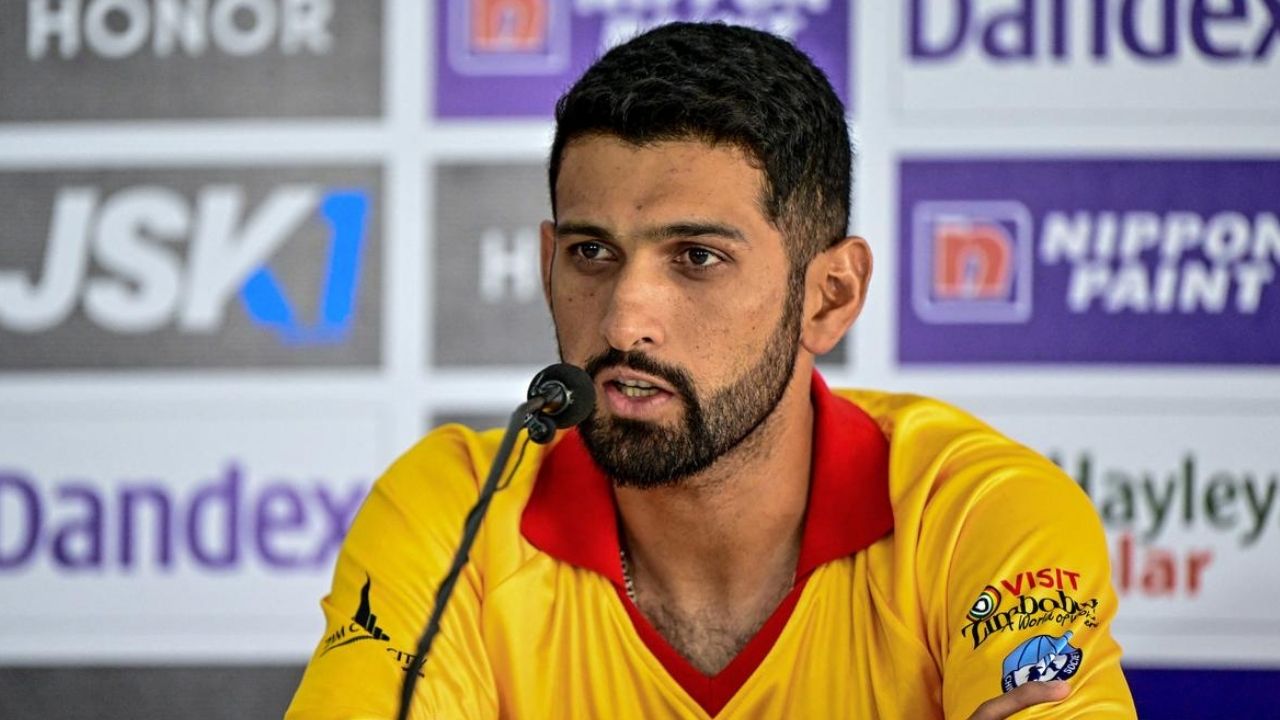
    After a dominating win against Sri Lanka in the tri-series, Zimbabwe captain Sikandar Raza has revealed the bigger challenge his side is eyeing.

    Talking to media persons after the win, Raza said that they are looking forward to meeting hosts Pakistan once more and that they have a plan for victory after coming close in the series opener.

    Pakistan on Nov 18 won the first match of the series by five wickets. Despite the result, Raza’s team was competitive throughout and caused plenty of trouble with both bat and ball.

    Zimbabwe has beaten Pakistan twice in the last five meetings, giving Raza’s comments credibility.

    The team bounced back in their second game against Sri Lanka, dismantling their opponents by 67 runs to move to the top of the points table.

    Pakistan and Zimbabwe will meet again this Sunday. For Pakistan, it may appear to be a routine match, but Zimbabwe, under a highly-motivated Raza, will enter the rematch with a point to prove.

    Per the details the Sri Lanka-Zimbabwe clash, Sri Lanka’s batting imploded in the face of a disciplined Zimbabwe attack. They were bowled out for 95, chasing a target of 163.

    For Zimbabwe, it was the perfect response to their opening game defeat to Pakistan.

  • LGS, Beaconhouse, Roots among top schools in trouble for forcing costly stationery, uniform upon students

    LGS, Beaconhouse, Roots among top schools in trouble for forcing costly stationery, uniform upon students

    The Competition Commission of Pakistan (CCP) has issued show-cause notices to 17 major private school systems for allegedly abusing their dominant position by compelling parents to purchase expensive logo-branded notebooks, workbooks and uniforms exclusively from school-authorised vendors.

    According to reports, the move aims to safeguard millions of school-going children and their families from unfair pricing practices and follows a detailed suo motu inquiry initiated after numerous complaints from parents, guardians and other stakeholders.

    Complainants accused schools of arbitrary fee hikes, non-transparent selling practices and bundling mandatory branded supplies, leaving families with no choice but to purchase these items at inflated prices. Many parents reported that schools were blocking the use of cheaper non-branded alternatives, further straining household budgets.

    The schools under scrutiny include Beaconhouse School System, The City School, Headstart, Lahore Grammar School (LGS), Froebel’s, Roots International, Roots Millennium, KIPS, Allied Schools, Super Nova, Dar-e-Arqam, STEP School, Westminster International, United Charter School and The Smart School, among others.

    Collectively these networks operate hundreds of campuses nationwide and educate millions of students, giving them considerable influence over enrolled families.

    The CCP’s inquiry revealed that parents were mandated to buy logo-bearing notebooks, workbooks, uniforms and other ancillary products from exclusive school-authorised outlets. In several cases, schools sold compulsory “study packs” through online portals or designated vendors, prohibiting students from using generic notebooks or uniforms available in the open market. The Commission defined the relevant markets as the provision of education services where each school enjoyed a 100% market share, making students “captive consumers,” and the market for ancillary school products which became the “tied market.”

    The inquiry report concluded that many study packs were up to 280% more expensive than similar items available in open markets. Leading school systems engaged in tying arrangements, making continued enrollment conditional upon purchasing secondary products such as notebooks and uniforms. Schools also appointed exclusive vendors, foreclosing the market for thousands of small stationery and uniform sellers nationwide. The CCP found that mandatory branded supplies and restrictive trading conditions violated Sections 4(1) and 4(2)(a) of the Competition Act, 2010.

    High switching costs, including limited school options, substantial transfer fees and transportation constraints, left parents with no viable alternatives, enabling schools to enforce these practices without resistance. The CCP observed that such practices restricted market access, harmed small retailers and limited consumer choice across Pakistan. With private educational institutions accounting for nearly half of all student enrollment in the country, the imposition of overpriced branded materials has further burdened families already struggling with inflation, raising concerns about excessive commercialization in the education sector.

    The CCP has directed the school systems to submit written responses within 14 days, appear before the commission through duly authorised representatives and explain why enforcement orders under Section 31 and penalties under Section 38 should not be imposed. Failure to comply may result in ex-parte proceedings.

    Under the law, the Commission may impose a penalty of up to 10% of the annual turnover or Rs750 million, whichever is higher, for such violations.

  • Mexico’s Fatima Bosch Crowned Miss Universe 2025

    Mexico’s Fatima Bosch Crowned Miss Universe 2025

    Fatima Bosch of Mexico has been crowned Miss Universe 2025, triumphing in a competition overshadowed by controversy and internal drama. The 25-year-old humanitarian and volunteer emerged as a fan favorite after a public clash with a Thai pageant director sparked a walkout by fellow contestants.

    Bosch received the crown from last year’s winner, Victoria Kjær Theilvig of Denmark, during Friday’s finale in Nonthaburi, Thailand. The event, often described as the “Super Bowl” of beauty pageants, drew millions of viewers worldwide and featured representatives from 120 countries.

    Thailand’s Praveenar Singh finished as runner-up, while Venezuela’s Stephany Abasali, the Philippines’ Ahtisa Manalo, and Ivory Coast’s Olivia Yacé rounded out the top five. In a historic first, Nadeen Ayoub represented the Palestinian people, advancing to the semifinal round of 30 before being eliminated.

    The finale, hosted by American comedian Steve Byrne and opened by Thai singer Jeff Satur, followed weeks of rehearsals and cultural showcases. Contestants competed in swimwear, evening gown, and national costume rounds, with Miss USA Audrey Eckert drawing attention for her elaborate bald eagle ensemble.

    Bosch impressed judges with her message of empowerment, telling the audience: “Believe in the power of your authenticity. Your dreams matter, your heart matters. Never let anyone make you doubt your worth.”

    This year’s pageant was marked by turbulence. At a pre-pageant meeting, Miss Universe Thailand director Nawat Itsaragrisil berated Bosch for not posting promotional content, allegedly calling her a “dumbhead.” Bosch resisted the remarks, prompting Nawat to call security. Contestants walked out in solidarity, and the incident drew condemnation from Mexico’s president Claudia Sheinbaum, who praised Bosch’s composure.

    The Miss Universe Organization later restricted Nawat’s role and issued a statement condemning his behavior. Nawat apologized but declined further comment.

    Additional controversy erupted when former Miss Universe Alicia Machado made racist remarks in a livestream discussing the incident, sparking backlash online.

    Meanwhile, two judges resigned days before the finale. Composer Omar Harfouch alleged the contest was rigged, claiming an “impromptu” panel had pre-selected semifinalists. The organization rejected his claims as a mischaracterization of the judging process. Former French soccer star Claude Makélélé also stepped down, citing personal reasons.

    The competition unfolded under new leadership after Thai media tycoon Anne Jakkaphong Jakrajutatip stepped down in June. Mario Búcaro was appointed CEO in October, just before delegates arrived. Jakkaphong, a transgender rights advocate, had purchased the organization in 2022 for $20 million, but her company later filed for bankruptcy.

    Despite the controversies, the pageant concluded with Bosch’s victory celebrated by fans across Mexico and beyond. The next Miss Universe competition is scheduled to take place in Puerto Rico in 2026.

  • At least 15 dead in Faisalabad glue factory explosion

    At least 15 dead in Faisalabad glue factory explosion

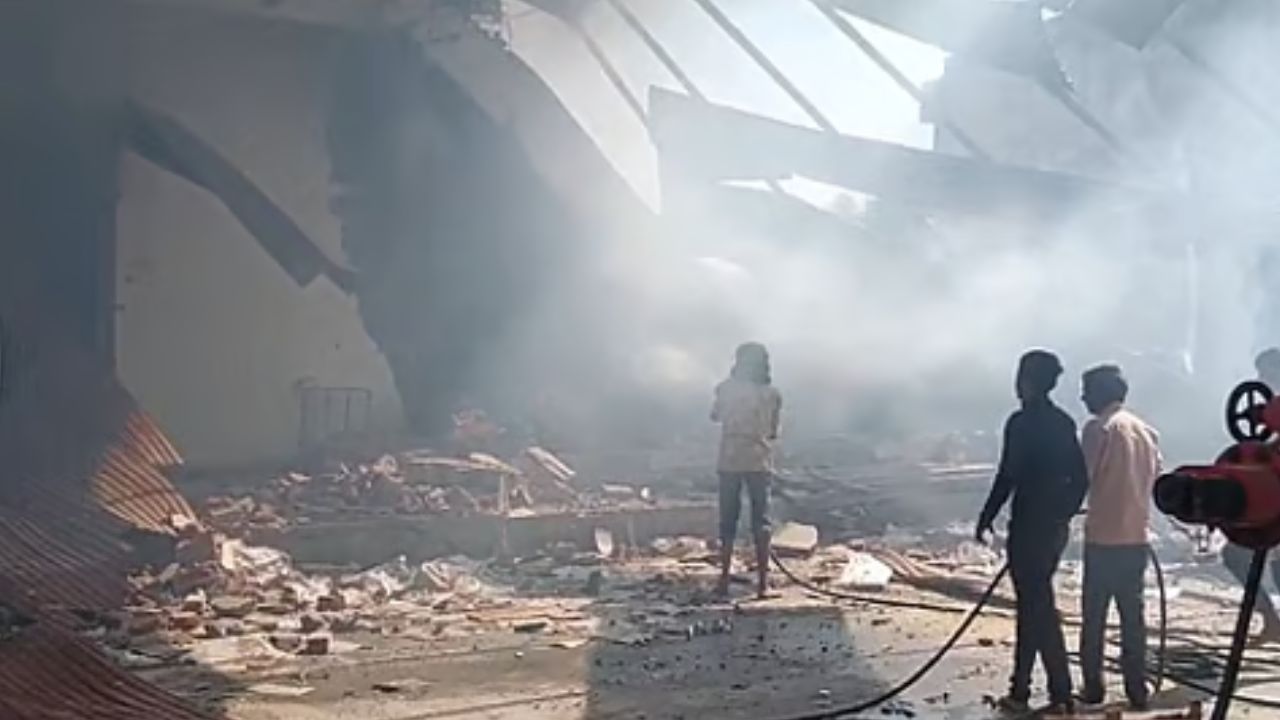
    At least 15 people were killed in a devastating explosion at a glue-manufacturing factory in Faisalabad’s Malikpur, with rescuers pulling more bodies from the rubble.

    According to Commissioner Raja Jahangir Anwar, the deceased include six children and two women while at least seven other people remain hospitalised with injuries.

    The blast, which occurred around 5 am, collapsed the factory building and damaged nearby structures.

    Initial investigations suggest the explosion was triggered by a gas pipeline that ruptured inside the chemical warehouse.

    Four factories were reportedly operating as a single connected unit, and many of the victims were residents of houses adjacent to the site.

    Commissioner Anwar noted that Punjab Chief Minister (CM) Maryam Nawaz was personally overseeing the rescue operation.

    Rescue officials said the factory’s boiler blast caused the collapse and ignited a fire. Debris removal is ongoing, with fears that more people may still be trapped.

    Several nearby homes also caved in, leaving both residents and factory workers buried under rubble. Civil defence teams have joined the search, while the Faisalabad deputy commissioner supervises relief efforts on the ground.

    The casualty count, which initially stood at three, rose steadily to 10 before reaching 15 as severely injured victims succumbed to their wounds and more bodies were recovered.

    Authorities warn the toll could rise further as operations continue.

  • Episodes that give every Pakistani woman her voice: Case No.9 makes history

    Episodes that give every Pakistani woman her voice: Case No.9 makes history

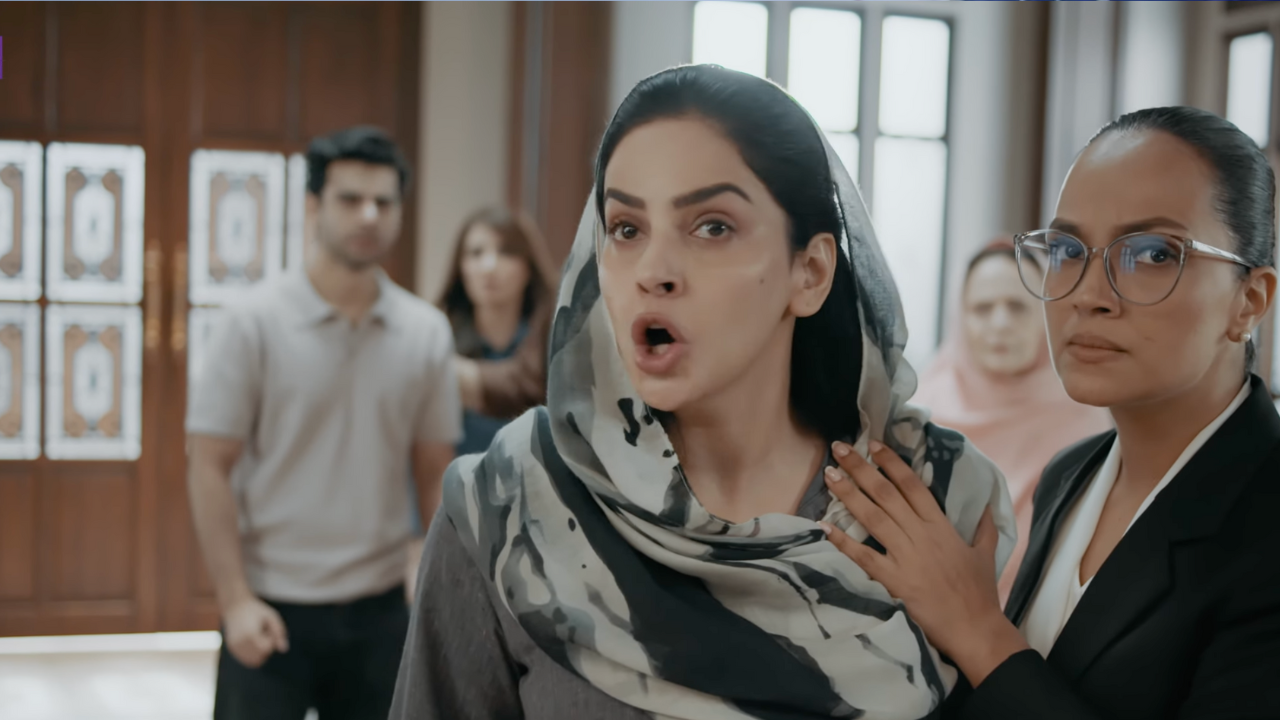
    It was episode 17 of Case No.9 that totally blew up Pakistani television. An episode that said things with such clarity and force that have never been said before, an episode that made women feel empowered by law, highlighted the struggle rape victim’s deal with with such legal force that you couldn’t help but thank Pakistan’s law on rape and in particular Justice Ayesha Malik. Beenish (Amina Shaikh) delivered the performance of a lifetime, her best yet, and it was goosebumps on screen. Her counterpart Bukhari (Noor-ul-Hasan) also was the perfect contrast to her as Beenish laid down facts vs. fictions, truth vs. stereotypes. 


    She mentions a rape case verdict that says a woman’s past cannot be called into question if shes been raped. The background doesnt matter: the rape does. It doesnt matter if the woman is a virgin or not, it doesn’t matter if she is divorced or not, all that matters is that she is raped – or not. It is these true, landmark cases that we need our society and its women to be aware of and Beenish does a stellar, stellar job.  She quotes statistics that are hard, and scary truths about Pakistan: Eight children are sexually abused in the country everyday, women, regardless of what they wear are harassed on a daily basis and you also see Bukhari trying to find stats to counter her, but unable to do so.


    This was Beenish’s moment, every Pakistani woman’s moment too. Hope is here in Case No.9 and here to stay.


    That’s not it. In a day-dream sequence we see Sehar (Saba Qamar) getting up in the courtroom and confronting her attacker, her rapist regardless of court decorum. She faces him with the strength we know she possesses but is unable to show given court decorum and in that moment, we are happy for her as she is mentally able to face her worst nightmare. Hope is here to stay for Sehar too.


    And Kiran (Rushna Khan) is not far behind either. In episode 18, Kiran finally leaves Kamran (Faysal Quraishi), as she is finally convinced, after confronting Rohit (Junaid Khan) that her husband has done ‘something wrong’ when he admits that he flirted with Sehar – unknowingly admits it, of course. We see her leaving with her little baby girl, a very scary thing to do for a new mother, but she takes the stand nonetheless. There is hope of freedom for Kiran too.


    And we also hear of an older rape survivour, who was raped by Kamran before, who contacts Sehar and says that she finally as the guts to speak up after hearing Sehar did too. Hope that others will also have hope to speak up and get justice.


    Case No.9 is the breakthrough drama we didn’t know we needed, where women come together to support each other in life and in its struggles. Be it a wife, a survivor or a lawyer, they are all connected and lets not also forget that the words used are also so important. Sehar calls herself a rape survivor and she proves that she truly is not a victim. She has survived and that’s why there is hope.

  • ‘Apology or criminal prosecution’: Talha Anjum served legal notice for draping Indian flag

    ‘Apology or criminal prosecution’: Talha Anjum served legal notice for draping Indian flag

    Pakistani rapper Talha Anjum has been served a legal notice for draping the Indian flag during his concert in Kathmandu last week.

    Reports quoted the notice as claiming that the rapper “inflicted widespread outrage, mental anguish, and profound injury to the national, patriotic and religious sentiments of millions of Pakistani citizens both domestically and abroad”.

    It further stated that Talha’s actions “exacerbated existing tensions between Pakistan and India, where diplomatic and military relations remain severely strained due to historical conflicts, border disputes and ongoing security concerns”.

    The notice demanded an “unconditional public apology” from the rapper, warning that non-compliance would result in filing of an FIR and criminal prosecutions without further notice.

    It merits a mention that Talha’s move had earlier this week sparked extreme reactions from people on this side of the border.

    Critics reminded him that platforms, including YouTube and Spotify, had removed his tracks on Indian authorities’ orders, and questioned why he chose to show affection to a country where the government has “banned” him.

    Responding to the backlash, the 30-year-old rapper, known for his blunt attitude and quick temper, had refused to back down.

    “My heart has no place for hate. My art has no borders. If me raising an Indian flag sparks controversy so be it. I will do it again. I will never care about the media, the war mongering governments and their propagandas. Urdu rap is and will always be borderless [sic],” he had said in a post on X. 

  • ‘Corruption, elite capture’ threatening Pakistan’s economic progress, IMF warns

    ‘Corruption, elite capture’ threatening Pakistan’s economic progress, IMF warns

    The International Monetary Fund (IMF) has cautioned that persistent corruption and weak institutions continue to undermine Pakistan’s economic development, even as the country shows signs of stabilisation under the ongoing Extended Fund Facility (EFF).

    The warning comes in the IMF’s Governance and Corruption Diagnostic Assessment (GCDA), published as a precondition for the Fund’s executive board to approve a $1.2 billion disbursement next month under the $7 billion programme.

    Launched at the government’s request in January 2025, the assessment was conducted by an interdepartmental IMF team with support from World Bank experts. Over eight months and two field missions, the team worked with federal authorities and stakeholders to identify governance gaps, corruption vulnerabilities, and priority reforms.

    Guided by the IMF’s 2018 Framework on Enhanced Engagement on Governance, the report focuses on five critical areas that included fiscal governance, market regulation, financial sector oversight, anti-money laundering and combating terror financing, and rule of law with an emphasis on contract enforcement, property rights and judicial integrity.

    The IMF stressed that the exercise was confined to federal-level governance issues, did not address provincial concerns, and were based on data collected up to April 2025, excluding reforms introduced thereafter.

    Despite governance concerns, IMF acknowledged “significant progress” under the EFF. Pakistan recorded a primary surplus of 2.0 percent of GDP in the first half of FY25, close to the 2.1 percent target. Inflation fell to a historic low of 0.3 percent in April, while foreign exchange reserves climbed to $10.3 billion at end-April, up from $9.4 billion in August 2024. Reserves are projected to reach $13.9 billion by June 2025.

    The report warned that longstanding challenges continue to weigh on Pakistan’s trajectory. Living standards lag behind peer countries in South and Southeast Asia due to underinvestment in human and physical capital, distortions from the state’s large economic role, fiscal weaknesses, and recurrent macroeconomic pressures.

    “Corruption is a persistent challenge in Pakistan, with significant adverse implications for economic development,” the report stated. It highlighted how citizens are often forced to make payments to officials for basic services, while elite groups capture public benefits for private gain.

    The IMF cited the 2019 sugar export decision under the PTI government as an example of elite influence, and noted that the National Accountability Bureau’s recovery of Rs5.3 trillion between January 2023 and December 2024 represents only a fraction of the losses caused by corruption.

    While Pakistan’s removal from the FATF grey list was noted as progress, the IMF criticised slow enforcement of punishments against money laundering offenders.

    The GCDA outlined a 15-point reform agenda, urging immediate action to strengthen governance and accountability. Key recommendations included ending special privileges in government contracts, shifting all procurement to e-governance within 12 months, establishing strict parliamentary oversight of financial powers, expanding transparency and public access to fiscal information, and strengthening anti-corruption institutions.

    The IMF projected that implementing governance reforms could boost Pakistan’s GDP by five percent to 6.5 percent over five years, based on cross-country experience in emerging markets.

  • 23 Indian proxy terrorists killed in Kurram ops

    23 Indian proxy terrorists killed in Kurram ops

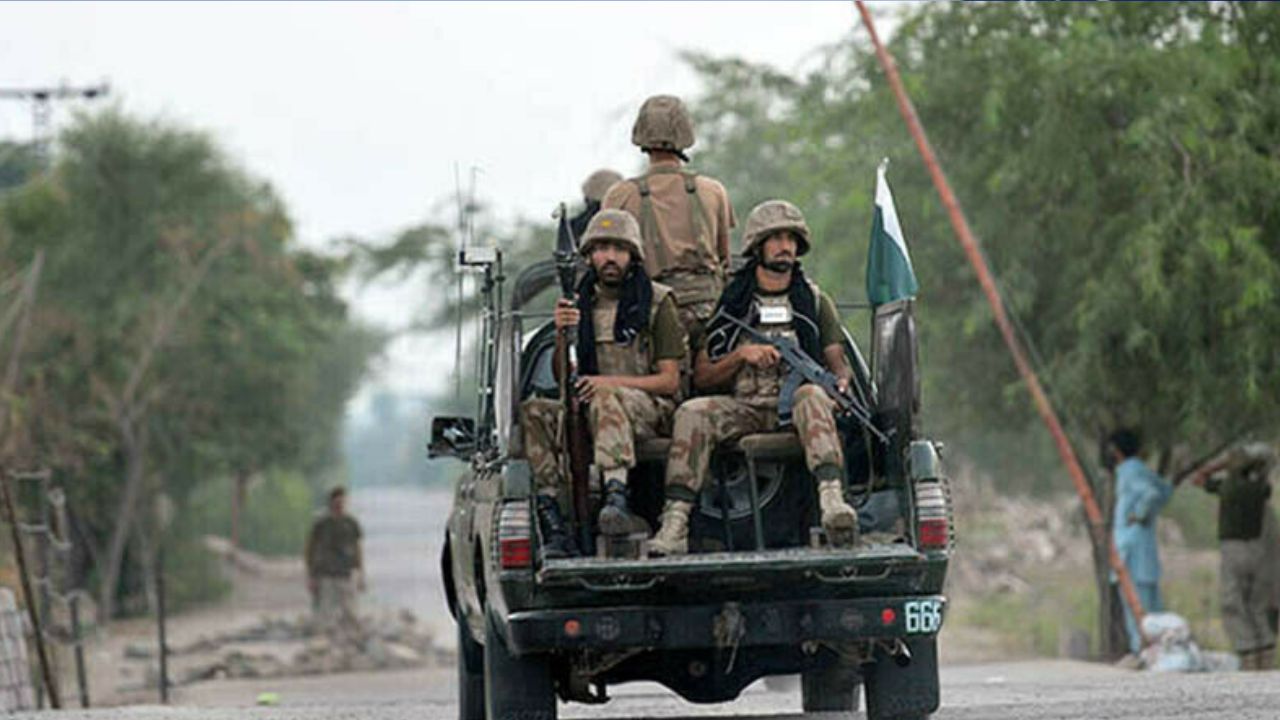
    Security forces have neutralised 23 Indian proxy Fitna al-Khawarij terrorists in Khyber Pakhtunkhwa’s (KP) Kurram district, the Inter-Services Public Relations (ISPR) reported Thursday.

    “Fitna al-Khawarij” is the term used by the state to refer to banned Tehreek-i-Taliban Pakistan (TTP).

    As per the details of the operations, the military’s media wing said that 12 terrorists were neutralised after an intense exchange of fire during a targeted operation conducted on reported presence of militants.

    “Capitalising on intelligence with respect to presence of another group of khawarij, in same general area, in another intelligence-based operation, own troops successfully neutralised 11 more,” the ISPR said.

    Noting that sanitisation operations were being conducted to eliminate any other terrorists in the area, it stressed that Pakistan would continue at full pace to wipeout menace of foreign-sponsored and supported terrorism under the ongoing counterterrorism campaign.

    The development comes amid series of anti-terror ops carried out by security forces across the country resulting in the elimination of dozens of terrorists in recent days.

    A day earlier, the ISPR announced killing of four terrorists in KP from November 17 to 18 — of which one was gunned down in Bajaur, two in Spinwam and Zakir Khel and one in Dera Ismail Khan district.

    Before that, 23 militants were neutralised in two IBOs in Bajaur and Bannu between November 16 and 17.

    Forces also killed 10 terrorists in Kulachi and another five in Datta Khel. The killed terrorists included commander Alam Mehsud, who led the India-backed network in the region.

  • Pakistan dominates javelin final at Islamic Solidarity Games with gold, silver

    Pakistan dominates javelin final at Islamic Solidarity Games with gold, silver

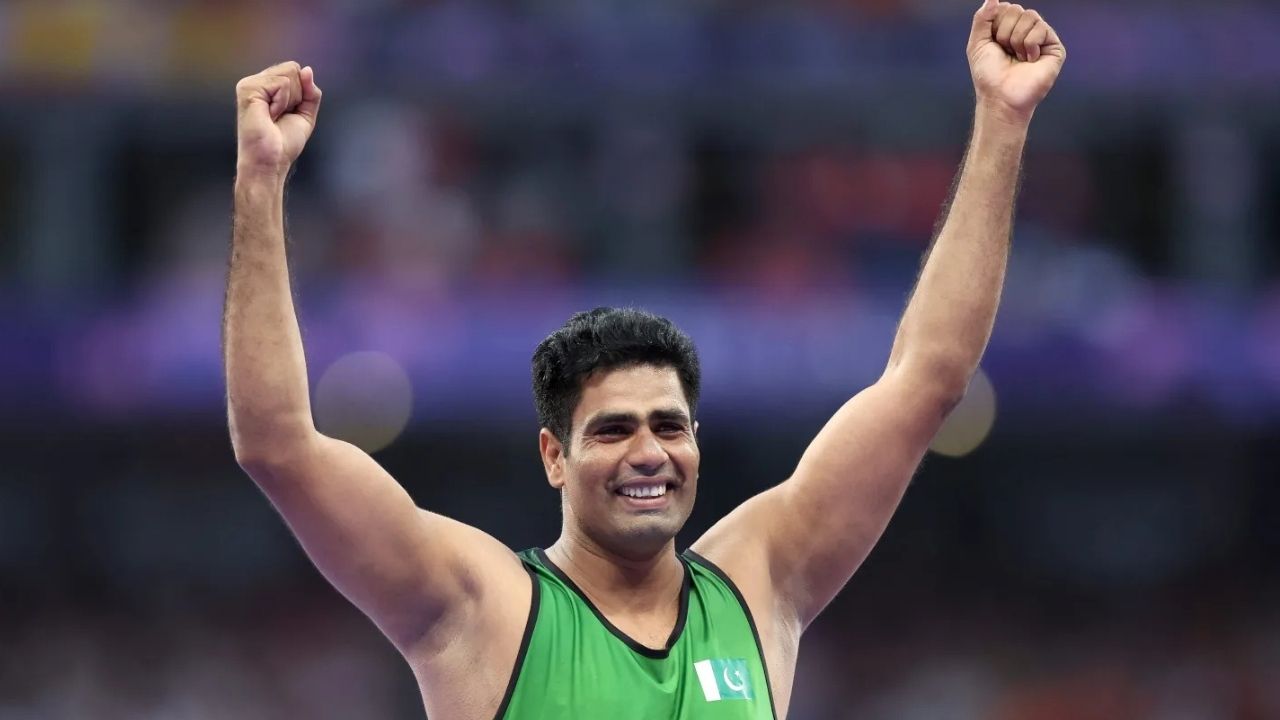
    Pakistan dominated the men’s javelin throw final at the 6th Islamic Solidarity Games in Riyadh as Olympic gold medalist Arshad Nadeem defended the top slot and Muhammad Yasir won silver.

    Arshad was in a league of his own headed into the seven-man event; his personal best of 92.97m, which won him gold and the games record at the Paris 2024 Olympics, was head and shoulders above the rest of the field.

    Predictably, he had the lead from the start and was the only competitor to throw more than 80m though he looked disappointed after most of his throws.

    The 28-year-old took home gold with a modest 83.05m throw on his second attempt, well below his 88.55m throw at the previous edition, which won gold and broke the games record.

    Yasir, on the other hand, shifted gears in the sixth and final throw to win silver in 76.04m after overtaking Nigeria’s Samuel Adams Kure, who won bronze with a 76.01m throw.

    The Pakistani duo’s medals took the country’s tally at the games to four after boxers Fatima Zahra and Qudrat Ullah both won bronze medals in their respective categories.

    A sparse audience at the Prince Faisal Bin Stadium was seen clustered behind the javelin throwing sector, waving Pakistani flags and holding up their mobile phones to get a picture of the javelin superstars in action.

    Earlier, Arshad opened his campaign with a low 75.44m first throw before breaching the 80m mark on his second and third throws. However, by his fourth throw, he had come back to 77.06m and had a no-throw on his fifth attempt.

    The gold medal comes months after the reigning Olympic Champion struggled in the final of the World Athletics Championships with a best throw of 82.75 meters, resulting in his elimination after the fourth round.


    He has himself stated his struggle with a calf injury and post-op recovery as to why he is not at his best.