Blog

  • Dhurandhar: Internet reacts to upcoming Bollywood movie on Operation Lyari

    Dhurandhar: Internet reacts to upcoming Bollywood movie on Operation Lyari

    The teaser for the upcoming Bollywood film Dhurandhar has sparked backlash in both Pakistan and India as audiences were taken aback over the representation of Karachi’s Lyari and the portrayal of Pakistan within the plot. The film features Ranveer Singh as a RAW agent who infiltrates Pakistan for a covert mission, while Arjun Rampal plays a Pakistani intelligence official named Major Iqbal, a character depicted as dedicated to harming India.

    R. Madhavan portrays Ajay Sanyal, a role inspired by India’s National Security Adviser Ajit Doval, who implies that Lyari plays a key role in militant activities and claims that it is crucial for Pakistan to be infiltrated to address threats. The trailer showcases sequences reminiscent of PPP rallies, images of the assassinated former Prime Minister Mohtarma Benazir Bhutto, and associated party flags, which fueled the online discourse.

    The reaction is part of a larger conversation regarding recent Indian films focused on Pakistan.

    Viewers also referred to other Bollywood films where Indian actors were cast as real-life Pakistani figures, such as Sanjay Dutt playing Karachi police officer Chaudhry Aslam and Akshaye Khanna portraying Lyari gang leader Rehman Dakait, roles that had already attracted criticism online.

    The discussion surrounding Dhurandhar intensified after the trailer circulated online, with viewers questioning how Bollywood portrays Pakistan’s issues as narrative elements.

    Users highlighted that the gang conflicts in Lyari stem from local rivalries and political affiliations within Karachi, without any connection to India.

    One social media commenter questioned the film’s intent, saying, “Do Pakistanis genuinely not recognize what the Indian government and film industry are promoting? This trailer aims to instill negativity in our minds and still profit from us.”

    Another user suggested that the cycle of reactions was uncalled for, stating, “This is just their way of releasing tension after Operation Tindoor. Let them produce the film, and watch it if you wish. Chill out and view it as entertainment. There’s no need to take any of this to heart.”

    Concerns also emerged regarding Sanjay Dutt’s role. One user remarked, “How is this even permissible? How can Sanjay Dutt portray someone like Chaudhry Aslam? He was a national figure for us. Casting Dutt in that role feels disrespectful.”

    Another reaction questioned the filmmakers’ perspective on Pakistan, stating, “Why is India making a movie on Pakistan’s internal gang war? Have the #Dhurandhar writer or director ever visited Pakistan? Let alone Lyari? Answer: No, but suna bahut hai.”

    Scheduled for release in early December, Dhurandhar continues to spark conversations across various platforms as viewers react to the trailer’s depiction of Pakistan.

  • After 27th Amendment blow, SC judges fail to reach consensus

    After 27th Amendment blow, SC judges fail to reach consensus

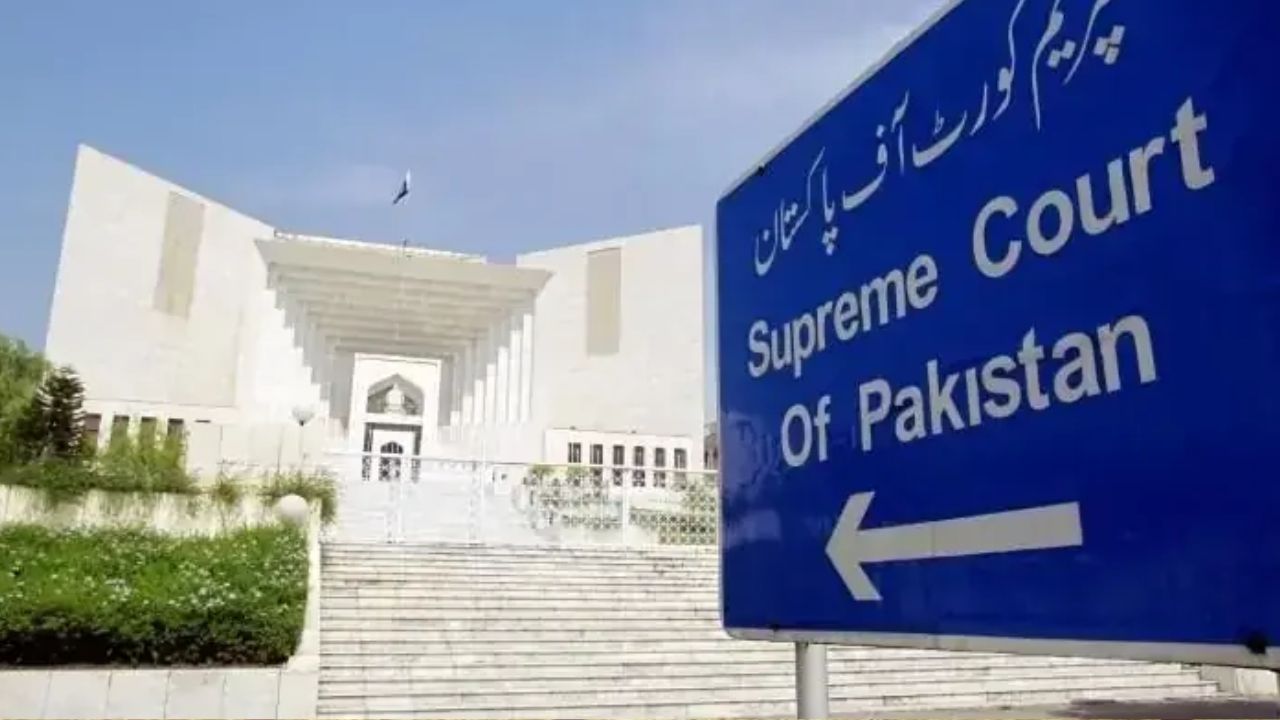
    A day after the 27th Amendment significantly curtailed its powers, more than a dozen Supreme Court judges gathered in the chief justice’s chambers to discuss how the judiciary should move forward.

    But even though the judges were clearly frustrated, a suggestion that they all retire in protest was met with silence, a news report has revealed.

    Four Supreme Court judges were promoted to the Federal Constitutional Court on November 14, the day of the meeting, which was presided over by Chief Justice of Pakistan Yahya Afridi. 

    The meeting took place after the resignations of Justice Mansoor Ali Shah and Justice Athar Minallah a day earlier.

    The two departing justices and Justice Salahuddin Panwhar had written to the CJP before the meeting, requesting that he call a full court session to discuss the 27th Amendment in order to “discharge their solemn duty to the Constitution.”


    A fly-on-the-wall account of the judges’ internal discussions on how to respond to the amendment revealed deep unease over parliament’s expanding powers.

    The conference, which took place in the CJP’s chambers, began in a noticeably tense atmosphere, with senior justices referring to the development as “a very sad day,” according to a person acquainted with the proceedings.

    The atmosphere grew even more heavy when one judge asked whether the Supreme Court had any constitutional authority left to restrain parliament from passing legislation or constitutional amendments.

    While the judges continued weighing the consequences of the amendment, the CJP reportedly remarked that rather than sending letters, the judges should have approached him directly, stressing that “his doors were always open”, the source added.

    At least 13 judges attended the meeting. Justice Munib Akhtar and Justice Ayesha A. Malik were absent, while Justice Musarrat Hilali was unable to join due to illness.

    The Federal Constitutional Court had previously received nominations for the remaining four judges: Ali Baqar Najafi, Hasan Azhar Rizvi, Aamer Farooq, and Aminuddin Khan.

    ‘Strong institutional response’ 

    The judges apologized for their colleagues’ resignations during the discussion and emphasized the necessity for a strong and unified institutional response from the court.


    Some members suggested that they issue a formal letter to the government, but the CJP repeated his earlier point that judges should have reached out to him directly instead of writing letters.

    The source said the CJP further clarified that the Supreme Court still held the authority of judicial review to examine the constitutionality of legislation  but only after a law had been enacted. He emphasised that the court “cannot stop parliament from making laws”.


    As calls for a forceful institutional response continued, one participant proposed that all judges  including the CJP should resign if they truly wanted to register a meaningful protest beyond the constitutional framework, the source stated.

    But the idea was met with silence, signalling that there was no agreement on such a drastic step.The meeting ultimately concluded without any consensus.

  • Mahira Khan rejects claims of ‘silent rivalry’ with Saba Qamar

    Mahira Khan rejects claims of ‘silent rivalry’ with Saba Qamar

    Superstar Mahira Khan recently addressed speculation of an alleged “silent rivalry” with thespian Saba Qamar during an appearance on a television show, where she promoted her upcoming film Neelofar alongside fellow A-lister Fawad Khan.

    During the show, a fan asked Mahira about persistent rumors surrounding the interactions between the two actresses. The fan inquired, “There have always been media reports of your and Saba Qamar’s unspoken animosity, how true is this?”

    Mahira replied, “Not in the slightest. I have been asked this question numerous times, and my response has consistently been that there is absolutely nothing of the sort from my side; it is entirely untrue.”

    Mahira elaborated on how such narratives often emerge when two prominent women are publicly discussed. 

    She stated, “This is a global phenomenon. When people observe two powerful and successful women together, they tend to pit them against one another.” She further noted that the attention often diverts to imagined disputes rather than their work, explaining that the situation “benefits everyone except those women.”

    She also praised Saba’s talents, saying, “I’m not trying to be diplomatic; I believe Saba is a fantastic actress.” 

    She mentioned that while she and Saba have not yet collaborated, she would be open to it. “If we end up working together on a project, it could potentially result in an excellent outcome.”

    The public dialogue surrounding the two actresses began in 2019 when Saba appeared on The Munshi Show. When questioned about her relationship with Mahira, Saba commented, “We are not friends.” 

    The statement sent social media into hyperdrive. Later, Saba clarified that there were no issues between them, asserting, “There’s no problem between us, primarily because we have never interacted or worked together. She is excelling in her own field, and I am doing the same in mine.”

    Since that time, Mahira has been asked about the issue repeatedly and has consistently maintained that there is no conflict from her end. Saba’s responses have also remained unchanged, with both actresses stating that they operate independently and that the discussion if a rivalry arises from assumptions rather than any personal experiences.

  • Multan court sentences Sania Zehra’s husband to death for murdering her

    Multan court sentences Sania Zehra’s husband to death for murdering her

    An additional district and sessions judge in Multan has handed a death sentence to the husband of a 20-year-old pregnant woman who was found dead last year, ruling that the case was murder disguised as suicide.

    On July 9, 2024, Sania Zehra, a mother of two, was discovered hanging from a ceiling fan in her room. Syed Asad Abbas, her father, denied the suicide claim, claiming that his daughter’s in-laws murdered her.

    Police at the New Multan station filed a case under Sections 148 (rioting with a dangerous weapon), 149 (unlawful assembly), and 302 (intentional murder) of the Pakistan Penal Code (PPC) in response to his allegation.

    Additional Sessions Judge Mohsin Ali Khan found the husband, Syed Muhammad Ali Raza, “duly convicted of the Qatal-i-Amd of Sania Zehra” in a one-page order dated November 18.

    According to Section 302(b) of the PPC, which stipulates that anyone found guilty of Qatal-i-Amd faces either death or life in jail, he was given the death penalty as Ta’zir.

    “Syed Muhammad Ali Raza convict shall be hanged by neck till his death is pronounced.” 

    The court also directed him to pay Rs500,000 as compensation to Zehra’s family under Section 554-A of the Code of Criminal Procedure, 1898 adding that “if he defaults, he will undergo six months’ imprisonment.”

    Two separate court orders  also found Raza’s brother, Syed Haider Raza, and his mother, Syeda Azra Parveen, guilty of Zehra’s murder.


    The court sentenced both to life imprisonment, with each ordered to pay Rs500,000 to the victim’s family.

    The FIR, narrating the father’s account, states that he was called by a police official and asked to rush to his daughter’s home. When the family arrived, they found Zehra hanging from a ceiling fan.

    According to the complaint, when a forensic expert attempted to untie the noose, it opened unusually easily, raising suspicion. A doctor present at the scene told the family that the victim had died around 6pm the same evening.

    The police registered a case under sections 302, 148, and 149 of the PPC against deceased’s husband Ali Raza, his brother Haider, father Jeevan Shah, mother Azra Bibi, sister Kanwal Bibi, and sister-in-law Syeda Dua on the complaint of the deceased’s father.

  • Air India suffers with massive losses as Pakistan airspace closure hits operations

    Air India suffers with massive losses as Pakistan airspace closure hits operations

    Air India is experiencing increasing operational and financial challenges following the closure of Pakistan’s airspace to Indian airlines in late April. 

    Documents obtained by an international news agency indicate that the airline has requested the Indian government to secure alternative routing through China’s Xinjiang region to mitigate losses.

    The closure has compelled Air India to redirect long-haul flights, resulting in longer travel times and higher fuel consumption. 

    Some westbound detours have extended flight durations by up to three hours, causing fuel expenses to rise by as much as 29 percent. Flights from Mumbai and Bengaluru to San Francisco are some of the most significantly impacted. Under the present restrictions, Air India deems these routes unviable, while data reveals a trend of passengers opting for foreign airlines that still utilize Pakistan’s airspace.

    The airline anticipates that the airspace closure could lower its annual pre-tax profit by around $455 million. This amount surpasses the carrier’s reported loss of $439 million for the financial year 2024-25. 

    Air India has urged the government to investigate possible routing over Hotan, Kashgar, and Urumqi in Xinjiang. The airline’s internal analysis suggests that utilizing these corridors would decrease fuel consumption, regain roughly 15 percent of lost passenger and cargo capacity, and diminish weekly losses by about $1.13 million.

    Additionally, Air India has requested temporary financial aid from the government until Pakistan opens its airspace again. 

    The strain on cash flow has intensified due to outstanding tax liabilities totaling $725 million. This amount includes recovery notices amounting to $58 million, despite guarantees that were established when the airline transitioned to the Tata Group in 2022.

    Gaining access to Chinese airspace remains uncertain. The suggested route traverses challenging high-altitude terrains and falls within the jurisdiction of China’s Western Theatre Command. 

    The area accommodates significant military installations, and there have been no recent operations by non-Chinese airlines at Hotan. Aviation experts quoted in the news report suggest that obtaining approvals for the requested flight paths is improbable due to concerns related to terrain and security.

    This appeal coincides with the recent resumption of direct flights between India and China. Services restarted after a five-year hiatus that followed heightened tensions along the Himalayan border. 

    Air India has been striving to revive its international services and stabilize its schedule after a June incident involving a Boeing 787 Dreamliner in Gujarat, which led to the temporary suspension of multiple flights for inspections.

  • Gold prices go up as international rate hits $4,092 per ounce

    Gold prices go up as international rate hits $4,092 per ounce

    Gold prices have risen by $79 per ounce to $4,092 in the international bullion market.

    According to reports, the global hike has also resulted in one for the local market where gold per tola rose by Rs7,900, reaching Rs431,562.

    Additionally, the price per 10 grams of gold increased by Rs6,773 to Rs369,994.

    On Tuesday, gold prices fell even as the international market saw a rebound from a one-week low, supported by softer US employment data and expectations of a Federal Reserve rate cut in December.

    According to the All-Pakistan Gems and Jewellers Sarafa Association (APGJSA), the price of gold per tola dropped by Rs7,000 to settle at Rs423,662. Similarly, the rate for 10-gram gold decreased by Rs6,002, closing at Rs363,221.

    The decline comes a day after domestic bullion rates remained stable, with the per-tola price standing at Rs430,662.

    In the international market, gold recovered after touching a one-week low, trading between $3,997 and $4,080. Adnan Agar, Director at Interactive Commodities, said global prices showed a mild correction following two days of upward movement.

  • ECC approves grants for security, defence projects

    ECC approves grants for security, defence projects

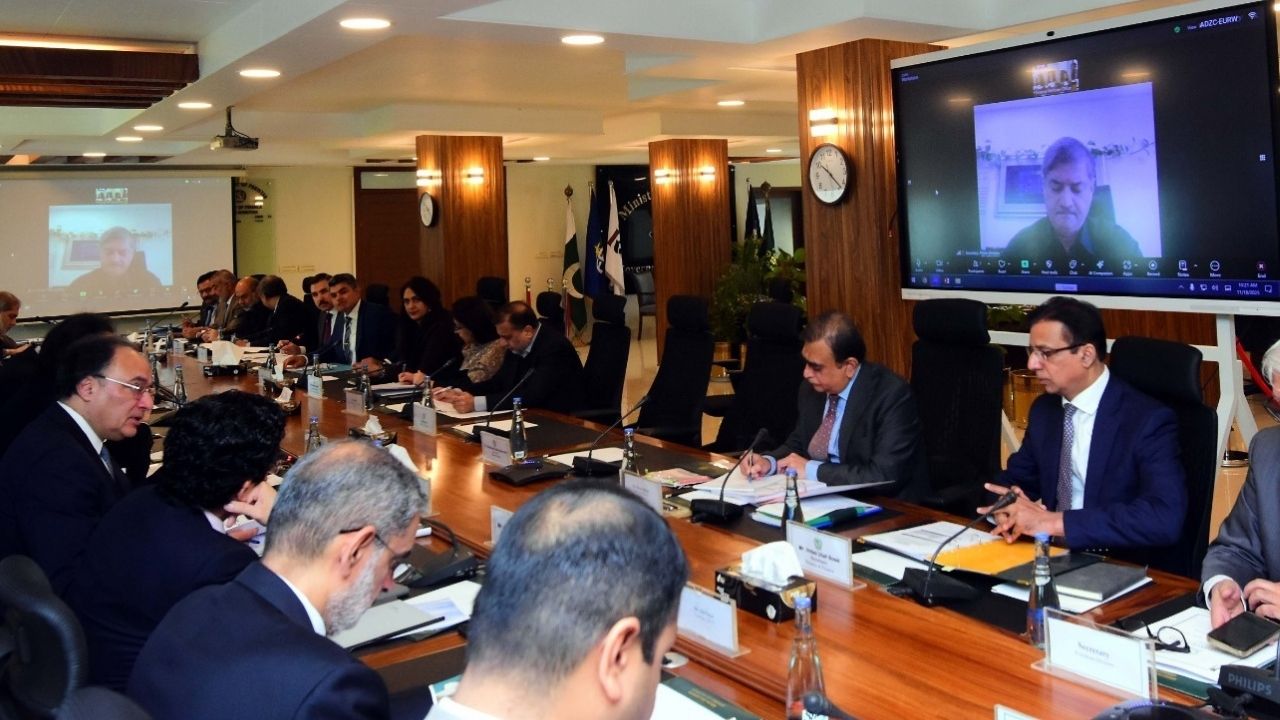
    The Economic Coordination Committee (ECC) has approved grants for Pakistan’s security and defence projects.

    In a post on social media platform X, the finance ministry said Minister Muhammad Aurangzeb chaired a meeting of the ECC that was attended by federal ministers, special assistants to the prime minister, secretaries and senior officials from relevant divisions.

    It said the ECC approved “several strategic grants and reforms aimed at strengthening Pakistan’s security framework, defence capabilities, food security, and petroleum sector operations”.

    According to the ministry’s statement, a technical supplementary grant of Rs100.3 million was approved for the maintenance of defence equipment used by the federal civil armed forces.

    A technical supplementary grant of Rs841.56m was also approved for enhanced border management, internal security and law and order. Further, a technical supplementary grant of Rs50 billion was also approved for defence services projects.

    The ECC also decided to establish a new special purpose vehicle, with initial paid-up capital of Rs1,000,000, to take forward the winding up of Pakistan Agriculture Storage and Services Corporation, along with “measures to incentivise foreign participation in offshore oil and gas exploration, including licence extensions and working interest assignments”.

    Pakistan also approved a new offshore exploration consortium, clearing Turkish Petroleum Overseas Company (TPOC) to take over operatorship of the Eastern Offshore Block-C as part of a push to revive drilling, Adviser to the minister Khurram Schehzad said.

    The ECC also approved Pakistan Petroleum Limited’s request to assign part of its interest in the block to TPOC, Mari Energies and state-run Oil and Gas Development Co Ltd, leaving PPL with a 35 per cent stake.

  • Skipper Agha calls for ‘ruthless’ powerplay approach

    Skipper Agha calls for ‘ruthless’ powerplay approach

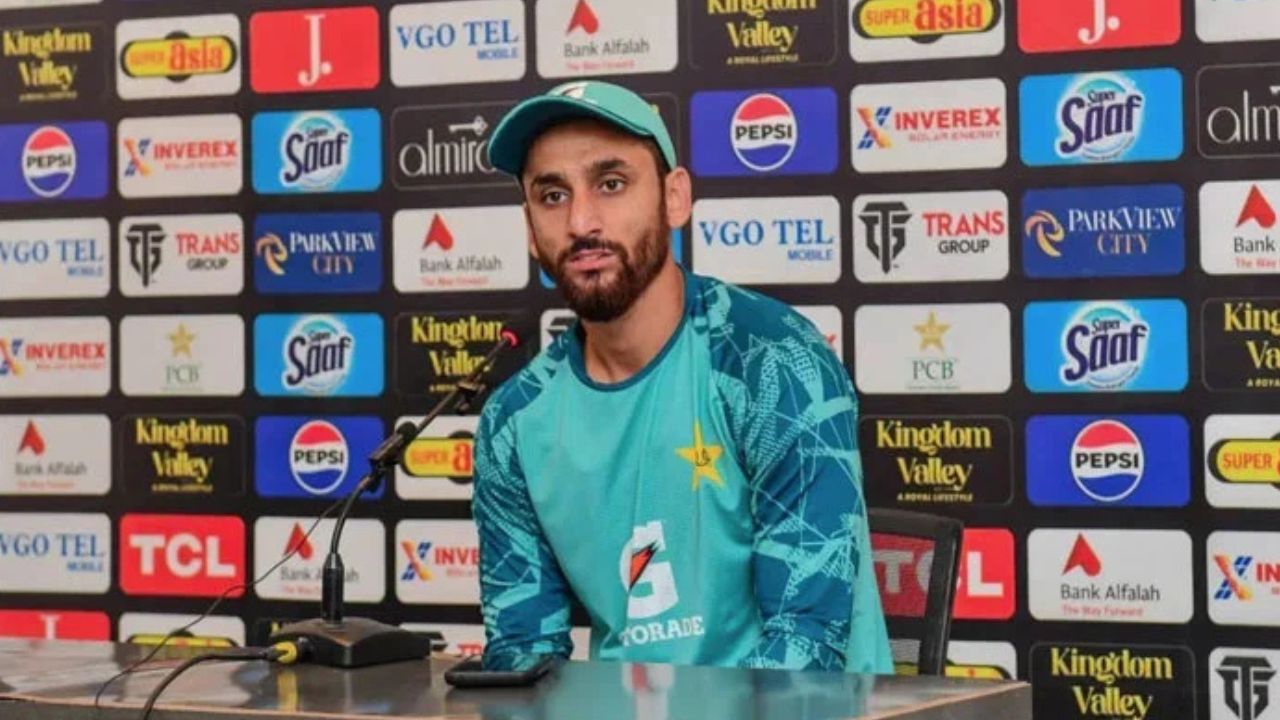
    Pakistan captain Salman Ali Agha has called for a more ruthless mindset in the powerplay overs after a nervy five-wicket win over Zimbabwe in the opening match of the T20I tri-series at the Rawalpindi Cricket Stadium.

    Put into field, Pakistan were immediately under pressure as Zimbabwe’s openers Tadiwanashe Marumani and Brian Bennett raced to 59 without loss in the powerplay — the Chevrons’ second-highest against Pakistan in T20Is. However, the visitors faltered once Mohammad Nawaz led a spirited fightback, restricting them to 147/8.

    “It was a close game. We didn’t start well with either bat or ball, and when you don’t start well, the game tends to get close,” Agha admitted during the post-match presentation.

    The skipper credited Pakistan’s spinners for turning the tide, highlighting their consistent performances over the past few months. He revealed that the team had anticipated a low-scoring contest after assessing the pitch conditions.

    “The spinners have been doing well for the last 4–5 months. They were the ones who put us back in the game,” Agha said. “When we saw the pitch last night, I knew it wasn’t going to be high scoring. It looked like a 160–180 kind of wicket, but we bowled really well. I was very happy chasing 147.”

    Looking ahead, Agha stressed the importance of sharper starts in both batting and bowling. “We need to start well, bowling or batting. In the powerplay, we need to be ruthless. That’s what I’m going to talk about,” he said.

    Pakistan’s chase was anchored by a crucial 61-run stand between Fakhar Zaman (44 off 32) and Usman Khan (37* off 28) while Nawaz capped his all-round display with 21* off 12 balls to seal victory with four deliveries to spare.

    The tri-series continues in Rawalpindi with Zimbabwe set to face Sri Lanka on Thursday, before Pakistan meet Sri Lanka in their second fixture on Saturday.

  • Ahsan Khan slams societal attitudes on mental health

    Ahsan Khan slams societal attitudes on mental health

    Ahsan Khan slams societal attitudes on mental health 

    Actor Ahsan Khan has slammed Pakistani society for its careless attitude about mental health. 

    “Mental health is not considered a problem in our society. People say with ease that it is not a disease,” he said during an appearance on a television show. Talking about how people react to discussions on mental health, the actor observed that people say, “You are Muslim, you cannot have this disorder.” He then elaborated his own response: “I always ask, can Muslims not get diabetes, do they not suffer from hypertension (high blood pressure), do they not get other diseases or do they not get injured?” 

    “You can’t see a visible wound with mental health but does that mean it is not a disorder?” 

    Ahsan then went on to promote seeking both medical and spiritual help for mental health problems. He outlined passages from the Holy Quran that can help someone who suffers from depression.  

    “If you have suffered a chemical balance, or some nutrient has been depleted inside you or you have a gut problem, it can lead to depression. You can treat it with medical science and as for spiritual treatment, there is no better cure than the Holy Quran,” Ahsan stated.

  • Malika’s cage: Why Pamaal is hitting Pakistani women straight in the heart

    Malika’s cage: Why Pamaal is hitting Pakistani women straight in the heart

    The drama Pamaal has created waves for the right reasons. It’s a drama that so many women are relating to and opening up about their own lives or the lives of people that they know. 

    Malika (Saba Qamar) is married to Raza (Usman Mukhtar) and they have a troubled marriage because of his extreme possessiveness. But the way that he deals with her, flip flopping between love and anger, caging her in her home and then letting her go out, mostly with him, is the quintessential narcissist that a lot of Pakistani women have lived with – or so it seems by the comments that are going around about the drama.

    The pain Malika faces is also intense where she loves him but is unable to leave him. When she does leave him, her mother convinces her to go back with the typical reasons – patience, sabr, shame, badnaami. What hits you harder is that Malika’s mamoo is more receptive to her needs and her self respect. It’s so heartbreaking to see Malika raise herself up and try to break the pattern and the life she is in and then be pushed down by herself and her mother. And it’s so bittersweet that she says that she would never do that to her daughter. 

    What also hits hard in these episodes is that she has resigned herself to believe that she can’t do things herself. She tells Raza that she can’t go out on her own, she’s too used to going with him, she goes shopping with her sister-in-law and her sister in law’s watch stops working and she doesn’t realise that it’s time to pick up her daughter. And Malika gets very, very upset, borderline hyperventilating and you can feel the trauma she’s living in and is now so used to that she doesn’t even realise that there is a way to be free. The queen we saw in the beginning is now the slave and doesn’t even know it anymore.

    The hope is that we know that she either leaves him or manages to push herself out of her cage to become an acclaimed and famous writer and is now telling her story. A story that is so painful for so many to watch. 

    In the recent episodes, 12-14 we know that she’s spent a lot of years with Raza, with a daughter in school and we know about the turning point in her life when Raza is arrested for corruption.

    How will she raise herself up to become the woman she was meant to be? And what’s worse is, if Raza wasn’t arrested and standing over her with the key of the cage, would she have been able to get out? 

    Only time will tell and we can’t wait see how she finally breaks through and re-emerges as the Malika that she is.