Blog

  • Israel sets Ramadan deadline for Rafah assault

    Israel sets Ramadan deadline for Rafah assault

    Israel will launch its long-threatened offensive against Rafah next month if the remaining hostages held in Gaza are not freed by the start of Ramadan, Israeli war cabinet member Benny Gantz said.

    “The world must know, and Hamas leaders must know — if by Ramadan our hostages are not home, the fighting will continue everywhere, including the Rafah area,” Gantz, a retired military chief of staff, told a conference of American Jewish leaders in Jerusalem on Sunday.

    Ramadan, the holy month, is expected to begin on March 10.

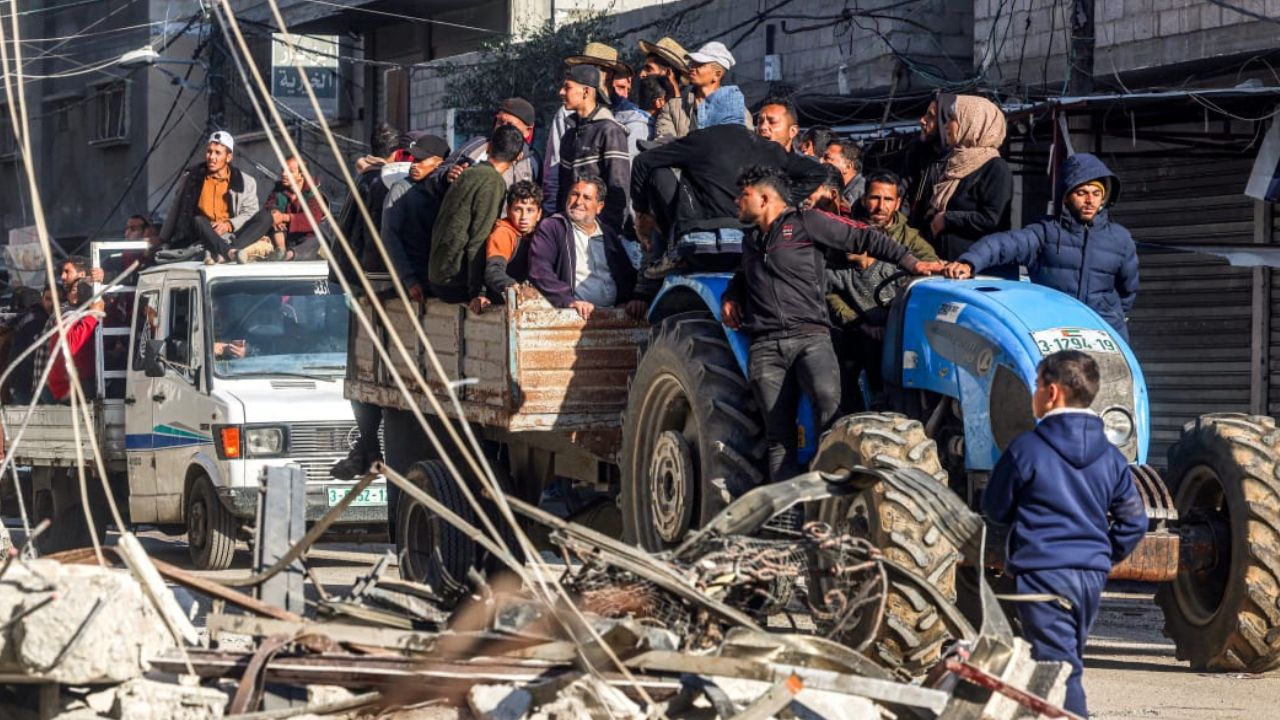
    The Israeli government has not previously specified a deadline for its planned assault on the city where the majority of the 1.7 million displaced Palestinians have sought refuge.

    Fearing the potential for mass casualties, foreign governments and aid organisations have repeatedly urged Israel to spare Rafah, the last major Gazan city not invaded by ground troops during the four-month-old war.

    Despite the mounting international pressure, including a direct appeal from US President Joe Biden, Israeli Prime Minister Benjamin Netanyahu insists the war cannot be completed without pressing into Rafah.

    Speaking at the same Jerusalem conference on Sunday, Netanyahu renewed his vow “to finish the job to get total victory” over “Hamas”, with or without a hostage deal.

    Gantz added that an offensive would be carried out in a coordinated manner and in conversation with Americans and Egyptians to facilitate an evacuation and “minimise the civilian casualties as much as possible”.

    But where civilians can safely relocate to on the besieged Gaza Strip remains unclear.

    The comments come after weeks of ceasefire talks have failed to produce a deal, with key mediator Qatar acknowledging over the weekend that the prospects are dimming.

    Washington, Israel’s key ally and military backer, has been pushing for a six-week truce in exchange for the release of the 130 hostages still estimated by Israel to be held in Gaza, including around 30 presumed dead.

    Israel has said it believes many of those hostages, as well as the Hamas leadership, are holed up in Rafah.

    The militants took about 250 people hostage during the October 7 attacks that triggered the war and resulted in the deaths of about 1,160 people in Israel, according to an AFP tally of Israeli figures.

    Israel’s retaliatory campaign has killed at least 28,858 people, mostly women and children, according to the health ministry.
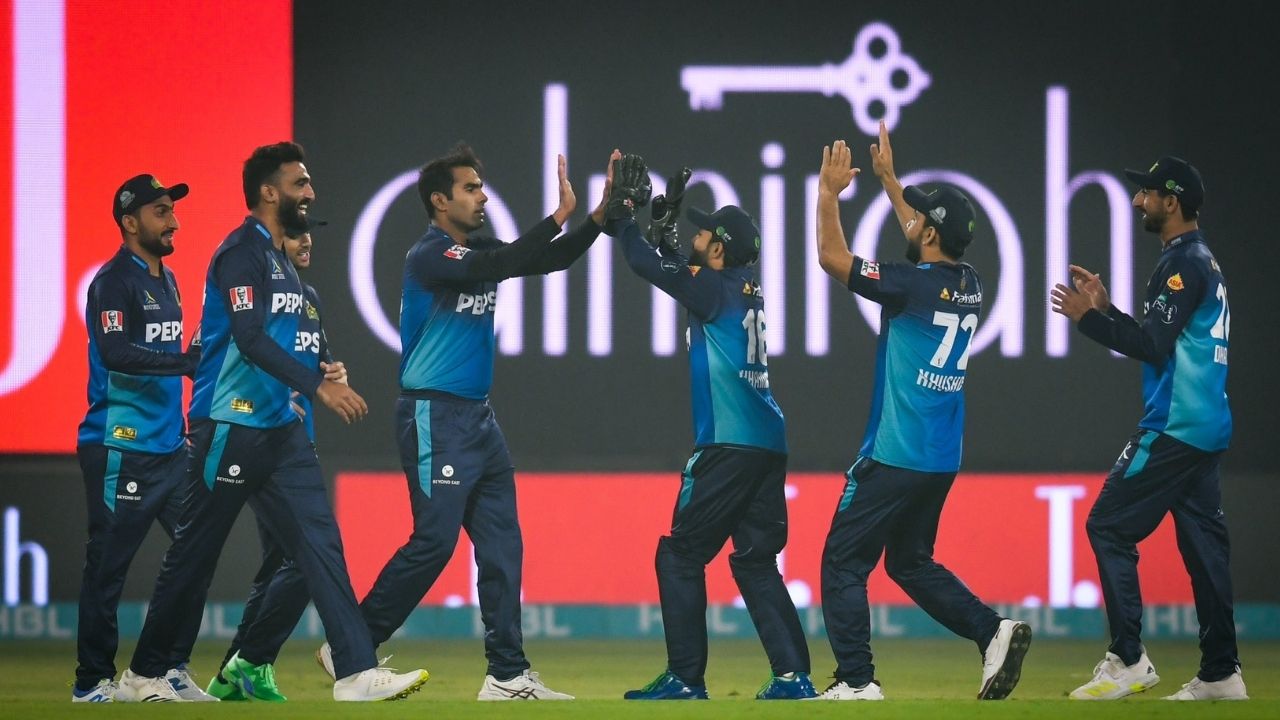

  • PSL 9: Multan Sultans defeats Karachi Kings by 55 runs

    PSL 9: Multan Sultans defeats Karachi Kings by 55 runs

    In the third match of the ninth edition of Pakistan Super League, Multan Sultans easily defeated Karachi Kings by a huge margin of 55 runs.

    In the match played in Multan, Karachi Kings captain Shan Masood won the toss and invited Sultans to bat.

    Multan Sultan’s inning

    Multan Sultans scored 185 runs for the loss of 2 wickets in the allotted 20 overs, Reza Hendricks remained unbeaten with 79 runs. Apart from this, David Mallan played an innings of 52 runs off 41 balls, Mohammad Rizwan was dismissed by scoring 11 runs while Khushdil Shah was not out by scoring 28 runs.

    Mir Hamza and Daniel took one wicket each for Karachi Kings.

    Karachi King’s inning

    In pursuit of the target of 186 runs, Karachi’s batting could not show any sufficient performance, except the experienced batsman Shoaib Malik, none of the batsmen could play well.

    Karachi Kings team could only score 130 runs for 8 wickets in the allotted overs in pursuit of the target.

    Shoaib Malik scored 53, Shaun Masood scored 30 and Kieron Pollard scored 28 runs. James Vance scored 5 runs, Mohammad Nawaz scored 7 runs.

    On behalf of Multan Sultans, Muhammad Ali dismissed 3 players, David Wali and Abbas Afridi 2.

  • Pakistan’s mobile phone imports skyrocket, surpassing $987 million in first half of FY 23-24

    Pakistan’s mobile phone imports skyrocket, surpassing $987 million in first half of FY 23-24

    Pakistan has witnessed a remarkable surge in mobile phone imports, reaching $987.539 million during the first half (July–January) of the fiscal year 2023–24. 

    This marks a substantial growth of 138.08 per cent compared to the same period in the previous fiscal year, where imports totaled $414.800 million.

    The data, released by the Pakistan Bureau of Statistics (PBS), underscores the country’s increasing reliance on imported mobile devices.

    In January 2024 alone, Pakistan’s mobile phone imports rose by 10.70 per cent on a month-on-month basis, totaling $194.928 million, compared to $176.093 million in December 2023. 

    Year-on-year comparisons reveal an even more staggering growth of 275.15 per cent in January 2024, compared to $51.960 million in January 2023.

    The overall telecom imports into Pakistan during July–January 2023–24 amounted to $1.243 billion, showcasing a robust 93.06 per cent growth compared to the same period in the previous fiscal year. 

    Year-on-year, the growth in overall telecom imports stood at an impressive 197.07 per cent, reaching $232.709 million in January 2024, compared to $78.336 million in January 2023.

    Despite challenges faced by the local manufacturing sector, including a decline of around four per cent in local manufacturing and assembling of mobile handsets during the calendar year 2023, commercial imports of mobile handsets increased. 

    Official data revealed that local manufacturing plants produced 21.28 million mobile handsets in 2023, compared to 21.94 million in 2022 and 24.66 million in 2021. However, commercial imports rose from 1.53 million in 2022 to 1.58 million in 2023.

    Moreover, of the locally manufactured and assembled mobile handsets in 2023, 13 million were 2G devices, and 8.28 million were smartphones. 

    According to the Pakistan Telecommunication Authority (PTA), 59 per cent of mobile devices in Pakistan are smartphones, while 41 per cent are 2G devices.

    Despite the challenges faced by the local manufacturing sector, the significant growth in mobile phone imports underscores Pakistan’s increasing reliance on imported devices, contributing to the country’s evolving telecom landscape.

  • PSL 9: Quetta Gladiators defeats Peshawar Zalmi by 16 runs

    PSL 9: Quetta Gladiators defeats Peshawar Zalmi by 16 runs

    In the second match of the ninth edition of Pakistan Super League, Quetta Gladiators easily defeated Peshawar Zalmi by 16 runs.

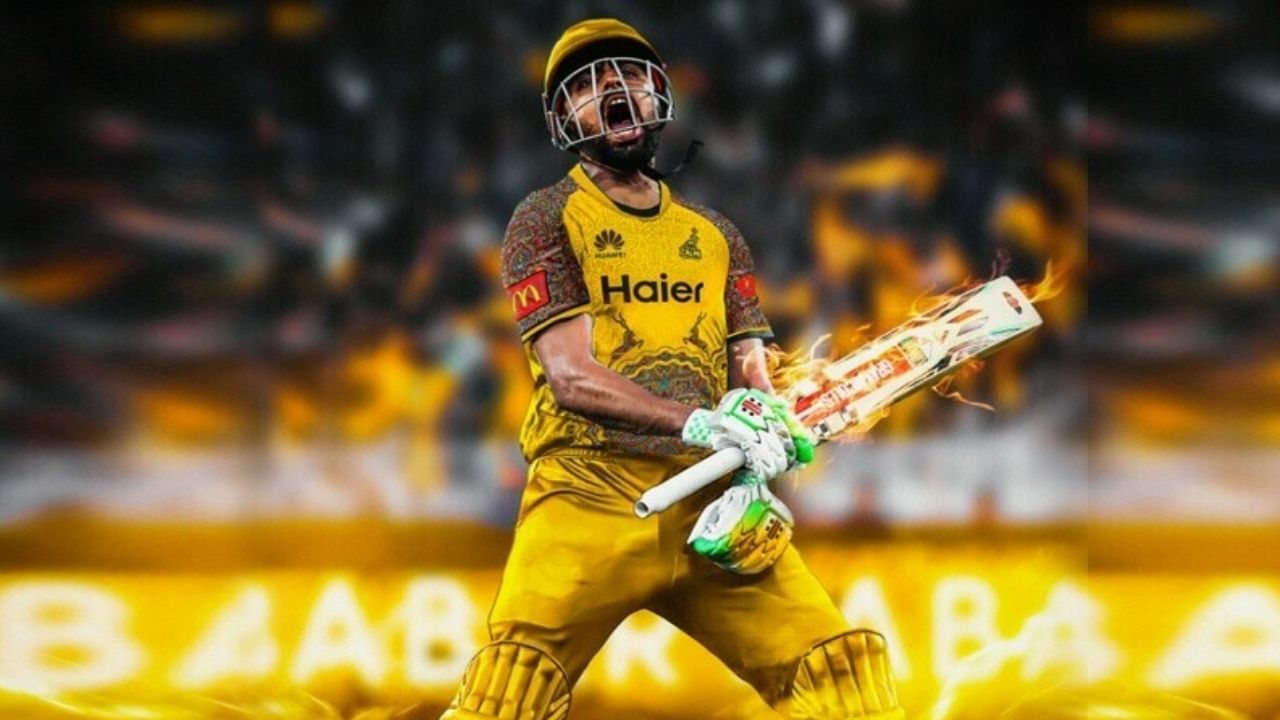
    Peshawar Zalmi captain Babar Azam invited Quetta Gladiators to bat in the match played at Gaddafi Stadium in Lahore.

    Quetta Gladiator’s inning

    Gladiators’ openers gave the team a brilliant start and scored 206 runs for the loss of 5 wickets in the allotted 20 overs, Jason Roy 75, Saud Shakeel 74.

    Apart from this, captain Riley Rossow scored 13 runs, Sherfan Rutherford scored 20 runs and Mohammad Wasim scored 4 runs.

    On behalf of Peshawar, Salman Irshad took 3 wickets, Luke Wood and Mohammad Zeeshan dismissed one player each.

    Peshawar Zalmi’s inning

    Chasing a target of 207 runs, Peshawar Zalmi got off to an aggressive start, with a 91-run partnership between openers Babar Azam and Saim Ayub.

    Then Saeem Ayub was unfortunately run out after scoring 42 runs off 26 balls. After that Muhammad Haris scored 7, Tom Koehler 18, Powell 17 and Mosley 11 runs. Zalmi’s captain Babar Azam played an innings of 68 runs off 42.

    In pursuit of the target, the Peshawar team scored 190 runs for 6 wickets in the allotted 20 overs and thus Quetta won the match by 16 runs.

  • Babar Azam created a new history in PSL

    Babar Azam created a new history in PSL

    Peshawar Zalmi captain Babar Azam created a new history in HBL Pakistan Super League (PSL). Babar became the first batsman to score 3000 runs in PSL history, scoring 3004 runs in 80 innings.

    On Sunday, the teams of Peshawar Zalmi and Quetta Gladiators competed against each other at the Gaddafi Stadium in Lahore.

    In this match, Peshawar Zalmi captain Babar Azam invited Quetta Gladiators to bat. Gladiators’ openers gave the team a brilliant start and scored 206 runs for the loss of 5 wickets in the allotted 20 overs, Jason Roy 75, Saud Shakeel 74.

    In pursuit of the target, Babar Azam crossed the milestone of 3000 runs in PSL while batting. Second in this list is Fakhar Zaman of Lahore Qalandars who has scored a total of 2381 runs in PSL so far.

  • X (Twitter) down in Pakistan since last night

    X (Twitter) down in Pakistan since last night

    Social media site X, formerly Twitter, is down across Pakistan, causing problems for millions of users of the micro blogging app.

    According to real-time internet and social media outage and monitoring service Downdetector.pk, X is down in Pakistan since 9 PM Saturday night, with users complaining that they are having trouble viewing tweets and new posts.

    But users can acces itvby using VPN.

    Cyber security watchdog, NetBlocks has also confirmed the shutdown of X in Pakistan. In the last few days, internet services including social media sites have been blocked several times across Pakistan.

  • Authorities confiscate smuggled cigarettes worth Rs14 crore

    Authorities confiscate smuggled cigarettes worth Rs14 crore

    In a substantial crackdown on the illicit trade of non-duty-paid cigarettes, the Inland Revenue Enforcement Network (IREN) successfully seized over 679,000 packerites (15,580,000 sticks) of smuggled cigarettes during a two-day operation.

    The confiscated cigarettes, representing various local and foreign brands, including Business Royal, H&P, Platinum, Milano, and Olympic, have an estimated value exceeding PKR 140 Million.

    The enforcement teams targeted local shops in Peshawar, Multan, and Sialkot, where the availability of non-duty paid cigarettes had seen a concerning surge.

    This operation was initiated under the directive of Mir Badshah Khan Wazir, Member (IR-Operations), who emphasized the need to curb the illegal trade of tobacco products.

    Criminal proceedings have been set in motion against both manufacturers and transporters involved in this illicit trade.

    One of the key factors contributing to the rise in the popularity of smuggled cigarettes is the substantial price difference compared to duty-paid alternatives.

    While the cost of a pack of 20 duty-paid cigarettes starts at Rs600, the non-duty paid counterparts can be obtained for as low as Rs200. Some reports even suggest that certain brands are being sold at an even more economical rate.

    The increasing prevalence of non-duty paid cigarettes poses a serious concern, not only in terms of lost revenue for the government but also due to health implications.

    Smokers in Pakistan, attracted by the affordability of these illicit products, have contributed to the surge in sales of non-duty paid cigarettes.

    The IREN’s recent operation sends a clear message that the authorities are actively addressing this issue to safeguard public health and financial interests.

    As investigations unfold, it remains to be seen how this crackdown will impact the illicit trade of cigarettes and discourage individuals from opting for non-duty paid alternatives.

  • Italy, Home Of The Mafia, Now One Of Europe’s Safest Countries

    Italy, Home Of The Mafia, Now One Of Europe’s Safest Countries

    Italy may be the land that launched Cosa Nostra, but today it is one of the safest countries in Europe, with a murder rate well below its neighbours.

    From the mid-19th century through to the 1990s, thousands of people died in mafia violence, from rivals or traitors cast in cement or fed to pigs, to judges, priests and witnesses killed for daring to defy the mob.

    There were also the traumatic “Years of Lead” from the end of the 1960s to the 1980s, when armed groups from the extreme left and extreme right brought terror to Italy with bombings and assassinations.

    The brutal murder of former prime minister Aldo Moro by the Marxist-Leninist Red Brigades in 1978 is burned into the national psyche, although the largest number of the estimated 400 victims of the period were killed by neo-fascists.

    But when this bloody period ended, and after a crackdown on mafias which pushed them into less violent financial crime, the murder rate plummeted.

    Back in 1990, there were 34 murders per one million inhabitants in Italy, compared to 24 in neighbouring France, according to UN figures.

    In 2021-22, this had fallen to 5.5 per million in Italy and 11 in France, eight in Germany and 10 in the UK.

    In Europe, only Norway and Switzerland have a murder rate lower or equal to Italy’s, while Latvia, the worst, has a rate 6.5 times higher.

    “Homicides in general have decreased in the last 25 years, especially the percentage of men” — who previously were the main victims of mafias, noted Raffaella Sette, a sociologist at the University of Bologna.

    Just 10 percent of murders each year are now blamed on organised crime.

    “The mafias — the Camorra, the ‘Ndrangheta, the Cosa Nostra — have radically changed their way of operating,” said Gianluca Arrighi, a criminal lawyer who writes police novels.

    “Today, they operate from a more economic point of view, buying up real estate, entering into companies,” he said.

    Analysing the causes of violence across different countries is always risky, but Arrighi believes several factors are at play.

    While Italy is poorer than its comparable EU neighbours, he says this is not always detrimental to social well-being, saying “goodwill” between people can help compensate for life’s difficulties.

    “The higher the conflict in a society, the higher the number of murders, committed by people who are in some state of anger,” Arrighi told AFP.

    The murder rate is, however, higher in the south of Italy, the poorest part of the country.

    But Stefano Delfini, head of criminal analysis at the government’s department of public security, agrees that “our society is less violent”.

    “The social fabric is more resistant, probably because of the presence of family values which mean difficulties are felt in a less harsh way.”

    Another factor that drives violence in other countries is alcohol or drug use, particularly in France and the UK.

    Italy does not keep data on this, but consumption of alcohol is the lowest in the EU, according to the World Health Organization.

    There is rising awareness in Italy about femicides — killing of a woman or girl by a partner, spouse or family member — with 97 recorded in 2023, out of a total 330 murders.

    A lack of harmonised data on femicides makes comparisons with other European countries difficult.

    But statistics compiled by the World Bank for 2021 show a rate of 3.9 murders of women per one million people in Italy, well below the 6.8 in France and 8.0 in Germany.

    © Agence France-Presse

  • El Salvador, where women are jailed for miscarriages

    El Salvador, where women are jailed for miscarriages

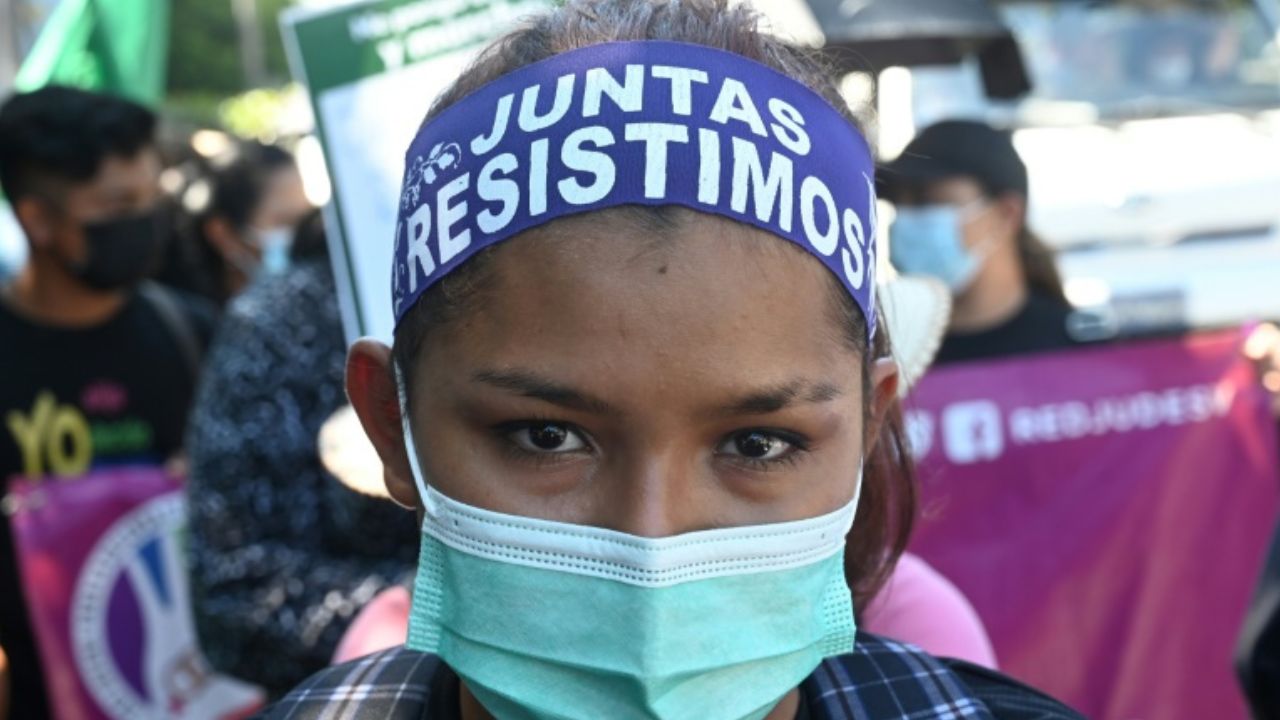
    Lilian was 20 when her newborn baby died of medical complications at a hospital in El Salvador, where abortion is a crime and even the suspicion of one can land a woman in jail.

    Lilian was arrested and sentenced to 30 years in prison for “aggravated homicide” after her infant daughter passed away at a public hospital in Santa Ana in the country’s west in November 2015.

    “I gave birth naturally, but I had a tear in my uterus,” recounted Lilian, now 28, who declined to give her full name to protect her family.

    She was sedated for a procedure to fix the tear, and when she awoke, “I knew my baby was dead.”

    Her nightmare did not end there.

    “I was first accused of abandonment and neglect, but the prosecution called it ‘aggravated homicide’ and I was convicted in May 2016,” she told AFP.

    A report found Lilian’s baby had died of neonatal sepsis, yet she spent eight years behind bars for ‘aggravated homicide’

    Last year, a medical report concluded that her baby had died of neonatal sepsis, a finding that resulted in Lilian’s early prison release in November with the aid of women’s rights NGOs.

    By then, she had already served eight years behind bars.

    “If she (the baby) had been treated in time, she would not have died. I wouldn’t have wasted so many years of my life in prison,” said Lilian, whose other daughter was just two when it happened and was raised by her grandparents.

    “I only saw her twice, I did not see her grow up.”

    Lilian is the last of 73 Salvadorans to be released from prison in the last decade under a campaign by rights groups to free women serving sentences of up to 50 years for abortions, miscarriages, or birthing complications.

    In Latin America, elective abortion is legal in Mexico, Argentina, Colombia, Cuba and Uruguay

    Almost all are from poor backgrounds in rural areas where health services are precarious, said Arturo Castellanos, a social worker with the Citizens’ Group for the Decriminalization of Abortion.

    Alba Lorena Rodriguez, now 36, became pregnant at 21 after an acquaintance raped her.

    Five months pregnant, she went into premature labor at home.

    “I had to give birth to him myself, I fainted, I dropped” the baby, she told AFP.

    A neighbor called the police, and Rodriguez, who has two other daughters, was arrested at the infant’s funeral.

    “I felt the world come crashing down on me, because I knew I wasn’t going to see the girls, and they were punishing me for something I hadn’t done,” she said.

    “The one who raped me was on the outside with his family and I (was)… imprisoned. The law is unfair,” said Rodriguez, who said she had no defense lawyer and no chance for anything like a fair trial.

    Rodriguez served 10 years of a 30-year sentence before she, too, was released.

    Both women chose to talk to AFP in the capital San Salvador, far from their own villages where the punishment has not stopped.

    When the jailed women leave prison, “the community discriminates against them and stigmatizes them,” Castellanos said.

    Alba Lorena Rodriguez, now 36, became pregnant after she was raped by an acquaintance at the age of 21

    In Latin America, elective abortion is legal in Mexico, Argentina, Colombia, Cuba and Uruguay.

    It is banned outright, without exceptions for health risks or other circumstances, in El Salvador, Nicaragua, Honduras, Haiti and the Dominican Republic.

    Nowhere are the penalties as severe as in El Salvador, however.

    Under the law there, abortion is punishable by two to eight years in prison. But the charge is often changed to “aggravated homicide,” which carries a penalty of 30 to 50 years.

    Since 1998, when abortion was criminalized in El Salvador, 199 women have been sentenced.

    Since Lilian’s release last year, none remain imprisoned, but seven women are awaiting trial, according to the Citizens’ Group.

    “No one can give me back my lost time. I’m rebuilding the bond with my daughter,” said Lilian, who would like to see the law changed so that other women do not have to go through what she has.

    But President Nayib Bukele, newly elected to a second five-year term with near-total control of parliament, has said there will be no change to abortion laws in the deeply Christian country.

    “The struggle continues,” said Lilian.

    Since abortion was criminalized in El Salvador in 1998, a total of 199 women have been sentenced
  • PSL 9: Islamabad United defeats Lahore Qalandars by 8 wickets in first match of event

    PSL 9: Islamabad United defeats Lahore Qalandars by 8 wickets in first match of event

    In the opening match of HBL Pakistan Super League (PSL) 9, Islamabad United defeated Lahore Qalandars by 8 wickets.

    In the match played at Gaddafi Stadium in Lahore, Islamabad United captain Shadab Khan won the toss and invited Lahore Qalandars captain Shaheen Afridi to bat.

    Playing first, Lahore Qalandars scored 195 runs for 5 wickets in the allotted 20 overs. Sahibzada Farhan played an innings of 57 and Abdullah Shafiq scored 28 runs, David Wesa scored 14 runs and Fakhzaman scored 13 runs. Van der Dusen remained unbeaten with 71 off 41 balls.

    Naseem Shah and Shadab Khan took one wicket each while Tymal Mills dismissed 2 players.

    Islamabad United achieved the target of 196 runs at the loss of 2 wickets in the 19th over. United captain Shadab Khan remained unbeaten with 74 runs off 41 balls with 5 sixes and 6 fours.

    Agha Salman was not out with 64 runs off 31 balls, Agha Salman’s innings included 3 sixes and 7 fours. Apart from them, Alex Hales scored 36 runs and Colin Munro scored 5 runs.

    Zaman Khan and Salman Fayaz took one wicket each for Lahore Qalandars.