Blog

  • Political instability, IMF loan conditions threaten Pakistan’s economic growth

    Political instability, IMF loan conditions threaten Pakistan’s economic growth

    In January, Pakistan experienced a boost in economic activity, thanks to the financial aid provided by the International Monetary Fund (IMF), as reported by Bloomberg Economics Tracker.

    However, there are three key developments that may impact future economic conditions.

    Firstly, the aftermath of the inconclusive February 8 election has resulted in persistent political instability, presenting a potential obstacle to new investments.

    Secondly, there is a likelihood of more stringent conditions associated with additional IMF loans. Lastly, there is an increasing probability that the State Bank of Pakistan will delay rate cuts.

    Despite the challenges, January saw a positive trend with a 0.9 per cent increase in economic activity compared to December, breaking a four-month contraction streak.

    The injection of IMF loans and eased trade restrictions contributed to this improvement, enabling increased purchases of essential import supplies.

    Looking ahead, the unresolved election outcome may prolong political uncertainty, affecting potential investments.

    The recent hike in gas prices on February 15 will likely drive inflation higher, further reducing the chances of a March rate cut.

    Considering these developments, Bloomberg Economics is considering revising its growth outlook.

    While Bloomberg currently predicts 2.1 per cent GDP growth through June 2024 (up from a 0.2 per cent contraction in the previous fiscal year), the consensus estimate is 2.5 per cent, and the IMF forecasts 2 per cent.

    It’s essential to note that the Bloomberg Economics monthly tracker assesses inflation-adjusted indicators of activity.

  • 24-karat gold price increases by Rs1,300 per tola

    24-karat gold price increases by Rs1,300 per tola

    In a persistent upward trend, the domestic bullion market showcased further gains, particularly in the value of 24-karat gold, which surged by Rs1,300 per tola to reach Rs212,400 on Friday.

    According to the latest report from the Karachi Sarafa Association, the price of 10-gram 24-karat gold experienced a notable increase, reaching Rs182,099 and reflecting a gain of Rs1,115 compared to the previous session.

    Simultaneously, the price of 10-gram 22-karat gold saw an uptick, settling at Rs166,924.

    Despite the positive momentum in the gold market, silver prices remained steady, with 24-karat silver holding at Rs2,580 per tola and 10-gram silver trading at Rs2,211.93.

    Interestingly, despite today’s substantial rise in gold prices and the prevailing political instability in the country, local gold is on track to record a weekly loss.

    This comes on the heels of hotter-than-anticipated US inflation data released on Wednesday, causing gold to dip below the $2,000 mark for the first time in two months.

    Bloomberg reported that the American Consumer Price Index (CPI) data disappointed investors, reversing recent declines in price pressures and dampening expectations for rate cuts this year.

    However, the international spot gold has rebounded strongly since Wednesday’s decline, currently trading at $2,007.61, reflecting a gain of over $3 day-over-day.

    Amidst these global dynamics, the fluctuation in the domestic currency plays a crucial role in determining the domestic gold rate.

    It’s noteworthy that the Pakistani Rupee (PKR) snapped its 13-week-long and historic winning streak against the US Dollar, experiencing a marginal drop of 8 paisa.

    Given that gold is denominated in US dollars, a depreciation of the PKR against the dollar contributes to the rise in the value of PKR-denominated gold.

    The bullion market’s resilience in the face of global challenges highlights its sensitivity to both local and international economic factors, providing a nuanced perspective for investors and stakeholders.

  • Russian opposition leader Alexei Navalny dies in prison

    Russian opposition leader Alexei Navalny dies in prison

    Moscow, Russia – Russian opposition leader Alexei Navalny died Friday in the Arctic prison colony where he was serving a 19-year-term, Russia’s federal penitentiary service said.

    Western governments immediately attacked the Kremlin over the death of the most outspoken critic of President Vladimir Putin.

    Navalny lost consciousness after a walk and could not be revived by medics, the prison service said.

    “Navalny felt bad after a walk, almost immediately losing consciousness. Medical staff arrived immediately and an ambulance team was called,” it said.

    “Resuscitation measures were carried out which did not yield positive results. Paramedics confirmed the death of the convict. The causes of death are being established.”

    The 47-year-old was Russia’s most prominent opposition leader and won a huge following with his criticism of corruption in Vladimir Putin’s Russia.

    Russia’s Investigative Committee said it had opened an investigation into the death.

    Navalny’s press secretary Kira Yarmysh said his team had not been informed of his death.

    “Alexei’s lawyer is now flying to Kharp,” where his prison colony is, she said in a post on social media.

    Citing his spokesman, Russian news agencies reported that Putin had been informed of Navalny’s death.

    Western governments and Russian opposition figures on Friday said the Kremlin was responsible for his death.

    Latvia’s president said he had been “brutally murdered by the Kremlin”.

    “The Russian government bears a heavy responsibility,” Norway’s Foreign Minister Espen Barth Eide wrote on X, formerly Twitter.

    France’s foreign minister said Navalny had paid with his life for resisting oppression.

    Opposition leader

    Navalny’s exposes, posted on his YouTube channel racked up millions of views and brought tens of thousands of Russians to the streets, despite Russia’s harsh anti-protests laws.

    He was jailed in early 2021 after returning to Russia from Germany, where he was recuperating from a near-fatal poisoning attack with Novichok, a Soviet-era nerve agent.

    In a string of cases he was sentenced to 19 years in prison on charges widely condemned by independent rights groups and in the West as retribution for his opposition to the Kremlin.

    His return to Russia despite facing jail put him on a collision course with Putin, after Navalny blamed the poisoning attack in Siberia on the Kremlin.

    “I’m not afraid and I call on you not to be afraid,” he said in an appeal to supporters as he landed in Moscow, moments before being detained on charges linked to an old fraud conviction.

    His 2021 arrest spurred some of the largest demonstrations Russia had seen in decades, and thousands were detained at rallies nationwide calling for his release.

    In prison, Navalny’s team said he had been harassed and repeatedly moved to a punitive solitary confinement cell.

    He said guards had subjected him and other inmates to “torture by Putin”, making them listen to the president’s speeches.

    From behind bars he was a staunch opponent of Moscow’s full-scale military offensive against Ukraine.

    The Kremlin moved to dismantle his organisation, locking up his allies and sending dozens of others into exile.

    Late last year he was moved to a remove Arctic prison colony in Russia’s Yamalo-Nenets region in northern Siberia.

    The last post on Navalny’s Telegram channel, which he managed through his lawyers and team in exile, was a tribute to his wife, Yulia Navalnaya, posted on Valentine’s Day.

  • ‘PPP will stay in Parliament for constructive criticism,’ says Faisal Karim Kundi

    ‘PPP will stay in Parliament for constructive criticism,’ says Faisal Karim Kundi

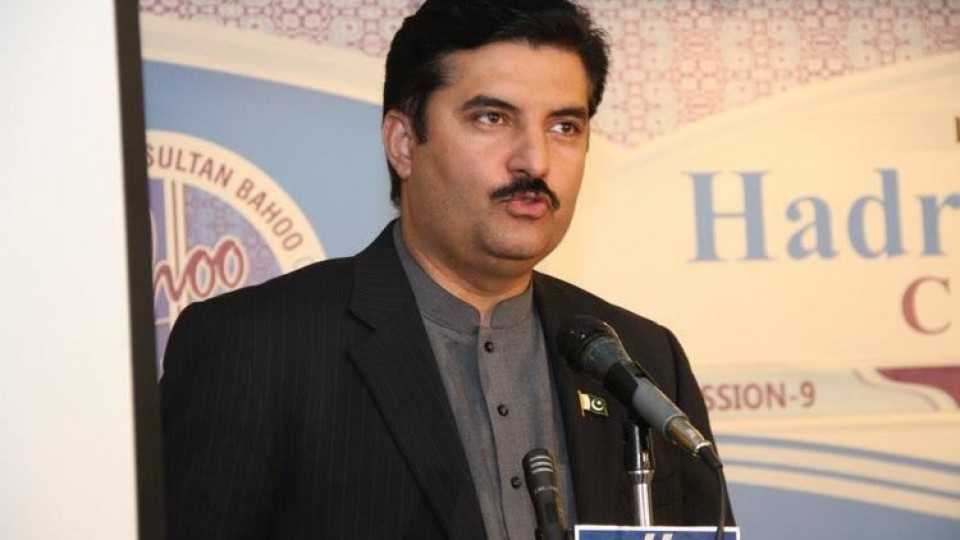
    As confusion around the formation of the government rages, Pakistan Peoples Party (PPP) leader Faisal Karim Kundi has said that if his party had chosen to sit in opposition, the country would’ve gone towards another election.”The PPP will stay in Parliament for constructive criticism,” he stated.

    While addressing a press conference in Islamabad today, Kundi said PPP will contest the seats of Senate Chairman and Speaker of the National Assembly (NA), adding that PPP will also help Pakistan Muslim League-Nawaz (PML-N) form a government in the centre.

    The politician also urged all political parties to work together for political stability in Pakistan.

  • Alarm over fate of major Gaza hospital after Israeli raid

    Alarm over fate of major Gaza hospital after Israeli raid

    Palestinian Territories – There was growing concern Friday over a key Gaza hospital a day after a raid by the Israeli army, with the health ministry saying several patients had died there due to a lack of oxygen.

    The health ministry said the power was cut off and the generators stopped after the raid at the Nasser hospital in the southern city of Khan Yunis, and that four patients had died Friday.

    In recent days, intense fighting has raged in the vicinity of the hospital – one of the Palestinian territory’s last remaining major medical facilities that are still operational.

    On Thursday Israeli army spokesman Daniel Hagari said there was “credible intelligence” to suggest hostages seized by Gaza militants in the October 7 attack that sparked the war had been held at the hospital, and that bodies of some of the captives may still be inside.

    But the military said later it had “not yet found any evidence of this”, although forces had found “weapons, grenades and mortar bombs” at the hospital complex.

    On Friday it said Israeli forces had taken into custody more than “20 terrorists” suspected of involvement in the October 7 attack at the hospital.

    A witness who declined to be named out of fear for their safety told AFP the army had shot “at anyone who moved inside the hospital”.

    The health ministry also raised fears over the fate of six other patients in the intensive care unit and three children, saying it held Israel “responsible for the lives of patients and staff considering that the complex is now under its full control”.

    ‘Pattern of attacks’

    Medical charity Doctors Without Borders described a “chaotic situation” at the hospital, with one employee unaccounted for and another detained by Israeli forces.

    “Our medical staff have had to flee the hospital, leaving patients behind,” it said.

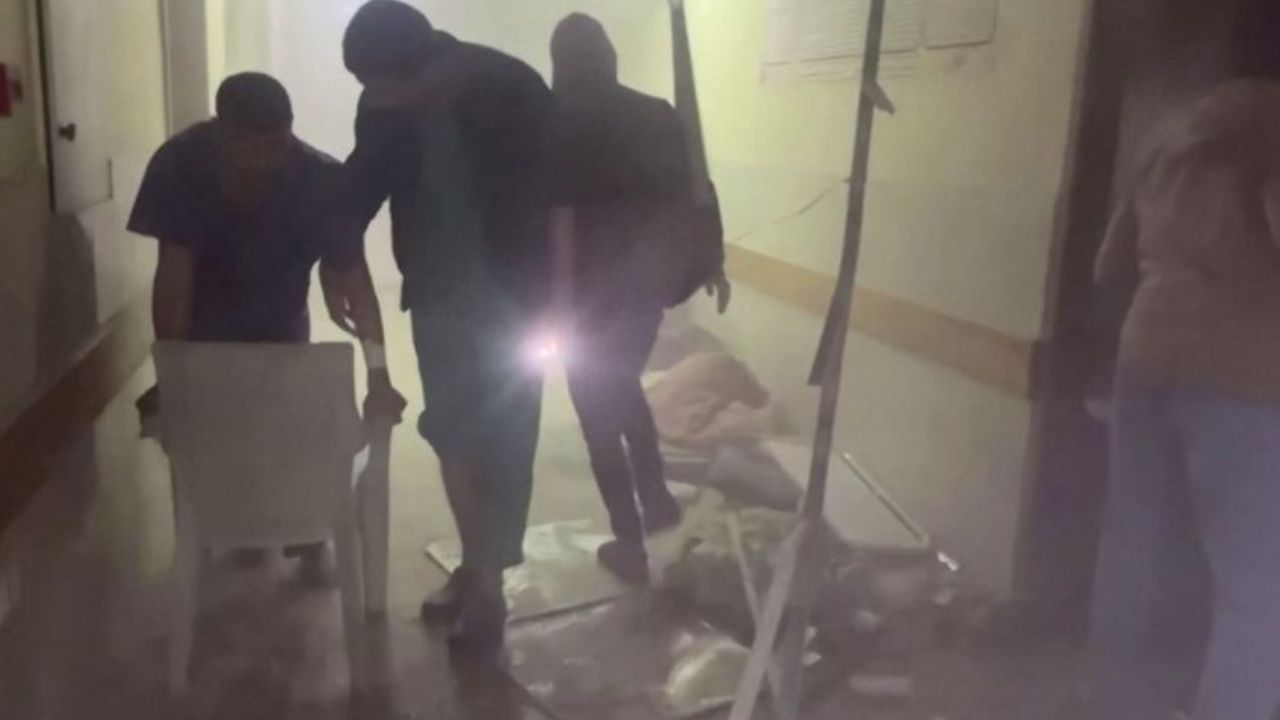
    Footage circulating on social media, which AFP could not independently verify, showed rescuers trying to move patients through dust-filled corridors amid fallen debris.

    At least 28,775 people, mostly women and children, have been killed in Israel’s assault on the Palestinian territory, according to the health ministry.

    The UN Human Rights Office said Israel’s raid on the Nasser hospital appeared to be “part of a pattern of attacks by Israeli forces striking essential life-saving civilian infrastructure in Gaza, especially hospitals”.

    The World Health Organization has described the Nasser hospital as a critical facility “for all of Gaza”, where only a minority of hospitals are even partly operational.

    Israeli strikes continued in the besieged territory overnight, with the health ministry saying Friday another 112 people were killed.

    ‘Dying slowly’

    Nearly 1.5 million displaced Palestinians are trapped in Rafah – more than half of Gaza’s population – seeking shelter in a sprawling makeshift encampment near the Egyptian border.

    There are fears about a growing humanitarian disaster without adequate supplies.

    “They are killing us slowly,” said displaced Palestinian Mohammad Yaghi. “We are dying slowly due to the scarcity of resources and the lack of medications and treatments in the city of Rafah.”

    “There is no medicine,” said Jihan al-Quqa, who was displaced from Khan Yunis to Rafah.

    “There are no antibiotics or any other treatments,” she added.

    “Everyone is sick, children and the elderly, and there is no medicine.”

    US President Joe Biden spoke by phone with Israeli Prime Minister Benjamin Netanyahu late Thursday, the White House said, and urged him again not to carry out an attack on Rafah without a plan to keep civilians safe.

    Britain, Australia, Canada and New Zealand have also urged Israel not to launch a ground offensive in the city.

    Despite international pressure, Netanyahu has insisted he would push ahead with a “powerful” operation in the overcrowded city to achieve “complete victory” over Hamas.

    Media reports suggested Egyptian authorities were building a new wall near the frontier with Gaza, amid fears of an influx of refugees.

    Truce talks

    Mediators from the United States, Qatar and Egypt gathered in Cairo this week to try and broker a deal to halt the fighting and see the release of the remaining hostages in exchange for Palestinian prisoners held by Israel.

    CIA director Bill Burns made an unannounced visit to Israel Thursday for talks with Netanyahu and the head of Israel’s Mossad intelligence agency, David Barnea.

    Barnea had already held talks with Burns and Egyptian and Qatari representatives in Cairo on Tuesday, before a Hamas delegation visited Wednesday.

    US Secretary of State Antony Blinken said he believed an agreement was still “possible”.

    But there has been limited sign of progress.

    Netanyahu said Thursday he rejected a plan for international recognition of a Palestinian state, following reports of the move in The Washington Post.

    burs-rox/dv

    © Agence France-Presse
  • ‘Main petrol nahin peeta’; Asif Ali takes U-turn

    ‘Main petrol nahin peeta’; Asif Ali takes U-turn

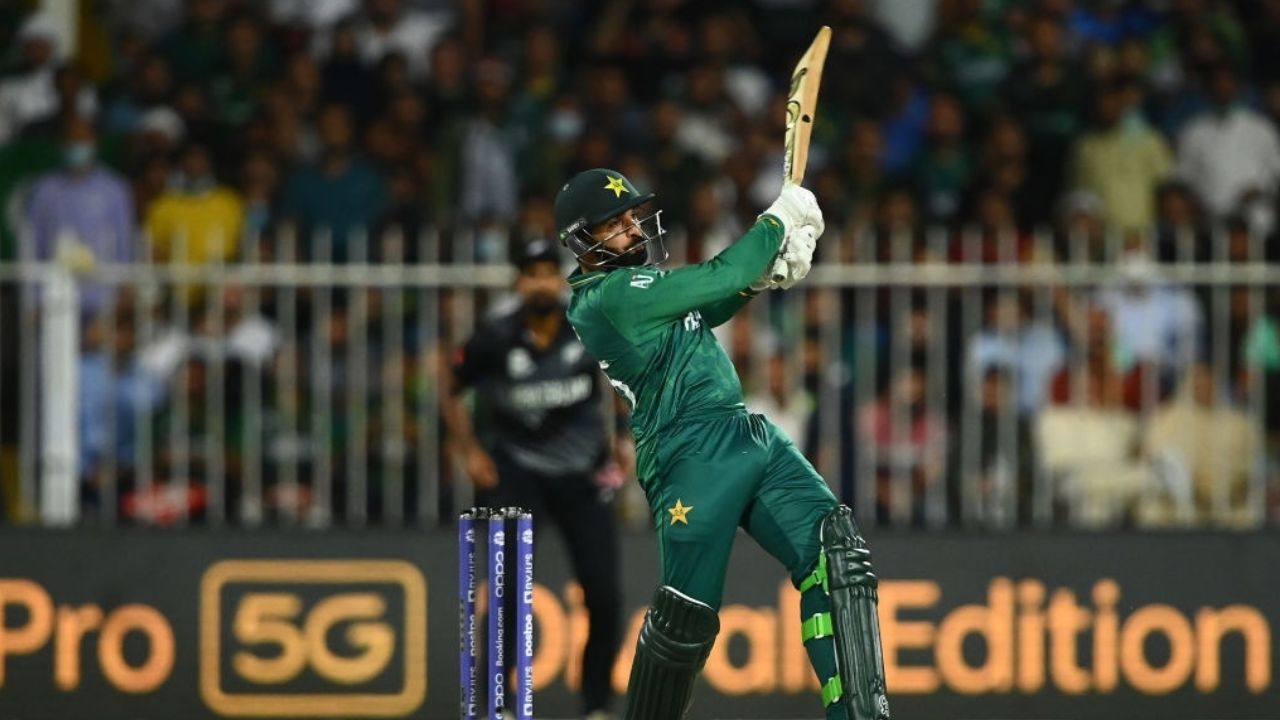
    National cricketer Asif Ali took a U-turn on a previous statement where he had said that he practices 300 sixes daily.

    Ehile talking to the media, Asif Ali said, “Recently I said that I don’t drink petrol to hit 300 sixes a day? During the camp at the National Cricket Academy (NCA) I practiced hitting sixes, but I was wrong about this statement.”

    Morover, he said “Babar Azam tries to guide all the players on the field, his greatness is that he trusted me and made me a part of his team.

    In August 2022, Asif Ali said that he tries to hit 300 sixes during daily practice so that he can hit sixes during the match. He faced a lot of criticism for his statement after his poor performance in the Asia Cup.

  • First-year students with low scores to be given additional marks

    First-year students with low scores to be given additional marks

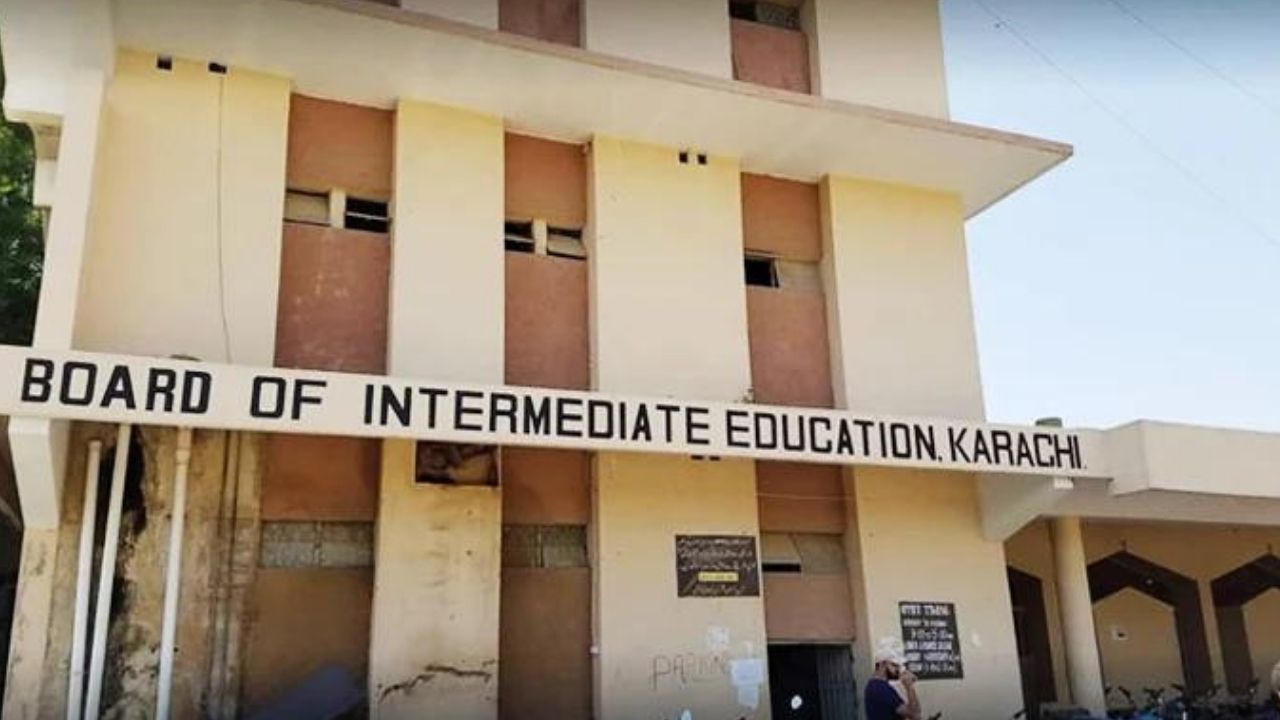
    Caretaker Chief Minister Justice (retd) Maqbool Baqar has directed the Board of Intermediate Education Karachi (BIEK) to give the students of Pre-Engineering, Pre-Medical, and General Science Part-I up to 15 percent additional marks in their exams, reports Geo News.


    The Sindh caretaker CM approved recommendations of a fact-finding committee formed to investigate Intermediate Part-I students’ getting unusually low marks this year.


    The committee submitted its report to the chief minister, following which BIEK’s IT in-charge was removed from his post.


    The CM said it had been decided on the committee’s recommendation that the students of pre-engineering, pre-medical, and general science would be given 15 percent extra marks.


    The committee advised forming paper patterns and a scheme for giving marks before the beginning of the educational year. It also said that the paper pattern and marking scheme would be implemented for three years. The Sindh CM ordered the relevant departments to increase the number of paper inspection centres to 10 in the city. He added that the MCQs papers should be checked with an optical marks recognition system so that there is no mistake.


    CM Baqar ordered that employees including head examiners, examiners, and invigilators should be trained, adding that the rules and regulations of BIEK should be strictly implemented.


    “The controller of examinations, all deputy controllers, and the IT manager are responsible for conducting the examinations in 2023,” he said.
    He also mentioned that notices should be issued against the board officers who do not follow the rules and regulations.


    Background


    On January 23, the BIEK released the results for Part I (first year) of the examination, revealing a concerning decline in the students’ performance.
    The statistics indicated that 80% of candidates failed in Arts (Regular), 72% failed in Arts (Private) and 63% failed in Commerce (Private) groups.
    Earlier in the results released, only 36.51% of candidates were successful in Pre-Medical, 34.79% in Pre-Engineering, and 38.69% in computer science groups.


    Most students who passed their matriculation exams with lower marks faced potential challenges in securing admissions to professional universities and colleges, given that admissions are typically based on Inter Part-I marks.

  • No meetha for people at health ministry in Pakistan

    No meetha for people at health ministry in Pakistan

    The Federal Ministry of Health has imposed a ban on eating sweet items in its subordinate institutions, reports Samaa News.


    According to the spokesman of the Ministry of Health, many diseases are caused by sweet drinks so the Federal Ministry of Health has banned the use of sweet items in its subsidiaries. Eating and drinking sweets are no longer allowed in all institutions affiliated with the Ministry of Health.

    An advisory has been issued by the Caretaker Health Minister Dr. Nadeem Jan that sugary drinks cause communicable and non-communicable diseases and that is why confectionery of all sorts will not be served in official meetings or functions.

  • Modi’s government accused of freezing Congress funds ahead of elections

    Modi’s government accused of freezing Congress funds ahead of elections

    India’s main opposition Congress party said on Friday that its bank accounts had been frozen by the tax department just weeks before the expected announcement of national elections.

    Critics and rights groups have accused India’s Prime Minister Narendra Modi’s government of using law enforcement agencies to selectively target its political foes.

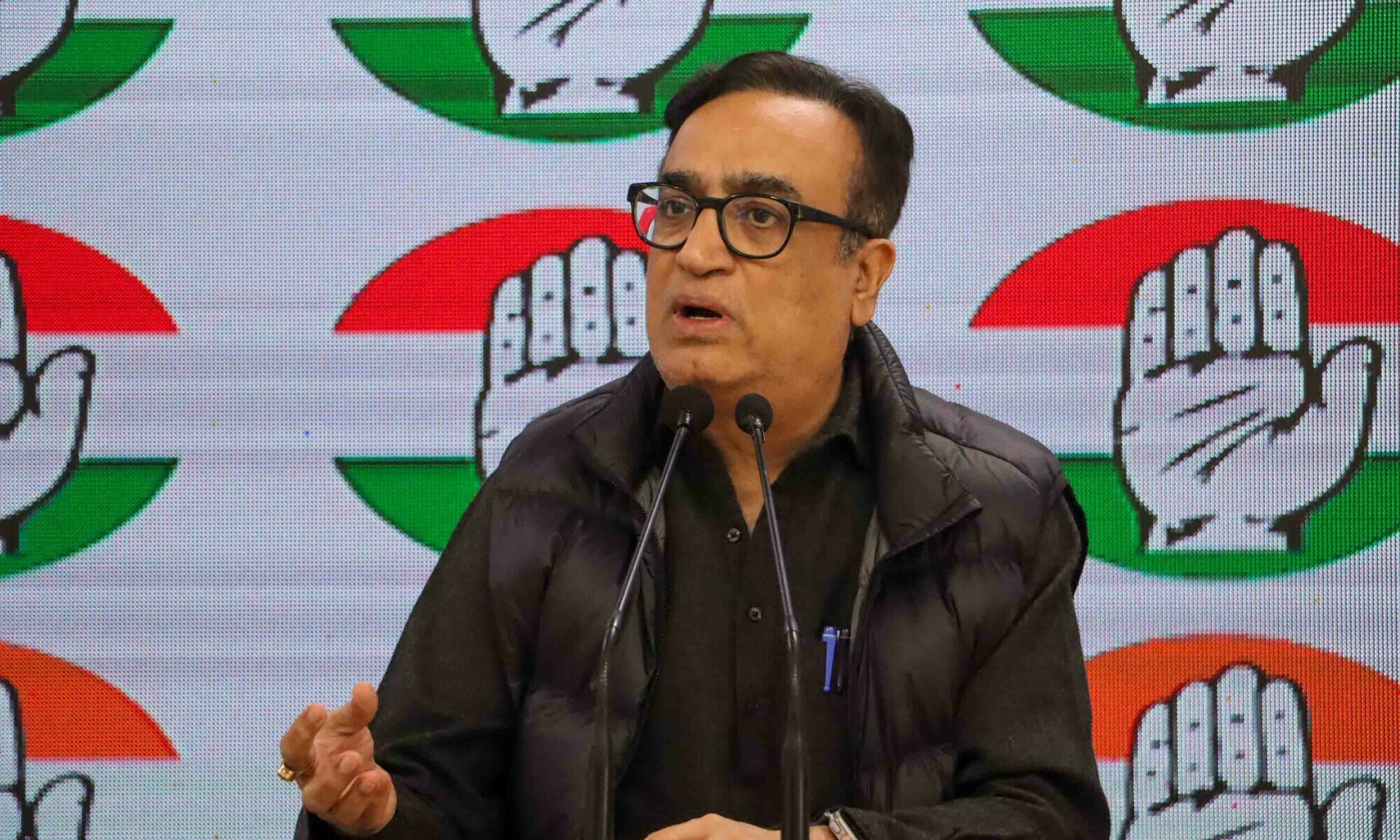
    Congress spokesman Ajay Maken said the action against his party was aimed at sidelining it ahead of the polls.

    “When the principal opposition party’s accounts have been frozen just two weeks before the announcement of the national elections, do you think democracy is alive in our country?” he asked reporters.

    “Don’t you think it is going towards one party system?” he added.

    Four of Congress’s accounts had been frozen after an investigation of the party’s 2018-19 income tax returns, Maken said.

    He added that the tax department had issued a payment demand for 2.1 billion rupees ($25.3 million) in relation to its probe.

    Maken conceded that the party had filed its returns late by up to 45 days but insisted it had done nothing to warrant such a penalty.

    “Today is a sad day for Indian democracy,” he said, adding that the party was appealing the decision in court and would stage public protests.

    India’s Congress party spokesman Ajay Maken addresses a press conference at All India Congress Committee (AICC) headquarters in New Delhi on February 16. — AFP

    Friday’s announcement follows numerous legal sanctions and active investigations against leading opponents of Modi’s ruling Bharatiya Janata Party (BJP).

    Congress party leader Rahul Gandhi, scion of the dynasty that dominated Indian politics for decades, was convicted of criminal libel last year after a complaint by a member of Modi’s party.

    His two-year prison sentence saw him disqualified from parliament for a time until the verdict was suspended by a higher court, but raised concerns over democratic norms in the world’s most populous country.

    ‘Face the consequences’

    Congress is a member of an opposition party alliance hoping to challenge Modi at this year’s polls, and other leading figures in the bloc have also found themselves under investigation.

    Arvind Kejriwal, leader of the Aam Aadmi Party and chief minister of the capital region Delhi, has repeatedly been summoned by investigators probing alleged corruption in the allocation of liquor licences.

    Earlier this month police arrested Hemant Soren, until then the chief minister of eastern Jharkhand state and another leading figure in the opposition alliance, for allegedly facilitating an illegal land sale.

    India’s main financial investigation agency, the Enforcement Directorate, has ongoing probes against at least four other chief ministers or their families, all of whom belong to the BJP’s political opponents.

    Other investigations have been dropped against erstwhile BJP rivals who later switched their allegiance to the ruling party.

    Virendra Sachdeva, president of the BJP’s Delhi branch, said on Friday that Congress had only itself to blame for the freezing of its accounts.

    “It is unfortunate that a big party like Congress is not following government rules,” he told the Press Trust of India news agency.

    “If it is not following the rules, then it has to face the consequences. “

  • Somia Asim charged in Rizwana torture case

    Somia Asim charged in Rizwana torture case

    The district and sessions court Islamabad has on Friday indicted Somia Asim, wife of Civil Judge Asim Hafeez, in the Rizwana torture case.

    The case was heard by civil judge Umar Shabbir. Rizwana’s mother and the suspect Somia Asim appeared in the court with their respective lawyers.

    During the hearing, the court read out the indictment while Somia Asim denied the crime.

    The court has formally started the trial against Somia and adjourned the hearing of the case till March 20, calling the witnesses to record their statements at the next hearing.

    Somia Asim is accused of torturing the young domestic maid Rizwana.

    Case

    Rizwana had been allegedly tortured and abused while working at a civil judge’s home in Islamabad, after she was accused of stealing jewellery. Rizwana’s family revealed that the girl was not paid a single penny by the family for the extensive workload she was doing and was instead subjected to violence.