Blog

  • F1 races in Bahrain, Saudi Arabia likely to be cancelled over Middle East conflict

    F1 races in Bahrain, Saudi Arabia likely to be cancelled over Middle East conflict

    Formula One races scheduled to be held in Bahrain and Saudi Arabia in April are set to be cancelled due to the ongoing conflict in the Middle East.

    An announcement on the cancellation of the two Grands Prix is expected over the weekend, with sources telling an international media outlet that a decision is anticipated by Monday at the latest. March 20 is the deadline for freight that must be transported to Bahrain for logistical purposes.

    Sky Sports, which holds Formula One broadcasting rights in Britain where most of the 11 teams are based, reported that the races are expected to be called off by Sunday night.

    The development comes as attacks involving the United States and Israel against Iran continue, while Iranian drones and missiles have struck several capitals in the region, including Manama in Bahrain. Most Formula One team personnel were scheduled to stay in hotels in the city during the race weekend.

    Formula One is currently in China for the second round of the season after the opening race in Australia last weekend.

    Reports quoted sources that Bahrain nor the Saudi Arabian race is expected to be replaced or rescheduled. If confirmed, April would remain without a race on the calendar and the championship would be reduced to 22 rounds.

    The Bahrain Grand Prix had been scheduled for April 12, while the Saudi Arabian race in Jeddah was set for April 19.

    The next race on the calendar is the Japanese Grand Prix on March 29, followed by the Miami Grand Prix on May 3.

    Audi team principal Jonathan Wheatley said teams would follow the guidance of the sport’s governing bodies. “I think we follow the guidance of the FIA and Formula One, as we always do. They’ve always led us in the right direction,” Wheatley told reporters after practice at the Shanghai circuit.

    “Nobody’s going to compromise on anything that would put teams into an uncomfortable situation,” he added.

    There has been no immediate comment from Formula One, which is owned by Liberty Media, or from the sport’s governing body, the International Automobile Federation (FIA).

    Meanwhile, the World Endurance Championship (WEC) has already postponed its season opener that was scheduled to take place in Qatar from March 26 to 28. The first race of the season is now set to be held at Italy’s Imola circuit on April 19.

    The Qatar round at the Lusail circuit outside Doha has been rescheduled for October 24 and will take place before the season finale in Bahrain on November 7.
  • Michael Vaughan calls South Africa ‘stupidest team’ of T20 World Cup

    Michael Vaughan calls South Africa ‘stupidest team’ of T20 World Cup

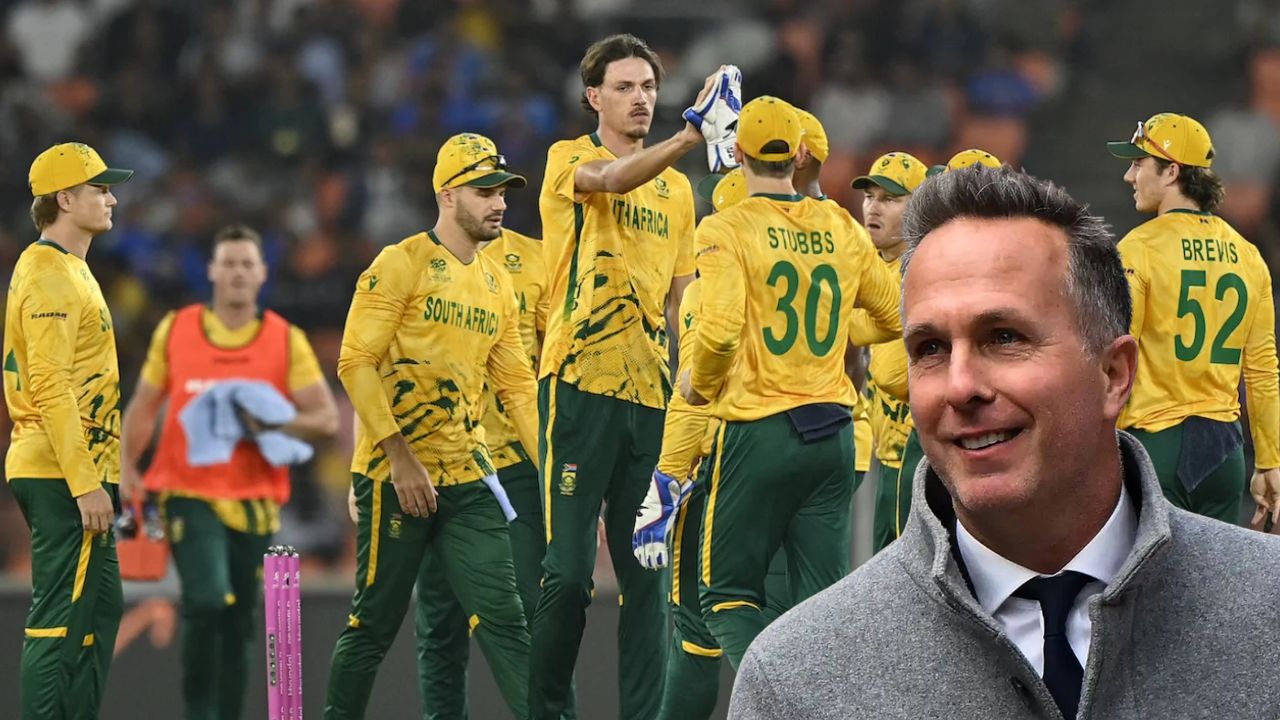
    Former England captain Michael Vaughan has sharply criticised South Africa national cricket team for a decision he believes changed the course of the T20 World Cup and helped India win the title.

    Speaking on the Stick to Cricket podcast, Vaughan claimed South Africa made a costly mistake during the Super Eights stage of the tournament. According to him, their dominant win over the West Indies national cricket team actually worked in India’s favour.

    Vaughan argued that if South Africa had lost that match, India might have been knocked out of the tournament much earlier.

    “I tell you who I think is the stupidest team of the tournament. South Africa. Because if South Africa had allowed the West Indies to beat them in the Super 8s, India would have been knocked out. I’m just saying – if they had cleared them out, the juggernaut that was coming would have stopped,” Vaughan said.

    He added that South Africa’s victory allowed India to gather momentum in the later stages of the tournament.

    “By winning that game, they allowed the juggernaut to go on. India then beat Zimbabwe, then the West Indies in a kind of quarterfinal, and then England. South Africa had to play Zimbabwe next, and they even rested three players for that match,” he said.

    The former England captain also explained his personal approach to major tournaments.

    “Look, these things shouldn’t happen and usually don’t happen. I’m just saying that if you want to win a World Cup, the best way is to eliminate the best team early,” Vaughan explained.

    The debate began after India suffered a heavy 76-run defeat to South Africa during the Super Eights. The result placed India under pressure, leaving the team with little margin for error in the remaining group games.

    Led by Suryakumar Yadav, India first managed to defeat Zimbabwe national cricket team to stay alive in the competition. Their chances then depended partly on the outcome of the South Africa versus West Indies clash.

    South Africa produced a strong performance in that match and comfortably defeated the West Indies, securing a place in the semi-finals. However, Vaughan believes that victory indirectly helped India.

    According to him, the result turned India’s final Super Eights match against the West Indies in Kolkata into a virtual quarter-final. India handled the pressure well and defeated the Caribbean side to reach the last four.

    India then went on to beat the England national cricket team in the semi-final before lifting the trophy.

    Meanwhile, South Africa’s campaign ended in disappointment after a heavy semi-final defeat to the New Zealand national cricket team.

    Despite Vaughan’s criticism, South Africa’s decision guaranteed their progress to the semi-finals at that stage. If they had lost to the West Indies, they would have faced a must-win game against Zimbabwe in their final Super Eights match, which could have complicated their path.

    Instead, the Proteas moved forward comfortably but failed to deliver in the knockout stage, while India continued their winning run and eventually secured the World Cup title.

  • Strait of Hormuz disruptions cost Gulf states $15bn in energy revenue

    Strait of Hormuz disruptions cost Gulf states $15bn in energy revenue

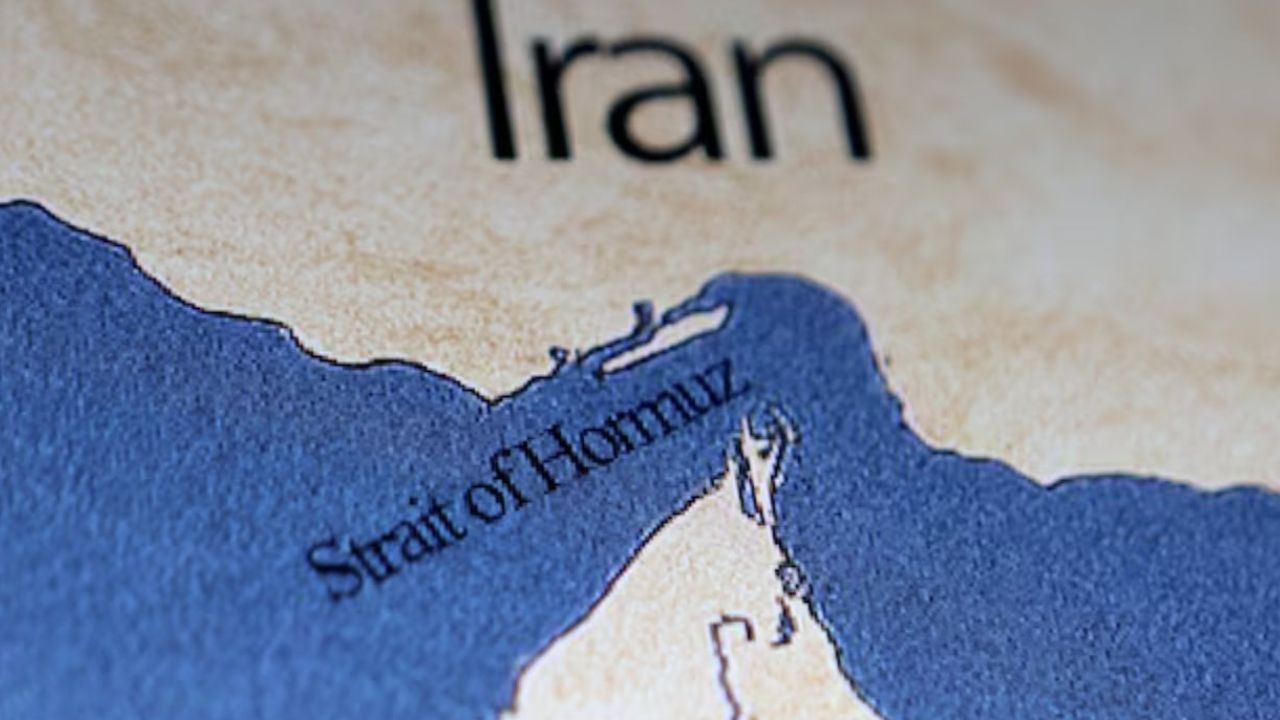
    Gulf oil producers have lost an estimated $15.1 billion in revenue since the start of US and Israeli strikes on Iran, as the near-shutdown of the Strait of Hormuz has trapped millions of barrels of crude, refined products, and liquefied natural gas.


    Data from commodities analytics firm Kpler shows the Strait typically carries around $1.2 billion worth of energy shipments daily, based on 2025 average prices and volumes. 


    Since the escalation of hostilities on February 28, traffic through the critical shipping route has largely halted, with Iranian attacks on vessels and soaring insurance premiums compounding the disruption.

    Florian Gruenberger of Kpler described the current flow as “negligible” compared with prewar levels, with crude oil representing 71 percent of the value of stranded shipments.

    Saudi Arabia, the region’s largest exporter, has lost the most, with Wood Mackenzie (research company) estimating $4.5 billion in missed revenue, though the kingdom plans to boost exports from the Red Sea in the coming days.

    Iraq, which depends on oil for 90 percent of government revenue, is among the most exposed, while Kuwait and Qatar can rely on sovereign wealth funds to offset short-term losses, according to Wood Mackenzie’s Peter Martin.

    At least $10.7 billion worth of crude, refined products, and LNG cargoes remain stranded inside the Strait of Hormuz. Some of these shipments had already been sold under prewar contracts, meaning revenue may still materialize depending on payment schedules, which typically occur 15 to 30 days after loading.

    Saudi Arabia holds additional oil in overseas storage and could continue supplying customers while benefiting from higher prices that may partly offset lost exports, analysts said. While Saudi Aramco has said it could reroute about 70 percent of crude from its eastern oilfields to the Red Sea via its east-west pipeline, experts warn the system has never operated at that capacity.

    Wood Mackenzie estimates that Gulf oil producers — including Saudi Arabia, Iraq, the UAE, Kuwait, and Bahrain — have collectively deferred $13.3 billion in sales and tax revenue. 


    QatarEnergy, Qatar’s state-owned energy company, has lost an estimated $571 million in revenue since halting production on March 2, excluding potential losses from delayed expansions or new plants.

  • Israel reports nearly 3,000 injured as Trump claims Iran is ‘about to surrender’

    Israel reports nearly 3,000 injured as Trump claims Iran is ‘about to surrender’

    The Israeli Health Ministry has confirmed that at least 2,975 people have been injured in Israel since the start of the joint United States (US)-Israeli military operations against Iran and Tehran’s counter-offensive.

    The figures came as President Donald Trump told G7 leaders in a virtual meeting that Iran is “about to surrender”. Despite Trump’s claim – reported by Axios – the Islamic Revolutionary Guards Corps (IRGC) announced its 44th wave of attacks, launching a “multitude of missiles” at northern Israeli cities including Haifa, Hadera and Kiryat Shmona.

    The strikes also targeted US bases and the US Fifth Fleet. In northern Israel, emergency services treated two individuals for shrapnel injuries following the latest alerts.

    In Iraq, US Central Command (CENTCOM) confirmed the deaths of four crew members after a KC-135 refueling aircraft went down in western Iraq on March 12. While the Islamic Resistance in Iraq claimed responsibility for downing the plane, CENTCOM stated the loss was “not due to hostile fire” and is currently under investigation.

    Meanwhile, instability continues to spread to neighbouring states as an explosion occurred near the Incirlik military base in Turkiye. Social media footage showed a projectile in the night sky while the US embassy in Baghdad warned American citizens of a significant risk of kidnapping, citing threats from Iran-aligned militia groups.

    On the diplomatic and economic front, global markets remain volatile. Brent crude is trading near $100 a barrel, and the US dollar reached a three-month high as investors seek safe-haven assets. Australia has begun releasing petrol and diesel from emergency reserves to counter supply chain disruptions caused by the war.

    The conflict has also seen heavy depletion of American military resources. Reports indicate the Trump administration has used “years” of critical munitions, including long-range Tomahawk missiles, since the start of the conflict.

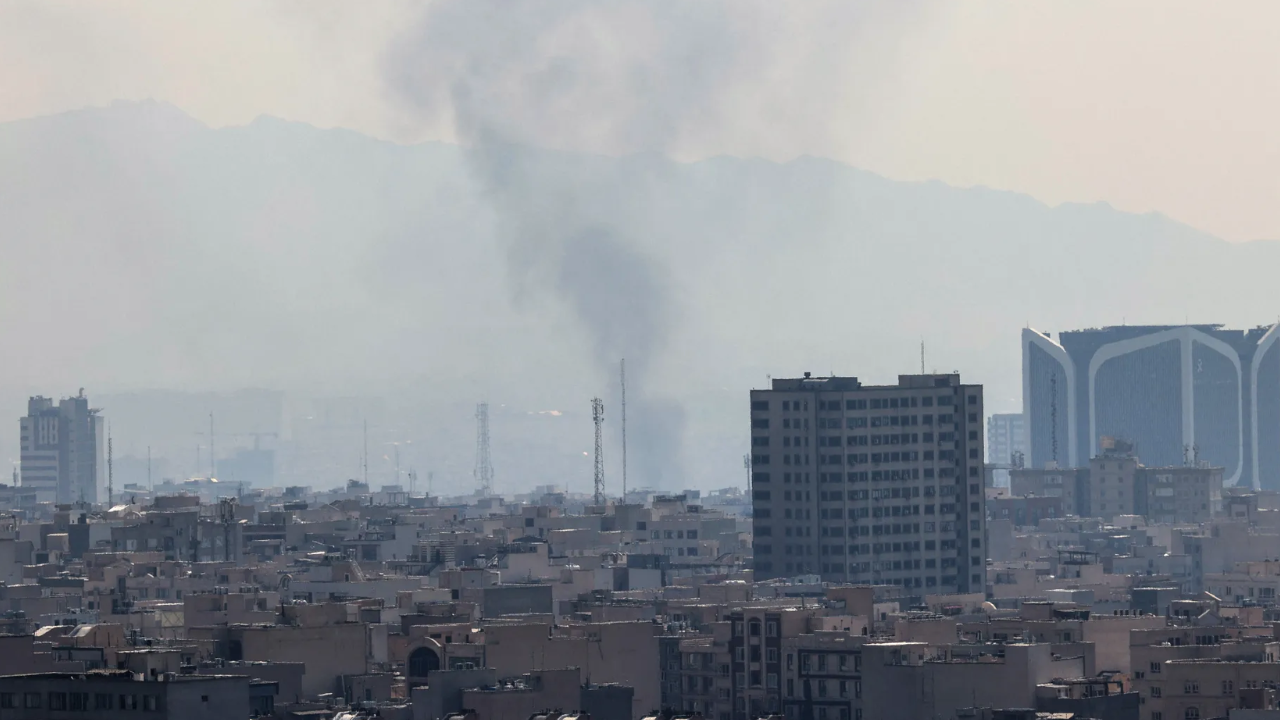
    In Tehran, massive explosions were reported near pro-government demonstration sites. Iran’s internet remains almost entirely offline, entering its 14th day of a blackout. The IRGC has warned that any internal protests will be met with a response “stronger” than the crackdown seen in January.

    Further strikes were reported across the region, with Saudi Arabia intercepting drones in its eastern and Al-Kharj provinces. Kuwait’s interior ministry confirmed its air defense systems dealt with a “missile threat” while two drones crashed near a major oil field in southern Iraq.

  • Govt plans to freeze domestic fuel prices despite global spike

    Govt plans to freeze domestic fuel prices despite global spike

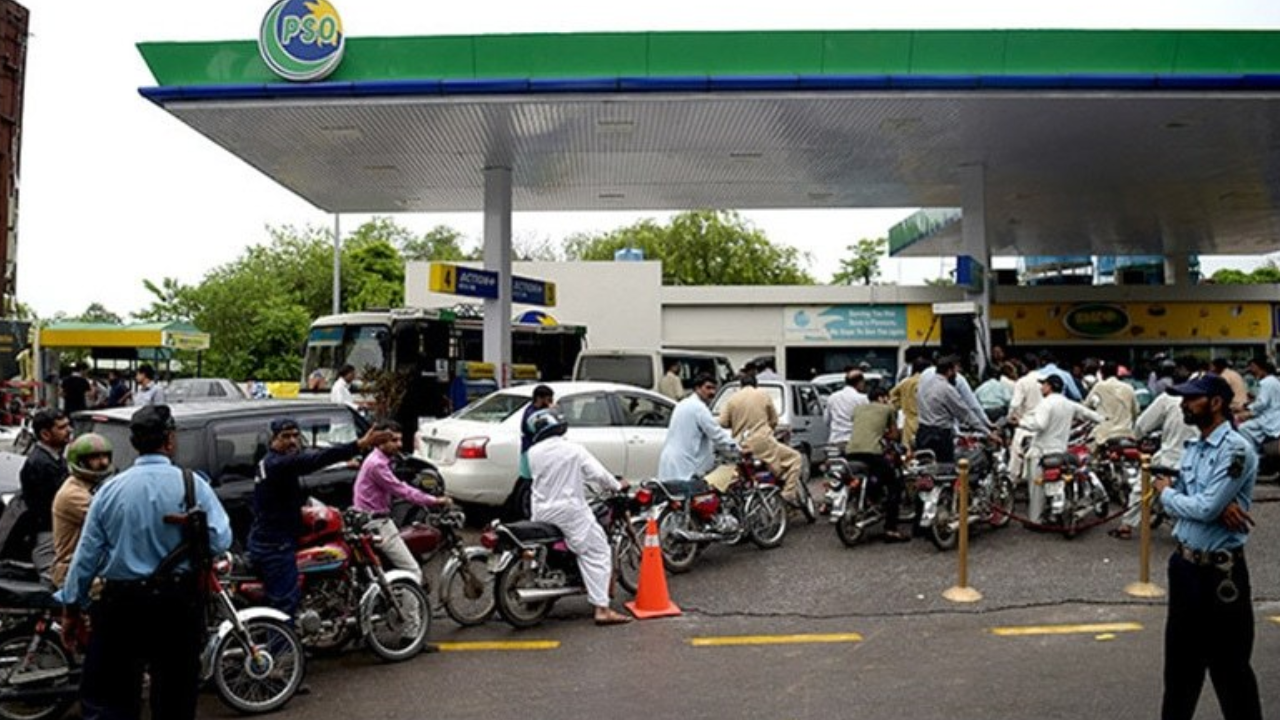
    The federal government has placed a ban on the export of all petroleum products and is exploring the possibility of holding back any immediate increase in domestic fuel prices despite continued upward trends in the global market. Authorities plan to use a Rs389 billion emergency fund to absorb potential price shocks.

    Recent calculations based on existing taxation and pricing formulas indicate that High-Speed Diesel (HSD) could increase by Rs56 per litre and petrol by Rs41. Retail prices currently stand at around Rs337 per litre for HSD and Rs322 per litre for petrol. Kerosene and light diesel oil are projected to rise by Rs7 and Rs53 per litre, respectively.

    While the next scheduled price review is March 15, ministers have suggested that adjustments could be considered as early as March 13. Sources told a private media outlet that Prime Minister Shehbaz Sharif conveyed during a consultative session, attended by federal and provincial officials as well as Field Marshal Asim Munir, that no further price hikes would be implemented in the near future regardless of Middle East market movements.

    During the session, it was reported that the government will utilise block allocations intended for emergencies to offset additional increases. The prime minister noted that the current fuel supply disruptions represented the most pressing emergency for the nation.

    The report quoted sources as saying that cabinet members remained divided over the prime minister’s stance. Technocrats, particularly those involved with the International Monetary Fund, expressed reservations about tapping into existing pricing buffers.

    In a meeting of the Senate Standing Committee on Finance, Petroleum Minister Ali Pervez Malik stated that efforts were underway to manage petroleum prices under the prime minister’s directives and that a final decision would follow a review of global rates on Friday.

    Minister of State for Finance and Railways Bilal Azhar Kiyani confirmed that while prices will be reassessed, the government aimed to avoid imposing additional burdens on the public. He added, “The prime minister has also directed that the burden should not be passed on to the people.”

    Both ministers defended the March 7 price increase of Rs55 per litre, citing supply risks similar to disruptions experienced in Bangladesh and India.

  • Muslim advisor resigns from Trump religious panel after anti-Zionist commissioner’s dismissal

    Muslim advisor resigns from Trump religious panel after anti-Zionist commissioner’s dismissal

    Sameerah Munshi, the only Muslim woman serving on the Advisory Board of Lay Leaders for the Religious Liberties Commission, has resigned in protest of the White House’s removal of anti-Zionist Catholic commissioner Carrie Prejean-Boller. Munshi’s resignation letter, obtained by Middle East Eye on Thursday, cited what she described as “hostile” behavior towards Muslims and a lack of respect for religious beliefs.

    Prejean-Boller, who confirmed that she was fired on X on Thursday, said that her removal was due to her opposition to Israel’s genocide in Gaza and her insistence that Catholicism and Zionism are not compatible. Her dismissal followed a viral video clip from a February commission meeting, in which she argued against the compatibility of the two.

    Munshi, in her resignation letter, wrote: “If we are not free in America to abide by our religious beliefs and hold fast to them despite others’ disagreement, then in what country are we free to do so?” She added that the commission treated Muslim members with hostility and mocked their faith.

    The commission, established under the Department of Justice in May 2025, reports directly to the president. There are no Muslim commissioners, only three appointed as advisors: Munshi; Ismail Royer, director of the Religious Freedom Institute; and scholar Sheikh Hamza Yusuf. 

    Munshi said she began to feel isolated after testifying in September 2025 about students’ rights to protest Israel’s actions in Palestine. “After I testified about Palestine, I stopped receiving the witness lists before each hearing, so I don’t know if that was a coincidence, if it was organizational, just a miscommunication on their end, or if they literally held it against me about what I testified on,” she said.

    Munshi described developing a connection with Prejean-Boller after the meeting. “Carrie has been wonderful. We’ve become pretty good friends at this point, and we’ve shared a lot,” she said. She also noted that Prejean-Boller respects Muslims, a quality she said she has rarely seen in conservative circles.

    Prejean-Boller has also spoken out against the US-Israeli war on Iran, which Munshi cited as another reason for her resignation. Munshi wrote: “This government’s unlawful killing of children and civilians in Iran is at the urging of a genocidal state… It is painfully obvious through their actions that this administration has no regard for the Constitution’s protection of free expression and religious liberty, nor its detailing of war powers.”

    After the February hearing clip gained attention, Jason Bedrick of The Heritage Foundation claimed Munshi provided Prejean-Boller with talking points. 

    Munshi denied the claim, stating: “I deny providing her talking points. Me and Carrie were texting during the hearing… That morning I was in that meeting… it was a joke. It was a clown show in there. And I was frustrated. Carrie was frustrated. She told me to start recording her in case they didn’t call on her.”

    Prejean-Boller said she felt sidelined because of her advocacy for Palestinians and for wearing a Palestinian flag pin. “I had to do it. I knew that it had to be done because of what I’d seen, and the poor Palestinian people… I had to speak for them. I couldn’t just sit there in this fancy room with important people and allow them to just disregard Palestinians as human beings,” she said.

    Prejean-Boller added: “I am disgusted. I am absolutely disgusted with this president. He betrayed the American people, and he’s betrayed our constitution.” 

    The genocide Gaza has killed over 72,000 Palestinians, including 651 since a ceasefire brokered by the Trump administration. Lawmakers are now examining possible violations of the Federal Advisory Committee Act, including concerns over transparency, balance, and fair representation.

    Munshi clarified that her resignation was not due to fear or intimidation but a response to what she described as injustice within the commission.

  • Pakistan intensifies strikes on Taliban amid border tensions

    Pakistan intensifies strikes on Taliban amid border tensions

    Pakistan’s armed forces carried out overnight airstrikes against Taliban targets and terrorist infrastructure on Friday, destroying training camps, ammunition depots, and other support facilities across Afghanistan, reports quoted security sources as saying.

    “Pakistan’s Armed Forces have carried out successful airstrikes inside Afghanistan as part of the ongoing Operation Ghazab Lil Haq,” the sources confirmed. 

    Strikes reportedly hit the headquarters of the Afghan Taliban 313 Corps, the Tarawo terrorist training camp in Kandahar, an oil storage facility, and the Sher-e-Nau terrorist camp in Paktia province.

    Operations along the Pak-Afghan border in North and South Waziristan also destroyed multiple Taliban posts and forced militants to abandon positions, reports quoted sources.

    The operation was launched following unprovoked firing from across the border, with Islamabad accusing Kabul of providing space to the banned Tehreek-i-Taliban Pakistan (TTP). UN monitoring reports over the past two years have noted TTP activity in eastern Afghanistan, though the Taliban deny offering support.

    In a separate development, Pakistan security forces shot down three rudimentary drones on Friday, allegedly deployed by militants linked to Afghan Fitna-al-Khawarij, in the Kohat district. 


    Authorities said the crude drones posed a potential security threat, and debris from the downed devices injured two civilians, who were shifted to a hospital for treatment. Reports quoted security sources as saying that the militants were backed by the Islamic Emirate of Afghanistan administration.

    Amid the ongoing military operations, Pakistan is engaging diplomatically with Beijing over the border tensions. Foreign Office (FO) spokesperson Tahir Andrabi confirmed that Deputy Prime Minister and Foreign Minister Ishaq Dar recently held a call with Chinese Foreign Minister Wang Yi. He said Islamabad and Beijing “cherish a long-standing strategic partnership, founded in mutual trust and deep respect,” and that both countries share common views on Afghanistan.

    China’s ambassador to Kabul, Zhao Xing, and the special envoy Dr Yue Xiaoyong has been shuttling between Pakistan and Afghanistan to mediate and encourage both sides to return to the negotiating table. 

    According to China’s foreign ministry, the most urgent task is to prevent the fighting from expanding. Beijing’s ambassador to Kabul, Zhao Xing, met Afghanistan’s acting Foreign Minister Amir Khan Muttaqi this week, during which Afghan officials reiterated their commitment to improving security and protecting Chinese nationals in Afghanistan.

    Andrabi clarified that a visiting delegation reportedly holding talks with the Afghan Taliban was not part of any official effort, though he confirmed Dr Yue’s visit to Pakistan to discuss shared concerns, particularly terrorism emanating from Afghanistan. He also said he had no information regarding any Turkish delegation reportedly mediating between Islamabad and Kabul.

  • Smartphones on instalments about to become reality as 5G launches in Pakistan

    Smartphones on instalments about to become reality as 5G launches in Pakistan

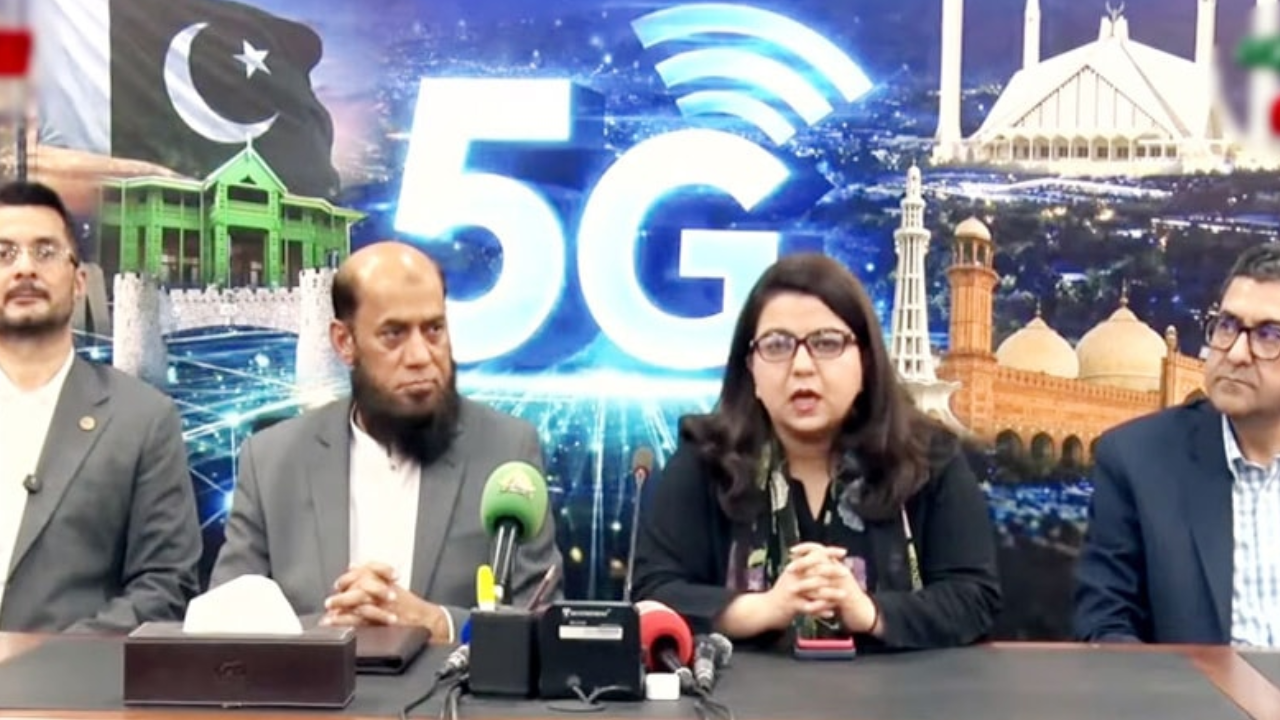
    Pakistan is preparing a policy to allow citizens to purchase smartphones on instalments as part of efforts to expand access to digital services, IT Minister Shaza Fatima Khawaja said on Thursday.

    Speaking at an event in Islamabad where additional telecom spectrum was released to operators, the minister said that the government was working on a framework that would enable people to obtain smart mobile devices through instalment plans.

    “Pakistan will soon have a policy to have smart mobile devices on instalments,” she said. “This will help the spread of smart phones among all segments of the society.”

    Fatima also said that a growing number of mobile phones used in Pakistan are now assembled or manufactured within the country, pointing to changes in the local mobile device sector.

    She said that internet access had become essential in Pakistan and noted that additional infrastructure had recently been added to support connectivity.

    “Internet is a basic need of Pakistan today and three new submarine cables have landed in Pakistan increasing the availability of internet,” the minister said.

    The remarks came during a ceremony where 480 MHz of spectrum was released to three telecom operators, increasing the country’s total available spectrum to more than 7,500 MHz. According to the minister, the move will expand network capacity.

    “Our capacity has now increased three times,” she said, adding that preparations for next-generation connectivity were already under way.

    “5G pilot launch will start in major cities from next week,” Fatima said. 

    The allocation of frequency slots took place at the Pakistan Telecommunication Authority and was attended by senior management from Jazz, Ufone and Zong.

    According to officials present at the event, the telecom companies acknowledged the transparency of the spectrum auction process and said testing of 5G services had already started in several locations.

    She also said that the government was working to establish an AI Council that would bring together professionals to help shape policy on artificial intelligence. She added that the initiative forms part of broader government efforts aimed at strengthening the country’s digital economy and promoting work in emerging technologies.

    Addressing taxation on mobile phones, the minister said the IT ministry and the telecom regulator had advocated reducing taxes on mobile devices. However, she said decisions on such taxes are made by the Federal Board of Revenue.

  • Babar Azam gets relief from Lahore High Court in harassment case

    Babar Azam gets relief from Lahore High Court in harassment case

    The Lahore High Court (LHC) has cancelled the additional sessions judge’s order directing the registration of a case against Pakistan’s national cricketer Babar Azam.

    Justice Asjad Gharal heard Babar Azam’s petition challenging the order. 

    According to reports, lawyers representing the federal government, the Punjab government, and the complainant, Hamiza Mukhtar, presented their arguments during the hearing.

    Babar’s counsel, Barrister Haris Azmat, argued that the complainant had filed a baseless application in 2018 alleging sexual harassment. He added that the additional sessions judge issued the order without following proper legal procedures.

    After hearing the arguments, Lahore High Court declared the sessions court’s order null and void.

  • Was Netanyahu killed? Here’s what we know so far…

    Was Netanyahu killed? Here’s what we know so far…

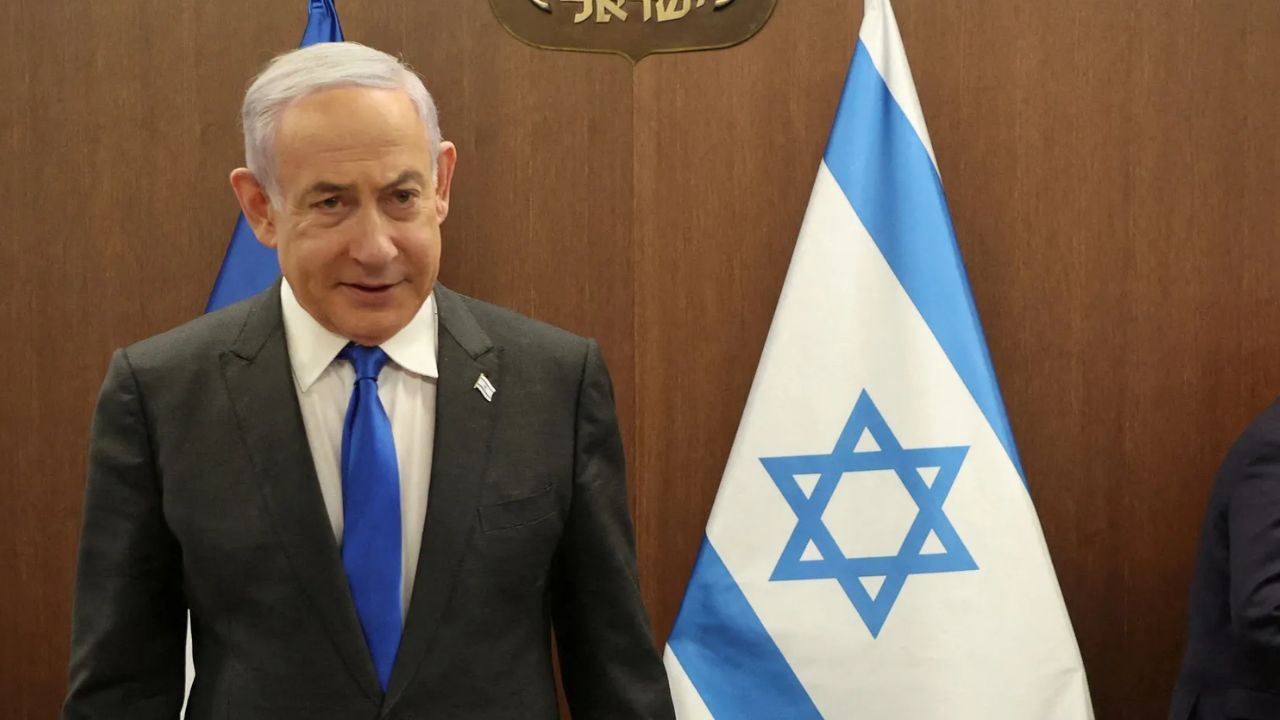
    Multiple unverified claims about the death of Israeli Prime Minister (PM) Benjamin Netanyahu have circulated widely on social media, suggesting that he was killed in an Iranian airstrike amid the ongoing Iran-Israel conflict.

    Similar posts have targeted his brother Iddo Netanyahu and Israeli National Security Minister Itamar Ben-Gvir, alleging that they were also injured. 

    Many of the claims were shared alongside videos of airstrikes and AI-generated images, sometimes amplified by commentary from former US intelligence officer Scott Ritter.

    Reports cited by Tasnim News Agency did not provide evidence of an attack on Netanyahu or confirmation of injury. The articles referenced circumstantial factors, including the absence of recent videos of the prime minister and heightened security around his residence.

    Speculation appeared to gain traction because it had been nearly three days since the last video of Netanyahu was posted on his personal channel, and almost four days since recent images were shared publicly. Previously, at least one video, and sometimes up to three, were typically posted each day.

    Additional reports said that the security perimeter around Netanyahu’s home had been increased, reportedly to counter potential drone threats. Observers also pointed to the cancellation of a planned visit to Israel by Jared Kushner, US President Donald Trump’s son-in-law, and Steve Witkoff, United States special envoy to the Middle East. A separate report from the Elysée Palace did not specify the date of a phone conversation between French President Emmanuel Macron and Netanyahu, releasing only a text transcript.

    Israeli officials and international media have described the claims as false. Netanyahu’s office dismissed reports of his death as “fake news.”

    Public updates show Netanyahu continuing his official duties. On March 10, he visited Israel’s National Health Command Centre, and on March 11, he conducted a visit to Ashdod Port to assess maritime trade operations during Operation Roaring Lion. Video footage of both visits was released publicly.


    Images circulating online that claimed to show Netanyahu after an attack were flagged as AI-generated.