Blog

  • ‘Below my dignity to respond to such a liar’: Ex-brigadier to Imran Khan

    ‘Below my dignity to respond to such a liar’: Ex-brigadier to Imran Khan

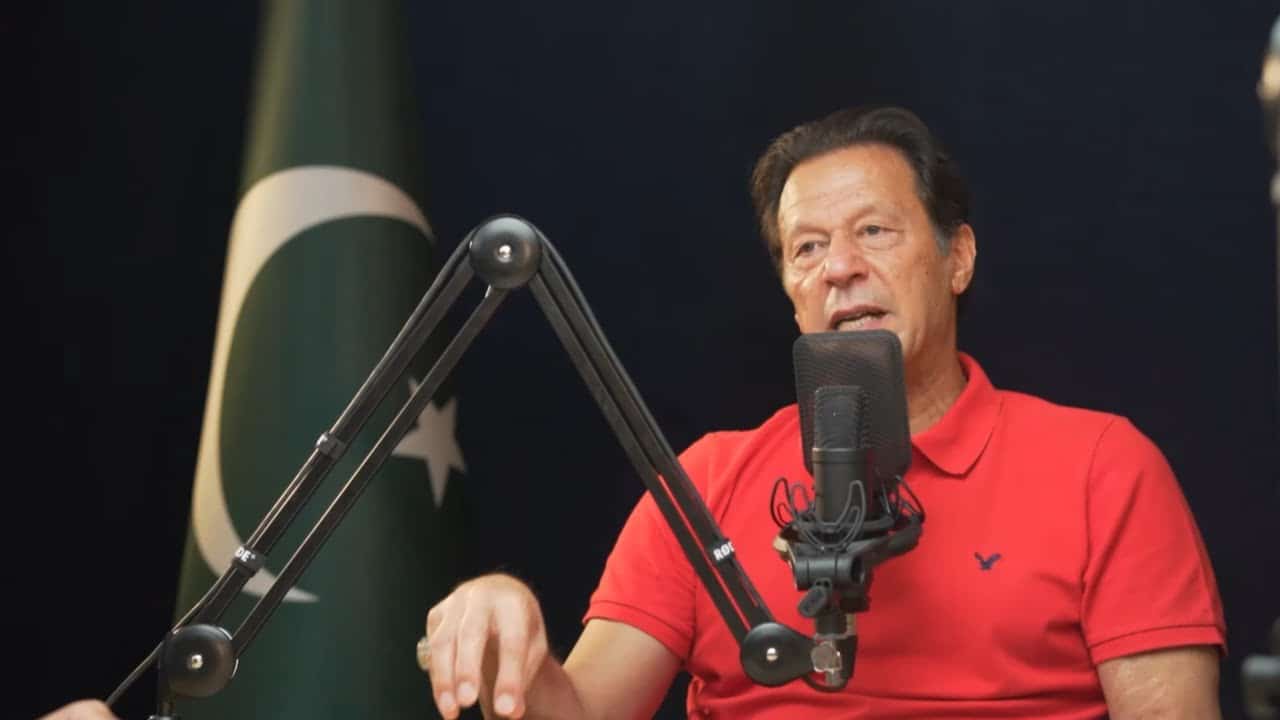
    Former Director-General (DG) of the Anti-Corruption Establishment, Punjab, Brigadier (retd) Muzaffar Ali Ranjha responded to the allegations made by former Prime Minister (PM) Imran Khan that Ranjha manipulated the 2013 general elections in favour of Nawaz Sharif.

    In an interview with Lahore Rang, the retired brigadier called Khan a compulsive liar, saying: “These are baseless allegations from a liar. But since he has publicly made these allegations, I am compelled to respond.”

    “He [Imran Khan] is a morally, financially, intellectually, and socially corrupt person. I am a respectable person. It’s below my dignity to respond to such a pathological liar,” he added.

    While replying to the question that why is Khan bringing up this issue, Ranjha said that he believes that Khan has lost his mind after losing power.

    “This man [Khan] has never been in favour of the armed forces. He only flirted with the military. Now, since the military has detached itself from politics, he is randomly hurling allegations.”

    “If he [Imran] opens his mouth again, then I’ll go to a public forum and spill the beans”, Ranjha said, adding that Imran should know that he knows everything about him as he has also served as an intelligence officer.

    During the interview, Ranjha offered Imran to agree to the formation of a commission that should investigate the vote-manipulation charges.

    The former DG also challenged Khan to contest elections against him.

    It is pertinent to mention that Ranjha was removed from his office by the Punjab interim government just before the 2018 elections.

  • Khan challenges NAB amendments in Supreme Court

    Khan challenges NAB amendments in Supreme Court

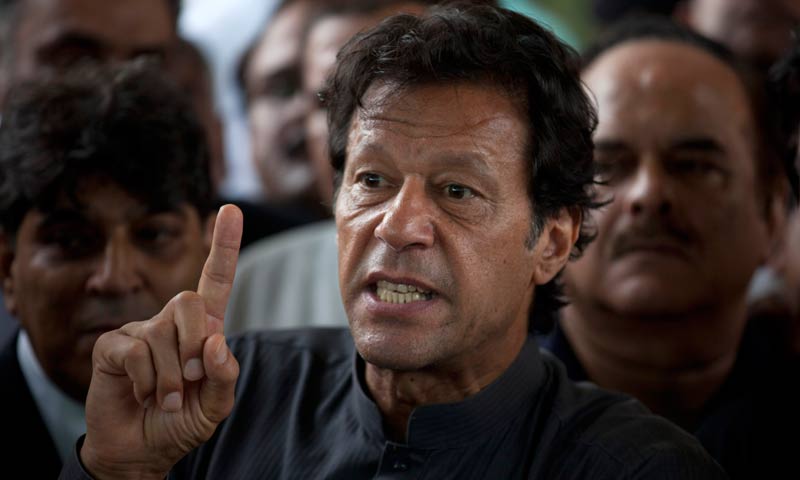
    Pakistan Tehreek-e-Insaf (PTI) Chairperson Imran Khan approached the Supreme Court (SC) to challenge the recent amendments to the National Account­ability (NAB) Ordinance, contending that they will “virtually eliminate any white-collar crime committed by a public office holder”.

    In the petition filed today (June 25), Khan named the Federation of Pakistan through its secretary Law and Justice Division, and the NAB through its chairman as respondents in the case.

    Khan had said his party would challenge the recent amendments to the NAB law in the SC.

    Addressing a press conference at his Banigala residence, Imran Khan expressed hope that the top court would take notice of the development, adding that if such moves were allowed then it would be detrimental to the country.

    Earlier in June, President Dr Arif Alvi refused to sign the bills seeking amendments in NAB and election laws.

    The bill was returned back to Prime Minister (PM) Shehbaz Sharif as the president said he “was not informed” about the “legislative proposal” under Article 46 before they were tabled in parliament.

  • Mumbai attacks’ alleged mastermind arrested by FIA

    The Federal Investigation Agency (FIA) has arrested suspect Sajid Mir with the help of law enforcement agencies, in the investigation of the Mumbai attacks, reports Wajahat S. Khan for Nikkie Asia.

    “According to the FBI, Mir allegedly served as the chief planner of the [Mumbai] attacks, directing preparations and reconnaissance, and was one of the Pakistan-based controllers during the attacks,” writes Wajahat.

    The deputy foreign minister, Hina Rabbani Khar, told Nikkei Asia that she would not comment on this particular case. Senior police officials and investigators from the Federal Investigation Agency (FIA), also did not comment on the arrest but did not deny it.

    The United States (US) Federal Bureau of Investigation (FBI) had placed Mir on its most-wanted criminal list. It offered a $5 million reward for information leading to his arrest.

    Mir is allegedly the mastermind behind the Mumbai attacks. Rumours of his death had persisted for a long time.

  • Govt raises tax rates for salaried class on IMF demands

    Govt raises tax rates for salaried class on IMF demands

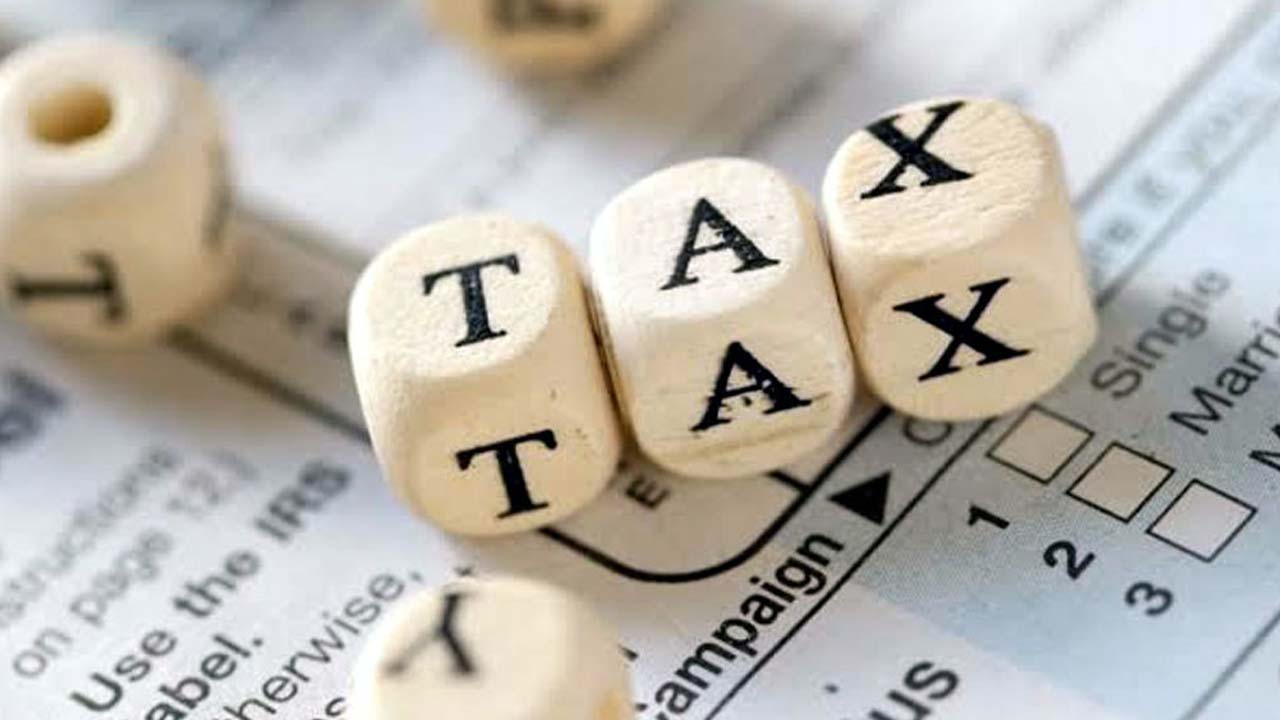
    In response to the International Monetary Fund’s (IMF) recommendation to eliminate relief provided on June 10, the coalition government on Friday announced amended tax deduction rules for the salaried class.

    The News reported on Saturday that the Federal Board of Revenue’s (FBR) target for tax collection for the fiscal year 2022–23 has been raised to Rs7,470 billion, an increase of Rs466 billion.

    In order to raise the collection, the government had to take harsh measures, such as boosting the tax rates for high earners to raise Rs120 billion for fighting poverty and Rs35 billion for the salaried class.

    For the upcoming fiscal year 2022–2023, the government imposed a 10 per cent super tax on 13 high-earning sectors, which will cost Rs80 billion in income.

    The government increased the Personal Income Tax (PIT) by Rs80 billion by abolishing tax relief worth Rs47 billion and then increasing the tax amount by Rs35 billion. As a result, the FBR was expected to collect Rs235 billion from the salaried class in the upcoming budget, up from Rs200 billion in the preceding fiscal year.

    The PTI-led government had promised to raise the tax revenue by Rs335 billion by increasing the tax slab rates for the salaried class, but the PDM-led coalition government persuaded the IMF to accept Rs100 billion less than the amount the PTI-led government had promised to raise.

    The government suggested a tax rate of 2.5 per cent for the salaried class for income brackets of Rs50,000 to Rs100,000. The proposed tax rate increased to 12.5 per cent for income earners who make between Rs100,000 and Rs300,000 per month.

    The FBR proposed raising the tax rate from 17.5 per cent to 20 per cent in cases where the taxable income is greater than Rs3,600,000 but not greater than Rs6,000,000. The FBR tax rate is proposed to rise from 22.5 per cent to 25 per cent where the taxable income exceeds Rs6,000,000 but does not exceed Rs12,000,000.

    The FBR will charge a tax amount of Rs2,004,000 plus 32.5 per cent of the amount exceeding Rs12,000,000 on an annual basis where the taxable income exceeds Rs12,000,000. The FBR suggested a 35 per cent tax rate for the aforementioned income.

  • Economic crisis: HEC recommends local tea production, promotion of ‘lassi’ and ‘sattu’

    Economic crisis: HEC recommends local tea production, promotion of ‘lassi’ and ‘sattu’

    The vice chancellors (VCs) of the public sector institutions have been advised by the Higher Education Commission of Pakistan (HEC) to encourage the use of regional beverages like lassi and sattu since doing so will boost employment and bring in revenue for the general population, Arshad Yousafzai, reports for Geo.

    Dr Shaista Sohail, acting chairperson of the HEC, called on the VCs in a circular to take a “leadership role and think of innovative ways to provide relief to the lower-income groups and the economy as a whole” in response to the financial crisis that Pakistan is currently experiencing.

    “I am sure that the honourable vice-chancellors will be able to innovatively explore many other avenues to create employment, reduce imports and ease the economic situation,” she added.

    She recommended VCs to promote regional tea plantations as well as locally produced, wholesome traditional drinks like lassi and sattu.

  • PM Shehbaz in Karachi: What is he planning to do today?

    PM Shehbaz in Karachi: What is he planning to do today?

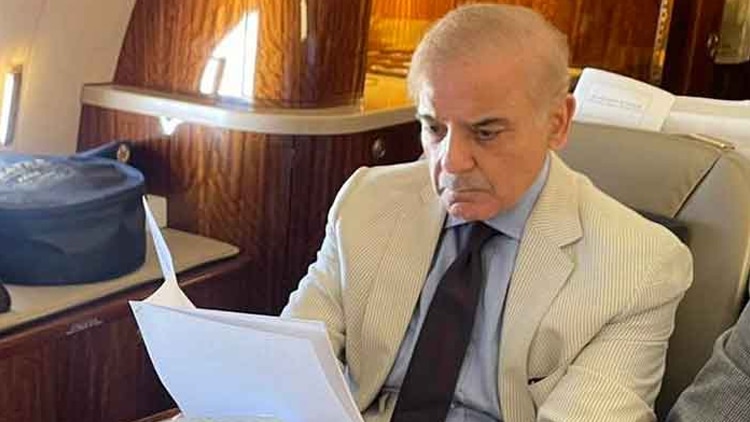
    Prime Minister (PM) Shehbaz Sharif has arrived in Karachi today (Saturday) on a day-long visit.

    During this visit, he will meet a delegation of leaders of the government’s allied party Muttahida Qaumi Movement-Pakistan (MQM-P).

    According to Geo News, the premier will discuss the MQM-P’s agreement with Pakistan Muslim League- Nawaz (PML-N).

    When former PM Imran Khan was ousted, an agreement was signed to confirm MQM-P leaving the Pakistan Tehreek-e-Insaf (PTI) coalition and joining hands with the then-opposition parties [PML-N, PPP, JUI-F and others]. The MQM-P decided to part ways with PTI almost a week before the no-confidence motion against Khan and announced its final decision on March 30.

    Other than this, discussions on the census, electoral reforms and upcoming local body elections will also take place between PM Shehbaz Sharif and MQM-P.

    PM Shehbaz also paid a visit to Nawabshah to offer condolence to Pakistan People’s Party (PPP) co-chairperson Asif Ali Zardari on his mother’s demise.

    The premier’s first stop was Pakistan Naval Academy Manora where he attended the passing out parade of the 25th Short Service Commission.

    In his speech during the ceremony, PM Shehbaz expressed happiness over witnessing women cadets in the passing out parade.

    On Friday, PM Shehbaz made a visit to the port city of Gwadar.

  • Imposing super tax on the rich will reduce budget deficit: Miftah

    Imposing super tax on the rich will reduce budget deficit: Miftah

    The government’s recently announced indirect tax (super tax) is intended to assist the country in increasing tax revenue and lowering the budget deficit, according to Finance Minister Miftah Ismail.

    He was relating to the large industries’ 10 per cent super tax or poverty alleviation tax.

    13 industries, including LNG terminals, sugar, cement, steel, textile, tobacco, fertiliser, banks, oil and gas, beverages, automobiles, and steel, will be subject to this one-time levy, according to Miftah. The government labelled these 13 industries for a special tax as they made significant profits last year.

    Companies in these sectors earning more than Rs300 million will be subject to a 10 per cent super tax, he added.

    According to the finance minister, this tax is a one-time levy that will only be in effect for fiscal year 2022–2023.

    He clarified on Twitter that the 4 per cent super tax will be imposed on all industries.

    “For the specified 13 sectors, another 6 per cent will be added for a total of 10 per cent,” he said. “So their tax rates will go from 29 per cent to 39 per cent. This is a one-time tax needed to curtail the previous four record budget deficits.”

    The imposition of a super tax on the wealthy, according to Finance Minister, will lessen the country’s reliance on foreign aid, lower the budget deficit, and bring the country closer to financial stability.

    Other businesses that make over Rs150 million will be subject to a 1 per cent super tax, and those that make over Rs200 million will be subject to a 2 per cent tax. On top of the current rates, it is worth noting that these taxes are additional.

    Businesses that earn more than Rs250 million in revenue will pay a 3 per cent super tax, and those that earn more than Rs300 million will pay a 4 per cent super tax.

    He continued, citing statistics, that there were 9 million retail and wholesale establishments in Pakistan, and that the government wanted to bring an additional 2.5–3.5 million into the tax system.

    “We are linking the income tax and sales tax of these shops with the electricity bill,” Miftah said. “Now, small shops will pay a fixed tax of Rs3,000 and large shops will pay Rs10,000.”

    Only 22 of Pakistan’s more than 30,000 gold trading companies, he claimed, were registered, and their average annual sales came to Rs4,000.

    Sales tax and a fixed income of Rs40,000 will now be paid by gold shops of 300 square feet or less.

    He said that the government would lower the sales tax on large stores from 17 per cent to just 3 per cent.

    The withholding tax on jewellery sales to gold shops by the general public has been reduced from 4 per cent to 1 per cent.

    According to Miftah, fixed tax structures similar to these will be introduced for real estate agents, car dealers, and builders. Since this tax only applies to income and not to spending, inflation will not rise.

    Additionally, the withholding tax for the IT sector has been eliminated. Sales and income taxes would not apply to IT companies with annual revenue of less than Rs80 million.

    Miftah emphasised that Pakistan needs the IMF programme to resume as the country’s foreign exchange reserves are at a critical point.
  • Mask up: Covid positivity rate jumps to 3.19%

    Mask up: Covid positivity rate jumps to 3.19%

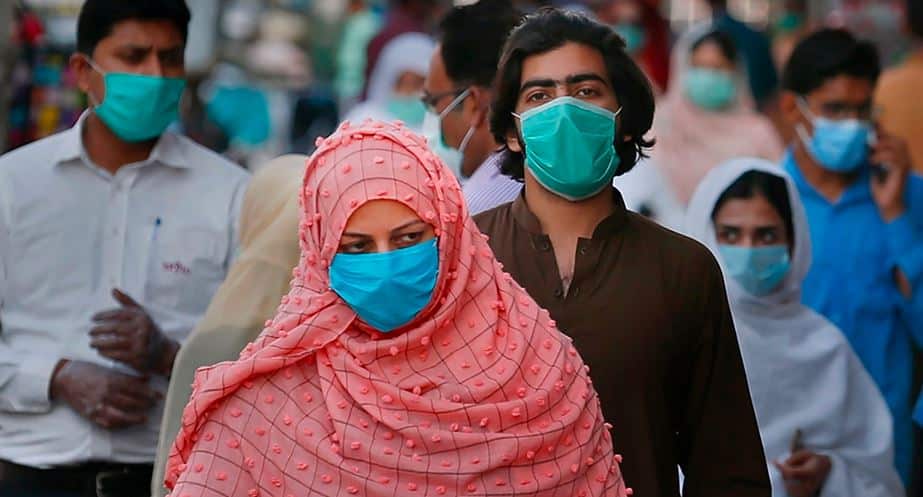
    According to the National Institute of Health (NIH),435 cases of Covid-19 with a positivity rate of 3.19 per cent were reported in Pakistan on June 24.

    The number of confirmed cases have jumped to 1,533,482. One death was reported in the last 24 hours. A total of 13,64 tests were conducted in the past 24 hours .

    In April, Pakistan reported zero Covid-19-related deaths for the first time since the breakout of the pandemic in the country.

    In March this year, the government announced the closure of the National Command and Operation Centre (NCOC). The body was set up in March 2020 to deal with Covid-19.

  • ‘Hurt, anger, confusion’: People react to US abortion decision

    ‘Hurt, anger, confusion’: People react to US abortion decision

    The United States (US) Supreme Court has overturned Roe v Wade, a landmark ruling that granted the right to abortion. The court determined that there is no constitutional right to an abortion, leaving it up to the states to decide whether or not to allow abortions.

    The verdict has been announced in the Dobbs vs Jackson case.

    According to research from Planned Parenthood, a healthcare organisation that provides abortions, almost about 36 million women of reproductive age, are expected to lose their access to abortion.

    What is the 1973 judgment known as Roe v. Wade?

    The landmark 1973 ruling protected the constitutional right to have an abortion.

    Roe v. Wade was a historic legal decision delivered by the United States Supreme Court on January 22, 1973, in which the court overturned a Texas law prohibiting abortion, essentially legalising the operation throughout the United States.

    “The court held that a woman’s right to an abortion was implicit in the right to privacy protected by the 14th Amendment to the Constitution. Prior to Roe v. Wade, abortion had been illegal throughout much of the country since the late 19th century. Since the 1973 ruling, many states have imposed restrictions on abortion rights.”

    Here are some key reactions.

  • Khan in court, granted pre-arrest bail in 10 cases against him

    Pakistan Tehreek-e-Insaf (PTI) Chairman Imran Khan has been granted pre-arrest bail till July 6 by the court of a district and sessions judge in Islamabad today (Friday). He got bail in 10 cases related to vandalism during his party’s Azadi March in the federal capital which happened on May 25.

    He is booked on charges involving interference in state affairs and damaging public property.

    Khan appeared in court with strict security arrangements. The court directed Khan to submit Rs5,000 as surety in each of the cases and directed the police to submit a record of cases in the next hearing which is on July 6.

    Prior to this development, the Peshawar High Court (PHC) granted transit bail to PTI Chairman till June 25 in different cases registered against him in connection with his party march.

    Bail to PTI leaders:

    Earlier, police had booked around 11 PTI leaders including Imran Khan, Asad Umar, Shah Mahmood Qureshi, Fawad Chaudhry and others in a case pertaining to violence at the Kohsar police station. However, an Islamabad court granted interim bail to them in this case on June 20.

    Similarly, last week, an anti-terrorism court (ATC) granted interim bail till June 28 to more than a dozen PTI leaders for vandalism in the case pertaining to violence at the Bhatti Gate police station, Lahore. The bail was granted to Hammad Azhar, PTI Central Punjab President Dr Yasmin Rashid, Mian Aslam Iqbal and others.