Blog

  • Varun Dhawan praises Abrar-ul-Haq, sends love in a video message

    Varun Dhawan praises Abrar-ul-Haq, sends love in a video message

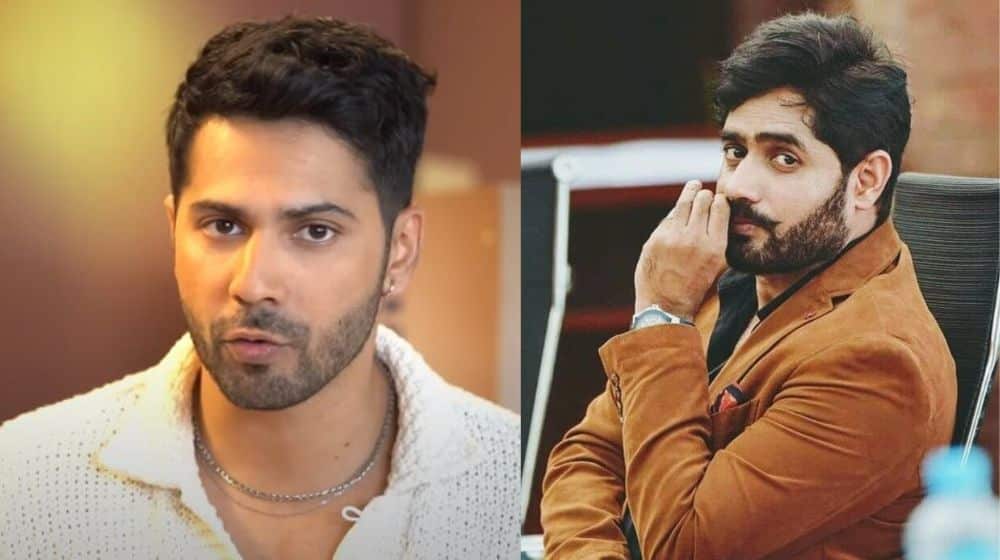
    Bollywood actor Varun Dhawan has praised singer Abrar-ul-Haq recently in a video message while recording an interview with Bollywood Hungama.

    “I want to say to Abrar that he sung the song so well, the original one,” the actor told the outlet. “It is amazing, outstanding and we loved it.”

    He added, “Our music company, they bought the rights and now our song is doing so well, so thank you.”

    https://www.youtube.com/watch?v=gD474_Dvxes

    Earlier this year, the Bheega December crooner took to his twitter handle to slam Bollywood filmmaker Karan Johar for plagiarising his famous song Nach Punjaban in his latest film, Jug Jugg Jeeyo.

    As soon as the trailer of the upcoming film was out, Abrar shared his statement.

    “I have not sold my song Nach Punjaban to any Indian movie and reserve the right to go to court to claim damages. Producers like @karanjohar should not use copy songs. This is my 6th song being copied which will not be allowed at all,” Abrar tweeted.

    After a series of unpleasant exchanges between the two entities, Abrar was given the credits for his iconic song Nach Punjaban used in Johar’s Jug Jugg Jeeyo.

    Taking to Instagram Story, the well-acclaimed Indian director shared the track’s new version of The Punjaabban Song‘s poster which featured Haq’s name alongside Tanishk Bagchi.

    This came after Haq publicly called out the filmmakers for using his famed song without taking his permission or right to it. Also the way they have credited him at the end of the list is also not fair. This should have been done earlier only.

    Abrar-ul-Haq officially gets credit for Nach Punjaban in Karan Johar film

    Earlier Dhawan broke his silence on the controversy by stating: “T-series has put out an official statement about this they legally licensed the rights. I think when you have international companies like YouTube and Spotify… When they are playing music they have very strict laws about copyrights. It’s no joke. All the processes have been followed.”
  • Karachi fifth worst city in the world to live

    Karachi fifth worst city in the world to live

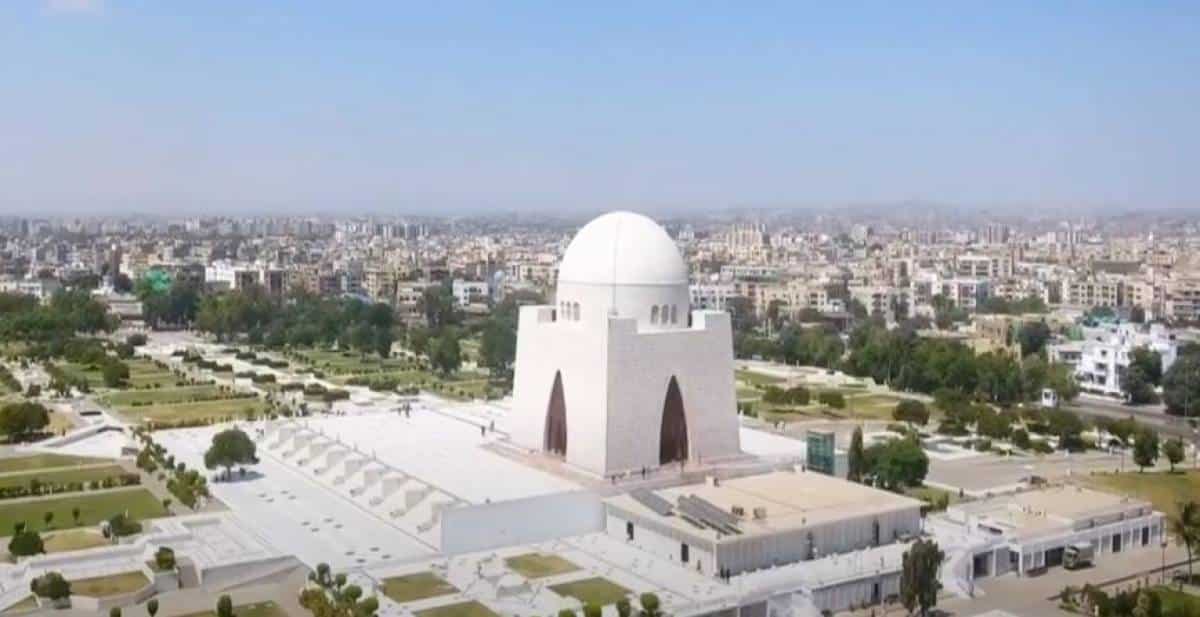
    Karachi is the fifth least liveable city in the world, according to an annual report released by the Economist Intelligence Unit (EIU). The report titled ‘Global Liveability Index 2022’ lists the capital of Sindh as one of the least liveable cities in the world.

    Syria’s capital, Damascus, is the least liveable city in the world. Karachi is better than only four other cities, which include Algiers, Tripoli, Lagos, and Damascus.

    The list has been divided into categories depending on the infrastructure, stability, culture, environment, and health care systems.

    Austrian capital Vienna has been ranked as the world’s most liveable city. Danish capital Copenhagen is the second most liveable city while Switzerland’s capital Zurich is the third most liveable city in the world.

  • Bilawal urges UN to create task force to tackle disinformation

    Bilawal urges UN to create task force to tackle disinformation

    Bilawal urges UN to create task force to tackle disinformation

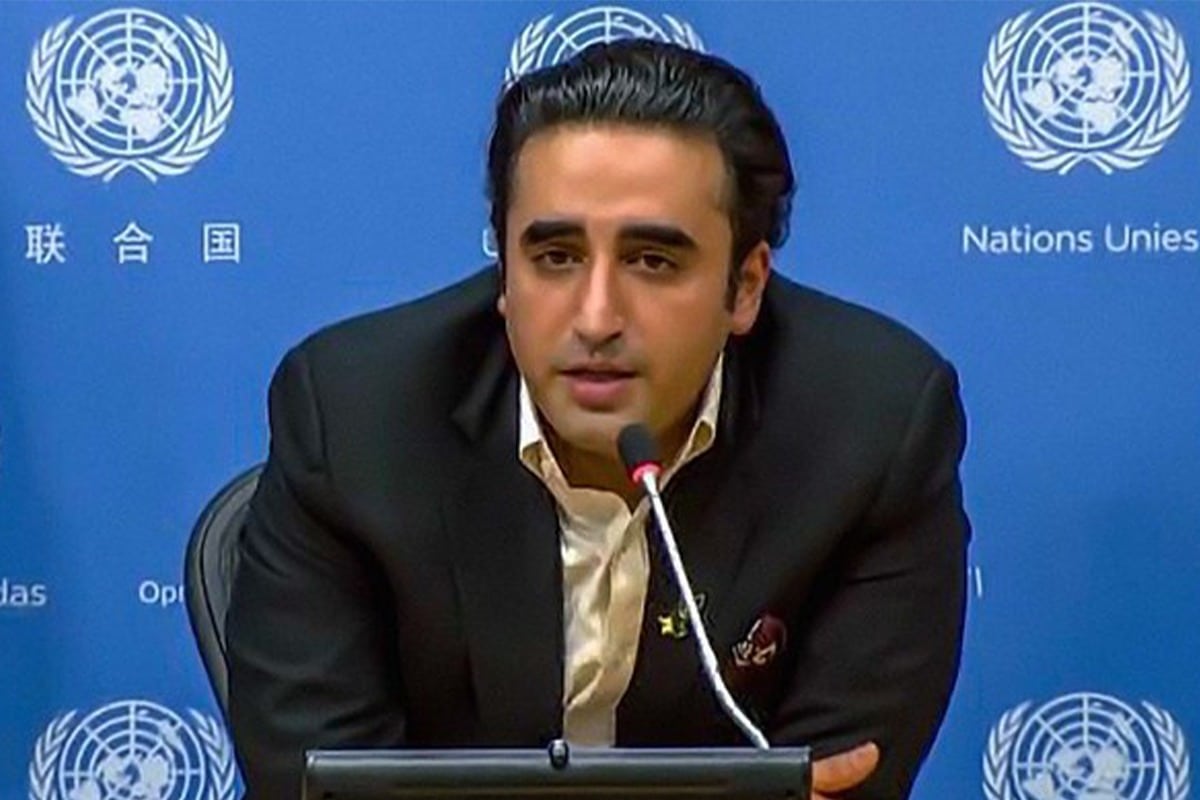
    Foreign Minister (FM) Bilawal Bhutto-Zardari in his virtual address to the Group of Friends on Countering Disinformation urged that a United Nations (UN) backed task force be set up to counter disinformation.

    “We should agree on an international plan to counter disinformation online and offline, in the public and private domain,” said Bilawal.

    He urged that the UN department of information set an international standard of guidelines that countries can follow to tackle disinformation.

    FM Bhutto put forth some of his own suggestions on how disinformation can be dealt with ranging from creating public awareness campaigns about disinformation to increasing the capacity of governments to filter and limit hate speech.

    “Misinformation is the biggest problem of this era,” Bilawal said. “An effective strategy has to be formulated to tackle the issue of disinformation.”

  • Indian engineer arrested for allegedly providing missile information to Pakistani female spy

    Indian engineer arrested for allegedly providing missile information to Pakistani female spy

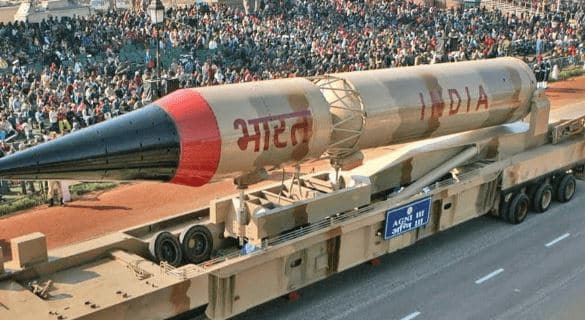
    An engineer working for the Defence Research & Development Laboratory India (DRDL) has been caught in a trap and leaked information about the Indian missile programme to a Pakistani female spy.

    Indian authorities say the suspect provided information about the technology used in the Indian Agni missile and the K-series missiles.

    A press note issued by the police in this regard has confirmed the arrest of 29-year-old engineer Mallikarjan Reddy and stated that he was a contract employee of DRDL.

    According to the press note, the man had mentioned on his Facebook profile that he works in DRDL. A girl sent him a Facebook friend request in March 2020.

    The woman said that her name is Natasha Rao, she lives in the UK and works for a defence magazine. She trapped the man who fell in love with her, and then forced him to disclose information about the missile programme.

    The alleged spy always talked to Reddy on Facebook Messenger and WhatsApp.

    The engineer stayed in contact with the woman for two years between January 2020 and December 2021. She always talked to Reddy on Facebook Messenger and WhatsApp but never made a video call.

    A senior intelligence official claimed that the accused had shared details of the ballistic missiles K-4, K-5, and K-15 with 3,500 km, 6,000 km, and 1,500km range, respectively. These all are equipped with nuclear weapons and launched from the submarine.

    The man has also claimed that the woman asked for bank account details to transfer money, but she never did. The police are now trying to trace Reddy’s account.

  • Italian spyware hacks Apple and Android smartphones

    Italian spyware hacks Apple and Android smartphones

    A report released on Thursday by Alphabet Inc.’s Google revealed that a hacking tool created in Italy was used to spy on Apple Inc. and Android smartphone users in Kazakhstan and Italy.

    The report claimed that RCS lab, a Milan-based company whose website lists European law enforcement agencies as clients, created tools to spy on the private messages and contacts of the targeted devices.

    Regulators in Europe and America have been considering possible revisions to the laws governing the sale and import of spyware.

    “These vendors are enabling the proliferation of dangerous hacking tools and arming governments that would not be able to develop these capabilities in-house,” Google said.

    According to Billy Leonard, a senior researcher at Google, the hackers occasionally collaborated with the target’s ISP, which suggests that they had connections to the government.

    Requests for comment from the governments of Italy and Kazakhstan were not immediately returned. According to a spokesperson for Apple, the company has cancelled all known accounts and certificates linked to this hacking campaign.

    According to RCS lab, its goods and services are compliant with European regulations and support criminal investigations.

    Government spyware has become a growing global industry in recent years. More and more businesses are being accused of supporting governments that, in some cases, use these tools to repress civil and human rights.

    When it was discovered that numerous governments were using the Pegasus spyware from Israeli surveillance firm NSO to spy on journalists, activists, and dissidents, there was a widespread outcry against the industry.

  • Pakistan sends aid to earthquake-stricken Afghanistan

    Pakistan sends aid to earthquake-stricken Afghanistan

    The National Disaster Management Authority (NDMA) on Thursday dispatched relief supplies for the earthquake victims in Afghanistan on the special directives of Prime Minister (PM) Shehbaz Sharif.

    Details indicate that the NDMA dispatched a shipment containing family tents, tarpaulins, blankets, and emergency medications, according to the NDMA spokesperson.

    “Pakistan has assured all possible support to ameliorate the sufferings of the Afghan people affected by the 6.1 magnitude earthquake which hit parts of Afghanistan on Wednesday, (June 22, 2022)”, it said.

    The relevant authorities were told on Wednesday by the PM Shehbaz Sharif, to assist Afghanistan when necessary. The PM expressed his grief over the earthquake in Afghanistan that claimed innocent lives in a message posted on his Twitter account. He said, “People in Pakistan share the sorrow and grief of their Afghan brethren.”

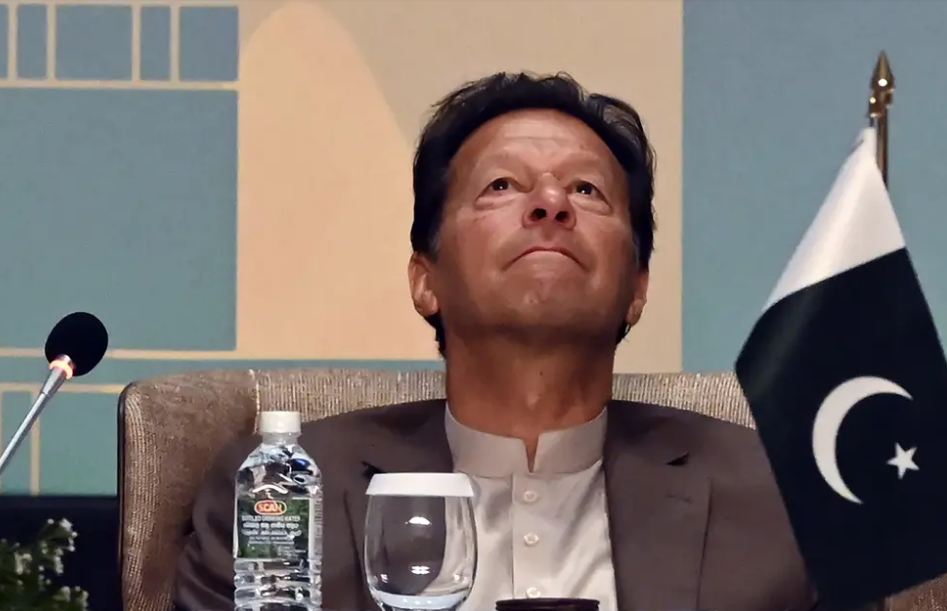
    Additionally, Imran Khan, a former minister, gave instructions to his KP government to arrange for medical facilities for the affected people in the neighbouring nation.

    Mahmood Khan, the chief minister of KP, has instructed the chief secretary and the health minister to send medical teams and aid to the nation’s earthquake-affected regions in accordance with orders from Imran Khan.

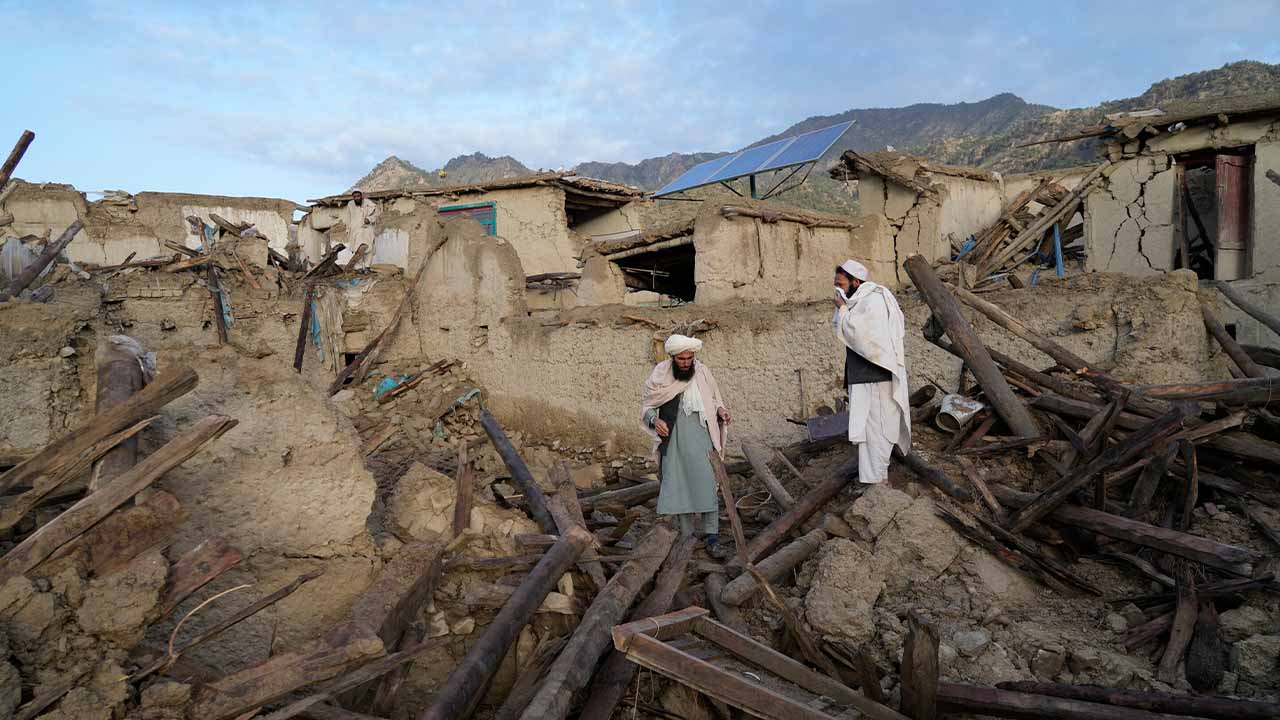
    A 6.1-magnitude earthquake that struck Afghanistan early on Wednesday left 950 people dead, and more than 600 injured. The death toll is expected to rise as news from isolated mountain villages trickles in, according to a report by Reuters.

    Images posted on Afghan media showed houses in ruins and bodies lying on the ground covered in blankets.

    According to Salahuddin Ayubi, an official with the interior ministry, helicopters were used in the rescue effort to transport food and medical supplies to the injured.

    The earthquake on Wednesday was the deadliest since 2002. The US Geological Survey (USGC) reported that it struck about 44 kilometres (27 miles) from the southeast Afghan city of Khost, close to the Pakistani border.

  • ‘Tough decisions’: PM Shehbaz announces 10 per cent super tax on large-scale industries

    ‘Tough decisions’: PM Shehbaz announces 10 per cent super tax on large-scale industries

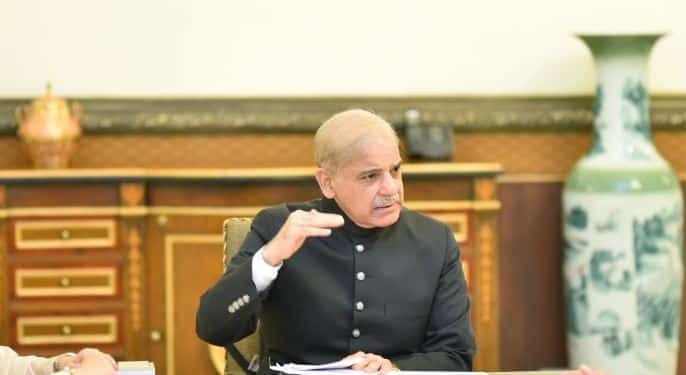
    Prime Minister (PM) Shehbaz Sharif announced that the coalition government plans to impose a 10 per cent super tax on large-scale industries, and that “tough decisions” have been taken to protect the economy in budget 2022-23.

    Addressing the nation, PM Shehbaz announced the imposition of a 10 per cent super tax on cement, steel, sugar, oil and gas, fertiliser, banking, textile, chemical, beverage, and automobile industries, adding that it it has been done to save the common man from taxes.

    PM said that people whose annual income exceeds Rs150 million will be subject to one per cent tax; for Rs200 million, two per cent; Rs250 million three per cent; and Rs300 million will be taxed four per cent of their income.

    PM Shehbaz said the steps taken in the budget were designed to ease the burden on the poor. “And the classes who are blessed, today, this nation is demanding of them to also work hard, to come forward and to make Pakistan prosperous, progressive and with its head held high,” he added.

    The premier called on the wealthy to distribute some of their wealth and “relive the memory of Ansar-i-Madina”. “This is your responsibility, and the nation demands it of you,” he said.

  • Female hotel owner bans her customers from calling her ‘auntie’

    Female hotel owner bans her customers from calling her ‘auntie’

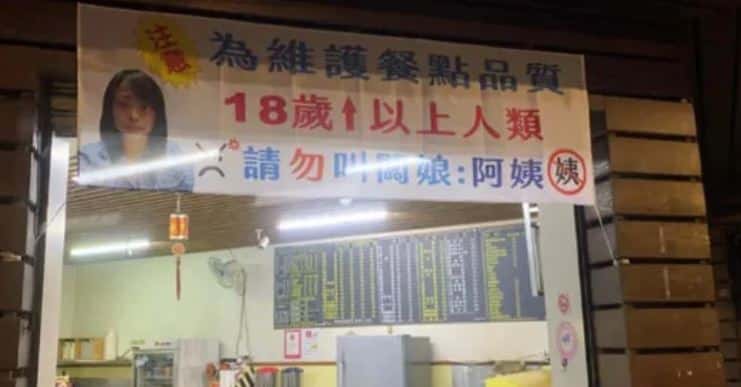
    A coffee shop owner in Taiwan has banned her customers from calling her “auntie”. She put up a banner in front of her shop saying that customers over 18 are not allowed to address her as “auntie”.

    The banner, which has been put up on the storefront, features a picture of the proprietor and the following message: “To ensure the standard of the food served, adults aged 18 and above must refrain from referring to the stall owner as ‘auntie’.”

    The hotel owner ignored the order of a customer named Chen Fuyun who addressed the owner as “auntie”. Chen then addressed the owner as “beautiful lady boss”.

    He added that the food served to him was good and that he did not find anything strange in his meal.

  • ‘No report of attack on Khan’: Rana Sanaullah

    ‘No report of attack on Khan’: Rana Sanaullah

    Federal Interior Minister Rana Sanaullah on Thursday denied claims of an attack against Pakistan Tehreek-e-Insaf (PTI) Chairman Imran Khan.

    “When big leaders are attacked, the whole country suffers. Imran Khan has the same security as when he was the prime minister,” said Sanaullah.

    In an interview on Samaa TV programme ‘Nadeem Malik Live’, Rana said: “When we looked into it, there was no truth in these claims.”

    However, the minister reiterated that Imran should be arrested and prosecuted for his “extremist views and violence-mongering”.

    Sanaullah said there was no possibility of discussion with the proscribed Tehreek-i-Taliban Pakistan (TTP) on the withdrawal of the military from tribal areas near the Afghan border, and reversal of the Fata merger, explaining that such demands were against the Constitution.

    Sanaullah insisted that the civil and military leadership were on the same page that the TTP militants would not be allowed to take up arms. “Otherwise, we won’t shy away from a fight”.

    “The military leadership assured us that we have the capacity and the power to sort these issues out effectively,” the minister added.

    To a question about the appointment of the next army chief, the interior minister said a decision in this regard will be taken in October.

    Earlier this week, the Counter-Terrorism Department (CTD)’s Khyber Pakhtunkhwa (KP) wing has issued a warning that terrorists are planning the assassination of Khan.

  • Pharmaceutical industry wants to raise drug prices by 25 per cent

    Pharmaceutical industry wants to raise drug prices by 25 per cent

    The government is given the deadline of June 30 to accept the pharmaceutical industry’s demands, or the cash-strapped sector will have no choice but to shut down.

    In order to prevent the collapse of the industry, Qazi Mansoor Dilawar, chairman of the Pakistan Pharmaceutical Manufacturers Association (PPMA), called for the refund of Rs40 billion that the government had collected as sales tax on the import of raw materials, the removal of the 17 per cent sales tax, and a 20 to 25 per cent increase in the price of medications during a press conference at the National Press Club.

    He also called for a 20 per cent increase in the maximum retail price (MRP). According to him, there is already a shortage of about 40 medicines on the market, and if immediate action is not taken, the shortage will grow alarmingly large.

    Dilawar claimed that the previous administration had pledged to refund the sales tax that had been imposed as a result of IMF pressure within 48 hours, but regretted that no mechanism had yet been established, preventing the refund of a significant Rs40 billion.

    The problem was made worse by a three-fold increase in the price of raw materials, a massive increase in freight costs, an increase in the price of fuel and electricity, and a drop in the value of the rupee. He added that 95 per cent of the raw materials used in the sector had to be imported.

    The president of the PPMA dismissed the notion that the industry was reaping huge profits by mentioning that many medications had costs that were higher than their retail prices.

    He asserted that about 70 per cent of Pakistani medications were less expensive than those found in India and Bangladesh.

    In response to a question, he stated that while there was much discussion about the increase in 600 drug prices after 13 years under the PTI government, there was little discussion of the decrease in 400 drug prices.

    The industry was not prepared to handle the challenge this time, according to the former PPMA chairman Qaisar Waheed, who also spoke about the recent increase in Covid-19 cases, particularly in Sindh.