Blog

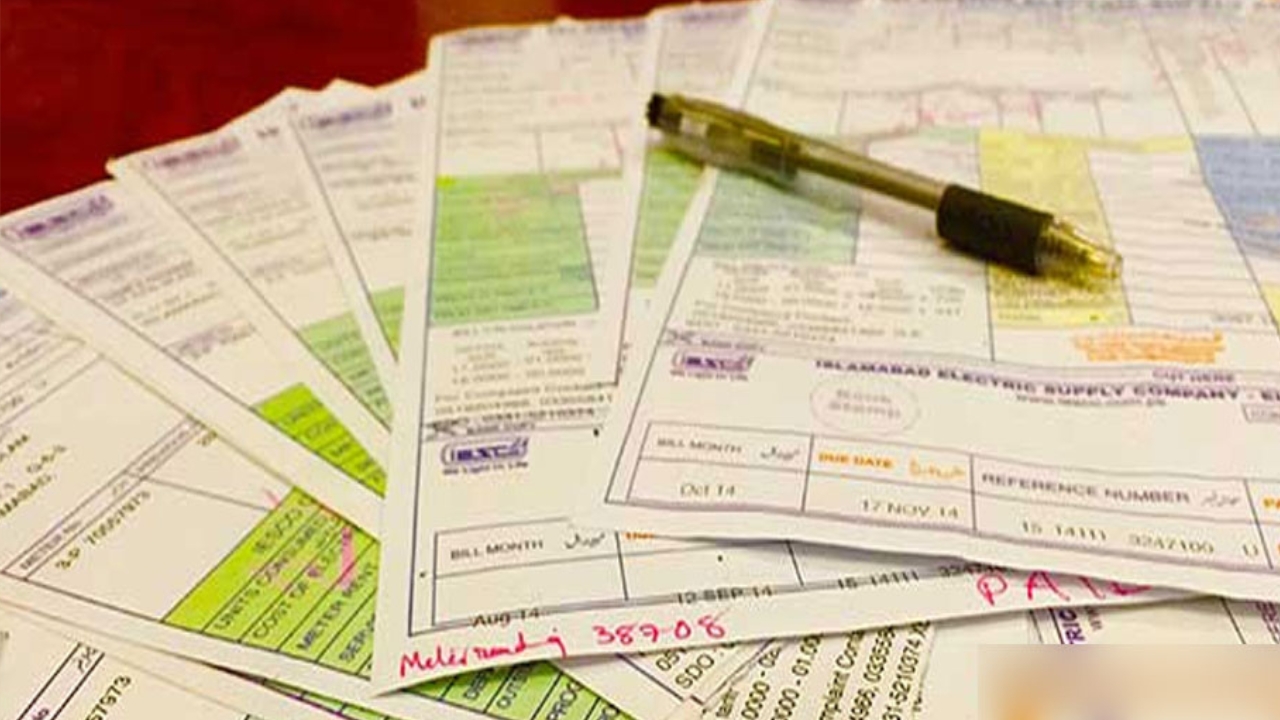
  • Lower electricity bills likely as NEPRA set to review adjustment

    Lower electricity bills likely as NEPRA set to review adjustment

    Consumers may soon receive financial relief in the form of lower electricity bills, as the National Electric Power Regulatory Authority (NEPRA) has reportedly scheduled a hearing on August 4 to consider a discount under the quarterly tariff adjustment. According to reports, the proposed relief will apply to the April–June 2025 quarter.

    Reports suggest that the aggregate discount requested by power distribution companies (DISCOs) sits at a staggering Rs53.93 billion. Officials have reportedly proposed adjustments that include market fees, capacity charges and transmission costs. 

    Consumers in Faisalabad are likely to witness the bulk of the overall relief as Faisalabad Electric Supply Company (Fesco) has reportedly requested an adjustment of Rs15.97 billion. Users in Lahore are also expected to witness reductions in electricity bills as Lahore Electric Supply Company (Lesco) has sought a quarterly tariff adjustment of Rs12.75 billion.

    Data from reports suggests that the Tribal Areas Electricity Supply Company (Tesco) has asked for the lowest tariff adjustment out of all the DISCOs, with the requested adjustment sitting at just Rs2.55 billion. Reports reveal that NEPRA has invited all relevant stakeholders and parties to register their objections prior to August 4. Reports claim that any decision made by NEPRA is likely to result in a nationwide reduction in electricity prices. 

    While DISCOs are pushing for financial relief, it merits a mention that a recent report by the Auditor General of Pakistan implicated eight DISCOS in a staggering financial fraud case amounting to Rs244 billion. According to reports, the Discos overcharged users to hide the true magnitude of power theft, line losses and major operational inefficiencies.

    The Auditor General’s report indicates that Electric Supply Companies of Islamabad (Iesco), Lahore (Lesco), Hyderabad (Hesco), Multan (Mepco), Peshawar (Pesco), Quetta (Qesco), Sukkur (Sepco), and Tribal Areas (Tesco) grossly overbilled consumers from 2023-24. As per the data, consumers were overbilled for a staggering 900 million units of power.

    Details from the audit suggest that five discos overcharged consumers by a whopping Rs47.81 billion in a single month. Reports reveal that 278,649 consumers faced higher bills as a result of this action by these discos.

    According to reports, consumers in Quetta bore the brunt of the fraud as Qesco passed on a staggering Rs148 billion in extra charges to agricultural users. Authorities levied inflated tube well charges in the region to reduce the financial losses faced by Qesco.

  • Lancashire launches investigation after Pakistani fan told to cover national jersey during India-England Test

    Lancashire launches investigation after Pakistani fan told to cover national jersey during India-England Test

    Lancashire County Cricket Club has launched an investigation after a video showing a Pakistani cricket fan being asked to cover his national team jersey during the fourth Test between England and India at Old Trafford went viral on social media. 

    The fan, identified as Farooq Nazar, posted the video online. He can be seen wearing a green Pakistan team T-shirt while seated in the stadium when a security steward says he was instructed by the control room to ask the fan to cover his shirt. Later in the clip, another steward refers to the shirt as “nationalistic” and insists it be concealed.

    The incident quickly sparked controversy online, drawing attention to issues of discrimination and freedom of expression in sports venues. Visibly frustrated, Nazar is seen questioning the repeated requests and is eventually approached by a police officer who asks him to step out of the stands. Reports suggest Nazar chose to leave the stadium rather than cover his shirt.

    While it remains unclear on which day of the five-day Test the incident occurred, Lancashire has acknowledged that it did take place and confirmed that a formal inquiry is underway.

    “We are aware of the incident and are taking steps to fully understand all the circumstances and context,” a club spokesperson told to ESPNcricinfo.

    The controversy comes amid heightened political tensions between India and Pakistan, following recent border skirmishes in June. 

    The strained relations between the two countries have also impacted cricketing ties, with no bilateral series played between them since 2012–13 and no Test series since 2007–08.

    Even in ICC events, matches between India and Pakistan are often held at neutral venues to avoid hosting disputes. 

    Meanwhile, Lancashire has been working to strengthen its commercial links with India in recent years. Manchester Originals, the club’s Hundred team, reportedly channels 70 percent of its revenue to Indian businessman Sanjiv Goenka’s RPSG Group, which also owns the Lucknow Super Giants in the IPL.

    Lancashire CEO Daniel Gidney has previously expressed interest in involving the BCCI in The Hundred competition as a potential stakeholder.

    The incident is now being viewed as another example of how political sensitivities can influence fan experiences at international sporting events. The club’s investigation is expected to address growing concerns over whether fans should face restrictions for simply showing support for their home country.

  • This Pakistani film is getting a North American release

    This Pakistani film is getting a North American release

    The Glassworker, Pakistan’s first-ever 2D hand-drawn animated feature film, is officially heading to theaters across North America.

    Distributed by Watermelon Pictures, the film is also Pakistan’s official submission for the 97th Academy Awards, competing in both the Best International Feature and Best Animated Feature categories.

    The announcement was made by Watermelon Pictures on social media. “From the award-winning team at Mano Animation Studios, comes a sweeping tale of art, war, and forbidden love,” the distributor shared, introducing audiences to Alliz, a gifted violinist at the heart of the story.

    The film is the directorial debut of Usman Riaz, who also leads the Karachi-based Mano Animation Studios alongside co-founder Mariam Paracha and CEO Khizer Riaz. Inspired by the storytelling style and animation techniques of Studio Ghibli, The Glassworker is a hand-drawn coming-of-age story that explores love, loss, and the effects of war through the eyes of young artists.

    The Glassworker made its worldwide premiere at the Annecy International Animation Film Festival in 2024, after being showcased as a work-in-progress at the same event in 2022. It was later released theatrically in Pakistan to critical acclaim.

    Set in a fictional war-torn country, the film follows young Vincent and his father Tomas, who run the finest glass workshop in the land. Their peaceful life is disrupted by the arrival of a military colonel and his daughter, Alliz, a talented violinist. As tensions rise, personal relationships are tested against the backdrop of an approaching war.

    The English-language voice cast features a mix of British and South Asian talent, including Art Malik, Sacha Dhawan, Anjli Mohindra, Tony Jayawardena, Teresa Gallagher, Maya Soraya, Sham Ali, and Mina Anwar.

    The North American release is being handled by Watermelon Pictures, which acquired the distribution rights during the Cannes Film Market in a deal between Hamza Ali and Charades’ Hélène Espeisse.

  • ‘Two cardiac arrests’; Annie Khalid reveals her daughter’s brave fight for life

    ‘Two cardiac arrests’; Annie Khalid reveals her daughter’s brave fight for life

    Pakistani-born British singer Annie Khalid has shared the experience of how her seven-year-old daughter suffered two cardiac arrests in less than 24 hours.

    In an Instagram post featuring videos of her daughter Isha’s brave journey, Annie began by saying, “I can’t believe I finally have the courage to post this… It was January 23rd, 2024. A date etched into my soul forever.”

    She revealed that Isha, who was perfectly healthy, suddenly had two cardiac arrests within just eight hours.

    “Her tiny heart was overwhelmed by arrhythmia and hypoxia. Oxygen deprivation for 45 long, brutal minutes caused her organs to start shutting down, one by one,” Annie wrote.

    Doctors had to put Isha on life support. She was intubated, connected to a heart-lung bypass machine, and placed on dialysis to keep her kidneys working. Annie recalled, “I watched through a blur of tears as my little girl, who once danced through our home with endless energy, lay motionless, tangled in wires and machines.”

    There was no warning before this happened. “My Isha. Born perfectly healthy. Not a single condition. Now facing organ failure, brain damage, and paralysis,” she shared.

    Doctors later told Annie that Isha had developed peripheral neuropathy and that due to the brain injury, she could no longer walk.

    But even during this painful time, Annie held on to her faith. “Because when medicine had no more answers… Allah did,” she wrote.

    She described Isha as a miracle of God: “He is Ar-Rahman, Ar-Raheem, the Most Kind, the Most Merciful. And Isha is His miracle.” Doctors were surprised at her survival, but Annie believes it was God’s mercy. “Where logic ends, divine mercy begins.”

    “She’s here. My daughter is alive. She’s smiling, laughing, healing. She’s stronger than I ever knew a child could be. And Insha’Allah, she will walk again one day. I believe that with every beat of my heart,” she wrote.

    Annie also explained why she had been missing from the public eye for so long. “People have been asking, ‘Annie, where have you been?’ I’ve been here!! doing the most important thing in the world. Being a mother to the most courageous, resilient, and beautiful girl I’ve ever known.”

    She ended her post by asking everyone to remember her daughter in prayers, “Please keep Isha in your Dua’s.”

  • No phone call between Modi-Trump during military action, Jaishankar tells Indian parliament

    No phone call between Modi-Trump during military action, Jaishankar tells Indian parliament

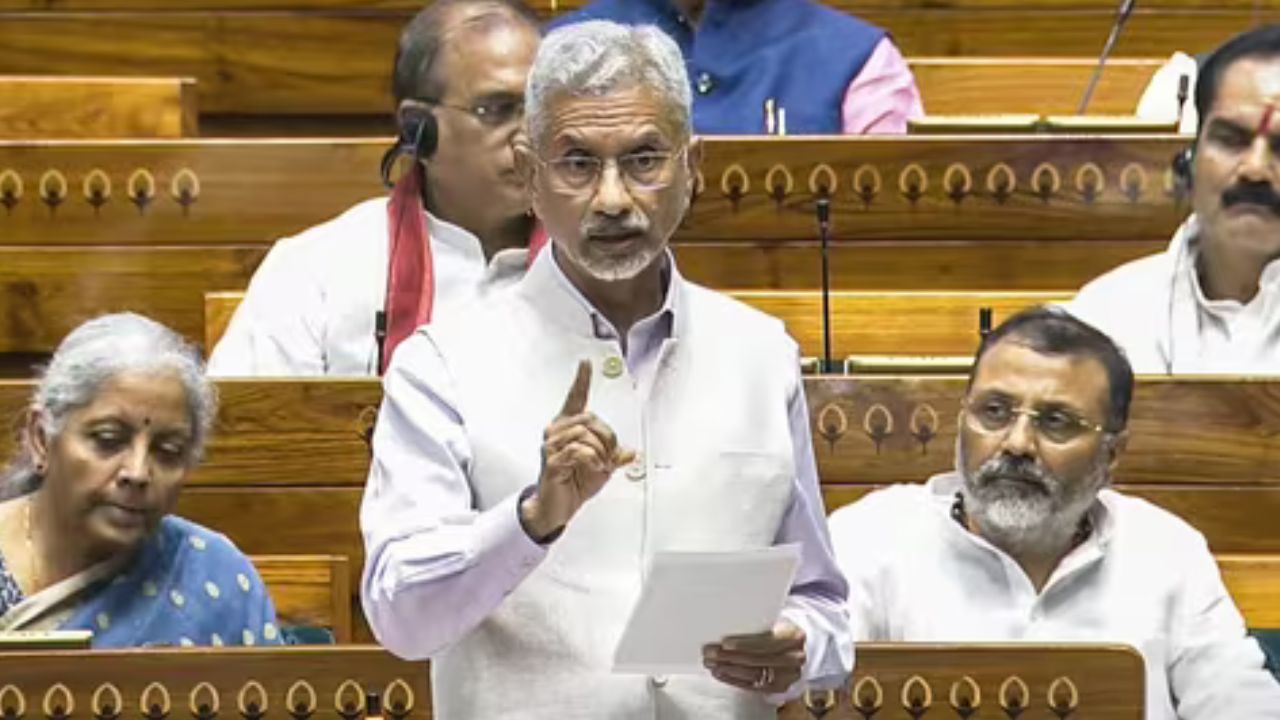
    Indian External Affairs Minister S. Jaishankar on Monday said that no phone call was held between Prime Minister (PM) Narendra Modi and United States (US) President Donald Trump during military clashes between Pakistan and India in May this year.

    “There was no call between Prime Minister Narendra Modi and Trump between April 22 (the Pahalgam attack) and June 17 … and at no stage was there any link to trade,” he said during a special debate on Operation Sindoor in the Indian parliament.

    The minister’s statements come after repeated claims by US President Trump that he stopped the conflict between Islamabad and New Delhi with trade deals.

    During a press briefing at the White House earlier in July, Trump said that the conflict stopped “over trade”. “We stopped a lot of fights … I think a very big one frankly … India and Pakistan and we stopped that over trade. We are dealing with India; we are dealing with Pakistan,” Trump added.

    In mid-July, during a meeting with North Atlantic Treaty Organisation (NATO) Secretary-General Mark Rutte, Trump reiterated that the two nations were on the brink of nuclear war before his intervention and claimed he used trade as leverage to settle the conflict.

    “India and Pakistan would have been (in) a nuclear war within another week, the way that was going (on). I said, we’re not going to talk to you about trade unless you get this thing settled. And they did,” Trump said.

    However, India has maintained that the understanding on cessation of hostilities with Pakistan was reached following direct talks between the Directors General of Military Operations (DGMOs) of the two militaries.

    Following the April 22 Pahalgam incident in Indian Illegally Occupied Jammu and Kashmir (IIOJK), New Delhi, on the night of May 6-7, breaching sovereignty and territorial integrity, launched strikes in Pakistan, killing innocent civilians.

    In response, the Pakistan Air Force (PAF) shot down Indian Air Force (IAF) fighter jets including Rafales. Following the humiliation, India launched drones and missiles at Pakistan. Acting swiftly, the latter country hit their air bases, inflicting heavy damage.

    On May 10, the US administration intervened and announced a ceasefire between them. Islamabad extended thanks to US President Trump, acknowledging his role in brokering peace between the two countries.

    Last month, Indian Foreign Secretary Vikram Misri said in a video statement that the decision to halt military action was made directly between India and Pakistan, through existing channels of the two armies, adding that PM Modi stressed that “India has never accepted mediation, does not and will never do so. There is complete political consensus in India on this issue”.

  • PM Shehbaz gives Rs5 million to Shahzaib Rind’s father after criticism

    PM Shehbaz gives Rs5 million to Shahzaib Rind’s father after criticism

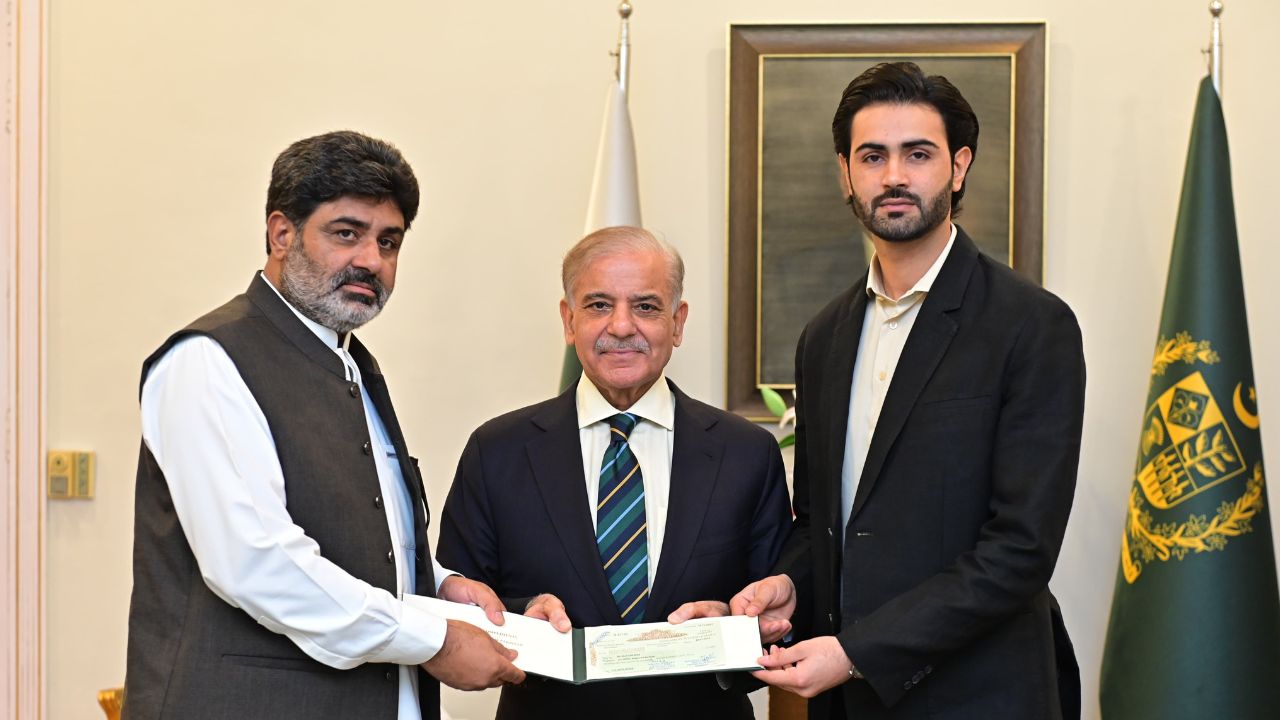
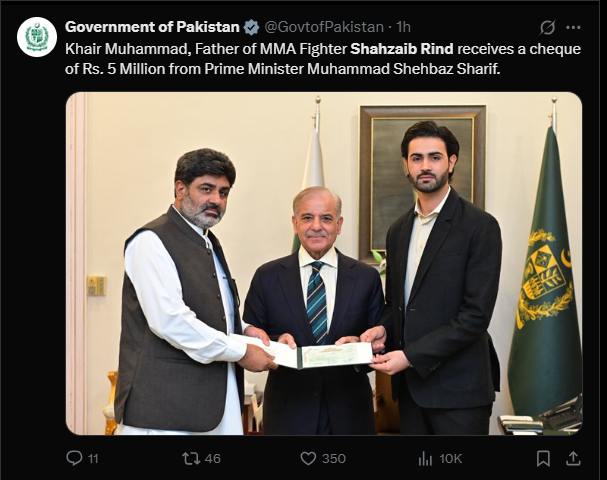
    Prime Minister (PM) Shehbaz Sharif on Tuesday presented a cheque of Rs5 million to the father of international mixed martial arts (MMA) fighter Shahzaib Rind, in recognition of the athlete’s role in elevating Pakistan’s image in global sports.

    The sports star’s father, Khair Muhammad, met the Prime Minister at the PM Office, where the financial award was formally given on behalf of the federal government.

    PM Shehbaz praised Shahzaib Rind’s international successes and extended his best wishes for future competitions. The gesture comes amid recent criticism of the federal government for delays in fulfilling promises made to the fighter.

    Shahzaib had publicly expressed disappointment over the delay, prompting the Prime Minister to take notice of the matter.

    Earlier, Federal Minister for Information and Broadcasting Attaullah Tarar issued a public apology to Shahzaib, citing a “miscommunication” as the reason behind the delay.

    In a post on social media, Tarar said, “Due to a miscommunication, there was an unfortunate delay in fulfilling our commitment to Shahzaib Rind. We sincerely apologize for the inconvenience and reaffirm our promise to honour his contributions.”

    He added that the Prime Minister had taken “serious notice” of the situation and instructed authorities to resolve the issue without further delay.

    Rind made history in 2024 by becoming Pakistan’s first-ever world champion in Karate Combat after defeating Brazil’s Bruno Roberto De Assis in the KC-49 final in Singapore. He is also a six-time national Wushu champion and previously secured the Combat League title in the United States.

  • Backlash hits Sajal Aly after body-shaming scene, viral Insta repost

    Backlash hits Sajal Aly after body-shaming scene, viral Insta repost

    Sajal Aly is facing strong criticism online, not just for a line her character says in Main Manto Nahi Hoon but also for reposting a fan story that mocked another male co-star. 

    Despite featuring a high-profile cast and airing in a prime-time slot on a national channel, the show is under fire for promoting body-shaming and toxic humour.

    The backlash began after a controversial scene in a recent episode. Humayun Saeed, who plays Professor Manto, is interrupted during a lecture by Mehmal, played by Sajal Aly. She asks, “Are you married,” a question viewers felt was unprofessional in a classroom setting.

    When Manto avoids answering the question, Mehmal jokes, “You look like someone who’s married with two kids and a fat wife.” He looks visibly uncomfortable and asks why she would say that. She replies, “The lack of motivation on your face means your wife must be fat.”

    While the class laughed, the audience did not.

    Online, viewers were quick to condemn the scene. Many called it outdated, offensive, and damaging. “Pretty girls get away with anything. If this was me, I’d be charged with harassment and body shaming,” wrote one user. 

    Another commented, “Sajal is equally responsible. She’s a big name now. She shouldn’t have agreed to deliver those lines.”

    Others raised concerns about the unhealthy portrayal of a student-teacher relationship. One viewer posted, “Romanticising this dynamic is dangerous, especially when we hear of real-life abuse and harassment in academic settings.”

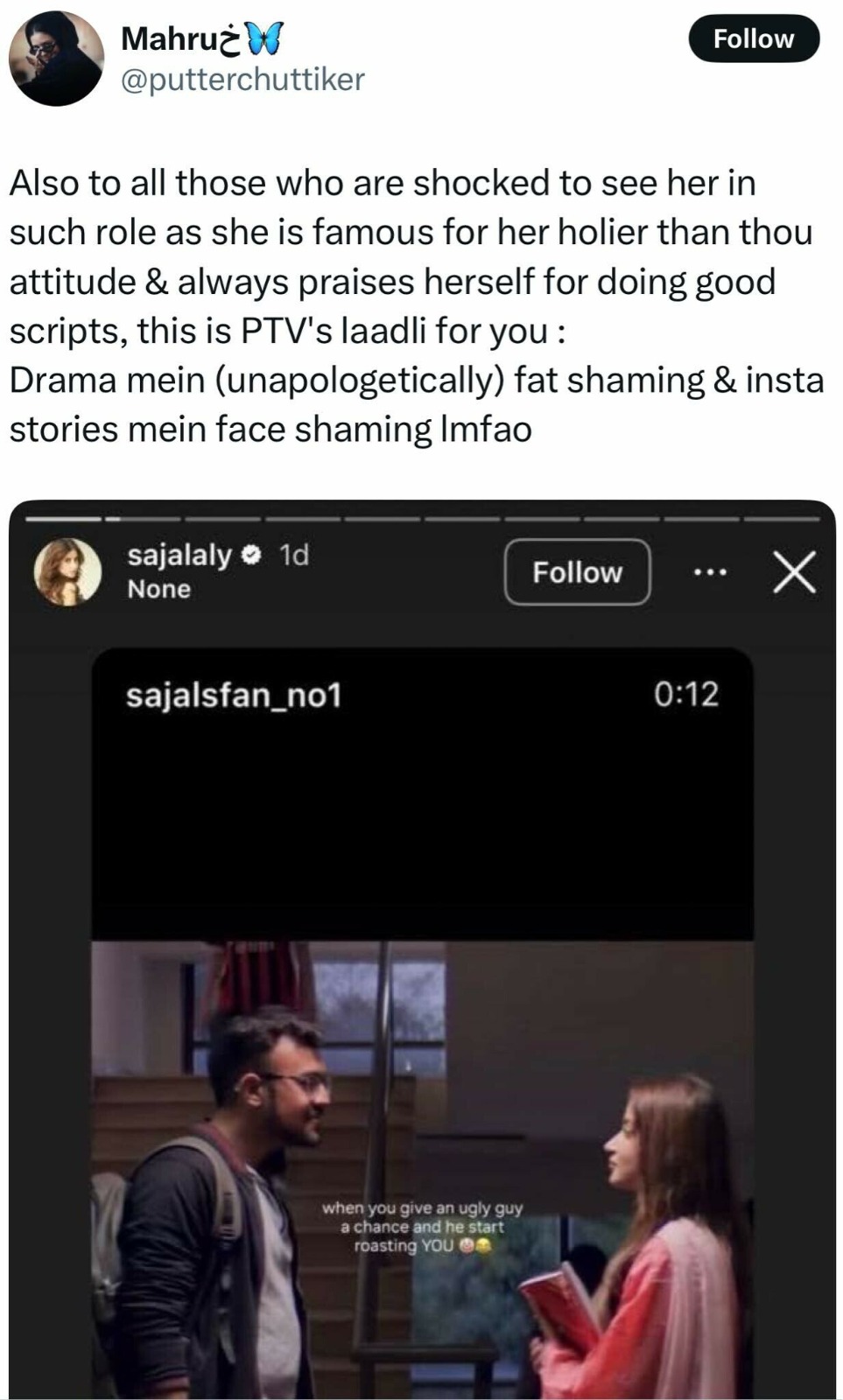
    But things escalated further when Sajal Aly reposted a fan’s Instagram story that took a dig at another male co-star. The caption read, “When you give an ugly guy a chance and he starts roasting you.”


    In response, a user criticised, “To all those surprised by her role — this is PTV’s favourite: fat-shaming in the drama, face-shaming on Insta stories.”

    Another comment read, “This isn’t funny or sarcasm. People have become too comfortable calling others ugly. Imagine being that actor, excited to share the screen with Sajal Aly, only to have her repost a reel calling him ugly to millions.”

    Others pointed out the irony that Sajal Aly is often celebrated for portraying “strong female characters.” One disappointed fan wrote, “Seeing THE Sajal Aly say such poor-quality lines shows how broken the industry is in terms of writing.”

    Writer Khalilur Rehman Qamar, known for his misogynistic views on gender and women, is also being criticised for scripting the offensive dialogue.

  • Reading the Reader: On Ammar Ali Qureshi’s Views and Reviews

    Reading the Reader: On Ammar Ali Qureshi’s Views and Reviews

    According to a Gallup survey, 75% of people claim not to read books at all. Mind you, this survey is from 2019 and by 2025, the figure has likely deteriorated even further; social media has drastically decimated our attention spans. A book, being a far more demanding form of engagement, often feels too formidable. People now struggle to read even a full 1,000 words op-ed, let alone something verbose. Many skim through posts on X, LinkedIn, or even long WhatsApp messages. And for those who do feel the urge to read, they’re often left perplexed: what should they read?

    And that’s where book reviews come in: book reviews offer several valuable benefits for readers, writers, and the broader literary community. They help readers make informed decisions by summarizing a book’s content, style, and strengths or weaknesses, ultimately saving time and guiding personal preferences. Albeit, it is not a replacement of the whole corpus at all.
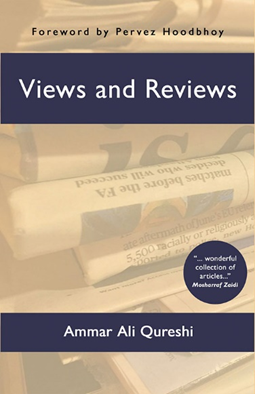
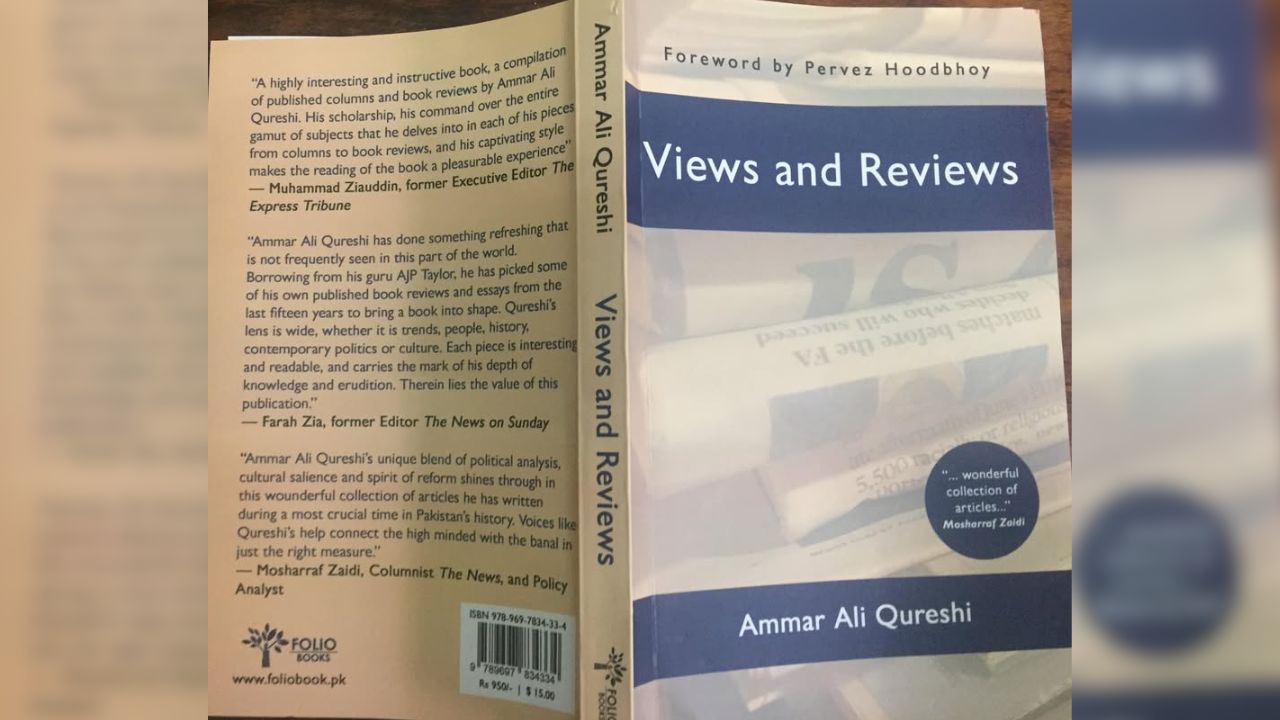
    Publisher: Folio Books

    Author: Ammar Ali Qureshi

    Pages: 228

    Price: Rs 950/-

    Reviews also deepen understanding by unpacking complex themes, symbolism, or context that casual readers might overlook. Additionally, they encourage critical thinking and discussion, as they often present arguments and interpretations that spark dialogue. Overall, they enrich the reading experience and foster a thoughtful culture of engagement with books. And the impending book under discussion does all of this and more.

    Ammar Ali Qureshi’s Views and Reviews is a compilation of articles written across five cities spanning three continents over the past 15 years. One might call it a ‘labour of love’—a testament to his deep affection for books, inherited from his parents, both students of history, who allowed him to devour every book in their home. Even today, the library he has posted online reflects this passion, curated with care and brimming with crème de la crème titles.

    The idea of writing these pieces draws inspiration from A.J.P. Taylor, the most popular and provocative British historian of the 20th century, who authored around 1,600 book reviews. This book, of course, is much slimmer compared to Taylor’s prolific output, yet it spans a wide range of subjects: history, politics, the economy and governance structures, nationalism, notable personalities, poetry, and more.

    One striking piece, included in the first section, covers the exiled prince I had never heard of before, Maharaja Daleep Singh, son of Maharaja Ranjit Singh. The author’s review captures the deep melancholy of the story: the fall of one of the fiercest and most formidable reigns faced by the British, stretching from 1799 to 1849—from the southern districts of Punjab to Afghanistan and Kashmir. Ranjit Singh’s feat was a remarkable historical achievement.

    The loss of this indigenous Punjabi kingdom, the confiscation of the Koh-i-Noor, Daleep’s dethronement at the age of ten, his coerced conversion to Christianity, his exile to England, and eventually his re-embrace of Sikhism, these form a profoundly tragic arc. He died penniless in a Paris hotel room, carrying the burdens of resentment and betrayal to the very end. The first section of the book, “Historical Perspectives on Punjab,” reads like a lament from a son mourning his lost mother, Punjab.

    The second section turns to Pakistan. Among the essays, Pakistan and Iran: Neighbours of Many Surprises and Pakistan’s Middle Class and Islam particularly caught my attention. The former explores how Iran, under the Shah, was the first foreign head of state to visit Pakistan in 1950, became its largest bilateral donor—providing $800 million in loans and credit in the 1970s—supported Pakistan in the 1965 and 1971 wars, and yet, today, we face off against each other at a tense border.

    The latter explores the rise of the new middle class, based on Dr Ammara Maqsood’s book The New Pakistani Middle Class. It focuses on how this class is more inclined toward a globalized form of Islam—seen as a legacy of Zia-ul-Haq and practiced by many Muslims in the West—rather than Wahhabism. However, Ammar points out the frequent conflation between the two, especially given the influence of Saudi funding. This stands in contrast to the older middle class, which projected a softer image of Pakistan.

    In the third section, the article on Iqbal, “Iqbal — Love Letter to Persia,” reveals his (Iqbal’s) deep love for Persia: the language (of over 12,000 verses he composed, around 7,000 are in Persian), and Persian history especially the Persian conquest, which he considered most significant in the history of Islam, as reflected in his doctoral thesis. Iqbal’s admiration was reciprocated by prominent Persians, including Iran’s poet laureate Mohammad-Taqi Bahar, Prime Minister Mohammad Mossadegh, and influential figures like Ali Shariati (the ideologue of the Iranian Revolution) and Ali Khamenei (Supreme Leader of Iran).

    Ammar quotes, “Although the language of Hind is sweet as sugar / Yet sweeter is the fashion of Persian speech / My mind was enchanted by its loveliness / My pen became a twig of the Burning Bush / Because of the loftiness of my thoughts / Persian alone is suitable to them.”

    The fourth section focuses on governance, particularly how corruption and the absence of a robust justice system fuel crony capitalism, weaken public service delivery, stifle economic growth, hinder innovation, crowd out investment, erode public trust, nudge religious extremism and reinforce elitism, among other consequences.

    The fifth section, focused on personalities and memoirs, features intriguing pieces on figures such as Karl Marx—described as a “Prophet of Revolutions”—and Nur Jahan, the only Mughal queen to have her name inscribed on coins, who effectively ruled Jahangir’s empire for 15 of his 21 years on the throne. It explores the enduring influence of their legacies and the lessons they continue to offer, even after centuries. He quotes Robert Heilbroner from his book The Worldly Philosophers: “We turn to Marx, therefore, not because he is infallible, but because he is inescapable.”

    The sixth section shifts to global history, touching upon the rise and fall of Eastern and Western powers, the miscalculations of the Afghan war, Robert Fisk’s life amidst global upheavals, Obama’s diplomatic failures, the rise of Trump, and much more. But I’ll stop here, I wouldn’t want to spoil it by revealing everything in it.

    What elevates Ammar’s work is that his reviews are not mere summaries. He weaves history, politics, identity, and contemporary relevance into his analysis. He doesn’t shy away from highlighting contradictions or calling for critical engagement. His essays are not just about books, but about how to read, how to wrestle with ideas, how to cherish curiosity, and how to think.

    In an age of vanishing attention spans, Views and Reviews is not only a literary respite, it is a call to return to depth, nuance, and the quiet joy of thoughtful reading.

  • Five, including attacker, dead in New York shooting

    Five, including attacker, dead in New York shooting

    At least four people, including a New York Police Department (NYPD) officer, were killed in a shooting on Park Avenue in midtown Manhattan skyscraper after a lone gunman on Monday evening opened fire inside a building home to the corporate offices of the National Football League (NFL) and investment firm Blackstone, US media outlets have reported.

    Media reports suggest that the shooter, identified as 27-year-old Shane Devon Tamura, died from a self-inflicted gunshot wound. NYC Police Commissioner Jessica Tisch said that after entering the building and shooting one person on the 33rd floor of the Park Avenue building, “he then proceeds down a hallway and shoots himself in the chest.”

    The lone gunmen had a mental health history, media reports quoted police as saying, adding that the shooter’s motives are still being determined. 

    Citing a source with knowledge of the investigation, CNN reported that the gunman had a suicide note in his back pocket alleging that he suffered from CTE, a brain disease linked to head trauma. In the note, he also asked for his brain to be studied.

    The skyscraper where the deadly shooting occurred has long been a home for major multinational companies, located in the heart of Midtown Manhattan, where corporate staff flow in and out every day.

    The building, 345 Park Avenue, is owned by Rudin Management, which bills itself as one of the largest privately owned real estate companies in the city.

    Who was the officer?

    The killed NYPD officer, Didarul Islam, was a 36-year-old husband and father. He was off-duty at the time and working security in the building where the shooting occurred. He had served in the NYPD’s 47th precinct in the Bronx for three and a half years, Mayor Eric Adams said in a news conference Monday night.

    The mayor stated that Islam was an immigrant from Bangladesh, and his parents’ only son, adding, “Everyone we spoke with stated he was a person of faith and a person that believed in God and believed in living out the life of a godly person.”

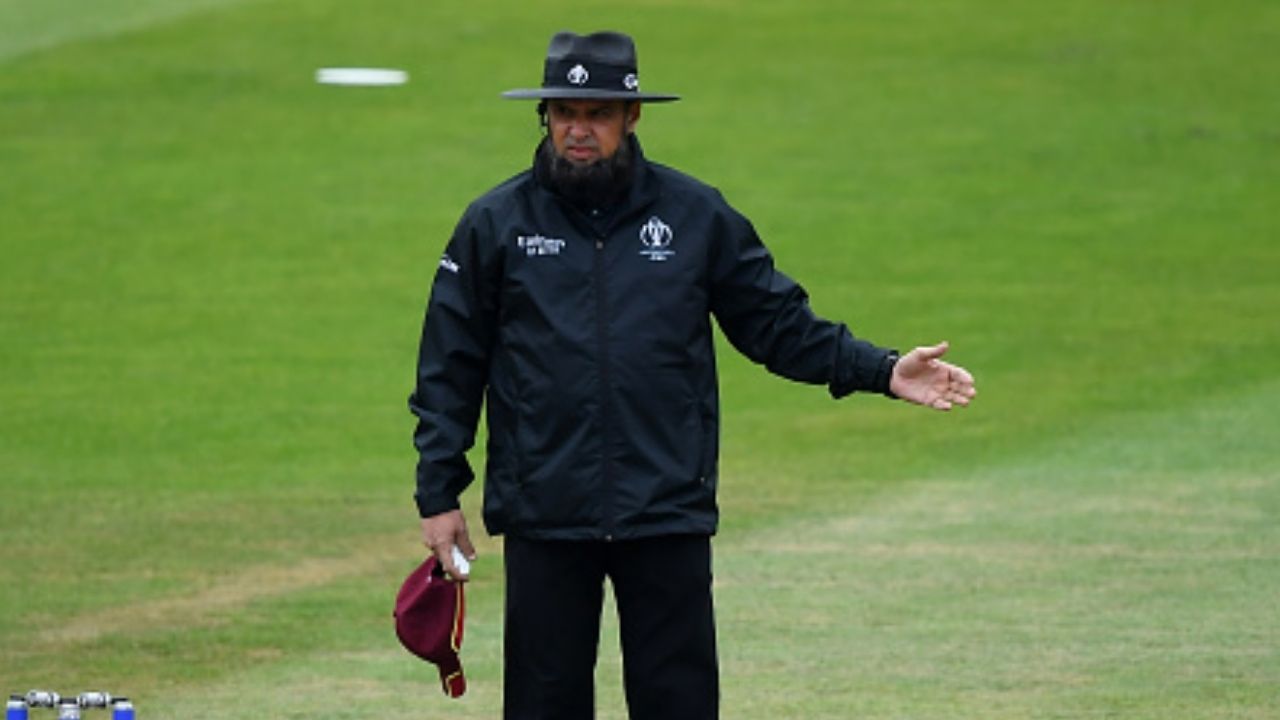
  • Aleem Dar paid twice the standard fee in PSL 9: audit

    Aleem Dar paid twice the standard fee in PSL 9: audit

    An internal audit report by the Pakistan Cricket Board (PCB) has raised serious concerns over irregular payments made to veteran umpire Aleem Dar during the 2024 edition of the Pakistan Super League (PSL 9). 

    The report reveals that Aleem Dar was paid double the standard match fee for his services, leading to excess payments amounting to around PKR 3.85 million.

    According to media reports citing the audit, Aleem Dar received $4,000 per match during PSL 9, despite being on the PCB’s International Panel, which entitles umpires to a standard fee of $2,000 per match. The increased payment was approved by the then-Chairman of the PCB Management Committee and was disbursed from the Chairman’s contingency fund.

    A total of $28,000 was paid to Aleem Dar for officiating in seven matches, while the amount he was entitled to under PCB regulations should have been $14,000. The auditors reportedly noted that this excess payment placed an additional financial burden on the PCB and indirectly impacted the PSL franchises as well.

    The note sheet titled “PCB-DCOP-24-1848 – Payments for Match Officials, PSL 9, 2024” confirmed that several umpires and match referees were appointed for PSL 9 fixtures, and the match fees were allocated accordingly. However, Aleem Dar’s match fee was based on the ICC Elite Panel rate of $4,000 per match, even though he was not part of the Elite Panel during the tournament.

    As per the audit, this action provided an undue financial benefit to Aleem Dar and was in violation of the board’s own regulations. It concluded that the overpayment caused a financial loss to the PCB.

    In response, the PCB management acknowledged that Aleem Dar had requested to be paid at the ICC Elite Panel rate and that this request was approved by the Chairman at the time

    The auditors noted that this explanation effectively confirmed the audit’s findings regarding the irregular payment.