Blog

  • Iran fires back at Israel after onslaught targets nuclear facilities

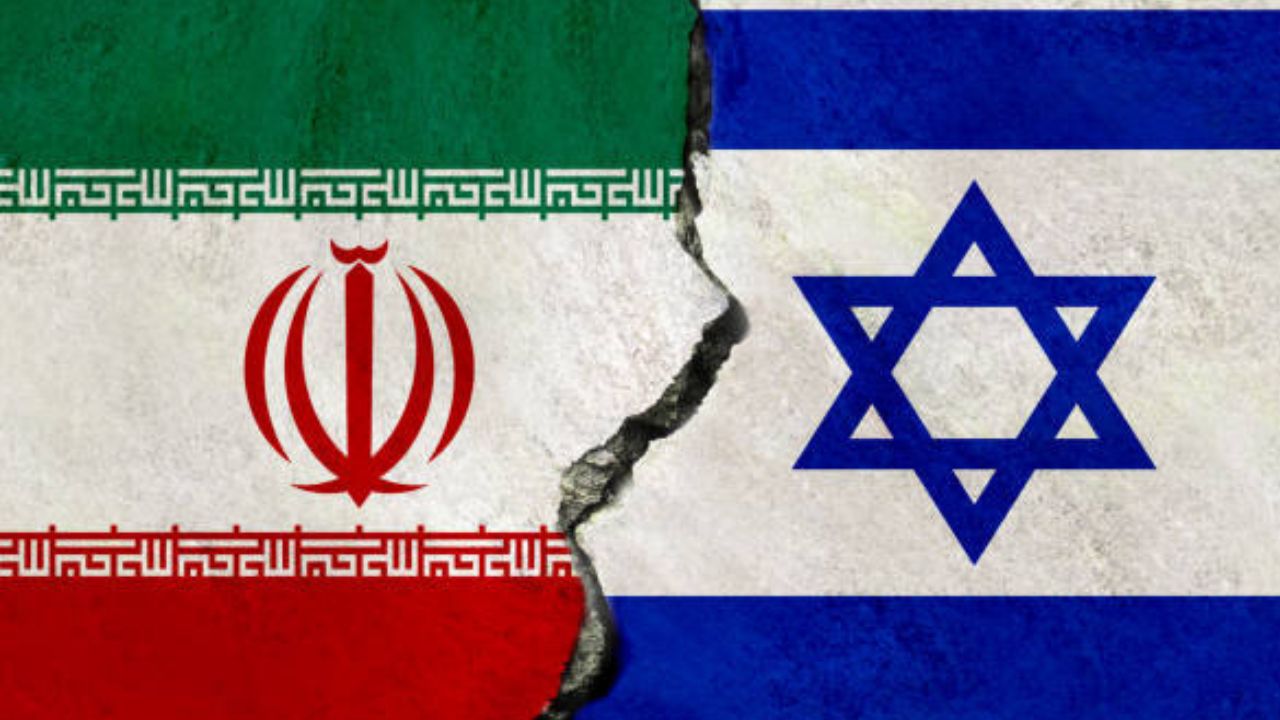
    Iran fires back at Israel after onslaught targets nuclear facilities

    Iran struck Israel early Saturday with barrages of missiles after a massive onslaught targeted the Islamic republic’s nuclear and military facilities, and killed several top generals.

    Air raid sirens and explosions rang out across Israel overnight, with its military calling on residents to take refuge in bomb shelters Saturday morning.

    The Israeli military said dozens of missiles — some intercepted — had been fired in the latest salvos from Iran.

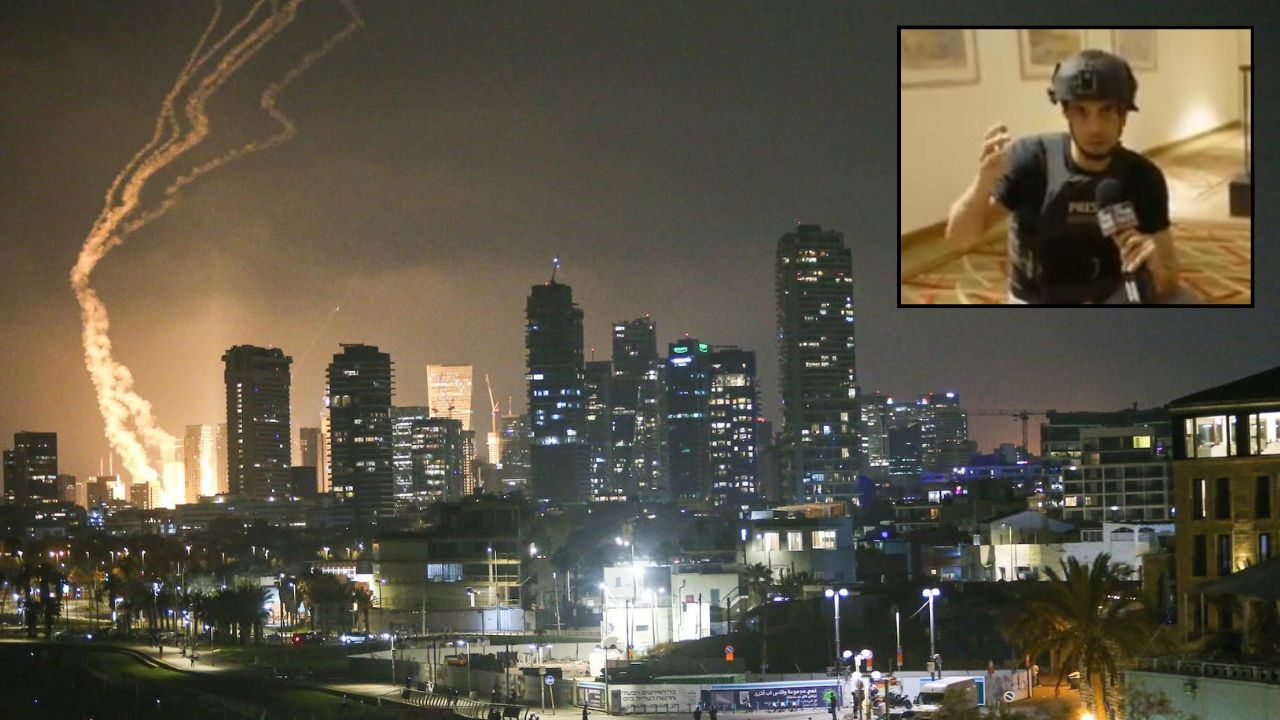
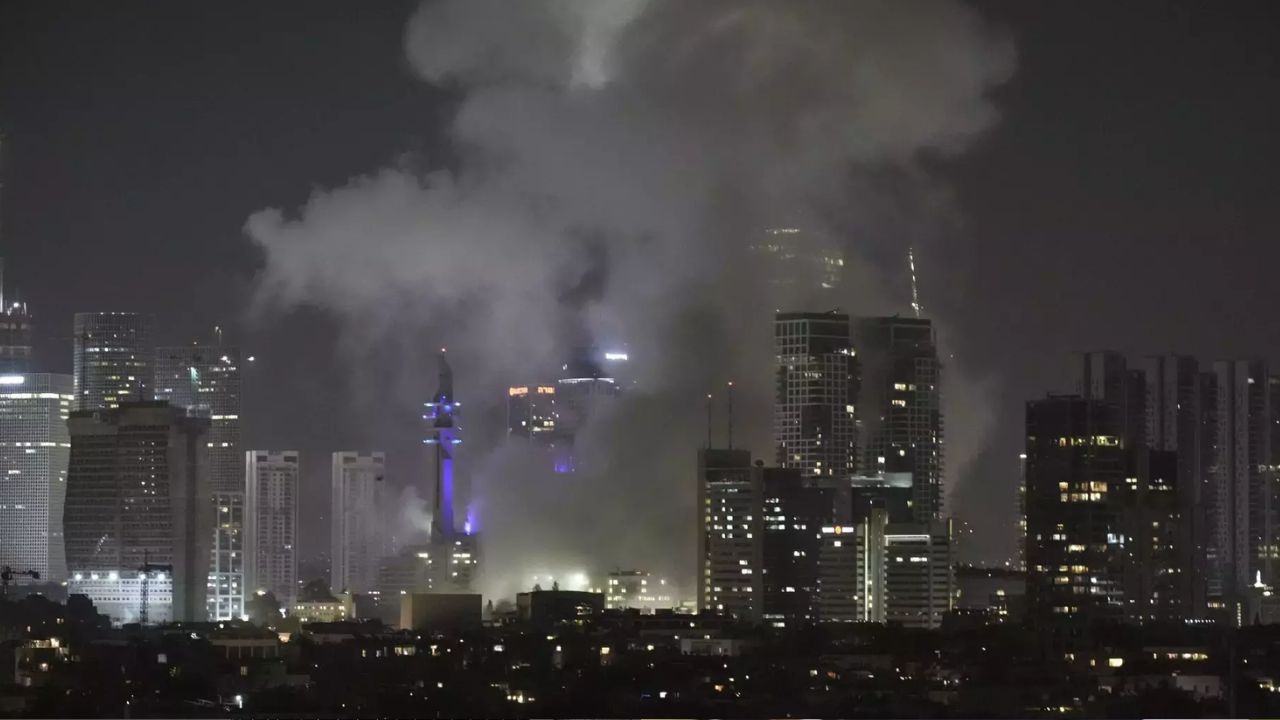
    Smoke was billowing above skyscrapers in downtown Tel Aviv, an AFP journalist reported, as Iran’s Revolutionary Guard said it had attacked dozens of targets in Israel.

    Israel’s firefighting service said its teams were responding to the aftermath of Iranian missile strikes, including working to rescue people trapped in a high-rise building.

    Rescuers said 34 people had been wounded in the Gush Dan area, including a woman who later died of her injuries, according to Israeli media reports.

    Resident Chen Gabizon told AFP he ran to an underground shelter after receiving an alert notification.

    “After a few minutes, we just heard a very big explosion, everything was shaking, smoke, dust, everything was all over the place,” he said.

    In Iran’s capital Tehran early Saturday, fire and heavy smoke billowed from Mehrabad airport, an AFP journalist said, as local media reported a blast in the area.

    Iran said earlier it had activated its air-defence system and explosions could be heard across the capital.

    Dozens of people took to the streets of Tehran overnight to cheer their country’s military response, with some waving national flags and chanting anti-Israel slogans.

    Iran’s ambassador to the UN said Friday that 78 people had been killed and 320 wounded in the first wave of strikes by Israel.

    After a day of back-and-forth bombardments, UN chief Antonio Guterres called for the two nations to cease fire.

    “Enough escalation. Time to stop. Peace and diplomacy must prevail,” he wrote on X late Friday.

    – Calls for dialogue –

    US officials said they were helping Israel defend against the missile attacks, even as Washington insisted it had nothing to do with Israel’s strikes on Iran.

    US President Donald Trump agreed on a call with UK Prime Minister Keir Starmer that “dialogue and diplomacy” were needed to calm the crisis, Starmer’s office said.

    Trump also spoke with Israel’s Prime Minister Benjamin Netanyahu Friday, US officials said, without elaborating.

    Iran’s missile salvo came hours after Israel said its widespread air raids had killed several top Iranian generals, including most of the senior leadership of the Revolutionary Guards’ air force.

    It had launched several rounds of strikes that hit about 200 targets including nuclear facilities and air bases.

    Iran’s supreme leader Ayatollah Ali Khamenei vowed to bring Israel “to ruin” during a televised address.

    In Israel, Netanyahu issued a statement calling on the Iranian public to unite against their own government. But he also warned more attacks were coming.

    “In the past 24 hours, we have taken out top military commanders, senior nuclear scientists, the Islamic regime’s most significant enrichment facility and a large portion of its ballistic missile arsenal,” Netanyahu said.

    While stressing that it was not involved in the Israeli attacks, the United States warned Iran not to attack its personnel or interests.

    Tehran nevertheless said Washington would be “responsible for consequences”.

    – Commanders killed –

    The strikes killed Iran’s highest-ranking military officer, armed forces chief of staff Mohammad Bagheri, and the head of the Revolutionary Guards, Hossein Salami, Iranian media reported.

    Khamenei swiftly appointed new commanders to replace those killed.

    “The senior chain of command of the air force of the Islamic Revolutionary Guards Corps had assembled in an underground command centre to prepare for an attack on the State of Israel,” the Israeli military said, adding that its attacks had killed most of them.

    Iran confirmed that the Guards’ aerospace commander had been killed, along with “a group of brave and dedicated fighters”.

    AFP images showed a gaping hole in the side of a Tehran residential building that appeared to have sustained a targeted strike.

    Tasnim news agency said six nuclear scientists were among the dead.

    Oil prices surged while stocks sank on the Israeli strikes.

    – Radiation ‘unchanged’ in Natanz area –

    The conflict raised questions as to whether Sunday’s sixth round of talks planned between the United States and Iran to seek a deal on Iran’s nuclear programme would go ahead in Oman.

    After the first wave of strikes on Friday, Trump urged Iran to “make a deal”, adding that Washington was “hoping to get back to the negotiating table”.

    Iran confirmed that above-ground sections of the Natanz enrichment plant had been destroyed, but the International Atomic Energy Agency (IAEA) said radiation levels outside the site “remained unchanged”.

    “Most of the damage is on the surface level,” said the Atomic Energy Organisation of Iran’s spokesman Behrouz Kamalvandi.

    Iran said there was only limited damage to the Fordo and Isfahan nuclear sites.

    The United States and other Western governments have repeatedly accused Iran of seeking a nuclear weapon, an ambition it has consistently denied.

    Netanyahu said Israeli intelligence had concluded that Iran was approaching the “point of no return” on its nuclear programme.

    Israel had called for global action after the IAEA accused Iran on Thursday of non-compliance with its obligations.

    Iran currently enriches uranium to 60 percent, far above the 3.67-percent limit set by a largely moribund 2015 agreement with major powers, but still short of the 90 percent threshold needed for a nuclear warhead.

  • Hairy chest to sleeveless shirts — Ali Raza’s clapbacks keep coming

    Hairy chest to sleeveless shirts — Ali Raza’s clapbacks keep coming

    Actor Ali Raza has reignited the debate over his bold styling after sharing a new photo on Instagram with the caption: “Sleeveless se toh koi masla nahi hai?” 

    The image, seemingly a reaction to past criticism from veteran actor Atiqa Odho, triggered a flurry of mixed responses online. 

    He later posted an Instagram Story stating, “Ab hairy chest k baad sleeveless be to baat nhi shuru ho gy na,” implying he was addressing the ongoing remarks regarding his look in the drama Dastak. 

    The comments section quickly became a space for divided opinions. “In the name of opinion, shaming someone is straight up absurd,” wrote one user. Another commented, “What is up with him? He always tries to stay in the limelight.” Some supported him, while others questioned his tone. “I like Ali but he shouldn’t react like this to criticism,” one comment read. Another user added, “Why is he so full of arrogance,” while a contrasting view said, “Atiqa Odho should apologise. Wasn’t expecting her to be that rude to a youngster who’s a fine actor. How do they expect respect after this?”

    The discussion first emerged earlier this week when Atiqa Odho critiqued Raza’s outfit in Dastak during an interview with Nadia Khan and Marina Khan. Commenting on his partially unbuttoned shirt, she stated, “Women are always told to wear long sleeves and adhere to strict dressing guidelines. Why shouldn’t men be held to the same standards?” While clarifying that she didn’t oppose bold fashion choices in general, she questioned their appropriateness in family dramas. “What bothers me is Ali Raza’s partially unbuttoned shirt. It’s unnecessary to display a hairy chest on-screen,” she claimed, finishing with a joke, “Please, do wax your chest. Hairy chests are the biggest turn-off. I can even take you to the salon. He’s a good actor, handsome and all, but this is a major no-no.” 

    Earlier, Ali Raza had responded to a clip of the interview on Instagram, writing: “Lagta hai baat toṛi galat jagah kar di inho ne. #AwamNhiChorayGy” That post also drew a mix of criticism and support from fans.

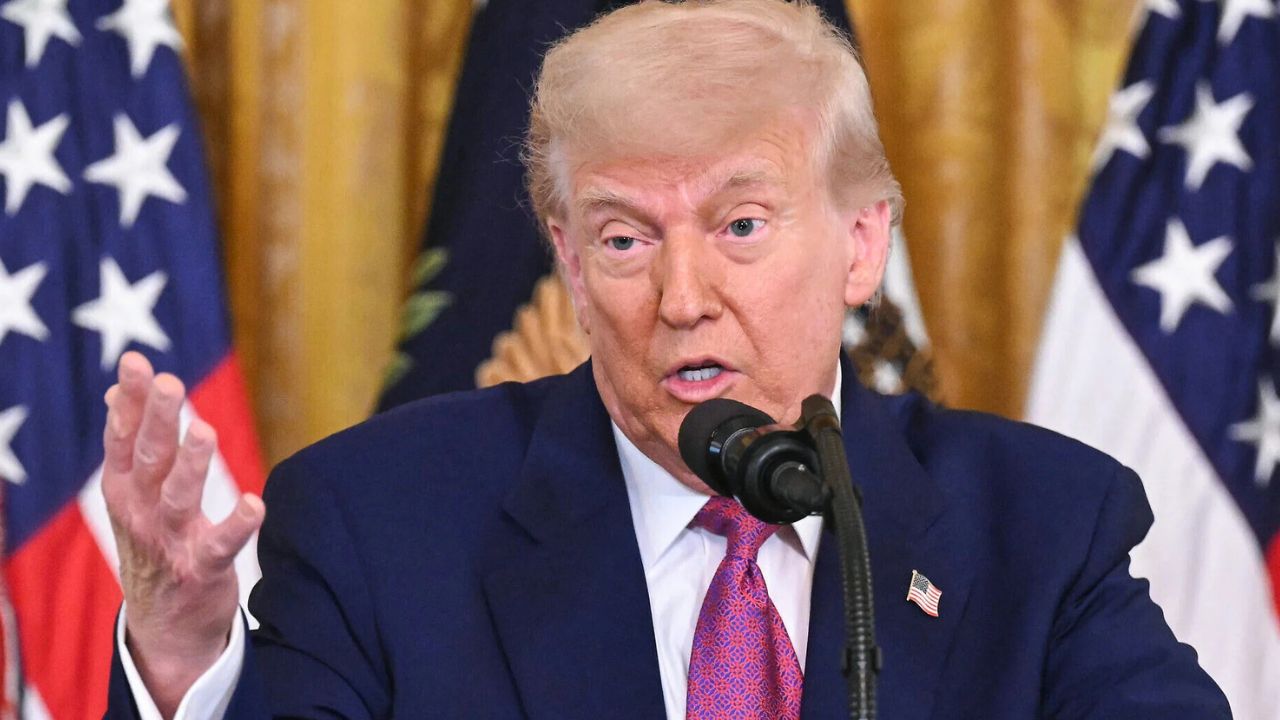
  • Trump says US knew in advance about Israeli strikes on Iran

    Trump says US knew in advance about Israeli strikes on Iran

    US President Donald Trump confirmed that his administration had been informed about Israel’s military actions against Iran and claimed that he had attempted to prevent the conflict through diplomatic means.

    In a phone interview with Reuters, Trump remarked, “We were aware of everything, and I made efforts to spare Iran from humiliation and death. I genuinely wanted to see a deal reached.”

    He also mentioned that there is a chance for an agreement, despite the recent tensions. “They can still finalize a deal, but it’s not too late.”

    Trump had been attempting to broker a deal with Iran to cease its uranium enrichment activities. He indicated that Iran was given a 60-day timeframe for negotiations, which has now elapsed. “We knew nearly everything. We knew enough to grant Iran 60 days to reach a deal, and today is day 61, right? So, you know, we knew everything,” he stated.

    The strikes, which Trump characterised in several media interviews as “very successful,” reportedly targeted nuclear sites, missile infrastructure, and high-ranking military officials within Iran. Israel has claimed this marks the beginning of an extensive operation intended to prevent Iran from developing nuclear weapons.

    The president reaffirmed his support for Israel and highlighted the diminished likelihood of a broader conflict. “We have always been very close to Israel. We are their foremost ally by a large margin,” Trump said, adding, “We’ll see what unfolds.”

    When asked if the US would support Israel in the event of retaliation from Iran, Trump confirmed his support but did not elaborate further.

    Subsequently, two American officials confirmed that the US military had aided in intercepting Iranian missiles directed at Israel.

    Despite the military developments, Trump noted that nuclear negotiations with Iran were technically still on the table. A US delegation, headed by special envoy Steve Witkoff, was scheduled to meet with Iranian officials in Oman. However, Trump acknowledged uncertainty regarding whether the talks would proceed.

    “They’re not off the table,” he stated about the negotiations. “We have a meeting with them on Sunday. Now, I’m uncertain if that meeting will actually happen, but we have a meeting with them on Sunday.”

    He also confirmed that he had maintained regular communication with Israeli Prime Minister Benjamin Netanyahu throughout the week and had discussed the situation during a security briefing at Camp David.

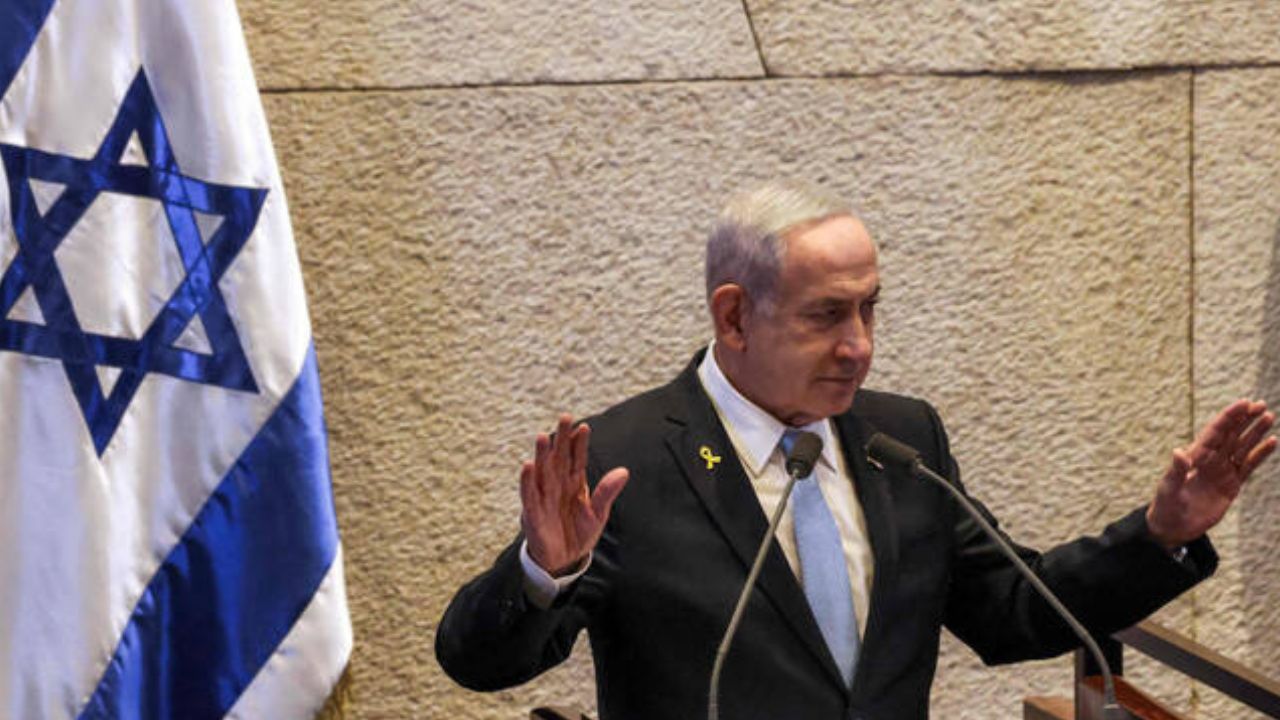
  • Netanyahu calls on Iranians to unite against ‘evil and oppressive regime’

    Netanyahu calls on Iranians to unite against ‘evil and oppressive regime’

    Israeli Prime Minister Benjamin Netanyahu called on Iranians Friday to unite against what he described as an “evil and oppressive regime,” telling them Israel was engaged in “one of the greatest military operations in history.”

    “The time has come for the Iranian people to unite around its flag and its historic legacy, by standing up for your freedom from the evil and oppressive regime,” Netanyahu said in a video statement after Israel struck over 200 military and nuclear sites in the Islamic republic.

    “We are in the midst of one of the greatest military operations in history, Operation Rising Lion,” he added.

    “As we achieve our objective, we are also clearing the path for you to achieve your freedom,” he said, referring to Israeli strikes that hit targets across Iran, including nuclear sites, killing several top military commanders and nuclear scientists.

    “The regime does not know what hit them, or what will hit them. It has never been weaker,” Netanyahu said in his video published shortly after a salvo of Iranian missiles reached Israel.

    “Our fight is against the murderous Islamic regime that oppresses and impoverishes you,” he said, adding: “This is your opportunity to stand up and let your voices be heard.”

    Netanyahu also promised that “more is on the way,” having said earlier that Israel’s attack on Iran would “continue for as many days as it takes.”

    Iran called the attack “a declaration of war” and threatened to retaliate by opening “the gates of hell” on Israel.

    It first sent about 100 drones toward Israel, many of which were intercepted before reaching the country.

    The drones were followed by dozens of missiles, some of which caused physical damage in Israeli cities, and injured at least seven people, according to first responders.

  • Israel-Iran conflict: what we know

    Israel-Iran conflict: what we know

    Israel struck Iranian nuclear and military facilities with a barrage of missiles on Friday, killing several top officials and prompting a counter-attack by Iran.

    Prime Minister Benjamin Netanyahu said Israel’s attack on its arch-rival would last “as many days” as needed, and cited Israeli intelligence that Tehran was approaching the “point of no return” on its nuclear programme.

    Iran called the Israeli air assault “a declaration of war” and fired dozens of missiles at Israel later Friday and Saturday.

    International calls for restraint are multiplying, as fears grow the Middle East could be on the threshold of a broader conflict.

    Here is what we know:

    – Nuclear sites hit –

    Israel’s attacks started in the early hours of Friday, a day of rest and prayer in Iran, and continued through the day, on various sites.

    A key target was a vast underground nuclear site in Natanz, which Israel hit several times, according to Iranian state television.

    Radiation levels outside the facility “remained unchanged”, the head of the United Nations’ International Atomic Energy Agency (IAEA), Rafael Grossi, said.

    Iran said there was limited damage to its Fordo and Isfahan nuclear sites.

    – Commanders killed –

    Top brass killed included the head of Iran’s Revolutionary Guards, Hossein Salami, and armed forces chief of staff Mohammad Bagheri, with replacements swiftly named by supreme leader Ali Khamenei.

    The Revolutionary Guards said its aerospace commander Amirali Hajizadeh was also killed. He was in charge of Iran’s ballistic missile forces.

    Iranian media said several nuclear scientists were killed.

    Iran’s ambassador to the UN said 78 people had been killed and 320 wounded in the first wave of strikes by Israel.

    – Ongoing strikes –

    Additional strikes hit sites in Iran’s northwestern East Azerbaijan province, with 18 people killed there, state news agency IRNA said.

    An Israeli military spokesman said “more than 200 targets” were hit, including nuclear facilities and air bases.

    Netanyahu’s national security adviser Tzachi Hanegbi said “there is currently no plan to kill” Khamenei and other political leaders.

    Internet restrictions were imposed across Iran, the country’s communications ministry said, adding they would be lifted “once normalcy returns”.

    – Iran’s response –

    Iran launched dozens of missiles at Israel, the Revolutionary Guards and Israel said, hours after the Israeli military said “most” of the 100 drones fired by Iran were intercepted outside Israeli territory.

    Early Saturday, Iran launched a fresh wave of attacks, according to state media, with the Israeli military sounding air raid sirens and reporting more inbound missiles from Iran.

    Israel said its air force was “operating to intercept and strike where necessary to eliminate the threat”.

    Israeli rescuers said Saturday that they were treating 21 people wounded in a rocket strike that hit the country’s coast.

    Rescuers said earlier that 34 people had been wounded in the Gush Dan area, including a woman who later died of her injuries, according to Israeli media reports.

    – US involvement? –

    Iran’s Foreign Minister Abbas Araghchi called the Israeli attacks “a declaration of war” and urged action from the UN Security Council, which held an emergency meeting on Friday.

    Tehran had previously warned it would hit US military bases in the Middle East if conflict occurred. The United States pulled out non-essential personnel from several sites days ahead of the Israeli attack.

    US President Donald Trump said Israel fully informed him of its raids ahead of time, but insisted Washington was not involved.

    He warned Iran that the “next planned attacks” will be “even more brutal” and said Tehran should cut a deal to roll back its nuclear programme “before there is nothing left”.

    Trump has repeatedly said he will not allow Iran to develop nuclear weapons.

    His secretary of state Marco Rubio warned Iran not to target US interests or personnel in the Middle East.

    – Nuclear programme –

    Tehran has long denied seeking atomic bombs but had been enriching uranium to 60 percent — far above the 3.67-percent limit set by a largely obsolete 2015 agreement with major powers.

    However, Iran’s 60-percent enrichment level is still short of the 90 percent threshold needed for a nuclear warhead.
    The United States and Iran had been holding talks on Tehran’s nuclear programme. The next round, scheduled for Sunday in Oman, now looks to be cancelled.

    – Reactions –

    The attack, and Iran’s response, is fuelling international alarm.

    Many capitals have urged restraint, fearing the consequences if the Israel-Iran conflict widened and drew in the United States, and if Middle East oil production and shipments were impacted.

    The UN’s atomic energy agency planned an emergency meeting for Monday.

    UN chief Antonio Guterres called on Israel and Iran to halt their conflict, saying: “Peace and diplomacy must prevail.”

    Israel, Iran, Iraq, Jordan and Syria closed their airspaces, and several airlines cancelled flights servicing the region.

    Oil prices surged on Friday, trading sharply up to around $75 a barrel before falling back a little.

    Analysts underlined the risk to the 20 percent of the world’s crude oil supplies that are shipped through the narrow Strait of Hormuz in the Gulf.

  • Never seen such an attack against Israeli city:  Fox News correspondent

    Never seen such an attack against Israeli city: Fox News correspondent

    FOX News Chief Foreign Correspondent Trey Yingst has described the intensity of Iran’s retaliatory attack against Israel on Friday night, saying Tel Aviv was under a “massive missile barrage”.

    “I’ve reported here for nearly seven years and never seen such an attack against an Israeli city,” he said while reporting from Tel Aviv, adding, “the amount of self-defence going off there is unprecedented.”

    He said that “apparently”, some of Tel Aviv’s central positions had been targeted. “Israel’s Ministry of Defence, the HaKirya (or Kirya), their version of the Pentagon, is located just a couple of miles from here,” he added.

    In response to Israel’s illegal military offensive Rising Lion that killed several civilians, a top general and nuclear scientists, Iran unleashed a barrage of missiles in Tel Aviv last night, inflicting significant damage.

    On Saturday morning, Tehran launched a fresh wave of attacks against Israel, state media said.

    Citing a senior Iranian military official, General Ahmad Vahidi, Iranian state media IRNA reported that “Operation True Promise 3”, as the retaliatory strikes are dubbed, will continue for as long as necessary.

    The Israeli military said dozens of missiles, some of which were intercepted, had been fired in the latest salvos from Iran.

    Appearing on CNN earlier in the day, Israel’s Ambassador to the United States Yechiel Leiter said that one woman was killed and “some 40 people” were injured by the Iranian strikes.

    “We faced three salvos of ballistic missiles fired from Iran today, about 150 in total,” he said, adding, “We expect that the Iranians, who have a considerable volume of ballistic missiles, somewhere in the neighbourhood of 2,000, will continue to fire them.”

  • ICC to change boundary catch rule

    ICC to change boundary catch rule

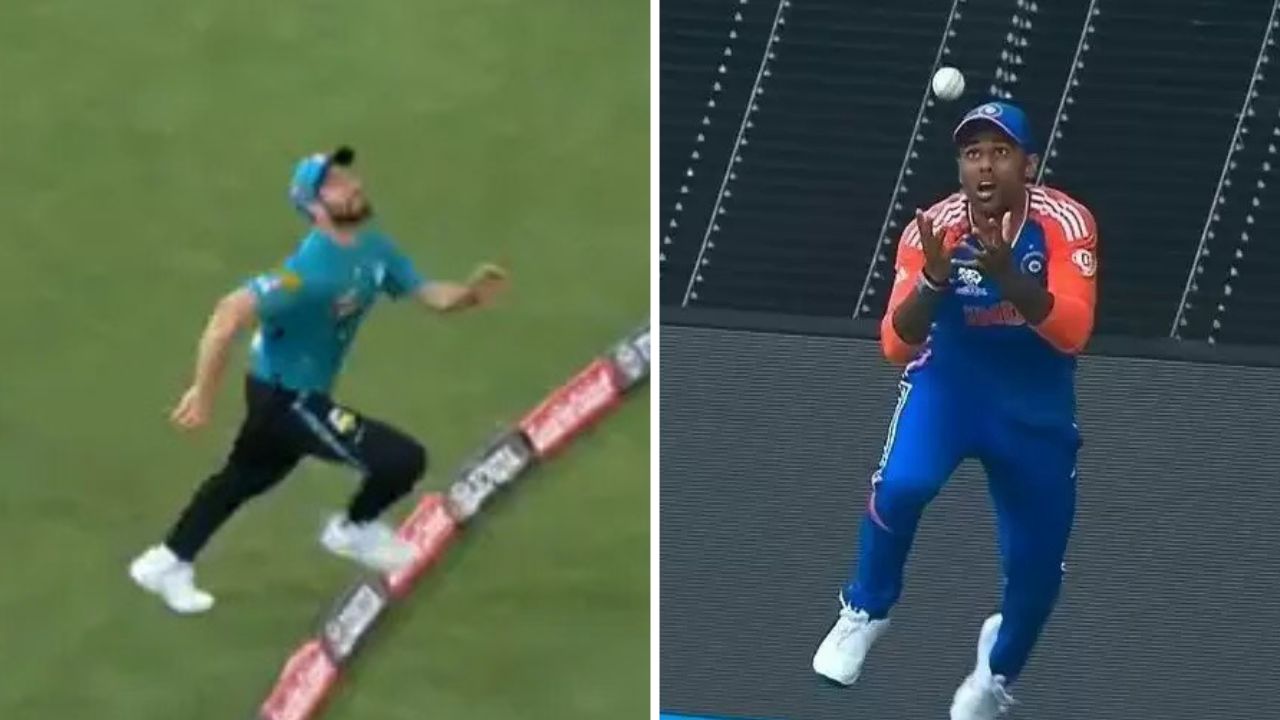
    The International Cricket Council (ICC) is planning to introduce a new rule that will ban the popular but controversial ‘bunny hop’ style of boundary catches.

    The move comes after eye-catching catches by players like Michael Neser, Tom Banton, and Matt Renshaw in different Big Bash League (BBL) seasons. One of the most talked-about moments was Neser’s catch during BBL 2023, where he caught the ball near the boundary, jumped in the air, threw the ball while still airborne beyond the boundary, landed outside the field, jumped again to tap the ball back in, and finally completed the catch inside the field. Banton and Renshaw made similar catches.

    While the efforts amazed fans, many felt such catches looked strange and unfair. As a result, the ICC has decided to tighten the rules. According to new conditions, which will be added later this month, a fielder can only touch the ball once while they are outside the boundary. To complete a legal catch, the player must return to the field of play before catching the ball again.

    The rule will also be added to the official Laws of Cricket by the Marylebone Cricket Club (MCC) in October 2026. In a note sent to ICC member boards, the MCC said that while the old rule led to some stunning fielding moments, it also allowed for catches that many cricket fans thought did not seem fair.

  • Why did Indians get furious at Israeli twitter account?

    Why did Indians get furious at Israeli twitter account?

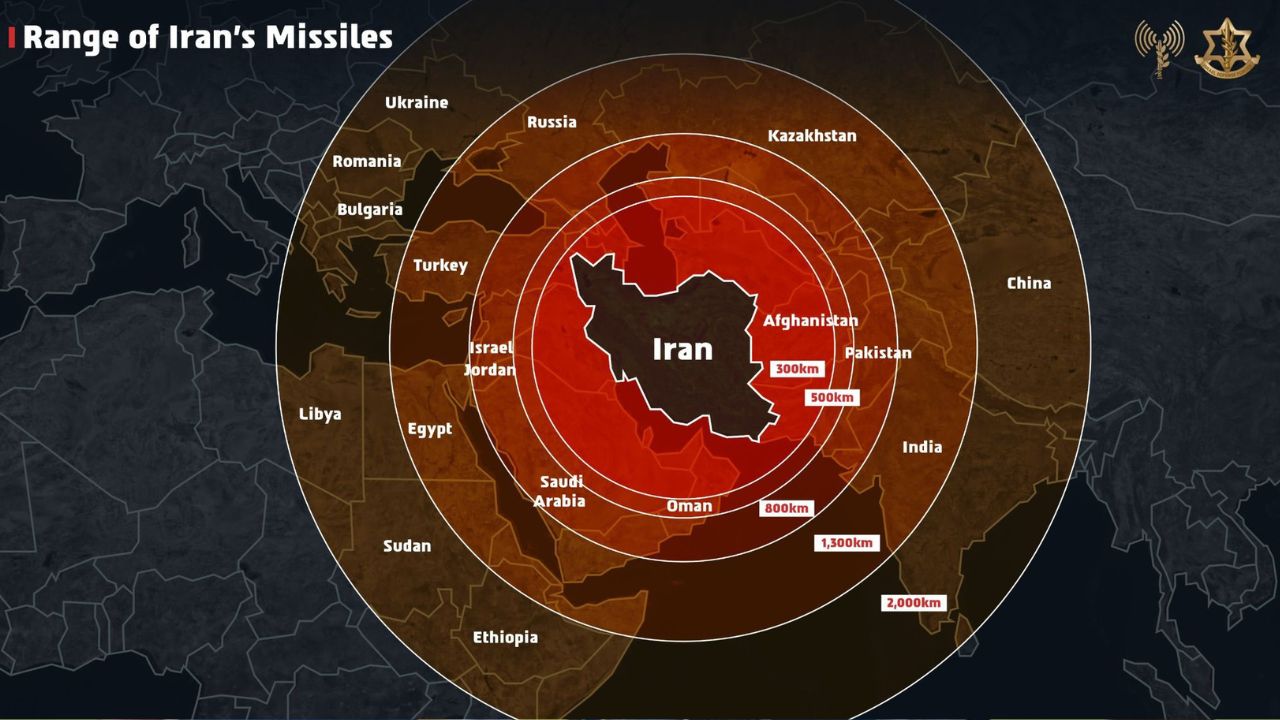
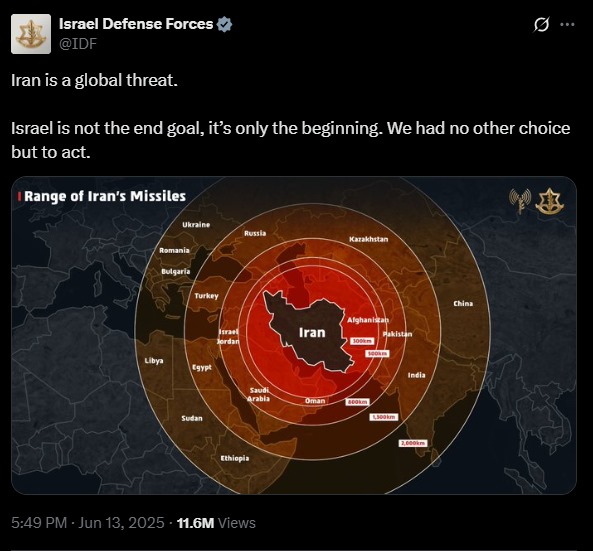
    As the world watched in concern while Israel attacked Iran, social media became littered with posts from accounts from both sides. Controversy broke out after the official account of the Israel Defense Forces (IDF) shared a map that showed the entire Kashmir region, including Indian Illegally Occupied Jammu and Kashmir (IIOJK) as part of Pakistan.

    The map was part of a graphic meant to show the range of Iranian missiles but it quickly went viral for an entirely different reason. 

    Indian users were shocked and angered by the map, calling it a major blunder by a country they often consider a close ally.

    One user commented, “This is outrageous. If you consider us your friends, you need to update our map to its correct version.”

    Another wrote, “Indian map is incorrect… have some shame.”

    Several others demanded action, saying, “Why can’t you delete this incorrect map and repost with the correct one?” and “Wrong map, correct India’s boundaries.”

    A frustrated user asked, “How can you add Pakistan to the Indian map???”

    The backlash was so intense that the IDF had to respond with a clarification. In a follow-up statement, the IDF said, “This post is an illustration of the region. This map fails to depict borders precisely. We apologize for any offence caused by this image.”

    Still, many Indian users were not satisfied and continued to urge the IDF to delete the post and upload a new version with what they called the “correct map of India.”

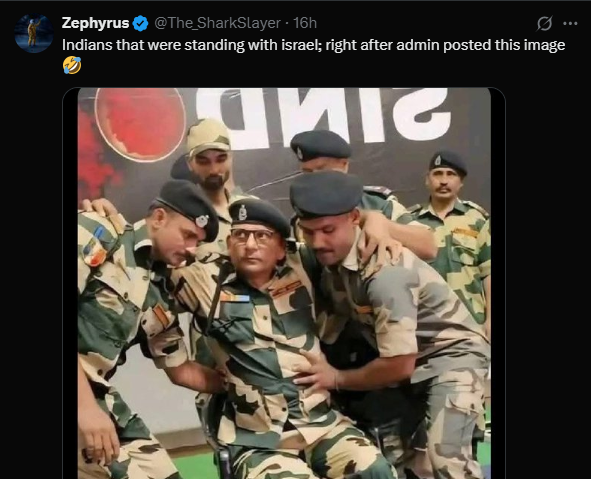
    Pakistani accounts made plenty of fun of what they called an Indian meltdown. 

    Israel launched a large-scale military offensive called “Operation Rising Lion” and carried out illegal airstrikes on nearly 100 targets across Iran, including key nuclear facilities and military bases. 

    According to reports, several top Iranian generals and nuclear scientists were killed. In response, Iran fired over 100 drones and missiles toward Israel, calling the strikes a “declaration of war.” Most of these were intercepted. Iran then launched another round of missile attacks on June 14, injuring at least seven people. Footage going viral on the internet showed Tel Aviv taking the brunt of Iran’s retaliation, as many missiles evaded the Iron Dome and destroyed infrastructure and cars.

  • PCB considering former all-rounder as new red-ball head coach

    PCB considering former all-rounder as new red-ball head coach

    The Pakistan Cricket Board (PCB) is reportedly close to appointing a new red-ball head coach, with a former all-rounder leading the race for the role.

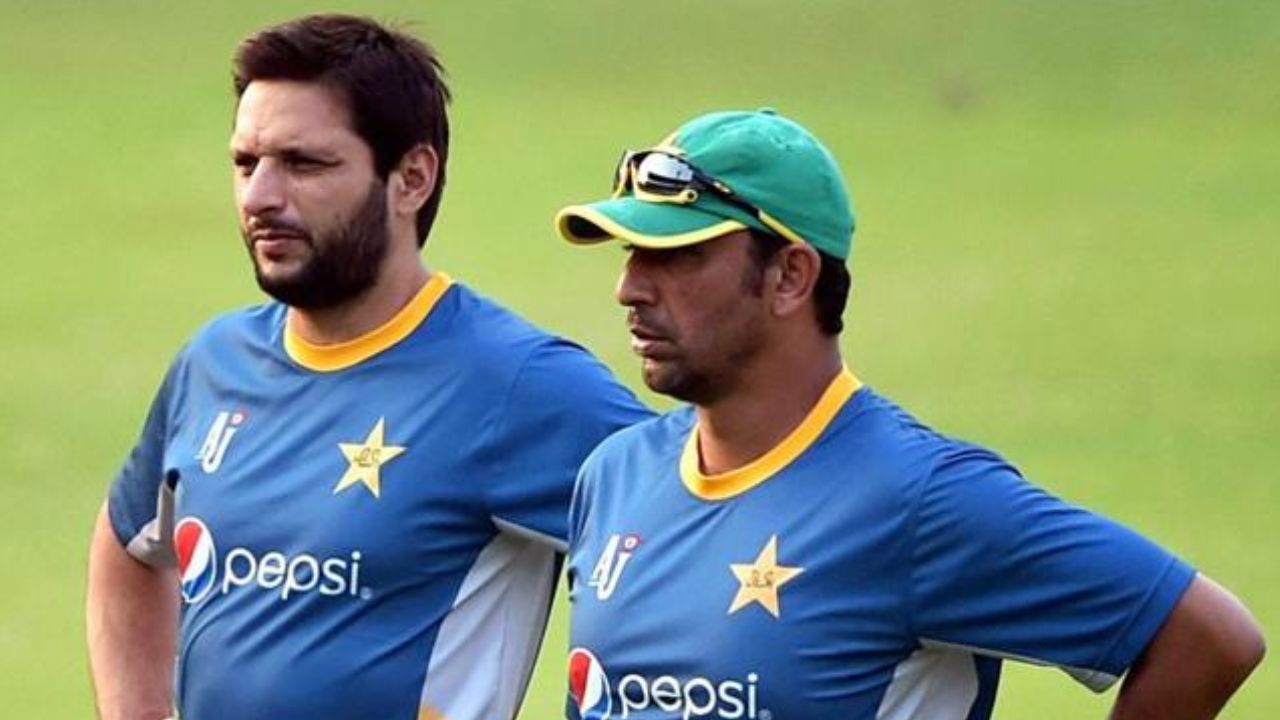
    According to reports, the PCB is considering Azhar Mahmood for the position. He is already under a two-year contract signed earlier this April. Although initially appointed as an assistant coach, his responsibilities were reduced after Mike Hesson was hired as the white-ball head coach.

    Since Jason Gillespie stepped down as Test coach, no permanent replacement has been named. However, Azhar Mahmood has emerged as the top candidate to fill that vacancy. His deep understanding of Pakistan cricket and strong relationships with senior players are seen as key advantages. He has previously played a supporting role during several transitional phases for the national team.

    While he was not part of the coaching setup during the recent series against Bangladesh, his availability and Test experience make him a strong contender. Reports suggest that his appointment would provide the PCB with a stable option during a time of uncertainty.

    Pakistan does not have any Test matches scheduled until October, giving the board time to ensure a smooth transition. If appointed, Azhar would become the first permanent red-ball head coach since Gillespie’s departure. Aaqib Javed has been serving as the interim coach in the meantime.

    Reports also suggest that potential changes in captaincy could follow, further highlighting the need for a steady presence in the dressing room.

  • Why Dr. Salunkhe CID Exit in CID 2 Shocked Fans: A Detailed Look at the ‘Traitor’ Twist

    Why Dr. Salunkhe CID Exit in CID 2 Shocked Fans: A Detailed Look at the ‘Traitor’ Twist

    The long-running Indian crime drama CID has been a favorite among viewers since it first aired in 1998. For two decades, audiences followed the CID team through hundreds of investigations, suspenseful mysteries, and unforgettable character moments. One of the most loved characters was Dr. Salunkhe, the forensic expert portrayed by veteran actor Narendra Gupta. Known for his intelligence and loyalty to the CID team, Dr. Salunkhe was a core member of the show’s cast and played a vital role in solving cases.

    So when CID 2, the sequel to the original series, revealed that Dr Salunkhe was the traitor in the team, fans across the world were left shocked and heartbroken. This article dives deep into what happened in CID 2, why this twist hurt fans, and how it affects the legacy of Dr Salunkhe CID.


    The Legacy of CID and Dr Salunkhe CID

    The original CID aired on Indian television from 1998 to 2018. The show became one of the longest-running crime series in Indian TV history. With gripping stories and strong characters, it built a loyal following across generations. Fans loved the crime-solving trio of ACP Pradyuman (Shivaji Satam), Senior Inspector Abhijeet (Aditya Srivastava), and Inspector Daya (Dayanand Shetty).

    But another standout figure was Dr. Salunkhe CID, the forensic expert who used science and sharp reasoning to help the team crack cases. His chemistry with the rest of the team, especially with Dr. Tarika, added warmth and depth to the show. Dr Salunkhe CID was often seen in the lab, analyzing evidence, running tests, and explaining scientific details in simple ways.

    His character brought intelligence and calm to the high-intensity investigations. Over time, he became a fan favorite and a trusted face on Indian TV.


    CID 2: A New Beginning with Old Favorites

    After CID ended in 2018, many fans hoped for its return. That wish came true in 2024, when CID 2 was launched. The show picked up with fresh cases, new challenges, and a few changes in the cast. However, the makers kept the heart of the show alive by bringing back beloved characters, including Dr Salunkhe CID.

    CID 2 started with dramatic twists. The main villain, Barboza, was introduced as a clever enemy who managed to break the CID team. In one of the earliest shocks, ACP Pradyuman was declared dead, and a new officer, ACP Ayushmaan (played by Parth Samthaan), took charge of the investigations.

    The story got even more intense when ACP Ayushmaan began to suspect that someone within the CID team had betrayed them by secretly helping Barboza. This idea of a “gaddar” (traitor) shook the very foundation of the show.


    The Big Reveal: Dr Salunkhe CID Is the Traitor

    In the most recent and dramatic episodes, fans were stunned when it was revealed that the traitor was none other than Dr. Salunkhe CID. This revelation came after ACP Pradyuman, who was believed to be dead, was found alive. In an emotional scene, the CID team reunited and asked the big question: Who was the traitor?

    Dr. Salunkhe then confessed. He admitted that he had helped Barboza. His reason? He felt frustrated and unrecognized after years of loyal service. According to his confession, he was tired of seeing others receive praise and awards while his forensic work went unnoticed.

    This explanation was met with strong reactions from both the characters in the show and viewers across social media. For many, the justification for his betrayal felt weak and unconvincing. Dr. Salunkhe had always been shown as a man of integrity and science. Fans could not believe he would turn his back on the team he had supported for so long.


    Fan Reactions to Dr. Salunkhe’s CID Exit

    The twist sparked a wave of emotional responses online. Many long-time fans said the plot twist was unfair and out of character. They argued that Dr Salunkhe CID would never betray his colleagues, especially not for something as shallow as recognition.

    Others were upset that the show had used a beloved character to create drama instead of giving him a respectful exit. For a character who had been loyal and intelligent for two decades, this ending felt like a betrayal of trust, not just within the show but also with the audience.

    Some fans even called for the show’s writers to reverse the twist or reveal that Dr Salunkhe CID was being framed.


    Why This Twist Matters

    The decision to make Dr. Salunkhe the traitor has long-term effects on how fans view the entire series. Characters like him were the heart of the original show. Changing his role into a villain can damage the memory and emotional connection viewers had built over the years.

    In storytelling, plot twists are important, but they must feel earned and believable. This twist, many fans think, was not supported by the character’s long history. Instead, it seemed forced, added only to shock the audience.

    From a broader view, this also brings up questions about how TV writers handle legacy characters in sequels. Should writers stay true to the original character arc, or do they have full freedom to change it for surprise value?


    What’s Next After Dr Salunkhe CID?

    With Dr Salunkhe CID now behind bars in the show, Dr. Tarika (played by Shraddha Musale) is expected to return and take over forensic duties. This brings hope to fans who are still trying to adjust to the twist.

    While CID 2 continues to deliver high-stakes drama, it remains to be seen how the show will recover from this creative risk. Will fans accept this version of Dr Salunkhe CID? Or will the backlash force the creators to rethink their approach?


    Conclusion: The End of an Era

    Dr Salunkhe CID was not just a character in a crime show — he was a symbol of intelligence, stability, and silent strength. His sudden transformation into a traitor has deeply affected fans, especially those who grew up watching the original CID series.

    While the show must evolve to stay exciting, character integrity should not be sacrificed for short-term drama. For many, this is not just a plot twist. It feels like the end of an era.

    If the makers of CID 2 truly value their loyal audience, they may need to bring more clarity or redemption to this storyline. Until then, fans will continue to remember the real Dr Salunkhe CID — the forensic genius who stood by truth and justice for over 20 years.

    In other entertainment news, Deemak spooks audiences with a record-breaking opening, setting new standards for horror dramas. Read full story here.