Blog

  • PSL moves from draft to auction model: here’s how it works

    PSL moves from draft to auction model: here’s how it works

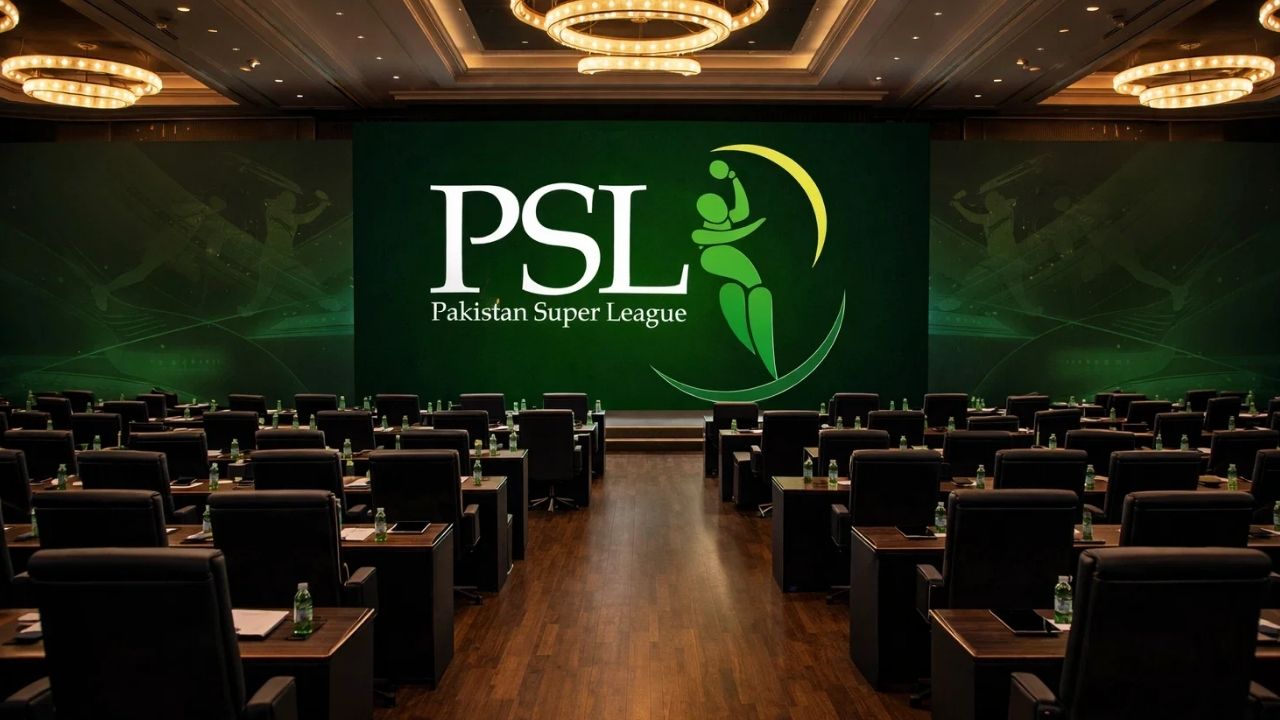
    The Pakistan Cricket Board (PCB) has announced a major overhaul of the Pakistan Super League’s (PSL) player acquisition system, replacing the decade-old draft mechanism with an auction model for the tournament’s 11th edition.

    The change represents the most significant structural reform since the league’s inception in 2016. 

    Accoring to PCB, the auction system aims to create more balanced teams while offering players bigger earning opportunities through competitive bidding.

    Under the new framework, franchises can retain a maximum of four players ahead of the auction, with restrictions limiting them to one player per category. This is a sharp reduction from the previous system, which allowed teams to retain eight players plus additional three options through mentors, brand ambassadors, and right-to-match provisions.

    The board has eliminated all three of these options for HBL PSL 11, streamlining the retention process and opening up more players to the auction pool.

    Two new franchises joining the league will receive special advantages to select and retain four players from the available pool before the auction begins. 

    Additionally, each team can sign one international player directly, provided that player did not participate in the 2025 edition.

    The PCB has increased the salary purse to $1.6 million per franchise, reflecting the league’s growth and commitment to attracting top talent from Pakistan and abroad.

    HBL PSL 11 will begin on March 26 and run through May 3, 2026. The tournament will expand its city reach by adding Faisalabad’s Iqbal Stadium as a venue for the first time, marking the city’s return to hosting top-tier cricket.

    The board will announce further details about the auction process, schedule, and operational guidelines in the coming weeks.

  • Saba Qamar turns Muamma into a slow-burn obsession

    Saba Qamar turns Muamma into a slow-burn obsession

    Eight episodes in, Muamma is a suspenseful thriller that revolves around the versatility that is Saba Qamar’s acting. It’s a series that will keep you guessing, and you can almost feel the drag coming on and then it speeds back up.


    Muamma is the story of Jahan Ara (Saba Qamar) who rents out a portion of her house to married couples. She gets close to the husbands, coyishly flirting with them, getting close to the wives and the best part: she has a secret window into their lounge where she can watch them and they can’t see her. She becomes part of their lives and they don’t even know it. 


    The drama opens with Jahan Ara’s first hit, Zeeshan (Nabeel Zuberi) who is her tenant and in a stupor, declares his love for Jahan Ara in front of his pregnant wife and neighbours. The marriage ends in divorce and a new couple moves in and Jahan Ara’s next target.


    The drama highlights how every betrayal starts with a lie. Jahan Ara lies to her tenants to get close to the men, they lie to their wives to stay in Jahan Ara’s presence and the lies wrap up happy marriages and then ultimately tear them apart. And it’s reflective of Jahan Ara’s (also known as Gigi in the show) marriage. She loves another (we know that the love of her life will be played by Usman Mukhtar) and marries a brutal man instead. The void in her life is filled by creating trouble for others, almost like she wants everyone to suffer just as she did. She lands in the lives of the wives as their saviour, listening to them, helping them, taking care of them, all the while she’s tearing them apart and watching them as it all breaks down.


    It will be interesting to see how the drama develops and the twists it is bound to take as we meet Jahan Ara’s husband who is in jail and find out how he got there. It’s all going to be unveiled and it’s a treat to watch as it gets there.

  • US launches second phase of Gaza Peace Plan, unveils ‘Board of Peace’

    US launches second phase of Gaza Peace Plan, unveils ‘Board of Peace’

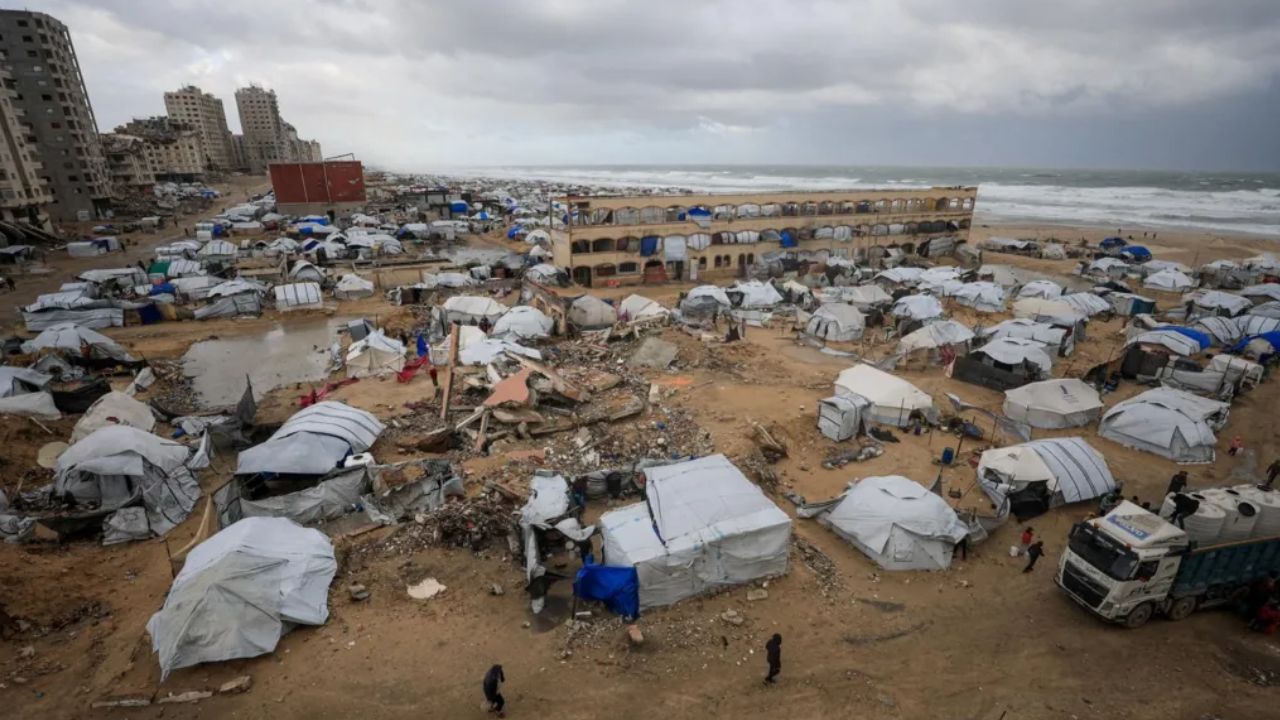
    The United States (US) has announced the launch of the second phase of President Donald Trump’s 20-point peace plan for Gaza, shifting focus from ceasefire implementation to demilitarisation, technocratic governance and reconstruction.

    In a social media post, US Special Envoy Steve Witkoff said the high-profile ‘Board of Peace’ unveiled on Friday was a move “from ceasefire to demilitarisation, technocratic governance and reconstruction”.

    Witkoff said the initiative marked a decisive move toward stabilising the war-ravaged territory, declaring, “Today, on behalf of President Trump, we are announcing the launch of Phase Two… moving from ceasefire to demilitarisation, technocratic governance and reconstruction”.

    He said the plan will establish “a transitional technocratic Palestinian administration in Gaza, the National Committee for the Administration of Gaza” and begin “the full demilitarisation and reconstruction of Gaza, primarily the disarmament of all unauthorised personnel”.

    Warning Hamas of consequences for non-compliance, Witkoff added, “The United States expects Hamas to comply fully with its obligations, including the immediate return of the final deceased hostage… failure to do so will bring serious consequences.”

    Witkoff said the initial stage had produced significant results, noting that “Phase One delivered historic humanitarian aid, maintained the ceasefire, returned all living hostages and the remains of twenty-seven of the twenty-eight deceased hostages”.

    He also expressed gratitude to regional mediators, saying Egypt, Turkiye and Qatar played “indispensable” roles in advancing the agreement.

    A day earlier, the White House said it has formed an executive panel tasked with implementing the plan, including Secretary of State Marco Rubio, Witkoff, Jared Kushner, World Bank President Ajay Banga and former British prime minister Tony Blair among others.

    The panel will supervise portfolios ranging from governance and regional diplomacy to reconstruction financing and investment mobilisation.

    According to the White House statement, the broader ‘Board of Peace’ will provide strategic oversight, coordinate international resources and ensure accountability during Gaza’s transition from conflict to development.

    The US also plans to deploy an international stabilisation force and appoint a high representative to coordinate governance, security and reconstruction efforts in Gaza under the transitional framework.

  • Free rickshaws, mandatory helmets for motorcycle passengers: Punjab’s safety plan for Basant unveiled

    Free rickshaws, mandatory helmets for motorcycle passengers: Punjab’s safety plan for Basant unveiled

    A detailed 27-point safety plan for Basant has been presented by Punjab Police to the Lahore High Court. 

    Although kite flying remains banned across Punjab, the provincial government has allowed limited Basant festivities to be celebrated in Lahore on February 6, 7 and 8, marking the return of the traditional festival after decades. 


    The plan states that 5,000 free rickshaws will be deployed across the city, while any motorcycles without safety antennas will not be allowed to enter red zones. All motorcycle riders including passengers, must wear helmets. 

    Chemical and glass string will remain strictly banned with only cotton thread string permitted to fly kites. Quick emergency response teams will be deployed throughout the city to handle emergencies. 

    All Commissioners, Deputy Commissioners, RPOs and DPOs have been tasked with ensuring that preparation and usage of kites and strings is only carried out in permitted areas.

  • 232-year-old cricket record broken as PTV defends lowest target in first-class history

    232-year-old cricket record broken as PTV defends lowest target in first-class history

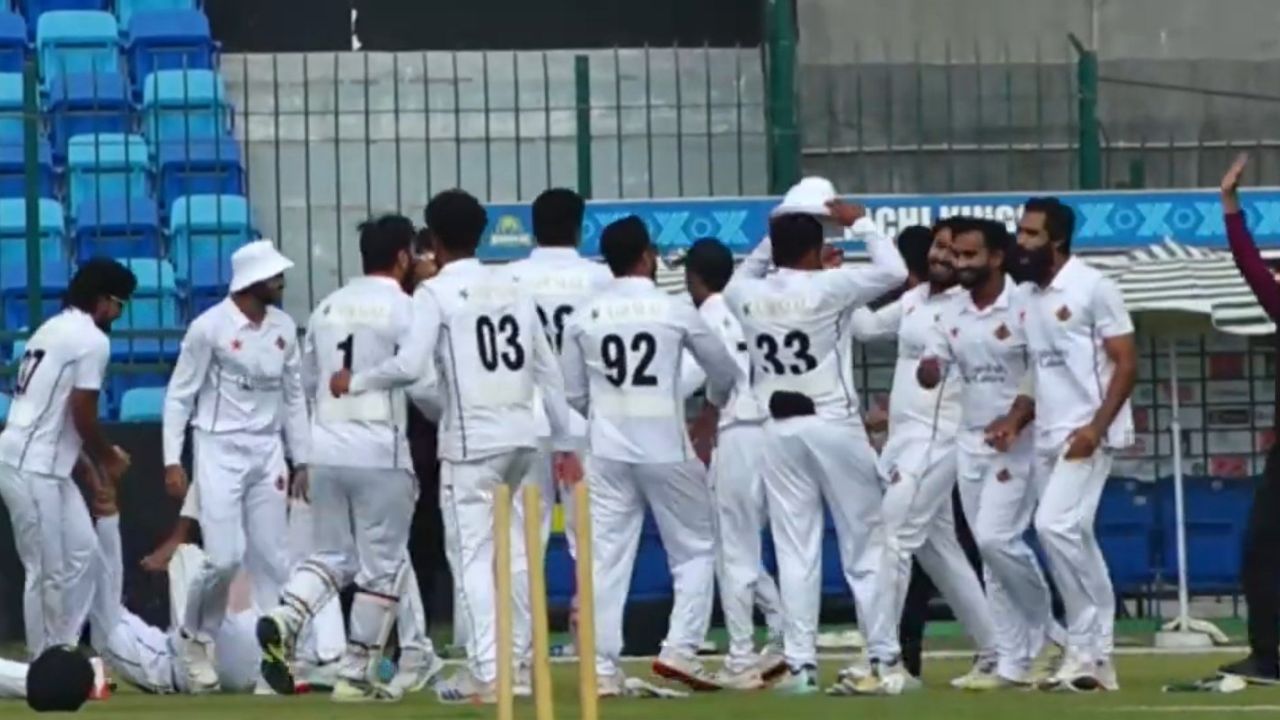
    A rare and unwanted world record emerged in the President’s Trophy First Class Cricket tournament where Sui Northern Gas Pipelines Limited cricket team (SNGPL) failed to chase a meager target of 40 runs.

    As per the details, in the match between Pakistan Television (PTV) and SNGPL, the state broadcaster created history by successfully defending the lowest score in first-class cricket history.

    SNGPL needed just 40 runs to win the match but the entire team collapsed for only 37 runs. This made it the first team in first-class cricket history when such a low target was defended.

    PTV also broke a 232-year-old record from 1794 when the Marylebone Cricket Club (MCC) failed to chase a target of 41 runs against Old Field, ESPN reported.

  • Pakistan-US defence ties strengthen further amid joint training, arms sales & Trump’s praise

    Pakistan-US defence ties strengthen further amid joint training, arms sales & Trump’s praise

    Military-to-military relations between Pakistan and the United States (US) appear to be entering a new phase of cooperation, marked by joint training exercises, major defence sales and unusually warm rhetoric from President Donald Trump towards Islamabad’s military leadership.

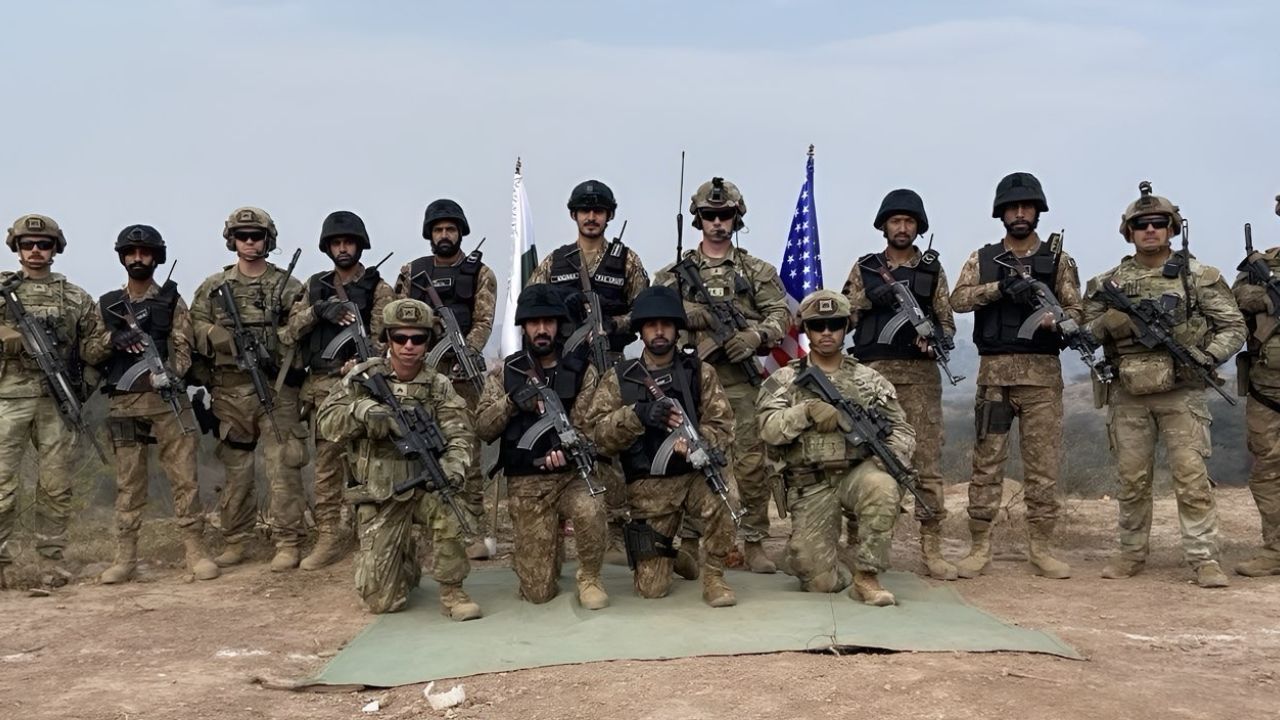
    According to a statement issued by the US Central Command (Centcom), American and Pakistani troops this week concluded joint training at Pakistan’s National Counter-Terrorism Center in Pabbi. The exercise, dubbed Inspired Gambit, focused on combined infantry skills, tactics and counterterrorism operations. Centcom said such engagements “strengthen our long-standing defense ties.”

    The training comes against the backdrop of broader re-engagement between the two defence establishments.

    In December, Washington approved a $686 million package to upgrade Pakistan’s fleet of F-16 fighter aircraft. The deal followed heightened regional tensions after Pakistan and India fought a brief but intense five-day conflict in May 2025. Pakistan is believed to operate between 70 and 80 F-16s, ranging from upgraded Block-15 aircraft to newer Block-52+ models. US officials have long described the programme as a cornerstone of bilateral military cooperation.

    Political signaling from Washington has also drawn attention. President Trump has repeatedly praised Pakistan’s army chief, Field Marshal Asim Munir, referring to him publicly as his “favourite field marshal”.

    In a year-end briefing on December 31, Trump claimed Pakistani leaders credited him with preventing a wider catastrophe during the May conflict, saying he “saved 10 million lives, maybe more”.

    Trump’s remarks at the Sharm el-Sheikh Peace Summit in October 2025 again highlighted Field Marshal Munir, alongside Prime Minister (PM) Shehbaz Sharif. Since returning to the White House in January for a second term, Trump has publicly praised Pakistan’s army chief at least ten times. In June 2025, he also hosted Munir at the White House for a lunch meeting – the first time a sitting US president formally received Pakistan’s military leader.

    Analysts suggest Washington’s renewed focus on the Middle East, particularly Gaza and Iran, combined with Pakistan’s air force performance during the May conflict, has encouraged closer defence ties. Islamabad has also signaled willingness to join a US-led stabilisation force for Gaza, a controversial proposal advanced by Trump.

    Recent military exercises, arms sales, and high-level engagement suggest defence ties between Washington and Islamabad are entering a new, more pragmatic phase, with both sides signaling readiness to deepen cooperation.

  • At least 24 dead in two separate road accidents in Punjab, Balochistan

    At least 24 dead in two separate road accidents in Punjab, Balochistan

    At least 24 people were killed and over 50 others injured in two separate road accidents as a truck plunged into a dry canal in Punjab’s Sargodha district and a passenger coach overturned near Ormara in Balochistan.

    According to reports, 14 people died and nine others sustained injuries in Sargodha where a truck carrying cargo and passengers fell off the Galapur Bangla Bridge, into the dry canal, due to fog.

    The crash occurred after thick fog reduced visibility in Kot Momin’s city area, causing the driver to lose control.

    The truck was carrying a total of 23 people, of which seven crash victims were crushed under the vehicle and died on the spot, rescue officials said.

    Another seven victims died during treatment at a nearby hospital, they added.

    The deceased included six children and five women, all of whom were traveling to attend a funeral.

    In a separate incident, at least 10 people died and 45 others sustained injuries when a passenger coach carrying 50 passengers overturned near Ormara in Balochistan.

    According to reports, the coach was traveling from Karachi to Gwadar when it lost control due to high speed and turned turtle.

    Medical teams airlifted the injured to Karachi via Pakistan Navy ATR aircraft for treatment.

  • ‘Genuinely mutually beneficial’: Putin on Pak-Russia relations

    ‘Genuinely mutually beneficial’: Putin on Pak-Russia relations

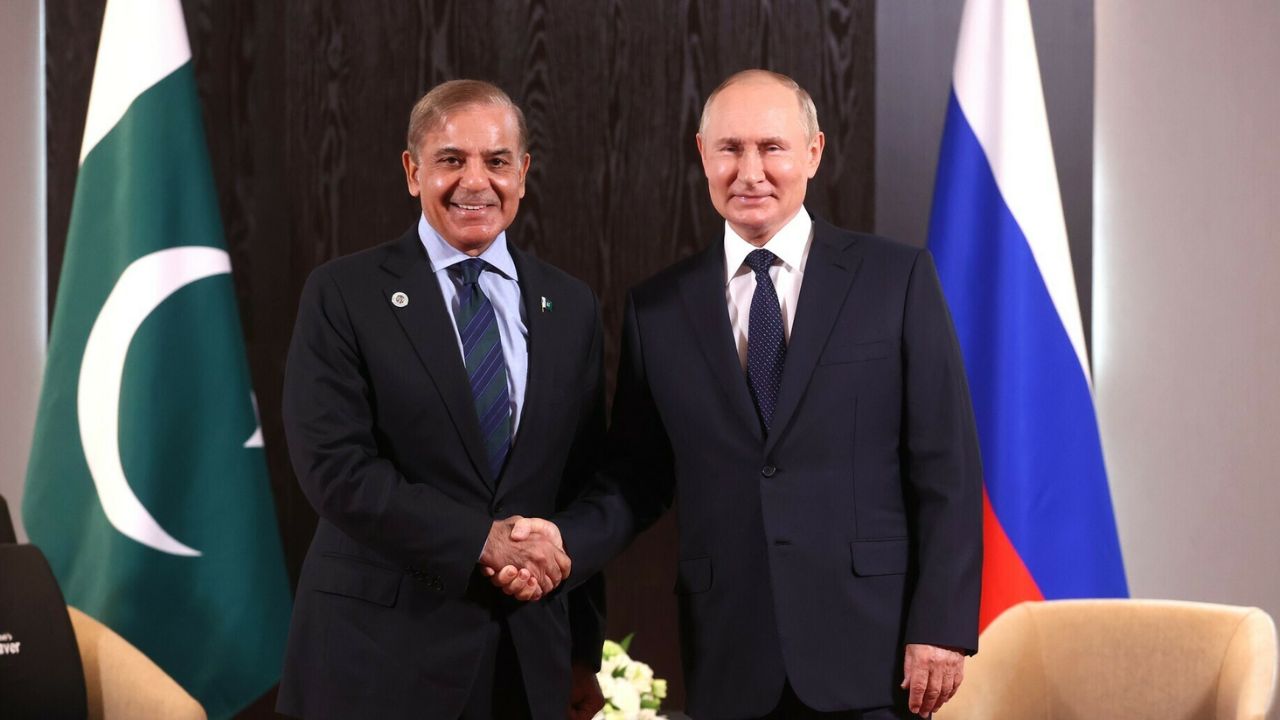
    Vladimir Putin, the President of Russia, has praised Pakistan-Russia relations as “genuinely mutually beneficial”. 

    Taking to its official account on X, the Russian embassy in Pakistan quoted Putin: “We maintain close cooperation with Pakistan, a full member of the Shanghai Cooperation Organisation, the largest regional organisation in terms of economic, technological, and human potential. Russia-Pakistan relations are genuinely mutually beneficial.”

    The Russian president reportedly said the words when the Pakistani ambassador to Russia, Faisal Niaz Tirmizi, presented his credentials to him on Thursday at the Kremlin Palace in Moscow.

    Pakistani and Russian diplomatic relations are on the rise since 2023 when Pakistan added Russian oil to its energy portfolio. 

    In December 2025, Finance Minister Muhammad Aurangzeb told the press that the two countries were holding talks about a new oil sector agreement.

  • Nikah conditions: Hina Afridi seeks Rs500,000 monthly maintenance, business-class travel from Taimur Akbar

    Nikah conditions: Hina Afridi seeks Rs500,000 monthly maintenance, business-class travel from Taimur Akbar

    Pakistani actor Hina Afridi and social media personality Taimur Akbar have tied the knot, with their wedding pictures and videos going viral on social media.

    The actress wore a white outfit for her nikah ceremony, which she paired with heavy gold jewellery that stood out prominently in the photographs.

    While wedding pictures continue to circulate online, a video from the couple’s Nikah ceremony has caught significant attention.

    The clip showed Afridi making rather interesting demands from her husband, asking Akbar for a monthly allowance of Rs500,000 and business-class travel every six months.

    She also said that her husband will bear all shopping expenses, including designer clothes, and that she will not spend any money from her own pocket; all of which Akbar agreed to.

    Reacting to the video, one user wrote, “This is too cute stay blessed,” while another commented, “Maray pasay b maray..ap k pasay b maray [my money is mine… your money is also mine] .”

    “Dulha calculating ,” joked one viewer, while another wrote: “Its fair BTW [sic].”

    It may be noted that the expectations set by Afridi are rooted in the Islamic practice of Nafaqah, which guarantees a wife’s right to financial maintenance.

    While Nafaqah is an inherent obligation for the husband – covering food, clothing, housing and general living expenses – specific terms regarding the amount or nature of this support can be formalised as binding conditions in the Nikah Nama.

  • Distribution companies’ inefficiencies add Rs397bn to circular debt

    Distribution companies’ inefficiencies add Rs397bn to circular debt

    Pakistan’s power sector continues to struggle under the weight of inefficiencies, with distribution companies (Discos) alone adding nearly Rs397 billion to the country’s circular debt in fiscal year 2024–25, it has emerged.

    As per the details, the figure was revealed in the State of the Industry Report 2025 issued by the National Electric Power Regulatory Authority (Nepra), which warned that losses have become entrenched in the tariff system and are routinely passed on to consumers through higher electricity prices.

    According to the report, Discos managed to recover only 93.5 percent of billed revenue, leaving a significant shortfall that directly fueled circular debt across the energy chain.

    Transmission and distribution losses stood at 16.4 percent, well above the allowed limit of 11.77 percent, driven by theft, outdated networks and poor maintenance. Instead of absorbing these costs, utilities transferred them to consumers, inflating electricity bills.

    Despite an installed generation capacity of 41,212 megawatts, electricity demand peaked at just over 33,000MW, leaving large plants idle but still paid for through consumer tariffs.

    Transmission bottlenecks prevented cheaper electricity from reaching consumers, forcing reliance on costlier options. Rigid “take-or-pay” contracts further burdened the system, requiring the government to pay power producers even when plants remained unused.

    Several thermal plants operated at low capacity but continued to receive full payments, pushing tariffs higher.

    The government terminated contracts for 2,829MW of unused capacity, a move Nepra estimated could save more than Rs900 billion over time. Yet inefficiencies persisted, with major public-sector plants such as the Guddu Power Plant and Neelum Jhelum Hydropower Plant operating below potential.

    Nepra noted that these shortcomings neutralised gains from tariff reductions offered by independent power producers.

    The country’s installed generation capacity stood at 41,121MW as of June 30, 2025, down from 45,888MW a year earlier due to the retirement of inefficient plants. The addition of 884MW from the Suki Kinari hydropower project partly offset the reduction, but underutilisation remained a core problem.

    Thermal and nuclear plants recorded an average utilisation factor of just 38.82 percent, keeping capacity payments stubbornly high despite surplus generation.

    The Capacity Purchase Price averaged Rs14.21 per unit, accounting for 82 percent of consumer-end tariffs, making it the single largest component of electricity costs. Additional cost pressures came from operational penalties, with Part Load Adjustment Charges amounting to Rs46.4 billion and Non-Project.

    Missed Volume costs standing at Rs13.3 billion. Though lower than last year, Nepra stressed these costs were largely avoidable with better planning and demand-side management.

    The regulator also reported a surge in consumer complaints, particularly about overbilling, faulty meters and prolonged outages. Frustrated households and businesses are increasingly turning to rooftop solar solutions to escape high costs and unreliable supply.

    Nepra concluded that without structural reforms, entrenched inefficiencies, rigid contracts and underutilised assets will continue to inflate tariffs and deepen Pakistan’s circular debt, leaving consumers to bear the brunt of mismanagement.