Tag: Afghanistan

  • More than half a million Afghans return from Pakistan

    More than half a million Afghans return from Pakistan

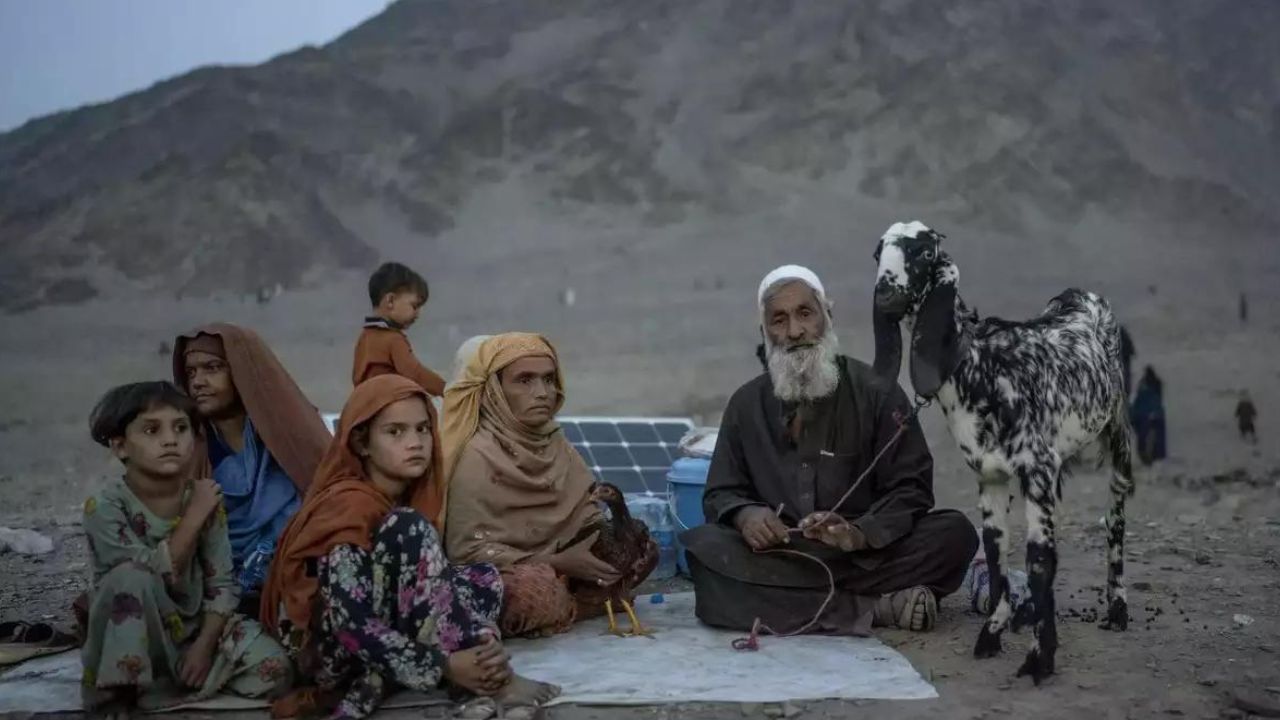
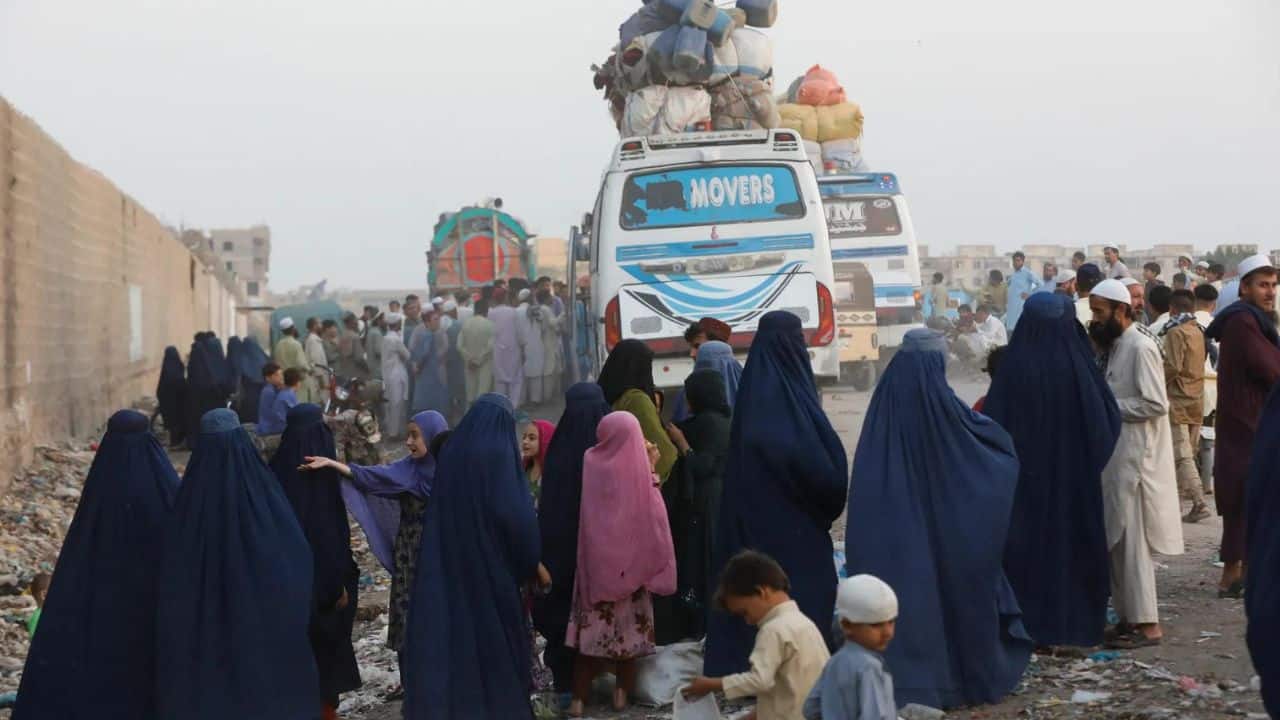
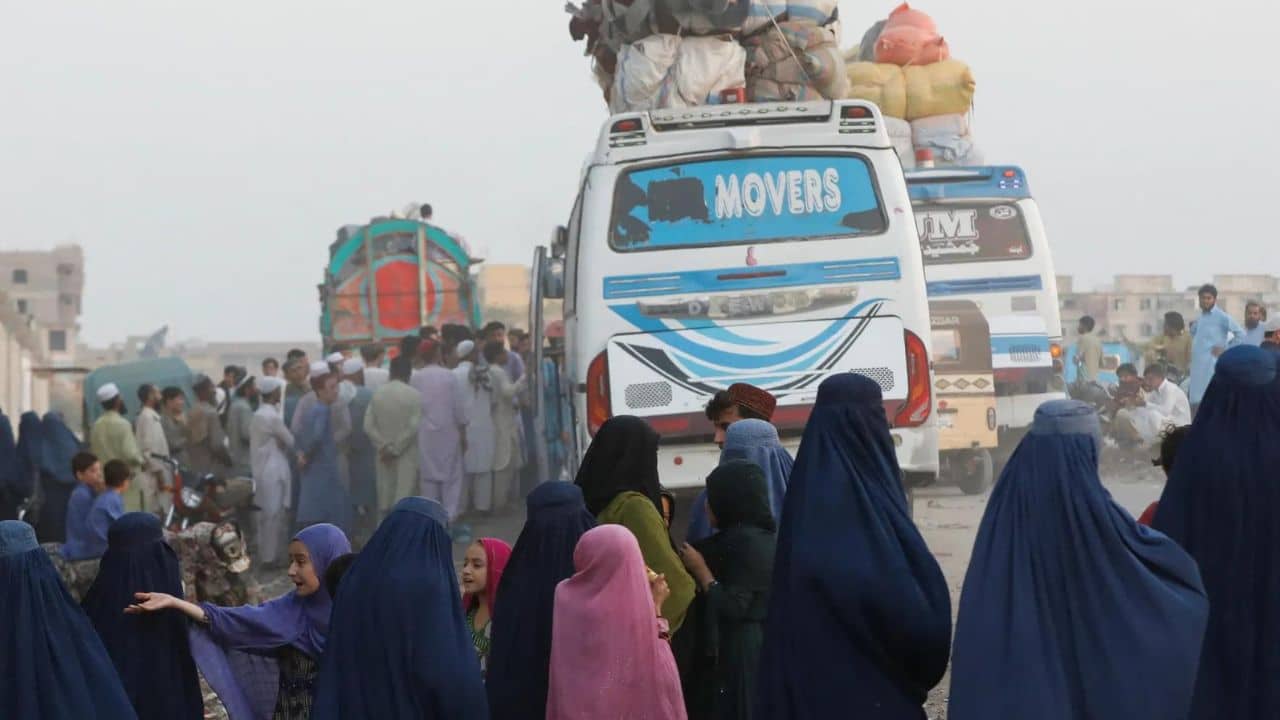
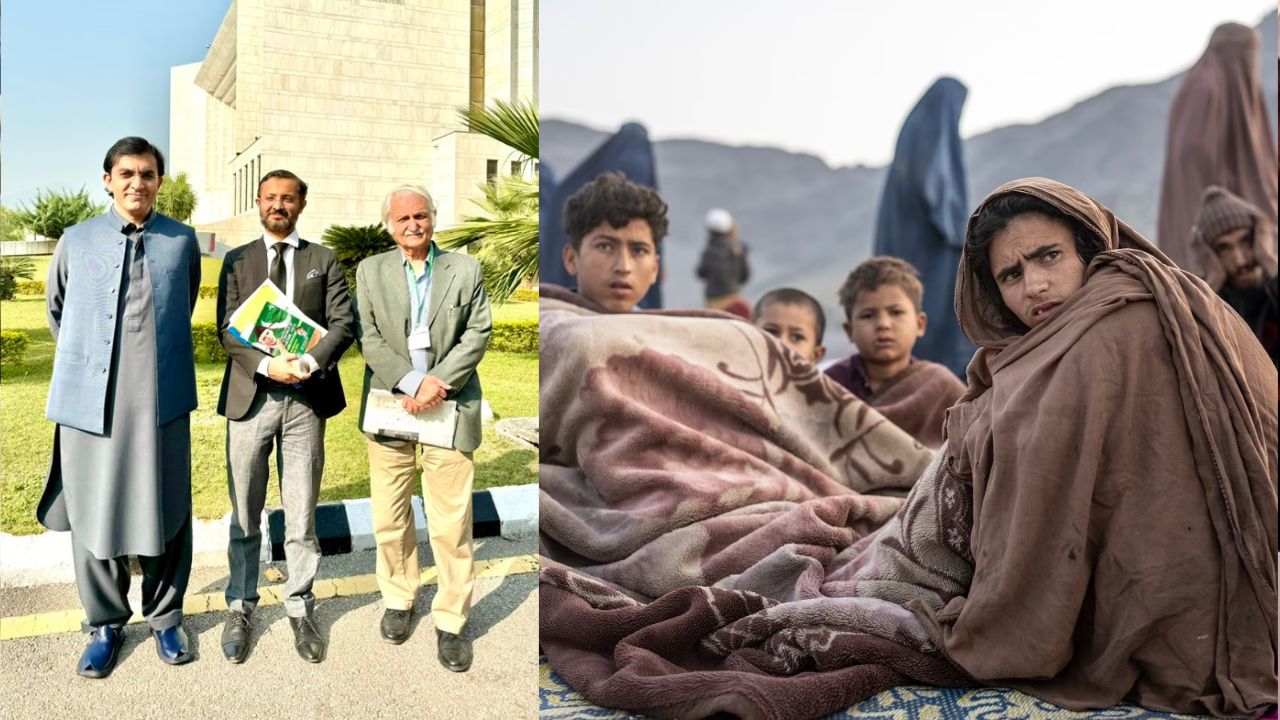
    More than 500,000 Afghans have fled Pakistan in the four months since Islamabad ordered undocumented migrants to leave or face arrest, the International Organization for Migration (IOM) said Monday.

    According to the latest figures reported by the UN migration agency, 500,200 Afghans left Pakistan between September 15, 2023 and January 13, 2024.

    Most rushed to the border in the days leading up to a November 1 exit deadline Islamabad set for the 1.7 million Afghans it said were living illegally in Pakistan, and as police opened dozens of holding centres.

    “Since the initial peak around November 1, the number of individuals crossing these official border points have consistently decreased but remains higher than pre-September 15th,” an IOM statement said.

    Pakistan defended the crackdown by pointing to security concerns in its regions bordering Afghanistan and pressure on its struggling economy.

    “Some Afghans forced to return may be at risk of persecution, arbitrary arrest and detention and/or torture or ill-treatment,” the UN’s Afghan mission said in a report on Monday.

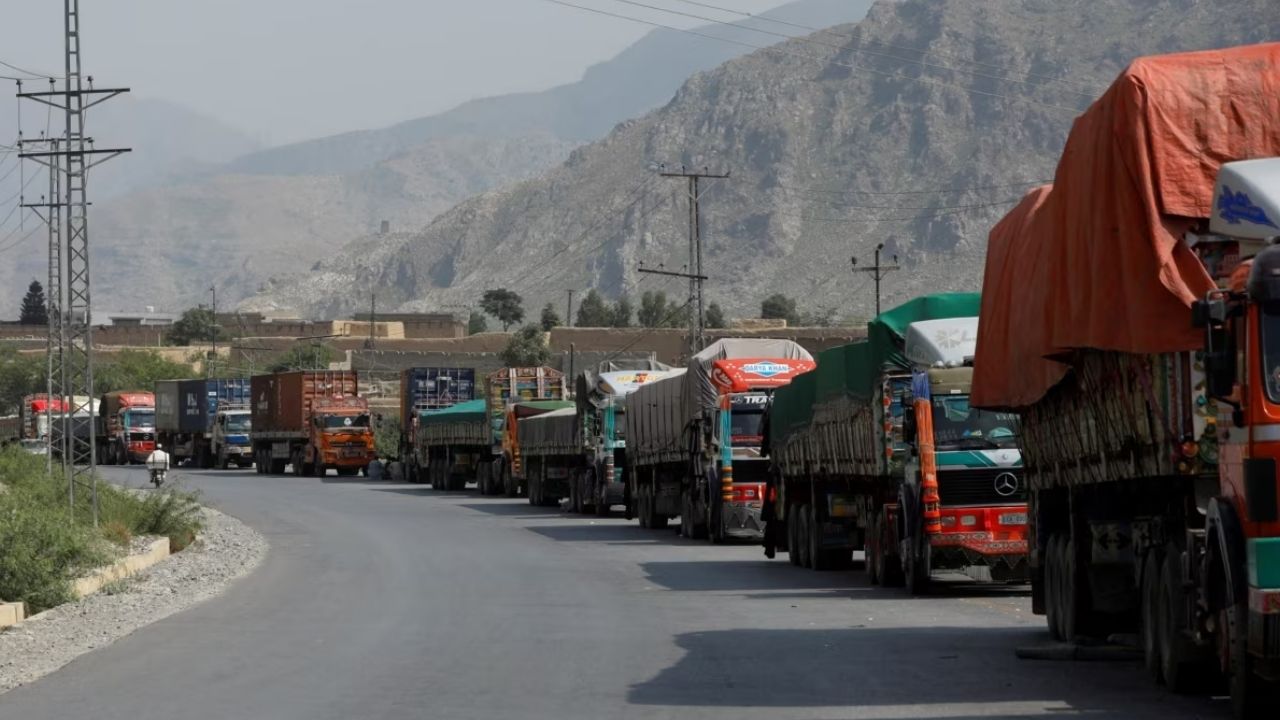
    Meanwhile, the busiest border crossing between the two countries remained closed for the tenth day running in a dispute over document rules for commercial drivers.

    The row centres on demands for drivers from both sides to have visas and passports — documents many Afghans do not have — as Pakistan cracks down on cross-border movements.

    More than 400 trucks were stranded on the Pakistan side of the Torkham crossing on Monday, according to a border official who asked not to be named.

    Relations between Pakistan and Afghanistan have grown increasingly fraught in recent months, with Islamabad accusing the Taliban government of failing to root out militants staging attacks in Pakistan from their soil.

    Kabul has always rejected the allegations.

    Millions of Afghans fleeing conflict have poured into Pakistan over the past four decades, including some 600,000 since the Taliban ousted the US-backed government and imposed its harsh interpretation of Islamic law.

    Some of the Afghans crossing into Afghanistan as a result of Islamabad’s eviction scheme were entering the country for the first time, having lived their whole lives in Pakistan.

    Upon arrival, migrants have received modest assistance from the government and NGOs in a country contending with one of the worst humanitarian crises in the world.

  • Pakistan-Afghan Border Crossing Reopens After Negotiations

    Pakistan-Afghan Border Crossing Reopens After Negotiations

    Pakistan and Afghanistan reopened a key trade crossing on Tuesday, officials on both sides said, after a row over travel papers as Islamabad cracks down on cross-border movements.

    The Torkham border closure since 12 January came after Islamabad imposed tighter controls requiring drivers from both sides to have visas and passports — documents many Afghans do not have.

    Ties between the two countries have increasingly frayed in recent months, with Islamabad accusing the Taliban government of failing to root out militants staging attacks in Pakistan from their soil.

    Kabul has always rejected the allegations.

    A Pakistan border official, who asked not to be named, confirmed the reopening to AFP after negotiations between Islamabad and Kabul, allowing hundreds of waiting trucks to cross.

    “It was agreed during the discussions that until 31 March, Pakistani and Afghan drivers can cross the border without a visa and passport,” he said.

    “However, starting on 1 April, both a visa and passport will be mandatory.”

    Afghan Torkham official Abdul Jabbar Hikmat confirmed lorries were allowed to cross again on Tuesday “without the need for passports and visas”.

    Pakistan’s casualties from armed groups hit a six-year high in 2023 with more than 1,500 civilians, security forces and militants killed, according to Islamabad’s Center for Research and Security Studies.

    The biggest militant threat to Pakistan is its domestic chapter of the Taliban movement, known as Tehreek-e-Taliban Pakistan (TTP).

    Pakistan officials said tighter restrictions on trade and on-off border closures are a pressure tactic to get the Taliban government to work with Pakistan on security.

    “Pakistan desires Afghanistan to adopt a tough stance against the TTP,” a senior provincial government official in Peshawar city who asked not to be named told AFP.

    “If they do not, the trade route will be intermittently closed for various reasons.”

    Islamabad has also recently forced out hundreds of thousands of undocumented Afghans living in Pakistan.

    More than 500,000 Afghans fled in the four months since Islamabad imposed a deadline ordering 1.7 million Afghans it says are living in the country illegally to leave or risk arrest and deportation.

    Millions of Afghans escaping conflict poured into Pakistan in past decades, including around 600,000 since the Taliban ousted the US-backed government and imposed its harsh interpretation of Islamic law.

    Some of the Afghans crossing into Afghanistan as a result of Islamabad’s eviction scheme were entering the country for the first time, having lived their whole lives in Pakistan.

    Upon arrival, migrants have received only modest assistance from the government and NGOs in a country contending with one of the worst humanitarian crises in the world.

  • Angelina Jolie slams global hypocrisy on human rights

    Hollywood A-lister and human rights activist Angelina Jolie, has talked about the hypocrisy in the world when it comes to human rights application.

    “The world is suffering from ambivalence on the issue of human rights,” she remarked in a recent interview.

    Jolie lamented the duplicity and discrimination of the world regarding human rights, saying that the scale of human rights is different for everyone, the fact is that the world works on business interests. Her comments come on the heels of her unequivocal demand for a ceasefire of Israeli attacks on Gaza.

    “Human rights can be for some people and some people can never be. Accountability for some people’s crime and not at all for some people, this is the ugly face of the world.”
    The actress said that she does not know of any country in the world which is free from these things.

    “Some people think that the colonial system has ended but the fact is that the control and exploitation of developing countries is still going on,” the actress observed.

    In her statement about Gaza, the Hollywood actress said that what happened in Israel cannot be a justification for bombing the civilian population of Gaza, pointing out that a few trucks cannot meet the aid needs of the besieged population, more than 20,000 of whom have been killed by Israel while the rest are at risk of starvation and disease.

    Angelina Jolie added that Gaza has a total population of two million, half of whom are children, who have been living under siege for two decades.

  • Number of repatriated Afghans exceeds four lakh

    Number of repatriated Afghans exceeds four lakh

    The deportation of illegally residing Afghans from across the country continues with another 2,473 Afghan citizens returning to Afghanistan yesterday alone.

    This included 232 families travelling in around 126 vehicles. Whereas on December 7, 2,473 Afghans were sent back, including 825 men, 523 women and 1,125 children.

    Samaa News reports an additional figure of 2,055 Afghan citizens who have returned among whom were 426 women and 1,045 children.

    Anadolu Agency reports that over 460,000 undocumented Afghan refugees left Pakistan last month while according to the latest UN figures, 1.3 million Afghans are registered refugees and 880,000 have legal permission to stay in Pakistan.

  • Taliban Interior Minister Sirajuddin Haqqani among thousands of Afghans holding Pakistani passport

    Taliban Interior Minister Sirajuddin Haqqani among thousands of Afghans holding Pakistani passport

    The News has uncovered, through Ministry of Interior sources, that the name of Afghanistan’s Interior Minister Sirajuddin Haqqani is among the list of thousands of Afghan citizens who had Pakistani passports until recently.

    Sirajuddin Haqqani was issued a Pakistani passport for five years, which he used to visit many countries; including Qatar where he negotiated with the American government, which led to the Doha Agreement and the withdrawal of the United States from Afghanistan.

    Two officials who issued passports to Haqqani have been arrested, one of whom had retired from service when the proceedings against him began.

    An official acquainted with the record-cleansing operation said 30,000 to 40,000 passports issued to Afghan nationals have been blocked.

    Passport offices in various cities issued passports to Afghan citizens, including Karachi and Thatta in Sindh. Without naming the cities of Balochistan and KP, the official said that passport offices established in different cities have also been found involved in the matter.

    Geo reports that Haqqani’s case was unveiled when a Peshawar-based journalist was on the same flight that Haqqani took to Doha. At the immigration counter, Haqqani had shown a Pakistani passport as his travel document. The aforementioned journalist was surprised to see him with that passport. But it was in August this year when the journalist drew the attention of the passport authorities in Pakistan about what he witnessed during a discussion. The information proved to be correct.

    An inquiry was then conducted into the matter which revealed that the passport was issued from Peshawar during the PTI regime.

    The passport-issuing officer said he was contacted by a man who identified himself as a senior military official from an intelligence agency and asked to issue a travel document for Haqqani.

    When the passport officer was asked to find out the identity of the army officer, he said that he was not sure who the man actually was as he had given instructions over the phone. After that, departmental action was initiated against the passport officer and also against the employee who had printed the passport.

    Reportedly both the persons are in jail. This is also confirmed by the information received from Saudi authorities.

    Initially, the Saudi authorities raised the issue with the government of Pakistan that Afghan citizens have obtained Pakistani passports to get jobs in Saudi Arabia. The Saudi government provided copies of passports, and as the government took notice of the case, it was found that the number of such cases is, in fact, more than 12,000. The passports of these individuals were revoked and those found to have used forged documents were deported to Afghanistan.

  • More than 250,000 illegal Afghan citizens have returned to their homeland

    More than 250,000 illegal Afghan citizens have returned to their homeland

    The process of repatriating undocumented Afghan citizens to Afghanistan is underway across Pakistan.

    So far, two lacs 55 thousand and 29 illegal residents have returned from Khyber Pakhtunkhwa to Afghanistan.

    According to the Interior Department, a total of 250, 814 immigrants have gone back to Afghanistan via Torkham, while 3,516 people have returned to their homeland through Angoot Ada border and 698 people have returned to their homeland from Kharlachi border.

    According to the data of the Immigration Department, 255,029 immigrants from Khyber Pakhtunkhwa have returned to Afghanistan.

  • Afghan migrants barred from supporting or funding elections

    The Ministry of Interior announced on Monday that Afghan migrants are barred from supporting candidates in the upcoming general elections scheduled for February 8 next year.

    The caretaker government, citing security concerns, has initiated a nationwide campaign to expel millions of illegal foreigners, predominantly Afghan citizens, residing in the country.

    The Ministry of Interior specified that both illegal and “legal” Afghans residing in Pakistan are prohibited from funding political and electoral activities, including providing funds to any candidate, in the upcoming polls.

    “Any Afghan citizen involved in such activities will be deported regardless of his or her legal status in Pakistan,” it stated.

    Pakistanis were also cautioned not to provide employment to illegal aliens or assist such individuals in obtaining employment.

    “Information about any such illegal alien or the person providing employment to him should be provided to the Ministry of Interior for legal action on the helpline available on the website of the Ministry.”

    Of the over four million Afghans in Pakistan, an estimated 1.7 million are undocumented, many having fled their war-torn country during decades of internal conflict, with another exodus occurring after the Taliban’s takeover in 2021.

    While the government asserts that its policy targets all illegal aliens, irrespective of nationality or ethnicity, human rights organizations, including the UN, have expressed concerns, emphasizing the importance of a “voluntary” return.

    Amidst the ongoing efforts, several Pakistani politicians and Human Rights activists have approached the Supreme Court, seeking judicial intervention against the caretaker government’s deportation of illegal foreign nationals, including Afghans.

  • No ‘illegal alien’ sent back on Friday thanks to verification process installed by Afghan Consulate General

    For the first time since the start of the repatriation plan of undocumented immigrants early this month, not a single ‘illegal alien’ was sent home via Khyber Pakhtunkhwa on Friday as Afghan authorities has announced to link the acceptance of deportations with the verification of their status by the Afghan consulate-general here.

    The decision was made after multiple cases of Afghan-looking Pakistanis being deported to Afghanistan surfaced. “Multiple cases of Pakistanis being sent to Afghanistan as illegal migrants have been reported,” an official source in the Afghan Consulate told Dawn.

    Unfortunately, whenever Afghan authorities took such Pakistanis to the border, Pakistani officials refused to receive them.

    The other reason stated by Afghan consulate is the harassment Afghan deportees are facing at the hands of Pakistani authorities even though many of them are repatriating voluntarily.

    “Many illegal aliens are leaving Pakistan voluntarily but they’re stopped and taken into custody on their way before their repartition. They’re not given time to carry their belongings,” an official told Dawn.

    Afghan consulate expressed concern over the separation of families that has been observed over the month. They said in “many” cases, men from undocumented families were deported, leaving behind their female dependants.

    Pakistani authorities have said that they have not been informed about the deportation condition, claiming that all allegations leveled by Afghan consulate are “baseless”, delaying the process of deportation.

    “Only deportation is linked with the verification letter. The voluntary repatriation is still continuing without any hurdle,” Pakistan responded.

    However, around 119 illegal migrants were deported from Punjab to Afghanistan via the Torkham border crossing on Thursday, according to officials.

  • Pakistan imposes hefty exit fees on Afghan refugees

    Pakistan is being widely criticised for instituting exit fees amounting to hundreds of dollars for Afghan refugees awaiting relocation to the United Kingdom and other Western nations.

    The imposition of exit fees, totalling around $830 (PKR 236,387), for Afghan refugees seeking resettlement in Western countries has drawn strong condemnation from Western diplomats and the United Nations.

    Mumtaz Zahra Baloch, the spokesperson for Pakistan’s foreign ministry, stated that there are no current plans to modify the existing policy.

    Five senior Western diplomats in Pakistan while talking to The Guardian termed the hefty fee imposed by Pakistan as ‘unprecedented’.

    “I know it is very tough economically for Pakistan but really, to try to make money off refugees is unattractive,” said one diplomat.


    He continued by adding, “The issue has also been raised by the two UN agencies in the lead on this mess, the [UN refugee agency] UNHCR and [International Organization of Migration] IOM,” the diplomat added. “It has also been raised in capitals and headquarters. I suspect everyone has also passed the message to their [Pakistani contacts].”


    Another diplomat said that when concerns were raised regarding the imposed fee, the Pakistani officials explained that the initial proposal was to charge $10,000 per person, but it had been subsequently reduced to $830.

    A different diplomat noted that the exit permit must be paid through a credit card, which poses an added difficulty for many Afghan refugees who lack access to such payment methods. This complicates the situation further, as the fee is mandated for payment by the refugees, a considerable portion of whom do not possess credit cards.

    “I think we need a cooperative approach of working together to help the refugees and we expect Pakistan would help,” he added.

    The United States government intends to relocate nearly 25,000 Afghans within the country, while the United Kingdom has announced plans to resettle 20,000 individuals.

    Separately, the United Nations Refugee Agency has expressed apprehension regarding Pakistan’s directive for undocumented foreigners to leave, citing its adverse impact on Afghan nationals. This includes registered refugees and individuals possessing valid documents, raising concerns about the potential humanitarian consequences of the orders.

  • Supreme Court will hear petition against deportation of Afghan refugees

    Supreme Court will hear petition against deportation of Afghan refugees

    In a significant development on Monday, the Supreme Court decided to entertain a petition challenging the government’s move to force out Afghan refugees from the country. The decision comes after the Supreme Court Registrar’s Office initially raised objections to the petition’s maintainability, putting a temporary halt on its progress.

    Despite the decision to entertain the petition, a specific date for the hearing is yet to be announced. According to sources, Justice Yahya Afridi of the Supreme Court heard the appeal against the objections in his chamber on Monday, as confirmed by a counsel for the petitioners.

    Mohsin Dawar took to X (former Twitter) and said, “We appeared before Justice Yahya Afridi for the Chamber Appeal against the Registrar’s objection on our petition against the mass deportation of Afghan Refugees. Our appeal has been accepted and the petition will be heard by the Supreme Court.”

    The petition, returned by the Supreme Court Registrar’s Office on November 8, faced objections related to its maintainability. One notable objection was the absence of a specific question of public importance regarding the enforcement of fundamental rights as guaranteed under the Constitution, warranting the invocation of Article 184(3).

    In response to the objections, the petitioners contended that their case raised critical issues pertaining to fundamental rights enshrined in the Constitution. The appeal, filed by Umer Ijaz Gillani on behalf of human rights activists and politicians, argued that the issues presented in the petition are essential for safeguarding the rights guaranteed in the Constitution.

    “The issues raised in the petition are critical for securing the fundamental rights enshrined in the Constitution,” stated the appeal. It emphasized the need to prevent constitutional promises from becoming mere rhetoric, asserting, “The promises contained in the Constitution must never be allowed to become mere verbiage, the harbingers of false hope.”

    The petitioners include prominent figures such as Jamaat-i-Islami Pakistan Senator Mushtaq Ahmed, Human rights activist Amina Masood Janjua, National Democratic Movement Chairman Mohsin Dawar, lawyer Jibran Nasir, Rohail Kasi, Syed Muaz Shah, Pastor Ghazala Parveen, lawyer Iman Zainab Mazari, Ahmad Shabbar, Advocate Imran Shafiq, Luke Victor, and Sijal Shafiq.

    The petitioners stated in their press release on Sunday, “After 18 days of eager wait and continuous legal struggle, the Supreme Court has finally fixed our Case against the Caretaker Government’s Mass Deportation drive for a preliminary hearing. The hearing will be conducted by a 1-member bench comprising Mr. Justice Yahya Afridi inside his Chamber. It is scheduled for 1:00 pm on Monday, 20th November, 2023.

    Needless to say that under Article 184(3), the principal responsibility for taking charge of the situation and preventing systemic violation of fundamental rights vests in the Court itself. The petitioners’ role is that of informants who apprise the Court about what is happening and prick its judicial conscience.

    What has been happening to scores of people since October 3, when this draconian Deportation Drive was launched by a government lacking all mandate, is clear to all and sundry. However, in order to assist the Court in discharge of its sacred duty, the counsel for the Petitioners will appear before the bench.”

    The government of Pakistan decided to deport all the illegal aliens from the country early in October.

    A vast majority of them are Afghans who were given a deadline of November 1 to leave the country voluntarily or else there would be a crackdown.

    The government has identified phases in which these Afghan immigrants will be repatriated under the Illegal Foreigners Repatriation Plan.

    There is a large number of 1.7 million Afgan refugees which the government aims to repatriate in the first phase of the plan. More than 200,000 of them have been repatriated until now.

    Aurat March protests

    Aurat March Lahore reiterated its demand that the Government of Pakistan immediately halt deportations of Afghan refugees, during a protest on Saturday.

    The protestors further stated that the hastily imposed 1 November expulsion deadline is an authoritarian decision that exceeds the caretaker government’s limited constitutional mandate. It effectively overturned decades of refugee policy overnight without accountability or transparency.

    Furthermore, the ill-thought-out decision has resulted in the denial of Afghan refugees’ rights to liberty,due process, and, in many cases, citizenship.

    On 29 October 2023, Aurat March chapters from across the country marked their protest and addressed an open letter urging the caretaker Prime Minister, Anwar ul Haq Kakar, to reverse his decision.

    However, this caretaker government has failed to yield to these demands and has since doubled down on its decision by announcing that the second phase of deportations will be of “documented” refugees.

    Aurat March stated, “We refuse this insidious distinction between “documented” and “undocumented” refugees; all refugees have the non-derogable right to non-refoulement and deserve support, not persecution.”