Tag: China

  • Japanese nuclear agency employee loses phone containing sensitive data in China

    Japanese nuclear agency employee loses phone containing sensitive data in China

    A Japanese nuclear safety official has lost a work-issued smartphone containing sensitive information during a personal trip to China, Japanese media has reported.


    The phone reportedly held confidential contact details of staff involved in nuclear security at the Nuclear Regulation Authority (NRA). The agency could not confirm if the data was leaked, reports suggest. 


    The incident comes as Japan seeks to restart its nuclear energy program, which has been largely stalled since 2011.


    Following the Fukushima disaster – a magnitude 9 earthquake and subsequent tsunami that triggered a meltdown, the government ordered a shutdown of all nuclear reactors. 

    The NRA was established in the aftermath to oversee nuclear safety including the restarting of the country’s reactor. 


    The employee is believed to have lost the phone on November 3, while undergoing a security check at Shanghai airport. 


    He noticed the device was missing three days later and, despite contacting the airport, was unable to recover it.


    NRA issues smartphones to certain staff members to ensure rapid response in emergencies, the Japanese news outlet reported. 


    The affected department handles the protection of nuclear materials against theft or terrorist threats, according to a Japanese news outlet. 


    Following the incident, the NRA reported it to Japan’s Personal Information Protection Commission and cautioned employees against taking work phones overseas, local media said.


    This is not the first time Japan’s nuclear sector has faced scrutiny over security lapses. In 2023, an employee at the Kashiwazaki-Kariwa Nuclear Power Plant – the world’s largest- lost a stack of documents after leaving them on top of a car. 

    Another employee at the same plant was found to have mishandled confidential documents by making copies and locking them in a desk.


    Earlier this week, Chubu Electric Power, operator of a central Japan nuclear plant, admitted to potentially using selective data during safety inspections. 


    The NRA has suspended the review for  Chubu to restart its reactors, citing “fabrication of critical inspection data,” Reuters reported.

  • China, US slash sweeping tariffs in trade war climbdown

    China, US slash sweeping tariffs in trade war climbdown

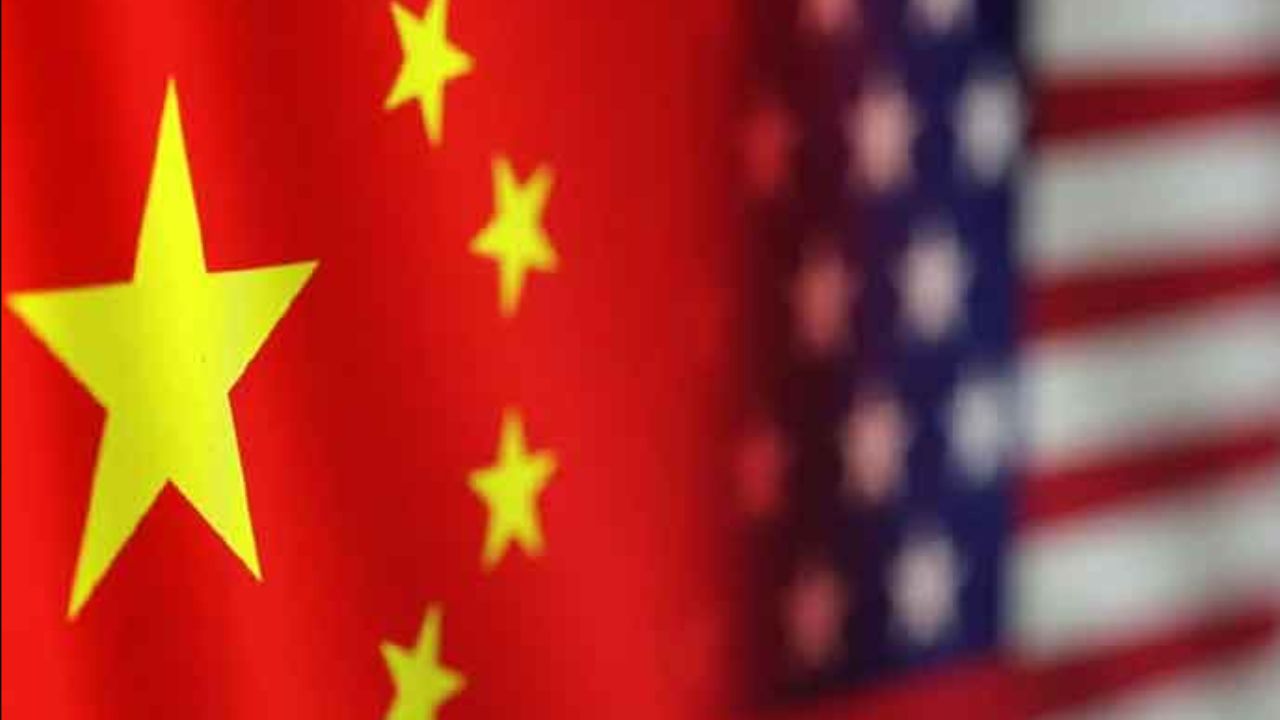
    Washington and Beijing agreed to drastically lower skyhigh tariffs in a deal that emerged from pivotal talks at the weekend in Geneva.

    US President Donald Trump said Washington now had the blueprint for a “very, very strong” trade deal with China that would see Beijing’s economy “open up” to US businesses, in an interview broadcast Tuesday on Fox News.

    “We have the confines of a very, very strong deal with China. But the most exciting part of the deal…that’s the opening up of China to US business,” he told the US broadcaster while aboard Air Force One on the way to the start of his Gulf tour.

    “One of the things I think that could be most exciting for us and also for China, is that we’re trying to open up China,” he added, without elaborating on details.

    Trump had upended international commerce with his sweeping tariffs across economies, with China hit hardest.

    Unwilling to budge, Beijing had responded with retaliatory levies that brought tariffs on both sides well over 100 percent.

    After billions were wiped off equities and with businesses ailing, negotiations finally got underway at the weekend in Geneva between the world’s trade superpowers to find a way out of the impasse.

    Under the deal, the United States agreed to lower its tariffs on Chinese goods to 30 percent while China will reduce its own to 10 percent — down by over 100 percentage points.

    The reductions came into effect just after midnight Washington time (0401 GMT) on Wednesday, a major de-escalation in trade tensions that saw US tariffs on Chinese imports soar to up to 145 percent and even as high as 245 percent on some products.

    Markets have rallied in the glow of the China-US tariff suspension.

    Chinese officials have kept their cards closer to their chests, pitching themselves at a summit in Beijing with Latin American leaders this week as a stable partner and defender of globalisation.

    “There are no winners in tariff wars or trade wars,” Xi told leaders including Brazil’s Luiz Inacio Lula da Silva, while his top diplomat Wang Yi swiped at a “major power” that believed “might makes right”.

    ‘Risk of renewed escalation’

    Deep sources of tension remain, too — the US additional tariff rate remains higher than China’s because it includes a 20 percent levy over Trump’s complaints about Chinese exports of chemicals used to make fentanyl.

    Washington has long accused Beijing of turning a blind eye to the fentanyl trade, something China denies.

    And while the US said it sees room for progress on the issue, Beijing on Tuesday warned Washington to “stop smearing and shifting blame” onto it.

    Analysts also warn that the possibility of tariffs coming back into force after 90 days simply piles on more uncertainty.

    “Further tariff reductions will be difficult and the risk of renewed escalation persists,” Yue Su, Principal Economist at The Economist Intelligence Unit, told AFP.

    Trump’s rollercoaster tariff row with Beijing has wreaked havoc on US companies that rely on Chinese manufacturing, with a temporary de-escalation only expected to partially calm the storm.

    And Beijing officials have admitted that China’s economy — already ailing from a protracted property crisis and sluggish consumer spending — is likewise being affected by the trade uncertainty.

    “Both sides have endured a good deal of economic pain and they can still endure a little bit more,” Dylan Loh, an assistant professor at Singapore’s Nanyang Technological University, told AFP.

  • Chinese giants team up to launch 10gbps internet

    Chinese giants team up to launch 10gbps internet

    China Unicom and Huawei have teamed up to launch a 10-gigabit broadband network in Xiong’an, Hebei province, powered by 50G-PON (Passive Optical Network) technology, which enables internet speeds of up to 10Gbps.

    The new network delivers download speeds of 9,834 Mbps and upload speeds of 1,008 Mbps, with latency reduced to just 3 milliseconds.

    Through this upgrade, a 90GB 8K movie can be downloaded in 72 seconds, while a 20GB 4K film takes under 20 seconds.

    The high-speed network supports advanced technologies like virtual reality, augmented reality, cloud gaming, remote surgeries, smart city systems, and real-time agricultural monitoring.

    This digital upgrade is part of China’s broader national strategy to improve internet infrastructure. The 10G internet rollout began in Sunan County and Xiong’an, with plans to expand to major cities like Shanghai and Shenzhen.

    Using existing fibre-optic cables, 50G-PON allows for these upgrades without needing major infrastructure changes.

    China is aligning with global efforts to advance next-gen internet access. Its new 10G network ranks among the fastest in the world, especially compared to average speeds of 300–500 Mbps in countries like the UAE and Qatar.

    No pricing has been revealed yet, and more details on commercial availability are expected soon.

  • Canada says fearing potential Pakistani, Chinese, others’ interference in upcoming elections

    Canada says fearing potential Pakistani, Chinese, others’ interference in upcoming elections

    Canadian intelligence has warned that Pakistan, Russia, China and India could “potentially attempt to interfere” in the country’s upcoming general election on April 28.

    As per the details, reports quoted Deputy Director of Operations at Canadian Security Intelligence Service (CSIS) Vanessa Lloyd as saying that China was “highly likely to use AI-enabled tools to attempt to interfere with Canada’s democratic process”.

    Regarding India, she said that the country had the “intent and capability” to do it as well whereas Russia and Pakistan could also seek to interfere.

    Lloyd maintained that these nations were increasingly using AI to interfere in elections around the globe. “It’s often very difficult to establish a direct link between foreign interference activities and election results… nevertheless, threat activities can erode public trust in the integrity of Canada’s democratic processes and institutions.”

    The statement comes amid dwindling ties between Ottawa and both New Delhi and Beijing.

    While there is no clarity over hints mentioning Pakistan and Russia, earlier this month, Beijing announced tariffs on more than $2.6 billion worth of Canadian agricultural and food products, retaliating against levies slapped on Chinese products last year.

    War of words over Indian intelligence’s alleged activities in Canada besides the killings of Canadian nationals allegedly by New Delhi has also repeatedly made headlines over the past several months.

  • New US bill proposes ban on Chinese students

    New US bill proposes ban on Chinese students

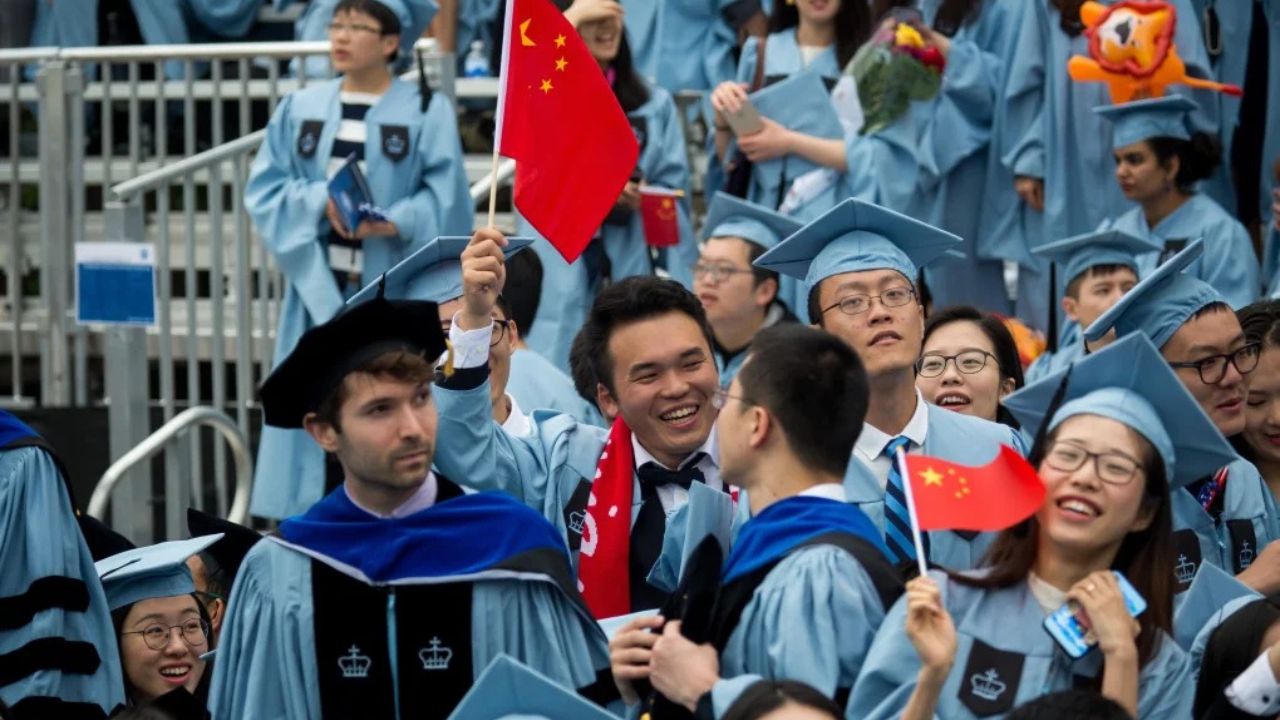
    A number of Republican House members proposed legislation on Friday, March 14, aimed at banning Chinese students from studying in American schools amid what they deem national security concerns.

    The bill was introduced by Rep. Riley Moore and co-sponsored by five other Republicans. The bill, if passed, could restrict Chinese nationals from getting visas that permit foreigners to travel to the U.S. to study or partake in exchange visitor programs.


    Moore said in a statement that the U.S. has “invited” the Chinese Communist Party “to spy on our military, steal our intellectual property, and threaten national security” by granting Chinese nationals such visas.


    “It’s time we turn off the spigot and immediately ban all student visas going to Chinese nationals,” he added.


    The bill, however, is unlikely to pass, reports AP news. Organisations and scholars have been critical of the proposed measures, stating that extreme policies and narratives against Chinese students could affect US interests.


    The executive director and CEO of NAFSA, Fanta Aw, an association of international educators, stated, “No policy should target individuals solely on the basis of their national origin.”


    “Making international students — the most vetted and tracked nonimmigrants in the United States — a scapegoat for xenophobic and anti-Chinese sentiment is misguided and antithetical to our national interest,” Fanta Aw added.


    The spokesperson for the Chinese embassy in Washington, Liu Pengyu, also expressed “strong concern and firmly opposes such practices,” further highlighting that education exchange and cooperation have been a pillar for the stable development of China-U.S. relations for a long time.


    The Asian American Scholars Forum pointed out that the bill would harm the brilliant Asian American scientists, scholars and researchers and compromise the US leadership in science and innovation.


    Yangyang Cheng, a research scholar at Yale Law School’s Paul Tsai China Center, added that the bill “should be seen as part of a broader effort to restrict academic freedom and hurt higher education in this country, to control what can be taught, which research projects can be pursued, and who have access to the classrooms and laboratories.”


    Citing an annual report on international students from the Institute of International Education, AP News reports that more than 277,000 Chinese students were enrolled in US universities in the 2023-24 academic year – a quarter of the total number of international students. However, the number of Chinese students in the US has been decreasing over the past few years. In 2024, Chinese students did not top in numbers as international students in India.


    Back in 2023, Florida passed a law barring state universities from hiring students from China and six other countries for graduate assistant and postdoc positions. This move, however, was challenged in court. Additionally, a number of  US universities have terminated academic partnerships with Chinese schools as Republican lawmakers coerced them in the name of national security concerns.

  • PM Shehbaz Sharif credits ‘friendly nations’ for securing IMF deal

    PM Shehbaz Sharif credits ‘friendly nations’ for securing IMF deal

    Prime Minister (PM) Pakistan Shehbaz Sharif has acknowledged the efforts of friendly countries for facilitating Pakistan in securing the International Monetary Fund (IMF) loan programme.

    Speaking to young parliamentarians of the Pakistan Muslim League (PML-N), he lauded the efforts of China, the United Arab Emirates (UAE), Saudi Arabia, the Army Chief and the incumbent government’s economic plan team.

    PM Sharif said that he hoped the upcoming IMF programme would be the last.

    He clarified that there will be no tolerance for tax evasion and stressed extending tax collection.

    Journalist Fakhar Durrani revealed in Talk SHOCK, a YouTube channel, that the IMF demanded two things from the Pakistan government before approving a seven-billion-dollar loan.

    He claimed that the first demand was a two billion dollars guarantee, which the government fulfilled by securing it from Standard Chartered Bank; the second demand was also fulfilled by securing a guarantee from Saudi Arabia on the deferred oil payment.

  • ‘It’s not possible’; Reporting in internet-challenged Pakistan

    ‘It’s not possible’; Reporting in internet-challenged Pakistan

    With the primary shift from newspapers to television channels and now to digital media applications, the dissemination of information has become increasingly competitive for newsrooms, with the latest updates just a click away.

    “Delays can be managed with newspapers, but today everything is in your hands—specifically, mobile phones,” says Raees Ansari, Bureau Chief of Geo News in Lahore.

    “Every single second is crucial in reporting now; some footage needs to be sent and put on air instantly. But due to poor network conditions and slow WhatsApp, content is not being sent on time, which is affecting our professional activities,” he reveals.

    Over the past week, internet users across Pakistan have reported network disruptions, with WhatsApp, Facebook, and Instagram experiencing slowdowns, hindering online activities. The Pakistan Telecommunication Authority (PTA) has denied any connection between these issues and the alleged firewall installation.

    Since the ban on X (formerly Twitter) on February 17, 2024, many have turned to Virtual Private Networks (VPNs). The ongoing disturbances, however, have complicated internet usage, which is crucial for a number of professions.

    Sumaira Raja, an investigative reporter, who is mostly found out on the field, complains of encountering issues with not only the internet but also phone signals which often prevents her from conveying news on time.

    “I also experience delays with receiving beepers, as head office frequently reports that the number is not available due to poor signals. This situation makes it very difficult to do my job. I’ve tried using a VPN, but it hasn’t worked,” Raja says.

    Sports journalist Faizan Lakhani recalls when javelin champion Arshad Nadeem returned to Pakistan on August 17 after winning the gold medal at the Paris Olympics, all the visuals sent through WhatsApp by reporters were delayed, and they struggled to download them unless they used a VPN.

    “This situation is very challenging and affects our workflow. When reporters are working on a story or covering an event, they need to stay connected with the desk. We usually rely on voice notes to pass instructions, but since we started encountering this issue, we are struggling with that method too,” he says.

    “We have been told that the network disruption is because of the firewall installation. While things are becoming easier around the world, it has been getting harder for us. Everything is happening with the help of technology and the current situation is a major challenge.” says Ansari.

    What’s happening?

    A highly placed source in the IT industry identifies that filtering of content delivery networks (CDNs) through Firewall is causing content to be routed via internet backbone rather than CDNs.

    “This means that around 4 TBs of internet traffic previously served through CDNs, hosted in Pakistan, is becoming ineffective. When all traffic goes on backbone bypassing CDNs, it’s causing massive slowdown at many western destinations that’s happening now,” he explains.

    Recently, Fiverr, an online marketplace for freelance services, warned clients that Pakistani freelancers may experience delays due to internet issues and the use of VPNs to change their locations.

    “Brace for impact. God save the internet in Pakistan”, says the IT expert.

    Background

    It all started on February 17, 2024, about a week into the new government, when X (formerly Twitter) was banned.

    Initially, amid the uproar, the government remained silent on the matter while the Pakistan Telecommunication Authority (PTA) seemed aloof until the High Courts of Sindh and Islamabad intervened. The PTA eventually admitted that the ban on X was imposed on the orders of the Ministry of Interior based on reports from intelligence agencies.

    The government eventually justified the ban by attributing it to national security concerns, citing ‘digital terrorism‘ and online propaganda as among the threats.

    Earlier in August, Provincial Information Minister Azma Bokhari stated that the government is not against social media but wants to focus on rules and regulations, which, if enforced, could lead to the removal of the ban on X.

    The disruption has now extended beyond X, affecting other widely used apps along with the internet.

    Ironically, since the February 2024 election, the new government has emphasised the need to grow the tech industry in Pakistan.

    In March, Lahore Knowledge Park (a science park) was handed over to the Punjab Central Business District Development Authority with the approval of Chief Minister Punjab Maryam Nawaz, with the goal of establishing Pakistan’s largest IT city.

    In June, Prime Minister Shehbaz Sharif visited Shenzhen— the tech hub in China— in hopes of future collaboration. Ironically, he posted on X (Twitter), expressing how “impressed” he was by the “city’s skyline and development that symbolizes modern-day China.”

    Given the lack of proper infrastructure in the country amid burgeoning surveillance, how will Pakistan evolve in the rapidly transforming digital world? It remains to be seen – but likely we won’t be able to download it.

  • No visa-free entry into Pakistan for two countries

    No visa-free entry into Pakistan for two countries

    The Ministry of Interior has informed the Federal Cabinet that Indian and Afghan citizens will not be given visa-free entry under the program launched for businessmen from friendly countries.

    According to a Business Recorder report, the Cabinet was informed on July 24, 2024, that in alignment with the Prime Minister’s vision of visa-free entry for businessmen and tourists from other countries, the Ministry of Home Affairs, in consultation with key stakeholders and the PM Office, has developed various proposals for visa reforms.

    Previously, the Prime Minister had directed a further relaxation of the visa system to attract businessmen, investors, and tourists from friendly countries.

    The Ministry has also taken several initiatives, including signing visa-free entry agreements with Nepal and the Maldives. Additionally, a ‘Visa on Arrival’ facility was available for 108 countries on the Business Visa List (BVL) and 64 countries on the Tourist List.

    Businessmen traveling to Pakistan now need only to complete the Electronic Travel Authorization (ETA) form 24 hours before travel, after which the visa will be issued electronically.

    Visas will now be issued through the electronic travel authorization form, which has reduced the required fields from 161 to 30 for basic information only, according to the Ministry.

  • China warns US, Japan to ‘stop creating imaginary enemies’

    China warns US, Japan to ‘stop creating imaginary enemies’

    Beijing on Monday warned the United States and Japan to “stop creating imaginary enemies” after the countries lashed out against China’s actions in the South China Sea in Tokyo talks.

    “We strongly urge the US and Japan to immediately stop interfering in China’s internal affairs and stop creating imaginary enemies,” foreign ministry spokesman Lin Jian said.

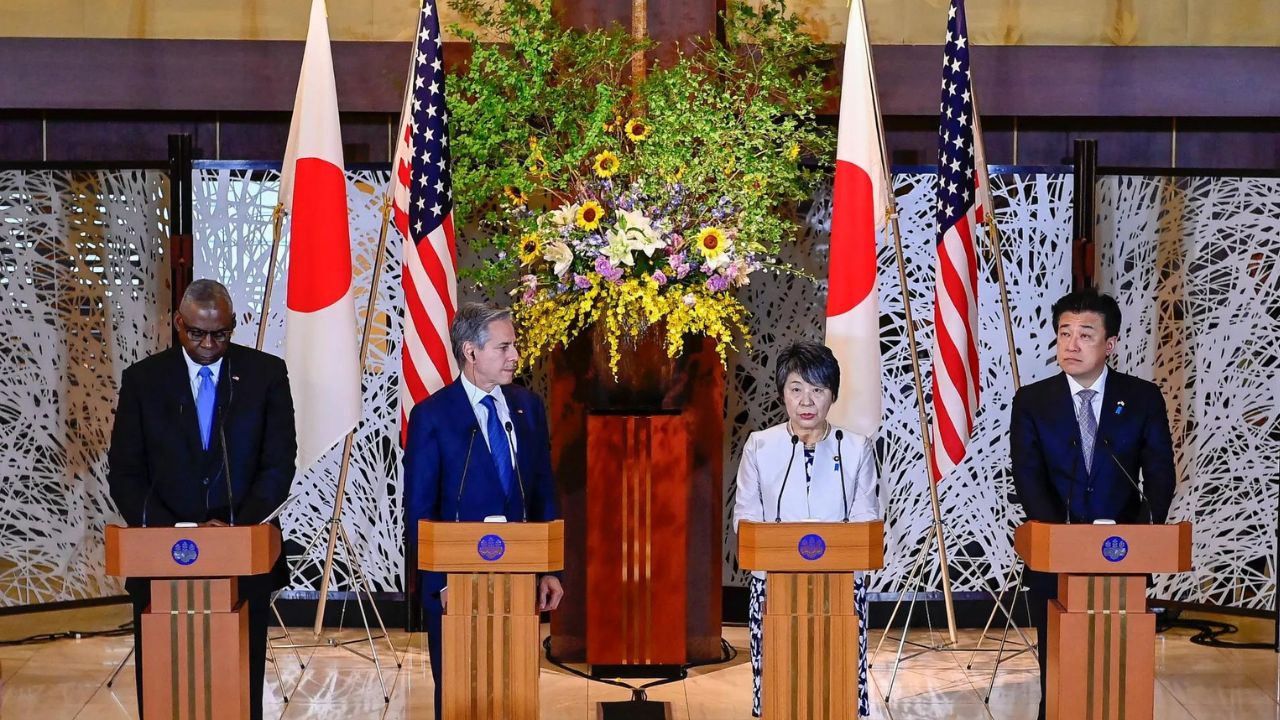
    Following talks in the Japanese capital on Sunday, the US and the hosts slammed Beijing’s “destabilizing actions” in the South China Sea while also condemning Russia’s growing military cooperation with China and North Korea.

    US Secretary of State Antony Blinken, Defense Secretary Lloyd Austin and their Japanese counterparts “reiterated their strong objections to the PRC’s unlawful maritime claims, militarization of reclaimed features, and threatening and provocative activities in the South China Sea”, a joint statement said, using an acronym for China.

    China’s “destabilizing actions in this region include unsafe encounters at sea and in the air, efforts to disrupt other countries’ offshore resources exploitation, as well as the dangerous use of Coast Guard and maritime militia vessels”, the communique added.

    They accused China of “intensifying attempts to unilaterally change the status quo by force or coercion in the East China Sea” and that Chinese “foreign policy seeks to reshape the international order for its own benefit at the expense of others”.

    China’s Lin on Monday said the joint statement “disregards facts, mixes up right and wrong maliciously attacks China’s foreign policy”.

    He added the communique “crudely meddles in China’s internal affairs, maliciously attacks and smears China on maritime issues, makes thoughtless remarks on China’s normal military development and defence policy, exaggerates and kicks up a fuss about the China threat, and maliciously hypes up regional tensions”.

    “China deplores and firmly opposes this,” Lin said.

    mjw-je/rsc

    © Agence France-Presse

  • First-time airplane traveler causes trouble for passengers

    First-time airplane traveler causes trouble for passengers

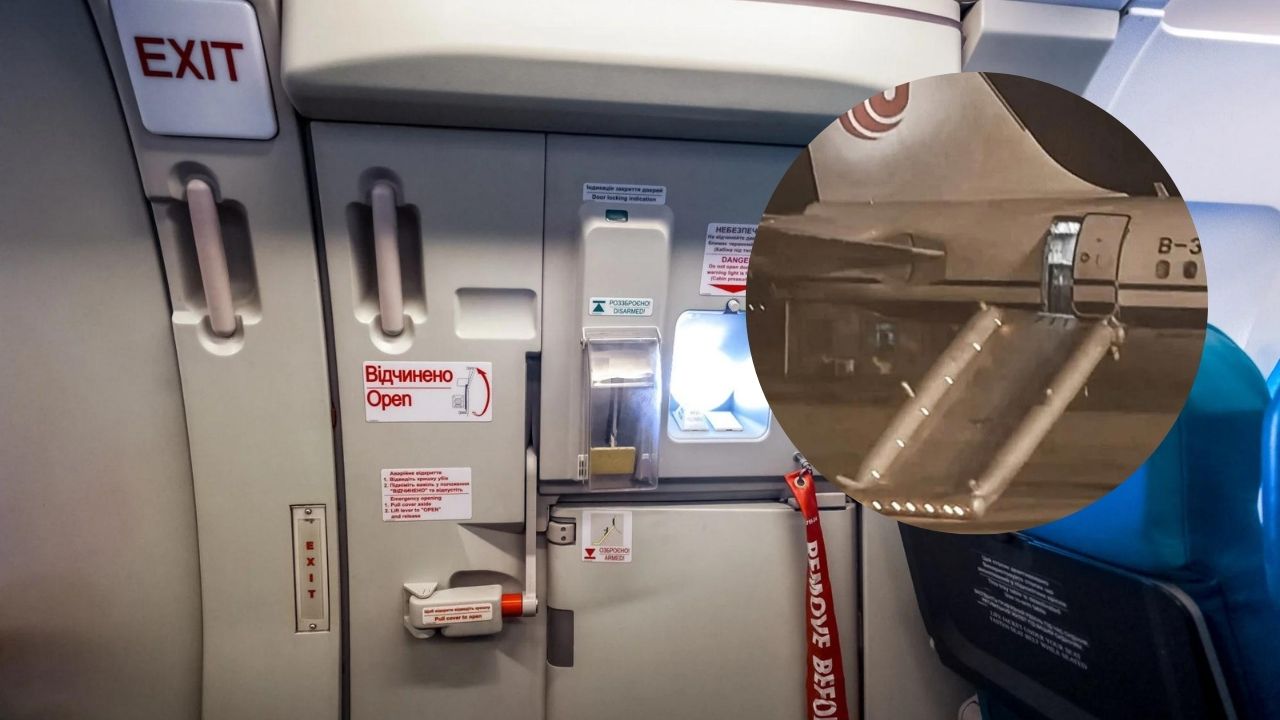
    Air China flight CA2754 was on the runway preparing for departure when a female passenger accidentally opened the plane’s emergency door.

    The incident occurred on July 4 at Chiyang Province airport, as reported by local media.

    The Chinese newspaper South China Morning Post stated that the woman, looking for a restroom, mistakenly opened the emergency door at the rear of the plane.

    As a result of her mistake, chaos ensued among the passengers, leading to the cancellation of the flight while passengers disembarked from the plane.