Tag: electricity

  • Cabinet approves Rs7.91 per unit increase in power tariff

    Cabinet approves Rs7.91 per unit increase in power tariff

    After several postponements, the Federal Cabinet finally decided to approve the Rs7.91 per unit increase in the power tariff.

    The Federal Minister of Power, Khuram Dastgir, and Minister of Petroleum, Musadik Malik, made the announcement during a press conference.

    Dastgir claimed that because Prime Minister (PM) Shehbaz Sharif wanted to provide relief to the masses. The consent was not given until 45 per cent of the population had been exempted from the tariff increase.

    Musadik Malik, the minister of petroleum, disclosed that by leaving out the protected sector, the homes with consumption of less than 200 units per month, or up to 90 million people, had been left out of the price increase.

    Previously, the government’s proposal for the tariff increase was subject to the National Electric Power Regulatory Authority’s (NEPRA) reserve decision, according to Dawn.

    In accordance with the approval, the government will raise the rate by Rs3.5 per unit starting on July 26. A similar price rise will be implemented in August. The cost would then be raised by Rs0.91 per unit in October by the government, bringing the total rise to Rs7.91.

    Malik blamed the previous administration’s lack of frequent fuel adjustments and transmission losses rebasing for the sharp increase in tariffs. Fuel surcharges were raised without notifying the public at the final rebasing, which took place in February 2021.

    The power minister informed the media that the present administration had paid Rs214 billion toward circular debt, bringing the total down from Rs2,476 billion on March 31, 2022, to Rs2,253 billion on June 30, 2022.
  • CM Hamza announces free electricity for households consuming up to 100 units

    CM Hamza announces free electricity for households consuming up to 100 units

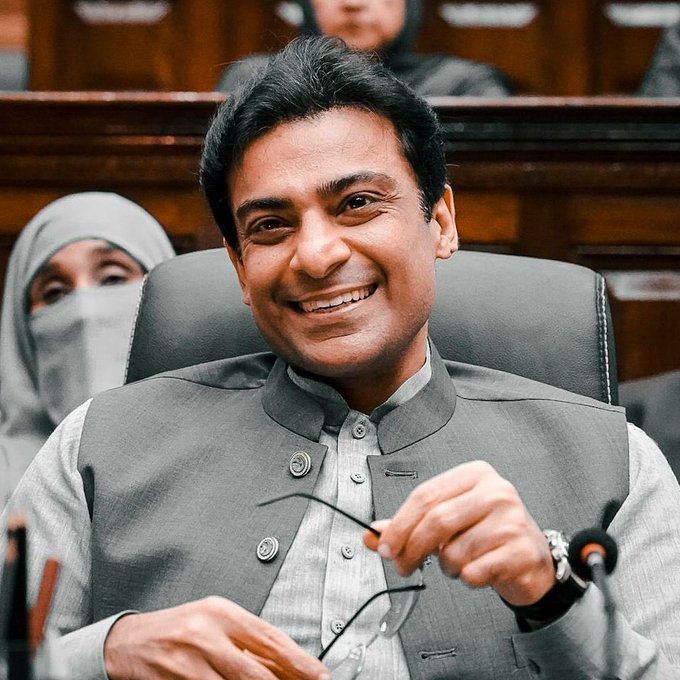
    Punjab Chief Minister (CM) Hamza Shehbaz announced on Monday the provincial government would bear the power cost of households consuming up to 100 units of electricity in a month.

    “I was told not to take big decisions without the cabinet’s consent to steer the backward class out of difficult economic conditions. I was told that it could become a NAB case, but I said that I am ready to face any difficulty to give relief to people,” said Hamza Shehbaz.

    The CM conveyed that the provincial government would pay the full bill of consumers using up to 100 units of electricity per month under the Punjab Chief Minister’s Roshan Gharana Programme. The consumers using up to 100 units of electricity in each of the past six months will be able to avail the facility, the CM said and emphasised that the programme would benefit almost half of the population of the province.

    “This will act as an incentive for those who use more than 100 units of electricity to save energy,” Hamza hoped.

    Hamza said that there are 4.4 million families using 100 units in Punjab, i.e. 55 million people in the province use less than 100 units per month.

    “The economic situation will be back on track,” he promised. He vowed that “the genie of inflation will be put back into the bottle and the dying economy will be revived with the grace of Allah Almighty and help of masses”.

  • Nepra approves price increase of Rs9.66 per unit for Karachi

    Nepra approves price increase of Rs9.66 per unit for Karachi

    On account of the fuel cost adjustment (FCA) for May 2022, the National Electric Electricity Regulatory Authority (Nepra) allowed K-Electric to increase its power rate by Rs9.66 per unit on Monday.

    According to Aaj News, Nepra will make the announcement following careful consideration.

    In order to transfer the financial burden of Rs22.65 billion to consumers for May 2022, K-Electric requested an increase of Rs11.34 per unit.

    Officials from Nepra questioned K-Electric during a hearing about why it wasn’t buying less expensive electricity and offered to help K-Electric establish a connection with the provincial and federal governments for this reason.

    The power distributor also questioned K-Electric’s decision not to use the inexpensive oil it had acquired for power production.

    Nepra’s representatives responded that the company was using peak hours, which are from 6:30 PM to 10:30 PM, to provide electricity and that the cost of power is much greater at these times.

    The FCA estimate for May 2022, according to K-Electric, was based on the requested rate for the month from CPPA-G and is subject to change based on a decision to be made by Nepra.

    In its FCA adjustment request, the power utility informed the regulator that it imports from outside sources and dispatches power from its own generating units (with the available fuel resources) in accordance with economic merit orders (EMOs).

  • NEPRA announces increase of Rs7.90 per unit in power tariff

    NEPRA announces increase of Rs7.90 per unit in power tariff

    An additional increase in the price of power of Rs7.90 per unit was announced by the National Electric Power Regulatory Authority (NEPRA) on Monday.

    After hearing the Central Power Purchasing Agency’s (CCPA) argument today, the power regulatory authority made the final hike announcement, according to ARY News.

    It is worth noting that life consumers and K-Electric are protected from the tariff increase and that the amount would be paid in July’s bills.

    In response to a request from CPPAG for a raise of Rs7.96 per unit, the increase was granted under fuel adjustment costs (FAC) for the month of May 2022, according to a notification released by the power regulating authority.

    Additionally, after a substantial increase of Rs7.91 per unit, the National Electric Power Regulatory Authority has just set the power rate at Rs24.82 per unit for the fiscal year 2022–23.

    The authority approved a Rs5.27 per unit increase in electricity rates for K-electric customers on June 24.

    According to a handout provided by NEPRA, K-Electric requested an increase in the electricity rate of Rs5.25 to account for fuel adjustment charges for April.

    Earlier, The Economic Coordination Committee (ECC) of the cabinet approved an increase in power costs for K-Electric customers of 57 paisa per unit.

    However, ECC deferred making a decision on a different proposal that called for charging K-Electric customers a surcharge of Rs1.45 per unit in order to recover Rs113.1 billion in past-due amounts related to quarterly rate increases. 

  • Energy crisis: Sindh govt announces market closures by 9pm

    Energy crisis: Sindh govt announces market closures by 9pm

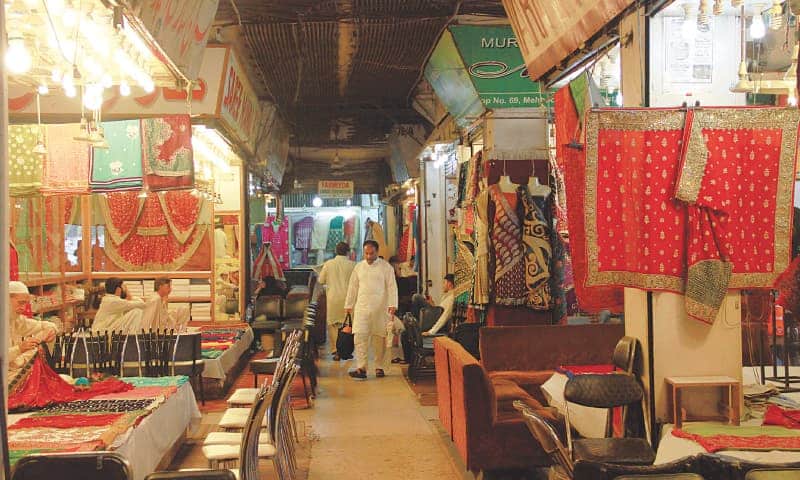
    The Sindh government announced that all markets, restaurants, marriage halls and hotels will be closed early in order to save electricity. The decision will remain in force from June 17 (today) to July 16.

    According to an official notification by the provincial Home Department, all markets, bazars, shops and malls will close by 9pm. Marriage and banquet halls will close by 10:30pm, while hotels, restaurants, coffee shops and cafes must shut by 11pm. However, the decision is not applicable to medical stores, pharmacies, hospitals, petrol pumps, CNG stations, bakeries and milk shops.

    The notification reads: “The urgent need to take the effective measures for the conservation of energy in Sindh through a two-pronged approach, i.e. to utilise the daylight hours for business activities and minimise the possible adverse impact of the business activities.”

    However, the All Pakistan Trade Union Association has rejected this decision of the provincial government, reports ARY News.

    Pakistan is facing a serious power crisis due to which the government has resorted to load-shedding all over the country.

    Last week, as part of the government’s ongoing measures to manage the energy crisis, the National Economic Council (NEC) agreed on the closure of markets by 8:30pm in all provinces.

    No power in commercial areas in the evening from 7-10pm

    The Power Division has decided to cut supply to commercial feeders from 7pm to 10pm daily across Pakistan, reports Geo News.

    In this regard, the Ministry of Energy has prepared a summary for the cabinet’s approval. According to the media outlet’s sources, the commercial feeders will not face load-shedding during the daytime, which would save approximately 5,000 MegaWatt (MW).

    Earlier, Defence Minister Khawaja Asif said that a huge amount of electricity can be saved if people start their businesses early in the morning and close by Maghrib prayers. He said that saving electricity means saving oil.

  • Energy sector to get a massive portion of the Rs699 billion subsidy

    Energy sector to get a massive portion of the Rs699 billion subsidy

    The government has proposed allocating Rs699 billion to multiple sectors in order to provide relief to the masses during the new fiscal year 2022-23.

    According to budget estimates, the government plans to boost subsidies by Rs17 billion to Rs699 billion for the next fiscal year, up from Rs682 billion in the previous fiscal year.

    The government has reduced power sector subsidies by Rs26 billion to Rs570 billion for the next fiscal year, down from Rs596 billion in the previous fiscal year and proposed increasing the total subsidy for the power sector for PEPCO by Rs18 billion to Rs275 billion. The budget 2022-23 proposed reducing the subsidy amount for K-Electric by Rs5 billion to Rs80 billion.

    Moreover, subsidies for Independent Power Producers (IPPs) are slashed by Rs39 billion to Rs215 billion for the coming fiscal year.

    The amount of petroleum subsidy has been upped from Rs51 billion to Rs71 billion. During the next fiscal year, the Utility Stores Corporation (USC) will receive a Rs17 billion subsidy. PASSCO will also receive Rs7 billion subsidy.

    During the next fiscal year, Rs8 billion has been set aside for wheat subsidies to Gilgit-Baltistan. For the coming fiscal year, the subsidy for the metro bus service has been increased to Rs4 billion. Similarly, the fertiliser plant subsidy has been increased to Rs15 billion.

    Read more: Govt unveils Rs9.5 trillion budget 22-23, focused on sustainable growth

    The new government has reduced the Naya Pakistan Housing and Development Authority (NAPHDA) subsidy amount to Rs500 million for the next fiscal year, down from Rs30 billion in the previous fiscal year. NAPHDA’s markup subsidy has also been reduced, from Rs.3 billion to Rs.500 million for the coming fiscal year.

  • PM Shehbaz directs power authorities to reduce load-shedding to two hours

    PM Shehbaz directs power authorities to reduce load-shedding to two hours

    Prime Minister (PM) Shehbaz Sharif instructed the power authorities on June 4 to reduce load-shedding throughout the country to two hours, alerting that he wanted results rather than explanations.

    As per a report from ARY News, PM Shehbaz Sharif, who presided over a meeting to resolve the challenge of hours-long unexpected load-shedding in the country, asked power division officials and federal ministers to do whatever was essential to reduce load-shedding to two hours per day.

    While dismissing explanations for the duration of load-shedding, PM Shehbaz stated that officials should minimise the sufferings of the general public rather than furnishing justifications.

    “I only wanted to provide relief to the masses and will not accept the ongoing situation of load-shedding,” a defiant PM stated that he will not compromise and will not allow any minister or official to relax until the problem is resolved.

    He instructed officials to work around the clock to bring power to businesses. The prime minister also aimed the finance minister to secure all necessary resources to address the problem. It is worth noting that Pakistan’s generation capacity has deteriorated, with the power disparity reaching over 7,000 megawatts.

    As per power division sources, the country’s electricity demand has risen to 27,200 megawatts due to the hot weather. The length of unannounced load-shedding across the country has also been elevated to 14 hours. “There is a nationwide power production of 20,000MW, resulting in a shortfall of 7200 MW,” they added.

    According to reliable sources, the country presently acquires 4,635 megawatts of electricity from hydropower, 1,060 megawatts from thermal power plants, and 9,677 megawatts from IPPs. Considering the findings, 3 key power companies have shuttered 16 power plants in Pakistan largely owing to a shortage of fuel.

  • Energy crisis worsens, electricity gap surpasses 7,000 megawatts

    Energy crisis worsens, electricity gap surpasses 7,000 megawatts

    The demand for electricity in Pakistan has risen to 28,200 megawatts due to the hot weather, while the supply is only 21,200 megawatts, resulting in a power shortfall of nearly 7,000 megawatts.

    According to well-placed sources, the country currently gets 4,635 megawatts of energy from hydropower, 1,060 megawatts from government thermal power plants, and 9,677 megawatts from IPPs. Additionally, due to a lack of oil, gas, and coal, numerous factories have been shut down.

    Several areas of the country are experiencing daily loadshedding of 10 to 12 hours due to the expanding shortfall, which is exacerbated by the hot heat.

    However, in locations with significant line losses, loadshedding lasts longer than 12 hours.

    The scheduled loadshedding technique is not being used due to the lack of data, according to the sources. In Karachi, K-Electric, the city’s sole electricity distribution provider, is imposing daily loadshedding of 9 to 10 hours.

    As per reports, the loadshedding will be resolved within the next several months.

  • Toyota Pakistan to launch first-ever locally assembled Hybrid crossover

    Toyota Pakistan to launch first-ever locally assembled Hybrid crossover

    Toyota Indus Motor Company (IMC), Pakistan’s most prominent automaker, is upgrading its manufacturing plant in preparation for the start of local production of hybrid electric vehicles (HEVs) by 2023.

    Toyota IMC CEO Ali Asghar Jamali revealed that the locally assembled Toyota Corolla Cross will be available in 2023. It is worth noting that this crossover will be the first ever locally assembled Hybrid vehicle by the Japanese manufacturer in Pakistan.

    He stated that the company intends to launch its hybrid crossover SUV in the Rs5 to Rs7 million price range, which may not be possible given the country’s economic and overall situation. Experts predict that the Crossover will be priced between Rs9-10 million.

    Given the current economic situation and the government’s plan to raise car taxes, Toyota IMC will reveal its final price next year.

    Jamali also discussed the company’s plans for overall HEV localization. He stated that Toyota has already invested $100 million in Pakistan to produce HEVs and plans to introduce electric vehicles (EVs) in the future when the country is ready for this technology.

    Jamali emphasised that HEVs are a midterm solution before EVs because Pakistan lacks the infrastructure for the latter, and that converting all cars to HEVs could reduce Pakistan’s oil imports by up to 50%.

    As most of Pakistan’s electricity is produced using fossil fuels, EVs will increase local LNG, coal, and crude oil imports, while investment in improving distribution and creating a charging infrastructure will also be required, according to Jamali.

  • IMF programme will only revive if Govt hikes fuel, electricity prices

    IMF programme will only revive if Govt hikes fuel, electricity prices

    The International Monetary Fund (IMF) has stated unequivocally that the loan programme under the Extended Fund Facility (EFF) will not be revived unless oil and electricity prices are increased. The Pakistani delegation, on the other hand, has asked for more time to withdraw the subsidy.

    The delegation would meet with Prime Minister (PM) Shehbaz Sharif to discuss it. Both parties have agreed to continue discussions. Apart from the withdrawal of the subsidy, officials claim that all other issues have been resolved.

    Pakistan was unable to persuade the IMF despite a week of discussions in Doha, Qatar, from May 18 to May 25.

    IMF postponed the rollback of Pakistan’s stalled $6 billion External Financing Facility (EFF) programme late Wednesday as the government hoped that the revival would bring stability to the financial markets, the rapid weakening of the local currency with depleting foreign exchange reserves.

    In a statement, the Fund underlined the elimination of petroleum and energy subsidies, among other conditions, as a prerequisite for the program’s restoration. Following the conclusion of the talks, Nathan Porter, the IMF Mission Chief for Pakistan, stated that the Fund held meaningful talks with Pakistani representatives.

    “The Mission has engaged in highly constructive discussions with Pakistani authorities in order to reach an agreement on policies and reforms that will lead to the completion of the awaiting seventh evaluation of the authorities’ reform programme, which is backed by an IMF Extended Fund Facility arrangement”.

    As per Porter, significant progress was made during the mission, including the need to continue addressing massive inflation and rising fiscal and current account shortfalls, whereas ensuring sufficient protection for the weakest.

    The Fund also lauded the State Bank of Pakistan’s (SBP) decision to raise the policy rate from 12.25 per cent to 13.75 per cent in order to combat rising inflation. However, the mission chief noted that there were fiscal deviations from the policies agreed upon in the previous review, reflecting in part the fuel and power subsidies announced by the authorities in February.

    The PTI-led government initially concurred to increasing the prices of energy and petroleum products, but Imran Khan announced a subsidy on both commodities later in March, and the present government is proceeding with the same arrangement.

    As per Porter, the IMF team highlighted the importance of tangible policy actions, including the removal of fuel and energy subsidies and the FY2023 budget, to achieve programme objectives. He went on to say that the IMF team is looking forward to proceeding with its discussion and close engagement with the Pakistani government on policies to ensure price stability for the benefit of all Pakistanis.