Tag: EXCHANGE RATE

  • Govt’s Rs250 dollar target falls flat as greenback holds steady at Rs284

    Govt’s Rs250 dollar target falls flat as greenback holds steady at Rs284

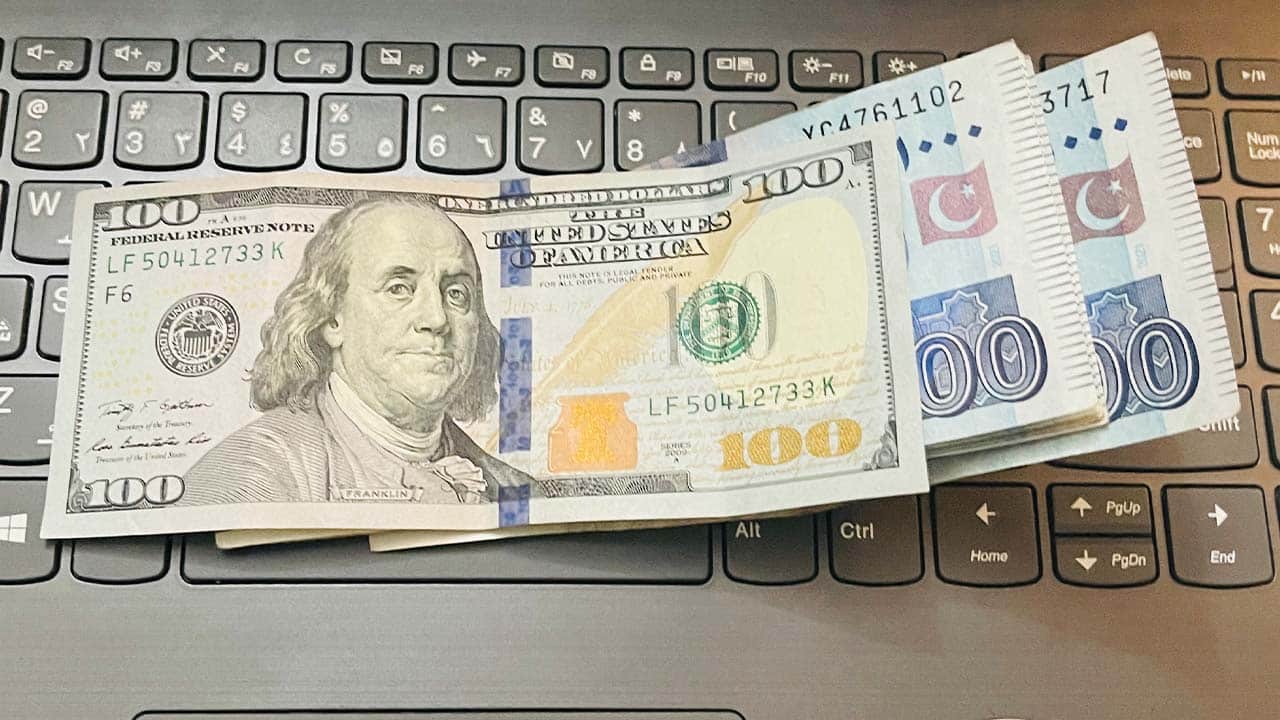
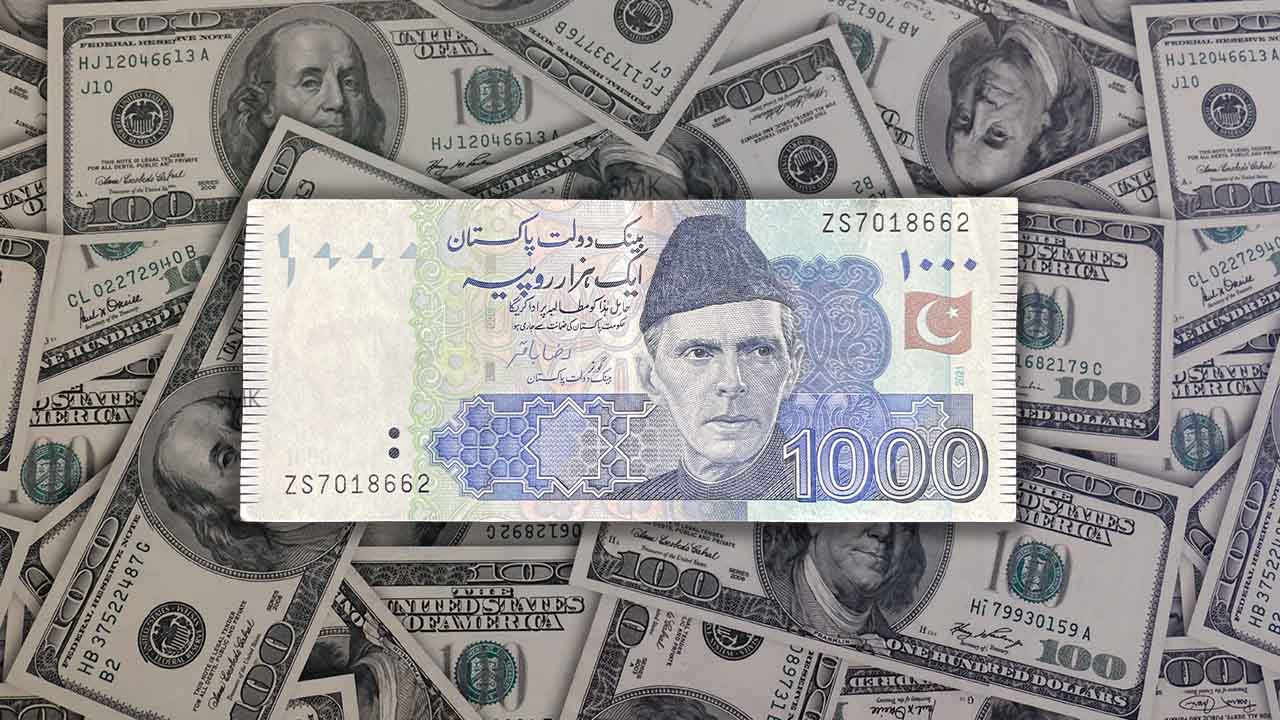
    The federal government’s efforts to bring the dollar back down to Rs250 have reportedly failed, as the greenback continues to trade above Rs280. According to reports, during recent meetings held in the federal capital, authorities made efforts to push the exchange rate down to Rs250 per dollar.

    Stakeholders present at the aforementioned meetings included currency dealers, commercial banks, and jewellers. However, it merits a mention that the participants of the meeting reportedly deemed the target unrealistic and dismissed it.

    Stakeholders present at the meetings included currency dealers, commercial banks, and jewellers who reportedly deemed the target unrealistic and dismissed it.

    While the federal government has not met its target exchange rate of Rs250 per dollar, the rupee has posted marginal gains in previous trading sessions. This appreciation can be attributed to the crackdown against the smuggling of dollars out of the country.

    Data from reports suggests that since July 23, the rupee has appreciated by a respectable Rs3 against the greenback. As per the details, this appreciation has been recorded by both open and interbank markets.

    According to reports, the gain did not bring the market rate in line with official expectations, as one US dollar continued to trade at Rs282.87 in the interbank market despite the rupee’s appreciation.

    The rate is reportedly even more unfavourable to the official target in the open market, with one US dollar being quoted at a rate of Rs285.15. Moreover, currency dealers have reported shortages of foreign currencies such as the pound, euro and dollar.

    A fall in the availability or supply of a particular currency can result in an increase in its value against others. In this case, it is against the rupee. Reports suggest that a black market for currency exchange has resurfaced, offering rates higher than those set by the Exchange Companies Association of Pakistan (ECAP).

    As per reports, this problem extends into the interbank market as banks permitted by the State Bank of Pakistan (SBP) to sell dollars to importers are setting higher exchange rates. Moreover, these banks are also favouring their own clients over others, which explains the difficulty certain importers have faced in obtaining a letter of credit (LC) for amounts as small as $500,000.

    Despite its best efforts, the federal government will not be able to reduce the exchange rate back down to Rs250 per dollar. Reports indicate that the rupee may appreciate “into the Rs270s” against the dollar; however, this gain is expected to be temporary, as it is not considered sustainable.


  • Dollar falls to 152 against rupee on Google

    Dollar falls to 152 against rupee on Google

    The United States (US) Dollar on Friday evening took a dive against the Pakistani rupee on the Google currency converter, leaving traders perplexed.

    As per the details, the USD crashed to Rs152.62 from Rs277.50 earlier in the evening. While no statements were issued by Google or Morningstar Inc that provides the search giant with data for its currency converter, it was probably an erroneous entry that was fixed moments after the glitch was first noticed.

    It is pertinent to note that the glitch wasn’t the first of its kind as on June 7, 2023, a similar case was observed when the value of the rupee dropped sharply only for it to turn out as a simple data entry error.

    Such errors have also occurred back in 2022 and 2018, leaving many confused. Had this been true, there would be great economic and business implications.

    However, there has been no change in the economy to suggest a rise in value of the rupee of this magnitude.

    One of the few entities that could have been responsible behind such a large rise in the value of the rupee is the State Bank of Pakistan (SBP). While it does hold the power to artificially increase the value of the rupee by buying it up using foreign reserves, there is no evidence to support such a large activity.

    Instead, the SBP actually reported its foreign exchange reserves to have grown by $116 million to $11.15 billion on October 25.

    While such a rise is a dream for many businesses and citizens alike in Pakistan, the lack of evidence that suggests such a change in the value of the rupee makes it exactly that: a dream.

  • Exchange rates for today: PKR closes over 13 paisa lower against US dollar

    Exchange rates for today: PKR closes over 13 paisa lower against US dollar

    The Pakistani rupee (PKR) dropped by 13.38 paisa, or 0.05 per cent, against the US dollar in the interbank market on Monday, ending the day at PKR 278.70, according to the State Bank of Pakistan (SBP).

    During the session, the highest bid for Pakistani currency was 278.90, while the lowest ask was 278.70.

    In the open market, exchange companies quoted the greenback at 279.10 for buying and 280.94 for selling.

    Since the start of the financial year, the PKR has depreciated by 35.88 paisa or 0.13 per cent against the US dollar, while in the current calendar year, it has appreciated by 3.16 rupees, or 1.13 per cent.

    CurrencyPrevious rateToday’s rateChange
    US DollarPKR 278.57PKR 278.7013.38 paisa
    British PoundPKR 367.19PKR 365.221.97 PKR
    EuroPKR 309.58PKR 308.211.37 PKR
    Chinese YuanPKR 39.32PKR 39.1912.96 Paisa
    Saudi RiyalPKR 74.21PKR 74.264.75 Paisa
    Swiss FrancPKR 330.82PKR 329.371.44 PKR
    UAE DirhamPKR 75.88PKR 75.843.64 Paisa
    Japanese YenPKR 1.9549PKR 1.94750.74 Paisa
    Exchange rates

    The British Pound on Monday became cheaper, falling by 1.97 rupees to close at 365.22, down from 367.19 the previous day. The PKR strengthened by 1.37 rupees against the Euro, ending at 308.21 compared to the earlier value of 309.58.

    The Chinese Yuan lost 12.96 paisa, closing at 39.19 compared to 39.32 from the last session. The Saudi Riyal gained 4.75 paisa, finishing at 74.26, up from 74.21 the day before.

    The Swiss Franc declined by 1.44 rupees, closing at 329.37, down from 330.82. The UAE Dirham increased by 3.64 paisa, rising to 75.84 from 75.88.

    Against the Japanese Yen, the PKR gained 0.74 paisa, closing at 1.9475 compared to 1.9549 the previous day.

  • Gold prices in Pakistan remain unaffected by political uncertainties

    Gold prices in Pakistan remain unaffected by political uncertainties

    Despite political uncertainties, the domestic bullion market exhibited stability, with 24-karat gold maintaining its price at Rs215,500 on Friday, showing no deviation from the previous session.

    This stability is indicative of the domestic gold market functioning normally, aligning with international gold rates and the exchange rate.

    The Karachi Sarafa Association reported that the prices of 10-gramme 24-karat gold and 10-gramme 22-karat gold also remained constant at Rs184,756 and Rs169,360, respectively.

    Similarly, silver prices showed resilience in the domestic market, with 24-karat silver being traded at Rs2,600 per tola and Rs2,229.08 per 10-gramme.

    On the global stage, the international spot gold exhibited minimal fluctuations, standing at $2,033.5 as of 12:40 pm.

    This stability in both domestic and international markets suggests a steady scenario despite the prevailing political uncertainties.

  • Pakistani rupee gains 6 paisa against US dollar, closes at Rs279.79

    Pakistani rupee gains 6 paisa against US dollar, closes at Rs279.79

    The Pakistani rupee (PKR) continued its upward trend against the US dollar (USD) for the fifth consecutive session, appreciating by 0.02 per cent in the interbank market on Tuesday.

    Closing at Rs279.79, the local unit gained Re0.06 against the greenback.

    This follows Monday’s positive performance, where the rupee settled at 279.85 against the US dollar.

    A notable development on the economic front is the government’s active pursuit of a government-to-government (G2G) agreement with Saudi Arabia and the United Arab Emirates (UAE) for upfront foreign currency repatriation against future workers’ remittances. 

    Both Saudi Arabia and the UAE hold significant importance as countries contributing to foreign exchange through remittances from Pakistani workers. 

    Meanwhile, on the global stage, the US dollar experienced a slight easing, resulting in a 0.07 per cent increase in sterling, reaching $1.2720.

    Compared to major currencies, the Pakistani currency depreciated by 18.84 paisa against the Euro, closing at Rs305.03, as opposed to the previous value of Rs304.84.

    The British Pound strengthened, increasing by 1.02 rupees and closing at Rs356.34, compared to Rs355.33 from the previous day.

    The Swiss Franc exhibited gains of 54.58 paisa, concluding at Rs322.62, in contrast to the previous session’s value of Rs322.08.

    Against the Japanese Yen, PKR experienced a decrease of 0.98 paisa, closing at Rs1.8993 compared to Rs1.8895 a day ago.

    Conversely, the Chinese Yuan appreciated by 13.91 paisa, closing at Rs39.03 against the previous session’s Rs38.89.

  • Pakistani rupee shows marginal strength, gains 4.51 paisa against US dollar

    Pakistani rupee shows marginal strength, gains 4.51 paisa against US dollar

    In Monday’s interbank session, the Pakistani rupee (PKR) exhibited a slight appreciation of 4.51 paisa against the US dollar (USD), settling at PKR 279.85 per USD, compared to the previous closing of PKR 279.9 per USD. The intraday fluctuations showed a bid high of Rs280.1 and an ask low of Rs279.8.

    In the open market, exchange companies quoted the dollar at 279 for buying and 281 for selling. Notably, Pakistan received the second installment of SDR 528 million, equivalent to $705.6 million, from the International Monetary Fund (IMF) last week. 

    The first review report under the standby arrangement emphasised the importance of market-determined exchange rates and the gradual development of the foreign exchange (FX) market.

    Against major currencies, the PKR experienced fluctuations:

    Euro: lost 37.07 paisa, closing at 304.84 compared to the previous value of 304.47.

    British Pound: increased by 39.06 paisa, closing at 355.33 compared to 354.94 from a day ago.

    Swiss Franc: Saw losses of 20.03 paisa, closing at 322.08 compared to 322.28 in the previous session.

    Japanese yen: lost 0.19 paisa, closing at 1.8895 versus 1.8876 a day ago.

    Chinese Yuan: Lost 2.38 paisa, closing at 38.89 against 38.91 from the previous session.

    Saudi Riyal: Closed at 74.62 with a loss of 1.2 paisa from its value of 74.63 a day ago.

  • Pakistan informs IMF of preparedness to address near-term challenges

    Pakistan informs IMF of preparedness to address near-term challenges

    In a recent communication to the International Monetary Fund (IMF), the government has underscored its preparedness to address potential near-term challenges, signalling a commitment to maintaining economic stability.

    The disclosure comes as part of the IMF’s first review under the stand-by arrangement.

    The government, as revealed in the report, stands ready to respond decisively should near-term price pressures reemerge. This includes addressing stronger-than-expected second-round effects on core inflation and potential pressures on the exchange rate amid the normalisation of the current account.

    Amid signs of weaker demand, positive supply developments, and decreasing pressures on the exchange rate, the government anticipates a notable decline in inflation in the coming months.

    As a result, the policy rate was maintained at 22 per cent during the latest Monetary Policy Committee (MPC) meeting held on October 30. However, the government reiterated its readiness to respond promptly if there is a resurgence of near-term price pressures.

    The primary objective is to ensure a clear downward trajectory for inflation and inflation expectations. The pace of future adjustments will be contingent on various factors, including inflation data, exchange rate developments, external position strength, and the fiscal-monetary policy mix.

    The government aims to keep the real policy rate in positive territory on a forward-looking basis, signalling a commitment to bringing inflation within the target band by fiscal year 2026.

    To enhance monetary policy transmission, the interest rate on major refinancing schemes, specifically the EFS and LTFF, will continue to be linked to the policy rate, with a spread of no more than 3 per centage points, as per the announcement by Pakistani authorities.

    The report emphasised the importance of vigilance, highlighting that despite the return of the forward-looking real policy rate to positive territory, caution is necessary due to near-term risks.

    With inflation expectations not yet firmly anchored, the Monetary Policy Committee is urged to respond robustly and promptly should inflationary pressures resurface.

    Maintaining a positive real policy rate during a period of easing inflation and promptly addressing signs of new demand pressures or rising inflation expectations is seen as crucial.

    This strategy aims to re-anchor inflation expectations and guide down core inflation from the second half of fiscal year 2024 onwards, contingent on the absence of a resumption in administrative import compression.

    The report projects a significant decline in headline inflation through fiscal years 2025–26, aligning within the targeted 5–7 per cent range by fiscal year 2026. This outlook is supported by fiscal consolidation efforts and the normalization of global commodity prices.

    While the IMF staff views the current stance as broadly appropriate given weak domestic demand, the report suggests that the MPC should remain prepared to respond resolutely if near-term price pressures reemerge, including second-round effects.

  • IMF forecasts improved inflation, slower economic growth for Pakistan in FY24

    IMF forecasts improved inflation, slower economic growth for Pakistan in FY24

    The International Monetary Fund (IMF) has adjusted its economic projections for Pakistan, providing a comprehensive review in its latest report. The key highlights include a downward revision of inflation forecasts and a moderated economic growth projection for the fiscal year 2024 (FY24).

    According to the IMF’s first review report, the inflation forecast for Pakistan has been revised down to an average of 24 per cent in FY24, showing a decline from the earlier projection of 25.9 per cent.

    This adjustment is attributed to the easing of food and energy prices, although the November gas tariff increase is expected to contribute to headline inflation in the coming months. Despite this, gradual declines are anticipated due to lower core inflation and recent movements in commodity prices.

    The year-end inflation is projected to be 18.5 per cent in FY24 and further decrease to 9 per cent in FY25, as outlined in the report.

    Conversely, the IMF has lowered its economic growth projection for Pakistan to 2 per cent in FY24, down from the initial estimate of 2.5 per cent. The revision reflects weaker domestic demand despite positive base effects from flood recovery, particularly in agriculture and the textile sector.

    The report emphasised that continued external challenges, along with tight fiscal and monetary policies, are expected to dampen consumption and private investment.

    The current account deficit (CAD) for FY24 is forecasted at $5.6 billion (1.6 per cent of GDP), below the previously projected $6.5 billion in the SBA Request. The import rebound is expected to be more restrained due to weakened domestic demand, while exports and remittances are also anticipated to be subdued.

    IMF staff anticipates the CAD to remain around 1.5 per cent of GDP over the medium term, reflecting efforts to rebuild reserves and a market-determined exchange rate consistent with sustainability.

    Despite a notable improvement in market sentiment since June, the IMF pointed out that risks to debt sustainability remain acute. Large gross financing needs and limited external financing pose challenges, and the global lender stressed that any policy slippages or insufficient financing could jeopardise the path to debt sustainability.

    Furthermore, the IMF highlighted that external financing risks are exceptionally high, and delays in the disbursement of planned financing from international financial institutions or bilateral partners could pose significant threats to the government’s programme, given limited buffers. This could lead to an increased reliance on expensive domestic financing, potentially crowding out private credit.

    In addition to economic concerns, the IMF warned that political tensions ahead of the upcoming elections may impact policy decisions and reform implementation, adding another layer of uncertainty to Pakistan’s economic outlook.

    The IMF concluded that while public debt could remain sustainable with decisive programme implementation and adequate financing, downside risks remain exceptionally high for the country, necessitating careful attention to policy measures and external support.

  • Interbank closing: PKR gains 8 paisa to close at Rs279.9 versus USD

    Interbank closing: PKR gains 8 paisa to close at Rs279.9 versus USD

    The Pakistani rupee (PKR) strengthened by 8.24 paisa against the US dollar (USD) in Friday’s interbank session, concluding the trade at PKR 279.9 per USD, surpassing the previous session’s closing rate.

    The local currency experienced an intraday high (bid) of Rs280.4 and a low (ask) of Rs279.9.

    In the open market, Exchange Companies quoted the dollar at Rs279.5 for buying and Rs281 for selling.

    Comparatively, against major currencies, the PKR gained 20.17 paisa against the Euro, closing at Rs304.47 in contrast to the previous value of Rs304.67. 

    The British Pound became more affordable by 30.06 paisa, concluding at Rs354.94 compared to Rs355.24 a day earlier. 

    The Swiss franc incurred losses of 1.38 rupees, settling at Rs322.28 compared to Rs323.66 from the previous session.

  • Pakistani rupee edges up against US dollar, marks 0.5% gain at closing

    Pakistani rupee edges up against US dollar, marks 0.5% gain at closing

    The Pakistani rupee exhibited a modest uptick of 0.1 per cent against the US dollar during the initial trading hours on Wednesday in the inter-bank market.

    At approximately 10:40 am, the local currency stabilised at Rs280.

    However, at the time of closing, the PKR experienced further appreciation against the US dollar, increasing by 0.05 per cent.

    According to the State Bank of Pakistan (SBP), the rupee concluded at Rs280.1, marking an increase of Re0.15 against the US dollar.

    In contrast, on the preceding day, the rupee experienced a dip, settling at Rs280.25 against the US dollar, as reported by the State Bank of Pakistan.

    Internationally, the US dollar index maintained a one-month high on Wednesday, propelled by comments from Federal Reserve Governor Christopher Waller that tempered expectations of a March rate cut. 

    Consequently, market projections for a March rate cut decreased from 76.9 per cent to 62.2 per cent, according to CME’s FedWatch Tool.

    Although the current market pricing aligns the Fed rate curve more reasonably, there are still a notable 157 basis points of rate cuts anticipated for 2024, suggesting potential for further adjustment.

    The dollar index, gauging the greenback against major currencies, concluded at 103.35, having reached 103.42 in the previous session—the highest level since December 13.