Tag: EXCHANGE RATE

  • Rupee gains ground against dollar for second day, closes at Rs238

    Rupee gains ground against dollar for second day, closes at Rs238

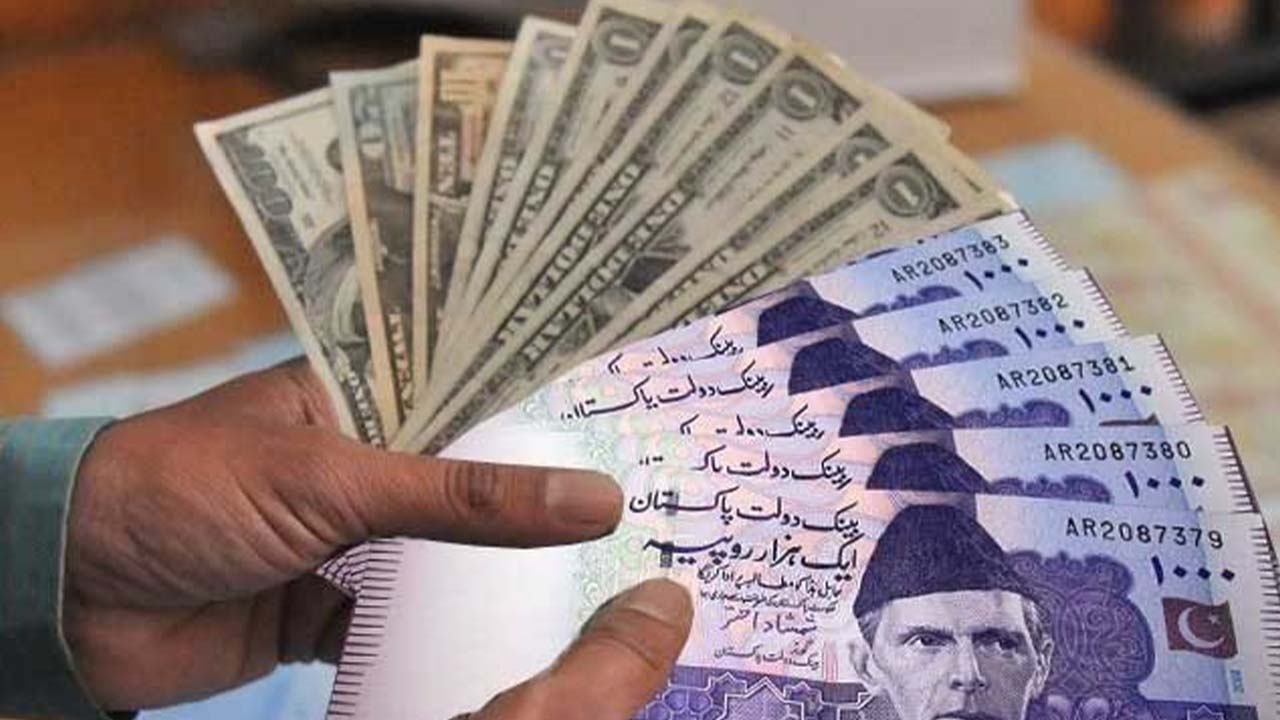
    Following days of increases in the interbank and open markets, the US dollar fell against the Pakistani rupee on Tuesday as a result of assurances from the government and State Bank of Pakistan (SBP) that the nation will have enough money for FY2022-23 after receiving IMF tranches.

    For the third straight session, the Pakistani rupee appreciated versus the US dollar in the interbank market on Tuesday. This occurred as a result of the market’s stability following the government’s assurance that it would successfully tackle the challenging economic situation.

    After the rupee dropped for 10 straight sessions in the final days of July and depreciated by about 5 per cent just last week, the dollar began to lose strength on Friday.

    Tuesday’s interbank trading ended with the rupee up a pitiful Rs0.46 or 0.19 per cent, reaching Rs238.38, from 238.84 in the previous trading session. In the meantime, the open market exchange rate remained constant at Rs241.

    Forex dealers report that the US dollar lost Rs0.94 in interbank trading and is now trading at Rs237.90. The banks are offering to sell dollars for Rs238.50.

    The US dollar dropped to Rs239 in the open market after crossing the Rs250 threshold.
  • One Euro is equal to one US dollar for the first time in 20 years

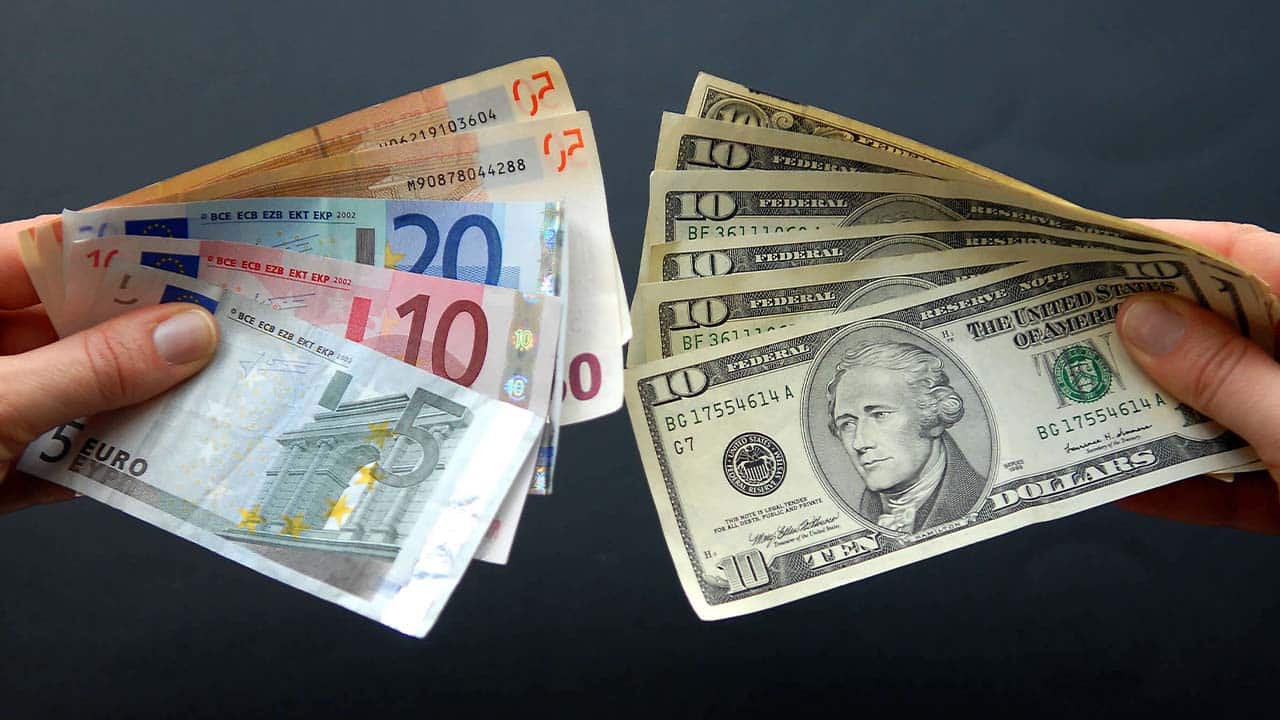
    One Euro is equal to one US dollar for the first time in 20 years

    The euro reached its lowest level in more than 20 years by 10:00 GMT on Tuesday, falling to $1.

    The stock markets declined as a result of the euro’s parity with the dollar and the possibility of additional central bank tightening as well as concerns over the global economy’s stability.

    Recent weeks have seen the US dollar soar to two-decade highs against a variety of other currencies, strengthening its position as the preferred currency for investors concerned about the economic outlook.

    A continuing rise in natural gas prices’ impact on the local economy as well as the conflict in Ukraine have made the euro particularly vulnerable. The European Central Bank has lagged behind competitors in increasing interest rates.

    The move towards parity, according to Mizuho analysts, is taking place as “the downturn in the eurozone is priced in,” and the overall environment does not appear to be improving risk sentiment.

    For the European Union, this is a “catastrophe,” according to SG Futures, as energy imports may become more expensive.

    “Energy supply is already unaffordable and as we head into winter it’ll likely get even worse,” it added on a tweet.

    The dollar index has been moving higher as a result of the euro’s weakness, as well as concerns about global economic growth as China, in particular, enforces strict zero-COVID policies to control new outbreaks.

    The presumption that the Federal Reserve will raise rates faster and further than peers is, however, arguably the main reason for the dollar’s increase.

  • Pakistani rupee nearing an all-time low

    Pakistani rupee nearing an all-time low

    On Monday, the Pakistani rupee (PKR) fell for the third consecutive session as depleted foreign exchange reserves and uncertainty over the renewal of the International Monetary Fund (IMF) programme weighed on the local currency.

    The PKR lost 0.48 per cent of its value against the US dollar in the interbank market.

    The rupee ended the day at Rs187.53, down 90 paisas, or 0.48 percent, according to the State Bank of Pakistan (SBP). After a 0.5 per cent decline, the rupee finished at Rs186.63 on Friday.

    Considering the latest decline, the local currency is only 65 paisas away from reaching an all-time low of Rs188.18 on April 7, 2022.

    Oil prices fell on Monday alongside equities, driven down by a strong dollar and demand fears stemming from China’s continued coronavirus lockdowns.

    Read more: Bitcoin falls to lowest since January after stock market

    The key cause driving the rupee’s decline against the greenback, according to Arif Habib Limited Head of Research Tahir Abbas, is uncertainty on the IMF front.

    Uncertainty about the programme led to a surge in selling pressure in Pakistani stocks, which fell throughout the day.

  • PKR continues losing streak against US dollar, sheds Rs1.48

    PKR continues losing streak against US dollar, sheds Rs1.48

    The Pakistani currency plummeted further against the US Dollar (USD) on April 20, with losses reported on the interbank exchange. At the completion of today’s session, the Pakistani rupee (PKR) lost Rs1.48 versus the US dollar.

    It declined by 0.80 per cent versus the greenback, closing at Rs185.92, after shedding Rs1.90 in the interbank market on Tuesday, April 19th, and concluding at Rs184.44. During today’s open market session, the Indian rupee (INR) fell to an intraday low of Rs185.95 over the US dollar.

    The local currency weakened against the dollar as businesses remained under pressure amid the ongoing dialogue between Pakistan and the International Monetary Fund (IMF). The Pakistani government is likely to undertake certain difficult and problematic steps in order to revive the local economy.

    Read more: PKR declines against US Dollar after winning for a week

    Oil prices rallied following steep losses the previous day as concerns about tighter supply from Russia and Libya arose, although industry data showed a decline in US crude inventories in the previous week.

  • Record-breaking: Current account experiences surplus of $959m

    Record-breaking: Current account experiences surplus of $959m

    According to reports, Pakistan’s current account witnessed an increase of $900 million during the first nine months of the current fiscal year (FY) 2020-21.

    The State Bank of Pakistan (SBP) released new data that shows a surplus of $959 million from July to March 2020-21. The surplus is big in comparison to the account deficit of $4.1 billion in the last fiscal year 2019-20.

    In March 2021, the current account also witnessed a slight deficit of $47 million. The reason for the deficit is huge import bills that stood at $5.22 billion. The import bill of services remained controlled at $628 million.

    On the other hand, the exports of goods and services also stood high at $2.64 billion and $564 million in March 2021.

    The remittances and strong support of overseas Pakistanis also exhibited a phenomenal contribution with record inflows of $2.72 billion.

    From July to March, the trade deficit of goods and services stood at $20.01 billion, which is seven per cent higher than the previous fiscal year.

    On the other hand, remittances witnessed a surplus of 26.2% or $4.4 billion. High remittances are one of the core reasons for the increase in the current account.

    According to experts, with almost three months left in the closing of the current financial year, the current account would likely remain in surplus.

    In addition to the inflow of foreign exchange, the financial support from the International Monetary Fund (IMF) and Euro Bonds also made the external account comfortable despite the fact that several debt repayments are pending.

    The value of the Rupee is volatile against the Dollar, but it remains within a range-bound limit, thereby favorable to the economy.