Tag: FBR

  • French visas for sale? FIA uncovers fraud involving FBR officer

    French visas for sale? FIA uncovers fraud involving FBR officer

    The FIA Anti-Corruption Circle in Islamabad has exposed a visa fraud scandal involving a second secretary of the Federal Board of Revenue (FBR), authorities said.


    According to the FIA, Atiqur Rehman, who is a serving second secretary at the FBR, fraudulently included two private individuals in an official government delegation by falsely presenting them as FBR officials, helping them to obtain French visas in exchange for Rs5.3 million.


    The investigation found that the French Embassy was misled through official government email correspondence, which falsely verified the two individuals, Muhammad Kamran and Aamir Shahzad as FBR employees. One of the men is a driver, while the other is a property dealer, the FIA said.


    Following the discovery of substantial evidence, the FIA registered a criminal case against the FBR officer and others involved. The agency has also decided to review visas issued to all FBR officers in light of the fraud.


    Kamran and Shahzad were reportedly offloaded and arrested at Islamabad International Airport by FIA immigration staff on suspicion. Investigators said the illicit funds were transferred to the FBR officer through banking channels, and complete financial records have been secured.


    An FIR has been registered at the FIA Anti-Corruption Circle Islamabad and a formal investigation is currently underway. Authorities added that Atiqur Rehman will be arrested shortly.

  • Smuggled vehicles, electronics worth Rs412 million confiscated in Islamabad

    Smuggled vehicles, electronics worth Rs412 million confiscated in Islamabad

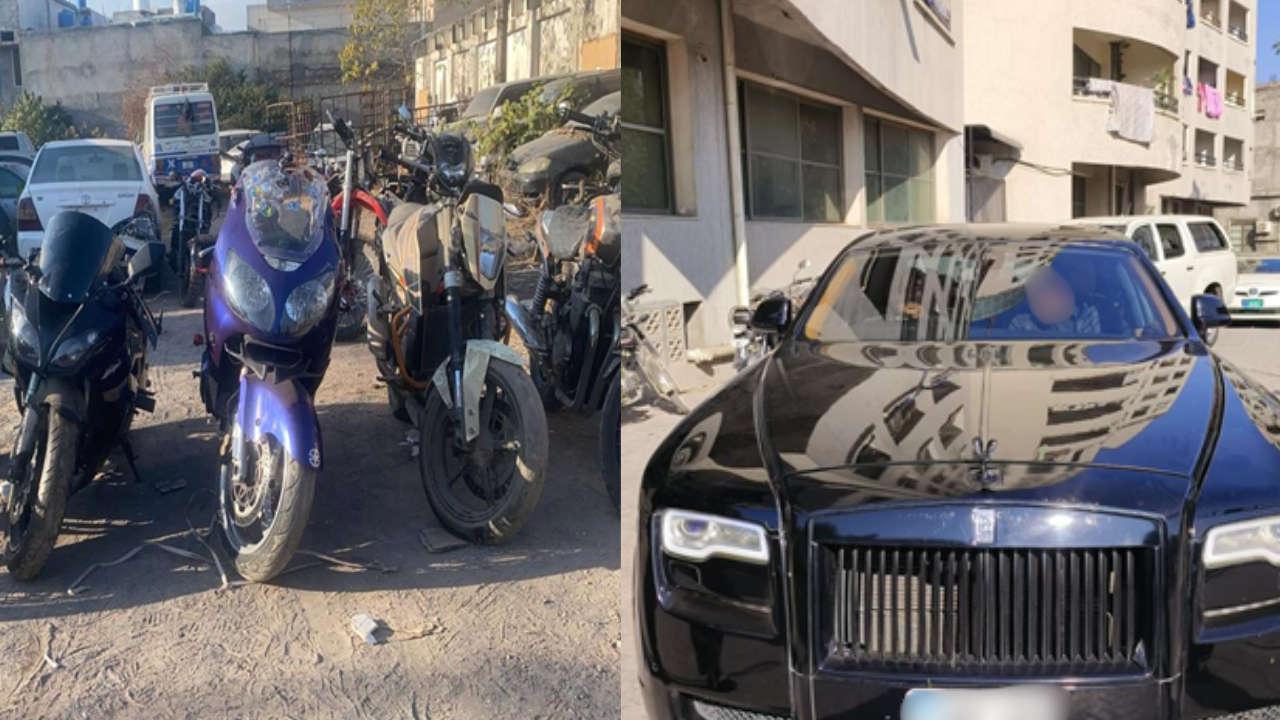
    The Collectorate of Customs Enforcement, Islamabad, has seized a large consignment of smuggled and non-duty-paid goods, including luxury vehicles, heavy bikes, and electronic items, with a total estimated value of Rs412.2 million. 

    The seizures were carried out during intelligence-based operations conducted late at night in Islamabad and surrounding areas.

    Acting on credible intelligence regarding the movement and concealment of illicit goods, Customs Enforcement teams conducted multiple targeted operations as part of an ongoing effort to curb smuggling, protect the national economy, and ensure compliance with customs laws.

    During the operations, officials recovered one Rolls-Royce, nineteen heavy Suzuki and Kawasaki bikes, and a significant quantity of laptops along with other electronic devices. Investigations confirmed that the seized items were non-duty-paid and had entered the country in violation of customs regulations.

    All recovered goods have been shifted to the designated Customs warehouse for detailed examination and safe custody. The consignments have been seized under the relevant provisions of the Customs Act, 1969, and further legal proceedings have been initiated. 

    The FBR remains committed to combating smuggling, curbing illicit trade, and safeguarding national revenue through sustained vigilance, intelligence-led enforcement, and strict implementation of customs laws.

    According to the FBR, Customs Enforcement Peshawar has also carried out intelligence-based operations over the past week, seizing smuggled foreign-origin cloth, cigarettes, and other contraband goods, along with vehicles involved in smuggling attempts. The total estimated value of goods seized in Peshawar during this period stands at Rs101.91 million.

  • Commerce ministry clears re-export of Afghan transit cargo stuck at ports

    Commerce ministry clears re-export of Afghan transit cargo stuck at ports

    The Ministry of Commerce has advised the Federal Board of Revenue (FBR) to permit the re-export of Afghan transit cargo to any seaport, subject to requests from exporters or their clearing and forwarding agents.


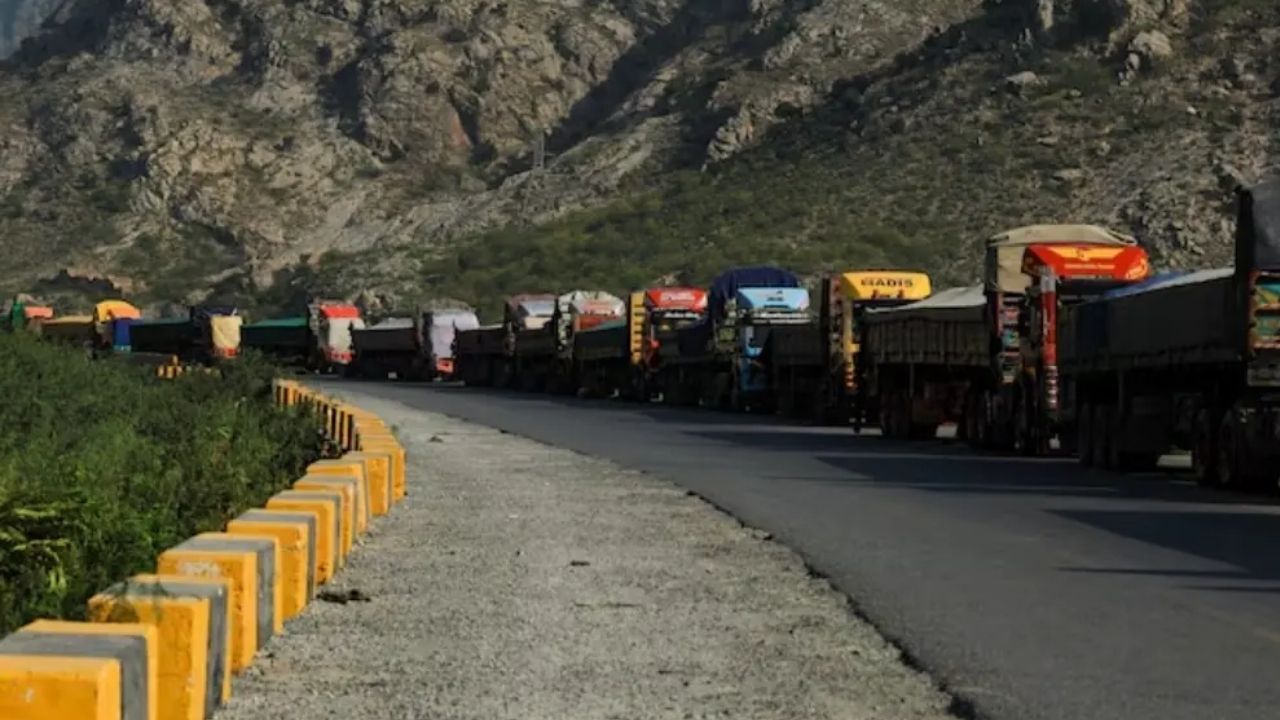
    In a letter addressed to the FBR, the ministry approved the re-export of all stranded Afghan transit trade cargo currently held at Karachi and Gwadar ports as well as at various Border Crossing Points (BCPs). The directive aims to facilitate the clearance of goods delayed due to border disruptions.


    In a separate communication, the commerce ministry also granted an exemption from para-6(4) of the Import Policy Order (IPO) 2022, which stipulates that imports under the Afghanistan Pakistan Transit Trade Agreement (APPTA) 2010 must be processed in accordance with rules notified by the federal government.


    “The stranded Afghan Transit Trade (ATT) containers originating from Vietnam and Malaysia are allowed to be re-exported to any seaport as per the request of exporters or their clearing/forwarding agents”. 

    “In view of the above, Federal Board of Revenue is requested to take further necessary action for the re-export of stranded ATT containers originating from Vietnam and Malaysia,” it added.

    The move follows an inter-ministerial meeting chaired by the joint secretary of the Ministry of Commerce to formulate a strategy for clearing cargo stuck at seaports and BCPs following the closure of the Pak-Afghan border on October 11, 2025.


    The meeting was attended by Director General Transit Trade Karachi Sanaullah Abro, Joint Secretary (FT-II) of the Ministry of Commerce Mrs. Maria Kazi, and other relevant stakeholders.


    During the meeting, the joint secretary (FT-II) stated that the ministry had already issued directives for the clearance of transit containers stranded at Karachi ports destined for Tajikistan and Uzbekistan, as well as UN humanitarian cargo and ATT containers originating from Vietnam and Malaysia.


    However, the director general transit trade informed participants that a significant number of transit containers from multiple countries remained stranded at Karachi ports and various BCPs, along with bulk cargo held at Gwadar port.

    She further noted that the Ministry of Commerce was receiving frequent requests from foreign missions, exporters and clearing agents for the clearance of stranded cargo, underscoring the need for a consistent policy framework to address congestion at ports and border crossings.

    The director general transit trade acknowledged the ministry’s efforts and said that while clear instructions had been received for certain categories of transit cargo, there was no guidance for the remaining consignments, accounting for nearly 50 percent of the total stranded cargo. He added that these goods could not be held indefinitely at ports and BCPs.


    According to the briefing, the remaining ATT cargo originated from several countries, including China, the UAE, Singapore and Turkiye, along with bulk DAP fertiliser cargo from Australia stranded at Gwadar port. A decision on this cargo was deemed necessary to ease congestion.


    Taking into account security considerations, the forum recommended four options for Central Asian transit cargo stuck at BCPs. These included allowing containers to cross via Taftan with a change of manifest at Karachi, permitting movement through Khunjerab/Sost with a revised manifest, allowing airlifting of containers, and re-exporting cargo to other seaports upon specific requests.


    For ATT cargo stranded at seaports and BCPs, the meeting recommended re-export to any seaport, subject to requests from exporters or their clearing agents.


    The forum also decided that the Ministry of Commerce would approach the Ministry of Foreign Affairs and UN agencies to seek approval for changes in the manifest of UN humanitarian cargo, which would then be cleared from Karachi ports and stored in warehouses.

  • Non-customs paid vehicles worth Rs158m seized in Quetta

    Non-customs paid vehicles worth Rs158m seized in Quetta

    Customs Enforcement in Quetta seized multiple non-customs paid vehicles worth an estimated Rs. 158 million from a showroom on Saryab Road. The operation was intelligence-based.

    The confiscated vehicles included a Toyota Revo 2020, three Toyota Land Cruisers, and a Honda Civic Hybrid 2007. All vehicles were non-customs paid, meaning they were imported without paying required duties and taxes.

    Federal Board of Revenue (FBR) said this operation underscores the continued commitment of Customs Enforcement Quetta to curb smuggling, safeguard government revenue, and protect the national economy.


    In recent months, the FBR has intensified its crackdown on non-customs paid vehicles nationwide. Such vehicles result in revenue losses for the national economy and affect legitimate businesses in the automobile sector.


    Customs authorities have conducted similar raids in major cities as part of a nationwide enforcement campaign. The FBR reiterated its resolve to eliminate smuggling, illicit trade, and corrupt practices.

  • Solar, smartphone users dodge higher taxes as shortfall lags behind FBR expectations

    Solar, smartphone users dodge higher taxes as shortfall lags behind FBR expectations

    The Federal Board of Revenue (FBR) missed its revised tax collection target for the first half of the fiscal year by Rs330 billion, a smaller shortfall than official estimates, reducing the immediate risk of a mini-budget that could have affected users of solar panels and smartphones among others.

    Provisional figures show the FBR collected Rs6.16 trillion during July to December. The amount was Rs545 billion lower than the original target for the period, but remained below the shortfall the tax authority had projected in briefings to the prime minister, where the gap was estimated at Rs564 billion.

    The reduced gap has eased pressure on the government to introduce additional tax measures in January that could have affected users of solar panels, mobile phones and banking services. However, the option of a mini-budget remains available under commitments made with the International Monetary Fund (IMF).

    Revenue collection in December was supported by Rs391 billion gathered on the last day of the month after banks were kept open until 10pm. The FBR also paid Rs38 billion in refunds during December, 47 percent less than the amount paid in the same month last year. 

    Despite these efforts, the authority missed the monthly target by Rs20 billion, though the shortfall was lower than in previous months.

    Tax collection during the first six months increased by 10 percent compared to the corresponding period last year, a rate well below what is required to achieve the annual revenue target of nearly Rs14 trillion.

    During the IMF programme review, the Fund reduced the FBR’s annual revenue target by Rs214 billion to account for lower inflation, weaker economic growth and the impact of floods. Both sides agreed that if revenue slippages widened, the government would introduce additional tax measures of at least Rs200 billion.

    Sources said Pakistan had informed the IMF that proposed measures could include increasing sales tax on solar panels, raising withholding tax on cash withdrawals, and increasing taxes on mobile and landline phone usage. Another proposal involved extending federal excise duty to confectionery and biscuits.

    Under one option, the withholding tax on cash withdrawals by non-filers could be raised from 0.8 percent to 1.5 percent. Another proposal involves increasing withholding tax on landline phones from 10 percent to 12.5 percent, which is expected to generate Rs20 billion annually. The withholding tax on cellular calls could also be increased from 15 percent to 17.5 percent, generating an estimated Rs24 billion per year.

    The government has also agreed to raise sales tax from 10 percent to 18 percent, while a proposal to impose a 16 percent federal excise duty on confectionery and biscuits could generate Rs70 billion annually.

    Tax-wise data shows income tax collection reached Rs3.03 trillion against a target of Rs3.3 trillion, recording nine percent growth. Sales tax collection stood at Rs2.09 trillion, reflecting a 10 percent increase. 

    Federal excise duty collection amounted to Rs400 billion, up 11 percent from last year, while customs duty collection reached Rs642 billion, showing an eight percent increase but remaining below the target.

    Meanwhile, exporters raised concerns with Prime Minister Shehbaz Sharif over the FBR’s decision to scrutinise income tax returns. Pakistan Retail Business Council Chairman Ziad Bashir wrote to the prime minister, warning that the move could “easily be misconstrued as an attempt to provoke friction between the business community and the elected leadership.”

    Earlier this week, the FBR issued instructions to its field formations to examine tax returns of exporters on the grounds that taxable incomes may have been understated following changes in the export taxation regime.

    The directives asked field formations to closely review declarations of major exporters within their jurisdictions to identify any abnormal reduction, inconsistency or change in reporting patterns following the amendment. 

    Bashir said the export sector was already operating under high effective tax rates, energy tariffs, interest rates and financing costs, adding that broad and open-ended scrutiny instructions sent a troubling signal to businesses. 

    “If this trajectory continues, one is compelled to ask whether the system is inadvertently or otherwise signalling that exporters should simply wind up their businesses,” Bashir stated.

    The FBR management has maintained that exporters will not be targeted and that cases selected for scrutiny will be monitored to avoid undue hardship.

  • FBR exempts Chinese imports to Gilgit-Baltistan from sales, income taxes

    FBR exempts Chinese imports to Gilgit-Baltistan from sales, income taxes

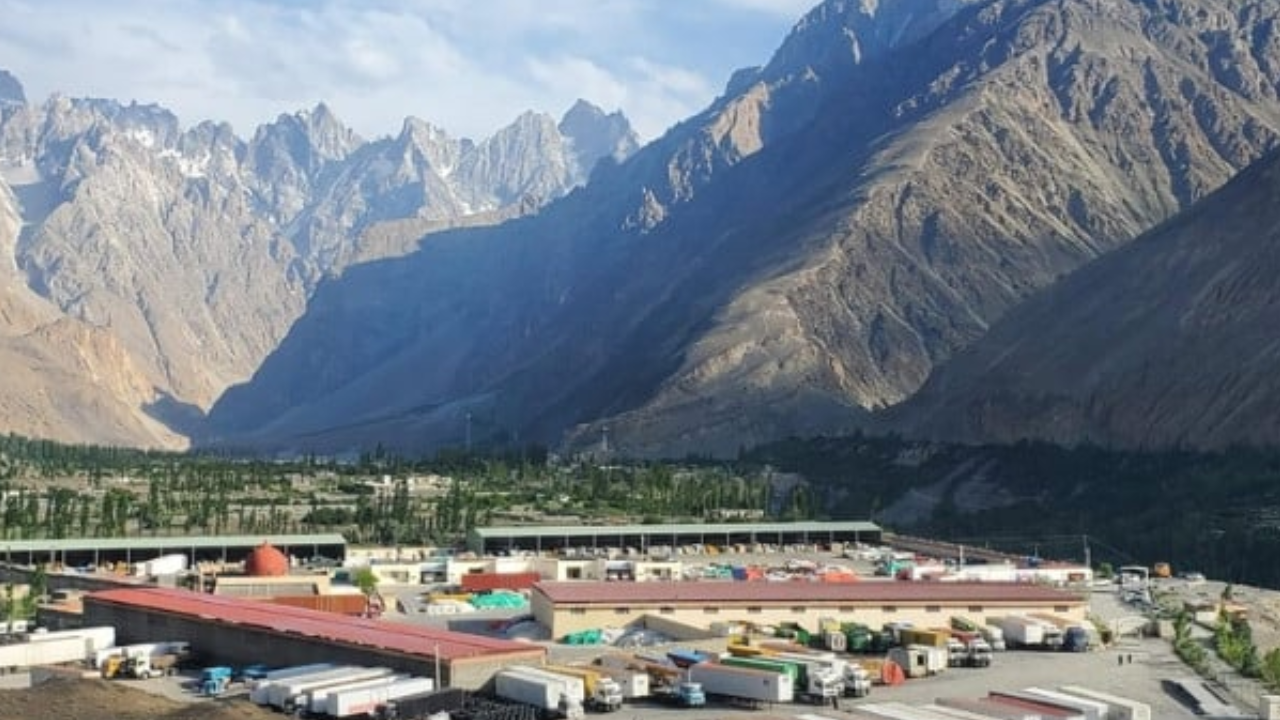
    The Federal Board of Revenue (FBR) has granted a tax exemption for Chinese products imported for use in Gilgit-Baltistan through the Customs Dry Port in Sost, eliminating the need for sales or income taxes as well as federal excise duty.

    As per the details, the exemption, effective immediately, has been formalised through a notification, which details a unique procedure for clearing goods imported from China.

    The notification includes over 2,403 Chinese products identified by particular Pakistan Customs Tariff (PCT) codes as eligible for this exemption.

    According to the outlined procedure, eligible imports will not incur taxes, provided that an online consignment-wise authorisation is obtained through the Customs Computerized Clearance System. This authorisation must be issued by an authorised representative of the Government of Gilgit-Baltistan using the designated format in the system.

    The notification states that the non-levy of taxes will be granted by the collector of Customs on a first-come, first-served basis within the specified quota. Any goods brought in for use in Gilgit-Baltistan that exceed the allocated quota will be liable for the applicable sales tax, income tax and federal excise duty.

    The Government of Gilgit-Baltistan is responsible for ensuring that all goods imported under this notification are exclusively used within the region’s boundaries.

    Additionally, the notification includes measures to prevent tax-exempt goods from being transported outside of Gilgit-Baltistan.

    In situations where Customs operations are hindered by protests or road blockages, the collector of Customs, may, in collaboration with the Government of Gilgit-Baltistan, suspend the exemption from sales tax, income tax and federal excise duty as stated in the notification.

    The collector of Customs also has the authority to deny tax exemptions in individual instances where there is significant misdeclaration that necessitates legal action under the Customs Act, 1969, or if goods cleared under this exemption are taken outside the jurisdiction of Gilgit-Baltistan.

    The board will also establish a special procedure to differentiate, monitor and clear goods imported via Sost intended for consumption in other regions of the country from those cleared under the exemption for Gilgit-Baltistan.

    All relevant laws and regulations under the Imports and Exports (Control) Act, 1950, the Import Policy Order and the Customs Act, 1969, will still apply to all goods imported through the Sost Dry Port, regardless of whether they are meant for use in Gilgit-Baltistan or other areas of the country.

  • No more PTA tax? National Assembly body sets deadline for report on possible revisions

    No more PTA tax? National Assembly body sets deadline for report on possible revisions

    The National Assembly’s Standing Committee on Finance and Revenue on Tuesday directed the Federal Board of Revenue (FBR) and Pakistan Telecommunication Authority (PTA) to prepare a detailed report on mobile phone taxes with instructions to include policy options, economic impact, international comparisons, and proposed revisions.

    Chairing the meeting, MNA Naveed Qamar voiced his concerns about increasing mobile phone taxes, arguing that these devices have been misclassified as luxury goods. “I am not pleased with the current designation of mobile phones as luxury items,” he remarked. Mr. Qamar directed both the FBR and the Tax Policy Office to reassess the existing tax rates applied to the import of mobile phones under personal baggage and registration programs. He indicated that the report should be finalized by March 2026, enabling the committee to review the situation ahead of the upcoming budget.

    MNA Qasim Gilani pointed towards the impact on consumers, emphasizing that taxes are levied again if phones are lost or stolen. “Individuals are utilizing smartphones for content creation, video sharing, and e-commerce,” he noted, mentioning that the taxes for older iPhone 6 models can soar to Rs35,000, whereas imports of iPhone 12 can incur taxes up to Rs100,000.

    MNA Sharmila Faruqi highlighted the expense associated with newer models. “The latest iPhone retails for Rs350,000, with an additional tax burden of Rs190,000,” she stated. Officials from the FBR clarified that taxes are based on the prices of devices rather than specific models.

    MNA Mirza Ikhtiar Baig emphasized the necessity for the government to establish a clear taxation system and dismissed the idea that smartphones are exclusively for affluent individuals.

    The PTA Chairman informed the committee that only six percent of premium phones are imported, while the majority are produced domestically. He also mentioned that 5G licenses are anticipated to be granted between February and March of the following year.

    FBR Chairman Rashid Mahmood Langrial noted that, in general, smartphone prices and taxes have declined, with the exception of certain major brands. He added that the mobile phone sector generated Rs82 billion in tax revenue during the last fiscal year.

    The committee proposed placing smartphones under the Eighth Schedule to provide relief for consumers. Tax officials explained that the Ninth Schedule currently governs telecom items, whereas the Eighth Schedule offers concessions. They also highlighted that except for Apple, most smartphones are now produced locally.

  • Govt finalises plan for new cybersecurity authority

    Govt finalises plan for new cybersecurity authority

    The federal government has decided to set up a Cybersecurity Authority to strengthen the country’s digital security landscape and safeguard critical information systems. 

    The Ministry of Information Technology has confirmed that a preliminary draft of the Cybersecurity Act has been created and distributed to stakeholders for consultation. 

    The ministry stated that a national framework for digital protection is already provided by the National Cybersecurity Policy and is presently being implemented under the Digital Economy Enhancement Program.

    The Secure Data Exchange Layer and digital identification efforts have advanced, according to government records. The Federal Board of Revenue (FBR), NADRA, and the telecom industry are all recognized as key digital infrastructure. Additionally, the process of designating immigration and passport services as critical infrastructure is currently in progress.

    According to officials, the new authority will be in charge of enforcing cybersecurity programs nationwide and suggesting cybersecurity measures for vital national infrastructure.

    Meanwhile, the Pakistan Information Security Framework 2025 is under development, and until the new authority becomes functional, the CERT Council consisting of 14 public and private sector institutions will continue to lead national cyber incident coordination and response.

  • ‘FBR to tax TikTokers’

    ‘FBR to tax TikTokers’

    In an effort to boost tax collection, the Federal Board of Revenue (FBR) is strategising to impose taxes on TikTokers, it has emerged.

    As per the details, Senator Faisal Vawda informed a meeting of the Senate Standing Committee on Finance and Revenue, chaired by Senator Saleem Mandviwalla, that the tax watchdog was planning to tax TikTokers’ income.

    He went on to say that the largest share of recoverable taxes would come from Punjab as the province has the largest number of internet users.

    The move comes days after FBR collected data of around 100,000 individuals flaunting their wealth on social media, with the revenue watchdog reportedly poising to take action against them.

    According to reports, FBR will audit 100,000 wealthy people in the initial phase and people showcasing their luxury lifestyle online, including mansions, expensive cars, jewelry and other assets, will have to disclose their source of income. Individuals wearing clothes worth as much as $20,000 as a sign of the extreme luxury at weddings, will also come under the tax net.

    Meanwhile, the tax authority will also compare income tax returns submitted last year with those filed this year.

    FBR has made it clear that individuals who provide accurate and updated information in their income tax returns will not be penalised. However, those who fail to disclose their lavish spending or luxury assets risk facing strict legal consequences.

  • Almost one lac social media users under FBR radar for flaunting untaxed luxury

    Almost one lac social media users under FBR radar for flaunting untaxed luxury

    The Federal Board of Revenue (FBR) has collected data of around 100,000 individuals flaunting their wealth on social media, with the revenue watchdog poised to take action against them, reports have said citing sources.

    According to reports, FBR will audit 100,000 wealthy people in the initial phase. People showcasing their luxury lifestyle online, including mansions, expensive cars, jewellery, and other assets, have to disclose the source of income.

    Individuals wearing suits worth as much as $20,000, a sign of the extreme luxury at weddings, will also come under the tax net.

    Moreover, the tax authority will compare income tax returns submitted last year with those filed this year.

    FBR has made it clear that individuals who provide accurate and updated information in their income tax returns will not be penalised. However, those who fail to disclose their lavish spending or luxury assets risk facing strict legal consequences, according to reports.

    Officials urged citizens to update their tax returns promptly to avoid complications. “Nothing will be said to those who submit correct and updated income details,” reports quoted FBR as saying.