The Ministry of Commerce has advised the Federal Board of Revenue (FBR) to permit the re-export of Afghan transit cargo to any seaport, subject to requests from exporters or their clearing and forwarding agents.
In a letter addressed to the FBR, the ministry approved the re-export of all stranded Afghan transit trade cargo currently held at Karachi and Gwadar ports as well as at various Border Crossing Points (BCPs). The directive aims to facilitate the clearance of goods delayed due to border disruptions.
In a separate communication, the commerce ministry also granted an exemption from para-6(4) of the Import Policy Order (IPO) 2022, which stipulates that imports under the Afghanistan Pakistan Transit Trade Agreement (APPTA) 2010 must be processed in accordance with rules notified by the federal government.
“The stranded Afghan Transit Trade (ATT) containers originating from Vietnam and Malaysia are allowed to be re-exported to any seaport as per the request of exporters or their clearing/forwarding agents”.
“In view of the above, Federal Board of Revenue is requested to take further necessary action for the re-export of stranded ATT containers originating from Vietnam and Malaysia,” it added.
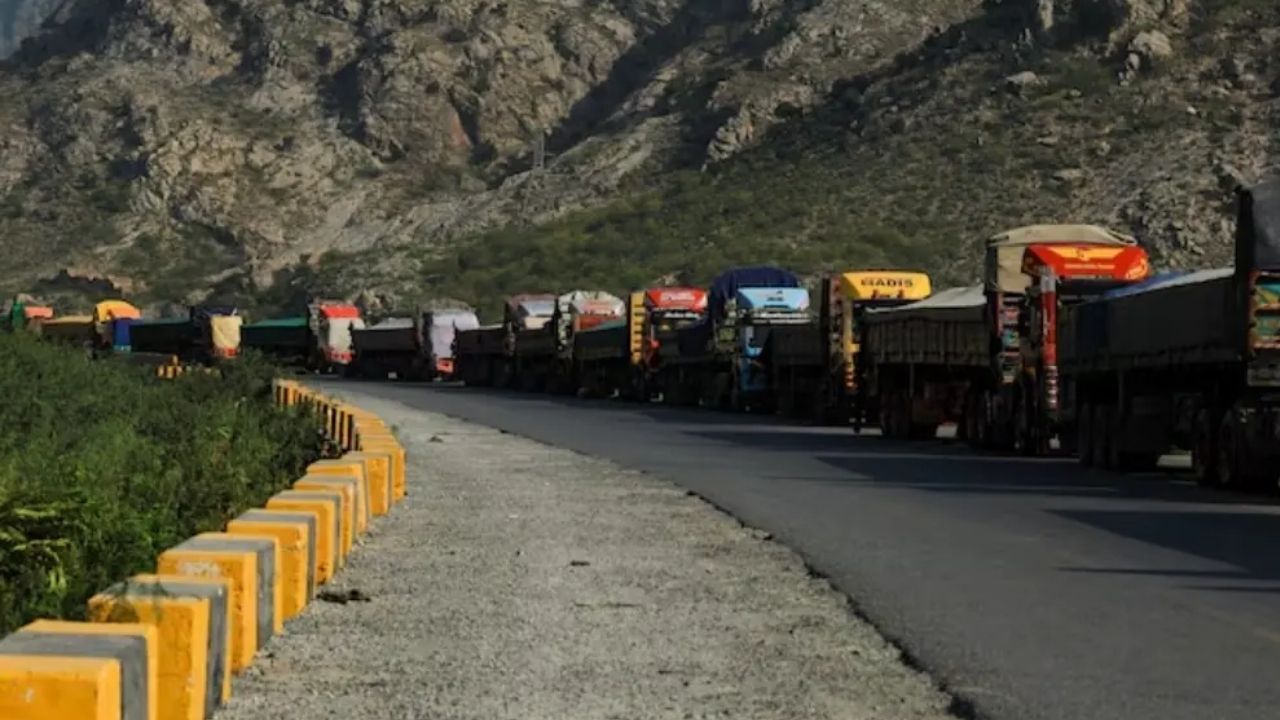
The move follows an inter-ministerial meeting chaired by the joint secretary of the Ministry of Commerce to formulate a strategy for clearing cargo stuck at seaports and BCPs following the closure of the Pak-Afghan border on October 11, 2025.
The meeting was attended by Director General Transit Trade Karachi Sanaullah Abro, Joint Secretary (FT-II) of the Ministry of Commerce Mrs. Maria Kazi, and other relevant stakeholders.
During the meeting, the joint secretary (FT-II) stated that the ministry had already issued directives for the clearance of transit containers stranded at Karachi ports destined for Tajikistan and Uzbekistan, as well as UN humanitarian cargo and ATT containers originating from Vietnam and Malaysia.
However, the director general transit trade informed participants that a significant number of transit containers from multiple countries remained stranded at Karachi ports and various BCPs, along with bulk cargo held at Gwadar port.
She further noted that the Ministry of Commerce was receiving frequent requests from foreign missions, exporters and clearing agents for the clearance of stranded cargo, underscoring the need for a consistent policy framework to address congestion at ports and border crossings.
The director general transit trade acknowledged the ministry’s efforts and said that while clear instructions had been received for certain categories of transit cargo, there was no guidance for the remaining consignments, accounting for nearly 50 percent of the total stranded cargo. He added that these goods could not be held indefinitely at ports and BCPs.
According to the briefing, the remaining ATT cargo originated from several countries, including China, the UAE, Singapore and Turkiye, along with bulk DAP fertiliser cargo from Australia stranded at Gwadar port. A decision on this cargo was deemed necessary to ease congestion.
Taking into account security considerations, the forum recommended four options for Central Asian transit cargo stuck at BCPs. These included allowing containers to cross via Taftan with a change of manifest at Karachi, permitting movement through Khunjerab/Sost with a revised manifest, allowing airlifting of containers, and re-exporting cargo to other seaports upon specific requests.
For ATT cargo stranded at seaports and BCPs, the meeting recommended re-export to any seaport, subject to requests from exporters or their clearing agents.
The forum also decided that the Ministry of Commerce would approach the Ministry of Foreign Affairs and UN agencies to seek approval for changes in the manifest of UN humanitarian cargo, which would then be cleared from Karachi ports and stored in warehouses.