Tag: Gaza

  • ‘It’s so painful, hurts all my body’: Pep delivers powerful Gaza speech at doctorate acceptance

    ‘It’s so painful, hurts all my body’: Pep delivers powerful Gaza speech at doctorate acceptance

    Manchester City manager Pep Guardiola has delivered a powerful speech during the acceptance of an honorary degree by the University of Manchester for his contributions to the city both on and off the pitch.

    Standing up for Gaza amidst the ongoing bloodshed by occupying Israeli forces, the Manchester City manager said it pains him to see what has been unfolding in the region for the past year or so.

    “It’s so painful what we see in Gaza. It hurts my whole body. And let me be clear, it’s not about ideology. It’s not about whether I’m right, or you’re wrong. Come on… it’s just about the love of life, about the care of your neighbour,” he said while addressing the ceremony at the historic Whitworth Hall.

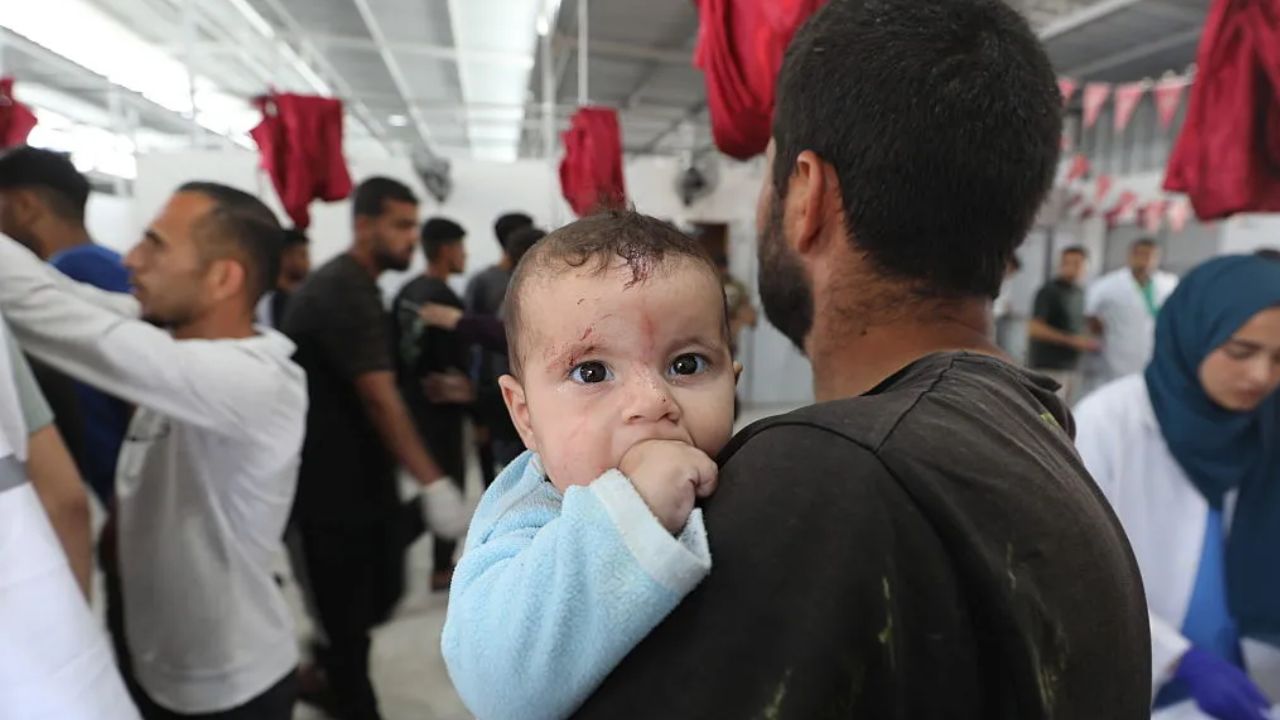
    “We see innocent four-year-old boys and girls being killed by bombs, thinking it’s not our business… but be careful… the next one will be ours. The next kids will be ours. Sorry, but I see my kids when I wake up every morning since the nightmare started with the infants in Gaza. And I’m so scared. Maybe this image feels far away from where we are living now. And you might ask what we can do,” he added.

    Guardiola also spoke on the importance of standing up for what’s right and not taking the backseat thinking about what might happen if one speaks up. “There is a story I’m reminded of… a forest is on fire. All the animals are terrified and helpless but a small bird keeps flying back and forth… to the sea, carrying drops of water in its little beak. A snake laughs and asks, why, ‘You will never put the fire out’, to which the bird replies, ‘Yes, but I’m just doing my part’.”

    “The bird knows it won’t stop the fire, but it refuses to do nothing. In a world that often tells us we are too small to make a difference, that story reminds me that power is not about the scale. It’s about choice. About showing up, about refusing to be silent, or still when it matters most,” he said.

  • US govt revokes Harvard’s right to enroll foreign students

    US govt revokes Harvard’s right to enroll foreign students

    Donald Trump’s administration on Thursday revoked Harvard’s ability to enroll foreign nationals — more than a quarter of the student body — in a dramatic escalation of the US president’s fight against the prestigious university.

    The school in Cambridge, Massachusetts quickly slammed the move as “unlawful” and said it would hurt both the campus and the country, while one student said the community was “panicking.”

    Trump is furious at Harvard — which has produced 162 Nobel prize winners — for rejecting his demand that it submit to oversight on admissions and hiring over his claims that it is a hotbed of anti-Semitism and “woke” liberal ideology.

    The loss of such a large proportion of the student body could prove to be a huge financial blow to Harvard, which charges tens of thousands of dollars a year in tuition.

    “Effective immediately, Harvard University’s Student and Exchange Visitor (SEVIS) Program certification is revoked,” Homeland Security Secretary Kristi Noem wrote in a letter to the Ivy League institution, referring to the main system by which foreign students are permitted to study in the United States.

    Harvard, which has sued the government over a separate raft of punitive measures, quickly fired back, calling the move “unlawful.”

    “We are fully committed to maintaining Harvard’s ability to host our international students and scholars,” it said in a statement, adding that it was working to offer students guidance and support.

    “This retaliatory action threatens serious harm to the Harvard community and our country, and undermines Harvard’s academic and research mission.”

    Karl Molden, an international student from Austria, said he had applied to study at Oxford in Britain because he feared such measures.

    “It’s scary and it’s saddening,” the 21-year-old government and classics student told AFP.

    “I love Harvard, and getting into the school has been the greatest privilege of my life.

    “It’s definitely going to change the perception of… students who (might) consider studying there — the US is getting less of an attractive spot for higher education.”

    Leaders of the Harvard chapter of the American Association of University Professors called the move “the latest in a string of nakedly authoritarian and retaliatory moves against America’s oldest institution of higher education.”

    “The Trump administration is unlawfully seeking to destroy higher education in the United States. It now demands that we sacrifice our international students in the process. Universities cannot acquiesce to such extortion,” it said.

    ‘Everyone’s panicking’

    Last month, Trump threatened to stop Harvard from enrolling foreign students if it did not agree to government demands that would put the private institution under outside political supervision.

    “As I explained to you in my April letter, it is a privilege to enroll foreign students,” Noem wrote.

    “All universities must comply with Department of Homeland Security requirements, including reporting requirements under the Student and Exchange Visitor Program regulations, to maintain this privilege,” she said.

    “As a result of your refusal to comply with multiple requests to provide the Department of Homeland Security pertinent information while perpetuating an unsafe campus environment that is hostile to Jewish students, promotes pro-Hamas sympathies, and employs racist ‘diversity, equity, and inclusion’ policies, you have lost this privilege.”

    More than 27 percent of Harvard’s enrollment was made up of foreign students in the 2024-25 academic year, according to university data.

    Fourth-year US student Alice Goyer told AFP “no one knows” what the development would mean for international students already enrolled.

    “We just got the news, so I’ve been getting texts from a lot of international friends, and I think everyone’s just — no one knows,” she said.

    “Everyone’s panicking a bit.”

    On whether students would willingly transfer to other institutions, as suggested by Noem in the letter, Goyer said, “I doubt people would do that.”

    “I would hope maybe there’s going to be a legal battle that’ll take place.”

  • 14,000 babies could die in 48 hours in Gaza: UN warns

    14,000 babies could die in 48 hours in Gaza: UN warns

    The United Nations (UN) humanitarian chief, Tom Fletcher, has warned that 14,000 babies in Gaza could die within 48 hours if aid shipments do not reach the region.

    Speaking on BBC Radio 4’s Today programme, Fletcher emphasised that thousands of trucks carrying essential supplies, including baby food and nutritional aid, are ready for delivery.

    Officials in Gaza say that at least 326 Palestinians have died from hunger since March 2 due to what they call Israel’s “starvation policy.” The UN has also warned that 14,000 babies could die within the next 48 hours if help does not arrive.


    European nations increase pressure on Israel to halt Gaza onslaught


    The European Union on Tuesday said it would review its trade
    cooperation deal with Israel over alleged human rights abuses brought about by the Israeli blockade of humanitarian aid into Gaza.

    In London, British Foreign Secretary David Lammy said in parliament that Israel’s policy of blocking aid and “expanding the war” in Gaza was “indefensible”.

    European countries ramped up pressure on Israel to abandon its intensified genocide in Gaza and let more aid into the war-ravaged territory, where rescuers said fresh attacks killed dozens of people on Tuesday.

    An AFP journalist saw some trucks entering the Kerem Shalom crossing into Gaza from the Israeli side on Tuesday, a day after the UN said it had been cleared to send aid for the first time since Israel imposed a total blockade on March 2, sparking severe shortages of food and medicine.

    The dire humanitarian situation in the Strip has prompted an international outcry, with the European Union saying it would review its trade cooperation deal with Israel over alleged human rights abuses following a foreign ministers’ meeting on Tuesday.

    The bloc’s top diplomat Kaja Kallas said “a strong majority” of its 27 member states backed the move, adding “the countries see that the situation in Gaza is untenable… and what we want is to unblock the humanitarian aid”.

    Sweden said it would press the EU to level sanctions against Israeli ministers.

    “Since we do not see a clear improvement for the civilians in Gaza, we need to raise the tone further,” said Foreign Minister Maria Malmer Stenergard.

    And Britain suspended free-trade negotiations with Israel, summoned the Israeli ambassador and said it was imposing sanctions on settlers in the occupied West Bank in its toughest actions so far against Israel’s conduct of the war.

    “Blocking aid, expanding the war, dismissing the concerns of your friends and partners. This is indefensible and it must stop,” Foreign Secretary David Lammy said in an impassioned speech to parliament.

    Responding to Britain’s moves, Israeli foreign ministry spokesman Oren Marmorstein said “external pressure will not divert Israel from its path in defending its existence and security”.

    Israel on Tuesday rejected a European Union decision to review the bloc’s cooperation deal in a bid to pressure Israel over its intensified offensive in Gaza.

    “We completely reject the direction taken in the statement, which reflects a total misunderstanding of the complex reality Israel is facing,” Israeli foreign ministry spokesman Oren Marmorstein said in a message on X.

  • Israel launches ‘initial stages’ of new Gaza operation: military

    Israel launches ‘initial stages’ of new Gaza operation: military

    The Israeli military said Saturday it had launched “extensive strikes” in the Gaza Strip over the past day as part of the “initial stages” of a fresh offensive on the besieged Palestinian territory.

    The strikes were part of “the expansion of the battle in the Gaza Strip, with the goal of achieving all the war’s objectives, including the release of the abducted and the defeat of Hamas”, Israel’s army said in a statement in Arabic on Telegram.

    Gaza’s civil defence agency earlier said Israeli strikes on Gaza had killed 100 people on Friday.

    The offensive, known as “Operation Gideon’s Chariots”, comes as Israel faces pressure to lift a sweeping aid blockade in return for a US-Israeli hostage released by Hamas.

    Israel resumed its military offensive in Gaza on March 18 after a two-month truce in its war against Hamas, which was triggered by an attack by the Palestinian group in October 2023.

    That assault resulted in the deaths of 1,218 people on the Israeli side, mostly civilians, according to an AFP tally based on official figures.

    Of the 251 hostages taken during the attack, 57 remain in Gaza, including 34 the military says are dead.

    The health ministry in Gaza said 2,985 people have been killed since Israel resumed strikes on March 18, taking the war’s overall toll to 53,119.

    Israeli media reported on Friday that the military had stepped up its offensive in line with a plan approved by the government earlier this month, though there had not been any formal announcement of an expanded campaign.

    The military said its forces had “struck over 150 terror targets throughout the Gaza Strip” in 24 hours.

    The latest operation comes as Prime Minister Benjamin Netanyahu faces increasing pressure to lift a sweeping aid blockade on Gaza, as NGOs warn of critical shortages of food, clean water, fuel and medicines.

    The return to fighting since March 18 has drawn international condemnation, with the UN’s rights chief on Friday denouncing the renewed attacks — and what he described as an apparent push to permanently displace the population.

    ‘People are starving’

    US President Donald Trump acknowledged on Friday that “a lot of people are starving” in the besieged Palestinian territory.

    “We’re looking at Gaza. And we’re going to get that taken care of,” Trump told reporters in Abu Dhabi, on a regional tour that excluded key ally Israel.

    The Arab League is to meet in Baghdad on Saturday to discuss regional crises, with Gaza expected to be high on the agenda.

    United Nations chief Antonio Guterres will attend the summit, and Spanish Prime Minister Pedro Sanchez — who has sharply criticised Israel’s offensive in Gaza — is expected to address it as a guest.

  • Ben & Jerry’s cofounder removed from Senate after Gaza protest

    Ben & Jerry’s cofounder removed from Senate after Gaza protest

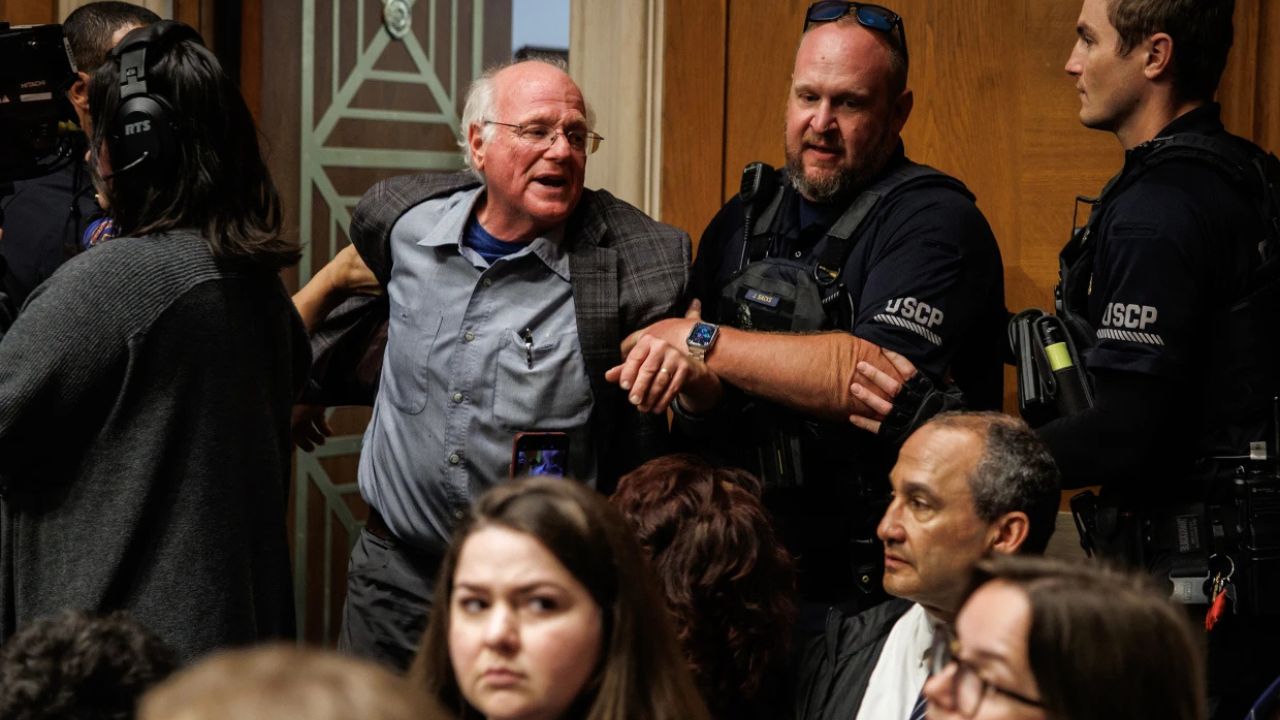
    Ben Cohen, co‑founder of Ben & Jerry’s ice cream and a longtime progressive activist, told AFP he was speaking for millions of Americans outraged by the “slaughter” in Gaza after his removal from a US  Senate hearing on Wednesday.

    Cohen, 74, was among a group of protesters who startled Health Secretary  Robert F Kennedy Jr. by interrupting his testimony about his department’s budget proposal.

    Shouting that “Congress pays for bombs to kill children in Gaza” while lawmakers move to slash Medicaid — the health insurance program for low‑income families — the businessman and philanthropist was placed in handcuffs by Capitol Police.

    He urged senators to press Israel to let food reach “starving kids” as he was led away.

    “It got to a point where we had to do something,” Cohen said in an interview after his release, calling it “scandalizing” that the US approved “$20 billion worth of bombs” for Israel even as social programs are squeezed back home.

    “The majority of Americans hate what’s going on, what our country is doing with our money and in our name,” he said.

    US public opinion toward Israel has become increasingly unfavorable, especially among Democrats, according to a Pew Research Center Poll last month.

    Beyond the spending, Cohen framed the issue as a moral and “spiritual” breach.

    “Condoning and being complicit in the slaughter of tens of thousands of people strikes at the core of us as far as human beings and what our country stands for,” he said, pointing to the fact that the United States pours roughly half its discretionary budget into war‑related spending.

    “If you spent half of that money making lives better around the world, I think there’d be a whole lot less friction.”

    Invoking a parenting analogy, he added: “You go to a three-year-old who goes around hitting people and you say ‘Use your words.’ There’s issues between countries but you can work them out without killing.”

    A longtime critic of Israeli policy, Cohen last year joined prominent Jewish figures in an open letter opposing the pro‑Israel lobby AIPAC. “I understand that I have a higher profile than most people and so I raise my voice, it gets heard. But I need you and others to understand that I speak for millions of people who feel the same way.”

    Israel intensified the genocide of Palestinians in Gaza after the October  7, 2023, attack by Hamas, which resulted in the deaths of 1,218 people on the Israeli side, mostly civilians, according to an AFP tally based on official figures.

    Israeli military aggression has killed at least 52,928 people in Gaza, mostly civilians, according to figures from the territory’s Hamas-run health ministry.

    Gaza is at “critical risk of famine,” with the entire population facing a food crisis after more than two months of an Israeli aid blockade, and 22 percent facing a humanitarian “catastrophe,” a UN-backed food security monitor warned this week.

  • Gazans struggling to survive as Israel plans for ‘conquest’

    Gazans struggling to survive as Israel plans for ‘conquest’

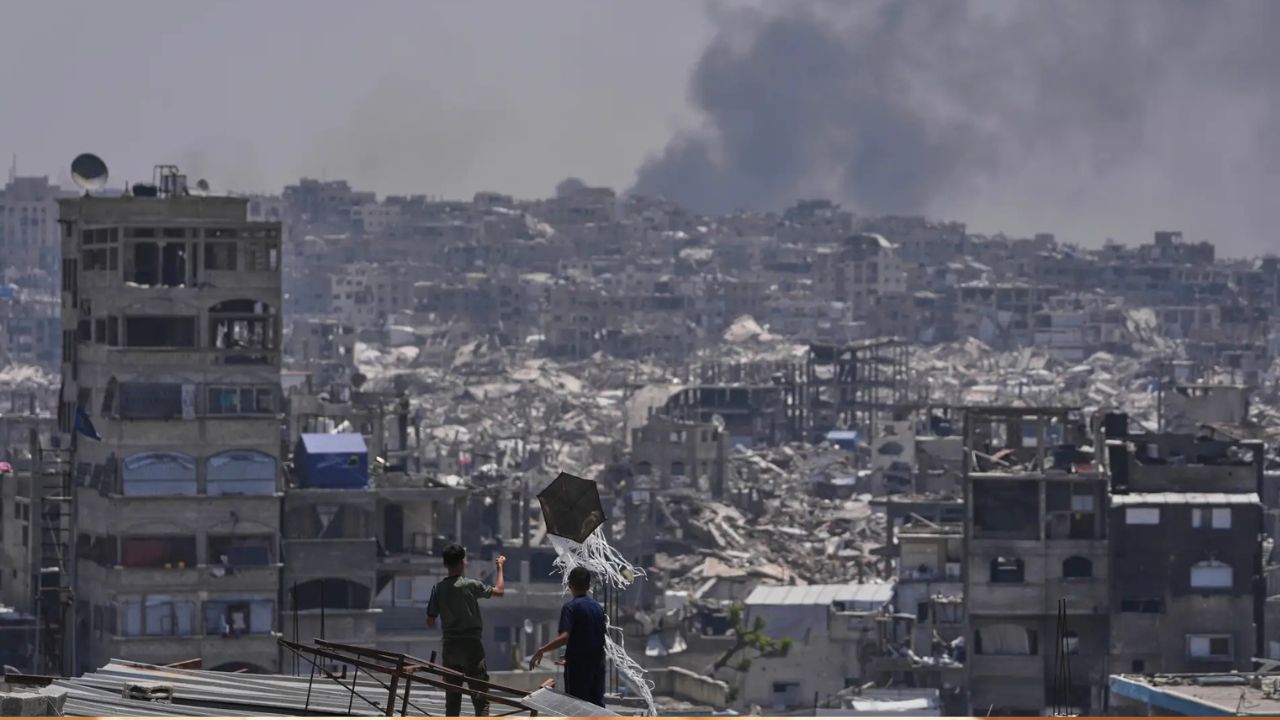
    Israel’s plan for the “conquest” of Gaza has sparked renewed fears, but for many of the territory’s residents, the most immediate threat to their lives remains the spectre of famine amid a months-long Israeli blockade.

    The plan to expand military operations, approved by Israel’s security cabinet overnight, includes holding territories in the besieged Gaza Strip and moving the population south “for their protection”, an Israeli official said.

    But Gaza residents told AFP that they did not expect the new offensive would make any significant changes to the already dire humanitarian situation in the small coastal territory.

    “Israel has not stopped the war, the killing, the bombing, the destruction, the siege, and the starvation — every day — so how can they talk about expanding military operations?” Awni Awad, 39, told AFP.

    Awad, who lives in a tent in the southern Gaza city of Khan Yunis after being displaced by Israeli evacuation orders, said that his situation was already “catastrophic and tragic”.

    “I call on the world to witness the famine that grows and spreads every day,” he said.

    The UN’s World Food Programme (WFP) in late April said it had depleted all its foods stocks in Gaza due to Israel’s blockade on all supplies since March 2.

    Aya al-Skafy, a resident of Gaza City, told AFP her baby died because of malnutrition and medicine shortages last week.

    “She was four months old and weighed 2.8 kilograms (6.2 pounds), which is very little. Medicine was not available,” she said.

    “Due to severe malnutrition, she suffered from blood acidity, liver and kidney failure, and many other complications. Her hair and nails also fell out due to malnutrition.”

    Umm Hashem al-Saqqa, another Gaza City resident, fears her five-year-old son might face a similar fate, but is powerless to do anything about it.

    “Hashem suffers from iron deficiency anaemia. He is constantly pale and lacks balance, and is unable to walk due to malnutrition,” she told AFP.

    “There is no food, no medicine, and no nutritional supplements. The markets are empty of food, and the government clinics and pharmacies have nothing.”

    ‘Distract the world’

    Gaza City resident Mohammed al-Shawa, 65, said that Israel’s new military roadmap changes little as it already controls most of Gaza.

    “The Israeli announcement about expanding military operations in Gaza is just talk for the media, because the entire Gaza Strip is occupied, and there is no safe area in Gaza,” he said.

    The UN’s Office for the Coordination of Humanitarian Affairs (OCHA) estimates that 69 percent of Gaza has now been either incorporated into one of Israel’s buffer zones, or is subject to evacuation orders.

    That number rises to 100 percent in the southern governorate of Rafah, where over 230,000 people lived before the genocide but which has now been entirely declared a no-go zone.

    “There is no food, no medicine, and the announcement of an aid distribution plan is just to distract the world and mislead global public opinion,” Shawa said, referring to reports of a new Israeli plan for humanitarian aid delivery that has yet to be implemented.

    “The reality is that Israel is killing Palestinians in Gaza by bombing, shooting, or through starvation and denial of medical treatment,” he said.

    Israel says that its renewed bombardments and the blockade of Gaza are aimed at forcing Hamas to release hostages held in the territory.

    Israeli Finance Minister Bezalel Smotrich praised the new plan for Gaza on Monday and evoked a proposal previously floated by US President Donald Trump to displace the territory’s residents elsewhere.

    The far-right firebrand said he would push for the plan’s completion, until “Hamas is defeated, Gaza is fully occupied, and Trump’s historical plan is implemented, with Gaza refugees resettled in other countries”.

  • Pope Francis leaves one final gift for the children of Gaza

    Pope Francis leaves one final gift for the children of Gaza

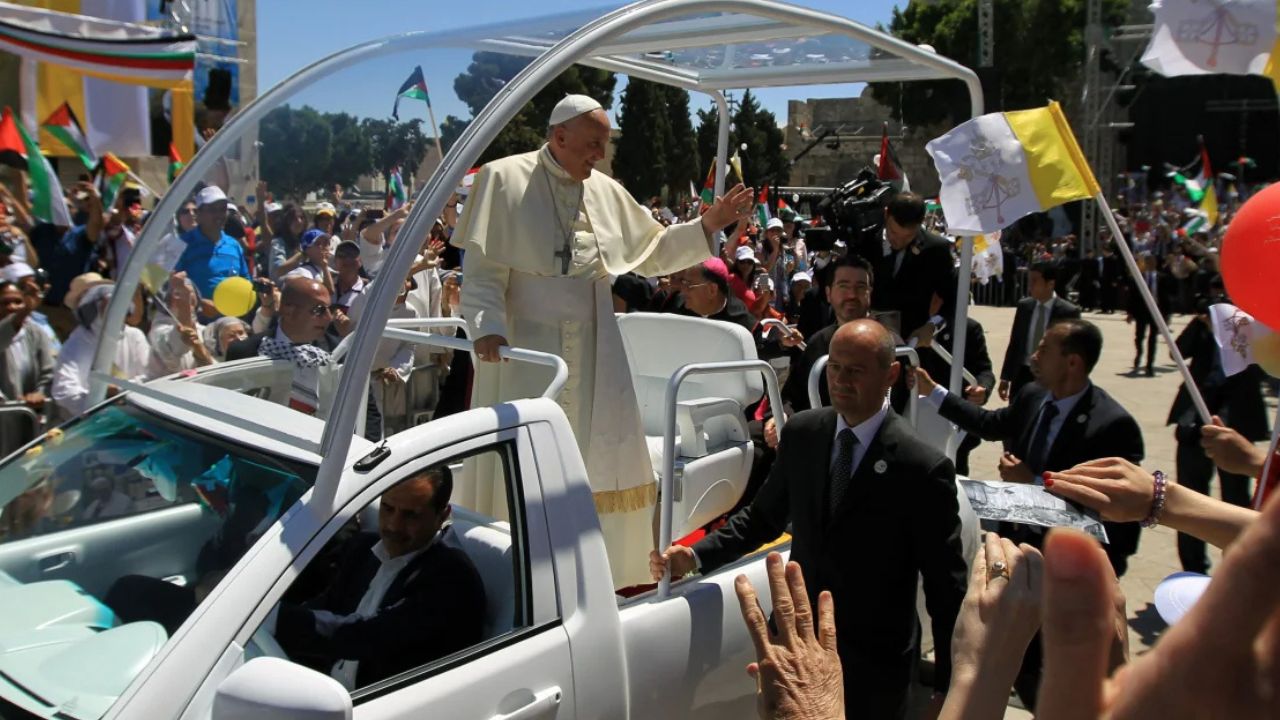
    The late Pope Francis Jorge Mario Bergoglio (late), one of the most staunch supporters of ending Israel’s genocide in Gaza, has left one last gift for the children of the besieged strip.

    One of the late Pontiff’s popemobiles, open roof vehicles used by the head of the Church to mingle with followers, is being transformed into a mobile health unit for the children of Gaza, Vatican News reported on Sunday.

    The repurposed popemobile is being outfitted with equipment for diagnosis, examination, and treatment, including rapid tests for infections, diagnostic instruments, vaccines, suture kits, and other life-saving supplies, Vatican News reported while citing Caritas, a Catholic aid network in Jerusalem.
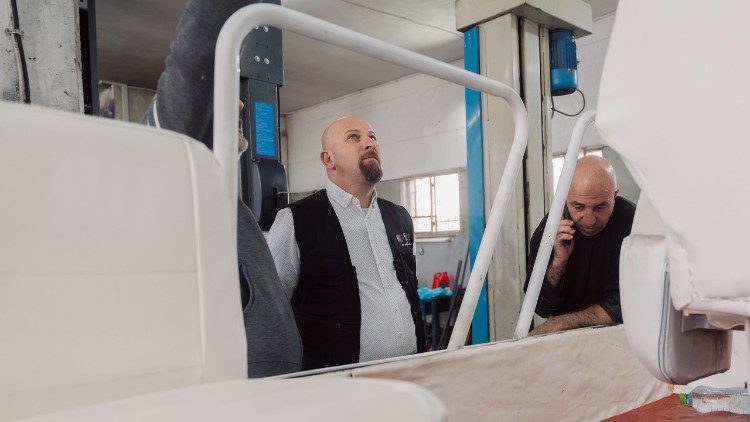
    In one of his final wishes before his passing, Francis entrusted the popemobile used during his 2014 pilgrimage to the Holy Lands to Caritas, Vatican News said, to help respond to the dire humanitarian situation in Gaza.

    Francis asked that the vehicle be used to help injured and malnourished children in the war-torn Palestinian enclave.

    “Children are not numbers. They are faces. Names. Stories. And each one is sacred,” Vatican News quoted Pope Francis as often claiming.

    The mobile health unit will be staffed by doctors, medics and will reach children in the most isolated corners of Gaza once humanitarian access to the strip is restored.

    “With the vehicle, we will be able to reach children who today have no access to health care—children who are injured and malnourished,” Secretary General of Caritas Sweden, Peter Brune, said in a press release.

    “This is a concrete, life-saving intervention at a time when the health system in Gaza has almost completely collapsed,” he further said.

    “It’s not just a vehicle…It’s a message that the world has not forgotten about the children in Gaza,” Brune added.

    Secretary General of Caritas Jerusalem, Anton Asfar, stated, “This vehicle represents the love, care and closeness shown by His Holiness for the most vulnerable, which he expressed throughout the crisis.”

    Meanwhile, welcoming the final gift of Pope Francis, the State of Palestine’s Ministry of Foreign Affairs, in a post on X (formerly Twitter) on Sunday, said, “Palestine has lost a loyal friend and a steadfast supporter of our people’s rights and a true messenger of peace and justice.”

    “He departed this world while calling for an end to the crimes of genocide, displacement, and annexation committed against our people at a time when the world failed to protect the children of Gaza,” the ministry added.

    As of May 3, 2025, the Genocide in Gaza has claimed the lives of 52,495 Palestinians, while 1163 Israelis have been killed.

    Read More: Hospitalised Pope Francis still makes nightly call to Gaza

    In February 2024, despite being admitted at hospital and quite unwell, Pope Francis was still making his nightly call to Gaza from his hospital bed. 

    Sometimes the Pope uses a video call and sometimes a text message to stay in touch with a small Catholic parish in the Gaza strip. Reverend Gabriel Romanelli, the priest of the church in Gaza, confirmed to Vatican News that the Pope calls every night at 8 pm Palestine time, maintaining the almost daily contact he begun when Israel started its onslaught on the Gaza strip. 

    “Although we had a blackout in the whole area of Gaza City, he insisted and managed to contact us with a video call,” the Reverend told the Vatican media outlet, adding that the Pope inquires about the parishioners and gives blessings. 

    A video of the Pope saying “Asalam o Alaikum” to Muslims present at the church went viral a few weeks ago. Francis, the first Jesuit head of the Roman Catholic Church, has been a vocal opponent of Israel’s war on Gaza, going so far as to suggest that the occupying country must be investigated for war crimes. 

    He has also called Israel’s actions in the besieged strip “terrorism”, pleading for an end to the genocide multiple times. 

    The vocal opposition warned him the wrath of powerful Zionists, including the entire Israeli government, however, the Pope has not budged from his point of view. 

    In April 2025, Pope Francis delivered his last speech on Easter Sunday at the Vatican’s St Peter’s Square.

    Here is some text of his final public address, as released by the Vatican

    “From the empty tomb in Jerusalem, we hear unexpected good news: Jesus, who was crucified, ‘is not here, he has risen’ (Lk 24:5). Jesus is not in the tomb, he is alive!

    Love has triumphed over hatred, light over darkness and truth over falsehood. Forgiveness has triumphed over revenge. Evil has not disappeared from history; it will remain until the end, but it no longer has the upper hand; it no longer has power over those who accept the grace of this day.

    I express my closeness to the sufferings of Christians in Palestine and Israel, and to all the Israeli people and the Palestinian people. The growing climate of anti-Semitism throughout the world is worrisome. Yet at the same time, I think of the people of Gaza, and its Christian community in particular, where the terrible conflict continues to cause death and destruction and to create a dramatic and deplorable humanitarian situation.

    I appeal to the warring parties: call a ceasefire, release the hostages and come to the aid of a starving people that aspires to a future of peace!

    In the passion and death of Jesus, God has taken upon himself all the evil in this world and in his infinite mercy has defeated it. He has uprooted the diabolical pride that poisons the human heart and wreaks violence and corruption on every side. The Lamb of God is victorious! That is why, today, we can joyfully cry out: ‘Christ, my hope, has risen!’ (Easter Sequence).

    The resurrection of Jesus is indeed the basis of our hope. For in the light of this event, hope is no longer an illusion. Thanks to Christ — crucified and risen from the dead — hope does not disappoint! Spes non confundit! (cf. Rom 5:5). That hope is not an evasion, but a challenge; it does not delude, but empowers us.

    Let us pray for the Christian communities in Lebanon and in Syria, presently experiencing a delicate transition in its history. They aspire to stability and to participation in the life of their respective nations. I urge the whole Church to keep the Christians of the beloved Middle East in its thoughts and prayers.

    I also think in particular of the people of Yemen, who are experiencing one of the world’s most serious and prolonged humanitarian crises because of war, and I invite all to find solutions through a constructive dialogue.”


  • Netanyahu, Trump say Israel working on fresh Gaza hostage deal

    Netanyahu, Trump say Israel working on fresh Gaza hostage deal

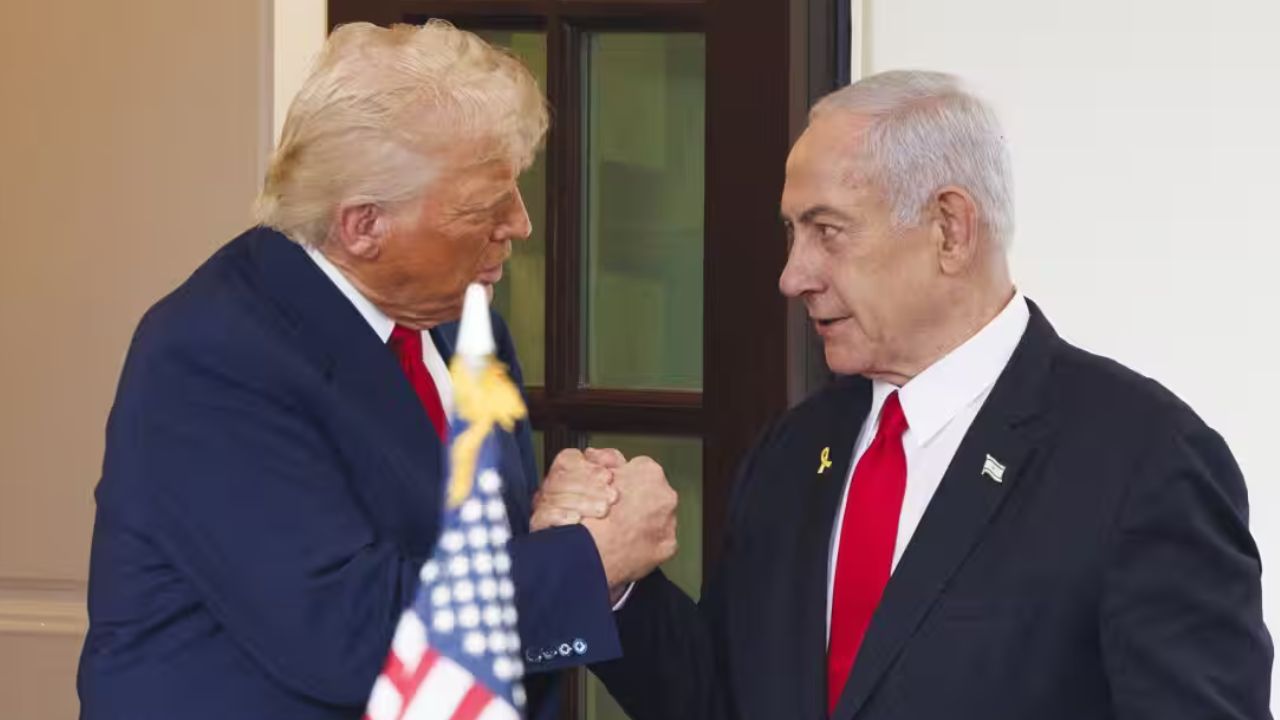
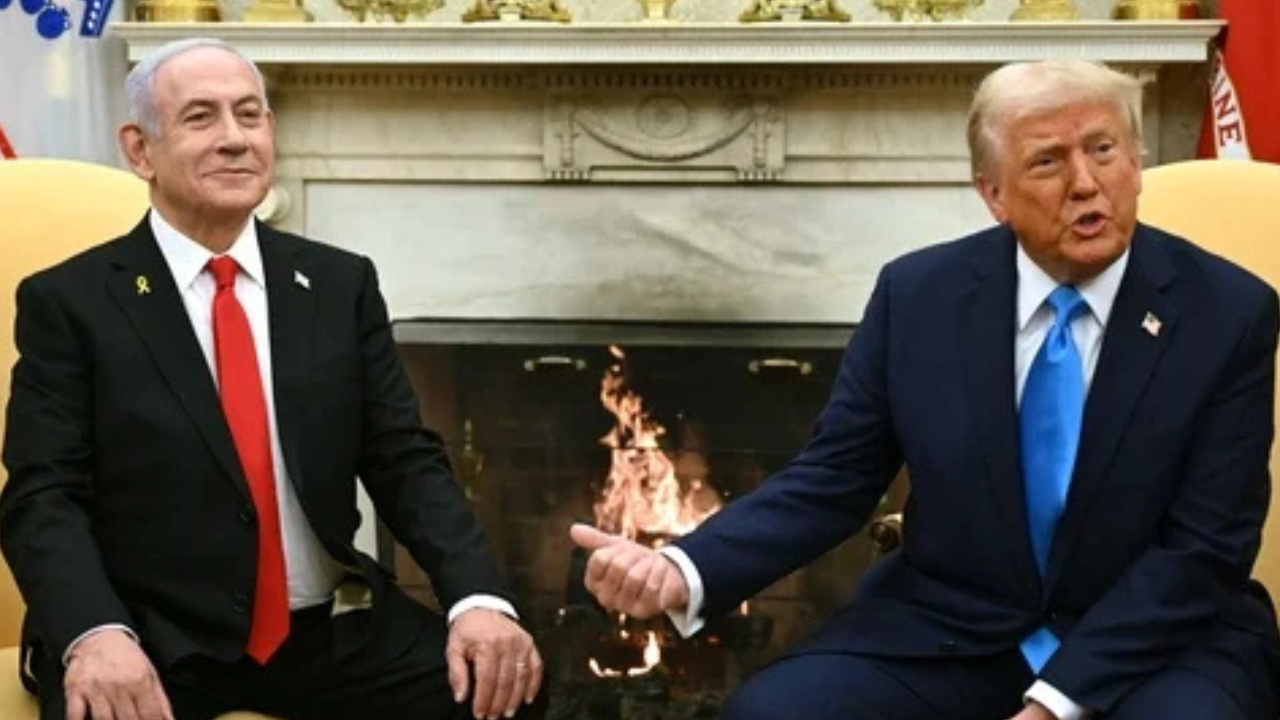
    President Donald Trump and Israeli Prime Minister Benjamin Netanyahu said Monday that new negotiations were in the works aimed at getting more hostages released from Hamas captivity in Gaza.

    “We’re working now on another deal that we hope will succeed, and we’re committed to getting all the hostages out,” Netanyahu told reporters in the Oval Office.

    Trump for his part said: “We are trying very hard to get the hostages out. We’re looking at another ceasefire, we’ll see what happens.”

    Netanyahu added that “the hostages are in agony, and we want to get them all out.”

    The Israeli leader, seated next to Trump, highlighted an earlier hostage release agreement negotiated in part by Trump’s regional envoy Steve Witkoff that “got 25 out.”

    Netanyahu’s visit follows the collapse of Israel’s six-week truce with Palestinian group Hamas, whose militants launched an unprecedented attack on Israel on October 7, 2023 that triggered the Israeli invasion of Gaza.

    The fragile ceasefire ended with Israel’s resumption of air strikes on Gaza on March 18.

    The recent truce had allowed the return of 33 Israeli hostages, eight of whom were dead, in exchange for the release of some 1,800 Palestinians held in Israeli jails.

    The prime minister and his government maintain — against the advice of most hostage families — that increased military pressure is the only way to force Hamas to return the remaining hostages, dead or alive.

    Of the 251 hostages abducted during Hamas’s October 7 attack, 58 remain in captivity in Gaza, including 34 who the Israeli military says are dead.

    On another issue, after staying silent of late on his much-criticized idea of the United States taking over Gaza and displacing its two million people, Trump plugged it again on Monday.

    “I think it’s an incredible piece of important real estate, and I think it’s something that we would be involved in,” Trump said.

    Trump has repeatedly spoken of Gaza, which the Palestinians want as part of a future state of their own, as a business opportunity for America, saying Gaza could be transformed into the “Riviera of the Middle East.”

    Countries around the world and in particular Arab nations have rejected this proposal vehemently, including Egypt and Jordan, where Trump has suggested the Palestinians of Gaza be sent to live.

    “But you know, having a peace force like the United States there, controlling and owning the Gaza Strip would be a good thing, because right now … all I hear about is killing and Hamas and problems,” Trump said.

    He added: “And if you take the people, the Palestinians, and move them around to different countries, and you have plenty of countries that will do that, and you really have a freedom, a freedom zone.”

  • Netanyahu and Trump to talk tariffs, Iran and Gaza

    Netanyahu and Trump to talk tariffs, Iran and Gaza

    Netanyahu becomes the first foreign leader to meet with Trump in the US capital since the president unveiled sweeping levies on multiple countries in his “Liberation Day” announcement on Wednesday.

    Arriving in Washington direct from a visit to Hungary, Netanyahu’s chief objective will be to persuade Trump to reverse the decision, or at the very least to reduce the 17 percent levy set to be imposed on Israeli imports before it takes effect.

    Before leaving Budapest, Netanyahu said his discussions would include a range of issues, including “the tariff regime that has also been imposed on Israel”.

    “I’m the first international leader, the first foreign leader who will meet with President Trump on a matter so crucial to Israel’s economy,” he said in a statement.


    “I believe this reflects the special personal relationship and the unique bond between the United States and Israel, which is so vital at this time.”

    Analysts said Netanyahu will seek to secure an exemption from the tariffs for Israel.

    “The urgency (of the visit) makes sense in terms of stopping it before it gets institutionalised,” said Jonathan Rynhold, head of political studies at Bar-Ilan University in Tel Aviv.

    Such an exemption would not only benefit Trump’s closest Middle East ally but also “please Republicans in Congress, whose voters care about Israel, but are unwilling to confront Trump on this at this point,” he said.

    Israel had attempted to avoid the new levy by moving preemptively a day before Trump’s announcement and lifting all remaining duties on the one percent of American goods still affected by them.

    But Trump still went ahead with his new policy, saying the United States had a significant trade deficit with Israel, a top beneficiary of US military aid.


    Gaza truce, hostages

    The Israeli leader’s US trip is “also a way for Netanyahu to play the game and show Trump that Israel is going along with him,” said Yannay Spitzer, a professor of economics at Hebrew University.

    “I would not be surprised if there is an announcement of some concession for Israel… and this will be an example for other countries.”

    Netanyahu will also discuss the war in the Gaza Strip, the Israeli hostages still held in the Palestinian territory, and the growing “threat from Iran”, his office said.

    Israel resumed air strikes on Gaza on March 18, ending nearly two months of ceasefire with Hamas that had been brokered by the United States, Egypt and Qatar.

    Efforts to restore the truce have since failed, with more than 1,330 people killed in renewed Israeli air and ground operations, according to the health ministry in the Hamas-controlled territory.

    Palestinian militants there still hold 58 hostages, including 34 the Israeli military says are dead.

    On Iran, Trump has been pressing for “direct talks” with Tehran on a new deal to curb the Islamic republic’s nuclear programme.

    Iranian Foreign Minister Abbas Araghchi on Sunday rejected the idea of direct negotiations with the United States as “meaningless”.

    There has been widespread speculation that Israel, possibly with US help, might attack Iranian facilities if no agreement is reached.

  • Israel expands Gaza ground operation as missiles intercepted

    Israel expands Gaza ground operation as missiles intercepted

    Israel’s military on Thursday expanded ground operations across Gaza, after it reported missiles intercepted from Yemen and Hamas militants said they fired rockets towards Tel Aviv.

    The rocket fire from Hamas was its first military response to the growing civilian death toll from Israel’s resumption of aerial bombardment and ground operations in Gaza this week.

    The offensive has drawn widespread condemnation and shattered a relative calm in the genocide-ravaged Palestinian territory where a ceasefire began on January 19. Talks on extending the truce reached an impasse, and Israel resumed intensive bombing of Gaza on Tuesday.

    Early Friday, the head of Shin Bet — Israel’s domestic intelligence agency — was sacked, days after Prime Minister Benjamin Netanyahu said he no longer trusts him, and fallout from a report on the October 7, 2023 Hamas attack.

    Netanyahu on Sunday cited an “ongoing lack of trust” as the reason for moving to dismiss Ronen Bar, who joined the agency in 1993.

    Late Thursday the military said troops had begun “conducting ground activity” in the Shabura area of Rafah, Gaza’s southernmost city near the Egyptian border.

    “As part of the activity, the troops dismantled… terrorist infrastructure,” the military said in a statement, adding that “troops are continuing ground activity in northern and central Gaza.”


    Israeli protesters and police scuffle in front of the prime minister’s residence in Jerusalem during a demonstration calling for an end to the genocide in Gaza and to bring home all hostages held there by militants
     Photo: Menahem Kahana

    Israel earlier said it had closed off the territory’s main north-south route as part of expanding ground operations that resumed on Wednesday.

    Gaza’s civil defence agency said 504 people had been killed since Tuesday, including more than 190 under the age of 18.

    The toll is among the highest since the genocide started more than 17 months ago.

    The armed wing of Hamas, the Ezzedine al-Qassam Brigades, said it fired rockets at Israel’s commercial centre in response to “massacres” of Gaza civilians.

    The Israeli army said it intercepted a missile launched from Yemen, claimed by Iran-backed Huthi rebels who say they act in support of the Palestinians, for the second time within a day.


    A boy in Gaza City’s Yarmuk area eats at a camp sheltering displaced Palestinians in a landfill
     Photo: Omar AL-QATTAA

    US President Donald Trump “fully supports” Israel’s renewed Gaza operations, White House Press Secretary Karoline Leavitt told reporters when asked if he was trying to get a Gaza ceasefire back on track.

    Israel’s military said an air strike had “in recent days” killed Rashid Jahjouh, the head of Hamas’s internal security agency.


    In Beit Lahia, northern Gaza, Alaa Abu Nasr said 17 members of his family were killed in an air strike.

    “They are targeting civilians, not fighters,” he said among the rubble.

    Military spokesman Avichay Adraee said on X that Israeli troops “have begun a targeted ground operation in the central and southern Gaza Strip in order to expand the security zone between the northern and southern parts”.

    Palestinians ride vehicles with their belongings as they flee from the northern Gaza Strip toward the south Photo: Eyad BABA

    Movement along Salaheddin Road between northern and southern Gaza is prohibited “for your safety”, he said.

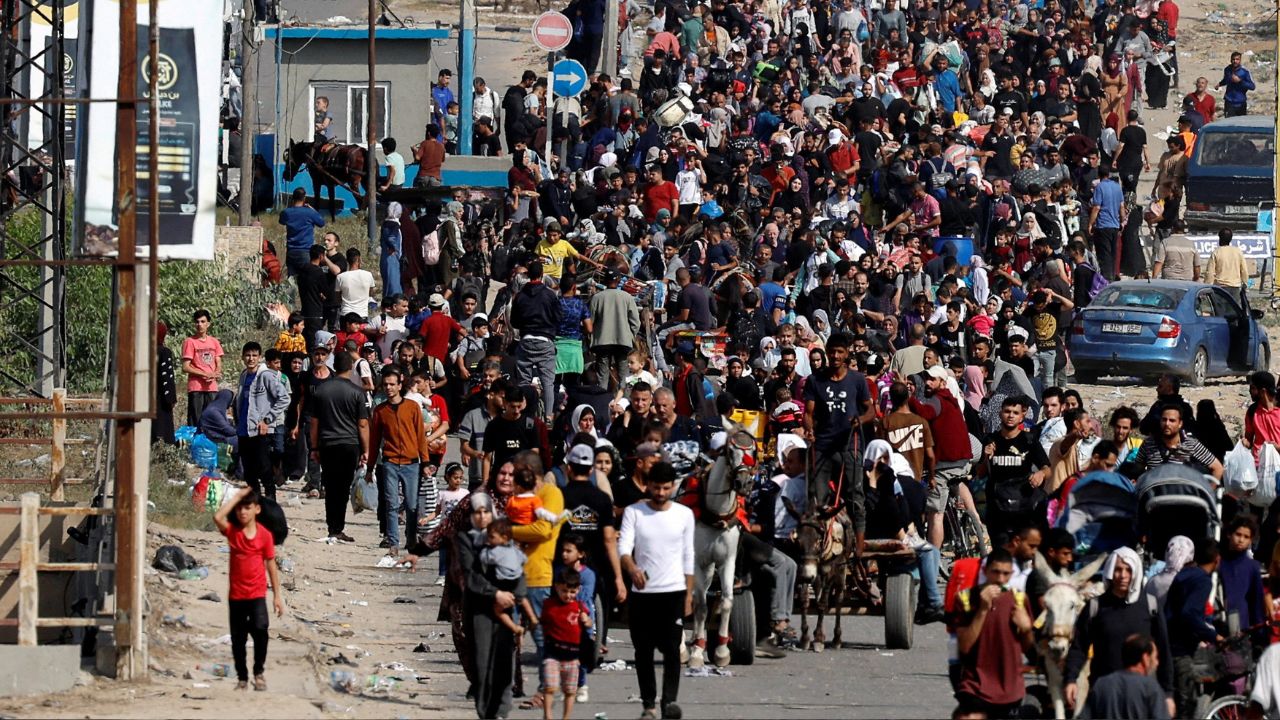
    Palestinians were seen fleeing south along a section of Salaheddin Road still open, near central Gaza’s Nuseirat refugee camp, atop donkey-drawn carts piled high with belongings.


    In Gaza’s south, the army warned people to evacuate Bani Suheila before a strike on militants “firing rockets from populated areas”.

    Government spokesman David Mencer said Israel controlled central and southern Gaza and was “expanding the security zone” and creating a buffer between the north and south.

    An official from Gaza’s interior ministry said the Israeli army had closed what it calls Netzarim Junction, just south of Gaza City on Salaheddin Road.

     
    Israeli troops gather near the Gaza border Photo: GIL COHEN-MAGEN

    The official said Israeli tanks had deployed at the junction after the withdrawal of American private security contractors stationed there since the pullback of Israeli forces in February, under the ceasefire.

    The first stage of the ceasefire, under which Israeli hostages held by Hamas were exchanged for Palestinian prisoners, expired early this month.

    Israel rejected negotiations for a second stage, demanding the return of all remaining hostages under an extended first stage. Hamas insisted on engaging in talks for phase two.


    Under the agreed truce deal, as outlined by then-US president Joe Biden, negotiations towards phase two were to begin during the initial six-week phase.

    Mkhaimar Abusada, an associate professor at Al-Azhar University in Gaza, said that if Netanyahu “was really interested in releasing all Israeli hostages, he could have gone with a second phase of the ceasefire. But he has never made any commitment to an end to the war”.

    A picture taken from Israel’s southern border with the Gaza Strip shows destroyed buildings in northern Gaza Photo: Jack GUEZ

    Speaking before the UN Security Council, former hostage Eli Sharabi called on the world to “bring them all home”, referring to the dozens still held by Gaza militants.

    He said he was “chained, starved, beaten and humiliated” during his Hamas captivity.

    Resumption of fighting in Gaza has coincided with a reignited protest movement by Israelis who see Netanyahu’s policies as a threat to democracy.

    On Thursday President Isaac Herzog, whose role is largely ceremonial, spoke of “controversial initiatives that create deep rifts within our nation.”

    He also called it “unthinkable to resume fighting while still pursuing the sacred mission of bringing our hostages home.”

    Hamas appealed to Arab and Islamic nations “to take urgent action” in the United Nations Security Council and other forums to halt the renewed fighting.


    Iran’s supreme leader Ayatollah Ali Khamenei called Israel’s latest strikes on Gaza a “catastrophic crime” and said the United States “shares responsibility”.

    Israeli retaliatory attacks and genocide after Hamas’s October attack on Israel has resulted in 1,218 deaths, mostly civilians, according to Israeli figures.

    The overall death toll in Gaza since the start of the genocide is 49,617, according to the territory’s health ministry.