Tag: Gaza

  • Israel halts Gaza electricity supply ahead of new truce talks

    Israel halts Gaza electricity supply ahead of new truce talks

    Israel ordered an immediate halt to Gaza’s electricity supply Sunday in an effort to pressure Hamas into releasing hostages, even as it prepared for fresh talks on the future of its truce with the Hamas.


    Israel’s decision comes a week after it blocked all aid supplies to the territory, a move reminiscent of the initial days of the genocide when Israel announced a “siege” on Gaza.

    Hamas described the electricity cut as “blackmail,” a term it had also used after Israel blocked the aid.

    The truce’s initial phase ended on March 1 and both sides have refrained from returning to all-out genocide, despite sporadic violence including an air strike Sunday that Israel said targeted miltants.

    Hamas has repeatedly called for an immediate start to negotiations on the ceasefire’s second phase, aiming to end the genocide permanently.

    Israel says it prefers extending phase one until mid-April, and halted aid to Gaza over the impasse.

    On Sunday it ordered a cut in the electricity supply.

    “I have just signed the order to stop supplying electricity immediately to the Gaza Strip,” Energy Minister Eli Cohen said in a video statement.

    “We will use all the tools at our disposal to bring back the hostages and ensure that Hamas is no longer in Gaza the day after” the war, he said.

    Izzat al-Rishq, a member of Hamas’s political bureau, described Israel’s move as “a desperate attempt to pressure our people and their resistance through cheap and unacceptable blackmail tactics”.

    Just days after the genocide, led by Israel, erupted on October 7, 2023 after Hamas’s attack, Israel cut electricity to Gaza, only restoring it in mid-2024.

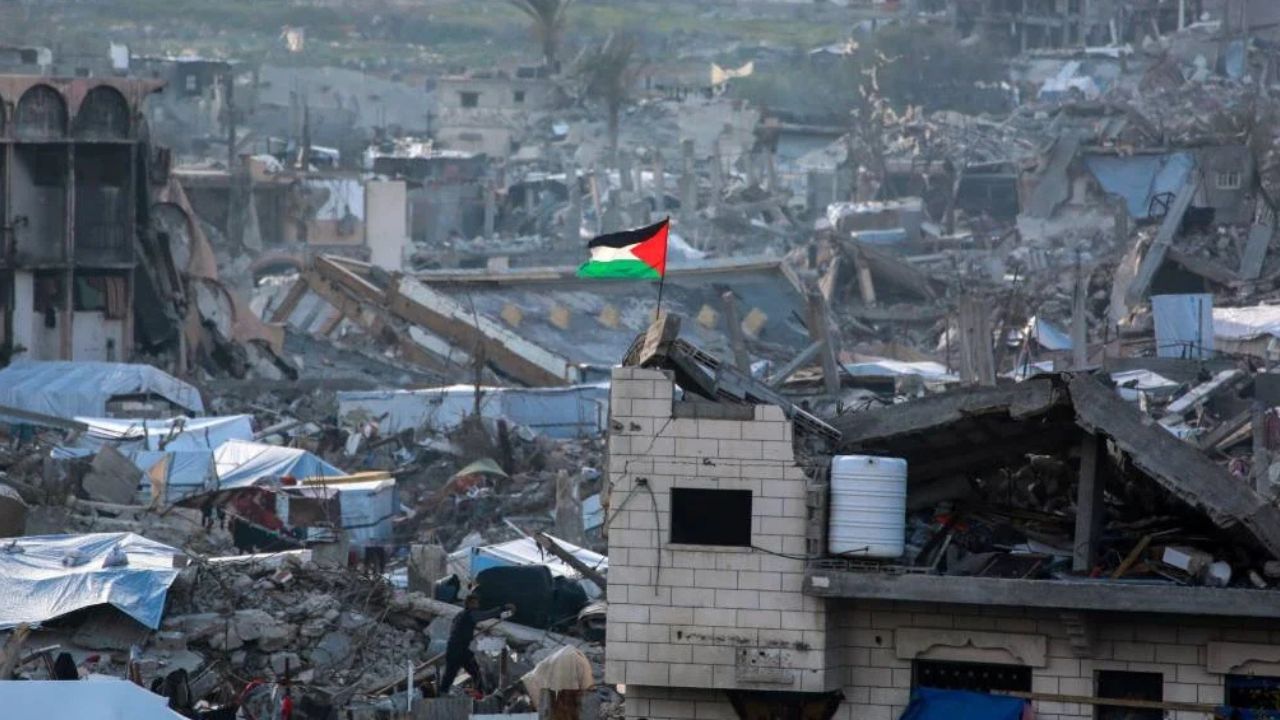
    The sole power line between Israel and Gaza supplies the main desalination plant, and Gazans mainly rely now on solar panels and fuel-powered generators to produce electricity.

    Hundreds of thousands of Palestinians in Gaza live in tents, with night-time temperatures now forecast around 12 degrees Celsius (54 Fahrenheit).

    Situation ‘dire’

    Hamas representatives met Egyptian mediators over the weekend, emphasising the urgent need to resume aid deliveries “without restrictions or conditions”, a Hamas statement said.

    “We call on mediators in Egypt and Qatar, as well as the guarantors in the US administration, to ensure that the (Israeli) occupation complies with the agreement… and proceeds with the second phase according to the agreed-upon terms,” spokesman Hazem Qassem told AFP.

    Hamas’s key demands for the second phase include a hostage-prisoner exchange, Israel’s complete withdrawal from Gaza, a permanent ceasefire, border crossings reopening and lifting the blockade, he said.

    Former United States president Joe Biden had also outlined a second phase involving the release of remaining living hostages, the withdrawal of all Israeli forces left in Gaza, and establishment of a permanent ceasefire.

    After meeting mediators, another Hamas spokesman, Abdel Latif al-Qanoua, said indicators were so far “positive”.

    Israeli Prime Minister Benjamin Netanyahu’s office said it would send delegates to Doha on Monday.

    The truce largely halted more than 15 months of fighting in Gaza, where virtually the entire population was displaced by Israel’s relentless military campaign in response to the October 7 attack.

    The six-week first phase led to the exchange of 25 living Israeli hostages and eight bodies for the release of about 1,800 Palestinian prisoners held in Israel.

    It also allowed in much-needed food, shelter and medical assistance.

    After Israel cut off the aid flow, UN rights experts accused the government of “weaponising starvation”.

    At a UN distribution of flour in Jabalia, northern Gaza, Abu Mahmoud Salman, 56, said that with the territory now closed off from fresh supplies, there are “fears of renewed famine in Gaza, where the situation remains dire”.

    Fears for hostages

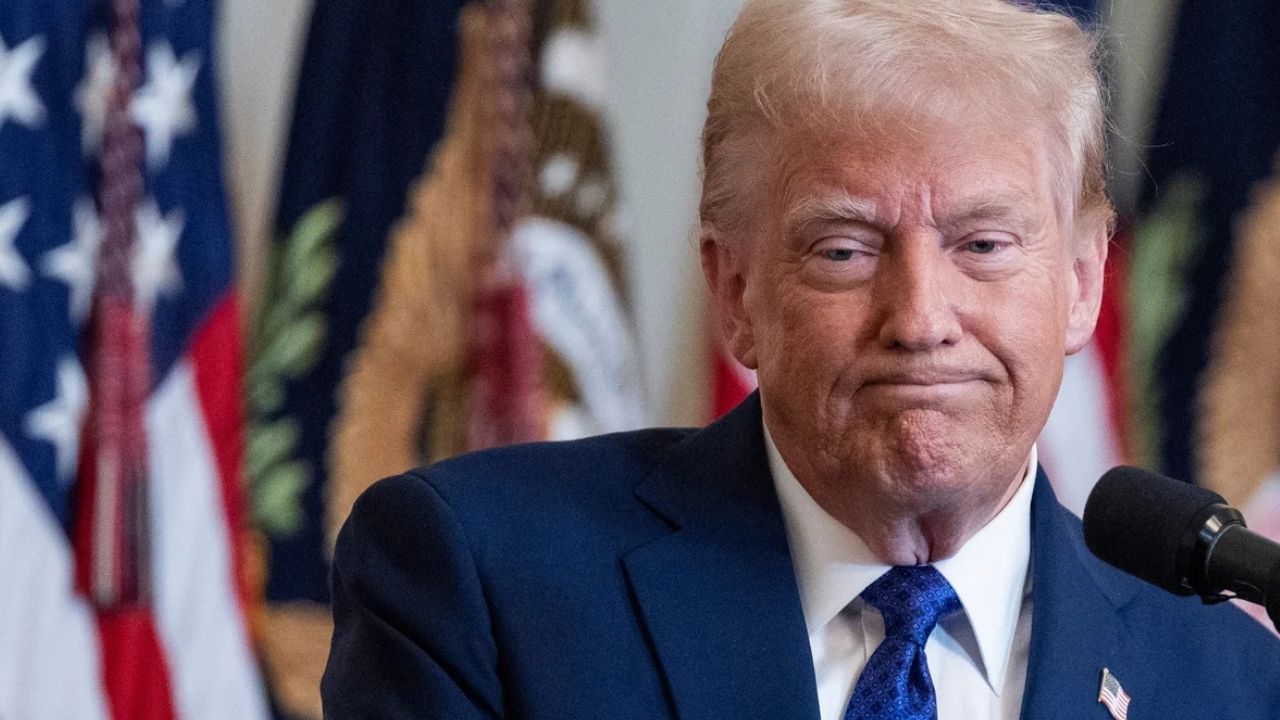
    Last week, US President Donald Trump threatened further destruction of Gaza if all remaining hostages were not released, issuing what he called a “last warning” to Hamas leaders.

    He also said Gazans who “hold Hostages… are DEAD!”

    The threats came after his administration confirmed it had unprecedented direct talks with Hamas, which Washington had previously refused contact with since designating it a terrorist organisation in 1997.

    The official who held the talks with Hamas, US hostage envoy Adam Boehler, told CNN on Sunday that a deal could be reached “within weeks” to “get all of the prisoners out, not just the Americans”.

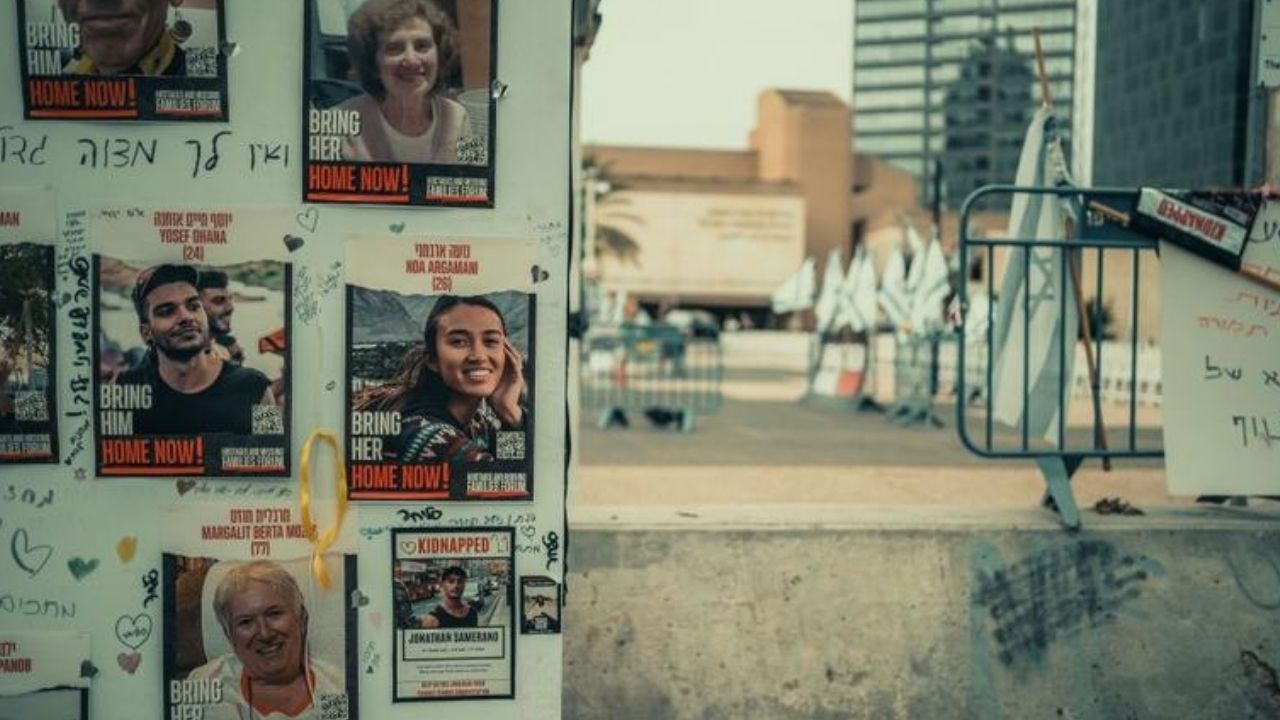
    Of the 251 hostages taken by Hamas during the October 7 attack, 58 remain in Gaza, including five Americans of which four have been confirmed dead.

    Trump has floated a widely condemned plan to expel Palestinians from Gaza, prompting Arab leaders to offer an alternative that would see reconstruction financed through a trust fund, with the Ramallah-based Palestinian Authority returning to govern the Hamas-ruled territory.

    On Sunday Israel’s far-right Finance Minister Bezalel Smotrich said that proposal was “taking shape”.

    Hamas’s 2023 attack resulted in the deaths of 1,218 people on the Israeli side, most of them civilians, while Israel’s retaliatory genocide has killed at least 48,458 people in Gaza, also mostly civilians, according to data from both sides.

  • Trump warns Gaza ‘you are dead’ if hostages not freed

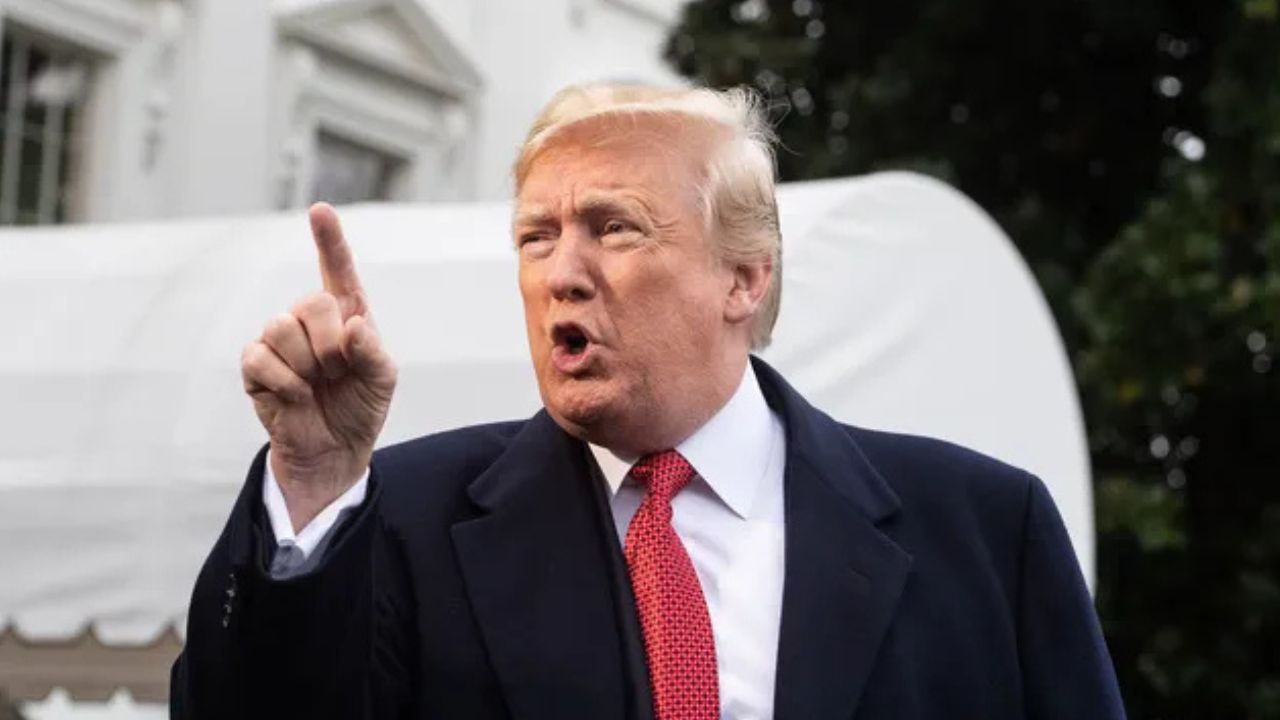
    Trump warns Gaza ‘you are dead’ if hostages not freed

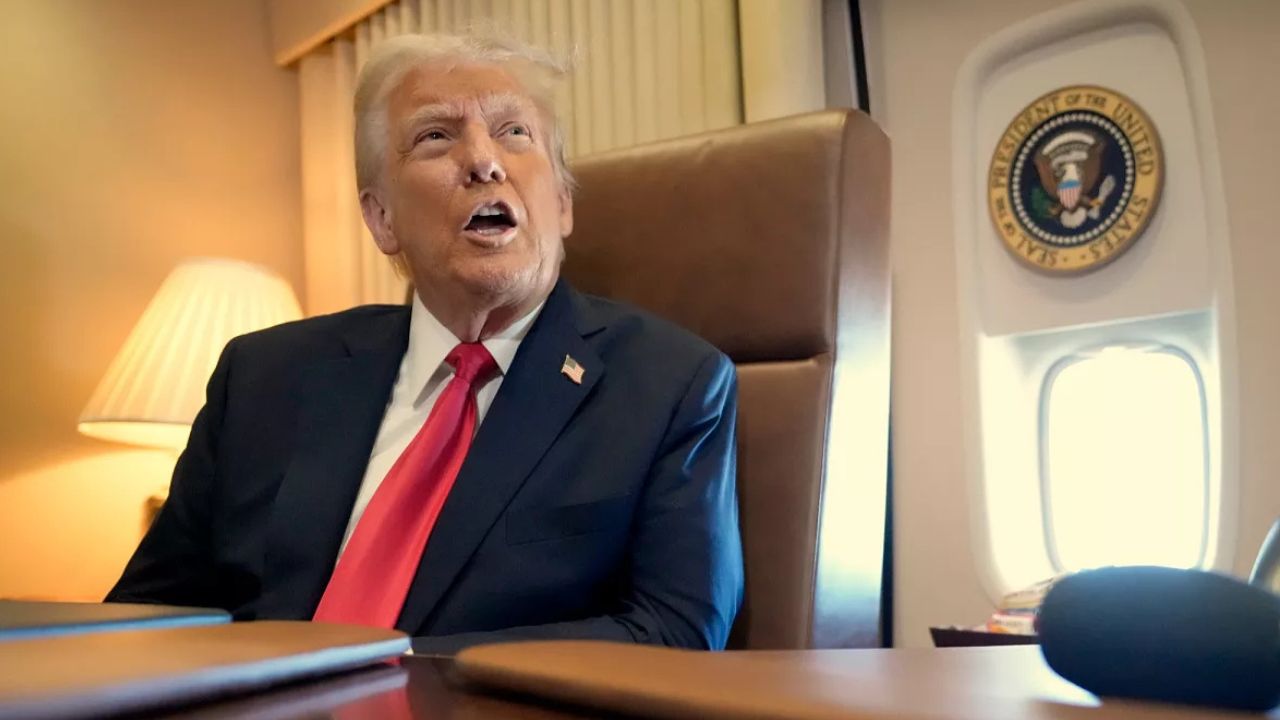
    US President Donald Trump on Wednesday threatened further destruction of Gaza if all remaining hostages are not released, and issued an ultimatum to Hamas leaders to flee.

    Strongly backing Israel as a ceasefire teeters, Trump said he was “sending Israel everything it needs to finish the job” as his administration expedites billions of dollars in weapons.

    “Release all of the Hostages now, not later, and immediately return all of the dead bodies of the people you murdered, or it is OVER for you,” he wrote on his Truth Social platform after meeting freed hostages.

    “This is your last warning! For the leadership, now is the time to leave Gaza, while you still have a chance.”

    Trump also made clear there would be repercussions for Gaza as a whole, where virtually the entire population has been displaced by Israel’s relentless military campaign in response to the October 7, 2023 attacks by Hamas.

    “To the People of Gaza: A beautiful Future awaits, but not if you hold Hostages. If you do, you are DEAD!”

    His comments follow Israeli Prime Minister Benjamin Netanyahu’s warning of “consequences that you cannot imagine” if Hamas does not hand over the remaining hostages seized in the October 7 attack.

    The first phase of a ceasefire ended over the weekend after six weeks of relative calm that included exchanges of Israeli hostages for Palestinian prisoners held in Israeli jails.

    While Israel has said it wants to extend the first phase until mid-April, Hamas has insisted on a transition to the second phase, which should lead to a permanent end to the genocide.

    Israel has ramped up pressure not just with threats but also by halting the flow of goods and supplies into Gaza.

    “Hamas has indeed suffered a severe blow, but it has not yet been defeated. The mission is not yet accomplished,” Israel’s new military chief Eyal Zamir warned Wednesday.

    Also on Wednesday, France, Britain and Germany jointly called the humanitarian situation in Gaza “catastrophic,” and urged Israel to ensure the “unhindered” delivery of aid.

    South Africa said Israel’s restriction of aid into Gaza amounted to using starvation as a weapon of war.

    Talks with Hamas

    Trump’s hawkish language came after the United States confirmed unprecedented direct talks with Hamas, with the US envoy on hostage affairs, Adam Boehler, discussing American hostages.

    “Look, dialogue and talking to people around the world to do what’s in the best interest of the American people is something that the president” believes is right, White House Press Secretary Karoline Leavitt said.

    The United States had refused direct contact with the Palestinian militants since banning them as a terrorist organization in 1997. But Leavitt said that the hostage envoy “has the authority to talk to anyone”.

    Both the White House and Netanyahu’s office confirmed Israel was consulted in advance.

    Five Americans are believed to remain among the hostages — four have been confirmed dead and one, Edan Alexander, is believed to be alive.

    The Hamas attack resulted in the deaths of 1,218 people, most of them civilians, while the Israel-led genocide of Palestinians in Gaza has killed at least 48,440 people, also mostly civilians, data from both sides show.

    Of the 251 captives taken during Hamas’s attack, 58 remain in Gaza, including 34 the Israeli military has confirmed are dead.

    In an interview on Wednesday night, US Secretary of State Marco Rubio urged Hamas to take seriously Trump’s threats of retaliation.

    “He doesn’t say these things and not mean it, as folks are finding out around the world. If he says he’s going to do something, he’ll do it,” Rubio said.

    Doubts on Arab plan

    Trump has floated a proposal to take over the Gaza Strip and displace its people, an idea that has drawn wide condemnation around the world.

    Arab leaders have sought support for an alternative plan that would finance Gaza’s reconstruction through a trust fund.

    A draft seen by AFP outlined a five-year roadmap with a price tag of $53 billion — roughly the amount the United Nations estimated for Gaza’s reconstruction — but the figure was not included in the summit’s final statement.

    The summit also called for unified representation under the Palestine Liberation Organization to sideline Islamist Hamas.

    Hugh Lovatt at the European Council on Foreign Relations said the Arab leaders’ plan was “far more realistic than what the Trump administration is proposing.”

    But Ghassan Khatib, a Palestinian political analyst and former Palestinian Authority minister, was skeptical.

    “It doesn’t make sense to expect Israel to drop the plan of Trump and to adopt the plan of the Arabs. There’s no chance.”

    Speaking after a UN Security Council meeting on Gaza’s future, French diplomat Jay Dharmadhikari said the final plan should neither allow Hamas to continue governing nor eject Palestinians.

    “We are clear that any plan must have no role for Hamas, must ensure Israel’s security, must not displace Palestinians from Gaza,” he said.

  • Next phase of Israel-Hamas ceasefire: Talks to resume in Cairo

    Next phase of Israel-Hamas ceasefire: Talks to resume in Cairo

    Talks resume in Cairo Friday on a second phase of an Israel-Hamas ceasefire that mediators hope will bring a lasting end to the genocide in Gaza, a day after Israel’s military acknowledged its “complete failure” to prevent the 2023 Hamas attack that resulted in intensified attacks by Israel.

    Mediator Egypt said Thursday that Israeli, Qatari and US delegations were already in Cairo for “intensive” talks on the next stage of the ceasefire, after a first phase only reached following months of gruelling negotiations.

    “The relevant parties have begun intensive talks to discuss the next phases of the truce agreement, amid ongoing efforts to ensure the implementation of the previously agreed understandings,” said Egypt’s State Information Service.

    The ceasefire, whose first phase is set to expire on Saturday, has largely halted the fighting that began when Hamas militants broke through Gaza’s security barrier on October 7, 2023, in an attack that resulted in the deaths of 1,218 people in Israel, mostly civilians, according to an AFP tally of official figures.

    Israel’s retaliation has killed more than 48,000 people in Gaza, according to the health ministry in the Hamas-run territory, figures the UN has deemed reliable.

    Prime Minister Benjamin Netanyahu sent negotiators to Cairo on Thursday, after Hamas handed over the remains of four hostages in exchange for hundreds of Palestinian prisoners under the truce.

    ‘Too many civilians died’

    An internal Israeli army probe into the October 7 attack, released on Thursday, acknowledged the military’s “complete failure” to prevent it, according to a military official who briefed reporters about the report’s contents on condition of anonymity.

    “Too many civilians died that day asking themselves in their hearts or out loud, where was the IDF?” the official said, referring to the military.

    A senior military official said at the same briefing that the military acknowledges it was “overconfident” and had misconceptions about Hamas’s military capabilities before the attack.

    Following the scathing probe’s release, Israel’s military chief General Herzi Halevi said: “The responsibility is mine.”

    Halevi had already resigned last month citing the October 7 “failure”.

    During their attack, militants seized dozens of hostages, whose return was a key objective of the war.

    Netanyahu vowed to destroy Hamas and to bring home all the hostages, but has faced criticism and protests at home over his handling of the war and the hostage crisis.

    ‘Murdered’

    A hostage-prisoner swap early Thursday was the final one under the initial stage of the truce that took effect on January 19.

    Over the past several weeks, Hamas freed in stages 25 living Israeli and dual-national hostages and returned the bodies of eight others.

    It also released five Thai hostages outside the deal’s terms.

    Israel, in return, was expected to free around 1,900 Palestinian prisoners.

    Israel’s Prison Service said that “643 terrorists were transferred from several prisons across the country” and released on Thursday under the terms of the truce after Hamas returned the bodies of four hostages.

    Hours after the handover on Thursday, an Israeli campaign group confirmed “with profound sorrow” the identities of the four bodies.

    Ohad Yahalomi, Tsachi Idan, Itzik Elgarat and Shlomo Mansour “have been laid to eternal rest in Israel”, said the Hostages and Missing Families Forum.

    Israel Berman, a businessman and former member of the Nahal Oz kibbutz community where Idan was abducted, said that “until the very last moment, we were hoping that Tsachi would return to us alive”.

    ‘We were in hell’

    Among those freed in exchange was the longest-serving Palestinian prisoner in an Israeli jail, Nael Barghouti, who spent more than four decades behind bars.

    He was first arrested in 1978 and sentenced to life imprisonment for the murder of an Israeli officer and attacks on Israeli sites.

    “We were in hell and we came out of hell. Today is my real day of birth,” said one prisoner, Yahya Shraideh.

    AFP images showed some freed prisoners awaiting treatment or being assessed at the European Hospital in Khan Yunis, southern Gaza, after their release.

    Several freed Palestinian prisoners were hospitalised following earlier swaps, and the emaciated state of some released Israeli hostages sparked outrage in Israel and beyond.

    After the swap, Hamas called on Israel to return to delayed talks on the truce’s next phase.

    “We have cut off the path before the enemy’s false justifications, and it has no choice but to start negotiations for the second phase,” Hamas said.

  • Internet reacts to Trump’s AI video imagining Gaza as luxury resort

    Internet reacts to Trump’s AI video imagining Gaza as luxury resort

    US President Donald Trump’s official social media accounts posted an apparently AI-generated video depicting war-ravaged Gaza rebuilt into a seaside resort, replete with a towering golden statue of himself.


    The video, which racked up more than 29 million views on Instagram and was shared thousands of times on Trump’s Truth Social network by Wednesday afternoon, prompted some commenters to question whether the president’s accounts had been hacked.


    The 33-second clip remained on Trump’s accounts without denial or retraction hours after the initial posting on Tuesday night.


    The video “Gaza 2025 What’s Next?” opens with people on a rubble-strewn street emerging from a tunnel onto a beach with palm trees and yachts.


    Trump has floated the idea of a US takeover of Gaza under which its Palestinian population would be relocated — a proposal met with global condemnation.


    He later appeared to soften his plan, saying he was only recommending the idea, and conceding that the leaders of Jordan and Egypt — the proposed destinations for relocated Gazans — had rejected any effort to move Palestinians against their will.


    In the social media clip, the soundtrack includes lyrics such as “Donald’s coming to set you free, bringing the light for all to see”, and “Feast and dance, the deal is done, Trump Gaza number one”.


    Seemingly AI-generated renditions of Trump and Israeli Prime Minister Benjamin Netanyahu sip cocktails in swimsuits by a pool, while other shots show what appears to be Elon Musk dancing under a shower of cash on the beach.


    A larger-than-life golden statue of Trump is also featured.


    Social media users reacted with both support and criticism, but many questioned whether Trump himself had posted the montage.


    AFP did not find any evidence the video had been shared online before it was posted to Trump’s Truth Social and Instagram accounts.

    Netizens reacted to the insensitive video circulating online, condemning the move made by the U.S. President.

    Matthew Stadlen, an English presenter, wrote on X (formerly Twitter), “The Trump Gaza video is quite possibly the most disgusting, the most shameful, the most hideous public communication by a US President in living memory.”

    Lawyer and activist, Dr Shola Mos-Shogbamimu, wrote, “President of the United States posts video of him taking over Gaza with his statue for worship, dollars raining, Trump Gaza as centrepiece as he & Netanyahu chill at the beach. Ethnic cleansing rebranded as a real estate deal. Colonialist White Supremacist Zionism. Pure Evil.”

    Another user added, “I feel physically sick at Trump’s Gaza clip. I just can’t comprehend how a human being could be so vile. Can I ask EVERYONE TO PLEASE REPOST THIS CLIP as a counter narrative. It’s essential we tell the truth about this horror show. Let your repost finger do the talking.”

    One user, sharing the screenshots of the comments noted, “Trump biggest supporters are not happy with him for posting that AI video of Gaza.”

    Dancers and beards

    One scene closely resembles an AI-generated image of Trump and Netanyahu drinking cocktails that began circulating in early February.


    Another scene shows belly dancers shimmying on the beach, sporting thick, long beards more typically worn by Islamists.


    More than 15 months of war, triggered by Hamas’s October 7, 2023 attack on Israel, have left much of the Gaza Strip in ruins and most of its population displaced from their homes.


    Senir Hamas official Bassem Naim said in reaction to the video: “Unfortunately, President Trump is once again proposing ideas and solutions that do not take into account the cultures and interests of the indigenous population.”


    In Gaza, people who watched the video were in disbelief.


    “This video of Trump is full of fallacies and shows a lack of cultural awareness… Gaza won’t become a tourist spot like Italy or Spain,” said Nasser Abu Hadaid, a 60-year-old resident of Khan Yunis in southern Gaza.


    “What I know about Trump is that he is a strange but bold president who does what he says he will do. What matters to him is money and investments — there is no humanity,” said Manal Abu Seif, a 23-year-old lawyer in Gaza City.


    “Gaza needs freedom, open border crossings and jobs for young people, and is not a playground for tourism and investment,” she added.


    UN estimates have put the cost of reconstruction at more than $53 billion.


    A fragile ceasefire, in effect since January 19, has allowed an increase in humanitarian aid into Gaza, though Hamas has accused Israel of blocking the entry of some essential supplies.

  • Arab leaders meet to counter Trump’s Gaza plan

    Arab leaders meet to counter Trump’s Gaza plan

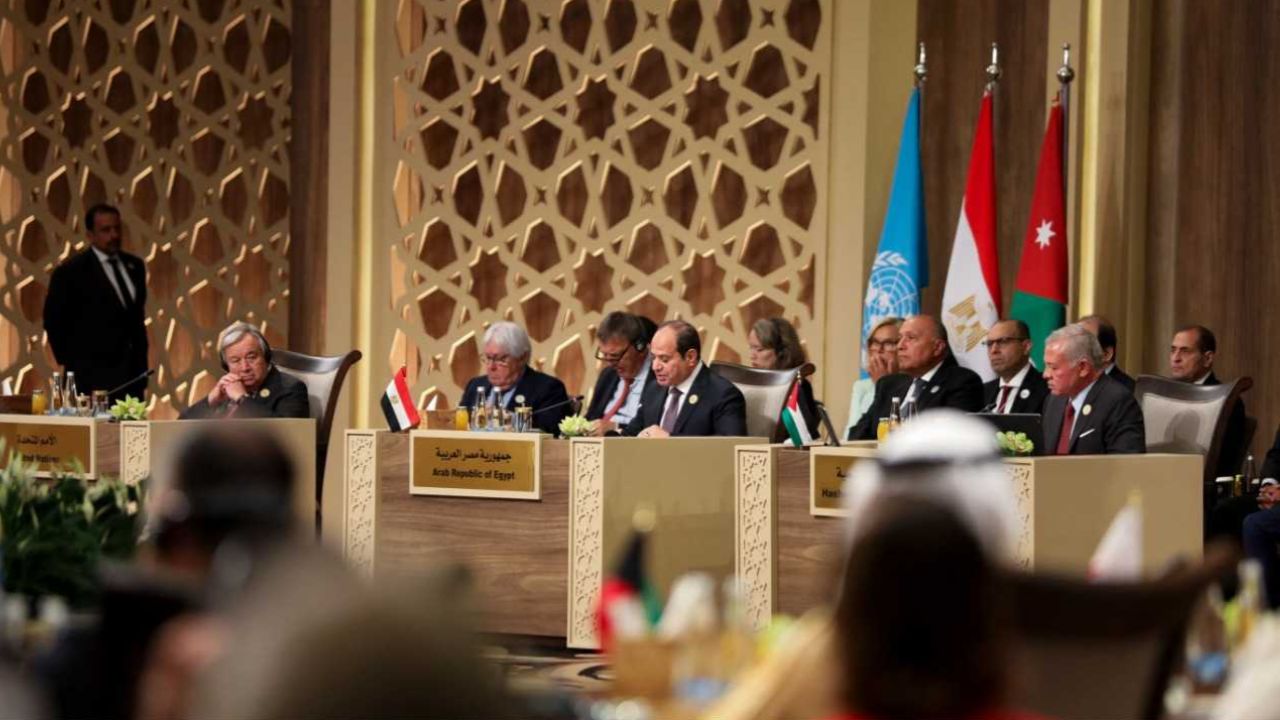
    Arab leaders will gather in Saudi Arabia on Friday to counter President Donald Trump’s plan for US control of Gaza and the expulsion of its inhabitants, diplomatic and government sources said.

    The plan stirred rare unity among Arab states which roundly rejected the idea, but they could still disagree over who will govern the Palestinian territory and who will pay for reconstruction.

    Umer Karim, an expert on Saudi foreign policy, told AFP the summit would be the “most consequential” in decades in relation to the wider Arab world and the Palestinian issue.

    Trump provoked international outrage when he announced that the United States would “take over the Gaza Strip”, moving 2.4 million Gazans living there to neighbouring Egypt and Jordan.

    A source close to the Saudi government told AFP Arab leaders would discuss “a reconstruction plan counter to Trump’s plan for Gaza”.

    Meeting with Trump in Washington on February 11, Jordan’s King Abdullah II said Egypt would present a plan for a way forward.

    The Saudi source said the talks would discuss “a version of the Egyptian plan” the king mentioned.

    Friday’s summit was originally planned for Saudi Arabia, Egypt, the United Arab Emirates, Qatar and Jordan.

    However, it has been expanded to include the six Gulf Cooperation Council (GCC) countries and the Palestinian Authority.

    For Palestinians, any attempt to force them from Gaza would have echoes of what the Arab world calls the “Nakba” or catastrophe, when hundreds of thousands of Palestinians fled in the fighting that accompanied Israel’s creation in 1948.

    Reconstruction

    Reconstruction will be a critical issue at the summit after Trump highlighted this as the key reason for moving its inhabitants out while Gaza’s infrastructure is rebuilt.

    Egypt has not yet announced its counter-initiative, but Egyptian former diplomat Mohamed Hegazy described a plan “in three technical phases over a period of three to five years”.

    The first would be a six-month “early recovery phase”, said the member of the Egyptian Council for Foreign Affairs, a think tank with strong ties to decision-making circles in Cairo.

    “Heavy machinery will be brought in to remove debris, while designated safe zones will be identified within Gaza to temporarily relocate residents,” Hegazy said.

    The second phase will require an international conference to provide details of reconstruction and would focus on rebuilding utility infrastructure, he said.

    “The final phase will oversee the urban planning of Gaza, the construction of housing units, and the provision of educational and healthcare services.”

    A UN estimate on Tuesday put the cost of rebuilding at more than $53 billion, including more than $20 billion over the first three years.

    The last phase would include “launching a political track to implement the two-state solution and so that there is… an incentive for a sustainable truce”.

    Umer Karim believes that adopting this plan would require “a degree of Arab unity not seen before in decades”.

    Finance

    One Arab diplomat familiar with the Gulf told AFP: “In the end, the biggest challenge facing the Egyptian plan is how to finance it.

    “Some countries like Kuwait will inject funds, perhaps for humanitarian reasons, but other Gulf states will set specific conditions before any financial transfer.”

    Karim said the “Saudis and Emiratis won’t spend any money if (the) Qataris and Egyptians don’t guarantee something on Hamas”.

    Egypt’s plan seeks to address the complex issue of post-war oversight for Gaza, which Hamas has controlled since 2007, with “a Palestinian administration that is not aligned with any faction”.

    It will comprise “experts” and will not be “factionally affiliated and is politically and legally subordinate to the Palestinian Authority”, Hegazy said.

    The Cairo initiative also envisions a Palestinian Authority-affiliated police force supplemented with security forces from Egypt, Arab states and other countries.

    Differences remain, however.

    Hegazy said that Hamas “will retreat from the political scene in the coming period”, while the Saudi source said Riyadh envisions a Gaza Strip controlled by the Palestinian Authority.

    Qatar, a key mediator in the war, believes the Palestinians themselves must decide Gaza’s future.

    “I think all regional actors understand that any alternative plan they propose cannot include Hamas in any form as presence of Hamas will make it unpalatable for the US administration and Israel,” Karim said.

    “So overall some things within the Strip have to fundamentally change in order for this plan to at least have a chance.”

  • Israel security cabinet to discuss new phase of Gaza truce

    Israel security cabinet to discuss new phase of Gaza truce

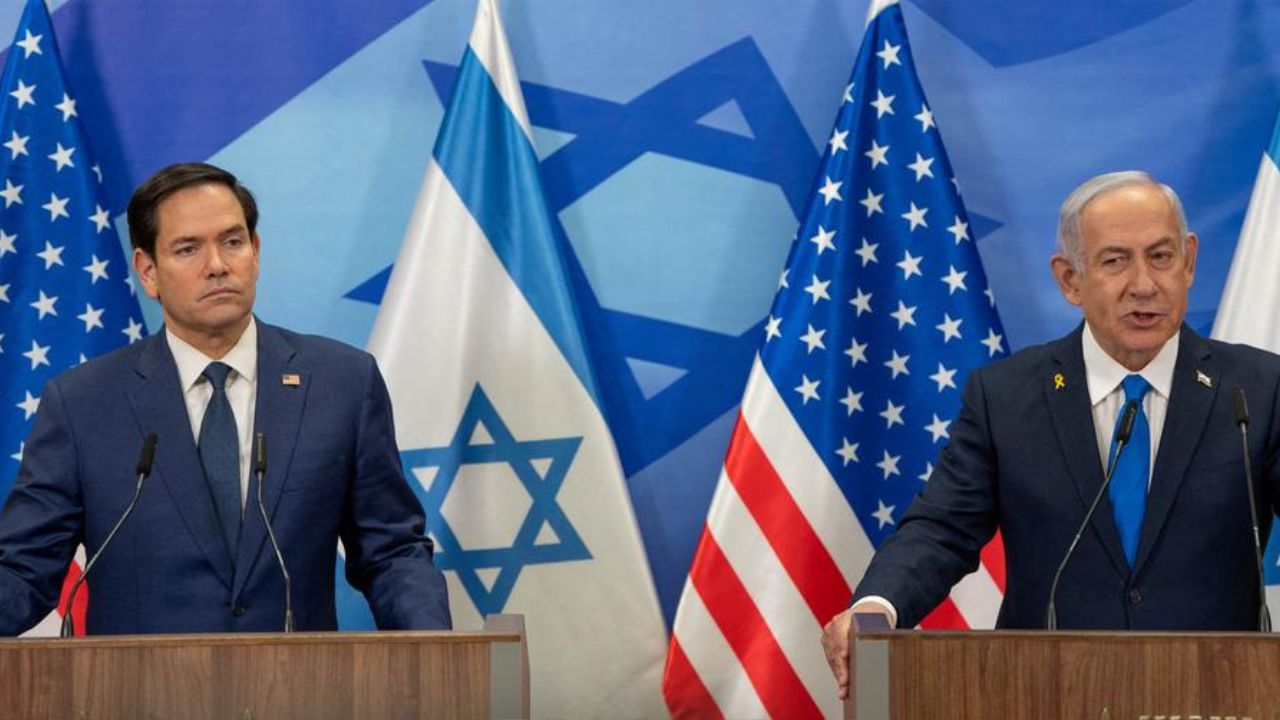
    Israel’s security cabinet was set to discuss on Monday the next phase of the ceasefire with Hamas, as top US diplomat Marco Rubio began a visit to Saudi Arabia where he will push Donald Trump’s proposal for a US takeover of Gaza.

    Rubio travelled to Riyadh from Israel, where he kicked off his first Middle East trip as Trump’s secretary of state.

    “Hamas cannot continue as a military or a government force… they must be eliminated,” Rubio said in Israel of the Palestinian Islamist group whose October 7, 2023 attack triggered a 15-month genocide that has devastated Gaza.

    Standing beside him, Netanyahu said the two allies had “a common strategy”, and that “the gates of hell will be opened” if all hostages held by militants in Gaza are not freed.

    The comments came a day after Hamas freed three Israeli hostages in exchange for 369 Palestinian prisoners — the sixth such swap under the ceasefire deal, which the United States helped mediate along with Qatar and Egypt.

    Israel and Hamas have accused each other of violating the ceasefire, which has been further strained by Trump’s widely condemned proposal to take control of rubble-strewn Gaza and move its more than two million residents out of the territory.

    “We discussed Trump’s bold vision for Gaza’s future and will work to ensure that vision becomes a reality,” Netanyahu said.

    The scheme that Trump outlined earlier this month as Netanyahu visited Washington lacked details, but he said it would entail moving Gazans to Jordan or Egypt.

    ‘The only plan’

    The United States, Israel’s top ally and weapons supplier, says it is open to alternative proposals from Arab governments, but Rubio has said for now, “the only plan is the Trump plan”.

    However, Saudi Arabia and other Arab states have rejected his proposal, and instead favour the creation of a Palestinian state alongside Israel.

    Egyptian President Abdel Fattah al-Sisi on Sunday said a Palestinian state would be “the only guarantee” of lasting Middle East peace.

    After Saudi Arabia, Rubio will also travel to the United Arab Emirates.

    The United States has been pushing for a potentially historic deal in which Saudi Arabia would recognise Israel, but Trump’s Gaza plan is complicating that effort.

    Hamas and Israel are implementing the first, 42-day phase of the ceasefire, which came close to collapse last week.

    “At any moment the fighting could resume. We hope that the calm will continue and that Egypt will pressure Israel to prevent them from restarting the war and displacing people,” said Nasser al-Astal, 62, a retired teacher in southern Gaza’s Khan Yunis.

    Since the truce took effect on January 19, a total of 19 Israeli hostages have been released in exchange for more than 1,000 Palestinian prisoners.

    Out of 251 people seized in Hamas’s October 7, 2023 attack on Israel, which sparked the war, 70 remain in Gaza, including 35 the Israeli military says are dead.

    In a statement, Rubio condemned Hamas’s hostage-taking as “sick depravity” and called for the immediate release of all remaining captives, living and dead, particularly five Israeli-American dual nationals.

    Negotiations on a second phase of the truce, aimed at securing a more lasting end to the war, could begin this week in Doha, a Hamas official and another source familiar with the talks have said.

    Netanyahu’s office said he would convene a meeting of his security cabinet on Monday to discuss phase two.

    It said the prime minister was also dispatching negotiators to Cairo on Monday to discuss the “continued implementation” of phase one.

    The team would “receive further directives for negotiations on Phase II” after the cabinet meeting, the office said.

    ‘Finish the job’

    The Gaza war has rippled across the Middle East, triggering violence in Yemen and Lebanon, where Iran backs militant groups.

    Israel fought a related war with Hamas’s Lebanese ally Hezbollah, severely weakening it before a ceasefire took effect on November 27.

    Israeli troops were meant to withdraw over a 60-day period but this was later extended to February 18.

    Hezbollah chief Naim Qassem said Sunday “Israel must fully withdraw” on the Tuesday deadline.

    “It is the responsibility of the Lebanese state” to exert every effort “to make Israel withdraw”, he said in a televised address.

    There have also been limited direct strikes by Iran and Israel against each other.

    Rubio called Iran the “single greatest source of instability in the region”.

    Netanyahu said that with the support of the Trump administration, “I have no doubt that we can and will finish the job” against Iran.

    Iran on Monday condemned Netanyahu’s remarks, calling them “a gross violation of international law and the United Nations Charter”.

    Hamas’s October 7 attack on Israel resulted in the deaths of 1,211 people, mostly civilians, according to an AFP tally of Israeli official figures.

    Israel’s retaliatory campaign has killed at least 48,271 people in Gaza, the majority of them civilians, according to figures from the health ministry in the Hamas-run territory that the United Nations considers reliable.

  • Trump insists US to own Gaza, Jordan king pushes back

    Trump insists US to own Gaza, Jordan king pushes back

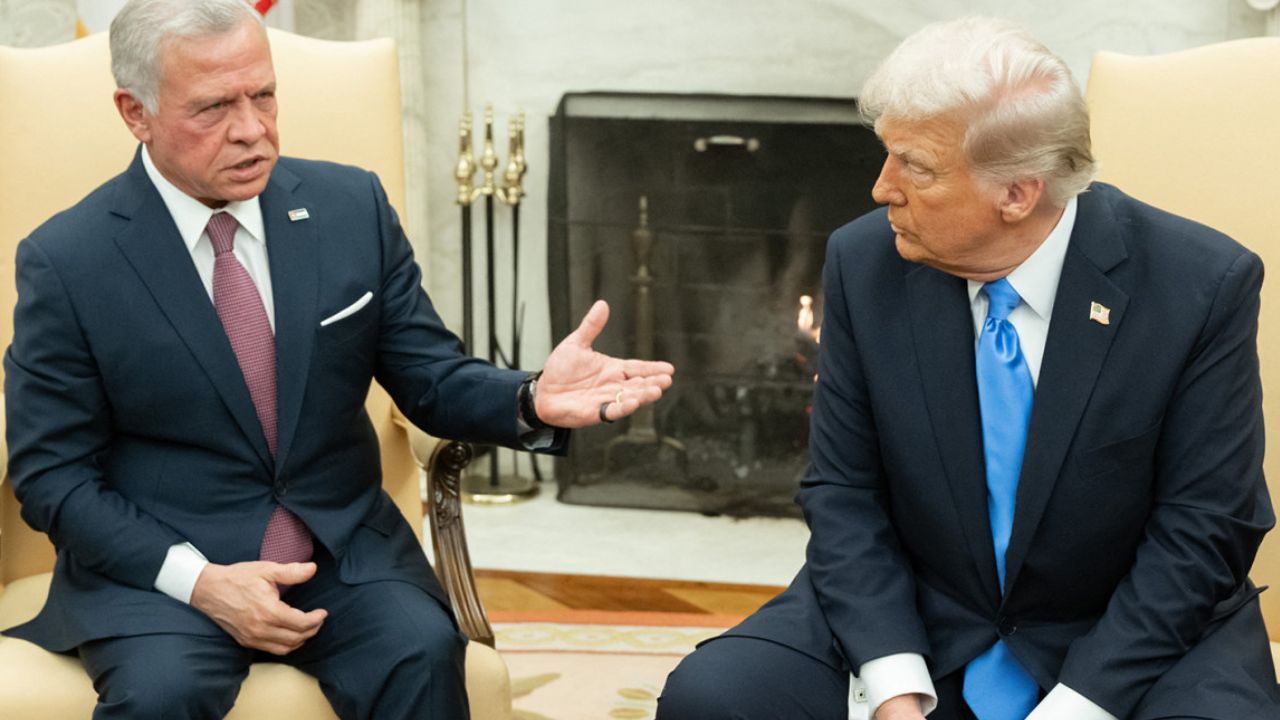
    President Donald Trump on Tuesday doubled down on his idea of exiling Palestinians and placing a rebuilt Gaza under “US authority,” but faced pushback from visiting Jordanian King Abdullah II.

    “I reiterated Jordan’s steadfast position against the displacement of Palestinians in Gaza and the West Bank. This is the unified Arab position. Rebuilding Gaza without displacing the Palestinians and addressing the dire humanitarian situation should be the priority for all,” Abdullah said on social media after the talks.


    However, he told Trump that Egypt was working on a plan for how countries in the region could “work” with Trump on his shock proposal.

    The Jordanian monarch also appeared to offer a sweetener to Trump, who the day before the visit floated the possibility of halting US aid to Jordan if it did not take in refugees.

    “One of the things that we can do right away is take 2,000 children, cancer children who are in a very ill state. That is possible,” Abdullah said as Trump welcomed him and Crown Prince Hussein in the Oval Office.

    Trump replied that it was “really a beautiful gesture” and said he didn’t know about it before the Jordanian monarch’s arrival at the White House.

    The US leader stunned the world when he announced a proposal last week for the United States to “take over” Gaza, envisioning rebuilding the devastated territory into the “Riviera of the Middle East” — but only after resettling Palestinians elsewhere, with no plan for them ever to return.

    Abdullah urged patience and said that Egypt was coming up with a response and that Arab nations would then discuss it at talks in Riyadh.

    “Let’s wait until the Egyptians can come and present it to the president and not get ahead of ourselves,” Abdullah said.

    Trump retreated from his previous talk of an aid halt to Jordan and Egypt, saying: “I don’t have to threaten that. I do believe we’re above that.”

    The Egyptian foreign ministry later said it plans to “present a comprehensive vision for the reconstruction” of the Gaza Strip that ensures Palestinians remain on their land.

    It said Egypt “hopes to cooperate” with Trump’s administration on the matter, with the goal of “reaching a fair settlement of the Palestinian cause”.

    ‘Tough guy’

    Trump, however, kept pushing his plan to “own” Gaza and place it under “US authority,” despite the fact that it is home to more than two million Palestinians who want their own sovereign state.

    “We don’t have to buy. We’re going to have Gaza,” Trump said.

    “We’re going to take it, we’re going to hold it, we’re going to cherish it.”

    But Trump, who made his fortune as a real estate tycoon did however deny that he would seek to personally develop property in Gaza. “No. I’ve had a great career in real estate,” he said.

    The meeting came as the Gaza ceasefire appears increasingly fragile, after Trump warned on Monday that “all hell” would break out if Hamas fails to release all hostages by Saturday.

    Trump said he doubted that the Palestinian militant group would abide by the ultimatum — but played down the risk of a longer threat to efforts to create a lasting peace between Israel and Hamas.

    “It’s not going to take a long time,” Trump said. “A bully is the weakest person, and they’re bullies. Hamas is bullies.”

    King Abdullah is a key US ally but last week rejected “any attempts” to take control of the Palestinian territories and displace its people.

    Egyptian President Abdel Fattah al-Sisi, who is expected to visit the White House later this week, urged on Tuesday the reconstruction of Gaza “without displacing Palestinians.”

    Analysts say the issue is an existential one for Jordan in particular.

    Half of Jordan’s population of 11 million is of Palestinian origin, and since the establishment of Israel in 1948, many Palestinians have sought refuge there.

    But Jordan is also keenly aware of the economic pressure Trump could exercise. Every year, Jordan receives around $750 million in economic assistance from Washington and another $350 million in military aid.

    On social media after the Trump talks, Abdullah stressed that his “foremost commitment is to Jordan, to its stability and to the well-being of Jordanians.”

  • Trump: Palestinians have no right of return under Gaza plan

    Trump: Palestinians have no right of return under Gaza plan

    President Donald Trump said Palestinians would have no right of return to Gaza under his US takeover plan, describing his proposal in excerpts of an interview released Monday as a “real estate development for the future.”

    Trump told Fox News Channel’s Bret Baier that “I would own it” and that there could be as many as six different sites for Palestinians to live outside Gaza under the plan, which the Arab world and others in the international community have rejected.

    “No, they wouldn’t, because they’re going to have much better housing,” Trump said when Baier asked if the Palestinians would have the right to return to the enclave, most of which has been reduced to rubble by Israel’s military since October 2023.

    “In other words, I’m talking about building a permanent place for them because if they have to return now, it’ll be years before you could ever — it’s not habitable.”

    Trump first revealed the shock Gaza plan during a joint news conference with visiting Israeli Prime Minister Benjamin Netanyahu on Tuesday, drawing outrage from Palestinians.

    The US president pressed his case for Palestinians to be moved out of Gaza, devastated by Israel’s genocide against Palestinians in Gaza, and for Egypt and Jordan to take them.

    Egyptian Foreign Minister Badr Abdelatty flew to Washington in the wake of Trump’s remarks. He met at the State Department on Monday with Secretary of State Marco Rubio, with neither speaking to the media.

    Jordan’s King Abdullah II was set to hold talks with Trump on Tuesday.

    In the Fox interview — which will be broadcast Monday after the first half was screened a day earlier — Trump said he would build “beautiful communities” for the more than two million Palestinians who live in Gaza.

    “Could be five, six, could be two. But we’ll build safe communities, a little bit away from where they are, where all of this danger is,” added Trump.

    “In the meantime, I would own this. Think of it as a real estate development for the future. It would be a beautiful piece of land. No big money spent.”

    ‘Unacceptable’

    Trump stunned the world when he announced out of the blue last week that the United States would “take over the Gaza Strip,” remove rubble and unexploded bombs and turn it into the “Riviera of the Middle East.”

    But while he initially said that Palestinians could be among the “world people” allowed to live there, he has since appeared to harden his position to suggest that they could not.

    Netanyahu on Sunday praised Trump’s proposal as “revolutionary”, striking a triumphant tone in a statement to his cabinet following his return from Washington.

    “President Trump came with a completely different, much better vision for Israel,” said Netanyahu, who was reportedly only briefed on the plan shortly before Trump’s announcement.

    The reaction from much of the rest of the world has been one of outrage, with Egypt, Jordan, other Arab nations and the Palestinians all rejecting it out of hand.

    The criticism was not limited to the Arab world, with German Chancellor Olaf Scholz on Sunday labeling the plan “a scandal,” adding that the forced relocation of Palestinians would be “unacceptable and against international law.”

    Trump’s plan has also threatened to disrupt the fragile six-week ceasefire between Israel and Hamas in Gaza, and the chances of it progressing to a second, more permanent phase.

    Trump, however, repeated his insistence that he could persuade Egypt and Jordan, both major recipients of US military aid, to come around.

    “I think I could make a deal with Jordan. I think I could make a deal with Egypt. You know, we give them billions and billions of dollars a year,” he told Fox.

    Last year, Trump described Gaza as being “like Monaco,” while his son-in-law Jared Kushner suggested that Israel could clear Gaza of civilians to unlock “waterfront property.”

  • Hamas frees two Israeli hostages as next ceasefire swap begins

    Hamas frees two Israeli hostages as next ceasefire swap begins

    Hamas on Saturday released two out of three Israeli hostages in the fourth exchange of the ceasefire deal, ahead of the expected release of 183 Palestinian prisoners held in Israeli jails.

    Ofer Kalderon and Yarden Bibas were paraded on a stage before being released to the Red Cross in Khan Yunis in southern Gaza, AFP journalists reported, while Keith Siegel is set to be freed in a similar ceremony at Gaza City’s port in the north.

    Israel’s military later confirmed that Bibas and Kalderon were back on Israeli territory.

    After holding them hostage for more than 15 months, Gaza began releasing captives on January 19, as the first phase of a ceasefire with Israel took effect.


    Hamas have so far handed over 18 hostages to the International Committee of the Red Cross in exchange for hundreds of Palestinian prisoners, many of them women and minors.

    Later Saturday, Israel will free 183 prisoners, the Palestinian Prisoners’ Club advocacy group said.

    “The updated number of prisoners to be released tomorrow is 183,” the Club’s spokeswoman Amani Sarahneh said Friday, after previously announcing that 90 prisoners would be freed.

    During their October 7, 2023 attack on Israel, after which Israel began genocide in Gaza, American-Israeli Siegel from the Kfar Aza kibbutz community, and Bibas and French-Israeli Kalderon from kibbutz Nir Oz were taken hostage by Hamas.

    They took a total of 251 people hostage that day. Of those, 76 remain in Gaza, including at least 34 the military says are dead.

    Those seized include Bibas’s wife and two children, whom Hamas has declared dead, although Israeli officials have not confirmed that.

    The two Bibas boys — Kfir, the youngest hostage whose second birthday was earlier this month, and his older brother Ariel whose fifth birthday was in August — have become symbols of the hostages’ ordeal.

    The children were taken along with their mother, Shiri. Hamas says an Israeli air strike in November 2023 killed all three.

    “Our Yarden is supposed to return tomorrow and we are so excited but Shiri and the children still haven’t returned,” the Bibas family said on Instagram Friday.

    “We have such mixed emotions and we are facing extremely complex days.”

    “Hamas, where are the Bibas babies?” Israel’s foreign ministry posted on X.

    “483 days have passed. Where are they?”


    Crowds mostly absent

    Ahead of both exchanges in Khan Yunis Gaza and Gaza City, scores of masked Hamas fighters stood sentry, apparently to control onlookers.

    In contrast to Thursday’s frenzied exchange which drew Israeli condemnation, large crowds were mostly absent.

    Green Hamas and Palestinian flags flew at the Gaza port in a strong breeze.

    Ranks of heavily armed Hamas fighters held portraits of the group’s slain leaders, including military chief Mohammed Deif, accused by Israel of being a mastermind of the October 7 attack and whose death was confirmed on Thursday.

    The arrangements for hostage handovers in Gaza have sometimes been chaotic, particularly Thursday’s release in Khan Yunis.

    Israel briefly delayed its prisoner release on Thursday in protest, and the ICRC urged all parties to improve security.


    When Saturday’s hostage release is completed, Gaza’s key Rafah border crossing with Egypt is expected to reopen, a Hamas official and a source with knowledge of discussions told AFP.

    “The mediators informed Hamas of Israel’s approval to open Rafah crossing tomorrow, Saturday, after the completion of the fourth batch of prisoner exchange,” the Hamas official said.

    Rafah was a vital entry point for aid into Gaza before the Israeli military seized the Palestinian side of the crossing in May.

    The EU’s top diplomat Kaja Kallas said on Friday the bloc has deployed a monitoring mission at the crossing “to support Palestinian border personnel and allow the transfer of individuals out of Gaza, including those who need medical care”.

    ‘Where’s Dad?’

    On Thursday, Israeli authorities released 110 inmates from Ofer prison, including high-profile former commander Zakaria Zubeidi, 49, who received a hero’s welcome in the West Bank city of Ramallah.

    On Friday, he called for “all our Palestinian people” to be freed from Israeli jails.

    “The situation of the prisoners is very difficult and we hope for their urgent release,” Zubeidi told AFP.

    Also freed was Hussein Nasser, who received little attention from the crowd but was at the centre of his daughter’s world.

    “Where’s Dad?” Raghda Nasser, 21, asked tearfully as she moved through the crowd, an AFP correspondent reported.

    Her mother was pregnant with her when he was jailed 22 years ago.

    “I just visited him behind the glass in Israeli prisons. I cannot express my feelings,” Raghda said.

    The fragile ceasefire’s 42-day first phase hinges on the release of a total of 33 hostages in exchange for around 1,900 people, mostly Palestinians, in Israeli jails.

    Negotiations for a second phase of the deal are set to start on Monday, according to a timeline provided by an Israeli official.

    This phase is expected to cover the release of the remaining captives and to include discussions on a more permanent end to the war.

  • Aid experts dismiss Trump’s ‘Gaza condoms’ spending claim

    Aid experts dismiss Trump’s ‘Gaza condoms’ spending claim

    US aid experts on Wednesday rejected Donald Trump’s claim that the United States had spent $50 million to fund condoms for the genocide-battered Gaza Strip, which the president has sought to make a poster child for wasteful spending.

    “We identified and stopped $50 million being sent to Gaza to buy condoms for Hamas,” Trump told reporters, referring to the group that has ruled the Palestinian territory for nearly two decades.

    “And do you know what’s happened to them? They’ve used them as a method of making bombs.”

    Trump offered no evidence to back his claim, which prompted both vehement rejections and ridicule from relief agencies and experts.

    The United States sent no condoms to any part of the Middle East since 2019, according to a detailed report last year from the US Agency for International Development (USAID).

    Its only family planning contribution to the region was a small shipment of injectable and oral contraceptives worth $45,680 that was sent to Jordan in 2023, the report said.

    International Medical Corps, a humanitarian aid organisation, said it received about $68 million from USAID for its Gaza operations since October 7, 2023 — the day Hamas launched a major attack on Israel –- which paid for two field hospitals providing lifesaving care.

    “No US government funding was used to procure or distribute condoms,” the organisation said in a statement.

    ‘Dangerous’

    On Tuesday, White House Press Secretary Karoline Leavitt claimed the $50 million expenditure was discovered in Trump’s first week by the budget office and the new Department of Government Efficiency (DOGE) led by tech billionaire Elon Musk.

    She called it a “preposterous waste of taxpayer money.”

    “The White House claim that DOGE uncovered $50 million in funding for condoms in Gaza is quite obviously untrue,” Matthew Kavanagh, director of Georgetown University’s Center for Global Health Policy and Politics, told AFP.

    “It does not even make sense.”

    A back-of-the-envelope calculation suggests $50 million would buy over a billion condoms for Gaza’s adult population.

    “What’s going is here is NOT a billion condoms for Gaza,” Jeremy Konyndyk, president of Refugees International, wrote on X, the Musk-owned site formerly called Twitter.

    “What’s going on is that the bros at DOGE apparently can’t read (government) spreadsheets.”

    Jesse Watters, host of a conservative-leaning talk show on Fox News, said that Hamas were using the non-existent US shipments to make “condom bombs,” floating explosives-laden balloons into Israel — a claim echoed by Trump.

    Soon after returning to office for a second term on January 20, Trump ordered a 90-day freeze in foreign assistance.

    He has vowed a review to ensure that aid conforms with policies of his administration, which opposes abortion, transgender rights and diversity programs.

    Secretary of State Marco Rubio said in a memo that the United States was freezing nearly all aid disbursement except for emergency food and military aid to Egypt and Israel.

    “What seems clear is the administration is taking a large grant to support healthcare infrastructure in Gaza and mischaracterising it in order to justify the dangerous halt to lifesaving aid programs around the world,” Kavanagh said.