Tag: government

  • Pakistan’s history of IMF bailouts: A look at 75 years of economic challenges

    Pakistan’s history of IMF bailouts: A look at 75 years of economic challenges

    Pakistan is currently facing yet another economic crisis, a recurring issue that has caused the country to repeatedly seek help from the International Monetary Fund (IMF) for financial assistance.

    Unfortunately, most of the previous 13 bailouts granted since the late 1980s were left unfinished, as Pakistan failed to implement any meaningful structural changes to rein in government spending or boost revenue.

    The country’s current government, led by Prime Minister Shehbaz Sharif, is currently in talks to revive its latest $6.5 billion loan programme as a result of the ongoing economic downturn, exacerbated by last year’s devastating floods and continued political instability. However, the implementation of the necessary belt-tightening measures may prove to be challenging, given the upcoming national elections planned for later this year.

    Pakistan and the IMF had agreed to a $6 billion bailout program in 2019, but disputes over monetary policies have prevented the release of over $1 billion. Furthermore, donors and lenders have demanded structural reforms before providing any further financial aid to Pakistan.

    Pakistan’s traditional partners have made it clear that their assistance is conditional upon the revival of the IMF program and the successful implementation of reforms, including the expansion of tax collection.

    Based on the prevailing Special Drawing Rights (SDR), also known as XDR, rates, the International Monetary Fund (IMF) has approved loans totaling $31.629 billion for Pakistan.

    It is worth noting, however, that not all of the approved funds have been disbursed, with only one out of 22 loans having been fully transferred to Pakistan. This highlights the complex political and economic dynamics that underlie IMF programs.

    Pakistan’s history of borrowing from the IMF

    Pakistan has a history of borrowing from the International Monetary Fund (IMF), which can be divided into four distinct periods. The early years of borrowing spanned from 1950 to 1988, followed by the Benazir and Nawaz Sharif era from 1988 to 1999. The third period was marked by the Musharraf and Zardari administrations from 2000 to 2013. The current period is led by Nawaz Sharif and Imran Khan.

    During these periods, each government worked with the IMF differently, especially in the past two decades. While the Benazir and Nawaz Sharif administrations alternated in seeking IMF programs in the 1990s, the Musharraf government, despite experiencing substantial foreign currency inflows, also had to turn to Washington for financial assistance.

    The Zardari administration, on the other hand, abandoned the largest-ever IMF program when it deemed it expedient to do so. This trend illustrates how Pakistan’s borrowing from the IMF has been characterised by inconsistency and shifting priorities.

    2013-2022

    Pakistan’s recent history of borrowing from the IMF has been marked by different governments seeking assistance in their own unique ways. While the Imran Khan government initially refused to seek assistance from the IMF, it eventually sought an Extended Fund Facility (EFF) loan worth SDR4.268 billion in July 2019. This was due to the country’s financial deterioration and instability, which had eroded the stability gains made since late 2016.

    Under Imran Khan’s government, the IMF disbursed a total of SDR3,159.5 million to Pakistan in four tranches. However, talks for the fourth tranche proved challenging and the government sought help from the US Assistant Secretary of State Donald Lu. Despite receiving SDR750 million in February 2022, then-Prime Minister Imran Khan announced a subsidy on petrol and diesel, effectively breaking the agreement with the IMF. As a result, the IMF suspended Pakistan’s $6 billion loan programme in March 2022.

    Negotiations for the revival of the fund facility did not commence until May, when Shehbaz Sharif of the PML-N took over the government. Talks on reviving the fund facility were concluded in late June, but only after the government took some harsh decisions, including withdrawing tax relief for salaried individuals. The next tranche will only be released after the IMF Executive Board takes up the combined 7th and 8th reviews.

    2000-2013

    During Pervez Musharraf’s government, Pakistan received significant foreign aid in the form of military and civil assistance, resulting in a low reliance on IMF loans for financial support. However, Pakistan did receive two IMF loans in the first two years of Musharraf’s regime, totaling SDR520 million. The first loan was a stand-by arrangement of SDR465 million, of which SDR150 million were disbursed, and the second was an extended credit facility of SDR1.033 billion, of which only SDR315 million were disbursed. Pakistan did not require IMF assistance from 2001 to 2008, as foreign aid prevented a balance of payment crisis.

    However, the aid failed to boost Pakistan’s forex reserves, which experienced a sharp decline between 2006 and 2008. In 2008, the Pakistan Peoples Party government negotiated with the IMF for the largest-ever loan of SDR7.235 billion, also the largest stand-by arrangement. Only SDR5.2 billion were disbursed between 2008 and 2010 in three tranches. Afterward, the PPP government did not complete the program as it received funds under the Kerry-Lugar program until 2013, when the United States ceased funding. The PPP government was unable to implement tough reforms demanded by the IMF due to impending elections.

    1989-1999

    During the 1990s, Benazir Bhutto and Nawaz Sharif sought eight bailouts from the IMF due to the consequences of the Soviet-Afghan war and political instability in Pakistan. In 1988, Bhutto signed up for two IMF packages, totaling SDR655 million. The IMF made two payments of SDR122.4 million and SDR189.5 million in 1991 and 1992. In 1993, Nawaz Sharif negotiated a loan of SDR265.4 million, with the IMF paying SDR88 million that year.

    Bhutto’s government signed three IMF programs of SDR379 million, SDR606 million, and SDR562 million between 1994 and 1995, with lower disbursements of SDR123 million, SDR133 million, and SDR107 million before being removed in 1996. Sharif then negotiated two loans in 1997 of SDR682.4 million and SDR454.9 million, respectively, with SDR250 million disbursed before his government was toppled in 1999. Bhutto negotiated a total of five programs of SDR2.2 billion, receiving SDR676.26 million, while Sharif signed up for three programs of SDR1.4 billion, with Pakistan receiving only SDR608 million. The instability of the government prevented the implementation of IMF reforms, which often led to increased tariffs and taxes, causing a negative perception of the IMF in the country.

    1958-1988

    The Zia-ul-Haq government received the largest amount of foreign aid from the International Monetary Fund in Pakistan’s history, surpassing the sum of all seven previous programs approved since 1958. In 1980, the IMF granted SDR1.268 billion to the government, followed by another program of SDR919 million in 1981. The Zia-ul-Haq administration received SDR1.079 billion out of the total SDR2.187 billion approved by the IMF.

    Before that, Zulfikar Ali Bhutto signed four loan programs with the IMF between 1972 and 1977 for a total of SDR330 million, of which SDR314 million was withdrawn. In 1958, Ayub Khan initiated Pakistan’s first loan from the IMF, seeking only SDR25 million, and in 1968 and 1969, two more programs of SDR37.5 million and SDR75 million were approved, respectively. The Ayub government received SDR112 million of the total SDR137.5 million approved.

    Pakistan has received a total of SDR23.656 billion in IMF-approved programs, of which SDR14.189 billion was disbursed. Pakistan was offered three long-term Extended Credit Facilities, five medium-term Extended Fund Facilities, at least 12 short-term Standby Arrangement loans, and one Structural Adjustment Facility over 63 years.

    This news story was created by compiling information from various news platforms as well as the IMF website.
  • Petrol price unchanged, diesel price slashed by Rs5 per litre

    Petrol price unchanged, diesel price slashed by Rs5 per litre

    The federal government has announced a reduction in the price of diesel by Rs5 per litre, effective immediately, while maintaining the price of petrol for the next two weeks.

    Finance Minister Ishaq Dar said that the prices are revised to provide “maximum relief” to the public, following the directives of Prime Minister Shehbaz Sharif. In addition to the decrease in diesel prices, there will be a reduction of Rs10 per litre in the prices of Kerosene oil and Light Diesel Oil (LDO).

    The new prices have been set at Rs282 per litre for petrol, Rs288 per litre for high-speed diesel, Rs176.07 per litre for kerosene oil, and Rs164.68 per litre for light diesel oil. Diesel is widely used in the transport and agriculture sectors, so the price reduction could have a positive impact on inflation and provide some relief to farmers, particularly as the crop-harvesting season is underway.

    However, consumers are already facing high prices, which are especially burdensome for the low-income group who use motorbikes and small cars.

    In its previous fortnightly announcement, the federal government increased the price of petrol by Rs10 and the price of kerosene oil by Rs5.78, citing the increase in petroleum prices in the international market and exchange rate variations as the reason for the increase.

  • Dar tells PTI that govt has nothing to do with raid at Elahi’s residence

    Finance Minister Ishaq Dar has talked to Pakistan Tehreek-e-Insaf (PTI) Senior Vice President Shah Mahmood Qureshi via telephone, discussing last night’s raid at former Chief Minister (CM) Pervaiz Elahi’s residence in Lahore.

    Dar distanced the federal government from the incident and blamed the Punjab government for it, while expressing grief over the raid that has been criticised for using excessive force.

    The minister said that he would forward PTI’s reservations to the ruling alliance and would get back to them.

    Meanwhile, Dar’s party fellow and Planning Minister Ahsan Iqbal criticised the PTI leaders for “using women and children” as a shield to evade arrest.

    Apparently justifying the raid, the minister said both PTI Chairman Imran Khan and Elahi were not arrested when police conducted a raid at their residence.

    The raid has put talks between PTI and the government, to reach a consensus on a date for election, in jeopardy. The final and third round of negotiations will be held on May 2 (Tuesday).

  • CJ Bandial admits Supreme Court can’t force govt into negotiations on election delay

    Chief Justice of Pakistan, Umar Ata Bandial has admitted on Thursday that the Supreme Court cannot force the government to hold negotiations with Pakistan Tehreek-e-Insaf (PTI) on the matter of delay in polls in Khyber-Pakhtunkhwa (KP) and Punjab.

    The three member bench, comprising of Justices Bandial, Ijazul Ahsan and Munib Akhtar, barely heard the case for an hour, calling for a sudden adjournment with the Chief Justice stating that a detailed order will be issued later.

    During last week’s hearing, the apex court had told political parties to hold dialogue on April 26 and report to the court. The coalition-led federal government, however, has held no dialogue and refused to accept the April 4 verdict, calling into question the legality of the bench.

  • Pakistan fails to meet Hajj quota due to rising inflation and dollar shortage

    Pakistan fails to meet Hajj quota due to rising inflation and dollar shortage

    On Wednesday, sources within the Ministry of Religious Affairs reported that the government has decided to return Pakistan’s quota of Hajj pilgrimage to Saudi Arabia due to a shortfall of applications caused by rising inflation.

    This year marked the first time a quota for Hajj pilgrimage was available in the country, but the shortage of dollars and rising inflation prevented Pakistanis from applying for Hajj.

    The final decision to return the Hajj quota will be made by the federal cabinet. The authorities considered giving the official Hajj quota to private operators after a few applications turned out for the government scheme. However, this option would lead to private operators collecting dollars from the open market, causing unnecessary demand for foreign currency.

    Pakistan had been demanding an increase in the Hajj quota, allowing 179,210 pilgrims to 202,000 or 201,000 pilgrims. This year, the country received its complete quota of 179,000 pilgrims after many years but couldn’t utilize it entirely. It’s worth noting that the cost of government-sponsored Hajj is around Rs1.2 million.

    Due to an acute shortage of the greenback amid the collapsing economy, the Ministry of Religious Affairs and Interfaith Harmony decided to allocate a 50% special quota in the Government Hajj Scheme-2023 for pilgrims who will pay in US dollars. However, a quota of 89,605 Hajj pilgrims was set under the government scheme, falling short of 9,000 applicants.

    The government received 72,869 applicants under the regular scheme and only 8,000 under the sponsorship scheme. Moreover, 28,679 additional applications were received under the official regular scheme against the quota of 44,190. Additional applicants are being sent for Hajj pilgrimage without a lucky draw.

    The sources indicated that a total of $235 million is required for the government scheme, some of which will be provided by the sponsorship scheme and the rest by the government.

  • Khan buys bulletproof gate for Zaman Park house worth Rs15 lakh

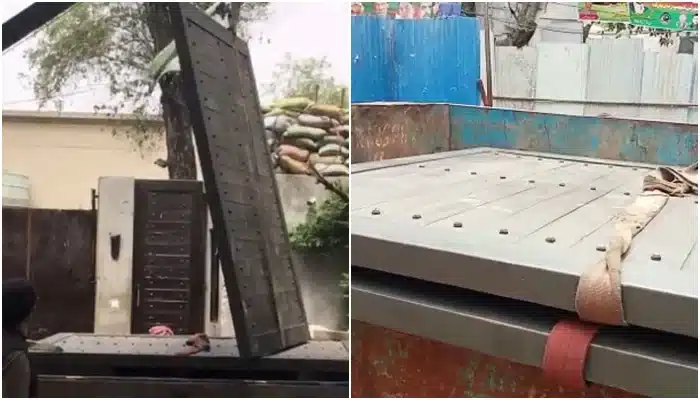
    Khan buys bulletproof gate for Zaman Park house worth Rs15 lakh

    Pakistan Tehreek-e-Insaf (PTI) Chairman Imran Khan has bought a new bulletproof gate for his Lahore residence in Zaman Park amid fear of a possible operation by the government.

    The gate, which has now been delivered, has reportedly cost between Rs12 lakh and Rs15 lakh.


    On Monday, Khan apprised the Lahore High Court (LHC) that he had “concrete information” of another “attack” at his Zaman Park residence during the Eid holidays.

    In March, Punjab police launched an operation in Zaman Park when Khan was on his way to Islamabad to appear before the court in the Toshkahana case.

    The police crashed into the gate before entering the premises.

  • Stampede for ration kills 11 in Karachi including three children

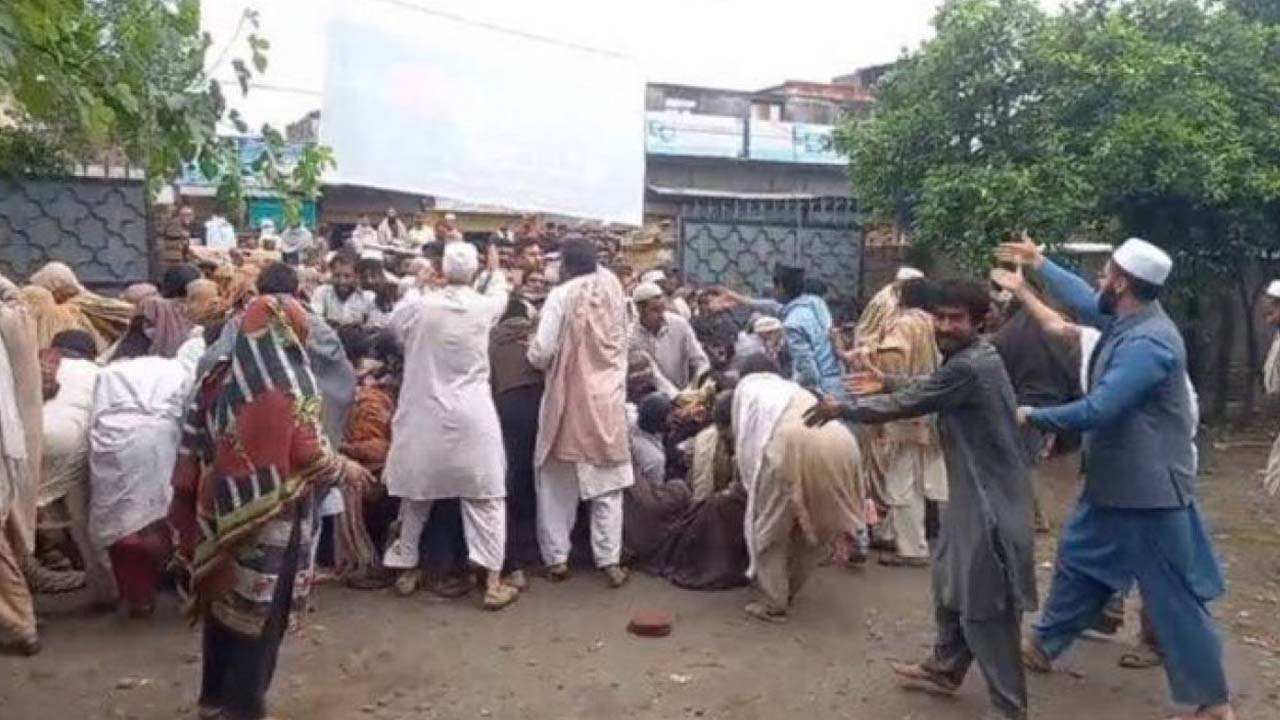
    Stampede for ration kills 11 in Karachi including three children

    A stampede at a private charity food ration distribution site in Karachi’s SITE industrial area on Friday left at least 11 people dead, including three children.

    Eyewitnesses and rescue workers reported that several people fell into a nullah at the location during the stampede. Reports suggest that some of the victims were electrocuted as an electricity power-line had fallen into the nullah.

    Several people, including women and children, also fell unconscious during the incident.

    The Abbasi Shaheed Hospital received nine bodies and six injured victims, while the Civil Hospital received two dead bodies, bringing the death toll to 11.

    The incident is one of several recent deadly stampedes at free food and flour distribution sites across the country as the population struggles with rising inflation.

    The government launched the flour distribution programme to reach millions of families in need during the holy month of Ramzan that began last week.

    Sindh Chief Minister Murad Ali Shah has ordered an inquiry into the incident and expressed sorrow over the loss of lives.

    Leader of the Opposition in the Sindh Assembly Khurram Sher Zaman demanded a transparent inquiry and action against those responsible for the incident, blaming the government for the people’s carelessness.

  • Punjab govt imposes ‘complete ban’ on departmental iftar parties due to economic situation

    Punjab govt imposes ‘complete ban’ on departmental iftar parties due to economic situation

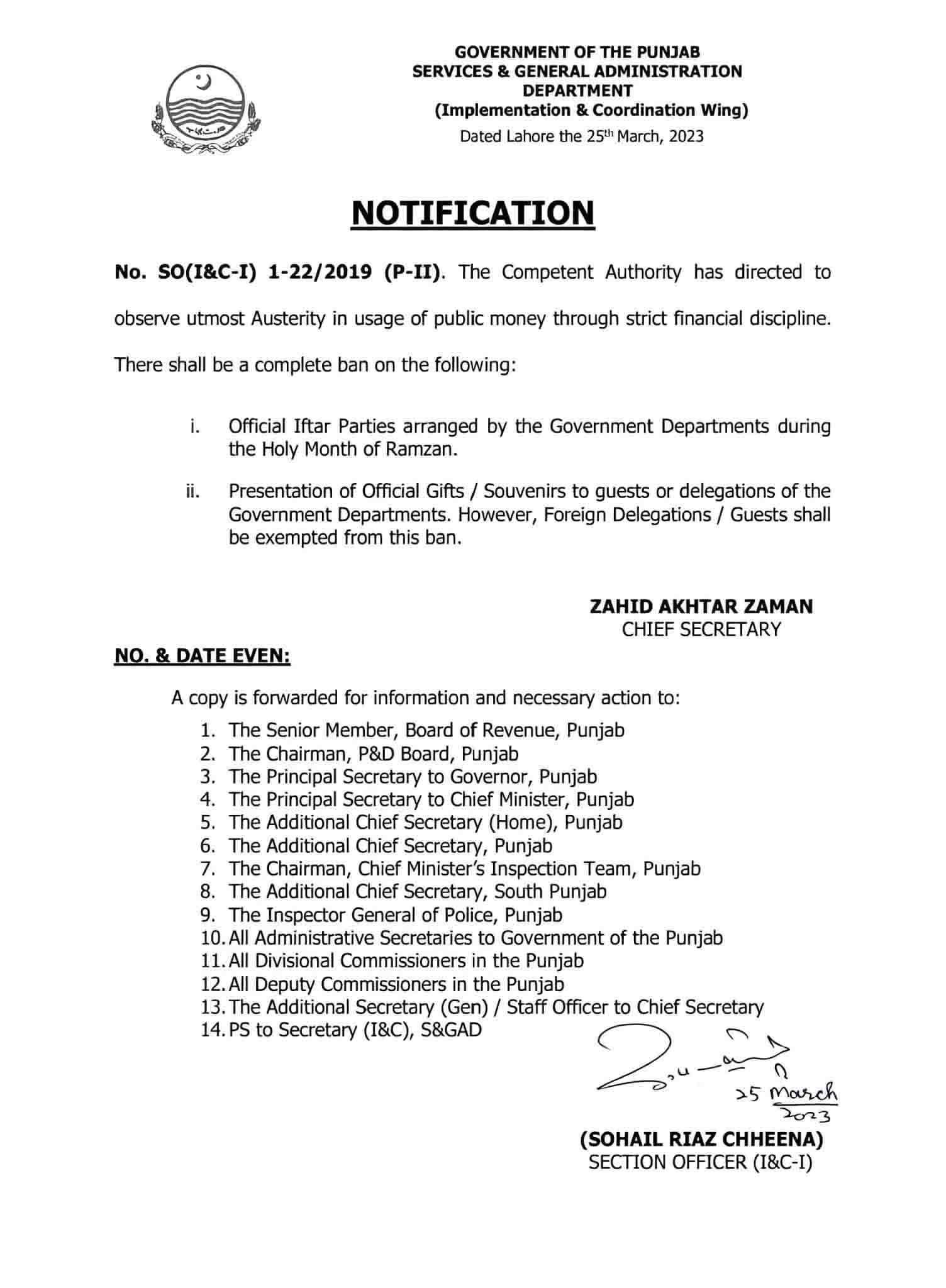
    The Services and General Administration Department (S&GAD) of Punjab has recently released a notification that prohibits government departments from organising Iftar parties.

    According to The News, the reason behind this move is the economic crisis faced by the country, and therefore, the government has advised against giving expensive gifts to departmental delegations during Ramzan. The notification, however, exempts diplomats and foreign guests from these bans.

    The notification highlights the significance of simplicity during the holy month and emphasizes the government’s commitment to celebrate it simply. It is essential to recognise Pakistan’s current economic circumstances and avoid hosting costly Iftar celebrations that might put a strain on the country’s financial resources.

    As a result, all government offices have been advised to follow these guidelines and avoid preparing lavish presents for local delegates. The administration acknowledges the importance of observing Ramzan in a more simple and conscientious manner that is consistent with the country’s economic position.

    This move by the Punjab government demonstrates a responsible and prudent approach towards managing the country’s resources during these challenging times. By promoting modest celebrations during Ramzan, the government aims to set an example for citizens and encourage them to prioritise their spending wisely.

    Furthermore, exempting foreign guests and diplomats from the ban ensures that Pakistan’s image remains positive while still taking necessary measures to address economic challenges.

  • Political arrests show our politicians have learnt nothing

    Pakistan Tehreek-e-Insaf’s (PTI) social media head Azhar Mashwani went missing outside his house on Thursday when he was taking a cab to Zaman Park. His brother has lodged an FIR of his kidnapping. PTI has alleged that Azhar has been illegally abducted by the authorities. It is indeed quite alarming that three days have passed since he went missing from Lahore and yet there is no news about his whereabouts. Imran Khan has condemned the police in Punjab and Islamabad for “breaking all laws with impunity as they target PTI”. The recent targeting of PTI leaders and workers, including Fawad Chaudhry, Hassaan Niazi, and now Mashwani shows that our political parties have not learnt anything and will do the same when they come in power which they condemned when they were at the receiving end of the same treatment during the regime of their political opponents.


    Two wrongs don’t make a right is something we often hear, but we don’t see this being professed in Pakistan. Witnessing the wrongs in the politics of Pakistan, it is safe to say that no one learns from past mistakes. For years, we have seen politics in our country. The people in power change, and their faces change, but their means and tactics to settle scores remain the same, and this vicious cycle continues. In the last few months, we have seen how the PTI leaders and workers have been arrested on frivolous charges just like workers and leaders of the Pakistan Muslim League-Nawaz (PML-N), Pakistan People’s Party (PPP) or others when the PTI was in power. For years now, we have seen some very powerful sectors influencing decision-making both in politics and otherwise. The political arena is overshadowed by these mighty decision-makers and their idea of politics. Every time a politician is arrested to silence him or her, it just shows a flagrant disregard for the law of the land.


    An arrest should only be made if, and only a crime has been committed or one is found guilty of any wrongdoing. Arrests on frivolous charges are not the answer to silence opinion. Democratic countries allow dissent. We have seen journalists and activists being arrested or picked up because of their views and opinions. The PDM government, which was a victim of such brutal policies in the past, has now made it abundantly clear that it will go to the same lengths to arrest Khan and his supporters. However, this vicious cycle must end. It is the responsibility of the political class to decide if they want to continue with settling scores and political victimisation or they want to put a stop to it. All politicians, be they in the government or the Opposition, need to unite on this point. Otherwise, such arrests and disappearances will continue. This culture must stop and change because political arrests will get us nowhere. A country facing multiple crises – from economic to political – needs stability. Not more chaos.

  • Govt announces Rs50 per litre petrol subsidy for low-income individuals

    Govt announces Rs50 per litre petrol subsidy for low-income individuals

    The government has announced a relief package for low-income individuals in the form of a petroleum subsidy worth Rs50 per litre. This announcement was made during a meeting chaired by Prime Minister (PM) Muhammad Shehbaz Sharif on Sunday.

    The Prime Minister directed that consumers using small vehicles such as motorcycles, rickshaws, and 800-CC vehicles will be included in the subsidy scheme. He also instructed relevant authorities to finalise the scheme as soon as possible to ensure its effective implementation.

    The Prime Minister emphasized that this subsidy will provide much-needed relief to low-income individuals, as they are the primary users of small vehicles. Despite the severe economic difficulties faced by the country, the government is committed to assisting the poor in every way possible.

    During the meeting, Minister of State for Petroleum Musadik Malik briefed participants on the strategy for implementing the subsidy to low-income individuals.